• Link to X
  • Link to Facebook
  • Link to Instagram
  • Link to TikTok
  • Link to Youtube
  • About
    • About Us
      • President
      • Board of Directors
      • Board of Advisors
      • Financials
      • Our Methodology
      • Success Tracker
      • Contact
  • Act Now
    • 30 Ways to Help
      • Email Congress
      • Call Congress
      • Volunteer
      • Courses & Certificates
      • Be a Donor
    • Internships
      • In-Office Internships
      • Remote Internships
    • Legislation
      • Politics 101
  • The Blog
  • The Podcast
  • Magazine
  • Donate
  • Click to open the search input field Click to open the search input field Search
  • Menu Menu

Archive for category: Nonprofit Organizations and NGOs

Information and stories about nonprofit organizations and NGOs

Nonprofit Organizations and NGOs, Water Sanitation

Matt Damon’s Water.org Leads the Fight Against the Global Water Crisis

Matt Damon and Water.org
Over the course of two decades, Matt Damon has built quite the resume, with acting achievements and accolades that aspiring actors can only dream of receiving. Damon entered the Hollywood spotlight after his break through film “Good Will Hunting,” which he starred in and co-wrote with close friend Ben Affleck, eventually winning the Oscar for best writing in 1998. Following his historic debut, Damon has gone on to star in highly-praised films such as “Saving Private Ryan,” “The Departed” and the Bourne trilogy.

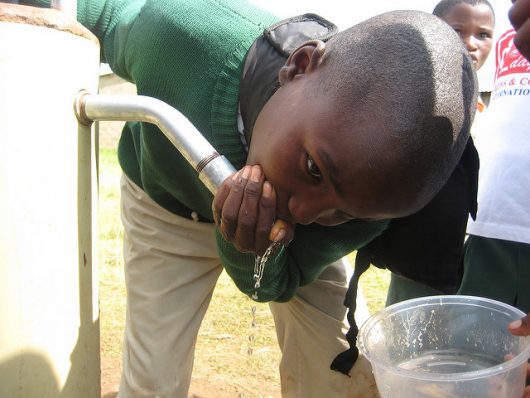
Damon has since devoted his time to provide underdeveloped countries in Africa, Latin America and South Asia with access to clean water through his foundation, Water.org.

According to Water.org, 663 million people lack access to safe drinking water, 2.4 billion lack access to improved sanitation, and one million are killed by tainted water or other poor sanitation-related diseases each year. One in three people lacks access to a toilet, and every 90 seconds, a child dies from a water-related disease–including diarrhea, the third leading cause of death among children.

Damon decided he could no longer ignore the suffering of millions of people on a daily basis, considering that lack of sanitary water is preventable. Damon addressed his discontent with the ongoing water crisis to CNN, saying, “You know, imagine if we cure cancer tomorrow and in 100 years, three-and-a-half million people a year are still dying of it. I mean it’s just unconscionable.”

Using his celebrity platform, Damon created a nonprofit that provides affordable access to safe water and proper lavatory facilities through microfinance loans. Damon and White met at the Clinton Global Initiative and discovered that both had similar organizations that focused on clean and safe water (Damon with H20 Africa Foundation, and White with Water Partners).

Damon and White agreed to merge their charities, and in 2009, Water.org was born. Water.org has since provided more than six million people with access to safe and sanitary water while implementing programs in 14 different countries across the globe, including Ethiopia, Cambodia and Brazil.

One of the main goals of Water.org is to give women and children a life where they do not have to work hours on end to obtain water. Water.org suggests that women suffer the most from the water crisis, due to the fact that women and children spend close to six hours a day collecting water. By providing access to clean water, Matt Damon’s Water.org believes women can use the extra time saved to pursue work and school.

One of the countries most impacted by the efforts of Matt Damon’s Water.org has been Ethiopia, where 43 million people don’t have access to safe water and 71 million lack access to improved sanitation. Through the contributions made by Water.org, 149,000 Ethiopians have been reached with improved water, sanitation and hygiene. As recently as 2015, Water.org launched WaterCredit programs, which the organization expects to bring 40,000 people access to safe water over five years.

Matt Damon’s Water.org has not slowed down its efforts. In the beginning of 2017, Water.org partnered with Stella Artois to further their pursuit of clean and sanitized water. If you buy a pint or bottle in various bars in the U.K and the U.S., Artois will personally fund a month of clean water for someone in the developing world.

Damon told CBS, “We’re going to try reach over the next four years 3.5 million more people with clean water solutions through Stella.” Through programs such as WaterCredits and the partnership with Stella Artois, Matt Damon and Water.org will keep fighting to provide accessible clean and sanitized water for all.

– Patrick Greeley

Photo: Flickr
August 27, 2017
https://borgenproject.org/wp-content/uploads/borgen-project-logo.svg 0 0 Borgen Project https://borgenproject.org/wp-content/uploads/borgen-project-logo.svg Borgen Project2017-08-27 07:30:062017-08-26 16:10:17Matt Damon’s Water.org Leads the Fight Against the Global Water Crisis
Nonprofit Organizations and NGOs

Google Gives $20 Million to Nonprofits in Africa for Education

Nonprofits in AfricaGoogle’s more philanthropic arm, Google.org, has connected and extended the endeavors of distinctive nonprofits and companies working to better their communities since 2005. This year’s efforts include providing around $50 million in funding, expertise, and tools to support these organizations. Additionally, the organization plans to train 10 million people in sub-Saharan Africa in this same time span, in order for them to be more employable and gain access to information and communications technologies, and it will train another 100,000 to develop mobile and global-capable apps. Thus far, Google.org has decided to put aside $20 million over the next five years for a range of nonprofits in Africa.
A leader in not only search engines but charity as well, Google has already chosen two African technology startups to receive $2.5 million in grants: Gidi Mobile and Siyavula. Gidi Mobile Ltd. focuses on expanding the visions of over 350 million young Africans and giving them the ability to accomplish such goals as Africa’s first mobile personal development platform. It allows people to complete courses and study materials online for all types of professional careers, connect with other learners and form a community and share personal progress with others. The company advances free content, cloud computing and both international and distinctly African content through its product Gidimo.

Siyavula similarly allows free online access to their line of published and curriculum-aligned math and science textbooks, alongside practice and teaching capabilities within the program. These are unlike restricted, copyrighted materials but adaptable without incurring costs, and allow educators to create and share accessible and open-licensed Open Education Resources (OERs). Both have in turn supported the unstifled digital education of over 400,000 underprivileged students in South Africa and Nigeria.

Through Google.org, almost $110 million has already been committed in the last five years to nonprofits in Africa and even other parts of the world that center around closing the education gap. Looking to their current portfolio, they are hoping technology will bring kids the right materials, as those who grow up in low-income areas have less access to books or are forced to use outdated, irrelevant texts. Around 221 million students today are taught in a language foreign to them, and 130 million do not learn basic math or reading despite placement in a four-year or more school system.

Moreover, 4.3 billion people lack consistent access to the internet. Technology can help solve this issue in bringing in more resources to students they can adapt to while remaining engaging and not being a financial burden. One of the first groups to win a grant in this area is the Foundation for Learning Equality, whose new platform Kolibri has brought 7,000 videos and 26,000 interactive exercises to offline students in 160 countries. This year, Google technicians are expanding Learning Equality’s content library and working with them on UX/UI, content integration and video compression technologies.

Next, Google is looking to keep teachers trained and engaged through such technology and is helping local leaders invest in tools offering such. In 2015, only 13.5 percent of teachers passed the India Central Teacher Eligibility Test. The first grant to address this went to the Million Sparks Foundation’s ChalkLit, which utilizes an app to share public curriculum-aligned content to teachers. And in 2016, the Delhi State Council of Education Research and Training (SCERT) selected Million Sparks as their online capacity building partner to offer in-service training for 60,000 teachers.

Lastly, Google.org hopes to reach students in conflict zones, as 32 million primary-school aged children cannot reach traditional classrooms due to crisis or displacement. One of their grantees, War Child Holland, addresses this with a game-based system that allows for a year of lessons and exercises that align with that host country. When deployed in Sudan, results showed students learned at equal and worthy rates from the approach. War Child Holland is hoping to expand to reach 170,000 children by 2020 and reach significant numbers in the Middle East and Africa.

In order to stimulate technological promise across this region, Google.org is launching an “Impact Challenge” in Africa in 2018, where the most innovative and worthwhile ideas can earn almost $5 million in grants. Similar challenges have been completed in Brazil, India and the U.K. in the past. With the support and backing of major companies like Google, such already influential nonprofits in Africa and beyond will gain further means to improve lives and educate all those otherwise lacking access to adequate education in developing parts of the world.

– Zar-Tashiya Khan

Photo: Flickr

August 24, 2017
https://borgenproject.org/wp-content/uploads/borgen-project-logo.svg 0 0 Borgen Project https://borgenproject.org/wp-content/uploads/borgen-project-logo.svg Borgen Project2017-08-24 07:30:522020-06-19 08:32:21Google Gives $20 Million to Nonprofits in Africa for Education
Nonprofit Organizations and NGOs

How to Help People in Peru

How to Help People in PeruAn imbalance of power between the government and its citizens continues to burden Peru. Corruption is rampant in the agricultural sector given that Peru’s plentiful natural resources keep its economy afloat, despite widening wage gaps. The country lives in the shadow of a civil war which cost the lives of nearly 70,000 people. Considering the various plights of the Peruvian people, from gender inequality to widespread poverty, it may initially seem difficult to procure a definitive strategy on how to help people in Peru. While modern day Peru faces an array of conflicts, there are many organizations which have formed in response to the various needs of the country.
With its history of autocratic governments, Peru is in desperate need of governmental assistance and foreign aid to protect the rights of its citizens from corruption in the government. One organization whose aim is to prevent further governmental strife is the Peru Support Group. This organization fights corruption through meticulous research of Peru’s current political and social climate and from there uses the information to improve policy as well as provide expedient news on how to help Peru. One can support the ongoing success of the Peru Support Group through donations as well as by familiarizing oneself with the data created by the organization to breed awareness for the conflicts Peru faces today.

Given that a cornerstone of Peruvian culture emphasizes the values of the family unit, this mindset has encouraged families to grow as well as to integrate extended family members into a single household. This results in many people sharing the same roof with very limited resources. In order to meet the needs of their families, Peruvian children often are forced to work on the streets vending an assortment of products from gum to souvenirs.

On a visit to Peru’s capital of Iquitos, Paul and Sandi Opp were deeply affected by how this epidemic of poverty was especially burdensome for children and relentlessly sought information on how to help people in Peru. The two formed the organization People of Peru Project, which has built a crisis center and an administrative dormitory to provide for the poor of Peru from childhood to adulthood. Over the years, the project has seen Peruvian inhabitants grow from poverty to successful careers in fields such as medicine, law and engineering. The organization makes it easy for others to contribute to the organization through means of volunteering and/or donations on their site.

The most recent conflicts which have wrought disaster on Peru are the recurring instances of mudslides that are happening across the country. The current death toll stands at 100 people and countless others are suffering from homelessness after the series of mudslides tore through more than 800 cities. While the Peruvian government has made great strides in doing all that it can to prevent further havoc, the media has not done its part in raising awareness for international funding to counter the incidents.

Fortunately, great mobilization is occurring through grassroots organizations in the United States, such as the Peruvian community living in the District of Columbia, Maryland and Virginia to provide aid. Anyone can contribute to the cause of how to help people in Peru just through sharing articles on social media to gain attention from the media, but especially those living in the above-mentioned areas can donate to local Peruvian relief organizations.

Volunteering, raising awareness, and donating toward social, economic and political relief in Peru is not only an investment in the country itself but also in the future. The inequality, social discrimination, and government instability of Peru do not only affect it within its borders; if the natural resources of Peru are not protected and properly sourced then it jeopardizes the prosperity of several other South American countries. It is not merely a topic of concern in terms of altruism but of international practicality and pragmatism.

– Kaitlin Hocker

Photo: Flickr

August 24, 2017
https://borgenproject.org/wp-content/uploads/borgen-project-logo.svg 0 0 Borgen Project https://borgenproject.org/wp-content/uploads/borgen-project-logo.svg Borgen Project2017-08-24 07:30:322024-06-07 05:07:43How to Help People in Peru
Global Poverty, Nonprofit Organizations and NGOs

How to Help People in Central African Republic

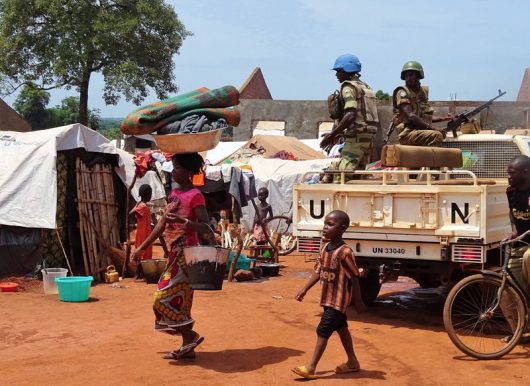
How to Help People in Central African RepublicThe Central African Republic (CAR) is ranked 188 out of 188 countries in the 2016 United Nation’s Human Development Index. Its ranking is determined by markers of income inequality and life expectancy. Its rank speaks largely to the estimated 2.7 million citizens in need of immediate humanitarian assistance, its half a million citizens internally and externally displaced resulting from years of civil conflict and violence and the absence of basic infrastructure.

Bearing in mind CAR’s long road towards social, political and economic recovery, many ask the question: how to help people in Central African Republic? Three agencies worth considering are the United Nations World Food Programme (WFP), United States Agency for International Development (USAID) and International Rescue Committee (IRC).

  1. U.N. World Food Programme
    The WFP strives to strengthen communities within CAR with short-term and long-term approaches. In the short-term, the WFP distributes food for the internally displaced in shelter communities and local populations. In the long-term, the WFP has a quid pro quo approach in that the organization will supply food for the participation of local populations in rebuilding and repairing community infrastructure. It is estimated that through food, cash and vouchers the WFP has reached up to 305,000 people in the CAR, with plans to reach at least 700,000 by the end of this year. Specialized nutrition packages for pregnant women, nursing mothers and young children, as well as management of the U.N. Humanitarian Air Service (UNHAS), also fall under the scope of the WFP.
  2. United States Agency for International Aid
    Earlier in July it was announced that the World Food Programme received a $11 million donation from the USAID in assisting the growing hunger issue in Central African Republic. Reportedly, this aid will help bring food supplies to approximately 550,000 people through CAR. Importantly, the U.S. Fiscal Year 2017 published that in response to CAR a total of $57,580,923 would be made available.
  3. International Rescue Committee
    Since 2006, the IRC has been assisting in Central African Republic by providing emergency funds, rebuilding educational infrastructure for children and working to recover clean water sources for communities. Amongst many other forms of assistance, the IRC has outlined its priorities until 2020 to achieve its short-term and long-term goals in CAR. Currently, its primary goals are to achieve widespread health, safety, education, economic sustainability and helping the displaced regain their decision-making agency. Moreover, its gendered approach to its solutions sets the IRC apart from many agencies, as the IRC has a special focus on underscoring its dedication to gender equality in its relief programs.

These three standout organizations have made great efforts to mitigate the humanitarian crisis in Central African Republic. In asking how to help people in Central African Republic, civil society members can volunteer their time, donate money or help connect businesses that are willing to help with these international agencies. Undoubtedly, pulling CAR out of its long plight is no easy feat, one that requires the attention of the public and private sector. Yet, with these agencies and the CAR’s problems gaining international traction, there shows to be steady progression being made. How to help people in Central African Republic largely relies on a steady influx of international aid and successful mechanism of peacebuilding.

– Sydney Nam

August 15, 2017
https://borgenproject.org/wp-content/uploads/borgen-project-logo.svg 0 0 Borgen Project https://borgenproject.org/wp-content/uploads/borgen-project-logo.svg Borgen Project2017-08-15 07:30:412020-06-12 08:33:58How to Help People in Central African Republic
Nonprofit Organizations and NGOs

Bleach Bottle Lights Bring Light to Poor Countries

Bleach Bottle LightsFor impoverished nations around the world, electricity is a luxury. In 2014, 1.2 billion people in the world lived without it. Many households used kerosene lamps as a source of light, but these were dangerous because of the risk of fire and number of fumes that the lamps emit. Bleach bottle lights may be a viable solution.
A project called Liter of Light has a solution. Its creators discovered that plastic bottles filled with a mixture of water and bleach “refract the light from outdoors into the house, lighting up much like a light bulb.” When placed on the roof of a house the bottle becomes an adequate and inexpensive source of light.

The project began in 2012 in the Philippines with the nonprofit MyShelter Foundation. The bleach bottle lights were an original idea of Alfredo Moser who shared it with the MyShelter Foundation, eventually developing into the Liter of Light project.

The life expectancy of one of these bleach bottle lights is five years. Since the concoction is simply one liter of water and three milliliters of bleach, it is cheap and easy to replace.

By using plastic bottles for the bleach bottle lights, communities reduce the amount of garbage they produce. Per the World Economic Forum, “eight million tons of plastic end up in the ocean each year.” In places like the Philippines where the number of disposed of plastic bottles is one of the highest in the world, the Liter of Light project kills two birds with one stone.

Since the bottle only works with sunlight, Liter of Light came up with a solution for night time. Huffington Post stated, “by slipping a test tube with a small LED light bulb into the bottle, which in turn is hooked up to a mini-solar panel, the bottle can still refract light during the day, but then also be used as a light bulb at night.”

The overall goal for the Liter of Light project is to provide poor countries with a sustainable alternative to electricity in homes with the bleach bottle light. This is crucial because they cannot afford to pay for expensive repairs when the country is struggling financially. Bleach and water are much more accessible in the communities than electrical materials.

As of now, the bleach bottle lights provide a source of light to homes in 15 different countries. The bottles containing the LED light bulbs are the most popular amongst the 850,000 homes that rely on them.

The Liter of Light project won the 2015 Zayed Future Energy Prize and the 2014-2015 World Habitat Award for its work installing bleach bottle lights into hundreds of thousands of homes. The United Nations now uses the technology in its UNHCR camps. Within the next three years, the organization hopes to reach one million people and brighten up the world.

– Mackenzie Fielder

Photo: Liter of Light

August 14, 2017
https://borgenproject.org/wp-content/uploads/borgen-project-logo.svg 0 0 Borgen Project https://borgenproject.org/wp-content/uploads/borgen-project-logo.svg Borgen Project2017-08-14 01:30:302020-06-11 08:18:41Bleach Bottle Lights Bring Light to Poor Countries
Global Poverty, Nonprofit Organizations and NGOs

The Causes of Rural Poverty in Albania

Causes of Rural Poverty in Albania
Southeastern Europe is one of the most beautiful regions in the world. Being a region that has vast amounts of untouched nature, beautiful views and fantastic hiking trails are commonplace in this region. This region is where the small republic of Albania resides.

Although the nation is known as one of the poorest countries in Europe, even more worrisome is that Albania has a huge issue with poverty in some of its rural districts.

This article’s purpose is to indicate some of the causes of poverty in rural Albania and what is currently being done by the government and nongovernmental organizations (NGOs) to deal with this issue.

Moving From A Controlled Economy To A Free Market

One of the causes of rural poverty in Albania stems from its transition from a controlled economy to a free market. This shift took place after gaining independence from the Ottoman empire in 1912. The effects of this change have mostly been felt by the country’s most impoverished people.

Even though the country’s economy has seen massive growth in the past two decades, about 7.5% of the citizens in Albania live under conditions of extreme poverty. The poorest in Albania tend to live in the most rural of regions, particularly the mountainous areas of the country which are almost impossible to grow food in. The lack of an ability to grow food is one of the causes of poverty in rural Albania.

Farming is one of the primary sources of income for this group of people and due to the cities being much more expensive to live in for citizens without a high skill occupation, many have to make ends meet by farming in mountains where small amounts of crops can get yielded from the soil. These two issues in tandem contribute to 19% of children having their growth stunted and 7% of the infants being born with a low birth weight in the country. Thus, citizens having a difficult time attaining a job and children dealing with malnutrition both contribute to the causes of rural poverty in Albania.

Scarcity Of Market Information

Another factor contributing to the causes of rural poverty in Albania relates back to the lack of market information for the farmers in the country’s rural regions. Albania struggles with having a strong enough government to ensure food-handling hygiene and safety standards for the food it produces. This fact makes citizens of the country hesitate from buying food from unregulated farmers in the mountains and only buying food from government-backed companies.

Recently, farmers in the region have asserted that the government should re-establish control of the food distribution, allowing their products to get reintroduced to the market. However, this is a solution that is not possible due to the mass amounts of the public being against the re-establishment of communism into the country.

The Solution

As outlined by the two above problems, the causes of rural poverty in Albania are mainly economic. If the citizens living in rural regions obtained access to better sections of land to grow crops on and understood the implications of trying to compete with established companies, they would have a fighting chance in the emerging Albanian economy.

Thus, the solution to this issue is having the farmers understand the benefits of collaboration and create avenues for small family farms to partner up to create larger organizations, which would have the ability to compete with the established companies and gain a reputation for being compliant with government regulations. Once the rural, family-owned farms joined to create a larger organization, they would have the economic ability to buy high-quality plots of land to grow their food.

The economy of Albania has been on the rise ever since the country gained its independence, even though it still struggles with poverty in its most rural areas. Although the public understands the causes of poverty in rural Albania, the solutions above need to be implemented to allow real change to occur in the region. Once farmers know that partnering up will benefit them, they will have a real shot at competing with the established companies in the area and would thus gain a good reputation for their products. These factors in tandem would allow for the rural regions of Albania to escape the cycle of poverty and catch up with the rest of the country’s economy.

– Nick Beauchamp

Photo: Flickr

August 10, 2017
https://borgenproject.org/wp-content/uploads/borgen-project-logo.svg 0 0 Borgen Project https://borgenproject.org/wp-content/uploads/borgen-project-logo.svg Borgen Project2017-08-10 01:30:562020-07-22 08:32:48The Causes of Rural Poverty in Albania
Food & Hunger, Food Security, Nonprofit Organizations and NGOs

How to Help People in Mexico

Helping People in Mexico
When people think about the country of Mexico, people reflect on some of its cultural features. These include the country’s food, music and clothing style. What people do not know about Mexico is that between the years of 2012 and 2014, the number of individuals living in conditions of poverty has increased by two million.

With this fact in mind, many people ask how to help people in Mexico. Due to the Mexican government spending many of its resources fighting the growing problem of cartels within its borders in conjunction with helping grow its economy, private solutions to poverty in Mexico appear to be much more adequate solutions to this issue.

This article highlights some NGOs that address the problem of how to help people in Mexico. Below are two NGOs that are currently doing this.

Children International

Drug violence and drug trafficking has transformed the cities of Mexico — essentially into war zones — and has taken hold of every section of the country’s state and national politics. The people most affected by the influence of the cartels in Mexico are the nation’s child populations. The NGO, Children International, is helping people in Mexico by focusing on the child populations living in the country’s cities.

Children International is helping people in Mexico by creating community centers that act as safe havens for the kids residing in this region. These centers contain books and computers for educational purposes, and toys to keep them entertained. On top of this, these centers also serve as a hub for child program activities that teach kids they can have a better life, and how to achieve that life.

One way to begin helping people in Mexico is to either donate to this NGO or to do volunteer work with their organization. Although volunteering is the most effective way of helping these people, any donation made makes a great difference.

Freedom From Hunger

Freedom From Hunger is an NGO that is helping people in Mexico by creating programs that aim to reduce the country’s food insecurity issue. Food insecurity gets defined as the inability to meet one’s basic nutritional needs for some or all of the year. On top of having 53% of the country living in poverty, and having 24% of the population living in extreme poverty, many people outside of these two groups struggle with food insecurity.

Freedom From Hunger is partnering up with local organizations in Mexico’s major cities and food banks. This partnership is being done to reach out to the needy in the country and give them access to a better food supply.

On top of this, Freedom From Hunger is helping people in Mexico by creating savings and loan programs for the people living under conditions of poverty. Although the incomes of these groups may be low, the issue of poverty only gets exacerbated when families fall further into debt or make poor financial decisions with what little money they do have.

Between helping the poor in Mexico deal with food insecurity and their economic issues, Freedom From Hunger is making great strides in fighting poverty in Mexico. In their first year, they reached out to 14,000 people in villages and cities where these services are needed. To support this group, and to begin helping the people in Mexico, volunteering one’s time or donating is a great way to start.

Private institutions are not always as efficient at making the substantive change needed to begin eliminating poverty, and at the current moment, the Mexican government is unable to make real change for its people dealing with poverty. With time and commitment, these organizations offer solutions for how to help people in Mexico and can continue to make the change needed in the country.

– Nick Beauchamp

Photo: Flickr

August 10, 2017
https://borgenproject.org/wp-content/uploads/borgen-project-logo.svg 0 0 Kim Thelwell https://borgenproject.org/wp-content/uploads/borgen-project-logo.svg Kim Thelwell2017-08-10 01:30:312020-07-21 08:25:22How to Help People in Mexico
Advocacy, Health, Nonprofit Organizations and NGOs

Increasing Surgical Care for Cleft Conditions

Increasing Surgical Care for Cleft Conditions
One of every 500-750 children worldwide is born with a facial deformity known as a cleft lip or cleft palate. If left untreated, the condition can result in social isolation and serious health concerns, such as malnutrition and infection. There is a clear need for increasing surgical care for cleft conditions.

While cleft conditions can almost always be reversed, many impoverished and/or rural families are unable to access affordable care in order to get their children the necessary medical attention. Operation Smile believes that all patients deserve exceptional surgical care regardless of where they are born or how much money their families make.

Operation Smile has been executing life-saving surgical procedures for children around the world for over 35 years. Their advocacy efforts expounding the importance of increasing surgical care for cleft conditions have touched millions. Consequently, their donor base continues to grow. In the month of July, the organization has plans to execute several medical missions in Ho Chi Minh City, Vietnam; Tame, Columbia and Ambato, Ecuador, to name a few.

Beyond the numbers, Operation Smile prides itself on personable and compassionate care. CEO and founder Dr. Bill Magee asks of his donors, “What if this was your child who needed the surgery?” He notes how this consideration makes people realize that the work he does not only rewarding but absolutely necessary.

Adding to the personal nature of the organization, it focuses on individual stories of patients and their families both before and after the life-altering surgery.

The healing story of Siham, a young girl from Morroco, demonstrates just how difficult overcoming the social obstacles of looking different than your peers can be. Every time she left her house, people tormented her in the streets. After only a few weeks of school, Siham dropped out because of the bullying she had endured. Doctors informed her that surgery was possible, but Siham knew that her family would never be able to afford the travel expenses to reach the hospital, let alone the procedure itself.

Stories like Siham’s touch readers at a personal level and help increase the reach of the organization’s successes.

Powered by its compassionate donors and volunteers, Operation Smile has provided hundreds of thousands of free cleft condition surgeries for children and young adults in developing countries. This care has grown exponentially since its beginning in 1982. One element that makes this organization unique from many other medical nonprofits is that it works within the local community’s health providers and cultural norms rather than independently to provide comfortable care for their patients. Each mission is different. Some require importing medical equipment and others need local expertise.

While the root cause of cleft conditions is not yet clear, Operation Smile and other organizations are researching ways to prevent the deformity. For over 30 years, the nonprofit has grown its donor and volunteer bank exponentially. In addition, it has gained valuable experience in unique areas by teaming up with local medical programs in developing countries.

The success of Operation Smile in increasing surgical care for cleft conditions lies in its sustainable practices. They involve local community volunteers and emphasize the importance of donations to fund the services rather than charging patients. The organization benefits everyone involved and will likely continue to grow.

– Sarah Coiro
Photo: Flickr

August 7, 2017
https://borgenproject.org/wp-content/uploads/borgen-project-logo.svg 0 0 Borgen Project https://borgenproject.org/wp-content/uploads/borgen-project-logo.svg Borgen Project2017-08-07 07:30:122024-05-28 00:15:07Increasing Surgical Care for Cleft Conditions
Activism, Global Poverty, Nonprofit Organizations and NGOs

Decreasing the Poverty Rate in Hong Kong

Hong Kong Poverty RateIn Hong Kong, 1.34 million residents live in poverty. With a poverty rate of 19.7 percent, the region’s people are in need of an economic reform. Fortunately, more entities are discovering the necessity for decreasing the poverty rate in Hong Kong and making plans to alleviate the problem.
In 2014, Hong Kong’s chief executive, Leung Chun-ying, proposed the Low-Income Working Family Allowance program. If a family’s income is at or below 50 percent of Hong Kong’s median income, and the family has at least one employed person, the family can receive up to $130 monthly or more, depending on the number of hours worked. The program is intended to reach 710,000 impoverished residents.

Since 2015, Hong Kong’s government implemented a second poverty alleviation plan. The plan provides Hong Kong’s government with a better understanding of the region’s impoverished areas and their specific situations. Hong Kong’s most impoverished groups and key strategies that could alleviate the poverty rate in Hong Kong are also being studied.

Hong Kong’s government also plans to enhance education and training opportunities, specifically jobs that facilitate mobility for the region’s youth. More financial, and other, assistance will be provided to Hong Kong’s poor families. The educational expenses for children within those families will also be considered.

The Old Age Living Allowance (OALA) is another program intended to alleviate poverty–specifically among Hong Kong’s elderly and impoverished communities. The OALA alleviated more than 43 million elderly Hong Kong residents in poverty in August 2016. Seeing this result has given Hong Kong’s government the goal to make similar programs that could help reduce the poverty rate in Hong Kong.

Groups and individuals outside of the government have also been doing their part to reduce the poverty rate in Hong Kong. Ho Hei-wah is a social activist who spent decades helping Hong Kong’s poor and continues to do so. Presently the director of the nonprofit Society for Community Organization (SCO), Hei-wah provides services to Hong Kong’s poor and other neglected communities. To Hong Kong’s people, Hei-wah is considered a champion and he plans to tackle future challenges facing the region’s poor.

In 2016, Habitat for Humanity found that many impoverished Hong Kong residents are forced to live in hazardous industrial homes, typically called “urban slums.” The organization is urging the government, charities and the public to work together in tackling Hong Kong’s housing problems. Habitat for Humanity plans for 15 million Hong Kong residents to have safe housing by 2020.

Decreasing the poverty rate in Hong Kong has become a main goal for many people. While some plans are still in progress, the mission to better the lives of Hong Kong’s impoverished communities remains an important priority. For now, Hong Kong’s poor are given hope that a better quality of life is soon to come.

– Rhondjé Singh Tanwar

August 6, 2017
https://borgenproject.org/wp-content/uploads/borgen-project-logo.svg 0 0 Borgen Project https://borgenproject.org/wp-content/uploads/borgen-project-logo.svg Borgen Project2017-08-06 07:30:372024-05-28 00:15:06Decreasing the Poverty Rate in Hong Kong
Global Poverty, Nonprofit Organizations and NGOs, Technology

Blockchain Technology and Poverty Disruption

Blockchain Technology and PovertySince its conception, blockchain technology has become widely synonymous with the cryptocurrency Bitcoin. However, the utility of blockchain comes not necessarily from its manifestation in online currency but the nature of its security and accessibility. These two features are what make blockchain technology and poverty so interlinked. It holds promise as a secure and equalizing tool for the world’s poorest and most rural.

The inner mechanisms and mathematical coding of blockchain are highly complex. The principle is simple. It is a public ledger, stored and spread across multiple networks in countries around the world, making an impermeable information network. The decentralized nature of the data stored on blockchain allows for its application across all sectors without risk of disruption.

Significant to alleviating poverty, blockchain technology’s secure nature allows for it to be used as a financial services platform. In both urban and rural areas of developing countries, banks can be hard to come by, expensive to set up an account in and somewhat unreliable.

Cryptocurrency services can be scaled up and down to be incorporated into everything from the most basic phones to the world’s most sophisticated smartphones. This cryptographic technology would allow its users to send money directly to other individuals without a middleman or “trusted third parties” which take a percentage as a fee for its services and can be largely inaccessible.

Estimates suggest that by 2020 over 70 percent of the world will have access to smartphones. With financial technologies such as blockchain services, there is a real chance for those in rural or economically unstable countries to secure themselves without huge risk. Blockchain technology and poverty could have a progressive and important relationship.

By using cryptocurrencies or internet-money, individuals in financially insecure nations can take steps to avoid financial vulnerabilities, such as fraud or hyperinflation. M-PESA, a mobile money-transfer and micro-loan financing company, operates all across Africa and in parts of central Asia. Numbers from early 2017 suggest that M-PESA’s user base allowed approximately 186,000 families, two percent of Kenyan households, move from poverty into sustainable working conditions.

Blockchain’s financial services allow for mass participation in the most remote parts of the world. A wide range of business owners can build financial credibility. Currently, Chinese pharmaceutical companies receive assistance from Yijan, a blockchain created by IBM and Hejia, a Chinese supply management company.

Significant and notable players on the international landscape are quickly getting involved in blockchain techniques. The Bill and Melinda Gates Foundation’s Level One Project aims to use digital financial services to bring the impoverished into the formal economic ecosystem, providing them with the tools necessary for financial mobility.

In early 2017, the United Nation’s World Food Programme (WFP) incorporated blockchain technology and cash-based transfers into its humanitarian aid outreach in Pakistan. By using mobile-transfers, the WFP ensured that those in need were receiving financial aid without the risk of the disruption possible with cash-based aid. The technology-based transfers also allowed for the WFP to streamline its tracking system. Since the success in Pakistan, the WFP has chosen to expand blockchain to other humanitarian efforts.

These are a few of blockchain’s many applications. Its reach and potential as a tool for poverty alleviation are great, especially if utilized jointly by governments and NGOs. Although it may be no panacea, the incorporation of blockchain technology may be a significant macro approach in solving the systematic issue of poverty. Blockchain technology and poverty disruption may be one of the most exciting aspects of the new digital age.

– Sydney Nam

August 6, 2017
https://borgenproject.org/wp-content/uploads/borgen-project-logo.svg 0 0 Borgen Project https://borgenproject.org/wp-content/uploads/borgen-project-logo.svg Borgen Project2017-08-06 07:30:022020-06-08 08:32:09Blockchain Technology and Poverty Disruption
Page 37 of 60«‹3536373839›»

Get Smarter

  • Global Poverty 101
  • Global Poverty… The Good News
  • Global Poverty & U.S. Jobs
  • Global Poverty and National Security
  • Innovative Solutions to Poverty
  • Global Poverty & Aid FAQ’s
Search Search

Take Action

  • Call Congress
  • Email Congress
  • Donate
  • 30 Ways to Help
  • Volunteer Ops
  • Internships
  • Courses & Certificates
  • The Podcast
Borgen Project

“The Borgen Project is an incredible nonprofit organization that is addressing poverty and hunger and working towards ending them.”

-The Huffington Post

Inside The Borgen Project

  • Contact
  • About
  • Financials
  • President
  • Board of Directors
  • Board of Advisors

International Links

  • UK Email Parliament
  • UK Donate
  • Canada Email Parliament

Get Smarter

  • Global Poverty 101
  • Global Poverty… The Good News
  • Global Poverty & U.S. Jobs
  • Global Poverty and National Security
  • Innovative Solutions to Poverty
  • Global Poverty & Aid FAQ’s

Ways to Help

  • Call Congress
  • Email Congress
  • Donate
  • 30 Ways to Help
  • Volunteer Ops
  • Internships
  • Courses & Certificates
  • The Podcast
Scroll to top Scroll to top Scroll to top