• Link to X
  • Link to Facebook
  • Link to Instagram
  • Link to TikTok
  • Link to Youtube
  • About
    • About Us
      • President
      • Board of Directors
      • Board of Advisors
      • Financials
      • Our Methodology
      • Success Tracker
      • Contact
  • Act Now
    • 30 Ways to Help
      • Email Congress
      • Call Congress
      • Volunteer
      • Courses & Certificates
      • Be a Donor
    • Internships
      • In-Office Internships
      • Remote Internships
    • Legislation
      • Politics 101
  • The Blog
  • The Podcast
  • Magazine
  • Donate
  • Click to open the search input field Click to open the search input field Search
  • Menu Menu

Archive for category: Hunger

Hunger, Nonprofit Organizations and NGOs, Technology

“Chowberry” App Reduces Food Waste

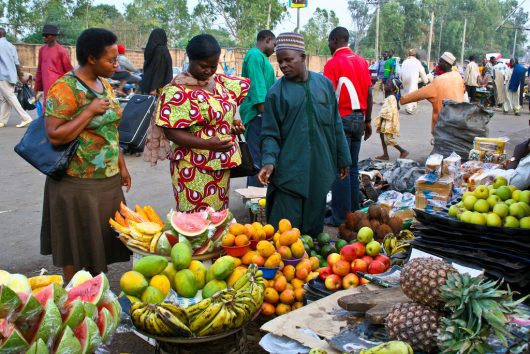
ChowberryChowberry is an app combating hunger and food waste in Nigeria. The app was invented by Nigerian software developer Oscar Ekponimo. According to the Nigerian Tribune, Ekponimo has partnered with the program Project FoodAccess to connect impoverished Nigerians and non-governmental organizations with cheap food.
Chowberry works through several steps. The first step involves local grocery stores. As the store’s food products near their expiration dates, the stores begins reducing the food prices each day. The app alerts Nigerians and food organizations about the lowered food prices. Project FoodAccess specifically matches the food with families they register need it the most. These include families with young mothers and female breadwinners.

Chowberry helps to alleviate the problem of hunger, which affects Africa as a whole and Nigeria in particular. According to the United Nations Food and Agriculture Organization, 223 million people in sub-Saharan Africa were hungry or malnourished from 2014 to 2016. Nigeria itself has been declared unable to feed its entire population by the World Food Programme.

Ekponimo himself has a personal experience with hunger. After his father had a stroke and could not work, his family could not afford to feed themselves. Chowberry has given Ekponimo the opportunity to help others going through similar situations.

The app has had a significant impact within different areas in Nigeria. The three-month trial run has fed 200 families and 150 orphans. Many Nigerians have requested that the program expand to more communities.

Chowberry also has assisted the 20 participating grocery stores. Food that would have been thrown out before now gets sold to families in need at a profit to the store. The helpful software has gained international recognition as well, winning the Rolex Award of Enterprise in 2016.

Ekponimo hopes that he can expand Chowberry to feed the hungry in other African countries. With continued innovation from people like Ekponimo, technology like Chowberry could be used to help put an end to hunger in Africa and around the globe.

– Cortney Rowe

Photo: Flickr

October 7, 2017
https://borgenproject.org/wp-content/uploads/borgen-project-logo.svg 0 0 Borgen Project https://borgenproject.org/wp-content/uploads/borgen-project-logo.svg Borgen Project2017-10-07 01:30:132020-07-23 09:47:20“Chowberry” App Reduces Food Waste
Global Poverty, Hunger, Refugees

Quality of Life Uncertain for Refugees in Kenya

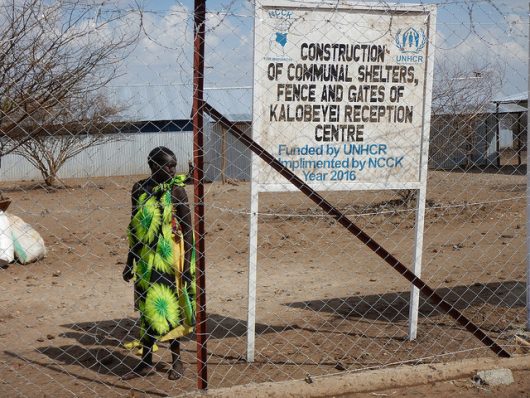
Refugees in KenyaKalobeyei is a town located in the northwestern part of Kenya that was built by the U.N. refugee agency (UNHCR) along with the local government of Turkana county. The town was designed as a location where refugees could become integrated with the local community and where this integration would benefit shared services and markets, thereby reducing the cost for Western aid donors. Unfortunately, this has not exactly worked out as planned for refugees in Kenya.
There have been quite a few issues that have risen since the town’s creation. The most prominent of these issues is that Kalobeyei was established just as South Sudan’s civil war greatly intensified, causing many refugees in Kenya to arrive with hardly anything more than the clothes on their backs, as well as without the proper resources that would help them make an attempt at a new life.

The World Food Programme provides $14 per month as a cash allowance to each refugee, which is supposed to cover up to 80 percent of an individual’s needs in the town. This may not be enough to live off of due to the current conditions these refugees are left in after the civil war, especially since Kalobeyei is hosting nearly 40,000 refugees, including individuals from places such as South Sudan, Ethiopia, Uganda, the Democratic Republic of Congo and Burundi.

There have also been many complaints from the refugees in Kenya who are currently residing in Kalobeyei. Refugees say that little to nothing that they were promised has been offered in the town. They have found themselves in an isolated camp where both food and water are in short supply and that residents are at the mercy of thievery that goes on within Kalobeyei. One resident of the town—an Ethiopian refugee—said, “When they brought us here, we were told that the place would be like a community village with many development projects, a school, clinic, market and almost everything close by,” but there is close to nothing within the settlement that is within walking distance.

When the UNHCR’s office in Kenya heard of this story, communications director Yvonne Ndege had a drastically different description of what life was like residents of Kalobeyei saying that the town was in fact not built in a remote area and had markets, water tanks and primary schools on-site, as well as stating that “there is no heightened security situation or security threat at Kalobeyei or Kakuma.” She went on to explain that refugees had the option to visit the camp before relocating and that perhaps they “may have had different expectations,” despite having viewed Kalobeyei in advance.

Whatever the case may be, it is wise to be empathetic and understanding toward refugees in Kenya when it comes to these situations—having to relocate yourself and your family is never easy, and struggling in a new environment does not make anything less difficult. Hopefully, the UNHCR will empathize and refugees in Kenya will be able to resolve and overcome the issues with Kalobeyei, for the town is meant to only do good.

– Sara Venusti

Photo: Flickr

October 4, 2017
https://borgenproject.org/wp-content/uploads/borgen-project-logo.svg 0 0 Kim Thelwell https://borgenproject.org/wp-content/uploads/borgen-project-logo.svg Kim Thelwell2017-10-04 07:30:212020-07-22 07:49:55Quality of Life Uncertain for Refugees in Kenya
Global Poverty, Hunger

The Success of the Pantawid Pamilyang Pilipino Program

Pantawid

The Pantawid Pamilyang Pilipino Program (Bridging Program for the Filipino Family) is a national initiative that serves as the Philippine government’s flagship program in its campaign against poverty and hunger in the country. The program is modeled after the conditional cash transfer (CCT) programs implemented in Brazil (Bolsa Familia) and Mexico (Oportunidades), a model which provides aid to poor families by supplementing low household incomes.

Under the program, household beneficiaries receive 500 pesos ($10 USD) per month and 300 pesos ($5 USD) per child every month for the duration of the academic year. For households with three children, cash grants can amount to as much as 15,000 pesos ($300 USD) annually.

Household eligibility is determined through the National Household Targeting System for Poverty Reduction, which locates the poorest municipalities in the country. Households in municipalities with a poverty incidence rate higher than 50 percent are automatically put on a list for eligibility assessment, while other households who may be eligible can apply for assessment. Local representatives from the Department of Social Welfare and Development assess the economic situation of the household by obtaining information on home facilities and assets, the education and livelihood of the household head and the household’s income.

To stay eligible for the transfer payments, households must spend a portion of these grants on pre-natal and post-natal care for pregnant women, regular checkups and vaccines for children aged 0-5 and bi-annual deworming pills for children aged 6-14. They must also have an 85 percent monthly attendance rate for children subsidized by the program and attend family development sessions, which involve discussions on responsible parenting and health.

The program has done wonders for the poor in the country, especially for households from the country’s 16 poorest provinces. In these provinces, most of which are in the southern island group of Mindanao, 37 percent of families were reported to be hungry due to insufficient income or unemployment. Most of the areas in Mindanao are also marked by civil unrest, where almost no opportunity for stable employment is available. In the Autonomous Region of Muslim Mindanao (ARMM), half of the population lives below the country’s poverty line, earning just over 30 pesos ($.60 USD) a day. 58 percent of households were reported to be unable to access or acquire food.

With these rates of poverty and hunger incidence, the former Aquino administration made it a point to make the poorest provinces its priority areas for rapid development and investment. As of August 2015, a vast number of Pantawid beneficiaries are from ARMM, with 448,757 people enrolled in the region (around 10 percent of active beneficiaries). The rest of Mindanao has around one million beneficiaries, while 20 of the 25 top Pantawid beneficiary provinces were on Aquino’s list of priority areas.

Almost a decade after the program started, the Pantawid has grown from a startup welfare project to the third largest CCT program globally, with 4,353,597 active beneficiaries. It has done well in its effort to diminish poverty rates in the Philippines. The 2013 Annual Poverty Indicator Survey conducted by the Philippine Statistics Authority revealed that the national poverty rate of 25 percent could have increased by 2 percent without the program, while the extreme poverty rate would have risen 1.4 percent without the Pantawid’s benefits.

The same report reveals that the poverty gap index—the gap between incomes of poor families and the national average—fell by 61 centavos per peso cash grant just five years after the program’s onset.

Several domestic and international organizations have expressed their praise of the Pantawid. A study by Dr. Anticeto Orbeta and Dr. Vicente Paqueo of the Philippine Institute for Development Studies suggests that besides the benefits of additional household income, the Pantawid has actually increased the desire for work in household heads and has increased school participation and performance in children aged 5-14.

Such is the trust of the World Bank in the long-term success of the Pantawid that in early 2016, it bestowed upon the Philippine government a 21-billion-peso ($43 million USD) loan to be allotted to the program.

Incumbent president Rodrigo Duterte, a staunch enemy of his predecessor Aquino, has reinforced his commitment to the program. During his presidential campaign last year, Duterte promised to give one sack of rice to each Pantawid beneficiary household. His government is now working towards giving 600 pesos worth of rice allowances on top of the original cash grant allotment.

The Pantawid Pamilyang Pilipino Program is the first of its kind. Many anti-poverty initiatives have failed to produce the desired results, and almost none have united leaders from all political fronts to root for its success. Despite the great divisiveness that has characterized contemporary Philippine politics, all agree that the eradication of poverty and hunger is something to work towards, and that the campaign to do so should be a top priority.

– Bella Suansing

Photo: Flickr

October 1, 2017
https://borgenproject.org/wp-content/uploads/borgen-project-logo.svg 0 0 Kim Thelwell https://borgenproject.org/wp-content/uploads/borgen-project-logo.svg Kim Thelwell2017-10-01 07:30:552020-07-23 18:00:24The Success of the Pantawid Pamilyang Pilipino Program
Global Poverty, Hunger

Hunger in Montserrat

Hunger in Montserrat

Located in the Lesser Antilles region of the Caribbean Sea, Montserrat is a tiny British overseas territory with a population of less than 6,000. After a series of volcanic eruptions in the late 1990s, the island became more difficult to reach. Even today, it is relatively isolated compared to other tourist-oriented Caribbean islands, but there are a growing number of tourists coming to see the “Caribbean Pompeii”.

The economy of Montserrat today is based mostly on service and construction due to the impact of both Hurricane Hugo and the severe volcanic eruptions that began in July 1995. The city of Plymouth was covered with ashes and boulders, and even though it is not completely reconstructed, it is still officially the capital of the island. Approximately two-thirds of the inhabitants fled the island to escape hunger and general insecurity in Plymouth area. Some of them still live in poor housing, struggling with their economic situation after the loss of their homes, incomes and family members.

The economic downturn after the hurricane increased unemployment, reduced working hours and increased pressure on household budgets. There is widespread criticism of the government’s performance, ranging from the failure to control prices or reduce taxes to the perception that administration only takes care of their own employees.

A 2007 study of poverty and hardship called “Montserrat Survey of Living Conditions” (MSLC) and research undertaken by the World Bank showed that economic factors are the main causes of poverty in Montserrat. According to the International Comparisons of Poverty table, 36 percent of the population is poor and 34 percent are food insecure. Children are the most vulnerable in general, and make up a third of the population affected by hunger in Montserrat.

Hunger in Montserrat is caused by high food prices, low wages and lack of employment opportunities. Many families are struggling to buy food every day and educate their children. This stress is made worse by high rates of criminal behavior, domestic violence and drug abuse. Because of the situation, many inhabitants have left the island to find work or to join their families in Britain.

Even though there are no opportunities for rapid economic growth in Montserrat, some government initiatives in the past few years, like the establishment of the Montserrat Development Corporation, promise to be beneficial for everyone.

The Department of Agriculture has several potential projects in the works, and there are plans to increase the number of small companies. The Ministry of Health and Wealth offers a number of services to the poor and vulnerable, including social assistance in cash and counseling for the poor.

Even though the general number of people affected by hunger in Montserrat remains high, some overall progress has been made in lowering the rate of extreme poverty. Most households have access to basic services and women are being empowered with educational programs. The government elected in 2014 is now investing in geothermal energy, tourism and sand mining. In an interview with The Guardian, premier Donaldson Romero declared that the “long, hopeless period” that started after the eruptions is finally over.

– Edita Jakupovic

Photo: Flickr

September 27, 2017
https://borgenproject.org/wp-content/uploads/borgen-project-logo.svg 0 0 Borgen Project https://borgenproject.org/wp-content/uploads/borgen-project-logo.svg Borgen Project2017-09-27 01:30:562020-07-16 17:52:00Hunger in Montserrat
Global Poverty, Hunger

7 Ways the FAO is Tackling Hunger in Palau

Hunger in PalauFor 18 years, the Republic of Palau, an island country in Micronesia, has worked with the Food and Agricultural Organization (FAO) to improve the lives of families living below the poverty line. Together, the government and the FAO are combatting hunger in Palau in the following ways.

7 Ways the FAO is Tackling Hunger in Palau

Palau first partnered with the FAO in 1999. The cooperation between the country and the FAO to reduce hunger has helped increase the production and productivity of farming systems and contributes primarily to supporting local food production.

    1. Country Programming Framework- The FAO (CPF) for Palau focuses on improving food security and developing sustainable agricultural and fisheries systems.  It emphasizes empowering the farmers, promoting agritourism and building resilience to climate change. 
    2. Local Crops- The FAO focuses on cultivating traditional crops like taro, cassava, sweet potato, banana and coconut to support local food production. Most of the harvest feeds the families and the country’s small commercial sub-sector in local markets and farms.
    3. Fishery Systems- The FAO is promoting the development of fishery systems through the Fish Aggregating Device program. It provides training on fishery techniques and safety. It also helps research yellow tuna fishing and thus helps strengthen local communities. 
    4. Training- The FAO regularly holds training events in Palau to target agriculture and domestic farming practices. Participants receive training in fundamental farm financial analysis and recordkeeping. They are also trained to be able to advise smaller local farmers in terms of marketing. 
    5. Agrotouristry- The FAO incorporates traditional agricultural practices with tourism and promotes local food heritage. This helps preserve the cultural traditions and improve the economic conditions of the local farmers. 
    6. Formation of Farmers Association– The FAO has helped establish the Farmers’ Association, which has increased cooperation among the local farmers. It also facilitates partnerships between the farmers and other stakeholders and creates new opportunities for the farmers. 
    7. Climate Resilience- The FAO promotes a sustainable land use system- agroforestry, in Palau. The initiative aims to restore degraded lands and improve soil quality.  Hence, it builds climate resilience in the community. 

Through its partnership with the FAO, the government and local agricultural workers are making strides towards improving livelihoods in Palau. The progress achieved so far has led to enhanced food security in the country, contributing to reduced hunger in Palau. 

– Olivia Cyr and Maria Waleed

Photo: Unsplash

Updated: July 10, 2024

September 18, 2017
https://borgenproject.org/wp-content/uploads/borgen-project-logo.svg 0 0 Borgen Project https://borgenproject.org/wp-content/uploads/borgen-project-logo.svg Borgen Project2017-09-18 01:30:422025-01-08 23:02:577 Ways the FAO is Tackling Hunger in Palau
Global Poverty, Hunger

Global Need Through Graphic Novels

Global Need Through Graphic NovelsThe World Food Program has teamed up with comic writer Joshua Dysert, artist Alberto Ponticelli, colorist Pat Masioni and letterist Thomas Mauer to illustrate global need through graphic novels.

Their first collaboration was “Living Level-3: Iraq” in February 2016, which followed Khaled Bushar, an Iraqi refugee, as he tries to survive in the country during the rise of the Islamic State. In 2017, their second graphic novel, “Living Level-3: South Sudan”, follows members of a Sudanese family who have to leave their home for a more dangerous place because of famine. Both graphic novels also revolve around Leila Helal, an aid worker for the WFP.

Before working on either graphic novel, Dysert spent time in both countries, classified by the United Nations as level 3 emergencies due to extreme humanitarian crises, interviewing the citizens and studying the area. He then worked with the rest of the creative team to devise graphic novels that present an honest and compelling picture of the situation in each country.

One of the benefits of illustrating global need through graphic novels is the ability to create an engaging story while informing the public about the country’s humanitarian situation. In an interview with Humanosphere, Dysert discussed how he wanted to present facts about what was going on in Iraq, but not in a dry medium like many documentaries. Graphic novels provide him with that opportunity, using illustrations and storytelling.

Another opportunity that results from highlighting global need through graphic novels is the scope that graphic novels can cover compared to other mediums. WFP’s head of television communications Jonathan Dumont and head of graphic design and publishing Cristina Ascone have talked about how graphic novels provide an overall picture of everything involved with the crisis, from the citizens to the governments to the aid organizations and beyond. Details like these are harder to notice when looking at a photograph or watching a short video.

Illustrating global need through graphic novels also provides more opportunities for empathy. As discussed by Mashable, the readers get to know the characters, their personalities and their relationships. Therefore, the readers are more invested in what happens to those characters when the hardships of living in their communities occur. They wish for a better life for those characters and praise the efforts of the aid organizations. A final benefit that comes from describing global aid through graphic novels is that it promotes global advocacy to a new audience.

WFP is already working on a third “Living Level-3” graphic novel. Their dedication to explaining global need through graphic novels will hopefully spark an interest in global issues in others.

– Cortney Rowe
Photo: Flickr

September 16, 2017
https://borgenproject.org/wp-content/uploads/borgen-project-logo.svg 0 0 Borgen Project https://borgenproject.org/wp-content/uploads/borgen-project-logo.svg Borgen Project2017-09-16 01:30:012024-05-28 00:16:24Global Need Through Graphic Novels
Global Poverty, Hunger

President Michel Addresses Hunger in Seychelles

Hunger in SeychellesJames A. Michel, the former president of Seychelles, attended a General Assembly for the United Nations in September of 2008 to discuss hunger in Seychelles as one of the enemies the Seychellois face daily.

According to the U.N., he also addressed the poverty and inequality of the global trading system that causes hunger in Seychelles. Alluding to the morality of the citizens in the Assembly Hall, Michel set clear commitments to resolve the climate, energy and food crises, among others.

The U.N. also clarified that his concepts suggest that industrialized countries should remove subsidies given to their farmers and provide the global South with urgently-needed resources to improve its infrastructure.

With about 90,000 inhabitants off the eastern coast of Africa and northeast of Madagascar, the Republic of Seychelles has the smallest population of all African countries.

While it is a naturalist’s playground and widely celebrated for its ecotourism on the mainland, inhabitants continue to look to global organizations such as Global Citizen, Save The Children, UNICEF and UNDP for support related to hunger in Seychelles. Part of this global support was the founding of a Global Island Partnership to get all small islands and nations with islands to give part of their natural resources to conservation sustainability.

The Food and Agriculture Organization reported that the islands live with several inconvenient circumstances, such as expensive food from remote markets. Another issue is the spread of aggressive creepers that have carried destructive diseases to some of the major forest lands during the last 40 years. One factor that limits agricultural production is the current forest laws that ban development on about half of the country’s land. This ultimately results in more hunger in Seychelles.

“Of the total value of tuna – our ‘blue gold’ – caught and transhipped in our waters by foreign fishing vessels every year, the Seychelles receives only 7 percent in revenue, comprising license and transhipment fees. This to my mind is unacceptable,” Michel announced to the Assembly. He suggested a restored United Nations to lessen foreign manipulation by investors for the country’s natural resources.

Correspondingly, the FAO monitored progress towards reducing hunger in Seychelles. The data displayed that of the total population from 2006-2008, over 83,000 people were undernourished.

One must remember that the slightest efforts have an impact on the mission to end world hunger. People should do what they can to help advocate for and support the less fortunate, as these affairs have the possibility to have a constructive outcome communally.

The United Nation’s Sustainable Development Goal (SDG) aims to give all people, especially those in vulnerable situations, access to safe, nutritious and sufficient food all year round. They also intend to double the agricultural productivity and the incomes of small-scale food producers by the year 2030.

To get involved, consider occupying your time collaboratively by joining the global conversation using the hashtag #sey4sdg in support of the SDG 2: NO HUNGER.

– Jalil Perry

Photo: Flickr

September 14, 2017
https://borgenproject.org/wp-content/uploads/borgen-project-logo.svg 0 0 Borgen Project https://borgenproject.org/wp-content/uploads/borgen-project-logo.svg Borgen Project2017-09-14 01:30:202020-07-09 07:54:30President Michel Addresses Hunger in Seychelles
Developing Countries, Global Poverty, Hunger

Is Hunger in Macau a Problem?

Hunger in MacauColonized by the Portuguese in the 16th century, Macau was the first European settlement in the Far East. Located in Eastern Asia, Macau borders the South China Sea and China. Although noted as a wealthy country, is hunger in Macau a problem?

Known as the “Las Vegas of the East” and with a GDP per capita more than double that of the United Kingdom, Macau is listed as the world’s third wealthiest city behind Luxembourg and Qatar, according to the International Monetary Fund.

With a population around 600,000 people, Macau’s life expectancy is at 84.5 years. For the male population, it is noted that 15.8 percent were overweight, while 18.8 percent were obese. Significantly more men than women aged 25-44 years were overweight and obese in Macau. Although Asia is noted as the continent with the most hunger issues, hunger in Macau is seen as a country with a small problem of malnutrition, but a bigger problem of overeating.

Local government statistics say that only 2.3 percent of Macau’s population lives in poverty, but the percentage is based on income and does not take into account the high cost of living. With the cost of living rising and wages staying the same, the rising costs have forced some to leave the country to seek a cheaper life in China.

While Macau’s poor are ignored and suffer, big businesses flourish. Instead of building houses and helping the poor, the government allocates more money to the gambling business. It is estimated that 10 percent of the population lives in poverty, with 7 percent struggling to fulfill basic needs such as food.

According to the Macau Daily Times, Macau Oxfam does not simply offer food and other resources to those in need, it also provides them with seeds and teaches them how to get out of the poverty cycle.

Although the country has yet to take action in recognizing hunger in Macau and helping their own, it has formed the organization Macau Famine. This includes a series of educational and fundraising activities based on the year’s theme. Generous donations are used to support World Vision’s work in Asian countries by providing health and nutrition assistance for children and families.

– Stefanie Podosek

September 14, 2017
https://borgenproject.org/wp-content/uploads/borgen-project-logo.svg 0 0 Borgen Project https://borgenproject.org/wp-content/uploads/borgen-project-logo.svg Borgen Project2017-09-14 01:30:002024-05-28 00:16:22Is Hunger in Macau a Problem?
Global Poverty, Hunger

Hunger in Gibraltar No Longer a Problem

Hunger in GibraltarTwenty-first-century Gibraltar is drastically different from what it was just thirty years ago. According to the CIA’s World Fact Book, the self-sufficient British Overseas Territory benefits from an extensive shipping trade, offshore banking, its position as an international conference center and tourism, among many other economic drivers. Low tax rates have also attracted plentiful foreign investment, driving British military presence to decrease to seven percent from the original 60 percent in the mid-1980s and hunger in Gibraltar to near dissolution.

Although no data exists to date for the percentage of Gibraltar’s 34,408 citizen population living below the international poverty line, the territory’s unemployment rate was listed as one percent in 2016, suggesting that Gibraltar has come a long way since the 19th century, when malnutrition, disease and economic instability were widespread. With improvements in the economy, poverty and hunger in Gibraltar have naturally become less and less concerning.

Gibraltar is currently a member of the European Union as a Special State territory, joining the European Economic Community under the United Kingdom in 1973. Despite its membership, Gibraltar is not subject to the same taxation requirements as other members. As a result, the territory has no capital gains tax, wealth tax, sales tax or value added tax. Non-resident businesses do not pay income tax unless the sources of this income are Gibraltar proper, and there is no tax on capital income. This plethora of “tax-free” conditions has made international trade a large player in the Gibraltarian economy, as non-resident companies can take advantage of such regimes to reduce taxation.

With recent Brexit developments, however, a debate over Gibraltar’s continued status as a member of the EU has arisen. Over 96 percent of the territory’s population voted to remain in a referendum held in June 2016 on the issue of continued EU membership. Since the referendum, Spain has offered a plan to keep Gibraltar in the EU on the condition that Madrid shares sovereignty over Gibraltar with London. Gibraltarian citizens overwhelmingly rejected the proposal.

Gibraltar currently benefits from the tourism industry and trade with Spain through its membership in the EU. Not only would leaving the EU mean leaving the European common market, a risky move for an extremely dependent territory like Gibraltar, but Spain’s economy would suffer as well. In 2007 alone, Gibraltar imported more than £174 million of goods and services from Spain, excluding petroleum imports, and enabled both Spanish and Gibraltarian frontier workers to earn £82.8 million from within the economy of Gibraltar.

On the surface poverty and hunger in Gibraltar may no longer be major issues of concern, but looming economic policy decisions could drastically change and shape the future of the territory.

– Katherine Wang

September 12, 2017
https://borgenproject.org/wp-content/uploads/borgen-project-logo.svg 0 0 Borgen Project https://borgenproject.org/wp-content/uploads/borgen-project-logo.svg Borgen Project2017-09-12 07:30:172024-05-28 00:16:15Hunger in Gibraltar No Longer a Problem
Global Poverty, Hunger

Hunger in The Czech Republic

Hunger in The Czech RepublicThe Czech Republic is in Central Europe between Germany, Poland, Austria and Slovakia. After World War I, the Czechs and the Slovaks of the former Austro-Hungarian Empire came together and formed Czechoslovakia. A political revolution caused the nation to split into the Czech Republic and Slovakia on January 1, 1993.

The country has since opened up to free market capitalism and has a parliamentary republic. These factors have contributed to only one in ten Czechs living below the poverty line when last measured in 2016. The Czech Republic is among the countries in the EU with the lowest rate of poverty, which has allowed hunger in the Czech Republic to be almost non-existent.

The Effects Of Hunger For Czechs
Hunger in the Czech Republic is not a primary concern for the country’s government due to its .48 percent malnutrition rate. This rate means that .48 people out of every 100,000 in the Czech Republic will die of hunger, making it one of the least hungry countries in the world.

When UNICEF last did a study of hunger in the Czech Republic, it found that hunger was not an issue that was affecting many in the nation. Currently, only two percent of Czechs under the age of five suffer from stunted growth caused by malnutrition. On top of this, only one percent of Czechs under the age of five suffer from being underweight due to malnutrition.

Babies do not suffer from hunger in the Czech Republic due to the abundance of food in the nation. When last measured, only eight percent of babies were born with a low birth weight and the majority of babies born underweight quickly grew to a healthy weight.

The Takeaway
The shift from a socialist government to a government that practices free market capitalism alongside its parliamentary republic have allowed hunger in the Czech Republic to be non-existent. For the one in ten citizens in the nation who are impoverished, social welfare programs ensure these people get adequately fed. Overall, hunger in the Czech Republic is almost a non-issue.

– Nick Beauchamp

Photo: Flickr

September 11, 2017
https://borgenproject.org/wp-content/uploads/borgen-project-logo.svg 0 0 Borgen Project https://borgenproject.org/wp-content/uploads/borgen-project-logo.svg Borgen Project2017-09-11 01:30:302024-05-28 00:02:12Hunger in The Czech Republic
Page 47 of 71«‹4546474849›»

Get Smarter

  • Global Poverty 101
  • Global Poverty… The Good News
  • Global Poverty & U.S. Jobs
  • Global Poverty and National Security
  • Innovative Solutions to Poverty
  • Global Poverty & Aid FAQ’s
Search Search

Take Action

  • Call Congress
  • Email Congress
  • Donate
  • 30 Ways to Help
  • Volunteer Ops
  • Internships
  • Courses & Certificates
  • The Podcast
Borgen Project

“The Borgen Project is an incredible nonprofit organization that is addressing poverty and hunger and working towards ending them.”

-The Huffington Post

Inside The Borgen Project

  • Contact
  • About
  • Financials
  • President
  • Board of Directors
  • Board of Advisors

International Links

  • UK Email Parliament
  • UK Donate
  • Canada Email Parliament

Get Smarter

  • Global Poverty 101
  • Global Poverty… The Good News
  • Global Poverty & U.S. Jobs
  • Global Poverty and National Security
  • Innovative Solutions to Poverty
  • Global Poverty & Aid FAQ’s

Ways to Help

  • Call Congress
  • Email Congress
  • Donate
  • 30 Ways to Help
  • Volunteer Ops
  • Internships
  • Courses & Certificates
  • The Podcast
Scroll to top Scroll to top Scroll to top