• Link to X
  • Link to Facebook
  • Link to Instagram
  • Link to TikTok
  • Link to Youtube
  • About
    • About Us
      • President
      • Board of Directors
      • Board of Advisors
      • Financials
      • Our Methodology
      • Success Tracker
      • Contact
  • Act Now
    • 30 Ways to Help
      • Email Congress
      • Call Congress
      • Volunteer
      • Courses & Certificates
      • Be a Donor
    • Internships
      • In-Office Internships
      • Remote Internships
    • Legislation
      • Politics 101
  • The Blog
  • The Podcast
  • Magazine
  • Donate
  • Click to open the search input field Click to open the search input field Search
  • Menu Menu

Archive for category: Hunger

Global Poverty, Hunger

Business Ideas to Help Alleviate Global Poverty

Sixteen entrepreneurs had the chance to present their companies’ plans at the United States Institute of Peace this past month. These entrepreneurs from all around the globe have developed business ideas to help alleviate global poverty and meet the U.N’s Sustainable Development Goals. They had the opportunity to pitch these plans at the Unreasonable Goals Global Event Summit, an annual event hosted by the private holding company Unreasonable Group in Washington, D.C.
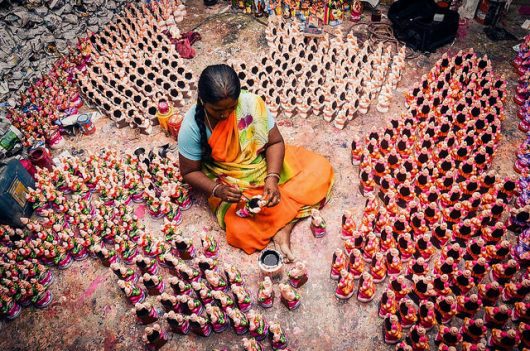
The Unreasonable Group brings together for-profit enterprises seeking social change and connects investors to their initiatives. The Group’s main goals in this endeavor are clearly stated, they are: to increase the flow of investment dollars to these initiatives, to accelerate the rapid-growth of effective entrepreneurial solutions, to establish public-private relationships between the world’s largest institutions and the most impactful entrepreneurs and to see a short and long term measurable impact for millions of people’s lives through these companies. The group’s goals are all framed around helping achieve the U.N’s Global Goals, signed two years ago, and which have a concrete deadline of 2030.

In 2015, 193 countries signed onto a set of 17 Sustainable Development Goals at the United Nations which strive to achieve several ends. These include ending global poverty and global hunger, ensuring good health and wellbeing for all, fighting inequality and tackling climate change. Under these 17 goals, the U.N. outlines 169 concrete targets for the 193 signatories to be achieved by 2030; they are also actively keeping track of work done so far and further outlining what is still needed.

At the first Unreasonable Goals Global Event Summit this year, there were several presentations of business ideas to help alleviate poverty that ranged from mobile health applications to clean water start-ups. One notable pitch was that of CEO Emily Stone of Uncommon Cacao. In her presentation, she claimed that 90 percent of cacao farmers are locked in poverty, earning a mere $2 per day; the mass consumption of cheap chocolate bars across the world, especially developed nations, perpetuates this situation. Her company, then, seeks to combat the commodification of the cacao supply chain by paying more directly to the farmers for better quality chocolate and thus helping lift them out of poverty.

The Unreasonable Group is demonstrating how achieving the U.N’s goals and constructing a better world is not solely in the hands of governments. By empowering entrepreneurs with business ideas to help alleviate global poverty they are softening the burden on centralized authorities and helping to catalyze the achievement of the sustainable development goals.

– Alan Garcia-Ramos

Photo: Flickr

September 7, 2017
https://borgenproject.org/wp-content/uploads/borgen-project-logo.svg 0 0 Kim Thelwell https://borgenproject.org/wp-content/uploads/borgen-project-logo.svg Kim Thelwell2017-09-07 07:30:562020-07-07 09:00:04Business Ideas to Help Alleviate Global Poverty
Developing Countries, Global Poverty, Hunger

Hunger in French Polynesia Less Critical Than Nutrition

As a scenic collection of islands sitting in the South Pacific, French Polynesia is known for its breathtaking ocean views and sandy beaches. French Polynesia has a population of about 280,000, and the country’s GDP annual growth is approximately four percent. The value added to the country’s GDP for agriculture is approximately five percent. While the image of resort life makes food insecurity seem like a non-issue, hunger in French Polynesia presents a challenge to the country’s lower class, and issues of nutrition plague most of its residents.
According to a report from the World Health Organization, issues of hunger in French Polynesia can mainly be attributed to issues of nutrition. Anemia, iodine deficiencies and vitamin A deficiencies are common nutritional issues in the country, according to the report. Anemia was found to mostly affect pregnant women and children. According to the report, of the pregnant women attending antenatal consultations in 2000, approximately 60 percent were suffering from anemia. Of 107 children surveyed in 1997, approximately 43 percent had anemia. Further studies in 2001 and 2002 showed a growing prevalence of anemia in school children.

One area in respect to nutrition that has seen improvement is infant feeding. According to the report, approximately 81 percent of infants were breastfed at birth in 2000. In the following years, this percentage grew, and the percentage of infants who were exclusively breastfed grew from five percent in 1997 to 19 percent in 2001.

Hunger in French Polynesia is viewed as a less critical problem in the country in comparison to issues of nutrition, though it is still a prominent challenge for low-income families.

According to data from Trading Economics, the depth of hunger in kilocalories for those living in French Polynesia is about 150. This means that the depth of hunger is relatively low, though it tends to have a greater effect on lower-class citizens.

– Leah Potter

Photo: Flickr

September 7, 2017
https://borgenproject.org/wp-content/uploads/borgen-project-logo.svg 0 0 Borgen Project https://borgenproject.org/wp-content/uploads/borgen-project-logo.svg Borgen Project2017-09-07 01:30:482020-07-07 09:05:45Hunger in French Polynesia Less Critical Than Nutrition
Global Poverty, Hunger

Ancient Seeds Could Fight Hunger in Central America

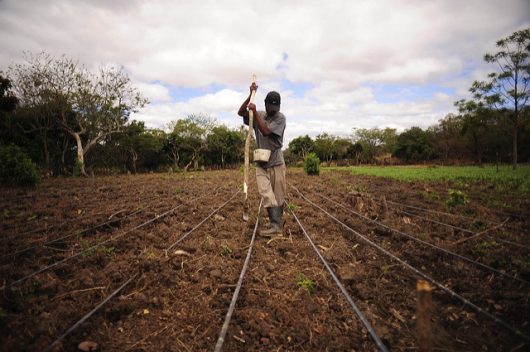
Hunger in Central AmericaCentral America is famous in many parts of the world for its coffee production, however, the region must also cultivate other crops and livestock to feed its population. As of 2014, the UN had declared much of Central America to be in a drought zone – one affecting over 2.8 million peoples’ food sources and financial security. Fortunately, ancient drought-resistant seeds could prevent impoverishment and hunger for many Central American farmers.
Drought instigates hunger in Central America and other places through a persistent lack of rainfall. The shortage of precipitation does not allow crops to grow, preventing farmers from eating or selling their yields. The National Drought Mitigation Center calls drought “a creeping phenomenon.” Many areas of the world go through shorter, less intense droughts; however, Central America’s has been dire.

The UN’s Office for the Coordination of Humanitarian Affairs (OCHA) has overviewed the situation by stating “The lack of rain since the middle of 2014 has resulted in the loss of staple grain crops and death of thousands of cattle in El Salvador, Guatemala, Honduras, and to a lesser extent in areas of Nicaragua, Costa Rica and Panama.”

Reversing the drought over an area as large as Central America seems to be an immense or even impossible undertaking, given that the drought has already affected millions of people. However, the answer to the area’s low food output and the growing hunger problem in Central America could lie within a specific type of seed – preserved ancient seeds.

The organization, Native Seeds/SEARCH, located in Tucson, Arizona, is a nonprofit dedicated to conserving local biodiversity. Many of the seeds protected and cultivated by the organization are anciently local to the dry and arid environment. This quality marks the seeds as well-suited to areas experiencing chronic drought, such as Central America. Moreover, the kernels that Native Seeds/SEARCH have protected have already been successfully used to provide the Tohono O’odham Nation of American Indians with a sustainable food source.

Because the seeds have been used for thousands of years in the dry environment of southwestern U.S., they have a natural propensity to thrive in drought-ridden areas. The seeds were not only cultivated in this region, but are also naturally native. This means that the seeds have a genetic predisposition to grow in nearly waterless environments.

Native Seeds/SEARCH calls their organization a “seed bank” and uses new freezing technologies to store their seeds. “What began as a humble operation with seeds stored in chest freezers has grown to a state-of-the art conservation facility,” states Native Seeds/SEARCH on their methodology.

Although no effort has been made directly by the organization to alleviate hunger in Central America specifically, Gary Nabhan, co-founder of the Native Seeds/SEARCH project, has expressed his enthusiasm for sowing his seeds on a grander scale. “We promote the use of these ancient crops and their wild relatives by distributing seeds to traditional communities and to gardeners worldwide.”

This endeavor could lead to a large reduction in hunger and poverty in drought-affected areas, which could possibly alleviate hunger in Central America as well, as it is most certainly affected by drought and in dire need of aid.

– Michael Carmack

Photo: Flickr

September 4, 2017
https://borgenproject.org/wp-content/uploads/borgen-project-logo.svg 0 0 Borgen Project https://borgenproject.org/wp-content/uploads/borgen-project-logo.svg Borgen Project2017-09-04 01:30:212024-05-28 00:15:58Ancient Seeds Could Fight Hunger in Central America
Global Poverty, Hunger, United Nations

Future Solutions for the Problem of Hunger in Central America

Hunger in Central AmericaSince mid-2014, the Central American countries of Honduras, Guatemala, El Salvador, Nicaragua, Panama and Costa Rica have been victims of a severe drought. The El Niño conditions that began in March of 2015 have caused staple crops to wither and thousands of cattle to die. These El Niño conditions worsened, and, by the end of June 2016, there were 3.5 million people affected by the drought and 1.6 million at the mercy of hunger in Central America.

This crisis, while dire, has been a rare outlier in the largely successful efforts to ease the pangs of hunger in Central America. Among the major problems contributing to the food shortages of Central America has been widespread poverty. Extreme poverty in Central America was reduced by 50 percent between 1995 and 2011.

The same can be said for hunger itself. Between 1992 and 2014, the number of people affected by hunger in Central America was reduced from 68.5 million to 37 million. While success this resounding is encouraging, it does not by any means imply that the fight to end hunger in Central America is over.

The El Niño drought was one of the worst in recent memory. Though its severity was extreme, it remains indicative of a problem which Central American farmers must face constantly. Droughts devastate Central America with shocking regularity, whether caused by El Niño or other malignant weather patterns.

In order to address the droughts, which, alongside endemic poverty, have been the biggest contributors to the problem of hunger in Central America, the U.N. has begun working with the governments of Honduras, El Salvador and Guatemala in order to better construct strategies that will allow the countries to remain independent in cases of severe drought. The U.N. has instructed farmers to plant crops that are both less water-dependent and more flood-resistant.

The problem of hunger in Central America is not one which will solve itself, but continuing to allow the countries hit hardest by droughts and poverty to rely on foreign aid and intervention a strategy that will not work in the future. The pattern the U.N. and forward-thinking governments like those of Honduras, El Salvador and Guatemala have established is one that must be followed. Countries such as these can utilize the ingenuity of their people alongside the expertise of foreign aid to alleviate both poverty and hunger, creating a prosperous cycle that will benefit themselves both now and in the future.

– Connor S. Keowen

September 1, 2017
https://borgenproject.org/wp-content/uploads/borgen-project-logo.svg 0 0 Borgen Project https://borgenproject.org/wp-content/uploads/borgen-project-logo.svg Borgen Project2017-09-01 07:30:392020-06-25 10:46:33Future Solutions for the Problem of Hunger in Central America
Global Poverty, Hunger, War and Violence

Hunger in Mali Driven by Drought and Conflict

Mali, the eighth-largest country in Western Africa, has a population of 24 million people. Nearly half live in extreme poverty and 1.3 million people are experiencing acute food insecurity and hunger driven by drought and conflict.

Today’s crisis in Mali

Hunger and poverty in Mali have worsened in recent years, primarily driven by climate change impacts, including severe droughts and over a decade of ongoing conflict. The Sustainable Development Report indicates that Mali is significantly off track in achieving SDG2, which aims for zero hunger by 2030, as the population suffering undernourishment increased from 4.2% in 2015 to 12.8% in 2021. The situation is even worse for children under 5, with 1.5 million affected by acute malnutrition and 22% facing stunted growth. 

  • Conflict-  The conflict in Mali, which began in 2012, has severely disrupted agriculture, devastated livestock populations and forced 355,000 people, including farmers, to flee their homes. Aid organizations have also struggled to assist in certain areas due to ongoing violence or destroyed road networks. Additionally,  the conflict has taken a toll on the country’s economy by destroying businesses like fishing, trade,  etc, due to security threats, extortion and destruction of infrastructure. The combination of these has led to a 150% increase in food prices over the last five years.
  • Droughts- Mali, a country reliant on agriculture and livestock, has been hit by persistent droughts. These droughts have reduced crop yields immensely because of land degradation and water scarcity. This year’s cereal harvest was 3% less than in 2023 because of erratic rainfall. The droughts have reduced the grazing land, negatively impacting the livestock population.

Hope Amid Crisis

Some organizations have been working in Mali to reduce the suffering and despair of the population. The text describes the commendable efforts of two such organizations.

  • Food and Agriculture Organization– The FAO assists vulnerable farmers with seeds and tools in Mali. It also collects and analyzes data to prepare policies and interventions and trains farmers to build capacity and resilience against climate challenges and droughts. The organization has helped millions in recent years.
  • World Food Program– The WFP provides help with cash and food to communities in severe need. It helps reduce malnutrition in children under 5 by providing supplemental feeding and increasing awareness through community reach programs. It also provides air support in areas with poor roads or increased security threats. It also runs long-term programs to build resilience in the community.

The Road Ahead

The challenges of hunger and food insecurity in Mali are daunting. Still, the efforts of organizations like the FAO and WFP and the resilience of Mali’s people offer a beacon of hope for the future. With continued support and international collaboration, Mali can move closer to achieving zero hunger and improving the quality of life for the people, ultimately contributing to a more stable and prosperous future. 

– Leah Potter and Maria Waleed

Photo: Flickr
Updated: November 4, 2024

September 1, 2017
https://borgenproject.org/wp-content/uploads/borgen-project-logo.svg 0 0 Borgen Project https://borgenproject.org/wp-content/uploads/borgen-project-logo.svg Borgen Project2017-09-01 01:30:222024-11-04 23:41:50Hunger in Mali Driven by Drought and Conflict
Global Poverty, Hunger

Hunger In The Cook Islands Places Second to Malnutrition

Hunger In The Cook Islands
A Brief History

The Cook Islands are made up of a combination of 15 different islands, reside in the South Pacific ocean and have a population of 15,000 people who practice their unique language and diverse culture — a habit that many tourists enjoy. The country has over 100,000 visitors each year which significantly contributes to the country’s economy. Tourism paired with the abundant natural resources in the region has led to the decrease in hunger in The Cook Islands.

Hunger In The Cook Islands

Although hunger in The Cook Islands is not as widespread as in other developing nations and many citizens have access to their daily caloric needs, malnutrition is still a huge issue for the citizens of this country. Financial hardship due to a lack of education for many people in The Cook Islands has led to residents making food choices which often leads to malnutrition.

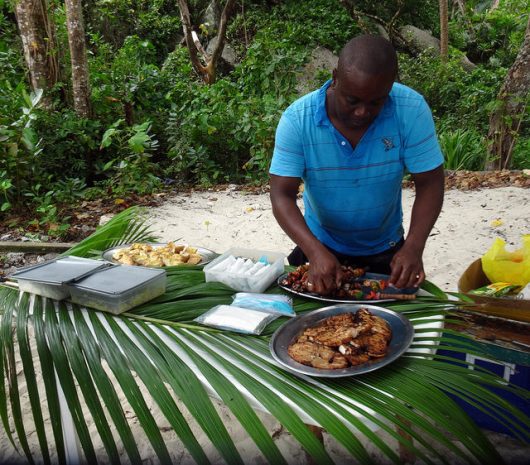
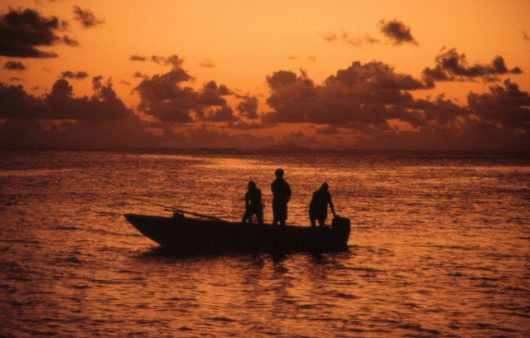
The cheapest foods in The Cook Islands are often the foods which can get caught in the wild or bought at a local market using little income. Fish acts as a staple food product due to its abundance in the South Pacific oceans.

A 2007 United Nations study states that The Cook Islands possess 133 commercial fisheries, 3,939 offshore fisheries and 5 freshwater fisheries. These practices have led to an abundance of fish in the country.

The issue, though, is that since fish are often the only food residents of The Cook Islands can purchase, they suffer from malnutrition that stems from a lack of micronutrients. Although fish can act as an excellent source of protein and omega three fatty acids, the human diet requires numerous other micronutrients to function properly. These micronutrients include Vitamins A, B6, B12, C and many others.

Although fish can provide the calories needed to sustain a human, it cannot provide the micronutrients required for optimal bodily conditions.

The Takeaway

Hunger in The Cook Islands does not appear to be an issue and for many living in this country, this perception is correct. The abundance of fish in The Cook Islands can provide the needed micronutrients required for humans daily caloric intake. The issue with relying solely on fish for one’s caloric needs is that fish cannot provide all the essential vitamins and minerals required for a human.

Hunger in The Cook Islands may not be as much of an issue, but malnutrition stemming from a lack of vitamins and minerals is. Organizations such as the United Nations conduct studies on what the people of The Cook Islands eat to allow people to understand that even though they are eating, they continue to suffer from preventable diseases caused by malnutrition. This information is imperative to solving the issue of malnutrition in The Cook Islands.

– Nick Beauchamp

Photo: Flickr

August 31, 2017
https://borgenproject.org/wp-content/uploads/borgen-project-logo.svg 0 0 Borgen Project https://borgenproject.org/wp-content/uploads/borgen-project-logo.svg Borgen Project2017-08-31 01:30:092024-05-28 00:15:55Hunger In The Cook Islands Places Second to Malnutrition
Hunger

Hunger in Martinique

Hunger in MartiniqueMartinique is a satellite nation of France located in the Caribbean. Its economy is supported by the production of items like rum, sugar and bananas, and by the spending of the French government. This makes the nation better off than some of its Caribbean nation neighbors.

On the World Food Programme’s 2011 Hunger Map, Martinique was listed as a Category 1 country, with less than five percent of its population undernourished and experiencing hunger. This puts Martinique at extremely low risk for hunger and malnutrition, on a similar level as countries like the United States.

More concerning for Martinique is the presence of a dangerous pesticide, Chlordecone – found in the soil and in plants – that has been causing inflated rates of prostate cancer in men for decades. It is estimated that 80,000 people or more in Martinique live in areas where the soil is contaminated by Chlordecone. About 13,000 of these people absorb much more than the recommended daily dose of the pesticide just by eating their own plants and produce that they’ve grown themselves.

Fisheries have also suffered from the effects of Chlordecone poisoning, as many lobsters and fish in the area contain an unsafe level of the toxin. Poor people and farmers are most affected by these rates of poisoning because of the loss of fisheries and agriculture.

For every 100,000 men in Martinique, 227 have prostate cancer – an alarming rate considering the drastically lower numbers in neighboring countries. Prostate cancer, along with breast cancer in women and cognitive malfunctioning in children, has been linked to exposure to Chlordecone.

It is estimated that it will take another 600 years to reduce the current amount of Chlordecone in the ground, so this is a problem that aid groups and foreign countries must help the people of Martinique learn to live with.

Recently, the French Overseas Minister to Martinique, Victorin Lorel, has created a $2.66 million aid package for Martinique’s fishermen to ease current and future industry loss. He has also promised a new and “ambitious plan” for fisheries in Martinique and other French islands.

The European Union has similarly allocated €520,951,695 to Martinique between 2014 and 2020. This money is intended to rebuild infrastructure, implement sustainable energy production, improve the skills of poor people in Martinique, and ultimately raise quality of life by lowering the poverty rate.

There are many other organizations involved in solving the problem of hunger in Martinique; their projects include setting up food and clothing drives to raise necessary funds. With continued efforts, it is possible that the poverty rate in Martinique will decrease, which will in turn have a positive effect on reducing hunger due to Chlordecone poisoning.

– Saru Duckworth

Photo: Pixabay

August 27, 2017
https://borgenproject.org/wp-content/uploads/borgen-project-logo.svg 0 0 Borgen Project https://borgenproject.org/wp-content/uploads/borgen-project-logo.svg Borgen Project2017-08-27 01:30:092024-05-28 00:16:08Hunger in Martinique
Development, Global Poverty, Hunger

Joint Effort to Address the Famine in the Horn of Africa

Famine in the Horn of AfricaA senior United Nations official claimed earlier in the year that the world faced the worst humanitarian crisis since 1945. The crisis he was referring to is the devastating famine which threatens to affect over 20 million people — 1.4 million of those being children — in the Horn of Africa and neighboring regions. Populations in South Sudan, Somalia, Yemen and Nigeria are at tremendous risk of starvation. A mixture of catastrophic circumstances including drought and war-fueled conflict have pushed the region to the brink of devastation; the situation could potentially reverse gains in economic development and destroy the livelihoods and future of a large swathe of the population. However, in spite of this calamitous situation, few people in the United States are aware of what is going on, and the situation gets little coverage in the press. Eight international relief organizations based in the U.S have decided to take action and have created a joint effort to address the famine in the Horn of Africa: the Global Emergency Response Coalition (GERC).

Earlier in the year, when senior U.N. official Stephen O’Brien claimed this was the worst humanitarian crisis in decades, he stated that an immediate injection of funds was necessary to avert the situation. “To be precise,” he said, “we need $4.4 billion.” This goal, however, has not been attained, and the international community has done little to reach that number. The Global Emergency Response Coalition, the first of its kind in the United States, has not established a concrete goal for its fundraising; however, the organization admits that it is far short of raising enough to fully solve the crisis. A big part of the joint effort to address the famine in the Horn of Africa is to create a campaign of awareness throughout the press and social media to bring attention to the issue.

The Global Emergency Response Coalition is formed by CARE, International Medical Corps, International Rescue Committee, Mercy Corps, Oxfam, Plan International, Save the Children and World Vision. Several companies have also committed to the joint effort to address the famine in the Horn of Africa; Pepsico and Blackrock have promised to match up to $1 million each for every dollar donated.

The situation is most dire in Yemen, where 18.8 million people — two-thirds of the country’s population — need desperate aid, and more than 7 million people do not know where their next meal will come from. In South Sudan, more than 7.5 million people need aid, up by almost 2 million since last year.

You can help the joint effort to address the famine in the Horn of Africa by donating to the Global Emergency Response Coalition or by following the GERC on all social media channels and sharing their causes to help raise awareness.

– Alan Garcia-Ramos

Photo: Flickr

August 24, 2017
https://borgenproject.org/wp-content/uploads/borgen-project-logo.svg 0 0 Borgen Project https://borgenproject.org/wp-content/uploads/borgen-project-logo.svg Borgen Project2017-08-24 07:30:142020-06-19 08:38:41Joint Effort to Address the Famine in the Horn of Africa
Global Poverty, Hunger

Why Everyone Should Care About Hunger in Zambia

Hunger in ZambiaThe nation of Zambia lies below the Democratic Republic of the Congo in southern Africa and is a region speculated by many to be on the brink of undergoing the worst famine in human history. The country has been familiar with this prospect with for a long time.

From 2001 to 2002, southern Africa experienced two consecutive years with no rainfall, which negatively impacted an estimated 2.3 million households that were dependent on agricultural production. This created a food deficit for farmers and restricted access to food.

Since then, according to the International Food Policy Research Institute’s 2016 Global Hunger Index, hunger in Zambia has only gotten worse. The data from the report suggests that Zambia is currently the third hungriest nation in the world, with 47.8 percent of the population undernourished, a 40 percent or higher rate of stunting in children five or younger and a mortality rate of 6.4 percent in children five or younger.

A root cause of severe hunger in Zambia is the occurrence of a 2015 El Nino weather event that is speculated to have been the strongest since 1982. El Nino weather events occur when the waters of the tropical Pacific (in this case) or other bodies of water begin to warm, which typically results in droughts and floods that directly impact the closest land mass and affect weather systems across the world. This particular event caused a severe drought in the country that remains ongoing today, the impacts of which unfortunately extend far beyond Zambian borders.

As of 2016, seven out of nine provinces in South Africa and eight countries across southern Africa have declared national states of emergency or disaster, and the U.N. estimated that by Christmas of 2016, 49 million people across southern Africa would be in need of food aid.

According to the United Nations’ office for the Coordination of Humanitarian Affairs, in 2016, governments across southern Africa collectively requested more than $1.5 billion. Unfortunately, less than a quarter has been promised thus far.

Areas of northeast Africa such as the Central African Republic, South Sudan, Chad, Ethiopia and Yemen are also facing severe food shortages. With an estimated 25 million or more people in need of food aid in these regions alone, it is possible that hunger in Zambia and its surrounding regions is only a part of what could be unfolding into a continent-wide food shortage.

– Hunter McFerrin

Photo: Flickr

August 23, 2017
https://borgenproject.org/wp-content/uploads/borgen-project-logo.svg 0 0 Borgen Project https://borgenproject.org/wp-content/uploads/borgen-project-logo.svg Borgen Project2017-08-23 07:30:202024-05-28 00:15:42Why Everyone Should Care About Hunger in Zambia
Global Poverty, Hunger

Hunger in Liechtenstein Virtually Nonexistent

Hunger in LiechtensteinWhen looking at countries that are suffering from hunger, it is easy to equate the hunger with nationwide poverty. In the case of high-income countries, such as the U.S., such a generalization might lead one far astray from reality.

Liechtenstein is a small country bordering Switzerland on the west side and Austria on the east side. Its GDP is the highest in the world, with people living there making an equivalent average of about $139,100 per year.

Note that the cost of living in Liechtenstein is only 33 percent higher than in the United States, even though they make on average 2.4 times as much as American citizens do. It is unimaginable that poverty can exist in such a wealthy country. However, we must ask, does poverty– or even hunger– in Liechtenstein exist?

The answer is: essentially, no. It is not hunger in the traditional sense, where people are starving or going hungry. In the case of Liechtenstein, there are some people who are not making enough money to have “disposable” income.

In the U.S., this is taken for granted. There are an estimated 45 million Americans living under the poverty line (2013), with 58 million Americans working for minimum wage. However, Liechtenstein doesn’t seem to have any people living under the poverty line, mainly because it has strong social services that tackle the problems of poverty or hunger before they even arise.

A 2008 estimate of households living in conditions that are called “Einkommensschwach,” which literally translates to “weak income” (low-income), is at 11 percent. This is about 3,000 people out of its population of 37,000.

Note that “Einkommensschwach” does not mean “living under the poverty line,” it just means a low-income household. Thus, these numbers convey people’s income even after social services have come into effect. The limit to be considered “Einkommenschwach” is about the equivalent of $28,000 per year.

However, social services in Liechtenstein are so powerful, it basically eradicates all hunger in Liechtenstein, as well as true poverty. During a meeting, the social minister in Liechtenstein even asked the question “With such high incomes, can we really speak about poverty? Wouldn’t this even be unethical to make such a comparison with other countries?”

In other words, not only is hunger in Liechtenstein not a considerable issue, it is even questionable if one can talk about poverty in Liechtenstein at all.

– Michal Burgunder

Photo: Pixabay

August 21, 2017
https://borgenproject.org/wp-content/uploads/borgen-project-logo.svg 0 0 Borgen Project https://borgenproject.org/wp-content/uploads/borgen-project-logo.svg Borgen Project2017-08-21 07:30:582024-05-28 00:15:36Hunger in Liechtenstein Virtually Nonexistent
Page 48 of 71«‹4647484950›»

Get Smarter

  • Global Poverty 101
  • Global Poverty… The Good News
  • Global Poverty & U.S. Jobs
  • Global Poverty and National Security
  • Innovative Solutions to Poverty
  • Global Poverty & Aid FAQ’s
Search Search

Take Action

  • Call Congress
  • Email Congress
  • Donate
  • 30 Ways to Help
  • Volunteer Ops
  • Internships
  • Courses & Certificates
  • The Podcast
Borgen Project

“The Borgen Project is an incredible nonprofit organization that is addressing poverty and hunger and working towards ending them.”

-The Huffington Post

Inside The Borgen Project

  • Contact
  • About
  • Financials
  • President
  • Board of Directors
  • Board of Advisors

International Links

  • UK Email Parliament
  • UK Donate
  • Canada Email Parliament

Get Smarter

  • Global Poverty 101
  • Global Poverty… The Good News
  • Global Poverty & U.S. Jobs
  • Global Poverty and National Security
  • Innovative Solutions to Poverty
  • Global Poverty & Aid FAQ’s

Ways to Help

  • Call Congress
  • Email Congress
  • Donate
  • 30 Ways to Help
  • Volunteer Ops
  • Internships
  • Courses & Certificates
  • The Podcast
Scroll to top Scroll to top Scroll to top