• Link to X
  • Link to Facebook
  • Link to Instagram
  • Link to TikTok
  • Link to Youtube
  • About
    • About Us
      • President
      • Board of Directors
      • Board of Advisors
      • Financials
      • Our Methodology
      • Success Tracker
      • Contact
  • Act Now
    • 30 Ways to Help
      • Email Congress
      • Call Congress
      • Volunteer
      • Courses & Certificates
      • Be a Donor
    • Internships
      • In-Office Internships
      • Remote Internships
    • Legislation
      • Politics 101
  • The Blog
  • The Podcast
  • Magazine
  • Donate
  • Click to open the search input field Click to open the search input field Search
  • Menu Menu

Archive for category: Human Rights

Information and stories about human rights.

Activism, Human Rights

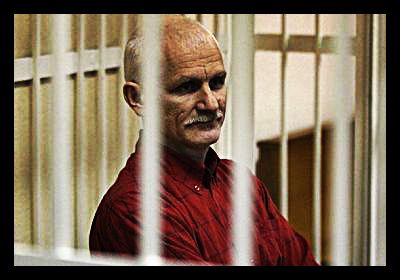
Ales Belyatsky Released from Prison Early

Ales_BelyatskyLeading Belarus human rights activist, Ales Belyatsky, was released early from prison this week after only serving three of a four-and-a-half year sentence for tax evasion. Belyatsky, who ran the rights group Vesna-96, was arrested for an alleged tax evasion after officials in Poland and Lithuania unwittingly supplied information regarding information in his bank accounts. Belarus, which imposes strict restrictions on the financing of NGOs, rules out virtually any financial help from abroad.

Yet Belyatsky, whose arrest was deemed “politically motivated,” never pleaded guilty for his alleged crimes, and attributed the funds in the bank account to years of supporting victims of human rights abuses in Belarus. In fact, there are at least seven other human rights activists in Belarus currently imprisoned, and while Belyatsky has been released early, many attribute his release to internal–and external–pressure toward the regime. The United States, among other countries, has commended Belyatsky’s release and urged Belarus to do the same for the rest of their prisoners.

Belyatsky claims he still feels part of the system, and while his release was unexpected, he has remained vigilant against the Belarusian regime. The regime, which has kept a tight authoritative control over the years, has consistently worked to eliminate human rights groups, squandering their political rights. While Belaytsky’s release may be seen from the West as a sign of improvement, those from the country fear this may be a political move to ensure a renewal of dialogue with the European Nation.

Despite his stint in prison, Belyatsky does not regret his activism. “I am not sorry for those three years spent in prison,” he said. “This is the price you pay for making Belarus a free and democratic country.” Belyatsky hopes other human rights prisoners, who often face extreme measures of psychological abuse under imprisonment, will be granted the right to follow suit.

– Nick Magnanti

Sources: KyivPost, Reuters, Charter97, Index on Censorship
Photo: Ozera

June 26, 2014
https://borgenproject.org/wp-content/uploads/borgen-project-logo.svg 0 0 Borgen Project https://borgenproject.org/wp-content/uploads/borgen-project-logo.svg Borgen Project2014-06-26 18:45:222024-06-05 01:57:36Ales Belyatsky Released from Prison Early
Human Rights, Politics and Political Attention

Will Narendra Modi Protect the Adivasis?

A great deal has already been written, discussed and predicted about India’s newly elected leader, Narendra Modi, and his Bahratiya Janata Party. A tremendous amount of implications arise from his election, but one that has slid under the radar has been his and his party’s policies toward the indigenous population — the Adivasi people.

Many of the laws currently in place in India already fall short of international standards regarding human rights and indigenous persons. This problem is only compounded by the nationalist platform adopted by the BJP, and has caused concern for people both inside and outside of India’s borders.

While on the campaign trail, Modi took several opportunities to debunk claims from the opposition Congress party that he would take advantage of the Uniform Civil code to take away rights of Adivasis. Furthermore, Modi went on to claim that BJP rule in states with prominent Adivasi populations has already helped protect their rights and increase their living standards. But as is natural with most political campaigns, what is said on the campaign trail does not always match up with reality.

The indigenous population of India has historically had a negative relationship with the state and companies based in the country. Amnesty International has already called for Modi to bring to justice those who have committed prior crimes against Adivasi population, referencing riots that took place in 2002 and 1984. While there have been acts of violence against the indigenous population, the most common crimes have been committed against the Adivasi’s rights to give businesses the free reign they need to make a profit. This information is particularly frightening considering that one of the central components of Modi’s platform was reinvigorating the Indian economy.

So the question remains — are the Adivasi people about to find themselves in the crosshairs yet again? Recent legislative efforts indicate this might not be the case. However, many of these need to be passed by Parliament in order to be ratified into law.

One recent draft bill proposes that in order to use land on constitutionally protected indigenous territories, you would need the consent of village assemblies. However, this draft bill still needs to get passed before becoming a law. The recent Parliament also passed a temporary law making wrongful possession of Adivasi land a criminal offense. But similar to the draft bill, this law will expire unless it gets passed within six weeks of Parliament reassembling.

While these laws and bills certainly are a step in the right direction, more work still needs to be done. One of the main criticisms lobbied at the bills is that while they protect the Adivasis from private companies, there is very little mention of intervention done on behalf of the state. But before more comprehensive bills can be written and laws can be passed, these important first steps need to survive the political process. It is now Parliament’s turn to take action. With any luck, they will make the right decision and protect India’s indigenous population.

— Andre Gobbo

Sources: Amnesty, Indian Express, The Guardian
Photo: Forbes

June 24, 2014
https://borgenproject.org/wp-content/uploads/borgen-project-logo.svg 0 0 Borgen Project https://borgenproject.org/wp-content/uploads/borgen-project-logo.svg Borgen Project2014-06-24 20:02:182024-05-26 23:50:03Will Narendra Modi Protect the Adivasis?
Gender Equality, Human Rights

Remembrance for the Human Rights Movement in America

Too often we forget that America has not always enjoyed its position as a human rights watchdog. Only a few generations ago, Americans were legally segregated with women and African-Americans barred from the voting booth. And looking back a few more generations, America was engaged in one of the most devastating slave trades the world has ever known.

As a nation, we have come a long way since then. But that is no excuse for forgetting our history. Remembrance for that arduous journey and reverence for the great men and women who led the way is in order.

The year 2014 gives us a unique opportunity to reflect on the long road to freedom that Americans have endured.

One hundred fifty years ago, the city of Atlanta was ravaged in one of the final battles of the Civil War. The Battle of Atlanta sealed the fate for the war-torn South, and it paved the way for the important, yet only marginally successful Civil Rights Amendments: the 13th, 14th and 15th Amendments. Combined, those amendments to the U.S. Constitution made slavery illegal, guaranteed equal rights for all and made it unconstitutional to deny a voter on the basis of color.

Sixty years ago, the U.S. Supreme Court ruled in Brown v. Board of Education that separate did not mean equal. The ruling deemed segregation of schooling facilities to be unconstitutional.

The basis for the ruling was the 14th amendment, which was added to the Constitution nearly a decade prior to the decision. Progress for the human rights movement in America was by no means swift.

This month also marks the 50th anniversary of the Civil Rights Act of 1964. Along with the Voting Rights Act of 1965, these laws were able to finally instantiate the ideals set forth in the 14th amendment.

But that was not the end for the human rights movement in America. True equality remains an elusive dream for the two aforementioned groups: women and African-Americans.

According to a 2012 Associated Press Poll, the majority of Americans — 51 percent — “now express explicit anti-black attitudes.”

Likewise, studies show that women earn somewhere between 77 and 84 percent of what their male counterparts earn.

Despite the great strides that we have made in the human rights movement, there is still much work to be done if we are to realize the full equality guaranteed to us by the First Amendment.

Even still, the progress that has yet to be made in America pales in comparison to the dismal condition of human rights globally.

Given our relative success in realizing human rights, and given our dominance on the global scale, America stands in a unique position where we can sacrifice a portion of our time and money to rectify human rights violations around the world.

If  a superpower like the U.S. had existed in the midst of our earlier struggles, a helping hand would have dramatically expedited our social development process.

Human rights are being advanced around the world, but at a relatively sluggish rate. America stands in a position to help move that process along, both with our bountiful resources and our invaluable knowledge of how to successfully lead a human rights movement.

We learned from the American human rights movement that progress takes time. It takes a monumental struggle. It requires trial and error. And more than anything else, it takes sacrifice.

– Sam Hillestad

Sources: US Courts, Historynet, SaportaReport, Stanford, Pew Research, USA Today
Photo: Civil Rights Teaching

June 12, 2014
https://borgenproject.org/wp-content/uploads/borgen-project-logo.svg 0 0 Borgen Project https://borgenproject.org/wp-content/uploads/borgen-project-logo.svg Borgen Project2014-06-12 08:36:522024-06-05 01:57:32Remembrance for the Human Rights Movement in America
Aid Effectiveness & Reform, Global Poverty, Human Rights

48 Years After Day of Affirmation Speech

June 6 is the 48th anniversary of Robert Kennedy’s “Ripple of Hope” speech. On this day Kennedy gave his speech at the University of Cape Town in South Africa. He called it a day of affirmation, defined by the freedom for which it stood. It was an incredible statement at the time to come to a third world country ruled by apartheid and express to the people that they are human beings, and that they do matter.

Senator Kennedy went on to talk of equality and its vital importance to progress and a better world. He noted the sad reality of discrimination, and that as a result, many never reached their full potential. As Kennedy notes, it is for this reason that we lost many great contributions to the world.

It was Senator Kennedy’s desire that equal opportunity exist for all and for the simplest of reasoning: “We must do [this] for the single and fundamental reason that it is the right thing to do.”

Where do we stand today? Have we eliminated discrimination and the poverty and suffering it brings with it?

Ideally, we would like to think we have, but there is much work still to be done. The best way to combat this ongoing struggle is to continue to create opportunity. We do this by empowering every man and woman on earth to lift themselves out of poverty so that they may realize their potential as well.

We have had many successes with eliminating poverty, including a reduction in extreme poverty by over half since 1981. However, with 1.2 billion people still living in extreme poverty, there is no doubt that there is much more potential to be realized.

In Sub-Saharan Africa, where Kennedy spoke 48 years ago, there lives more than one-third of the world’s extreme poor. That is the equivalent of more than 400,000,000 people living in extreme poverty. The average income of these individuals is 84 cents a day.

It is discouraging to realize that of all the wealth we have amassed, we still have not eliminated extreme poverty. A 2012 report by Oxfam showed that, in 2012 alone, the world’s 100 wealthiest individuals earned enough money to end extreme poverty four times over.

This distribution of wealth does not represent the equality that Kennedy and so many others sought. The term equality encompasses more than rights and protection. It encompasses access to resources, income equality and fairness in general.

However, it is too early to get discouraged. In 2010, the world achieved Millennium Development Goal One, which was to decrease poverty in developing countries by half. The number of those living in poverty is still declining and if we as an international community keep working toward this goal, then ending extreme poverty is possible in our lifetime.

In the words of Kennedy on this day 48 years ago, “they are hoping and they are gambling their progress and their stability on the chance that we will meet our responsibilities to them, to help them overcome their poverty.”

– Christopher Kolezynski

Sources: Day of Affirmation Speech, The Huffington Post, Policy Mic
Photo: NPR

June 12, 2014
https://borgenproject.org/wp-content/uploads/borgen-project-logo.svg 0 0 Borgen Project https://borgenproject.org/wp-content/uploads/borgen-project-logo.svg Borgen Project2014-06-12 04:49:022024-12-13 17:53:5248 Years After Day of Affirmation Speech
Global Poverty, Human Rights

Reports of Human Rights Violations

child laborHamas_Children
A report filed by the Palestinian Independent Commission for Human Rights (ICHR) documented nearly 500 “allegations of torture and ill treatment” in 2013, a steep jump when compared to the 294 cases in 2012.

The report also reveals that 10 Palestinians died in January in the West Bank and Gaza Strip. The deaths were allegedly caused by “anarchy, lawlessness and misuse of weapons.”

A majority of the cases reported have occurred in the Gaza Strip, which is governed by Hamas, a political party and terrorist group that controls the legislative and executive branch of government in the territories. In addition, attacks on journalists and arbitrary detentions rose sharply in the West Bank and Gaza.

On April 2, the Palestinian Authority submitted its paperwork to become a signatory of 15 international treaties necessary for statehood. The signing of the treaties complicated negotiations with Israel—a part of Palestinian President Mahmoud Abbas’ alleged strategy to internalize the conflict between Palestine and Israel.

Hamas’ territories, which make up the ‘State of Palestine,’ violate 11 of the 15 treaties. “Acts or threats of violence, the primary purpose of which is to spread terror among the civilian population” is prohibited by the Geneva Convention.

A U.S. Department of Labor report filed in 2012 noted that the Palestinian Authority made “minimal advancement in efforts to eliminate the worst forms of child labor,” a failure that violates the Convention on the Rights of the Child treaty. The treaty establishes civil, cultural, economic, political and social rights for any citizen under the age of 18, including freedom from economic exploitation (listed in Article 32) and the right to education (as noted in Article 28).

The Optional Protocol to the Convention, another treaty the Palestinian Authority violated, mandates that states will not recruit children under 18 for positions in the armed forces.

Last year, reports indicated that Hamas trained about 37,000 children ages 15 to 17 in the acts of urban warfare.

Other treaties that the Palestinian Authority is in violation of include: The Convention on the Elimination of All Forms of Discrimination against Women, The Convention on the Rights of Persons with Disabilities, The International Convention on the Elimination of All Forms of Racial Discrimination, The Convention against Torture and Other Cruel, Inhuman or Degrading Treatment or Punishment, The Convention on the Prevention and Punishment of the Crime of Genocide, The International Convention on the Suppression and Punishment of the Crime of Apartheid, The International Covenant on Civil and Political Rights and The International Covenant on Economic, Social and Cultural Rights.

The Palestinians’ major complaint is the lack of attention by Western media on these violations. According to Khaled Abu Toameh, a writer for the Gatestone Institute, most Western journalists, governments and human rights groups have “chosen to endorse the Palestinian Authority’s stance that the only evil-doers are the Israelis” and due to this stance, the ICHR report will be ignored.

-Monica Newell

Sources: Gatestone Institute, The Tower 1, The Tower 2, The Tower 3

Photo: Skeptikai

May 19, 2014
https://borgenproject.org/wp-content/uploads/borgen-project-logo.svg 0 0 Borgen Project https://borgenproject.org/wp-content/uploads/borgen-project-logo.svg Borgen Project2014-05-19 04:39:552016-07-19 13:47:49Reports of Human Rights Violations
Global Poverty, Human Rights, Nonprofit Organizations and NGOs, Women and Female Empowerment

MacArthur Fights for Women’s Rights In Nigeria

Nigeria
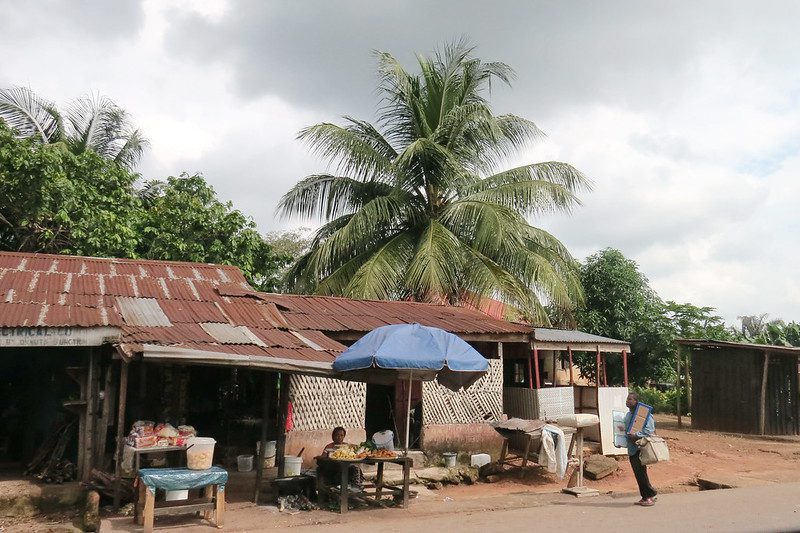
Every year, the MacArthur Foundation awards substantial grant money to a select few nonprofit organizations for “exceptional creativity and effectiveness.” Ranging from $750,000 to $1.5 million, these donations help fund organizations that benefit disadvantaged citizens around the globe. This year, the Foundation has awarded $750,000 to Nigeria’s Women’s Rights Advancement and Protection Alternative (WRAPA), an initiative that serves to combat the frequency of human rights abuses suffered by women in Nigeria.

Nigerian women are consistently subject to employment discrimination and denied access to educational opportunities. Denied equal status under the law, they are disproportionally impoverished and lack basic access to healthcare. Violence against women is rampant, and many investigative journalists suspect collusion among police and government officials intentionally to underreport cases of sexual assault. The problem has become so pervasive that Nigerians are demanding dozens of counseling clinics from the United Nations to help the numerous victims of these violent crimes.

However, this sizable grant is a necessary first step to address these widespread problems. Luckily, WRAPA has first-hand experience confronting controversial issues hindering women’s progress in the West African Nation. The organization continues to fight for universal marriage consent as well as a divorced woman’s right to child custody.

In addition, WRAPA is publically speaking out against the oppressive nature of Sharia Law in courts by providing first-class legal representation to women who otherwise would have been denied due process. Finally, the organization is using its grant money to respond to the Nigerians’ demand for counseling clinics. With this substantial increase in funding, WRAPA will construct a resource center to help abused women by providing temporary shelter and mental health professionals.

The nonprofit is also taking political action. According to the MacArthur Foundation, the program has garnered support from 84 government officials and local leaders to provide greater opportunities for women under Sharia Law. Although cultural changes will take longer to realize, legal equality is an essential first step for women to garner basic human rights, and a resolution to guarantee compensation from estranged fathers is in the works.

In addition, WRAPA is aggressively tackling poverty at the local level in Nigeria. The Macarthur Foundation estimates the up to 30 women per day will benefit from the program’s imitative to educate the disadvantaged. Reading lessons are provided daily, and the organization continues to connect undereducated girls to nearby public schools, yet no problem is too small. Houses are being repaired and proper cooking techniques are being taught. Anything to help these women live better lives.

More can be done, however. The recent kidnappings in the country are a horrific reminder that women also suffer from violence that accompanies political instability. WRAPA will continue to work with government officials to enact stringent punishments against violent offenders. In addition, the international community must respond to this current crisis to deter future terrorist acts targeted at Nigerian women.

Alongside Nigeria’s WRAPA, The MacArthur Foundation awarded grants to twelve other nonprofit organizations. You can find the entire list at this website.

– Sam Preston

Sources: Macfound, USA Today, Leadership

May 16, 2014
https://borgenproject.org/wp-content/uploads/borgen-project-logo.svg 0 0 Borgen Project https://borgenproject.org/wp-content/uploads/borgen-project-logo.svg Borgen Project2014-05-16 04:00:422017-11-30 10:55:56MacArthur Fights for Women’s Rights In Nigeria
Human Rights

Brunei’s New Penal Code

While the country of Brunei planned to introduce severe Islamic criminal punishments to be put into effect by April 22, the country decided to postpone the laws.

The delay is “due to unavoidable circumstances,” according to Jauyah Zaini, the assistant director of the Islamic Legal Unit.

Brunei is a wealthy sultanate, due to its large reserves of oil and gas, and is ruled by the Sultan Hassanal Bolkiah, one of the richest men on the planet. The majority of the country is made up of ethnic Malays, with smaller groups of Chinese, Indians and indigenous groups in the country.

As a former British protectorate, Brunei’s civil courts are based on British law. Sharia law was mainly practiced for family complications, marriage, and inheritance. However, once implemented, the new penal codes will widen the scope of Islamic law to a broader range of possibilities.

The new Sharia criminal punishments are medieval, extreme, and potential violations of human rights. For example, the code allows, “stoning to death to punish rape, adultery, sodomy, extramarital sexual relations [for Muslims], defamation of the Prophet Mohammed, insulting any verse of the Quran and Hadith, blasphemy, and declaring oneself a prophet or non-Muslim.”

Robbery is punishable by amputation and drinking alcohol will result in flogging.

The United Nations is one of the few international organizations that has taken a stand in opposition against the new penal codes.

“Under international law, stoning people to death constitutes torture or other cruel, inhuman or degrading treatment or punishment,” UN members said. “It is thus clearly prohibited.”

Sultan Bolkiah reasoned that the Sharia Penal Code would only pertain to Muslims as a “special guidance” from God. Muslims comprise around two-thirds of Brunei’s population of 420,000.

However, it is naïve to assume that the laws will not be applied to non-Muslims by law enforcement. Both non-Muslims and Muslims are prohibited from drinking alcohol in Brunei, and thus there is a high possibility that the other one-third of the population will be subjected to the penal codes.

Sultan Bolkiah called the penal code, “a part of the great history of our nation” in October and said that the new laws would not drastically change Brunei’s existing policies. Does this suggest that the penal codes are simply ceremonial and will not be enforced? Brunei still has the death penalty, but its last execution took place in 1957. Perhaps these codes are merely there to project an image of religious devotion.

Countries and international organizations should not wait to observe whether or not these penal codes will actually be enforced. These criminal punishments are a violation of human rights and all of Brunei’s citizens can potentially be subjected to the inhumane penal code.

— Sarah Yan

Sources: The Daily Beast, BBC, The Diplomat, BBC(2)
Photo: Military Photos

May 2, 2014
https://borgenproject.org/wp-content/uploads/borgen-project-logo.svg 0 0 Borgen Project https://borgenproject.org/wp-content/uploads/borgen-project-logo.svg Borgen Project2014-05-02 04:00:012024-12-13 17:50:15Brunei’s New Penal Code
Advocacy, Global Poverty, Human Rights, United Nations

The Universal Declaration of Human Rights

Upon the founding of the United Nations, there was much discussion of the purpose of the organization. The founding years in the late 1940s were immediately following the horrors of World War II, and the representatives UN had made it a priority to set the world on a new path of peace. One of the mission documents for the attempted new world order was the Universal Declaration of Human Rights. The document put forward some great ideals for the rest of the Twentieth Century, but there is still much work that has to be done to meet the goals of the Declaration.

The first sentence of the document describes “the inherent dignity and of the equal and inalienable rights of all members of the human family.” That sentence gives a great amount of hope for the UN and its mission, yet for a reader over 65 years later, we see how far things still have to go. We see in a number of developing nations how women are still discriminated against, as well as religious and ethnic discrimination. The feelings after World War II might have given a sense of optimism, that those horrors would never come again, but that is one claim that the UN has yet to achieve.

The Declaration contains a pledge by the UN member nations that “in co-operation with the United Nations, the promotion of universal respect for and observance of human rights and fundamental freedoms.” This statement, as part of a founding document for the UN, stands out when considering the situation in Syria. The UN has worked for the past three years to alleviate the plight of Syrians, yet there has been criticism from some of its own members. This pledge in the Declaration shows the need and responsibility the UN has to help in a situation of humanitarian plight.

Article three of the Declaration reads “Everyone has the right to life, liberty and the security of person.” Out of the many instances where this principle has not been upheld, the recent anniversary of the Rwandan genocide is one of the most egregious examples. The genocide of 1994 resulted in the death of almost a million Rwandans. The UN unfortunately did little to stop the killings, and after 20 years the genocide is still a large black mark on the international community.

Overall the Universal Declaration of Human Rights put forwards what we would all hope would be the best for the international community. It gives an idea of what the UN stands for, and while there have been a number of instances when the league has not held up to their lofty standards, the UN has carried out countless missions to help the impoverished. Hopefully they will learn from their slip-ups, however, and do more to accomplish their stated mission.

– Eric Gustafsson

Sources: UN, Youth for Human Rights
Photo: Encyclopædia Britannica

April 26, 2014
https://borgenproject.org/wp-content/uploads/borgen-project-logo.svg 0 0 Borgen Project https://borgenproject.org/wp-content/uploads/borgen-project-logo.svg Borgen Project2014-04-26 15:35:592024-05-26 23:27:01The Universal Declaration of Human Rights
Global Poverty, Human Rights, Human Trafficking

20 Ways to Fight Human Trafficking

​
Human trafficking is not only a human security issue, but the fight against human trafficking is also one of the most important human rights causes of our generation. Global poverty is a direct link to the increase in human trafficking making the reduction of global poverty a goal in the near future to save the lives of thousands of young girls and boys within the next decade. Discussed below are the best practices that can be used to fight against human trafficking.


Solutions to Human Trafficking: 20 Ways to Fight


1. Look for red flags that may indicate human trafficking. For example, be aware of situations that can help identify potential trafficking victims. Also, check for human trafficking awareness groups around the community for more information.
2. For the United States, the National Human Trafficking Resource Center can be contacted at 1-888-373-7888 while on a global scale, Polaris can be reached at (888) 373-7888. Both are available twenty four hours a day and can provide a service officer which can provide and receive information regarding suspicious activity which may relate to human trafficking in the area.
3. Be aware of companies and products that may be involved with child labor. The department of labor provides a list of companies that do and do not utilize these practices.
4. Include human trafficking into the professional realm. Specifically, at conferences and within training manuals that relate to this discussion. Help people understand the severity of the issue.
5. Seek out anti-trafficking organizations or create a startup organization geared toward spreading awareness and ways to prevent these acts from occurring.
6. Find the local, state and federal government representatives and inform them about how to combat human trafficking in the community, and also ask what they are doing to address human trafficking in your area and at the global perspective.
7. Distribute public awareness materials available from the Department of Health and Human Services or the Department of Homeland Security around the community, local schools and universities.
8. Volunteer with local outreach or global outreach groups to help fight human trafficking.
9. Donate to an approved anti-trafficking group locally or globally.
10. Start a fundraiser to help provide assistance in the community as well as across the globe.
11. Host events to discuss, show films or do anything related to raising awareness of human trafficking. Promote this locally and collect donations to help fight for the cause.
12. Bring awareness to schools and universities. Encourage information to be provided in the curriculums and in the classrooms. Evoke emotion from students and share with them the steps to help fight for the end of human trafficking.
13. Utilize Google alerts to keep you up to date on current involvements with human trafficking.
14. Write letters to magazines, newspapers and even blogs to bring awareness to these issues.
15. Start a petition against human trafficking or sign a petition to support anti-human trafficking.
16. If you own a business, provide internships for students relating to these efforts or provide job skills to traffic survivors.
17. University students and high school students can take action at their school or on their campus. Students can raise awareness about these issues and create clubs and organizations to gain momentum to fight human trafficking.
18. Join a task force initiative for law enforcement officials.
19. Provide medical assistance at low cost to those who have survived human trafficking.
20. Help survivors gain access to legal assistance, so survivors can fight back as well.

– Rachel Cannon


Sources: U.S. State Department, Polaris Project
Photo: List DOSE

April 17, 2014
https://borgenproject.org/wp-content/uploads/borgen-project-logo.svg 0 0 Borgen Project https://borgenproject.org/wp-content/uploads/borgen-project-logo.svg Borgen Project2014-04-17 11:35:012024-05-26 23:27:2720 Ways to Fight Human Trafficking
Children, Global Poverty, Human Rights, Human Trafficking, Violence Against Women, Women & Children

The Internet’s Role in Sex Trafficking

Internet_sex_trafficking
Sex trafficking exists in the United States. Sex traffickers target women and children with histories of addiction, abuse and even issues with debt and use manipulation to keep these victims trapped in the sex trafficking industry. The leaders in sex trafficking use violence and threats against the victims loved ones as means to force these victims to work against their own will. Accordingly, 83% of sex traffic victims are United States citizens. This issue is larger than most people realize and exists in the form of strip clubs, fake massage businesses, hostess clubs and even online escort services.

The internet is the number one center for sex trafficking in the United States. For example, pimps use websites like Backpage.com and even Craigslist.org disguised as massage services to escort victims for services. Thus, these women are forced into sex trafficking at a young age mostly by older men. Most of the services that are offered on Craigslist are in the form of recruiting. Women post pictures of themselves and answer customer’s calls referencing the ads placed on Craigslist. These women are not willingly posting these pictures, but are in constant fear of their own lives. In addition, these pimps use not only force but the false promise of a better life and threats to harm the victims’ loved ones. Victims are coerced into trafficking by pimps posing as model scouts, or nannies and house maids being recruited and then captured by these sex traffickers.

Because trafficking is unique when based in the internet it has become extremely profitable and it is easier to reach a larger audience. Anyone can post ads on these sites and these ads can be seen by thousands of people in addition to being unnoticed by the police. The average age range these victims enter the sex trafficking industry is 11-15 and due to the vague description of age with words like “young,” these operations slip by unnoticed by authorities.

In addition, many women in places like Nigeria, Thailand, and other places suffering from global poverty are involuntarily forced into sex trafficking. The geological approach to sex trafficking shows high numbers of victims in areas stricken with poverty, as well as remote areas where women are more likely taken from to an area of global capitalization and tourism. These high traffic areas are promoted through the use of the internet and smartphones. Because of the accessibility to these websites, where a brothel can be located in under a minute generates high revenue for the owner.

Accordingly, President Barack Obama released a statement saying “We’re turning the tables on the traffickers. Just as they are now using technology and the Internet to exploit their victims, we’re going to harness technology to stop them.”

To illustrate the alarming statistics of this issue the US Department of Health and Human Services show that 90% of runaways end up in the commercial sex trade industry and in Tennessee 94 children are trafficked every month. Human Trafficking has become a larger issue than most realize and will be addressed accordingly to the advancement of technology.

– Rachel Cannon

Photo: CNN
Sources:
End Slavery Tennessee, Polar is Project

April 16, 2014
https://borgenproject.org/wp-content/uploads/borgen-project-logo.svg 0 0 Borgen Project https://borgenproject.org/wp-content/uploads/borgen-project-logo.svg Borgen Project2014-04-16 01:07:502020-07-25 00:43:36The Internet’s Role in Sex Trafficking
Page 34 of 45«‹3233343536›»

Get Smarter

  • Global Poverty 101
  • Global Poverty… The Good News
  • Global Poverty & U.S. Jobs
  • Global Poverty and National Security
  • Innovative Solutions to Poverty
  • Global Poverty & Aid FAQ’s
Search Search

Take Action

  • Call Congress
  • Email Congress
  • Donate
  • 30 Ways to Help
  • Volunteer Ops
  • Internships
  • Courses & Certificates
  • The Podcast
Borgen Project

“The Borgen Project is an incredible nonprofit organization that is addressing poverty and hunger and working towards ending them.”

-The Huffington Post

Inside The Borgen Project

  • Contact
  • About
  • Financials
  • President
  • Board of Directors
  • Board of Advisors

International Links

  • UK Email Parliament
  • UK Donate
  • Canada Email Parliament

Get Smarter

  • Global Poverty 101
  • Global Poverty… The Good News
  • Global Poverty & U.S. Jobs
  • Global Poverty and National Security
  • Innovative Solutions to Poverty
  • Global Poverty & Aid FAQ’s

Ways to Help

  • Call Congress
  • Email Congress
  • Donate
  • 30 Ways to Help
  • Volunteer Ops
  • Internships
  • Courses & Certificates
  • The Podcast
Scroll to top Scroll to top Scroll to top