• Link to X
  • Link to Facebook
  • Link to Instagram
  • Link to TikTok
  • Link to Youtube
  • About
    • About Us
      • President
      • Board of Directors
      • Board of Advisors
      • Financials
      • Our Methodology
      • Success Tracker
      • Contact
  • Act Now
    • 30 Ways to Help
      • Email Congress
      • Call Congress
      • Volunteer
      • Courses & Certificates
      • Be a Donor
    • Internships
      • In-Office Internships
      • Remote Internships
    • Legislation
      • Politics 101
  • The Blog
  • The Podcast
  • Magazine
  • Donate
  • Click to open the search input field Click to open the search input field Search
  • Menu Menu

Archive for category: Government

Children, Economy, Global Poverty, Government

The Problem with Poverty in Tokyo

Despite having the third-largest economy in the world, there is a growing issue with poverty in Japan. Of the total population, 15.7 percent of Japanese people live in poverty, a percentage greater than countries with less economic resources.

The country’s overall child poverty rate has also hit a record high of 16.3 percent, prompting questions as to whether the country is trying to fix these issues.

When people think of Tokyo, “poor” is a thought that seldom ever comes to mind. Walking in the streets of the capital, you do not see people begging for money; the homeless are all hiding amongst the shadows.

Yet when the story of the emaciated and hypothermia-struck bodies of an elderly man, his wife and 39-year-old son were found in their home after weeks of no one noticing, one cannot help but question the state of the one in six Japanese citizens living under the poverty line.

Living in a Single-Parent Household

In 2012, The Organization of Economic Cooperation and Development (OECD) reported that “significant poverty among single parents is a factor boosting the child poverty rate to 14 percent.” According to a Library of Congress article, there has been an increase in the number of welfare recipients, especially from single-parent households. In addition, the article states, “It is hard for single mothers to find jobs that pay enough to support a household in Japan.”

Child poverty in working, single-parent households stood at 50 percent, according to a 2014 TokyoWeekender article. The Abe administration is working on poverty alleviation methods, but not enough attention is paid to child poverty.

Due to the stagnant economy, the number of “freeters” is on a rise. “Freeters” refer to young people, who, after deciding to avoid Japanese corporate culture, live a freer lifestyle. But jumping from job to job in modern Japan is too difficult to properly survive on.

More than 1.23 million single mother households exist that earn only 40 percent of the average household income. One out of three unmarried women are considered poor, and many of these women fall into poverty due to divorce, single parenting, debts, domestic violence and family background.

The Elephant in the Room

After the Fukushima nuclear disaster of March 2011, there have been many job losses for middle-aged workers.

At the national level, Japan has gone through three prime ministers since the Fukushima disaster, who ranged from anti-nuclear to cautiously pro-nuclear. Calls for removing nuclear plants completely swarmed the country due to the fact that 20 percent of the world’s earthquakes occur in Japan; danger of a repeat is high.

Only one or two of the 54 nuclear reactors in Japan are now active; the rest are substituted by imported coal and gas, which have caused other detrimental effects on the economy.

When it comes to the question of poverty in Tokyo, many people prefer to hide the truth. On a neighborhood level, people hide that they need two jobs to afford tuition. On the political level, the government hides the true poverty statistics from its international community.

According to an article describing the effects of the Fukushima disaster, the “government was afraid to face reality and did not set the poverty line at an appropriate value.” All of this was done in the effort to endure the misfortune in private.

Poverty is a topic that is emerging from the shadows, and the Japanese government is beginning to acknowledge and address its presence.

– Ashley Riley

Sources: Behind the Grids, Japan Sociology, Tokyo Weekender, Library of Congress, The Economist
Photo: Travel CNN

August 16, 2014
https://borgenproject.org/wp-content/uploads/borgen-project-logo.svg 0 0 Borgen Project https://borgenproject.org/wp-content/uploads/borgen-project-logo.svg Borgen Project2014-08-16 04:00:122024-06-05 01:57:59The Problem with Poverty in Tokyo
Government

World Bank and Tunisian Government

world_globe_borgen_africa
The World Bank Board of Executive Directors approved a U.S. $300 million program that will focus on increasing efficiency within local governments. The campaign is the first project that will aim to prioritize decentralization within the Tunisian government. It is particularly interested in increasing municipalities’ ability to deliver services to urban populations.

The campaign is called Urban Development and Local Governance Program and will impact all 264 Tunisian municipalities. It will also act as an aid to support the Tunisian government’s own plan to decentralize authority, a plan that took effect this year and will run through 2019. Although the municipalities are not equal in size, historically they have all lacked the power to make decisions. Additionally, they hold weak authority, have almost no connection to the citizens and play a miniscule role in local development.

The program will attempt to reverse these trends. While financial stability and increased authority in decision-making positions are the main points, the program aims to increase community involvement, especially in regard to the youth and women. The program looks to have these groups involved in the decision making process.

As a part of the Arab Spring, Tunisia celebrated independence three years ago. In January of this year, the country drafted and adopted a new version of the constitution. The Tunisian Republic, as it is now called, fares well when compared to other products of the uprising such as the coup in Africa and the war in Syria. But freedom comes at a steep price and the republic is dealing with economic, security and political challenges.

The recent program seems to have come at an ideal time for the Tunisians. Previously, giving aid to the government was described as “a noose,” by one critic. The constitution that was ratified in January faced an incredible amount of setbacks, not the least of which included several assassinations.

In January, the United States State Department announced that Ansar al-Sharia in Tunisia was a terrorist group. The State Department alleged that the AST had ties with al-Qaeda. The Tunisian government responded by banning the group, although there were many subsequent clashes. Included in these uprisings was Mohamed Brahmi, a founder of the People’s Movement in Tunisia.

But the World Bank has pledged its faith in Tunisia. In total, 1.2 billion USD will be given to the country in 2014. This number represents quadruple the amount given in the pre-revolution period and double what has been given in the wake of the uprising.

– Andrew Rywak

Sources: The World Bank, Wamda, Al Jazeera

July 30, 2014
https://borgenproject.org/wp-content/uploads/borgen-project-logo.svg 0 0 Borgen Project https://borgenproject.org/wp-content/uploads/borgen-project-logo.svg Borgen Project2014-07-30 17:43:332017-05-30 08:41:01World Bank and Tunisian Government
Government, Refugees and Displaced Persons

5 Famous Refugees

famous refugees
June 20 marked the 65th World Refugee Day, described by the United Nations High Commissioner for Refugees as “a special day when the world takes time to recognize the resilience of forcibly displaced people throughout the world.”

The official definition of the term “refugee,” quoted from the 1951 Refugee Convention, states:

“A refugee is someone who owing to a well-founded fear of being persecuted for reasons of race, religion, nationality, membership of a particular social group or political opinion, is outside the country of his nationality and is unable to, or owing to such fear, is unwilling to avail himself of the protection of that country.”

While many associate this definition to the countless faces pictured in the midst of crisis, like the current situation in Syria, the term refugee can be applied to prominent figures that have made a significant change in our international history. Below are just five examples of famous refugees that have made a difference.

1. Albert Einstein
Profession: Scientist
Country of Origin: Germany
Country of Asylum: United States of America
Backstory: As a German Jew, Einstein was accused of treason and his books were thrown into Hitler’s bonfires. Finding it increasingly difficult to work in Nazi Germany, Einstein took a job at Princeton University in 1932 and gained United States citizenship. Despite having left Germany, Einstein and his wife continued to support the German Jews from abroad, making visa applications for refugees and later selling his 1905 research paper on special relativity, earning $6 million towards the war effort.
Quote: “I am privileged by fate to live here in Princeton,” Einstein wrote in a letter to the Belgian Queen. “In this small university town the chaotic voices of human strife barely penetrate. I am almost ashamed to be living in such peace while all the rest struggle and suffer.”

2. Frédéric Chopin
Profession: Composer
Country of Origin: Poland
Country of Asylum: France
Backstory: Chopin left his home country to advertise Poland’s fight, against the Russians, through music abroad. After leaving Warsaw for Vienna, the fighting broke out and Chopin was notified that he was longer welcome back in Poland.
Quote: “Oh, how hard it must be to die anywhere but in one’s birthplace.”

3. Madeline Albright
Profession: First Female U.S. Secretary of State
Country of Origin: Czech Republic
Country of Asylum: United States of America
Backstory: Albright is unique in the fact that her family was forced to leave her home country on two separate occasions. The family fled to England when Nazis invaded Czechoslovakia during World War II and later fled Prague during the Communist takeover of 1948.
Quote: “My father had been in the Czechoslovakian Diplomatic Service. I was a refugee during World War II in England as a little girl and lived through the Blitz. I then went back and had a fairly glorious life as a daughter of an ambassador. And then all of a sudden we were again refugees and came to the (U.S.) with nothing.”

4. Sigmund Freud
Profession: Neurologist
Country of Origin: Austria
Country of Asylum: England
Backstory: Upon the Nazi army’s attack on Austria, Freud fled to London and became a refugee at age 84, after living in Austria for 79 years.
Quote: “Civilized society is perpetually menaced with disintegration through this primary hostility of men towards one another.”

5. Henry Kissinger
Profession: 56th U.S. Secretary of State
Country of Origin: Germany
Country of Asylum: U.S.
Backstory: Kissinger did not publicly share much information about his experience as a refugee. However, it is known that Kissinger fled with this family to the U.S., escaping the Nazi regime in his homeland of Germany. Dr. Kissinger became a U.S. citizen in 1938 at age 15.
Quote: “When you see the mass exodus of people in war situations, or in genocidal situations, that magnifies my personal experience. But I think my personal experience creates an understanding and, I like to think, a sense of obligation to being sympathetic and supportive. So for all of these reasons I think helping refugees is something this country must do.”

– Blythe Riggan

Sources: United Nations High Commissioner for Refugees, History, Huffington Post, BrainyQuote, United Nations High Commissioner for Refugees, United Nations High Commissioner for Refugees, Nobel Prize, International Rescue Committee
Photo: Colombo Telegraph

July 7, 2014
https://borgenproject.org/wp-content/uploads/borgen-project-logo.svg 0 0 Borgen Project https://borgenproject.org/wp-content/uploads/borgen-project-logo.svg Borgen Project2014-07-07 04:00:142024-06-05 01:57:395 Famous Refugees
Foreign Policy, Government

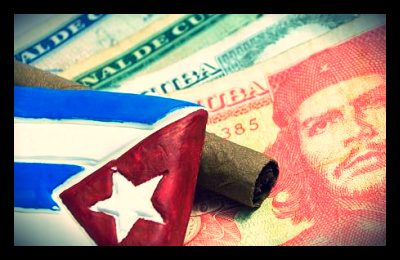
Cuban Economic Growth

Cuban Economic Growth
For decades, Cuba kept itself off the radar and rarely allowed access to the United States. However, Raul Castro, brother to the infamous Fidel Castro and current leader of Cuba, has recently allowed small changes to make an impact on Cuba.

After years of economic isolation and little internal growth, Castro faces a difficult job in making up for lost time. Small programs like the Cuban Emprende make a world of difference as community leaders learn how to grow their small businesses into larger, more modern companies, leading the way for Cuban economic growth.

The distribution of wealth in Cuba is skewed, with the poor representing a large portion of the population. The average Cuban worker earns around $20 a month, and little has changed in the past 50 years. Cuba has now opened the doors to looking into private investments, a monumental step in the direction of globalization.

In the past, Cuba was mostly affiliated with Latin and South America. By allowing other countries, such as the U.S., into the Cuban system, the people of Cuba are looking at a brighter economic future.

However, members of U.S. Congress seem tentative about whether this Cuban economic growth and reform are benefiting the labor rights as well as human rights of the population. Raul Castro has yet to make clear how the people are being affected by this change in internal government, so outsiders are weary of possible retribution. It is unclear as to how the U.S. will react to these changes and opening up foreign investment. Since the revolution of Cuba in the 1960s, the U.S. has not been allied with Cuba.

Chamber President Thomas Donahue recently visited the island for the first time in 15 years. He reports positive change in the direction of free enterprise, fewer government jobs and increased private hiring. Cubans are seeing a better daily life as companies begin to modernize and improve the impoverished neighborhoods as jobs become more readily available.

Raul Castro has recently implemented programs teaching Cubans how to successfully operate small businesses and create meaningful business relationships. Programs such as this offer the lower class an opportunity to support themselves in the realm of business and become potential business partners as foreign investors start to peer into Cuba’s economy.

Cuba is still in the early stages of change as its people adjust to the government’s new approach, but current conditions are looking promising as people find their new niches in a budding economy.

– Elena Lopez

Sources: Reuters, NY Times, TIME
Photo: InterNations

June 3, 2014
https://borgenproject.org/wp-content/uploads/borgen-project-logo.svg 0 0 Borgen Project https://borgenproject.org/wp-content/uploads/borgen-project-logo.svg Borgen Project2014-06-03 08:00:022024-05-26 23:37:00Cuban Economic Growth
Activism, Global Poverty, Government, Inequality

Rising Global Inequality

Global_Inequality_sucks
Everywhere one looks in the news media, the word inequality is beamed into television sets, either through the banter between detached pundits or through the bullhorns of activists storming littered streets.

Brought to the forefront of policy debates after the full force of the Great Recession was being felt, the rising, global inequality between the rich and the poor has stoked the powerful emotions of the disenfranchised.

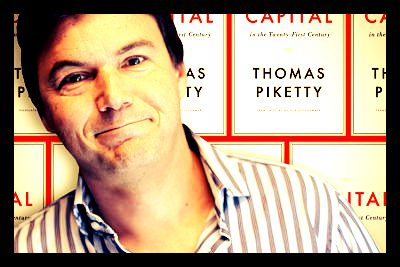
And now, a French professor, Thomas Piketty, is ratcheting up the debate even further with a massive tome designed to showcase just how vast the gulf between rich and poor has become.

The book is called “Capital in the 21st Century” and in it Piketty attempts to address the reasons behind the trend of rising inequality throughout the world during the past decade.

And people’s ears are perking up; the book reached number one on Amazon.com shortly after its release.

Oxfam recently released a report detailing the harm global inequality is inflicting on the lives of the poor, as well as its effect on governance. Oxfam notes that 85 people in the world collectively own the same amount of wealth as the bottom half of the world’s population.

They note that stocks and corporate profits are continuously climbing, while wages have stagnated. And one of the most prominent concerns among the public is the over-representation of the wealthy’s concerns in governments around the world.

But has there been no progress? Has the state of those inhabiting the poorer regions of the world not changed at all? In reality, many things have changed for the better in the past several decades.

Between 1981 and 2008, the amount of people living on one dollar a day fell by 750 million. That is astronomical progress, but if one looks between countries rather than within, the inequality gap is as big as ever.

So what can be done? Many people have lost faith due to a perceived shift in political power away from the average voter and toward the wealthy and politically connected. Despite voters heading to the polls again and again, politicians routinely implement policies that do nothing to truly address rising inequality.

This happens despite the fact that most people agree great inequality is undesirable; most view its alleviation as a good thing, so long as the policies are sensible and do not harm the overall economy.

Many individuals complain of vast oligarchies setting policy against the average man, but fail to show up at the voting booth (a problem in America especially).

It’s more important to show support for policies and politicians that will actually implement effective and sensible policies to reduce inequality than to simply bemoan the current state of affairs.

Policies such as the expansion of the Earned Income Tax Credit in the United States, and increasing social spending in poor countries to actually reach those in need are just a couple things that can alleviate inequality.

The policies are there. It is simply up to the public to remain informed and active within their respective societies.

– Zachary Lindberg

Sources: Oxfam, The New Yorker, The Guardian
Photo: Salon

May 11, 2014
https://borgenproject.org/wp-content/uploads/borgen-project-logo.svg 0 0 Borgen Project https://borgenproject.org/wp-content/uploads/borgen-project-logo.svg Borgen Project2014-05-11 04:00:442017-03-20 14:07:26Rising Global Inequality
Global Poverty, Government, Inequality, Slums

Favelas in Rio

Favelas in Rio
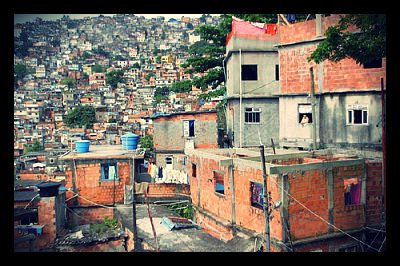
In Brazil, especially in the city of Rio de Janeiro, the wealthy tend to live closest to the sea. Favelas, or shantytowns, are slums in Brazil that are located farther away from the water on hills. They started out as an inexpensive housing option for returning Brazilian soldiers and freed African slaves in the 19th century. In Rio de Janeiro, a city of about six million people, approximately 20 percent live in favelas.

The urban phenomenon of favelas grew during the dictatorship of Gétulio Vargas, who pushed for greater industrialization within Brazil, which brought in more immigrants to Rio de Janeiro and therefore more occupants into the cheaper form of housing.

The 600 favelas in Rio de Janeiro today are mostly known for their high levels of poverty and crime, with numerous drug trafficking groups and street gangs operating within the various favelas that dot the hills of Rio de Janeiro. Favelas are also known for their relative lack of public services and government attention. Brazil is known to be one of the most unequal countries economically, with the top 10 percent of the population earning 50 percent of the national income and 8.5 percent of people living below the poverty line.

The location of favelas makes it difficult for the Brazilian government to provide proper public services, and as such makes it harder for the government to establish a positive presence in the favelas, which only furthers the cycle of violence as gangs are given more or less free reign.

This security issue within the favelas has been addressed by the introduction of a government program in 2008 that aimed to crack down on violence in the slums. Such programs are proving especially important ahead of the upcoming World Cup. The program installs permanent “police pacification units” (PPUs) throughout the favelas to deter crime and rid the favelas of the most serious gangs.

These PPUs are becoming a more widely accepted form of security control on behalf of the government. In Rio de Janeiro alone there are currently around 37 PPUs covering an area of about 1.5 million people, yet these PPUs have been criticized in Brazil for their severe tactics in dealing with local residents. Right now more than 24 policemen are facing charges for allegedly torturing a local resident of a favela.

More positive government policies have been successful in bringing 40 million Brazilians into the middle class over the last decade. Moreover, nationwide statistics indicate that 15.9 percent of Brazilians were impoverished in 2012, down from 18 percent in 2011. But Brazil is a land of contradictions, and despite this impressive decrease in poverty the South American nation remains the 12th most unequal nation in terms of income. Although Brazil should certainly be commended for its substantial decrease in poverty, policies should be implemented to ensure further social inclusion for those living on the margins.

– Jeff Meyer

Sources: IRIN News, G1, BBC News, NPR, BBC News
Photo: Blog Spot


Read The Borgen Project Magazine


April 30, 2014
https://borgenproject.org/wp-content/uploads/borgen-project-logo.svg 0 0 Borgen Project https://borgenproject.org/wp-content/uploads/borgen-project-logo.svg Borgen Project2014-04-30 04:00:032020-07-25 00:49:04Favelas in Rio
Charity, Economy, Global Poverty, Government

NGO Disappointed with 2015 House Budget Proposal

2015 House Budget Cuts
In its recently released April 2014 newsletter, Bread for the World voiced its “deep disappointment” for the 2015 fiscal year House budget proposal. This proposal, introduced by Representative Paul Ryan, makes deep cuts to programs that help poor and hungry people in the United States and abroad.

The budget proposal cuts over $5 trillion over 10 years and calls for many changes to low-income programs. These policy changes will kick an estimated four million people out of the Supplemental Nutrition Assistance Program (SNAP), or food stamps, program. The changes to SNAP are significant, as assistance will now come in the form of a federal block loan and will not be able to increase should need arise. Negative impacts also reach Special Supplemental Nutrition Program for Women, Infants, and Children (WIC) and low-income tax credits.

The House’s proposal also cuts the International Affairs budget by 11 percent. Decreases to the International Affairs budget are detrimental to the success of food aid and other humanitarian efforts and undermine U.S. ability to fight poverty in the world’s poorest countries. The proposal also moves the Millennium Challenge Corporation to the position of lead agency for foreign development assistance, diminishing USAID’s role in ending global hunger.

Although many agree that federal spending is out of control, David Beckmann, President of Bread for the World, believes that pulling funding for programs that support the most vulnerable is clearly a poor reallocation of resources. “Fiscal responsibility means not sacrificing our commitment to reducing hunger and poverty for the sake of reducing a deficit that vulnerable people did not create,” Beckmann states. “Lawmakers must stop violating the basic principle to protect ‘the least of these’ in budget decisions, which Congress has adhered to in all major budget agreements over the past 30 years.”

– Madisson Barnett

Sources: Bread for the World, Bipartisan Policy Center
Photo: PennLive

April 28, 2014
https://borgenproject.org/wp-content/uploads/borgen-project-logo.svg 0 0 Borgen Project https://borgenproject.org/wp-content/uploads/borgen-project-logo.svg Borgen Project2014-04-28 10:48:012024-05-24 23:40:30NGO Disappointed with 2015 House Budget Proposal
Economy, Global Poverty, Government

Financial Reform Law in Bolivia

Financial Reform Law in Bolivia
Last August, Bolivian President Evo Morales signed a bill that would reform the country’s financial sector. The reform bill has more than 550 articles and is expected to force the private sector banks in the country to become more competitive as interest rate ceilings and mandatory-lending quotas are implemented. The law will boost the competitiveness of state-owned bank Banco Unión and the many microfinance institutions operating in the region.

The reform is also intended to focus on financial inclusion and reducing economic inequality, an issue that is extremely important for Morales and his large indigenous following. The private banks in the region will need to become more efficient as well, but fortunately for the banks the Bolivian government has been implementing the changes gradually. It is unknown how much the reform will cut into the bank’s profitability.

During the last few years, however, Bolivia has enacted harsh taxes designed to reduce its “excess” profitability. The private banks’ average return on equity fell from 21% in 2007 to 17.5% in 2012, then to 14% in 2013. This latest dip came from the imposition of additional taxes on extraordinary earnings and a tax on exchanges related to foreign exchange.

The law also states that at least 60% of a bank’s loan portfolio should go to financing the productive and social sectors. This will be difficult for Bolivia’s banks, however, as they are currently focused on specific markets. Despite this new requirement, the government is giving the banks a period of two years to four years to implement it.

Another requirement states that the interest rate ceiling on loans for houses to be set at 5.5 to 6.5%, a figure that depends on the value of the house. Banks currently set the loan ceiling to a figure of 7 to 8%. This loan ceiling is designed to allow more people to be able to better afford a house and is a part of the movement towards more financial inclusion in Bolivia.

Bolivia’s private banks should be able to weather this new reform with continued profitability as the Bolivian economy is buoyed by its 6.5% growth rate in 2013 and its credit growth of 20%.

– Jeff Meyer

Sources: BNamericas, BNamericas, laRazon
Photo: The Telegraph

April 27, 2014
https://borgenproject.org/wp-content/uploads/borgen-project-logo.svg 0 0 Borgen Project https://borgenproject.org/wp-content/uploads/borgen-project-logo.svg Borgen Project2014-04-27 08:23:172024-05-26 23:28:50Financial Reform Law in Bolivia
Economy, Global Poverty, Government

The Limitations of U.S. Government on the Economy

Bloomberg recently posted an article on how the unemployment rate has held steady at 6.7 percent while U.S. payrolls have increased, despite more Americans entering the labor force. This means that Americans who had stopped trying to find work are now renewing their job hunt. The limitations of U.S. government have had little to do with this hopeful sign. Here’s why:

1. People Assume The President Has Too Much Power

When it comes to economic policy, aside from tariffs or taxes, the Federal Reserve has the more relevant hand in the interest rates banks charge for loans, savings accounts, capital accounts and stocks.

The Federal Reserve controls the money supply by tinkering with bank reserve ratios or how much currency a bank can hold. The President can affect inflation through drastic action, such as removing the gold standard (see Richard Nixon).

2. People Assume The President Has Too Little Power

The economy is not some ethereal being who lords over all controlling prices and jobs. The economy is the public. It is a market, in which people trade and consume, and income and prices fluctuate accordingly. The Federal Reserve simply reacts to the behavior of people, not the other way around.

It all hinges on something called aggregate demand, or how much the general population wants to consume and buy. The government does best when it does not interfere in markets at all. The Great Recession occurred because too many people put all their eggs in the housing bubble basket. The Great Depression occurred because people stopped consuming, lowering the money supply, and demanded money from banks with insufficient supply. Even now, as the unemployed population rejoins the workforce, they do so because of choice.

3. It all Runs in Cycles

Businesses and the markets they operate in run on cycles. There are booms, recessions and recoveries, and eventually this cycle repeats. It’s the ebb and flow of economics. If anticipated correctly, the cycles could pass through without any serious repercussions. However, the length between these cycles vary so widely, the public, the Federal Reserve, and the government often seem to forget about them. As a result, policies and behaviors are enacted that can prove detrimental once the cycle restarts.

This view of economics not only applies to the United States, but to the world as a whole. The power of the markets should lie with the people, and in a way, always has. Unless the government is linked directly to markets or totalitarianism, its economic power is somewhat limited. The government can guide and suggest movements for businesses, but at the end of the day, its not the government, the Federal Reserve, or the President that determines the one’s livelihood: it’s the individual.

– Matthew Price

Sources: Bloomberg, Daily Infographic
Photo: Housing Works

April 11, 2014
https://borgenproject.org/wp-content/uploads/borgen-project-logo.svg 0 0 Borgen Project https://borgenproject.org/wp-content/uploads/borgen-project-logo.svg Borgen Project2014-04-11 04:00:452024-05-26 23:25:45The Limitations of U.S. Government on the Economy
Developing Countries, Global Poverty, Government, Health, Nonprofit Organizations and NGOs

Myanmar Government Bans Doctors Without Borders

The Myanmar government banned Doctors Without Borders (DWB) from operating in one of its most impoverished states, following rumors of ethnic tension.

Most of the disenfranchised Muslim minority reside in the Rakhine State. The government accused the DWB of favoring this minority over its rival group, the Rakhine Buddhists. This tension led to widespread violence, killing 100 people and displacing nearly 140,000 others. The government regards Muslims as “interlopers” from Bangladesh, as opposed to a legitimate minority. President Thein Sein granted DWB permission to resume its work in other regions, but continued its ban on operations in Rakhine.

Presidential spokesman Ye Htut accused DWB of “not following their core principle of neutrality and impartiality.”

Rakhine State government accused the NGO of intentionally fueling tension between the minorities, according to Htut. The perception of bias led to large-scale protests in the state capital against DWB.

The organization responded to these accusations in a statement, asserting “services are provided based on medical need only, regardless of ethnicity, religion, or any other factor.”

This January, DWB released a statement contradicting the government on an alleged massacre in Rakhine. This reportedly “triggered” the ban on its operations in the region. The United Nations report the death of more than 40 Rohingya Muslims, and DWB confirmed treating 22 victims. Wounds occurred at the hands of state security forces, yet the government denounced these claims, reporting the death of one police officer.

Following the ban, the Ministry of Health plans to provide health services for the “whole community.” Myanmar President Thein Sein also dispatched the emergency response workers and ambulances to the region, replacing the DWB clinics.

These services cannot match those provided by the NGO. The national health services rank “among the most rudimentary in Asia,” according to the New York Times. The government also confines Muslims to their villages, preventing the group from receiving medical care.

Banning DWB deprives nearly 750,000 people of proper healthcare.

The NGO acted as the largest provider in northern Rakhine, a region largely populated with Muslim Rohingya. It managed five permanent clinics as well as 30 mobile units. Within these clinics, workers operated an intensive feeding center for undernourished children. Medical professionals report diagnosing more than 20 percent with acute malnourishment.

The government ban forced these centers to close, following the removal of DWB.

The organization also served those living in displaced camps outside the state capital, Sittwe. Tuberculosis, a disease endemic to Muslim neighborhood Aung Mingla, threatens the health of displaced Muslims. HIV and malaria also threaten resident health. With limited medical attention, the supplies of medicine continue to dwindle.

The government prevents these patients from leaving the area, surrounding the camp with “barbed-wire security posts and police officers.”

As head of the U.N. Office for the Coordination of Humanitarian Affairs in Myanmar, Mark Cutts expresses concern for the present healthcare shortage. Rather than antagonizing the government, though, the U.N. has chosen “quiet diplomacy.”

For the time, the International Committee of the Red Cross and other organizations can provide care. Myanmar deputy health director Dr. Soe Lwin Nyein plans to accept tuberculosis and HIV medication from DWB. These concessions help patients in the region receive more than the minimum government care, yet negotiations over the medicine distribution appear ongoing.

Cutts plans to coordinate with the government and reinstate DWB “as soon as possible,” protecting the minority from disease. As ethnic tension continues to incite violence, the government banned professionals in the best position to serve its people.

– Ellery Spahr

Sources: CNN, New York Times
Photo: Richard Roche

March 21, 2014
https://borgenproject.org/wp-content/uploads/borgen-project-logo.svg 0 0 Borgen Project https://borgenproject.org/wp-content/uploads/borgen-project-logo.svg Borgen Project2014-03-21 04:00:512024-05-26 23:21:15Myanmar Government Bans Doctors Without Borders
Page 21 of 24«‹1920212223›»

Get Smarter

  • Global Poverty 101
  • Global Poverty… The Good News
  • Global Poverty & U.S. Jobs
  • Global Poverty and National Security
  • Innovative Solutions to Poverty
  • Global Poverty & Aid FAQ’s
Search Search

Take Action

  • Call Congress
  • Email Congress
  • Donate
  • 30 Ways to Help
  • Volunteer Ops
  • Internships
  • Courses & Certificates
  • The Podcast
Borgen Project

“The Borgen Project is an incredible nonprofit organization that is addressing poverty and hunger and working towards ending them.”

-The Huffington Post

Inside The Borgen Project

  • Contact
  • About
  • Financials
  • President
  • Board of Directors
  • Board of Advisors

International Links

  • UK Email Parliament
  • UK Donate
  • Canada Email Parliament

Get Smarter

  • Global Poverty 101
  • Global Poverty… The Good News
  • Global Poverty & U.S. Jobs
  • Global Poverty and National Security
  • Innovative Solutions to Poverty
  • Global Poverty & Aid FAQ’s

Ways to Help

  • Call Congress
  • Email Congress
  • Donate
  • 30 Ways to Help
  • Volunteer Ops
  • Internships
  • Courses & Certificates
  • The Podcast
Scroll to top Scroll to top Scroll to top