• Link to X
  • Link to Facebook
  • Link to Instagram
  • Link to TikTok
  • Link to Youtube
  • About
    • About Us
      • President
      • Board of Directors
      • Board of Advisors
      • Financials
      • Our Methodology
      • Success Tracker
      • Contact
  • Act Now
    • 30 Ways to Help
      • Email Congress
      • Call Congress
      • Volunteer
      • Courses & Certificates
      • Be a Donor
    • Internships
      • In-Office Internships
      • Remote Internships
    • Legislation
      • Politics 101
  • The Blog
  • The Podcast
  • Magazine
  • Donate
  • Click to open the search input field Click to open the search input field Search
  • Menu Menu

Archive for category: Government

Foreign Policy, Global Poverty, Government, Politics and Political Attention

UNSC Propose Reforms, Russia Exploits Veto Power

Following landmark political shifts in Ukraine during 2014, the scope of international politics has heavily focused its lens upon tension between Ukraine and Russia, and more recently in the eastern Ukrainian region of Crimea.

Popular uprisings in Ukraine have divided the population between western supporters of the European Union and eastern supporters of Russia. Although the majority of Ukraine’s population wants to be in alignment with the European Union, the region of Crimea contains a significant amount of Ukraine’s Russian-supporting population.

Russia has recently received international attention by its military occupation in the region of Crimea. In addition, the parliament of Crimea has even voted to secede from Ukraine. Critics of Russia, such as President Barack Obama of the United States, argue that Russia’s actions are in violation of Ukraine’s sovereignty and established international laws.

Deputy Secretary General of the UN, Jan Eliasson stressed that meaningful discourse and dialogue ought to be facilitated within the Security Council in order to reach a resolution to alleviate the problems in Ukraine.

The situation in Russia has consistently been a heavily debated topic in the United Nations Security Council (UNSC); however, extensive use of veto power by Russia has hindered the UN Security Council from reaching any substantial resolutions to alleviating the escalating tension between Ukraine and Russia.

The UNSC contains a body of five permanent member states including the United States, the United Kingdom, China, France and Russia. The ability for Russia to block actions that are clearly within the goals and intentions of the UN to “pursue diplomacy, and maintain international peace and security,” and “save succeeding generations from the scourge of war,” provides significant concern for the institutional framework of the UNSC.

Although the United Nations Security Council accounts for the most powerful UN body, Russia’s ability to exploit its status as a permanent member have produced consequences with their violation of international law.

Moreover, while the UNSC remains in suspension of reaching a resolution, the situation in Ukraine is continuing to rapidly escalate. Ukraine’s ambassador to the United Nations pleaded to the UNSC in an emergency session to do everything that is possible to end the violation of national sovereignty and invasion of Crimea by Russian military forces.

Failure to make steps to remedy the conflict between Russia and Ukraine is exemplary of some of the weaknesses inherent to the UNSC. However, it has not been the only case of Russia’s exploitation of its permanent status and veto power in the UNSC. Critics have also argued that failure to resolve the conflict in Syria has also been the result of blocked motions by Russia.

Considering the level of power and influence the UNSC has, problems arise when just one nation has the means to restrict action in addressing pressing international problems. Russia has been quintessential in portraying how special interests can hinder the intentions of international law—which is at the root of why international law may need to be reformed in accommodating 21st century problems.

– Jugal Patel

Sources: Reuters, Al Jazeera, UN News Centre, ABC News
Photo: Rianovosti

March 19, 2014
https://borgenproject.org/wp-content/uploads/borgen-project-logo.svg 0 0 Borgen Project https://borgenproject.org/wp-content/uploads/borgen-project-logo.svg Borgen Project2014-03-19 04:00:112024-06-05 01:57:17UNSC Propose Reforms, Russia Exploits Veto Power
Development, Global Poverty, Government

Sustainable Irrigation and Development in India

Experiencing a period of drought on a normal basis before the rainy season, the farmers of India often find themselves at the mercy of nature as well as heavily relying on diesel oil in order to irrigate their farms. Not only that, it is estimated that only 32% of India’s farms are irrigated.

For this reason, over the next five years, the government of India is aiming to reduce this reliance by installing solar energy pumps in rural India. This project is also expected to protect the level of groundwater in the Subcontinent.

The investment needed to initiate this clean and sustainable alternative will cost around $1.6 billion, which will be channeled into replacing non-solar pumps with 26 million solar powered ones to provide access to sufficient electricity to farmers in certain areas of the country wherein electricity resource is still insufficient.

If this project proves to be a success, it will enable India to save $6 billion annually in energy subsidies handed out to farmers, a sum that could go a long way in terms of rural development.

This will also allow farmers—many of whom are poor—to be able to water their plants with no operation cost at all. Thus, this project will not only help the state to save, it will also expand the profit margin of rural farmers of the world’s second most populous country. In certain states, such as Punjab, the state authorities are already helping farmers to acquire necessary materials for the installment of drip-irrigation watering system via subsidization.

The drip-irrigation method, also known as the micro-irrigation method, is an agricultural technique used in order to curb both the use of fertilizer as well as water by trickling water in a very small amount directly to the roots of the plants. Thus, in addition to the solar pump the investment of which will be disseminated countrywide, in the southern state of Kerala, another $62 million is going to be spent to put in place drip-irrigation infrastructure.

Once complete, it will allow more people access to water on their farms regardless of where they are, as water will be dispensed equally throughout a larger area.

With the agricultural sector commanding 51% of India’s total workforce but nevertheless providing India with only 15.7% of the country’s gross domestic product (GDP). This indicates a huge disparity when more than half of the country is in a sector that earns less than a fourth of the total GDP. Thus, with the expanded profit margin and more government’s attention in the sector India and its dynamic economic growth will—in the foreseeable future—be able to lift more people out of poverty.

– Peewara Sapsuwan

Sources: We Demain, Bloomberg, India Text, Irrigation Direct, Bloomberg Sustainability, World Bank
Photo: Ingetje Tadros

March 14, 2014
https://borgenproject.org/wp-content/uploads/borgen-project-logo.svg 0 0 Borgen Project https://borgenproject.org/wp-content/uploads/borgen-project-logo.svg Borgen Project2014-03-14 04:00:002024-12-13 17:50:09Sustainable Irrigation and Development in India
Global Health, Global Poverty, Government, Health

Doctors Without Borders expelled from Myanmar

expelled
Doctors without Borders, also known as Medecins Sans Frontiers, is one of the most respected aid organizations in the world. It was created in 1971 by a group of doctors who desired to have a more direct approach to aiding those in need. It has provided aid to many countries that desperately need it. Doctors without Borders won the Nobel Peace prize in 1999 for its work helping those in war torn countries around the world.

In accepting the award in 1999, former head of the organization Dr. James Orbinski said, “Silence has long been confused with neutrality, and has been presented as a necessary condition for humanitarian action. From its inception, MSF (Medecins Sans Frontiers) was created in opposition to this assumption.”

The situation in Myanmar for the Rohingya could not be more dire and the comments of Orbinski could not be more apt. The Muslim Rohingya are the minority in Myanmar and are one of the most persecuted groups in the world, according to the United Nations.

Doctors Without Borders was an integral part of ensuring that the Rohingya received basic medical care and the services that they desperately need. The situation is more complex however as the government of Myanmar does not recognize the Rohingya as a legitimate ethnic group and persecutes and block their basic human rights at every turn.

Doctors Without Borders has been providing aid to citizens in Myanmar for the last 22 years, according to CNN, and was the largest non-governmental organization in the Rakhine state where the Rohingya live. The group was banned by the Myanmar authority for allegedly showing a “bias” towards the Rohingya who are termed Bengali by the Myanmar government which views them as illegal aliens.

There is speculation by a number of sources that the ban originated because Doctors without Borders put out a statement regarding a massacre of 44 Rohingya by state security officials. The UN and Doctors Without Borders maintain that the Rohingya were targeted by security forces and a mob of local Buddhist.

Myanmar’s government maintains that just one police officer was killed and no other violence occurred.

Doctors Without Borders was operating medical clinics for basic needs as well as HIV/AIDS clinics that were providing treatment to over 30,000 people. The NGO was Myanmar’s largest supplier of HIV medicine and the lack of treatment for this many could and will have devastating consequences in the long term.

Representative Joe Crowley is an outspoken voice on Myanmar and recently tweeted, “It is the responsibility of the Burmese government to protect its civilians. This is deeply troubling.” The Rohingya need more outspoken representatives in international governments around the world if they are to continue to be under the thumb of Myanmar’s oppressive government.

– Arthur Fuller

Sources: ABC, CNN, Doctors Without Borders, Los Angeles Times, Fox
Photo: Apologetics Press

March 12, 2014
https://borgenproject.org/wp-content/uploads/borgen-project-logo.svg 0 0 Borgen Project https://borgenproject.org/wp-content/uploads/borgen-project-logo.svg Borgen Project2014-03-12 04:00:222024-05-26 23:18:31Doctors Without Borders expelled from Myanmar
Global Poverty, Government

Chinese Judicial System Investigated for Corruption

Chinese Judicial System
Following ongoing cases of judicial corruption with commutations to sentences, probations and cases of bribery, Chinese authorities have declared they will establish a strict anti-corruption initiative.

A former board chairman of a Chinese beverage company was able to navigate his way through the judicial system and eventually escape overseas. According to Chinese news agencies, Zhang Hai was able to illegally reduce his sentence by nine years. His release came after he was sentenced to 15 years in prison for embezzling the equivalent of $33.8 million in public funds.

There are 24 people altogether, ranging from police officers to prison and court officials, that are now under investigation for their involvement in the case highlighting judicial corruption from multiple fronts. The Commission for Political and Legal Affairs under the China Central Committee reported that criminals were able to use money and power to escape punishment in the Chinese criminal justice system.

The anti-corruption drive aims to strengthen the framework of the judicial system so there is greater accountability and transparency. In fact, a report from the Chinese Academy of Social Sciences revealed that multiple local and regional governments were neglecting the process of publicizing information to allow for transparency in the judiciary.

Cases of corruption within the Chinese judicial system indicate a significant concern for the Chinese people. Similar to the United States judicial system, the Chinese judiciary is only able to operate with the good faith of the people. Problems arise, however, when a lack of transparency obstructs the awareness of corruption. Moreover, in-depth studies of the corruption within the Chinese judicial system indicate that acts of corruption are not rare and isolated occurrences. On the contrary, corruption is embedded within the Chinese judicial system and is even inherently produced by the mechanism of decision-making.

To account for the systemic failures of their judicial system, Chinese authorities plan to take an institutional approach to addressing the problem by amending the system. According to the Central Commission for Discipline Investigation, a total of 182,038 Chinese government officials have been punished for corruption in the last year. Considering the magnitude of the government’s shortcomings in stemming corruption, it is important that authorities begin to seriously address the ongoing problem.

– Jugal Patel

Sources: BBC, Global Times, U.S.-Asia Law Institute
Photo: New York Times

March 10, 2014
https://borgenproject.org/wp-content/uploads/borgen-project-logo.svg 0 0 Borgen Project https://borgenproject.org/wp-content/uploads/borgen-project-logo.svg Borgen Project2014-03-10 04:00:422016-12-15 14:37:54Chinese Judicial System Investigated for Corruption
Foreign Policy, Global Poverty, Government, War and Violence

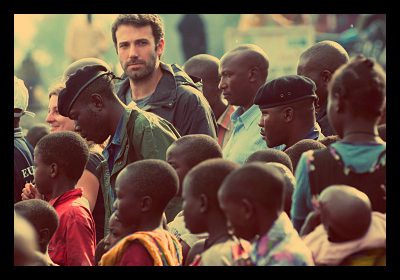
Ben Affleck DRC Testimony

Ben Affleck
Ben Affleck, co-star of the upcoming film Superman vs. Batman, spent time in Washington, D.C. on February 26 discussing the situation in the Democratic Republic of the Congo (DRC). Using his celebrity and networking super powers,  Affleck has previously launched the Eastern Congo Initiative (ECI) in 2010 and has since helped raise awareness and generate public action against violence in the DRC.

While in D.C. Affleck testified in front of the Senate Foreign Relations Committee and Committee Chairman  Sen. Robert Menéndez (D-N.J.). He began his testimony by acknowledging the significant progress made in the last three months. He also thanked Congress, U.S. President Obama and the State Department for their roles in achieving the surrender of M23, the Congolese Revolutionary Army, which has been violently rebelling against the DRC government.

Affleck emphasized that though progress has been made, it is important to stay on track, and that deviating could risk losing the fruit of their hard diplomatic labor.  The ECI created five key points for Congress to ensure sustainable peace in the country:

  1. Urge U.S. Secretary of State John Kerry to ensure DRC special envoy Russell Feingold has the support needed to successfully achieve his mission
  2. Call on U.S. Embassador to the U.N. Samantha Power to support extending the intervention brigade past its March 31 expiration
  3. Foreign Relations committee hold an oversight hearing to consider a sunset to MONUSCO that compels the DRC to follow through and fully reform its security sector
  4. Have Obama directly engage with DRC President Joseph Kabila to encourage him to make good on his critical commitment to long-overdue security sector reforms by establishing a clearly defined road map
  5. Have the U.S. play a pivotal role and robustly participate in multilateral efforts to ensure that the Congolese holds free, fair and timely local and national elections that respect the Congolese constitution including strict observance of term limits
  6. Call upon USAID to scale up its economic development initiatives in Eastern Congo

Ultimately, the ECI believes the DRC can be revived through enhanced security on one side and injecting small amount of development aid throughout pockets of the community. This will allow the Congolese people to stand on their own and create a market economy, eventually joining the global market.

– Sunny Bhatt

Sources: YouTube, Eastern Congo Initiative
Photo: Ryot.org

March 6, 2014
https://borgenproject.org/wp-content/uploads/borgen-project-logo.svg 0 0 Borgen Project https://borgenproject.org/wp-content/uploads/borgen-project-logo.svg Borgen Project2014-03-06 04:00:132018-01-30 13:14:12Ben Affleck DRC Testimony
Foreign Aid, Global Poverty, Government

Land Grabbing in Ethiopia Threatens Native Population

land grabbing
Natives of Ethiopia’s Omo River Valley are having their way of life threatened by state-run land grabbing projects designed to develop the area. The valley consists of the traditional lands of the Bodi tribe, which is being forced into government-run villages. These natives have no one to help them; the government’s wants only destroy their land.

Much of the development is being allocated to state-run sugar plantations. In the last 15 months, most of the tribe’s traditional lands have been wiped out. The repercussions of the government’s move will likely affect more than just the 7,000 members of the Bodi tribe.

The development consists of the construction of not only sugar plantations, but a large dam within the Omo River basin. The construction of the dam is projected to be the most devastating of the government projects. It will take the majority of the water present in the river basin with the potential to affect over 500,000 Ethiopians.

No social impact studies were done prior to the implementation of the project, the consent of the tribes occupying the river valley was not obtained and absolutely no one has received any type of compensation for the hardship endured by the forced relocation.

The dam, named Gibe III, will be responsible for adjusting river flows to aid commercial agriculture in the valley. Some believe that this will cause a severe shortage within neighboring bodies of water.

Lake Turkana is situated nearby and is expected to experience a severe drop in its water level. Some are expecting the further development of sugar plantations to result in a water level drop of 16 to 22 meters.

Due to the project’s controversial nature, it has failed to receive funding from many institutions outside of Ethiopia. The World Bank, African Development Bank and the European Investment Bank all decided not to fund the project. However, China’s Industrial and Commercial Bank (ICBC) has come through to provide funds.

Sadly, the development of the Omo River Valley is just a footnote in the long list of human rights abuses the Ethiopian government has inflicted upon its people. The government routinely makes a sham out of its “democracy” with one party winning elections time and time again despite the presence of other political parties.

Criticism of the government is routinely punished. Many journalists have been tossed in jail for simply highlighting government abuses. One journalist, Eskinder Nega, received an 18 year jail sentence for criticizing the government. There are also frequent crackdowns against the Muslim minority who have peacefully protested for the freedom to worship.

There does not seem to be much the average Ethiopian can do to evade the impact of this land grabbing development project. Barring intervention by diplomatic forces outside, the Chinese-backed development project will go on as planned and thousands of innocents will suffer for it.

– Zachary Lindberg

Sources: The Huffington Post, Human Rights Watch
Photo: Any Uak Media

March 5, 2014
https://borgenproject.org/wp-content/uploads/borgen-project-logo.svg 0 0 Borgen Project https://borgenproject.org/wp-content/uploads/borgen-project-logo.svg Borgen Project2014-03-05 04:00:212016-12-15 14:40:09Land Grabbing in Ethiopia Threatens Native Population
Global Poverty, Government

Poverty and Hunger in Swaziland

hunger in swaziland
Swaziland is considered a low-income to middle-income nation. However, over 50% of the population lives below the national poverty line and makes less than 2 dollars per day.

Weather conditions contribute to the impoverished conditions. Droughts and flooding have caused years of food shortages and an increase in food prices. Maize, which is Swaziland’s main export, exceeded 100,000 tons 10 years ago and is now harvested at a rate of 70,000 tons. Weather, disease and unorganized food management programs are partly to blame for the plummet.

Health complications play a vital role in unsuccessful food productivity. For instance, Swaziland holds the highest rate of HIV/AIDS and Tuberculosis in the world. Nearly half of all women are HIV positive, along with over 80% of tuberculosis patients. With such high prevalence rates of HIV, the number of orphaned children is well over 200,000. Sadly this number will jump by over 50,000 by 2015.

Stunting causes numerous health and work related problems for the population, as well. Roughly 31% of children and over 40% of adults are stunted.

All of these health issues contribute not only to high mortality rates but a poor economy. Reports show adults who are stunted miss more work days and are less productive then non stunted individuals. Stunted individuals have more health problems and are more sickly. Education is also affected by the effects of undernourishment.

Many individuals end up dropping out of school and/or repeat coursework. Therefore workers required to use critical thinking or reasoning skills often provide low productivity. According to “the Cost of Africa Study,” Swaziland loses 783 million per year due to hunger-related illnesses.

Many blame the poverty-related conditions and hunger on the Swaziland government. The king’s lavish lifestyle reportedly depleted funds meant for the starving Swazi people. Reportedly, the king also enjoys 13 palaces, a private jet and luxury cars. He is quoted saying to the starving people that “hard work and prayer” will bring you out of poverty. He says this while the plans to tear down a school for a remolding project for one of his palaces is in the works.

Swaziland is a small landlocked country surrounded by South Africa and Mozambique. Its population, which reigns in at just over one million, is ruled by King Mswati III, one of the last absolute monarchies in the world. Many people believe that hunger, disease and malnutrition would decline if Swaziland became more of a democracy. Mswati does not support democratic transition, however.

– Amy Robinson

Sources: World Food Programme, All Africa, WFP
Photo: Development Diaries

March 4, 2014
https://borgenproject.org/wp-content/uploads/borgen-project-logo.svg 0 0 Borgen Project https://borgenproject.org/wp-content/uploads/borgen-project-logo.svg Borgen Project2014-03-04 04:00:472024-05-26 23:15:28Poverty and Hunger in Swaziland
Foreign Policy, Global Poverty, Government

Death Penalty Holds Firm in Outlier Nations

death penalty
A decreasing number of nations around the world utilize capital punishment, but according to Amnesty International, countries that use the death penalty do so at an “alarming rate.” Between 2010 and 2011, known executions increased from 527 to 676, a 28% rise.

In 2012, the number increased again to 680. There are many executions in nations such as Iran, China and Syria that go unreported. Amnesty International has not published Chinese reported figures on executions since 2009 because the organization declares that the government’s official numbers are exceptionally inaccurate. The organization estimates that annual executions in China are likely to be in the thousands.

Iran faces similar criticism. Amnesty states that it has received “credible reports” of a high volume of clandestine and unconfirmed executions in the country. Adding in these reports would effectively double Iran’s death penalty numbers.

In 2011, only 20 out of 198 countries, or roughly 10%, performed executions, and in 2012 the number of countries that had abolished the death penalty was five times higher than those that had not.

Iran, Saudi Arabia, Iraq and the United States have the highest total number of executions from 2007 to 2012. The Middle East has the highest number of executions of any region (557 executions in six nations.) With the notable exception of the U.S., most countries that still use the death penalty are in the developing world.

The U.S. is the only G7 country where capital punishment is legal.

Methods of executing prisoners vary globally but include lethal injection, beheading, hanging and shooting. In some nations such as Iran, North Korea, Saudi Arabia and Somalia, public executions still occur.

Crimes that are punishable by death also vary but can include drug offenses, rape, sorcery, adultery, “crimes against the state” and murder. Amnesty International also articulates concern over an increase in military courts sentencing people to death in Bahrain, Egypt, Lebanon, the U.S. and other nations.

Japan, India and Pakistan, contrary to global trends, all reinstated the death penalty after long periods of not executing prisoners. In these nations, changes generally occur because different political parties come into power, which leaves sentenced prisoners’ fate to the politics of the moment.

More than half of the world’s nations voted in December 2012 for a United Nations resolution, creating a worldwide moratorium on the death penalty. And the international pressure on countries like the U.S. has intensified.

Due to stated ethical obligations, the European Union banned the export of drugs such as sodium thiopental to the U.S. because they were being used for lethal injections.

Richard Dieter of the Death Penalty Information Center states that the E.U. embargo has stalled, but not ended, executions in the U.S. He asserts, “It has made the states seem somewhat desperate and not in control, putting the death penalty in a negative light, with an uncertain future.”

Amnesty International, Human Rights Watch (HRW) and many other human rights groups oppose the death penalty in all circumstances. HRW states that capital punishment violates people’s innate dignity, is “unique in its cruelty and finality and is “inevitably and universally plagued with arbitrariness, prejudice, and error.”

When asked if he thought the world was closer to abolishing the death penalty, Brian Evans, acting director of Amnesty International’s Death Penalty Abolition Campaign, seemed to remain hopeful, if hesitant.

“They’ll come around when they take a longer look at their death penalties,” Evans states, “but it’ll be a while.”

– Kaylie Cordingley

Sources: National Geographic, The Atlantic, The Huffington Post, The Huffington Post, Amnesty International, Amnesty International, The Guardian, Death Penalty Information Center
Photo: Amnesty International

February 28, 2014
https://borgenproject.org/wp-content/uploads/borgen-project-logo.svg 0 0 Borgen Project https://borgenproject.org/wp-content/uploads/borgen-project-logo.svg Borgen Project2014-02-28 09:44:512024-05-26 23:15:26Death Penalty Holds Firm in Outlier Nations
Economy, Global Health, Government, Politics and Political Attention

Is Global Governance Undermining Global Health?

Global governance
On February 11, The Lancet and the University of Oslo issued a joint commission calling for a political commitment to reform the current system of global governance in favor of one that prioritizes human health over wealth. The Commission of Global Governance for Health brought together 18 leaders of research and policy-making, drawn from a number of different backgrounds, to draft the report.

Data was gathered for two years on how socioeconomic inequality between nations is exacerbated by a system of global governance run by a handful of the wealthiest nations. This imbalance of political power between nations is exactly what the commission is trying to fight.

The main agenda it promotes is that health equity should be a top priority of all political, economic and social sectors.

Richard Horton, editor-in-chief of The Lancet, notes, “Economic growth alone will not deliver good health to the most vulnerable sectors of society without addressing the intertwined global factors that challenge or destroy health lives.”

The commission identifies seven areas where political and economic injustice affects population health:

  • The global financial crisis and ensuing austerity policies
  • Knowledge and intellectual property
  • Investment treaties
  • Food security
  • Transnational corporations
  • Migration
  • Armed violence

Within these areas, there are five key “dysfunctions” that are preventing improvements in health outcomes. They are:

  • Democratic deficits (“the exclusion of civil society and marginalized populations from national and global decision making”)
  • Weak accountability (“inadequate means to constrain power”)
  • Institutional “stickiness” (“decision-making processes that fail to adapt to the changing needs of people”)
  • Inadequate policy space for health (“health concerns are too often subordinated to other objectives, such as economic growth and national security”)
  • Absence of international institutions to protect and promote human health

So where does this leave people?

The Commission makes it quite clear that all of these challenges can only be addressed by moving beyond the health sector. In order to promote human health and address global inequities, they argue that people need to reform their current system of global governance in a number of ways:

1. Create a multi-stakeholder platform on governance for health (“a place for deliberation and debate to strengthen accountability for health”)
2. Form an independent scientific monitoring panel (“to measure and track progress in overcoming the political, economic, and social determinants of adverse health outcomes”)
3. Organize health equity impact assessments of all policies and practices
4. Strengthen existing mechanisms to protect health and build commitment to global solidarity and shared responsibility

It is the hope of the Commission of Global Governance for Health that this report will bring health inequities between nations to the forefront of global policy.

– Mollie O’Brien

Sources: Medical News Today, The Hindu
Photo: Masafumi Matsumoto

February 25, 2014
https://borgenproject.org/wp-content/uploads/borgen-project-logo.svg 0 0 Borgen Project https://borgenproject.org/wp-content/uploads/borgen-project-logo.svg Borgen Project2014-02-25 18:04:212014-02-25 18:04:21Is Global Governance Undermining Global Health?
Global Poverty, Government, Politics and Political Attention

Define Congress… Defining Can be Difficult

call_congress
Politics can be very confusing to follow, especially if one is unaware of the basics, but a quick description of the functions and structure of Congress can help advocates of poverty reduction get a brief overview of the complex size and scope of the United States Congress.

Let’s define Congress. The U.S. Congress makes up the legislative branch of the U.S. government, meaning it has the power to write and make laws. Additionally, it has the ability to approve all government spending, collect taxes, declare war, regulate commerce and provide for the general welfare. Under the American democratic system of checks and balances, it shares governing authority with the executive and judicial branches of the government.

Structure

Congress is made up of two parts, or chambers. The lower chamber, the House of Representatives, has 435 members. The amount of members per state varies by the state’s population, but currently each representative typically represents approximately 700,000 constituents. Each state must have at least one representative who serves two-year terms.

The upper chamber, the Senate, has 100 total members. Each state has two senators, regardless of its population. Senators face re-election every six years; however, elections are rotated so that no more than one senator per state is up for re-election in a single election cycle.

Making Laws

A “Congress” lasts two years and begins on January 3 of odd-numbered years. Each year is considered a “session” of Congress. As of 2014, the 113th Congress is serving its second session. At the end of this year, elections will be held to decide the 114th Congress, which will meet from 2015 to 2017. Unapproved bills remain alive between sessions of Congress but do not carry over into the next two-year congressional term.

After a bill’s introduction in either house, it goes for review to the legislative committee that covers the subject of the bill. The committee may refer the bill to a subcommittee, which may hold hearings on the bill and amend it before recommending it for approval in a new form to the greater committee. Once the bill clears the committee process, it goes to the House or Senate floor for debate.

The House and Senate must each approve the bill in identical form before the President has an opportunity to sign it into law. Therefore, should differences exist between the House and Senate versions, the two chambers of Congress will form a conference committee to hash out any discrepancies. The president then has ten days to sign or veto the bill.

Shared Authority

The Senate and the House of Representatives share identical legislative authority with a couple of exceptions. First, the House of Representatives originates all revenue-raising bills, initiates impeachment proceedings against federal officials and has the final authority to choose the president if no candidate wins in the electoral college.

The Senate has the authority to confirm federal and judicial branch appointments and also the authority to ratify treaties. The senate also conducts impeachment trials after the House of Representatives has initiated them.

– Martin Levy

Sources: About, Congress Link, Census Data
Photo: OSG’s AP Gov. and Politics


Learn how to call Congress.


February 19, 2014
https://borgenproject.org/wp-content/uploads/borgen-project-logo.svg 0 0 Borgen Project https://borgenproject.org/wp-content/uploads/borgen-project-logo.svg Borgen Project2014-02-19 08:15:012024-05-26 23:14:59Define Congress… Defining Can be Difficult
Page 22 of 24«‹2021222324›»

Get Smarter

  • Global Poverty 101
  • Global Poverty… The Good News
  • Global Poverty & U.S. Jobs
  • Global Poverty and National Security
  • Innovative Solutions to Poverty
  • Global Poverty & Aid FAQ’s
Search Search

Take Action

  • Call Congress
  • Email Congress
  • Donate
  • 30 Ways to Help
  • Volunteer Ops
  • Internships
  • Courses & Certificates
  • The Podcast
Borgen Project

“The Borgen Project is an incredible nonprofit organization that is addressing poverty and hunger and working towards ending them.”

-The Huffington Post

Inside The Borgen Project

  • Contact
  • About
  • Financials
  • President
  • Board of Directors
  • Board of Advisors

International Links

  • UK Email Parliament
  • UK Donate
  • Canada Email Parliament

Get Smarter

  • Global Poverty 101
  • Global Poverty… The Good News
  • Global Poverty & U.S. Jobs
  • Global Poverty and National Security
  • Innovative Solutions to Poverty
  • Global Poverty & Aid FAQ’s

Ways to Help

  • Call Congress
  • Email Congress
  • Donate
  • 30 Ways to Help
  • Volunteer Ops
  • Internships
  • Courses & Certificates
  • The Podcast
Scroll to top Scroll to top Scroll to top