• Link to X
  • Link to Facebook
  • Link to Instagram
  • Link to TikTok
  • Link to Youtube
  • About
    • About Us
      • President
      • Board of Directors
      • Board of Advisors
      • Financials
      • Our Methodology
      • Success Tracker
      • Contact
  • Act Now
    • 30 Ways to Help
      • Email Congress
      • Call Congress
      • Volunteer
      • Courses & Certificates
      • Be a Donor
    • Internships
      • In-Office Internships
      • Remote Internships
    • Legislation
      • Politics 101
  • The Blog
  • The Podcast
  • Magazine
  • Donate
  • Click to open the search input field Click to open the search input field Search
  • Menu Menu

Archive for category: Government

Global Poverty, Government

How to Vote in Elections

How to Vote In Elections
The 58th United States presidential election is scheduled to take place on Nov. 8, 2016. Two Democrats and six Republicans remain on track for the election, as of Feb. 10.

As the day approaches, voters are under more pressure to become aware of the specifics on how to vote in elections. BallotPedia provides election information, including dates of primaries and caucuses for each party, information about the delegate selection process and a history of the most recent elections in each state. It also holds records of voting patterns and demographic profiles, which can be a valuable resource for voters interested in learning more about the factors that contributed to their state’s decisions in the past.

According to USA.gov, eligible voters are U.S. citizens at least 18 years of age and they need to meet their state’s residency requirements. Each state’s policy differs slightly but all documentation is easily accessible via the U.S. Election Commission’s website. Voters are able to look up the conditions on an interactive map of all states, which provides the exact dates of presidential and congressional primaries, primary runoff and a link directed to voters’ online registration.

In addition, USA.gov recognizes the complexity and confusion of the voting process. Therefore, “in an effort to simplify that process and bring the most important government tasks into the digital age, GSA has created an online voter registration tool,” as stated on its website.  The tool is an online platform – vote.USA.gov – that provides state-specific online resources and easy voter registration.

This tool aims to assist voters by providing a link to online registration of more than 30 states and the District of Columbia, as well as a form for voters to fill out and mail to their state’s election office. Voters should identify whether their state offers the National Mail Voter Registration Form before proceeding.

– Hoa Nguyen

Sources: USA.gov 1, USA.gov 2, Ballotpedia, NY Times, Wikipedia
Photo: Unsplash

February 26, 2016
https://borgenproject.org/wp-content/uploads/borgen-project-logo.svg 0 0 Borgen Project https://borgenproject.org/wp-content/uploads/borgen-project-logo.svg Borgen Project2016-02-26 01:30:502020-06-23 12:06:11How to Vote in Elections
Children, Education, Global Poverty, Government

Expanding Preschool Access for Poor Children

Preschool Access
Attending preschool can drastically improve the intellectual capacity of children. Research has demonstrated positive effects on learning and development in both the short and the long run.

A recent study from Northwestern University suggested that children from lower income families tend to perform significantly worse in the first years of elementary school. This is due to the fact that they usually did not have the opportunity to attend preschool.

Policy expert Whitmore Schanzenbach suggested that “by the time they reach kindergarten, disadvantaged children already show an achievement gap relative to their higher-income peers.”

Schanzenbach emphasized that “the poverty gap in school readiness appears to be growing as income inequality widens.”

Teachers at elementary schools have reported that children from less privileged families have more difficulty paying attention and exhibit more behavioral problems given no kind of education prior to elementary school.

This is because the state and the government usually do not focus their attention on expanding preschool access to children from marginalized sectors. They have concentrated mainly on improving education for children over five years of age.

According to Schanzenbach, a common proposal to bridge this gap is to make formal preschool accessible to poor children under the age of five. Given many ways to expand these educational programs, specialists at Northwestern designed a program that is cost-effective.

In their proposal, a well-developed framework would introduce the highest quality curriculum and nurturing assistance that would ultimately help these young children prepare themselves for further education.

It is important to emphasize that this is a project designed to be introduced in developing countries and rural sectors, where preschool access needs to be attainable.

Schanzenbach concluded that “the expansion of early education programs along these lines will lead to improved educational outcomes for disadvantaged children.” She added a list of other benefits which included lower crime rates, reduced teenage pregnancy and a decreased reliance on the social safety net.

Read Schanzenbach’s full study here.

– Isabella Rölz

Sources: Brookings, U.S. Department of Education, NYTimes
Photo: U.S. News

February 13, 2016
https://borgenproject.org/wp-content/uploads/borgen-project-logo.svg 0 0 Borgen Project https://borgenproject.org/wp-content/uploads/borgen-project-logo.svg Borgen Project2016-02-13 01:30:542024-12-13 18:05:41Expanding Preschool Access for Poor Children
Activism, Global Poverty, Government

Lighting Up Myanmar With The National Electrification Plan

National_Electrification_Plan
In rural Myanmar today, only 16 percent of households have electricity. The Myanmar government, in partnership with the World Bank, intends to drastically increase the number of connections to reach universal connectivity for rural residents by 2030 through the National Electrification Plan.

The Myanmar government has found that lack of access to electricity is more than a basic hindrance to the people of Myanmar. As it turns out, lack of access plays a major role in stunting community development and perpetuating the poverty cycle.

Students, in particular, suffer from the lack of universal connectivity, having to rely on expensive battery powered lights or candles. In a nation where the sun sets each evening before 7 p.m. year-round, that leaves a lot of rural school children in the dark.

Creating sustainable local businesses has also proven to be a challenge. Without electricity, markets are unable to operate at night, losing valuable employment opportunities for community members while causing a loss of community potential for outside investment.

Rural clinics also suffer due to the shortage of quality lighting but, more importantly, because of refrigeration issues. A wide variety of injectable medication requires constant refrigeration, such as lifesaving drug insulin.

The National Electrification Plan will be able to put an end to these problems. Designed with three checkpoints, the program intends to reach 50 percent access by 2020, 75 percent by 2025 and universal access by 2030, according to World Bank.

Due to some of the challenging geographic locations that require a connection, the program is incorporating solar power and mini-grid connections besides just increasing the size of the of the national grid.

As of Sept. 16, 2015, the Myanmar government was approved for a $400 million International Development Association (IDA) credit to move forward with the program. The entire project is estimated to require $6 billion of investments to connect all 7 million households.

The first phase of the project is estimated to cost $700 million and connect nearly 2 million homes and will be finished over the course of the next five years.

As for community welfare, 23,000 new connections have been designated for clinics, schools and religious buildings, and more than 150,000 public lights are planned to illuminate public spaces.

The Myanmar government hopes that the National Electrification Plan will help pave the way to increased economic and social prosperity throughout the nations, giving the people of Myanmar a brighter, more successful and sustainable future.

– Claire Colby

Sources: Timebie, World Bank, World Factbook
Photo: Pixabay

October 17, 2015
https://borgenproject.org/wp-content/uploads/borgen-project-logo.svg 0 0 Borgen Project https://borgenproject.org/wp-content/uploads/borgen-project-logo.svg Borgen Project2015-10-17 01:30:052024-12-13 18:05:15Lighting Up Myanmar With The National Electrification Plan
Government

EITC Fulfills Purpose by Reducing Poverty

reducing_poverty
Earned income tax credit, or EITC for short, is a program instituted by the federal government to give refundable tax credit to low- or moderate-income households. The amount of refundable tax credit varies by household according to specific incomes and whether or not the recipients have children. The EITC helps accomplish several crucial goals in the government’s mission of reducing poverty nationwide.

According to the Bloomberg Review, “EITC (along with the federal child tax credit) has lifted more than 10 million people out of poverty (including more than 5 million children).” In addition to giving back money to struggling households, EITC has also been linked to several recent improvements in overall health. Earned income tax credit “is associated with reductions in cardiovascular diseases and metabolic disorders among mothers [and] with significantly reduced levels of premature births and low birth weight.” By providing low-income homes at or below the poverty line with a viable financial source, these families are afforded better-quality healthcare.

EITC also helps develop other key social issues, such as employment for women and higher rates of education for children. According to the Center on Budget and Policy Priorities, “The research shows that by boosting the employment of single mothers, the EITC reduces the number of female-headed households receiving cash welfare assistance.”

Concerning education, the CBPP says, “For each $1,000 increase in annual income over two to five years, children’s school performance improves on a variety of measures, including academic test scores. A credit that’s worth about $3,000 (in 2005 dollars) during a child’s early years may boost his or her achievement by the equivalent of about two extra months of schooling.” EITC spurs poverty reduction by people taking initiative in their lives and in turn receiving better aid.

Earned income tax credit is accomplishing on its own many of the goals that politicians say they will themselves. The statistics support the success of EITC, as evident by the rapidly improving conditions in various social reforms.

– Diego Catala

Sources: Bloomberg View, CBPP
Photo: INDULGD

August 23, 2015
https://borgenproject.org/wp-content/uploads/borgen-project-logo.svg 0 0 Borgen Project https://borgenproject.org/wp-content/uploads/borgen-project-logo.svg Borgen Project2015-08-23 01:30:152024-12-13 18:04:50EITC Fulfills Purpose by Reducing Poverty
Developing Countries, Disease, Global Poverty, Government

No Over-the-Counter Aspirin in Delhi Spotlights Government Action

No Over the Counter Aspirin in Delhi Spotlights Government Action

The Delhi government has banned the sale of nonsteroidal anti-inflammatory drugs (NSAIDs) without a prescription. The restriction is set to last from August 15 until November 30, which is peak dengue fever season. For patients with dengue fever, NSAIDs can increase the risk of hemorrhage or death. Other precautions taken include increasing the number of beds available and keeping extra NS1 Antigen detection kits, blood and supplies in hospitals.

Additionally, all government buildings, including hospitals, have been asked to procure the National Center for Disease designed mosquito-proof air coolers (MPCs). Mosquito nets will also be provided to sentinel surveillance hospitals. The government has also made moves to reward or penalize those areas where breeding is or is not found, respectively. New warnings are expected to be drafted featuring more correct and simplified information so that the public can be better informed of the change and why it is being implemented.

Because dengue fever plagues nearly the entire developing world, it can be considered a developing country disease. The people that are most affected rely on correct information and government action to protect themselves. The cooperation of the Delhi government in response to an impending potential for a health crisis showcases how both health officials and government officials can work together to bring about a more efficient action. The ban will likely be successful in decreasing dengue-related deaths and could perhaps serve as a model for other places where dengue fever claims the lives of many. The emphasis on encouraging correct public knowledge of risks and preventing the spread of misinformation is a huge step towards public transparency and again can serve as a model.

The cross-sectional cooperation and move to enact such a ban before peak dengue season is also noteworthy, as the government was able to act quickly enough that they should see drastic results with the ban in regards to dengue-related deaths. Cooperation and a prevention-based movement are both good indicators of the success of a public health initiative. Results pending, the Delhi restriction can serve as a model prevention program for not only other countries plagued with dengue fever but for other illnesses with known risky associations.

– Emma Dowd

Sources: Financial Express, India Times, Merinews
Photo: One Healthcare Worldwide

August 19, 2015
https://borgenproject.org/wp-content/uploads/borgen-project-logo.svg 0 0 Borgen Project https://borgenproject.org/wp-content/uploads/borgen-project-logo.svg Borgen Project2015-08-19 07:23:132020-04-03 13:49:57No Over-the-Counter Aspirin in Delhi Spotlights Government Action
Government, Health

Ready for the Next Global Epidemic?

global_epidemic
Less than one year ago, the Ebola outbreak scared the world and killed over 10,000 people. A recent poll taken by The World Bank Group reports that there are still concerns regarding the policies that are supposed to prevent another outbreak. Citizens in five different countries – France, Germany, Japan, the United States and the United Kingdom – say they are not convinced that the world leaders have taken the proper steps and protocols to prepare their countries for another global epidemic.

The World Bank Group’s article states that the poll reports nearly 6 in 10 people support investments and policy changes in developing countries that will help protect their own country from global epidemics. The first cases of Ebola during the outbreak were seen in some of the poorest countries in the world. These countries lacked the financial resources and manpower to deal with an outbreak that spread past rural villages and major cities, and quickly crossed borders.

What steps need to be taken to bring attention back to the fact that many countries are unprepared? Some responses from the poll state that by raising awareness about policies that help bring doctors, nurses and clinics to developing countries, epidemics can be prevented and policies can be developed to better prepare hospitals in our own countries as well. Policies that strengthen health care and stop a disease before it becomes an outbreak are needed.

With the risk of global outbreaks becoming increasingly common due to an overly connected world, the fact is that a batch of bad fruit on a cargo ship or a single sick person on a crowded airplane can start an outbreak.

– Elizabeth Steadman

Sources: The World Bank, PBS 1, PBS 2
Photo: Flickr

August 14, 2015
https://borgenproject.org/wp-content/uploads/borgen-project-logo.svg 0 0 Borgen Project https://borgenproject.org/wp-content/uploads/borgen-project-logo.svg Borgen Project2015-08-14 08:30:452020-03-25 16:27:42Ready for the Next Global Epidemic?
Global Poverty, Government

The Plight of Chinese Migrant Workers

chinese_migrant_workers
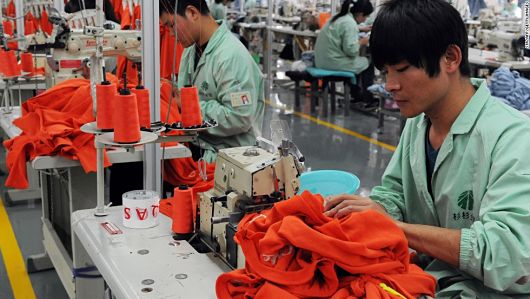
Every year, around the Chinese New Year, China experiences the world’s largest human migration. About 700 million people gather at boat landings, train stations and airports to return home; during this holiday period, 2,265 trains per day will carry this plethora of people across the country.

A majority of these travelers are in fact migrant workers who are returning home after working in China’s crowded but economically thriving cities. For many of these laborers, this will be their only visit home before they have to return to their place of employment for the rest of the year.

Traditionally, life for these millions of migratory workers has not been easy. While many leave their rural hometowns for greater economic opportunities in China’s booming metropolises, they often find more than they bargain for.

A study conducted by Cheng Yu at Sun Yat-sen University in Guangzhou surveyed the mental health of 807 migrant workers from Shenzhen and also saw Cheng discussing personal experiences with 60 of them. The study found that 58.8 percent of participants suffered from depression. Another 17 percent experienced anxiety, while around 4.6 percent had considered suicide.

The issue of mental health among Chinese migrant workers became widely apparent in 2010 after a series of suicides at a Foxconn manufacturing facility in Shenzhen. The company had assembled components for Apple products.

For migrant workers who must transition from rural life to city living without the support of their families, the chance of developing mental illnesses is much greater. They also face greater inequality through China’s hukou system.

The hukou essentially serves as a domestic passport which distinguishes between those of rural backgrounds and urban backgrounds. Unfortunately, migrant workers have to pay more for social services such as healthcare and education, which they could expect for little expense in their rural hometowns. They will frequently experience wage disparities and discrimination.

In 2008, a study found that urban workers earned around 1,000 yuan per month, while their migrant counterparts earned only 850 yuan. Most were expected to work around 11 hours per day for 26 days a month. Another study found that migrant laborers worked 50 percent more hours than their urban counterparts, yet in turn received 60 percent less in pay.

In order to improve their working conditions, laborers have recently taken to the streets in protest. In 2011 the country experienced 185 labor protests and things have only escalated since then: last year, 1,300 labor protests took place.

Even though the Chinese government guarantees workers’ rights under a 1995 labor agreement, workers must seek approval for strikes through the All-China Federation of Trade Unions, a government entity. If they don’t coordinate through the federation, they can face arrest.

Yet these arrests are usually only based on disorderly conduct and not for the actual strikes themselves. Wu Gaijin, a worker representative from Shenzhen, was detained for an entire year without a conviction. The government charged him with disrupting traffic.

However, life for laborers has been gradually improving. China has recently worked towards loosening restrictions on the hukou system in an attempt to lessen the disparity between urban and rural workers. Furthermore, individuals such as Cheng have advocated for required mental health testing at work facilities and for providing employees with a mental health support line to mitigate suicides and depression.

As China grows larger and its cities expand, changes such as these will have to be made in order to make its labor force sustainable and healthy.

– Andrew Logan

Sources: Business Insider, CNN 1, CNN 2, ILO, NPR, PBS
Photo: CNN

August 13, 2015
https://borgenproject.org/wp-content/uploads/borgen-project-logo.svg 0 0 Borgen Project https://borgenproject.org/wp-content/uploads/borgen-project-logo.svg Borgen Project2015-08-13 01:30:192024-12-13 18:04:44The Plight of Chinese Migrant Workers
Global Poverty, Government, War and Violence

10 Cruelest Dictators

Cruelest_DictatorsHere is a list of the top 10 cruelest dictators.

10. Vladimir Putin is the current president of Russia and has been in power since 1999. He spent four years as the Russian Prime Minister from 2008 to 2012, though most experts believe he was still calling the shots. Putin is a strong man who rules Russia with a fierce grip. His presidency has been lamented by human rights groups and Western governments. Putin maintains a terrible domestic civil rights policy, and viciously puts down political dissension and free speech. Moreover, under his command, Russia has engaged in military action in Georgia, Chechnya and most notably, Crimea, the invasion and annexation of which violated Ukrainian sovereignty.

9. Robert Mugabe is now in his seventh term of office as the President of Zimbabwe. Many political scientists and experts have cited massive electoral fraud and rigging in Mugabe’s favor during the 2013 election as the reasons behind his victory. According to both Amnesty International and Human Rights Watch, Mugabe’s government systematically violates the right to shelter, food, freedom of movement and political expression. In addition, Mugabe made all acts of homosexuality illegal in Zimbabwe.

8. Muammar Gaddafi was the self-proclaimed “Brotherly Leader and Guide of the Revolution” of Libya for more than 50 years. Gaddafi was, at first, a widely supported leader after he led the September Revolution in 1969. However, as he consolidated power, his regime became more authoritarian. His calls for Pan-Africanism were greatly overshadowed by his pitiful human rights record. During the Arab Spring, Gaddafi ordered his forces to fire on unarmed protesters calling for his resignation. The United Nations Human Rights Council called for an investigation into war crimes. Gaddafi was deposed and killed at the end of the Libyan Civil War.

7. Idi Amin’s paranoid administration was marred by rampant violence toward his political enemies. U.N. observers estimate that 100,000 to 500,000 were persecuted and killed in Uganda under his reign. Amin’s victims were originally his direct political opponents and those who supported the regime he fought to overtake. However, extrajudicial killings began to include academics, lawyers, foreign nationals and minority ethnic groups within the country.

6. Kim Jong Il continued his father’s fearsome policy of official party indoctrination. North Korea currently ranks as one of the poorest nations on the planet, with millions facing starvation, disease and lack of basic human needs. Under Kim’s reign, North Korean military spending quadrupled, yet he refused foreign aid and did not invest in his country’s farms, thereby indirectly killing millions. Kim’s policy of mass internment through the use of labor camps and virtually no political debate makes him one of history’s worst despots.

5. Pol Pot was the dictator of Cambodia for 20 years, from 1961 to 1983, as the leader of the Khmer Rouge government. His regime is characterized by the Cambodian genocide and the infamous “killing fields.” Pol Pot began a program of severe nationalization whereby he forced millions of people out of urban areas into the countryside to farm and work on forced labor projects. Due to the forced labor, poor food and medical conditions, as well as the addition of massive amounts of state-sponsored killings, nearly 25% of Cambodia’s population died under Pol Pot’s rule.

4. Bashar al-Assad is the current President of Syria. Assad’s authoritarian regime was called into question during the Arab Spring and was cited for numerous civil rights violations, including suppression of free speech, corruption and political freedom. Assad ordered massive crackdowns and thus triggered the ongoing Syrian Civil War. Government forces only grew more violent towards protesting Syrian citizens, and there have been allegations of chemical warfare. Assad has been accused of numerous human rights violations, war crimes and crimes against humanity.

3. Joseph Stalin was the second leader of the Soviet Union. Though part of the original seven Bolshevik leaders, Stalin quickly consolidated sole power and became a tyrant. In the 1930s, he pursued a policy of political upheaval known as “the Great Purge.” From 1930 to 1934, millions of Soviet citizens were imprisoned, exiled or killed. Stalin also pursued a policy of massive economic reforms that led to the deaths of millions due to famine and forced labor in Gulag camps.

2. Mao Zedong was the first Chairman of the Communist Party of China, and in terms of numbers of deaths during his reign, he tops the list. Nearly 70 million Chinese died during his rule. Mao systematically broke down ancient Chinese culture and nearly ended political dissent and freedom in China. His revolutionary economic policies during “the Great Leap Forward” resulted in one of the worst famines in modern history. In addition, Mao also implemented forced labor and public executions.

1. Adolf Hitler was the Führer of Nazi Germany from 1934 to 1945. Hitler tops the list because of his disturbingly systematic genocidal policies. 5.5 million Jews and other “unwanteds” were deliberately targeted and executed in sanctioned ghettos, work camps and extermination camps. Hitler’s foreign policy and unrelenting desire to give the German people “room to live” were the major causes of World War II. Hitler also put down political dissenters and enemies and banned art, film, literature and teaching methods not sanctioned by the state.

– Joe Kitaj

Sources: Forbes, List25, The Atlantic
Photo: Flickr

August 8, 2015
https://borgenproject.org/wp-content/uploads/borgen-project-logo.svg 0 0 Borgen Project https://borgenproject.org/wp-content/uploads/borgen-project-logo.svg Borgen Project2015-08-08 07:50:052024-12-13 18:04:3910 Cruelest Dictators
Global Poverty, Government, Politics and Political Attention, War and Violence

10 of the Cruelest Dictators Who Ignored the Impoverished

Cruelest_Dictators

10. Vladimir Putin

Putin is the current president of Russia and has been in power since 1999. He spent four years as Prime Minister from 2008 to 2012, though most experts believe he was still calling the shots. Putin is a strong man and one of the cruelest dictators, ruling Russia with a fierce grip. His presidency has been lamented by human rights groups and Western governments. Putin maintains a terrible domestic civil rights policy and viciously puts down political dissent and free speech. Not to mention, under his command Russia has engaged in military action in Georgia, Chechnya, and most notably the invasion and annexation of Crimea, thus violating Ukrainian sovereignty.

9. Robert Mugabe

Now in his seventh term of office as president of Zimbabwe is Robert Mugabe. Many political scientists and experts have cited massive electoral fraud and rigging in Mugabe’s favor during the 2013 election. According to both Amnesty International and Human Rights Watch, Mugabe’s government systematically violates the right to shelter, food, freedom of movement and political expression. In addition, Mugabe made all acts of homosexuality illegal in Zimbabwe.

8. Muammar Gaddafi

Self-proclaimed “Brotherly Leader and Guide of the Revolution” of Libya for more than 50 years, Gaddafi was, at first, a widely supported leader after he led the September Revolution in 1969. However, as he consolidated power his regime became more authoritarian. His calls for Pan-Africanism were greatly overshadowed by his pitiful human rights record. During the Arab Spring, Gaddafi ordered his forces to fire on unarmed protesters calling for his resignation. The UN Human Rights Council called for an investigation into war crimes. Gaddafi was deposed and killed at the end of the Libyan Civil War.

7. Idi Amin

Amin’s paranoid administration was marred by rampant violence to his political enemies. UN observers estimate that 100,000 to 500,000 were persecuted and killed in Uganda under his reign. Amin’s victims were originally his direct political opponents and those who supported the regime that he fought to overtake. However, extrajudicial killings began to include academics, lawyers, foreign nationals and minority ethnic groups within the country.

6. Kim Jong Il

Kim Jong Il continued his father’s fearsome policy of official party indoctrination. North Korea currently ranks as one of the poorest nations on the planet, with millions facing starvation, disease and lack of basic human needs. Under Kim’s reign, North Korean military spending quadrupled, yet he refused foreign aid and did not invest in his country’s farms, thereby indirectly killing millions. Kim’s policy of mass internment through the use of labor camps and virtually no political debate makes him on of history’s worst despots.

5. Pol Pot

Pot was the dictator of Cambodia for 20 years from 1961 to 1983 as the leader of the Khmer Rouge government. His regime is characterized by the Cambodian genocide and the infamous “killing fields.” Pol Pot began a program of severe nationalization whereby he forced millions from urban areas into the countryside to farm and work on forced labor projects. Due to the forced labor, poor food and medical conditions, and the addition of massive amounts of state-sponsored killings, nearly 25 percent of Cambodia’s population died under Pol Pot’s rule.

4. Bashar al-Assad

As the current president of Syria, Assad’s authoritarian regime was called into question during the Arab Spring and cited for numerous civil rights violations including suppression of free speech, corruption and political freedom. Assad ordered massive crackdowns and thus triggered the ongoing Syrian Civil War. Government forces only grew more violent toward protesting Syrian citizens, and there have been allegations of chemical warfare. Assad has been accused of numerous human rights violations, war crimes and crimes against humanity.

3. Joseph Stalin

Stalin was the second leader of the Soviet Union. Though part of the original seven Bolshevik leaders, Stalin quickly consolidated sole power and became a tyrant. In the 1930s he pursued a policy of political upheaval known as “the Great Purge.” From 1930 to 1934, millions of Soviet citizens were imprisoned, exiled or killed. Stalin also pursued a policy of massive economic reforms that led to the deaths of millions due to famine and forced labor in Gulag camps.

2. Mao Zedong

Zedong was the first chairman of the Communist Party of China, and in terms of numbers of deaths during his reign, he tops the list. Nearly 70 million Chinese died during his rule. Zedong systematically broke down Ancient Chinese culture and nearly ended political dissent and freedom in China. His revolutionary economic policies during “the Great Leap Forward” resulted in one of the worst famines in modern history. In addition, Mao also implemented forced labor and public executions.

1. Adolf Hitler

Hitler was the Fuhrer of Nazi Germany from 1934 to 1945. Hitler tops the list of cruelest dictators because of his disturbingly systematic genocidal policies. A total of 5.5 million Jews and other “unwanteds” were deliberately targeted and executed in sanctioned ghettos, work camps and extermination camps. Hilter’s foreign policy and unrelenting desire to give the German people “room to live” was the major cause of World War II. Hitler also put down political dissenters and enemies as well as banning non-government sanctioned art, film, literature and teaching methods.

– Joe Kitaj

Sources: Forbes, List 25, The Atlantic
Photo: Flickr

August 1, 2015
https://borgenproject.org/wp-content/uploads/borgen-project-logo.svg 0 0 Borgen Project https://borgenproject.org/wp-content/uploads/borgen-project-logo.svg Borgen Project2015-08-01 12:13:262024-12-13 18:04:3810 of the Cruelest Dictators Who Ignored the Impoverished
Global Poverty, Government

For China’s Nomads: Forced Settlement and Poverty

China's_Nomads
Nomads of China’s Western regions are the latest subjects of the government’s restrictive policies. Over the past fifteen years, the government has relocated over 1.2 million herders whose ancestors roamed the plains of Inner Mongolia for thousands of years. Many of these herders and their families have been relocated to cities in Qinghai Province, where, according to the government, they will have improved access to schools, electricity, and medical care.

This policy is not as ideal as it is portrayed. Many herders are forced to sell their livestock and are resettled in isolated towns on the edges of the countryside. In towns such as Xinlinhot in Inner Mongolia, illiterate former herders are unable to acquire the skills necessary to work at mills and factories and are left in unemployment and desolation. The annual government stipend of $925- good for only five years- allows them to feed and clothe their children, but leaves little room for anything else. Government-provided milk cows, native to Australia, are not adapted for the brutal winters of Inner Mongolia and often do not produce milk for their owners’ profit. After the stipend runs out, these unemployed, unskilled, displaced families don’t know where they will turn. Uprooted from their lives, these nomad families have to adjust to life in a cash economy while simultaneously profiting from it.

In these grim, shoddy townships, many homes lack toilets and running water and are often hastily built with leaky roofs. Anthropologists who study such relocation communities cite unemployment, alcoholism, and alienation from a new way of life as outcomes of the government’s projects to relocate an entire indigenous culture.

The government claims its efforts are meant to restore the fragile status of the frayed grasslands that make up more than 40 percent of China. The government claims overgrazing of grasslands threatens the water sources that supply the Yellow, Yangtze and Mekong Rivers that serve the entire country. Chinese scientists disagree, however.

Li Wenjun, professor of environmental management at Peking University, has said that these relocation programs have exacerbated poverty and worsened water accessibility. Indeed, residents of the major coastal cities, Beijing and Shanghai, earn nearly double their counterparts in the Western provinces. Li further argues that traditional grazing practices, which require little water compared to modern lifestyles, actually support grassland growth.

Certainly, this governmental change has kindled widespread social unrest. Nearly every week, herders protest in their new cities, carrying posters reading “We Want to Return Home” and “We want survival”. Seventeen herders were arrested last month alone.

Since the beginning of consolidated Chinese rule, the Western hinterlands have attracted fear and confusion. Populated by ethnic minorities such as the Uighurs, Kazakhs and Manchus, these groups have resisted assimilation and heavy-handed rule for decades.

Other government attempts at Western assimilation have been their “Go West” program, which encouraged the Han majority to move West and provided funding to build up the infrastructure of western provinces. Many suspect this new relocation is an effort not to economically support the rural West, but instead force its dependence on the eastern coastal cities for welfare.

Meanwhile, millions of herders and their families lie in anxious wait of what will come next. Forced into a new way of life dependent on a cash economy and far from the independence of the plains, they have little knowledge on how to alleviate the poverty they are living. “This is not a place fit for human beings,” said one. Until change is enacted, they will continue on in their impoverished houses on the outskirts of the lands and lives that helped them thrive.

– Jenny Wheeler

Sources: New York Times, Human Rights Watch
Photo: Flickr

July 27, 2015
https://borgenproject.org/wp-content/uploads/borgen-project-logo.svg 0 0 Borgen Project https://borgenproject.org/wp-content/uploads/borgen-project-logo.svg Borgen Project2015-07-27 08:57:362020-07-14 10:36:27For China’s Nomads: Forced Settlement and Poverty
Page 19 of 24«‹1718192021›»

Get Smarter

  • Global Poverty 101
  • Global Poverty… The Good News
  • Global Poverty & U.S. Jobs
  • Global Poverty and National Security
  • Innovative Solutions to Poverty
  • Global Poverty & Aid FAQ’s
Search Search

Take Action

  • Call Congress
  • Email Congress
  • Donate
  • 30 Ways to Help
  • Volunteer Ops
  • Internships
  • Courses & Certificates
  • The Podcast
Borgen Project

“The Borgen Project is an incredible nonprofit organization that is addressing poverty and hunger and working towards ending them.”

-The Huffington Post

Inside The Borgen Project

  • Contact
  • About
  • Financials
  • President
  • Board of Directors
  • Board of Advisors

International Links

  • UK Email Parliament
  • UK Donate
  • Canada Email Parliament

Get Smarter

  • Global Poverty 101
  • Global Poverty… The Good News
  • Global Poverty & U.S. Jobs
  • Global Poverty and National Security
  • Innovative Solutions to Poverty
  • Global Poverty & Aid FAQ’s

Ways to Help

  • Call Congress
  • Email Congress
  • Donate
  • 30 Ways to Help
  • Volunteer Ops
  • Internships
  • Courses & Certificates
  • The Podcast
Scroll to top Scroll to top Scroll to top