• Link to X
  • Link to Facebook
  • Link to Instagram
  • Link to TikTok
  • Link to Youtube
  • About
    • About Us
      • President
      • Board of Directors
      • Board of Advisors
      • Financials
      • Our Methodology
      • Success Tracker
      • Contact
  • Act Now
    • 30 Ways to Help
      • Email Congress
      • Call Congress
      • Volunteer
      • Courses & Certificates
      • Be a Donor
    • Internships
      • In-Office Internships
      • Remote Internships
    • Legislation
      • Politics 101
  • The Blog
  • The Podcast
  • Magazine
  • Donate
  • Click to open the search input field Click to open the search input field Search
  • Menu Menu

Archive for category: Global Poverty

Key articles and information on global poverty.

Global Poverty, Health, Nonprofit Organizations and NGOs, Sanitation, War and Violence, Water

Sanitation and Clean Water is an Issue In Liberia

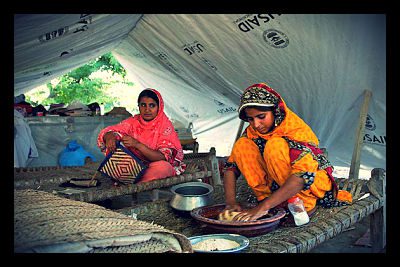
In 2003, Liberia finally came out of a thirteen-year long civil war that ravaged the country and left the inhabitants riddled with poverty. Right after the end of the war, the unemployment rate was listed at 85 percent of the population. The populations in the slums skyrocketed and the people living there were left with little choice of where to obtain water or where to use the bathroom. During the war, rebels destroyed much, if not all, of the water and sanitation infrastructure the country once had. A decade later, much of the population is still impoverished and lacking access to the basic needs of potable water and a sanitary living area. In 2010, there were almost 4 million people living in Liberia, over 1 million of which were rural poor. However, there is a stress for clean water in slums, from where a number of people from rural areas fled to Monrovia during the fighting and violence in an attempt to find refuge. For every four people, there is one living without access to clean water and sanitation in Liberia, and for every five deaths in the country, one is a result of contaminated water sources. In fact, in 2012, the World Health Organization discovered that E. coli was present in 58 percent of the city’s water due to public defecation. This spreads illness such as diarrhea and perpetuates the issue, creating a cycle of illness through dirty water. Liberian president, Ellen Johnson Sirleaf, has pledged to double the amount of access to safe water in four years, but has clearly fallen short of this claim. Phillip Marcelo of Rhode Island’s Providence Journal is spending two weeks in Liberia this month to investigate what progress has been made since the end of the war and the installation of democracy within the country. He notes that at the entry to the slums at West Point Beach, there is a massive pile of trash marking the place. The defecation of children is all over the beach and people are being forced to buy their water from “distributors.” While adults have been banned from using the beach as a bathroom and there are pay toilets in the slum, there is often still no other option. Because of this, the spread of cholera is common along with other water-borne diseases. The government is opening up nine new toilets for the area, but the inhabitants are not sure a real difference can be made considering there are more than 50,000 people living the area. Aid groups are investing time and money into providing Liberia with better access to clean water, with the hope that this will cease to be an issue in the coming years, if not in time to meet the Millennium Development Goals. Non-profit organization Waves for Water has raised $15,100 towards the goal of $25,000 to help provide clean water filters for over 60,000 people living in poverty in Liberia. WaterAid, another NGO, also works in Liberia and happens to be an organization for which President Sirleaf is an ambassador. Last year, they were able to reach 17,000 people and provided them with clean water or sanitation facilities. Help for Liberians is out there and there are solutions to the present issues, but it will take a while to recover completely from the devastation of the war. Simply put, it is going to take plenty of hard work and a revamp of the entire infrastructure of the country in order to change the conditions of those living in the slums of Liberia. – Chelsea Evans Sources: Providence Journal, Rural Poverty Portal, Waves for Water, PBS, WaterAid Photo: Sanitations Update [hr top]

  • $30 billion per year is needed to end world hunger.

  • $660 billion per year is the amount Congress spends on Defense.


August 24, 2013
https://borgenproject.org/wp-content/uploads/borgen-project-logo.svg 0 0 Borgen Project https://borgenproject.org/wp-content/uploads/borgen-project-logo.svg Borgen Project2013-08-24 05:32:242016-02-16 11:55:06Sanitation and Clean Water is an Issue In Liberia
Global Poverty

CSR: Ethics or Marketing?

corporate_social_responsibility
As a modern business trend, it is hard to know whether “corporate social responsibility”—or CSR—will be a lasting ethos that transforms the way companies conduct business or a passing fad designed to make big corporations more likable. CSR may be thought of as a corporation’s conscience—a set of internal policies that govern how the company interacts with and relates to its community, its people and its environment.

There is no question that executives and business leaders have adopted the lexicon of corporate social responsibility. As The Economist notes, “It would be a challenge to find a recent annual report of any big international company that justifies the firm’s existence merely in terms of profit, rather than service to the community.” In the late 1990s, a group of CEOs went as far as launching a global organization—the World Business Council for Sustainable Development—for the purpose of discussing strategic issues related to sustainable business practices. The rhetoric is clear: corporations care.

The question is what kinds of corporate actions have resulted from the emerging ethos of CSR. One area where companies have been keen on improvement is energy reduction. For example, General Mills instituted an energy audit program, and in 2012 reduced its energy consumption by 7 percent. It’s a win-win for General Mills—the company saves money and highlights its commitment to the environment. Other corporations like Solo Cup Company are engaging their employees to help with community cleanup events, trash collection programs or recycling drives at Solo facilities.

But some critics question the motives of companies that institute policies and public relations campaigns related to corporate social responsibility. One argument is that CSR is simply a marketing scheme developed to attract consumers to certain brands.

Many dissenters point out that markets are not concerned with ethics or social responsibility. In an article for the Stanford Social Innovation Review, Deborah Doane explains, “CSR can hardly be expected to deliver when the short-term demands of the stock market provide disincentives for doing so.”

While the companies and critics each present compelling arguments for or against CSR, it may be that corporate social responsibility is just a negotiated balance between companies and the communities in which they operate. It is how the company achieves or bolsters legitimacy with its potential consumers. The business benefit, of course, is that the company will profit in some way from its investment in CSR. After all, conventional wisdom says the primary objective of any corporation is not principle, but profit.

– Daniel Bonasso
Sources: Standford Social Innovation Review, The Economist, Corporate Watch
Photo: Career Realism


Join The Borgen Project in Fighting for the Underdog

What is it? from THE BORGEN PROJECT on Vimeo.

  • Volunteer
  • Donate
  • Learn


August 24, 2013
https://borgenproject.org/wp-content/uploads/borgen-project-logo.svg 0 0 Borgen Project https://borgenproject.org/wp-content/uploads/borgen-project-logo.svg Borgen Project2013-08-24 04:59:272024-06-05 01:53:36CSR: Ethics or Marketing?
Global Poverty

Saving the World One Drop at a Time

water_cooperation
The struggle to access clean water in many developing nations is no secret.  Every year, between six to eight million people perish due to water-borne diseases or lack of water.  Another cause of concern lies in the fact that over two thirds of the global population lives on the driest half of earth.  Experts estimate that 2.5 billion people lack proper water sanitation, and another 783 million completely struggle to locate access to any source of water.

In response to these alarming facts, the United Nations has declared 2013 the UN International Year of Water Cooperation to bring a revitalized focus and attention to these water issues.  The purpose of using water as the year’s theme is to ignite change in this crisis.  The plan is to draw more attention to successful water projects that have worked in various areas in an attempt to spark innovation and spread ideas in areas needing water development.  Other initiatives in the Year of Water Cooperation include increasing water education, working with regional leaders to develop relationships focused on addressing issues, settling border disputes involving water, and fundraising and developing necessary legal limits.

The UN chose the name International Year of Water Cooperation to highlight the necessity of forming regional bonds and of leaders working together to address the problems.  The theme is meant to inspire countries to share and work as a team to save millions of lives.  Since there are many different cultural, political and social factors at play in this global issue, cooperation remains the key to moving forward.

This initiative was started back in December 2010, among a United Nations General Assembly delegation.  The idea began by thinking of water as a chain: connected by various water basins, rivers and groundwater flow all around the world.  One objective of the year is to increase collaboration over sharing these resources to reach a maximum number of people, effectively creating a chain reaction.

If the water initiative goes successfully, not only will millions of lives be saved from simple prevention of disease, diarrhea and dehydration, but conflicts over water and ethnic fighting will simultaneously decrease.  The UN chose a strikingly important issue to focus on during 2013, with the potential to make an impact on the lives of billions of people around the planet.

– Allison Meade

Sources: UN News Centre, UN Water, United Nations
Photo: 

August 23, 2013
https://borgenproject.org/wp-content/uploads/borgen-project-logo.svg 0 0 Borgen Project https://borgenproject.org/wp-content/uploads/borgen-project-logo.svg Borgen Project2013-08-23 21:26:312024-06-11 01:51:16Saving the World One Drop at a Time
Global Poverty

Poor People: Do They Hold Societies Back?

poor_people

You’ve probably heard people discuss the burden that poor people place on society, or the need for them to “pull themselves up by their own bootstraps.” If not, only look to Mitt Romney’s infamous comment from the 2012 presidential campaign, in which he referred to the 47% of Americans who are “dependent on the government” and who could never be convinced to “take personal responsibility and care for their lives,” for an example.

Psychologist Herbert Gans writes about the labeling of the poor as “undeserving” and the effects that such labels have in society. He posits that deeming the poor undeserving fulfills a wide array of functions for the affluent. Primarily, this phenomenon distances the labeled from the labelers, allowing the situation to be cast firmly as “us-versus-them.”

By casting poverty as something that happens to “them,” but not to “us,” one can tap into a well-known psychological bias explained by psychologist Jeremy Dean on PsyBlog.

He describes the phenomenon using sports teams. When a fan sees a member of their team score, they are likely to praise the player’s talent and hard work. On the other hand, when a fan sees a member of the opposite team score, it’s usually attributed to dumb luck or a missed call. By the same token, when a fan’s team loses, it can easily be chalked up to a rough week or a rowdy crowd.

However, a fan would rarely claim that his team won because another team had a difficult week. In other words, one works much harder to make excuses for people that they perceive as “one of us.” This same principle can be applied to almost any facet of society, including poverty.

When poor people are considered to be fundamentally different from us, it becomes more difficult to empathize with their situations. Unfortunately, it also becomes easier to blame the poor for their poverty and struggles, consciously or otherwise.

Some may not concretely be thinking that women in sub-Saharan Africa should just stand up for themselves already, but it is often easier to sympathize with women who live in societies that look most like ours.

For example, when America discovered that Ariel Castro had held three women captive in his Ohio home for a decade, outrage erupted. People were horrified that something this appalling could happen here, to people “like us.” Meanwhile, similar atrocities are happening worldwide every day and our indignation may go just far enough to get us to make an online donation.

While it is incredibly difficult for one to truly comprehend the obstacles faced by the poor, it is important to remember that “we” are not so terribly different from “them.” The balance between recognizing these differences and the similarities is a delicate and important one, and one that is immensely tough to strike.

It is imperative to acknowledge that everyone has different experiences and struggles, and that the wealthy often do not know how best to help the poor. Simultaneously, it is important to keep in mind that the wealthy and the poor are both just groups of people, who usually have a lot more in common than they think.

– Katie Fullerton
Sources: The American Journal of Sociology, PsyBlog, NY Daily News, ABC News
Sources: Danutm

August 23, 2013
https://borgenproject.org/wp-content/uploads/borgen-project-logo.svg 0 0 Borgen Project https://borgenproject.org/wp-content/uploads/borgen-project-logo.svg Borgen Project2013-08-23 20:16:132024-05-25 00:19:00Poor People: Do They Hold Societies Back?
Global Poverty

New Strategy to test Tuberculosis in Asia

 tuberculosis

Over 600 million people in Bangladesh, Pakistan, and India are infected with the tuberculosis bacterium Mycobacterium tuberculosis. Each year, at least three million people reach the potentially deadly staged called active TB. The disease is still treatable at this stage with antibiotics, but traditional tests miss more than one out of three active cases. An average of 400,000 people die from the disease in South Asia every year.

For the first time, thanks to a new strategy developed at University of California, Davis (UC Davis) Health System, the disease can be effectively detected in children. Over 20,000 people in Pakistan will now be tested for the dangerous stage using the scientific breakthrough.

In traditional screening, a laboratory worker must identify the bacterium in a sputum sample observed under a microscope. Unfortunately, this test rarely picks up more than 50 percent of active cases of lung TB. The new TB screening looks for antibodies in the blood that are found only when a person is fighting off active TB. This new test is expected to detect 80 percent of active cases.

Another advantage to the new strategy is the speed of the screening. While the sputum microscopy test requires three sputum samples collected over a three-day period, the new test requires only a few drops of a blood sample and results are provided in two hours. According to researchers, because it takes such little time, millions more people can be screened worldwide per year.

An additional limitation of conventional screening comes from the very use of sputum samples. Children often have trouble providing a sputum sample, and are often missed in TB screening. TB can also be inactive in the lungs but active in other organs and tissues, cases that are missed by sputum screening. These two undetectable groups account for over 20 percent of all active TB cases.

The new strategy is based on an FDA-approved diagnostic instrument and was developed by UC Davis Medical Center scientists along with colleagues in Pakistan. Preliminary trials were funded by the U.S. Agency for International Development (USAID), and were reported in the journal Clinical and Vaccine Immunology. USAID and the World Health Organization (WHO) fund today’s large-scale research. An additional grant was awarded in July 2013 from the U.S. State Department and USAID, which will focus on developing and commercializing the TB test in partnership with the Forman Christian College in Pakistan.

“The fast turn-around time of the new antibody diagnostic test, in combination with high number of patients who can be tested, should enable millions of more TB patients to be screened,” said Imran Khan, assistant professor in the Department of Pathology and Laboratory Medicine, and Center for Comparative Medicine at the UC David Medical Center. “As a result, effective treatment can be provided in a more timely fashion to reduce the spread of this deadly disease.”

– Ali Warlich

Sources: UC Davis Health System, WHO
Photo: News Medical

August 23, 2013
https://borgenproject.org/wp-content/uploads/borgen-project-logo.svg 0 0 Borgen Project https://borgenproject.org/wp-content/uploads/borgen-project-logo.svg Borgen Project2013-08-23 13:28:062024-05-25 00:19:43New Strategy to test Tuberculosis in Asia
Developing Countries, Food & Hunger, Global Poverty, Poverty Reduction

Tax on Carbon Dioxide Emissions to Potentially Help South Africa’s Poor

Tax on South Africa Emissions
This year, South Africa has launched a new tax on carbon dioxide emissions in an effort to create a lower carbon future and a greener economy.

Finance Minister Pravin Gordhan has announced a Carbon Tax Policy White Paper that will describe the placement of taxes based on pounds of carbon dioxide emissions. Currently, South Africans already pay some unofficial carbon emission taxes, such as taxes on automobile emissions and electricity. However, the new carbon tax policy would introduce a new tax of 120 rands, or about 12 dollars, per ton of carbon dioxide equivalent.

The tax will be effective in 2015 and increase 10 percent between 2015 and 2020.

South Africa is one of the 20 nations that produce the most carbon emissions into the atmosphere. Increasing use of fossil fuels in recent years has led to rapid climate change. For developing or poor nations, the warming climate means that people are losing the ability to grow enough food.

In other places, environmental disasters bring ruin to land. Drying water sources means that women and children will have to walk farther and farther to find water. As carbon emissions increase, inequality and poverty only grow. Thus, it is imperative for nations such as South Africa to make a difference by reducing their carbon footprint.

The creation of a stricter carbon emissions tax means that the government, businesses, civil society and other stakeholders must have the same understanding of carbon emissions: it is something that needs to be eliminated progressively.

By enforcing taxes, the government of South Africa provides an incentive for companies and organizations to take up greener technologies. This would help to shift production from a high emissions approach to a new standard of a green technology.

Though the carbon tax sounds like a good way to fight environmental degradation, the tax could still negatively affect poorer households. The poor of South Africa spend significantly more of their income on food and energy. In some instances, these poor will eventually spend up to 40 percent more of their income on such basic necessities.

Furthermore rising coal-based electricity prices have increased more and more in recent years. This has put enormous pressure on low-income households. For these households that don’t have the luxury of spending freely on energy, a tax on carbon dioxide producing energy sources could be a great burden.

Moreover, there is also a worry that the carbon tax won’t be strict enough due to the possibility of exemptions. The proposed carbon tax provides a tax-free exemption threshold of 60 percent. When such exemptions exist, it is easy for carbon emissions to simply be ignored as groups or companies vie for exemptions. Exemptions mean that the people may be tempted to prioritize money over truly reducing the carbon footprint.

Perhaps the best way to think about this potential carbon dioxide tax is to consider poverty first. While the tax helps to reduce emissions, it can also generate billions of rands in revenue.

Additionally, it is important to note that greener technology can provide thousands of new employment opportunities for South Africa’s jobless.

– Grace Zhao

Sources: Mail and Guardian, BD Live, Times Live
Photo: The Guardian

August 23, 2013
https://borgenproject.org/wp-content/uploads/borgen-project-logo.svg 0 0 Borgen Project https://borgenproject.org/wp-content/uploads/borgen-project-logo.svg Borgen Project2013-08-23 05:18:552024-05-25 00:19:15Tax on Carbon Dioxide Emissions to Potentially Help South Africa’s Poor
Global Poverty

Four Facts About India That Will Surprise You

Four Facts About India
What do you really know about India? Maybe that it just celebrated its 66th year of independence from British rule on August 15th. Or that the famed, and often revered, Mahatma Ghandi was Indian. Here are some more facts about India that may really surprise you.

  1. In 1947, the Indian rupee (re) was equal in worth to the American dollar. Sixty-seven years later one dollar is the same as 61.43 rupees. Renting a three bedroom apartment in the middle of a city in India would cost an average of 24,000 Re, or about $390 a month. Comparatively, the median disposable income is listed as 25,000 a month, which is only $400. Simply, the cost of living and the wages people actually make just do not add up.
  2. With over 450,000,000 people living in extreme poverty, or under $1.25 a day, India is home to 42% of the world’s poor. According to the World Bank, even those who have made it out of poverty status are still very likely to fall back into it due to a lack of infrastructure to support the growing population. One in three people living in rural areas lack access to a reliable road and 40% of the world’s malnourished children are living in India. In fact, in many Indian states, infant and maternal mortality rates are on par with the world’s poorest countries despite the World Bank’s official designation of the country as “lower-middle class.”
  3. Up to 25% of the new workers in the world will be Indian. While the percentage of children under 14 is dropping, the number of people within the working ages of 15 and 59 is increasing. It is expected that the work force in India will be 653 million by 2031, a fact about India that may be marred by the problematic education system in the country. The problem becomes not whether they will possess enough people to fill job openings, but one of whether India will be able to use all these people effectively to bring the country out of declining poverty or if it will continue to perpetuate the cycle of poverty.
  4. Around 10 million female births have gone missing in the last twenty years as a result of illegal sex selection. In India only male children are allowed to care for aging parents and must be the ones to perform the last rites at their deaths. They also receive more education and make more money. Daughters must be cared for, given away into marriage, and then a dowry is usually paid to the parents of the groom. Even though sex-selection and dowrys are both illegal, the old customs still prevail. This leaves India with a massive gender ratio problem as well as serious issues with pervasive gender inequality.

While none of these facts about India is pleasant, each reveals the reality of what the people are currently facing and what they might have to deal with in the years to come. A lot of work will have to be put in to effectively change these statistics and realities, but the right focus and effort could make all the difference.

– Chelsea Evans

Sources: Business Insider, World Bank, The Hindu, Boston Globe, PBS, Numbeo, Business Standard

August 22, 2013
https://borgenproject.org/wp-content/uploads/borgen-project-logo.svg 0 0 Borgen Project https://borgenproject.org/wp-content/uploads/borgen-project-logo.svg Borgen Project2013-08-22 17:31:142024-12-13 17:49:40Four Facts About India That Will Surprise You
Global Poverty

Home Gardens Grow Developing Countries

Home Gardens
Home gardens in developing countries is now being viewed as a key to alleviating hunger and providing a source of nutrition for millions of people in developing countries. The quantity of food that low-income families consume must also be supplemented by adequate nutrition; research conducted by the Lancet earlier this year concluded that malnutrition kills 3.1 million children annually, and caused stunting in 165 million in 2011.

In countries where women are traditionally responsible for providing their families with food, the disparity in access to land between men and women can often cause problems. According to the FAO, women receive only 5% of agricultural extension services globally making it difficult for them to grow food, especially food rich in essential micronutrients such as vitamin A, iron, and zinc. Therefore, several development organizations have taken the step to help women make better use of the space they can control–their home gardens.

In 2009, Care International launched the EU-funded Food Security for the Ultra-Poor (FSUP), which aimed to support 55,000 women living in the northeast region of Bangladesh in providing food. The project addresses the underlying causes of social and economic exclusion and seasonal imbalances in food availability and affordability in order to achieve sustainable improvement in food access and utilization. One element of the program included homestead gardening.

Women were taught to grow crops such as cucumber, gourds, red amaranth, spinach, papaya, carrots, tomatoes, and beans. The program taught women how to use various gardening tools and how to identify space in their houses that could be utilized for growing vegetables. They were then provided with vegetable seed packets to start their own gardens. While these harvests were not huge, they did provide families with crucial nutrients in regions where people would otherwise rely heavily on rice.

For these women, and for their families in Bangladesh, access to vegetables and fruits has not only increased but has also given them a surplus of produce which they are then able to sell to the community. A sample of 1,614 families participating in FSUP showed that between December 2012 and March 2013, households produced an average of 53kg of vegetables and fruits of which they consumed an average of 36kg and sold an average of 18kg.

As women begin to make an income they are able to make financial choices that positively impact their families. Larissa Pelham, food security adviser at Care International UK, said “when women have control over household resources, they are likely to spend it on the wellbeing of the household overall.” Other organizations have built on the success of this program and have included the additional element of combining gardening training with support in maternal health, nutrition, immunization, and financial services to women. This holistic approach is empowering women in developing countries, allowing them to use the land they own to build a better future for themselves and for their families.

– Chloe Isacke

Sources: The Guardian, Care

August 22, 2013
https://borgenproject.org/wp-content/uploads/borgen-project-logo.svg 0 0 Borgen Project https://borgenproject.org/wp-content/uploads/borgen-project-logo.svg Borgen Project2013-08-22 14:37:162017-11-30 10:50:13Home Gardens Grow Developing Countries
Global Poverty

Will Botswana Be Africa’s Success Story For Long?

botswana_africa
For a sparsely populated and landlocked nation in the middle of the Kalahari Desert, Botswana has achieved much in terms of social and economic development. The country has experienced stable economic growth since claiming independence in 1966. Unlike many other African nations, Botswana is not frustrated by political instability and widespread corruption. In addition, the government has long championed environmental stewardship and sustainable tourism. For now, Botswana remains one of Africa’s success stories.

But the nation is confronting a range of near and long-term problems that will require innovative solutions. First, Botswana is struggling to diversify its economy. Diamond exports comprise nearly 50 percent of government revenues and more than 70 percent of the nation’s export earnings. In last year’s State of the Nation address, President Ian Khama said, “Dependency on anything is never healthy.”

Sensing the consequences of this dependency, the government is initiating programs to bolster other industries such as agriculture, tourism and textile manufacturing. They have also created the Citizen Entrepreneurial Development Agency, which provides low-cost financing and mentoring programs for aspiring business owners. To date, there is little evidence that these programs are stimulating Botswana’s economy. Many economists believe that its proximity to South Africa will make it difficult for Botswana to successfully compete in global markets.

For years, Botswana’s unemployment rate has exceeded 15 percent. Even graduates of Botswana University have had trouble finding jobs that are commensurate with their skills and education. Many well-qualified young people are competing for a small pool of jobs. This dilemma contributes to Botswana’s growing poverty rate, which is currently just above 20 percent. To combat the problem, the government has increased expenditures on social programs, which more than doubled between 1997 and 2005.

Increased funding of social programs is the natural result of an expanding government. In 2005, the average wage of government workers exceeded those in the private sector by more than 40 percent. This disparity between the public wage and private wage has created a wage reservation, whereby people in the private sector believe they should be paid the same as public sector employees. For this reason, many Batswana refuse to seek employment and instead rely solely on the government’s social programs.

Botswana has achieved exceptional economic improvement since 1966. But reliance on diamond mining and government social programs is undermining the country’s ability to sustain economic growth. Appropriate policies should be implemented to diversify revenues, increase private participation in the labor force and reduce dependency on social programs. Otherwise, Botswana’s success could be in jeopardy.

– Daniel Bonass

Sources: Council on Foreign Relations, African Economic Outlook, International Monetary Fund
Photo: Telegraph

August 22, 2013
https://borgenproject.org/wp-content/uploads/borgen-project-logo.svg 0 0 Borgen Project https://borgenproject.org/wp-content/uploads/borgen-project-logo.svg Borgen Project2013-08-22 13:53:222024-12-13 17:49:39Will Botswana Be Africa’s Success Story For Long?
Global Poverty

Top Five Bill Gates Quotes

Bill Gates Quotes
This past May, Bill Gates made headlines again when he reclaimed the title of “World’s Richest Man.” According to the Bloomsberg Billionaires Index, Gates had a net worth of nearly $73 billion. Gates’ groundbreaking advancement of computer technology has long established him and his company, Microsoft, as household names during the last three decades.

Unlike his contemporaries, Gates is not one to lavishly spend his money. Instead he and his wife, Melinda Gates, are fervent believers of the mantra, “with wealth comes responsibility.” The power couple established the Bill & Melinda Gates Foundation in 1997 to address the issues of global poverty and disease, as well as those of domestic education and systemic inequality. For nearly two decades the foundation has worked to eradicate everything from malaria to the recreational use of tobacco. To date, Gates has donated almost $30 billion to the foundation.

Gates, however, is not only a man of great action but also of sound philosophy. His belief in a harmonious balance between philanthropy and capitalism, as well as his faith in government action and public policy as ideal agents for social change, are awe-inspiring. Hopefully, with Gates’ continued success as both a business mogul and humanitarian leader, more elite members of America’s top 1 percent will learn to share the wealth.

1. “I believe that if you show people the problems and you show them the solutions they will be moved to act.”

2. “People always fear change. People feared electricity when it was invented, didn’t they? People feared coal, they feared gas-powered engines. There will always be ignorance, and ignorance leads to fear.”

3. “You know capitalism is this wonderful thing that motivates people, it causes wonderful inventions to be done. But in this area of diseases of the world at large, it’s really let us down.”

4. “The Internet is becoming the town square for the global village of tomorrow.”

5. “Governments will always play a huge part in solving big problems. They set public policy and are uniquely able to provide the resources to make sure solutions reach everyone who needs them. They also fund basic research, which is a crucial component of the innovation that improves life for everyone.”

– Melrose Huang


Read quotes about global poverty.

Read humanitarian quotes.

Sources: Bill & Melinda Gates Foundation, USA Today, BrainyQuote
Photo: Techno Crates

August 22, 2013
https://borgenproject.org/wp-content/uploads/borgen-project-logo.svg 0 0 Borgen Project https://borgenproject.org/wp-content/uploads/borgen-project-logo.svg Borgen Project2013-08-22 13:06:532024-05-25 00:19:27Top Five Bill Gates Quotes
Page 2104 of 2161«‹21022103210421052106›»

Get Smarter

  • Global Poverty 101
  • Global Poverty… The Good News
  • Global Poverty & U.S. Jobs
  • Global Poverty and National Security
  • Innovative Solutions to Poverty
  • Global Poverty & Aid FAQ’s
Search Search

Take Action

  • Call Congress
  • Email Congress
  • Donate
  • 30 Ways to Help
  • Volunteer Ops
  • Internships
  • Courses & Certificates
  • The Podcast
Borgen Project

“The Borgen Project is an incredible nonprofit organization that is addressing poverty and hunger and working towards ending them.”

-The Huffington Post

Inside The Borgen Project

  • Contact
  • About
  • Financials
  • President
  • Board of Directors
  • Board of Advisors

International Links

  • UK Email Parliament
  • UK Donate
  • Canada Email Parliament

Get Smarter

  • Global Poverty 101
  • Global Poverty… The Good News
  • Global Poverty & U.S. Jobs
  • Global Poverty and National Security
  • Innovative Solutions to Poverty
  • Global Poverty & Aid FAQ’s

Ways to Help

  • Call Congress
  • Email Congress
  • Donate
  • 30 Ways to Help
  • Volunteer Ops
  • Internships
  • Courses & Certificates
  • The Podcast
Scroll to top Scroll to top Scroll to top