Key articles and information on global poverty.
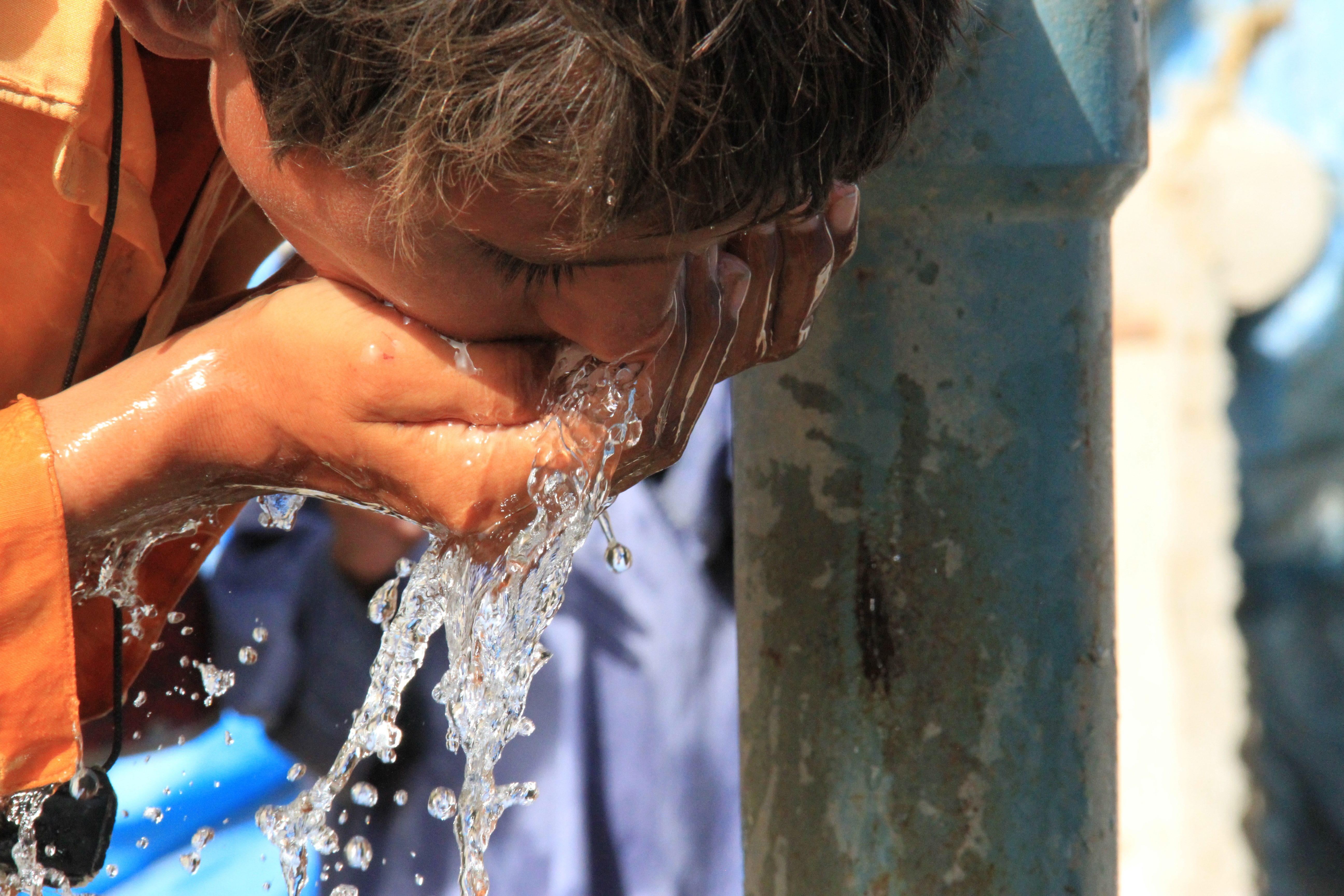
Water—our lives depend on it, but for many people around the world, this essential, life-giving liquid brings disease and even death. Today nearly one billion people have limited access to safe, clean water because of pollutants from inadequate sewage systems, industrial dumping, agricultural run-off and irresponsible manufacturing practices. The result? More people die every year from water contamination than war and other forms of violence combined. Each year, around 840,000 people die of health problems from water pollution.
3 Health Problems from Water Pollution
1. Diarrhea: The most common health problem from water pollution, diarrhea causes loose, watery stools, abdominal pain, dehydration and even death. Diarrhea is commonly caused by drinking, cooking or cleaning with water contaminated by feces. In India, a country where roughly half the population practice open defecation, diarrhea is the third leading cause of death in children under the age of five. In 2015, diarrhea killed an estimated 321 children every day in India. However, India is making efforts to prevent and treat diarrhea. In 2014, the country approved the Integrated Action Plan for Prevention and Control of Pneumonia and Diarrhea (IAPPD), with one of its main focuses being to provide safe drinking water and improved sanitation to Indian households. Since its adoption of IAPPD, India has improved treatment cover to those with diarrhea, launched immunization campaigns to treat diarrheal disease, and as of 2018 constructed household toilets in 52.16 percent of the IAPPD’s targeted 12 million rural Indian households. Because of these efforts, deaths of children below-four children in India have decreased by 52 percent over the last several years.
2. Cholera: Contracted by consuming contaminated water or food, cholera’s main symptoms are severe diarrhea and vomiting which leads to dehydration. There are an estimated 3-5 million cholera cases every year and the World Health Organization (WHO) reports that 54 percent of all cases are from developing countries in Africa whose inhabitants lack access to safe water, basic hygiene and sanitation facilities. The Lake Chad Basin, which includes Nigeria, Niger, Mali, and Cameroon, reported that in 2018 there were eight times as many cholera cases compared to the previous four years in that region, with more than 23,000 people affected and over 388 deaths. In response to the increased cholera outbreaks in Africa, GAVI the Vaccine Alliance, along with WHO and the Global Task Force on Cholera Control (GTFCC), launched a massive vaccination drive throughout five African regions to help treat and extinguish further epidemics. Between 1997 and 2012 only 1.5 million doses of cholera vaccines were administered worldwide, but thanks to the vaccine drive, in just the first four months of 2018, 15 million cholera vaccines were approved for administration. The vaccine drive is part of a global initiative to reduce cholera deaths by 90 percent by the year 2030. Dr. Seth Berkley, CEO of GAVI the Vaccine Alliance, shares that despite the vaccine drive’s importance in addressing the outbreaks, improved water and sanitation is “the only long-term, sustainable solution to cholera outbreaks.”
3. Dysentery: Dysentery is an inflammation of the intestines. Its symptoms include bloody diarrhea, fever, abdominal cramps and even excreting large portions of the intestinal membrane. Like many other health problems from water pollution, dysentery is spread through fecal-polluted water, and mainly impacts impoverished communities who rely on makeshift sewage systems and contaminated water sources for sanitation and drinking. Dysentery can be a major concern in refugee camps where insufficient and overwhelmed sanitation facilities and open-air sewage dumping become a breeding ground for water pollution diseases like dysentery, as the recent Rohingya refugee crisis in Bangladesh revealed. Dr. Samir Howlader, National Program Officer for Migration Health at the International Organization for Migration (IOM) reported that when the Rohingya refugees—over a million people have fled their homeland of Myanmar to seek refuge in Bangladesh—first arrived in the Bangladesh camp of Cox’s Bazaar in 2017 there were “effectively no facilities” for the new arrivals and dysentery was a common concern. In 2019 however, the UN’s refugee agency, UNHCR, made it possible for the largest-ever refugee camp sewage treatment plant to be constructed in Cox’s Bazaar. The now-operating plant treats the human waste of 150,000 people every day, protecting the refugee community from the previous dangers of sewage-contaminated water. Medical clinics set up in the camp by the International Organization for Migration (IOM) have also helped treat and eliminate dysentery from the community. Since 2017, over one million refugees have received consultations at IOM clinics, and Rick Brennan, director of emergency operations for WHO states that there has not been any significant increase in disease thanks to these diligent efforts.
Though health problems from water pollution claim too many lives each year, great progress is being made towards a solution. The UN reported that over the last two decades, 2.6 billion people gained access to an improved drinking water source. Now more than ever there is hope as the global community and developing nations work together to address water pollution problems and create a world where everyone has access to safe, clean water.
– Sarah Music
Photo: Flickr

The Horn of Africa is a peninsula that extends into the Arabian Sea and the Gulf of Aden. It includes seven countries: Djibouti, Eritrea, Ethiopia, Somalia, South Sudan, Sudan and Uganda. Here are 10 facts about poverty in the Horn of Africa, how poverty impacts the people of these countries and how their situations can improve.
10 Facts About Poverty in the Horn of Africa
- Food Insecurity in Djibouti: Food insecurity is a major problem for those living in rural areas of Djibouti. While those living in more urban areas of the country do not experience the same levels of poverty, 62 percent of those living in rural Djibouti have little access to food containing adequate nutrition. Djibouti’s climate may be a cause as it makes crop production difficult. As a result, it must receive 90 percent of its food supply as imports, making the country vulnerable to changes in international market prices.
- Drought and Malnutrition in Eritrea: Amnesty International reports that many in Eritrea struggle to meet their basic needs as drought and laws within the country make it difficult to access clean water and limit the availability of basic food supplies. Half of all children in Eritrea experience stunted growth due to malnutrition.
- Poverty in Ethiopia: Ethiopia is one of the most populated countries in Africa and one of the poorest countries in the world. Despite experiencing a massive surge of economic growth since 2000, 30 percent of Ethiopians are still living below the poverty line, and the United Nations has classified 36 million of the country’s 41 million children as multidimensionally poor.
- Conflict in Somalia: Years of conflict have destroyed much of Somalia’s economy, infrastructure and institutions. Forty-three percent of the population of Somalia live on less than $1 a day. Nearly five million Somalis depend on humanitarian aid every day.
- Conflict and Climate in Sudan: Like Somalia, Sudan has faced serious damage to its economy due to conflict. Sudan has also faced serious damage to its agricultural industry due to unpredictable climate and rainfall in recent years. One in three Sudanese children under the age of 5 is underweight due to malnutrition.
- South Sudan, Foreign Investors and Agriculture: Though South Sudan is rich in resources, particularly oil, foreign investors monopolize most of its supplies. The vast majority of workers in South Sudan engage themselves in agriculture and livestock rearing. South Sudan is incredibly vulnerable to changing patterns in rain, similar to its northern neighbors, and it frequently experiences floods and droughts that, in conjunction with conflict and depreciating currency, has left 80 percent of its population impoverished.
- Poverty in Uganda: Uganda has made great strides in reducing poverty over the last decade. However, it still requires more work. Poverty is still a major issue throughout the country, particularly in the northern and eastern regions, which have less access to infrastructure than the rest of the country. In northern Uganda, 29 percent of households do not have toilets and 96.3 percent of households are without electricity.
- The Link Between Poverty, War and Instability: The Horn of Africa is currently dealing with several wars and conflicts. There is civil unrest in Sudan and South Sudan, and terrorism plagues the entire region. In 2017, the Prime Minister of Ethiopia, Hailemariam Desalegn, suggested that poverty is the underlying cause of war and instability in the region and that the best way to foster peace in this high-conflict area is to focus on improving the economies of these countries.
- Digital Technologies: Digital technologies could play a major role in closing the economic gap between these countries and more financially stable regions of the globe. Digitalization of a country is relatively low-cost, and can significantly assist in alleviating poverty through a number of channels. Technology can allow those in rural communities to access education, health care and agricultural information that would dramatically increase productivity. Beyond that, technology allows women and other marginalized populations to enter the formal economy. An International Monetary Fund study stresses the importance of boosting women’s participation in the economy to create economic growth. Taking simple steps in investing in things like mobile phones and the internet could lay groundwork not only for alleviating poverty in the region but also for ensuring equality and lasting peace. This strategy has worked extremely well in countries such as Bangladesh.
- The World Bank’s Initiative: The World Bank has developed an initiative that focuses on alleviating poverty in the Horn of Africa by focusing on building resilience in the region and integrating the region economically.
The Horn of Africa is one of the poorest regions in the world. These facts demonstrate that these nations desperately need the attention and assistance of the global community in order to create stability in the region, and a chance at a better life for the people living there.
– Gillian Buckley
Photo: Flickr

The room is dark with a spotlight and hard bleachers. One young person enters from stage left juggling three red balls. Another performer helps the juggler onto a cylinder. Barefoot, the juggler is now balancing and juggling. Soon they add another cylinder at a 90-degree angle to the first, followed by another cylinder and another. The juggler is now five feet off the ground, still balancing and juggling. Phare Battambang Circus is a human-only circus in Battambang, Cambodia with goals well beyond entertainment that involves its idea of The Brightness of the Arts. It strives to fight poverty in Cambodia through the arts.
The Phare Battambang Circus
The Phare Battambang Circus runs through a Cambodian nonprofit, Phare Ponleu Selpak (PPS) or The Brightness of the Arts, which provides a “nurturing and creative environment where young people access quality arts training, education and social support.” Sparked in 1986 in a refugee camp on the Thai/Cambodian border, Phare Ponleu Selpak uses a whole child approach through arts, education and social support to break intergenerational patterns of poverty steeped in the long history of state-sponsored violence. While the violence of the Khmer Rouge has retreated, children in Cambodia still struggle with extensive social problems such as poor school retention, drug abuse, poor working conditions, domestic violence, illegal migration and exploitation.
Now a must-do for visiting tourists, high season at the Phare Battambang Circus means at least 150 visitors a night. About 40 percent of nightly circus revenue goes to the youth performers themselves. This income supports families around Battambang and keeps youth out of more destructive industries like human trafficking in Thailand. PPS estimates that over 1,000 lives should positively change every year through its free-of-charge artistic, general education and personalized social support. Its arts education and artistic performances are changing the lives of families living in poverty in Cambodia.
The Khmer Rouge Regime
Under the Khmer Rouge from 1975 to 1979, the party’s radical Maoist and Marxist-Leninist agenda governed all aspects of everyday life in Cambodia. In its effort to render the country a classless agricultural utopia, the Khmer Rouge asserted that only the culturally pure could participate in the revolution. As such, the Khmer Rouge “executed hundreds of thousands of intellectuals; city residents; minority people such as the Cham, Vietnamese and Chinese and many of their own soldiers and party members, who were accused of being traitors.” Recent estimates place the death toll between 1.2 and 2.8 million.
The people the Khmer Rouge found to be nonconforming went to prison camps, the most notorious being S-21 where the regime imprisoned over 12,000 people and only 15 survived. Such widespread violence forced millions into refugee camps for years after the fall of the Khmer Rouge.
At Site II, a refugee camp on the Thai/Cambodian border, a French artist and humanitarian worker named Véronique Decrop started offering informal drawing classes for the children at the camp orphanage.
How Site II Grew into PHARE
Classes at Site II grew into PHARE, a French association and acronym meaning Patrimoine Humain et Artistique des Réfugiés et de leurs Enfants (Human and Artistic Heritage of the Refugees and their Children). Communications and Marketing Coordinator for Phare Ponleu Selpak Morgane Darrasse said, “The original idea was to develop a form of art therapy for them to escape and overcome the traumas of war.” Over time PHARE grew into Phare Ponleu Selpak or The Brightness of the Arts.
When Site II closed in 1992, Veronique and nine of her students moved to Battambang to create a sustainable school for the most affected children from the surrounding area. By 1995, the school accepted its first students and to this day, four of the original founders are still active in PPS.
Thanks to state-wide violence, all founders of PPS grew up in refugee camps segregated from their own cultural traditions. When it came time to implement music and dance programs at PPS, the founders chose to spotlight Cambodian traditional music. Derasse said, “They felt it their duty to revive the dying Cambodian arts” while fighting poverty in Cambodia.
Phare Ponleu Selpak Supports Its Students
Even though drawing classes with PHARE were the first seed, Phare Ponleu Selpak now has a thriving visual and performing arts curriculum as well as a strong outreach and social work foundation to support students find job placements and networking opportunities through and after their education. In its efforts to create a sustainable arts community, PPS ensures that 100 percent of students who complete their secondary or vocational training with it achieve employment within three months of graduation. This sustainable long-term approach lessens the intergenerational hold of poverty in Cambodia.
One student, Monisovanya RY, studied visual arts and graphic design through PPS. Upon graduation, PPS hired her into the PPS communications team to coordinate product design and production. In her free time, she creates performances in local galleries to cultivate an understanding of the environmental dangers of plastic waste.
Morgane Darrasse for PPS boasts, “We provide our students with communication and life skills, and also a complete set of technical skills, a strong fundamental and cultural knowledge of the arts, and the ability to understand, analyze and respond to a given problem with professionalism and creativity.”
The organization’s graphic and animation graduates work in advertising, marketing and animation production, and all local circus instructors are graduates of the program itself. Its goal is the creation of a sustainable arts community.
PPS’s Child Protection Program
In addition to pursuing arts programming, PPS’s Child Protection Program (CPP) asserts the inherent value of children’s rights. It wants communities to be safe and to provide families with the tools to care for their children. These programs extend into the three communes surrounding Battambang.
In collaboration with 32 NGOs based in Battambang and generous international donors, CPP follows, tracks and supports students and their families through a family needs assessment process and a monthly student sponsorship program. Most PPS participants come from these local communes because of the intense time commitment their programs require. PPS established a scholarship program for its visual arts program recently, which has made it accessible to young people from other parts of Cambodia.
Phare Ponleu Selpak or The Brightness of the Arts saves lives and combats poverty in Cambodia. In 2013, PPS received a royal award of $31,000 from the Netherlands. The Dutch Ambassador said PPS gets at the heart of their award requirements “to promote the use of culture as a means of development.”
– Sarah Boyer
Photo: Phare Ponleu Selpak

Dominica is one of the islands in the Caribbean that suffered from two destructive hurricanes within the last four years. The hazardous climate in this region has been a catalyst for the building of resilient infrastructure. These top 10 facts about living conditions in Dominica highlight the benefit of disaster relief.
Top 10 Facts About Living Conditions in Dominica
- Dominica’s government is funded through the exchange of passports through the Citizenship by Investment Program. This program invites foreign residents to come and live on the island under certain agreements. One-third of the population of 74,027 lives on the coastline. The rest are scattered inland.
- Prime Minister, Roosevelt Skerrit, has expressed concern for the living situations caused by Hurricanes Erika and Maria. The Citizenship by Investment Program is funding projects for housing developments that brave Dominica’s natural hazards. The residential reconstructions include electrical, cable and telephone lines that run beneath the surface.
- The state has an international disagreement with Venezuela’s dominion over Aves Island. This calls into question whether the circumstances fall under the U.N. Convention on the Law of the Sea. But instead of a military, the Commonwealth of Dominica has a police force that includes a coast guard.
- Dominica has subtropical valleys and cool coastlines. However, the mountainous parts of the island can experience flash floods. Between June and October, hurricanes pose a major threat. These natural hazards contribute to soil erosion.
- Dominica suffered disruption in more than 40 of its water systems as a result of Hurricane Maria’s destruction. The Office of U.S. Foreign Disaster Assistance has partnered with the U.S. Agency for International Development, the International Federation of Red Cross and Red Crescent Societies (IFRC) to provide support with water, sanitation and hygiene. Access to safe drinking water was an urgent need for hurricane survivors.
- The Japan Caribbean Climate Change Partnership donated wood chippers, tillers, brush cutters, seeds, water tanks, soil testing equipment, machine-powered mist blowers and laptops to 40 Roseau Valley Farmers. The total cost of the project to equip farmers affected by Hurricane Maria’s devastation of agriculture $390,000.
- In an effort to sustain school feeding programs and engender the value of farmers, the Ministry of Agriculture is working to form an agro-entrepreneurship program in schools nationwide. The ministry has invested $70,000, not including other resources. The Junior Achievement Agricultural Program will use this opportunity to give students the experience of fundraising to cultivate their own food.
- The World Bank and the United Nations Development Programme assisted the Dominican government in the maintenance of public services following Hurricane Maria. The restoration of four hospitals, five medical clinics, three schools and six structures at the Dominica State College took place in the summer of 2108. More than 400 contractors learned the methods of climate resilient reconstruction.
- Plastic pollution has affected the island’s coast. In an effort to heal Dominica’s ecosystem, the country will have to restrain from using plastic through a plastic ban that the Prime Minister has introduced. The U.K. government is also funding the Commonwealth Marine Economies Programme (CME), which will improve the economy’s tourism sector by developing navigation charts to reduce the damage to Dominica’s coral reefs.
- The U.K. government’s CME Programme will also restore a tide gauge at Roseau’s port to detect unsafe sea patterns. Instructions on the conservation of data equipment, like the Tidal Analysis Software Kit, and connections to the Intergovernmental Oceanographic Commission, as well as to other experts, will contribute to the region’s tsunami warning system. These foundations and skills will bring stronger pre-disaster security.
Though strides are being made to establish Dominica as the first climate-resilient country, there is still danger in the unpredictability of these natural disasters. These top 10 facts about living conditions in Dominica show how proactive development of a stable infrastructure is the most effective way to respond to calamity. Systems must be put in place to overcome adversity before the blow.
– Crystal Tabares
Photo: Wikimedia Commons

The Democratic Republic of Congo is both one of the world’s most mineral-rich countries and consistently one of the poorest. The mining industry makes up a significant part of the country’s economy with over 90 percent of its revenue coming from the export of these minerals. Many of these mines in Congo are artisanal mining operations; small-scale entrepreneurial operations that often exist in a legal and economic gray zone.
The Dangers of Artisanal Mining in the Democratic Republic of Congo
While mining is a dangerous job, the conditions of artisanal mining in the Democratic Republic of Congo, in particular, are problematic. These conditions include unsafe mining conditions for the workers, a lack of rights for those employed in many of Congo’s mines, as well as permanent environmental damage coming from mining methods. Further, the unregulated nature of the artisanal and small scale mining industry can lead to the proliferation of issues like child labor and conflict resources.
A lack of appropriate safety equipment is an endemic issue in many mines. Many of the resources that miners extract is toxic. Air quality is a consistent issue and face masks are rarely available. Gold, copper, cobalt and other dust pose numerous health issues. Heavy metal dust can lead to respiratory issues, and one can easily absorb the fine particles of these toxic metals through the skin, causing numerous problems. Mine conditions are also dark and dangerous. Long hours and a lack of structural reinforcement in the mines mean that accidents are common and tunnel collapses are not infrequent.
Artisanal Mining Impacts the Environment
Environmental issues are also a great concern. Chinese mining companies are particularly egregious when it comes to a lack of environmental awareness. Many companies make promises to pay for environmental restoration for the area when a mining operation shuts down. Wastewater runoff, heavy with toxic minerals, often destroys the livelihoods of those that originally lived near a mining site. The environmental destruction turns once arable land fallow. Moreover, some companies intentionally mislead local communities about their impact, both environmentally as well as economically.
Can Artisanal Mining Help People?
However, one should note that artisanal mining in the Democratic Republic of Congo is not inherently problematic all on its own. Small-scale mines can help pull people out of poverty when they function properly and regulate efficiently.
An International Conference on Artisanal and Small-Scale Mining and Quarrying occurred in Livingstone, Zambia, in September 2018. One of the key things that came out of the three-day event was the Mosi-oa-Tunya Declaration at the end of the conference, which called for the recognition and regulation of artisanal mines. The declaration stated that improvements must happen in general regulation to formalize and stabilize the artisanal mining industry. Amongst these reforms, a call for the improvement of the status of women in mines and for the reduction of child labor stood out. These reforms need to also consider the economic, societal and regulatory realities. The Mosi-oa-Tunya Declaration also called for supply chain integration to occur to help highlight the opportunities to eliminate money laundering and the exploitation of workers through conflict resources. Resource scarcity and ever-increasing prices for minerals also help drive reforms. The German automaker BMW partnered with the Swedish chemical company BASF, as well as Korean electronics firm Samsung and GIZ GmbH, a German aid and development organization. The companies engaged in a pilot program to push for mine reforms at a cobalt mine in Congo in order to improve efficiencies and consolidate BMW’s cobalt supply chain. If the program succeeds, it will expand to other mines and other materials.
The US Makes Legislative Moves
The U.S. made significant legislative moves to help combat the most abusive practices in artisanal mining in the Democratic Republic of Congo. While people mostly know the 2010 Dodd-Frank Act for its Wall Street reforms and various consumer protections in the financial services sector, it also has provisions surrounding the tracing of the most common conflict materials: columbite-tantalite, cassiterite, gold and wolframite, which are metals key to tech and jewelry manufacturing. While companies do not have to proactively and publicly make a declaration about the status of the sourcing resources, they must track the sourcing of these materials. If the Securities and Exchange Commission (SEC) request it, companies must also be able to provide proof that they did their due diligence to ensure that the resources used were conflict-free.
There is no penalty for the use of conflict resources, however, nor is there a ban from the use of minerals from the Democratic Republic of Congo. Some believed that this disclosure alone would create public pressure to move away from conflict resources from the region. However, after a 2012 ruling in a case brought by the National Association of Manufacturers, the Chamber of Commerce and the Business Roundtable against the SEC, the original mandatory disclosures significantly changed after it found that it violated the First Amendment. Indeed, manufacturers have to disclose that their products are DRC conflict-free if they cannot ensure a conflict-free status proactively.
Further, there are many academics and think tanks that study this issue. Tom Burgis, for instance, suggests that to fix the problems in artisanal mining in the Democratic Republic of Congo and other underdeveloped countries, Congo has to stop exporting its resources. He believes that only by keeping the resources within the country and shifting the country’s economy toward manufacturing goods made of those extracted resources, can the so-called resource curse break so that the lives of those working in the mines can become better.
– John Dolan
Photo: Wikimedia Commons

The end of World War II brought the division of North and South Korea. The fragmented region became occupied by the United States in the south and by the Soviet Union in the north. While both nations now hold sovereign status, they are still not on good terms. An area that spans the width of both countries and is roughly two and a half miles long separates the north from the south today. This zone, called the demilitarized zone (DMZ), is rarely crossed to travel from one country to another. That has changed recently, though.
Potential for Change
On Wednesday, the South Korean government announced that they will give North Korea 50,000 tons of rice to offset rising malnutrition rates in the region. South Korea sharing food with its neighbor marks the first humanitarian venture across the DMZ to provide food aid in North Korea.
Historically, North Korea has faced numerous issues providing the proper nourishment to their population. Here are a few quick facts on North Korean malnourishment:
The Bleak Facts
- Roughly half of North Korea’s population of 24 million live in extreme poverty. North Korea holds the lowest spot on world personal freedom rankings. Poverty, coupled with a lack of freedom, has led to very poor living conditions for its citizens.
- One-third of children in North Korea have stunted growth because of malnourishment.
- The Global Hunger Index ranked North Korea tenth from last, stating the hunger levels seen in this country are a serious health threat. One-third of children are thought to have their growth permanently stunted due to malnourishment. The lack of food not only affects children, it has also dropped life expectancies by five years.
- North Korea has lost hundreds of thousands of people to malnourishment due to historical famines. The largest, which occurred in the 1990s, had a disputed death toll that varied widely from 800,000 people to 3.5 million. This famine, although it killed several hundred thousand, if not millions, has never been acknowledged by the North Korean government.
- Currently, the country is facing the worst drought in a decade, which led to a 1.36 million ton shortage of grain. This shortage forced the North Korean government to reduce rations to only 11 ounces per person daily. If nothing is done to counterbalance the food shortage caused by this drought, up to 40 percent of the population is at risk of needing food aid in the next few months.
A New Precedent
These facts paint a bleak picture of life in North Korea, yet South Korea is trying to offset this growing problem by offering food aid. South Korea sharing food is an act of good faith aimed at improving relations between the two countries. The possibility of South Korea sharing food in the future with its estranged neighbor depends on North Korea ending its nuclear weapons program and improving ties between the two countries.
An act of humanitarian aid between two divided countries gives hope that someday food, not fences, will be shared between the two countries and that the world will see a unified Korea sharing food.
-Kathryn Moffet
Photo: Flickr
 South Africa possesses one of the strongest economies and lowest hunger rates in the continent of Africa. It is a middle-income emerging economy with a profusion of natural resources and well developed legal, communication, energy and transport systems. In recent years, its economic growth has declined to 0.7 percent and records show official unemployment as 27 percent. The cost of food in South Africa has increased and citizens are finding it more difficult to acquire food. South Africa’s economic state is one of the main reasons why millions of South Africans are food insecure, unable to consistently access or afford adequate food. To grasp the volume of the issue, here are 8 facts about hunger in South Africa.
8 Facts about Hunger in South Africa
- The Statistics South Africa General Household Survey (GHS) reported that 7.4 million people encountered hunger in 2016 and 1.7 million households had a family member go hungry in the past year. The percentage of South African Households with an insufficient or severely insufficient acquisition of food has been steadily declining since 2002. This may be in relation to the rising price of food and the unemployment rate in South Africa. The inflation rate was 5.3 percent in 2017 and the unemployment rate was 27.5 percent.
- According to the World Wildlife Fund (WWF) 2017 report, “Food Loss and Waste: Facts and Figures,” a third of all the food produced “in South Africa is never consumed and simply ends up in a landfill.” Specifically, South Africa loses 210 kg per person per year. The report detailed that this contributes to adding more pressure to South Africa’s overly exerted waste-disposal system. The WWF is currently doing research on how to tackle food loss and working towards advocating for action across government and business sectors. Its “research includes both qualitative studies of attitudes and understanding and more data-driven approaches such as using life-cycle analysis to understand hotspots in food product value chains.”
- Reports indicated that households led by whites (96.6 percent) and Indian/Asians (93.2 percent) have adequate access to food. On the other hand, black African headed households had the largest proportion (17.9 percent) of households with inadequate access to food. This relates to the fact that the South African unemployment rate is roughly 27 percent of the workforce, and runs significantly higher among black youth.
- The number of children aged five or younger who have experienced hunger in 2017 reached half a million and counting. Data provided by Statistics South Africa shows that households with few to no children have more adequate food. Tables show that “80.8 percent of households with no children reported that their food access was adequate.” The report detailed that more than half of the households containing children that have undergone hunger were in urban areas. The report defines rural areas as traditional areas and farms. South Africans living in rural areas are more likely to have farms and thus attain food through agricultural means. Families living in urban areas have a harder time growing food or farming due to their location and surroundings.
- The Statistics South Africa General Household Survey reports that in 2017, 63.4 percent of households located in urban areas claimed they were experiencing hunger. As in the previous point, South Africans living in rural areas are more likely to gain food through farming endeavors, whereas people in cities will be less likely to grow their own food.
- The number of those living in extreme poverty in South Africa rose from 11 million in 2011 to 13.8 million in 2015. The price of agricultural products has increased over several years as well, which places many South Africans who are combating poverty in a position of insufficient access to food. South Africa’s GDP for agriculture in 2017 was 2.8 percent. Households most commonly grow crops or keep animals in order to grab hold of an additional food source. However, only 14.8 percent of households took part in manufacturing agriculture and only 11.1 percent of these individuals declared receiving government-issued agricultural support. The support would involve training as well as dipping/livestock vaccination services but it is not very widespread across South Africa. The few provinces that received significant support were KwaZulu-Natal (16 percent), Eastern Cape (21.7 percent) and Northern Cape (21.1 percent).
- FoodForward South Africa (SA) is a nonprofit organization that redistributes food throughout South Africa. It has partnered with “retailers, manufacturers, wholesalers, farmers and growers” to distribute their overabundance of food to those in need. The organization distributed 4,400 tonnes of food and fed 250,000 people in 2018. It provides food to beneficiary organizations centered around services such as youth development, women’s empowerment and care centres that serve “hundreds of thousands of beneficiaries daily throughout South Africa.”
- The last of the 8 facts about hunger in South Africa is that many South Africans are not dying of hunger, but malnutrition because they do not have access to proper amounts of food. Malnutrition is the main cause of death for younger children. Deficiencies of vitamins and minerals can lead to birth/growth defects and increase the risk of getting HIV and AIDS. UNICEF is aiding the Department of Health to restructure the capacity of health workers and execute nutrition aid in under-served communities in South Africa. It has also implemented the single infant feeding strategy that encourages breastfeeding in relation to HIV. Specifically, to ensure that babies reach their full potential, health practitioners encourage mothers with HIV and their babies to take antiretroviral medicines (ARV) to prevent transmission.
This list of 8 facts about hunger in South Africa underscores the hunger issue that a number of people in South Africa face. Groups and organizations like the United Nations International Children’s Emergency Fund (UNICEF), FoodForward SA and the World Wildlife Fund (WWF) recognized this problem and are making efforts to improve food conditions in South Africa.
– Jade Thompson
Photo: Flickr
 The 2019 elections in India represent the largest displays of democracy around the world. Because of the number of eligible constituents, more than seven phases of the election took place throughout the country. The same rules that apply in America apply in India; you have to be at least 18 years old and register to vote. The casting of votes ended on May 19, and the counted votes were revealed on May 23.
There were two primary candidates in the running for the elections. Prime Minister Narendra Modi, who won the 2014 elections, ran as part of the Bharatiya Janata Party (BJP). The opposing candidate was Rahul Gandhi, a member of the Congress Party.
Narendra Modi
“Together with All, Progress for All” was Narendra Modi’s campaign slogan for the 2019 elections in India. But, what does this statement mean for the country as a whole? India is one of the poorest countries in the world, even though its economy is rapidly growing. According to Forbes, “The GDP per capita of Delhi, the National Capital Territory with a population of 20-25 million, is roughly equal to that of Indonesia at around $4,000.” Although some provinces come in even lower.
The wealthiest territory in India is Delhi, and the poorest states are Bihar and Uttar. The disparity is so great that Delhi’s GDP per capita is over four times that of each of the poorest states in India. So, what does Modi plan to do with such variety within one nation? He plans on reducing internal trade barriers between states and constructing a highway that would connect most of the country.
Modi also plans to continue the reform of the Goods and Services Tax (GST) that was implemented to reduce complications between different state taxes. The goal of the GST is to level the playing field for businesses, bringing about a common rule of taxation.
Reducing the internal trader barrier, implementing the construction of a national highway and continuing the reform of the GST will all help move India toward a reduction in national poverty. Uniting a scattered and diverse country through general taxation and a major roadway could help diminish chaos and confusion.
Rahul Gandhi
Rahul Gandhi is part of the National Congress Party and has spent much of his life in politics. The Congress Party’s slogan for the 2019 elections in India was, “Now, There will be Justice.” Gandhi claimed that, if elected, he could assure the people of India “truth, freedom, dignity, self-respect, and prosperity for our people.” Gandhi believes the injustice that ruled during Modi’s previous regime has left the countryside of India scattered and depraved.
He his plan was to create job sustainability throughout the country by deferring application fees for government jobs and other work. He also hoped to bring growth to the manufactoring businesses and to encourage people to take up entrepreneur endeavors through the Enterprise Support Agency.
Furthermore, Gandhi planned to push for incentives for businesses to hire women and broaden diversity among the workplace. He wanted to abolish the law that states women are unable to work night shifts and to reinstate the Equal Remuneration Act of 1976, which demanded men and women have equal pay.
The Election
The votes for the 2019 elections in Indian were counted on May 23. The nation reelected Modi who must continue to address the issue of regional disparity between states. If the government focuses on unifying its nation and bringing the people to one comprehensive understanding of law and regulation, India’s economic gain could be substantial.
– Hannah Vaughn
Photo: Wikimedia Commons

In January 1990, Daily Mail reporter Bob Graham was one of the first British journalists to visit a Romanian orphanage in Bucharest. This trip unraveled the troubled history of Romanian orphanages. “Usually, when you enter a room packed with cots filled with children, the expectation is lots of noise, chatter or crying, sometimes even a whimper,” he said in an interview with Public Radio International in 2015. “There was none, even though the children were awake. They lay in their cots, sometimes two to each cot, sometimes three, their eyes staring. Silently. It was eerie, almost sinister.”
“They were inhuman,” he continued, recalling the living conditions of those he saw. “Stalls where children, babies, were treated like farm animals. No, I am wrong — at least the animals felt brave enough to make a noise.”
Journalists like Graham began to expose the nightmarish history of Romanian orphanages in December 1989. Their reports broke the hearts of the international community. As the haunting details of such places began to emerge, so did numerous charities, fundraising activities and adoption efforts.
The impassioned relief effort provided things such as blankets, powdered milk and toys. However, little improvement was actually made in the decade following the collapse of the Iron Curtain. Much of what defined the old, corrupt regime bled into the new government. Consequently, this interrupted any progress and left the abject conditions of orphans unaddressed.
When Emil Constantinescu was elected in 1997, however, a period of greater reform ushered in. Under his government, services were implemented that helped his countries’ parentless, such as establishing a new Child Protection Authority and promoting foster care. Since then, the system has made vast improvements. However, the living conditions of orphans remain problematic in Romania and throughout Eastern Europe to this day.
The ‘Decret’
It all started with a decree.
The last Communist leader of Romania, Nicolae Ceauşescu, took a page out of the 1930s Stalinist dogma and enacted pronatalist laws to fuel his belief that population growth would lead to economic growth. In October 1966, Decree 770 was enacted. It forbade both abortion and contraception for women under 40 with fewer than four children.
Children born during these years are popularly known as decreței. Decreței comes from the Romanian word “decret”, meaning decree. Ceaușescu announced, “The fetus is the property of the entire society … Anyone who avoids having children is a deserter who abandons the laws of national continuity.”
After the decree, birth rates rose significantly from 1967 to 1969 to catastrophic numbers. Coupled with Romania’s poverty, this policy meant that more and more unwanted children were turned over to state orphanages. There, they were subjected to institutionalized neglect, sexual abuse, and indiscriminate injections to ‘control behavior.’
By the end of the 20th century, over 10,000 institutionalized children were living with AIDS due to neglect and failure to sterilize medical instruments. “Children suffered from inadequate food, shelter, clothing, medical care, lack of stimulation or education, and neglect,” a report by nongovernmental organization Human Rights Watch stated.
Disabled children suffered even worse conditions and treatment. Many were malnourished, diseased, tied to their own beds or dangerously restrained in their own clothing. When Western psychologists entered the mix in the 1990s, they noted stunning developmental problems in institutionalized orphans. Their traumatic experiences served a tragic experiment, showing what happens to children denied normal human relationships.
Brain Development
The Bucharest Early Intervention Project launched a 12-year study following 136 infants and children who had been abandoned in Romanian institutions. They discovered institutionalized children more slowly acquired language skills. They also lacked problem-solving and reasoning skills, compared to children raised in foster homes. Moreover, the study noted the brains of institutionalized children were smaller and they had lower IQs. Similarly, they had increased rates of psychiatric disorders, particularly emotional disorders like anxiety and depression. Institutionalized children also displayed abnormal social development. This supported the theory of a ‘sensitive period’ of acquisition–the narrow time frame for the development of particular skills to occur.
“For children being raised in any kind of adversity, the sooner you can get them into an adequate caregiving environment, the better their chances are for developing normally,” says Charles Zeanah, a principal BEIP investigator. Unfortunately, adopted Romanian orphans are still suffering in adulthood to this day.
Romanian Orphanages Today
Today, only one-third of Romania’s children are housed in residential homes maintained by the state. Historically, Romanian orphanages had little to no recourse. Today, there are a few different ways they can receive the tender love and care they deserve.
Many of the problems today can still be traced back to Ceausescu. In aiming to create a race of Romanian worker bees, his policies precipitated the abandonment of thousands of children each year. Because parents could not afford to raise children, the state orphanage system grew. Many parents believed the state could better take care of their children. And unfortunately, such a mentality, especially among the poor, remains today.
The majority of Romanian children in the state system are in foster care. The state pays Romanian foster parents a salary to rear children. There are also ‘family-type’ homes, where five or six children grow up together. In regards to the more problematic, remaining institutional buildings–called placement centers–the government has made a public commitment to close them all by 2020.
Ultimately, many countries in Eastern Europe are fighting to decrease their orphans and orphanages. In Moldova, Europe’s poorest country, the orphanage population has dropped from 11,000 to 2,000 since 2011. In Georgia, the number of state-run orphanages dropped from 50 to two. Additionally, Bulgaria has focused its reforms on children with disabilities, finding family-style care for all in state institutions.
While it was once the region with the highest rate of children in orphanages, Eastern Europe leads the movement to empty them today.
– William Cozens
Photo: National Archives of Romania
