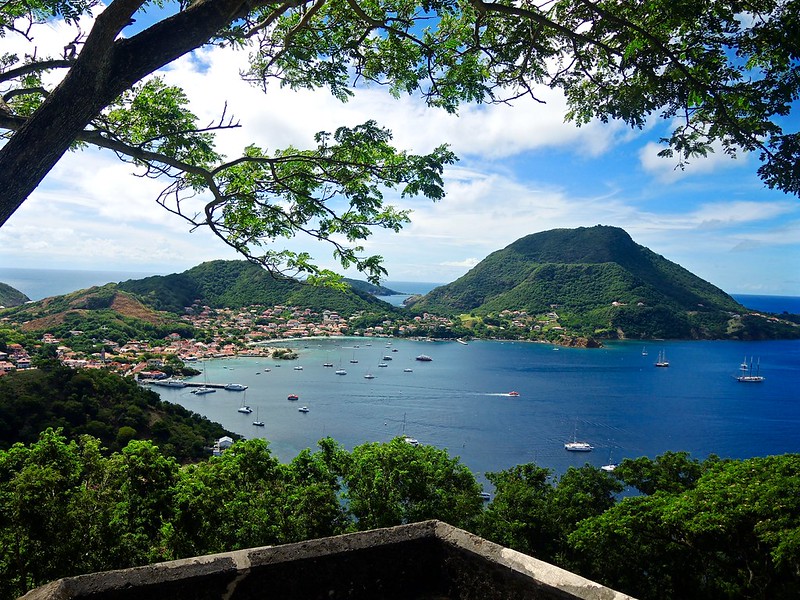
Southeast of Puerto Southeast of Puerto Rico and north of Dominica lie the French Caribbean islands of Guadeloupe. As an overseas region of France, Guadeloupe follows French administrative, legal, health, and education systems, while also maintaining its own unique cultural identity.
Top Ten Facts About Living Conditions in Guadeloupe
- Guadeloupe’s government runs under the French Constitution and executes authority with the French legal system. With France as the head of state, this country has no military of its own; instead, it relies on Les Forces Armées aux Antilles, the French military force of the Caribbean, to defend its borders.
- In October 2024, Guadeloupean workers went on strike to protest living conditions that lag behind those in continental France. The protest included a takeover of the island’s power station, causing a temporary blackout. Although authorities quickly restored electricity, the strike highlighted widespread dissatisfaction with social and economic conditions in the region.
- Over 30% of Guadeloupeans live in poverty, and there is an unemployment rate of 18.6%. However, the government agency, Agence Française de Développement has dedicated over €1 billion in the last decade to promote the development of the economy and infrastructure, in an effort to reduce poverty in Guadeloupe.
- While Guadeloupe exports food products such as bananas, sugar, and rum, it is still highly dependent on imports for its food supply, importing 90%of its food for consumption.
- The urbanization rate is 98%. This means, by 2030, 1,500 hectares (approximately 3,700 acres) will be needed for the construction of 19,000 units to house 50,000 dwellers. Careful urban planning will be critical to manage growth and avoid overcrowding and environmental strain.
- According to a UTS-UGTG, a union of healthcare workers in Guadeloupe, as of September 2024, the health care system in Guadeloupe has deteriorated. The Basse-Terre Hospital Center only obtained an MRI machine in April of 2024 and was not even able to effectively utilize this crucial technology as of September of that year, largely since it took so long for the test results to come back. Furthermore, due to an epidemic of the flu in January 2026, the Pointe-à-Pitre University Hospital has an oversaturation in its emergency room. In response, it has needed to cancel appointments and change its system of managing and treating patients.
- The country also follows the French education system with primary schooling from age 6 to 11, followed by secondary schooling from age 11 to 18. Attending school is mandatory from age 6 to 16, and the literacy rate is 96.5%.
- Although there is limited data on the tourism industry in Guadeloupe, it is significant, with roughly 500,000 tourists spending €505 million on a yearly basis as of 2013. Furthermore, about 8% of businesses in Guadeloupe are in catering and accommodations. Thus, tourism is a significant portion of Guadeloupe’s economy, providing Guadeloupeans with jobs.
- Guadeloupe is unable to effectively manage drinking and waste water. Water loss rates are as high as 63%, and water distribution is unequal across regions. However, the European Regional Development Fund had invested 43.8 million euros into improving Guadeloupe’s water infrastructure as of 2024, resulting in 287,907 people enjoying better water access and 9,748 having better sanitation.
- Guadeloupe may be able to leverage its cultural and creative industries to boost its economy going forward. These industries, which promote Guadeloupe’s Creole culture, already accounted for 1.5-2.5% of employment in Guadeloupe in 2024, and could be effectively expanded, such as through the creation of music festivals celebrating Creole music.
These top 10 facts about living conditions in Guadeloupe depict more than French colonial power. The archipelago distinguished itself from simply taking on the French way of life. The islands have a culture of their own which is a catalyst of its industry.
– Crystal Tabares, Jackson Meyer
Photo: Flickr
