• Link to X
  • Link to Facebook
  • Link to Instagram
  • Link to TikTok
  • Link to Youtube
  • About
    • About Us
      • President
      • Board of Directors
      • Board of Advisors
      • Financials
      • Our Methodology
      • Success Tracker
      • Contact
  • Act Now
    • 30 Ways to Help
      • Email Congress
      • Call Congress
      • Volunteer
      • Courses & Certificates
      • Be a Donor
    • Internships
      • In-Office Internships
      • Remote Internships
    • Legislation
      • Politics 101
  • The Blog
  • The Podcast
  • Magazine
  • Donate
  • Click to open the search input field Click to open the search input field Search
  • Menu Menu

Archive for category: Global Health

Information and stories about global health.

Global Health, Global Poverty, Health

Global Warming and Global Health

global_warming
A new study published in The Lancet claims that climate change and global warming could erode as much as 50 years of global health advances. The study confirms what many health and climate change experts have been predicting for years but had unfortunately, for the most part, not been taken seriously.

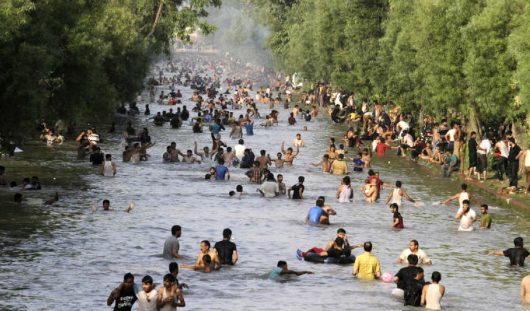
As we have seen in recent months with intense heat waves in India and Pakistan, dramatic changes in climate have disastrous effects on public health. The heat waves bring storms, droughts and floods, which in turn brings about changes in water quality, pollution, land use and ecological differences. These changes translate to large swings in the social dynamics of a country. As the demographics rapidly change, so do health status, socioeconomic status and infrastructure. As a nations health is undermined, social capital declines, as do social and political institutions decline so drastically that years of work in development can be eroded. As the institutions that bind us are broken down, the opportunities for conflict rise, and opportunities for meaningful economic contribution decrease. The biggest calls for concern are the long-term effects that these problems cause that primarily stem from the heat waves, epidemics, storms, sea level rise and large-scale migration. Climate is often seen as an “X Factor” in globalization and development models because it is so unpredictable. Climate change makes the “X Factor” even more volatile but even more important in global leaders consideration and negotiation of major international moves.

Global warming has both direct and indirect effects on global health. Immediately, intense heat waves cause a significant amount of preventable deaths annually. Also, the types of natural disasters that we can expect to see in coming years are predicted to be even more chaotic and destructive. As these storms wipe out communities across the globe and force others to migrate elsewhere, demographic and population shifts will effect the general health and wellbeing of generations to come. These storms also contribute to the prevalence of mental illness, malnutrition, allergies, cardiovascular diseases, infectious diseases, injuries and respiratory diseases.

The most vulnerable countries are the countries that need to focus on immediate development rather than sustaining current development levels. Developed or industrialized countries have the means to make changes now to alleviate future complications by climate change. Developing countries often do not have the flexibility to up-haul current industrial practices or to enact nationwide preparedness protocols for natural disasters on the large scale that it is expected.

With climate change, much of the damage has been done, and immediate action is essential to maintaining the health of the world, let alone improving it. But on the bright side, nearly all of the ways that we can mitigate the risks that climate change creates also contribute to better individual and public health. Investing in reversing climate change is an investment in the environment, in the economy and in health.

– Emma Dowd

Sources: The Economist, PRI, Time, US News, Washington Post
Photo: India Water Portal

July 2, 2015
https://borgenproject.org/wp-content/uploads/borgen-project-logo.svg 0 0 Borgen Project https://borgenproject.org/wp-content/uploads/borgen-project-logo.svg Borgen Project2015-07-02 01:20:512024-05-27 09:25:23Global Warming and Global Health
Global Health, Global Poverty

Watsi Changes Healthcare Through Crowdfunding

Watsi
What do a Kenyan mother of four, a Cambodian grandfather and an eight-year-old Tanzanian boy have in common?

Each is having their treatment funded, and their life changed, on Watsi.

Watsi describes itself as “a global crowdfunding platform that enables anyone to donate as little as $5 to directly fund life-changing healthcare for people around the world.” By using the crowdfunding model to fund healthcare for those in need, Watsi allows people around the world to change the lives of individuals.

The operations funded by Watsi tend to be one-time operations with relatively high rates of success. Procedures range from repairing 63-year-old Alice’s ankle fracture to treating four-year-old Veronica’s hydrocephalus. Each of these procedures brings crowdfunded healthcare to the developing world.

Along with supporters for individual patients, Watsi has attracted many major supporters toward its general goal. Rotten Tomatoes CEO Joe Greenstein, Kholsa Ventures co-founder Vinod Kholsa and many others have supported the goal of crowdfunding the healthcare of the global poor. Changing lives through funding health, it seems, is a goal that unites both large-scale funders and the various microfinancers who have decided to assist patients through funding.

In addition to providing a platform where people can change lives for as little as $5, Watsi is also devoted to transparency, distancing itself from the criticisms that other micro-lending platforms often face. In an interview with The New York Times, Watsi founder Chase Adam described transparency as benefiting both donors and the organization, claiming that “by being transparent, we’re actually crowdsourcing a lot of our work.” The organization describes itself as “radically transparent” and provides access to a Google document on its website, which displays financial data, details on individual patients and partners, and various other pieces of information that give crowdsourcers background on the platform. In the Internet age, where skepticism reigns supreme, this is an important step for nonprofits.

The power to crowdfund healthcare around the world is an amazing reality in the technological age. It creates a personal connection between charitable individuals and the poor and sick, and changes live for those without a voice on the global stage. Additionally, it puts a face to the many lives changed by global charity. By taking advantage of the crowdfunding model to promote healthcare, Watsi both innovates and changes lives, allowing the platform to become a new and powerful voice for the global poor.

– Haley Luce

Sources: Watsi 1, Watsi 2, Watsi 3, New York Times, Tech Crunch
Photo: CrunchBase

June 29, 2015
https://borgenproject.org/wp-content/uploads/borgen-project-logo.svg 0 0 Borgen Project https://borgenproject.org/wp-content/uploads/borgen-project-logo.svg Borgen Project2015-06-29 06:45:182024-12-13 17:51:33Watsi Changes Healthcare Through Crowdfunding
Global Health, Global Poverty, Health, Women and Female Empowerment

Improving Women’s Health Leads to Sustainable Development

Improving Women's Health Leads to Sustainable DevelopmentThe Lancet Commission on Women and Health, a report discussing ways of improving women’s health. The report on women’s vital contributions to healthcare, economic welfare, environmental protection and societal stability, was recently published after three years of research. The Commission, headed by Dr. Ana T. Langer from the Harvard T. H. Chan School of Public Health and Afaf Meleis from the School of Nursing at the University of Pennsylvania and composed of public health experts, social scientists, policymakers and advocates, not only highlights the importance of women’s work in the success of nations, but also promotes recognizing and protecting these roles to increase sustainable development in nations around the world.

The Commission aimed to make policy recommendations in terms of economic, social and cultural factors that would make governments accountable for recognizing the need for improving women’s health and the welfare of them and their communities. Published at a critical point in which Millennium Development Goals are ending and the world is beginning to adopt new Sustainable Development Goals, the Commission aims to heighten women’s roles in national and international leadership and set developments in their health and social status as a measured requisite for completing each Development Goal.

The Commission’s work was primarily concerned with developing ideas about women’s health from a productive standpoint – how they contribute to societies economically, culturally and environmentally – rather than reproductive standpoint. Viewing women’s health solely in terms of reproduction allows gender inequity to prosper because it defines women solely based on their ability to have children. The report demonstrates that improvements in women’s healthcare from a comprehensive standpoint will expand their contributions in education, the economy and the environment.

Globalization, the Commission reports, has contributed to the improvement of women’s status globally but has worsened it in individual countries, threatening social stability. Thus, though globalization has led to more widespread recognition of gender inequality, it has not done anything to change it. The increasingly rapid transmission of communicable diseases, another outcome of globalization, has increased the importance of women in caring for family members and preserving the welfare of their communities.

As humanitarian crises and ecological degradation continue to grow and conditions for populations around the world worsen, the protection of women’s health and social status are increasingly vital to the well-being of societies. Thus, it is essential that nations adopt plans to improve women’s healthcare and equality.

According to the Commission, financing healthcare should take into account persistent health challenges that affect women, such as communicable diseases and violence against women and girls. They should also take on measures to promote women’s rights and recognize their invaluable roles in society. Doing so will improve not only gender equality and societal harmony but also economic stability, healthcare, education and environmental quality. Thus, in investing in the needs and welfare of women, policymakers will help achieve sustainable growth and development for their nations.

– Jenna Wheeler

Sources: The Lancet, Impatient Optimists, The Lancet
Sources: Flickr

June 18, 2015
https://borgenproject.org/wp-content/uploads/borgen-project-logo.svg 0 0 Borgen Project https://borgenproject.org/wp-content/uploads/borgen-project-logo.svg Borgen Project2015-06-18 08:15:292024-12-13 17:51:31Improving Women’s Health Leads to Sustainable Development
Global Health, Health, Malaria, Technology

Photonic Fence Zapping Malaria, One Mosquito at a Time

Photonic_fence
A laser defense system from the scientists at Intellectual Ventures may prove to be an effective weapon against malaria-spreading mosquitoes.

The device is known as a “photonic fence” and works by monitoring a virtual field for disturbances caused by insects. Once an intruder is properly identified as a mosquito, it is targeted with a deadly laser. Within a fraction of a second, the device shears off the bug’s wing, leaving it dead or incapacitated.

Bees, butterflies and humans need not worry, however; the software powering the photonic fence is precise. It can determine not only the type of insect but also its gender and species. This accuracy is needed because only mosquitoes of the genus Anopheles carry malaria and only females bite people. The software analyzes insect size, wing movement pattern, airspeed and other characteristics to discern friend from foe.

Naturally, the idea is not without its skeptics. One concern is that rural areas often have unreliable power grids. The scientists at Intellectual Ventures hope to solve this problem with the use of solar cells. The laser itself doesn’t require much energy, as it targets the wings of a mosquito rather than its tough exoskeleton.

Intellectual Ventures sees the device as supplementing, rather than replacing current measures of control. These include habitat destruction, nets for homes and beds, as well as pesticides. Nonlethal uses of the photonic fence are also possible, such as monitoring mosquitoes or agricultural pests so that they can be treated with more traditional methods.

The company is currently field testing the device in a partnership with Lighting Science Group. Models are not yet for sale and the so-called mosquito laser will need to be produced cheaply in order to be effective.

The device couldn’t come at a better time. Over three billion people—more than half the world’s population—are at risk of malaria worldwide. An estimated 584,000 people died of malaria in 2013, out of 198 million cases. Although the disease is present in the Middle East, Asia and Latin America, most deaths due to malaria occur in Sub-Saharan Africa. Young children are particularly vulnerable to the disease; it is estimated a child dies of malaria every minute.

Its widespread economic effects worsen malaria’s human devastation. Several studies have demonstrated a relationship between malaria and poverty, and many of the world’s poorest countries have high rates of the disease. Refugees and transient people are at heightened risk of malarial infection, as they may not have developed any immunity.

– Kevin Mclaughlin

Sources: Intellectual Ventures, NCBI, WHO
Photo: Intellectual Ventures Lab

June 18, 2015
https://borgenproject.org/wp-content/uploads/borgen-project-logo.svg 0 0 Borgen Project https://borgenproject.org/wp-content/uploads/borgen-project-logo.svg Borgen Project2015-06-18 08:00:362024-06-04 01:08:09Photonic Fence Zapping Malaria, One Mosquito at a Time
Disease, Global Health, Health

Can the Measles Vaccine Ward Off ‘Immune Amnesia’?

measles_vaccine
Scientists are speculating that the measles vaccine does more than prevent measles. A new study published in the journal “Science” found that children that were vaccinated did not just avoid the measles, they also eluded infectious illnesses such as pneumonia, influenza and tuberculosis.

Historically, each time the measles vaccine was introduced, childhood mortality dramatically went down by 30 to 50 percent in some countries and by 90 percent in severely destitute nations.

Today the vaccine is hailed as one of the most effective operations in public health in recent history.

The World Health Organization has asserted that the vaccine is linked to a hefty decrease in child mortality no matter what the infectious illness is. Following widespread vaccination, childhood deaths due to infectious disease fall by 50 percent.

Michael Mina is a post-doctorate at Princeton University and a medical student at Emory University. He and his team performed a recent study using computer models to predict the mortality rate for infectious diseases in the next few years.

The team looked at figures collected from the U.S, Denmark, England and Wales. Numbers dated back to the 1940s.

In every location, the presence of measles was linked by some degree to the rate of mortality. The magnitude of the affect was different for each country because, most likely, health care underwent changes during the 70-year stretch.

From the evidence, Mina and his colleagues concluded that being infected with measles leaves children susceptible to other infectious diseases for an average time span of 28.3 months, or about two or three years.

Measles is a severe immunosuppressor, increases a host’s likelihood of contracting other diseases. Most viruses have this effect, but measles takes it even further. It actually obliterates any immunity the host once had.

After going through a measles infection, “the immune system kind of comes back. The only problem is that it has forgotten what it once knew,” Mina explains.

For example, if a child gets sick with pneumonia, they build up antibodies which prevent the child from contracting the disease again. But if that child then catches the measles, their immune system loses that protection and they could contract pneumonia once more.

Persuasive evidence from the new study contributes to the belief that measles affects a person’s immunity and, therefore, their overall mortality. Thus, the measles vaccine could decrease mortality to a much larger degree than originally thought.

Still, scientists still have not been able to supply enough evidence as to why this phenomenon happens. They have only come up with “immune amnesia” as a theory. There is still more testing to be done.

Even so, no one can ignore the overwhelming evidence that eliminating measles lessens the risk of contracting other infectious diseases. It is just another incentive for people, especially children, to be vaccinated.

Reductions in mortality have been observed in the U.S., England and other parts of Europe and are still seen in developing countries each time the vaccine is instituted.

– Lillian Sickler

Sources: NPR, U.S. National Library of Medicine, Research Gate, Online Post, ARS Technical
Photo: Flickr

June 16, 2015
https://borgenproject.org/wp-content/uploads/borgen-project-logo.svg 0 0 Borgen Project https://borgenproject.org/wp-content/uploads/borgen-project-logo.svg Borgen Project2015-06-16 14:38:512024-06-04 01:08:10Can the Measles Vaccine Ward Off ‘Immune Amnesia’?
Children, Disease, Global Health, Global Poverty

Children in Yemen at Risk for Epidemic

Children-in-Yemen-at-risk-for-Epidemic
With the outbreak of conflict in Yemen, health centers have to shut down. Forces continue to attack hospitals and health care centers. There are medical shortages as the conflict hinders the delivery of medical supplies. As a result, children cannot receive the crucial vaccines and treatments they need to fight communicable diseases.

Vaccines save 2.5 million children worldwide from preventable diseases. Without basic vaccines, about 1.5 million children die. There are already cases of Measles reported in Yemen. Doctors are worried about reports of other diseases like Polio. If children in Yemen continue to not receive the vaccines, then these two diseases could continue to spread.

Parents are hesitant to take their children to health care centers to get the vaccines because the centers continue to be targets for attack, and because just getting there is dangerous. That leaves the health workers going into the field to vaccinate children. This can make it difficult to properly track how much of the child population has been vaccinated.

Another often overlooked aspect of vaccinating children is the protection of the vaccines themselves. Doctors have to make sure that vaccine centers maintain a supply of the vaccines needed. However, the conflict can make it difficult for WHO officials to deliver the medical supplies to the vaccine centers. Fuel shortages also cause problems, as there needs to be enough to ensure that the vaccines have the proper cold chain needed.

Issues like this can limit the number of children that can be reached and vaccinated. If supplies cannot be replenished or maintained, then it becomes difficult to keep children safe from diseases.

Contributing to the issue is food insecurity. Before the civil war, Yemen was already importing most of its food. Now, with conflict preventing food from being delivered, Yemen is struggling to feed its people. Without the nutrients to stay healthy and prevent malnutrition, the children’s immune systems are at a higher risk for contracting diseases.

Diseases could spread rapidly, as children in Yemen do not have access to enough food and clean water, people live in close proximity in refuge areas, and there is limited health access. The WHO workers try to combat the spread with consistent monitoring of medical supplies and going out and finding those who need the vaccines.

– Katherine Hewitt

Sources: Bill & Melinda Gates Foundation, UN News Centre, World Health Organization,
Photo: Twitter

June 15, 2015
https://borgenproject.org/wp-content/uploads/borgen-project-logo.svg 0 0 Borgen Project https://borgenproject.org/wp-content/uploads/borgen-project-logo.svg Borgen Project2015-06-15 08:11:152024-06-11 02:48:06Children in Yemen at Risk for Epidemic
Disease, Global Health, Refugees and Displaced Persons

Cholera Outbreak in Burundi Refugee Camp

cholera outbreakThe Office of the United Nations High Commissioner for Refugees (UNHCR) confirmed that over 105,000 Burundian people have crossed the border to find sanctuary from politically-driven violence in Burundi’s capital city, Bujumbura.

The Burundian political sphere was rattled in late April when President Pierre Nkurunziza was nominated by the CNDD-FDD party to serve a third term, which his political opponents believe to be unconstitutional. As a result of the debate, Bujumbura was flooded with protests in the following weeks, culminating in a short-lived coup d’état on May 13.

Despite the coup d’état ceasing within 24 hours, violence continued into the rural regions, threatening a large majority of rural Burundian people. The Imbonerakure tribe ravaged towns by marking red paint on the houses of those who they intended to kill, causing thousands of families to flee the country.

UNHCR correspondent Adrian Edwards reported, “Many of these [people] have crossed into Rwanda (25,004), but over the last week we have also seen a sharp increase in people seeking asylum in Tanzania (17,696) after entry restrictions there were lifted. In addition, almost 8,000 people have crossed into South Kivu province in the Democratic Republic of the Congo. In all these cases, women and children, including a large number of unaccompanied children, are in the majority.”

The reported number of 17,000 seeking refuge in Tanzania has since increased to over 70,000. A large majority of those traveling to Tanzania have landed in Kagunga, a border village on the shore of Lake Tanganyika. This small village can only be reached by boat, due to a treacherous mountain range surrounding the village on the Tanzanian side.

This small village quickly reached its maximum capacity, and the Burundian people have been crammed into short-stocked refugee camps, without adequate sleeping space, food or sanitation. These refugee camps are overwhelmed by the rapid out-pour of people. As a result, a recent cholera outbreak has infiltrated the water supply, killing as many as 31 refugees in the past few weeks and causing acute diarrhea in 3,000 more.

Médecins Sans Frontières (MSF) is working to open re-hydration checkpoints and cholera treatment centers in both Kagunga and Kigoma. Refugees are currently being fast-tracked to Kigoma, where there have been no reported cases of cholera. The transfer of pregnant women, children, the elderly and the sick is a top priority.

In Kigoma, local aid has assembled a sort of “pit stop” location where refugees can stay a few days while being registered and receiving medical care before being transferred to another refugee camp called Nyarugusu. With the help of UNHCR and other contributors, more than 18,000 refugees have been safely moved to Nyarugusu so far.

Regarding the Cholera outbreak, MSF stated, “Epidemics tend to occur where living conditions are poor: where there is overcrowding, inadequate access to safe drinking water or proper latrines and insufficient rubbish collection. Improved hygiene practices and treatment are important components of the cholera response. The provision of safe water and effective sanitation remain essential during all outbreaks.”

– Hanna Darroll

Sources: MSF, UNHCRInternational Business Times
Sources: BBC, MSF
Photo: The Guardian

June 14, 2015
https://borgenproject.org/wp-content/uploads/borgen-project-logo.svg 0 0 Borgen Project https://borgenproject.org/wp-content/uploads/borgen-project-logo.svg Borgen Project2015-06-14 16:00:062024-12-13 17:51:25Cholera Outbreak in Burundi Refugee Camp
Global Health

Review of Senate Hearing on Global Health

Senate-Global-Health-Elton-John
Earlier this month, the U.S. State and Foreign Operations Senate Subcommittee held a hearing on global health. The purpose of this hearing was to determine the role of U.S. leadership in the global health community as well as the type of approach it should take.

During the hearing, Grammy award-winning founder of the Elton John AIDS Foundation, Sir Elton John, and NY Times best-selling author and controversial California pastor, Dr. Rick Warren, voiced their opinions on the subject. Although these men are of different sexual orientations and come from different areas of the world, both are dedicated to eliminating preventable diseases that seem to be caused by extreme poverty.

At the hearing, Dr. Warren urged the Senate to approach the global health epidemic with new eyes. By highlighting the fact that a minimal amount of the national budget goes to foreign assistance, Dr. Warren told lawmakers to cultivate “the right kind of foreign assistance” so terrorism will be deterred for the next generation in a cost-effective manner.

Dr. Warren also encouraged the Senate to forge a new partnership with NGOs and religious organizations so that less stable countries can be guaranteed a continuous support system until these preventable diseases are eradicated from the Earth.

With 1 percent of the national budget going to foreign aid, Dr. Warren argues that more could be allotted to foreign aid so that the U.S. could better cultivate relations with foreign countries by changing its approach to funding. So often, the U.S. fails to provide long-lasting and substantial aid to foreign countries. By respecting the “culture and history of the country it aims to support” and targeting “the upstream causes of ill-health” like poverty, the U.S. can change its approach and make a greater impact.

While Dr. Warren highlighted a different approach to solving the problem of global health, Sir Elton John focused on a specific disease to which he feels personally connected.

Motivated by the despair he saw many sub-Saharan Africans suffering through, Sir John provided a “dignified death to more than 800,000 men, women, and children” as well as food, shelter and education to orphans.

Since the 1990s, Sir Elton John has focused on helping Africans grapple with the effects of HIV/AIDS. This disease that can be transmitted with the exchange of bodily fluids is rampant throughout the African continent due to impoverished conditions in communities.

At the hearing, John urged world leaders to de-stigmatize AIDS. Historically, HIV/AIDS has been seen by mainstream citizens as a part of the LGBTQI community. Because of that, many leaders view this disease as preventable by nature of sexual orientation. This stigmatizes those with the disease and makes it difficult to get proper treatment and preventable measures.

– Erin Logan
Sources: C-SPAN, Senate.gov
Photo: ABCNews

June 6, 2015
https://borgenproject.org/wp-content/uploads/borgen-project-logo.svg 0 0 Borgen Project https://borgenproject.org/wp-content/uploads/borgen-project-logo.svg Borgen Project2015-06-06 08:00:362024-05-27 09:24:00Review of Senate Hearing on Global Health
Global Health, Global Poverty

Ebola Survivors Fight Stigma

ebola
The stigma of having contracted the Ebola virus has created public health and development issues for regions most deeply stricken by the virus. Doctors and patients alike who fought the virus have now become public educators to doubly continue the fight against Ebola and the accompanying stigma.

In the media, those who contracted Ebola have been portrayed as guilty of the disease, as if it were their decision. Guilt and blame have surrounded the mass fear of Ebola.

It takes an immense amount of strength to survive Ebola and to move back into a life that has drastically changed. For some survivors, this means returning to an empty home or even discovering that they are homeless. The stigma of surviving Ebola comes at a cost. This cost is termed “Post-Ebola Syndrome.” This syndrome is the mental and physical effect of surviving the disease and returning to society. In many cases, this has developed into Post-Traumatic Stress Disorder.

Some survivors have been removed from their homes because of the fear that they are not fully cleared of the virus. Certificates are issued to patients in clinics and hospitals who survive the disease, but these certificates are not enough for some fearful community members. There have been reports where those who are known to have contracted Ebola have been removed from buses. Also, communities have ostracized health workers who treat Ebola victims.

Doctors and patients who survive play a critical role in treatment, clinical assistance and public awareness. Survivors are able to provide their antibodies to help other patients fight the disease. Also, doctors who return to the field are able to provide their insight on treating the disease. Doctors and patients alike show to the public and other patients that while Ebola is deadly, it is not a guaranteed death sentence. Survivors represent the importance of seeking clinical treatment and monitoring.

In order to fight the stigma, some medical organizations, such as Doctors Without Borders, accompany survivors when they return home. Doctors Without Borders volunteers educate the community on Ebola and explain that those who survive have a very low chance of transmitting the disease to others. They answer any questions that the community has in hopes of encouraging others to spread awareness and accept members of their community. In addition, a Doctors Without Borders treatment center in Monrovia, Liberia, is run by seven doctors who all once had Ebola. This makes patients hopeful for themselves and encourages a greater understanding of the disease.

The Ebola virus cases have significantly decreased from 600 weekly cases in November, to 30 weekly cases in April. While even one case is a critical concern, public efforts to re-integrate those formerly living with the disease are also important for communities.

– Courteney Leinonen

Sources: Action Aid, BBC, Doctors without Borders 1, Doctors Without Borders 2, Doctors Without Borders 3, Doctors Without Borders 4
Photo: Flickr

April 30, 2015
https://borgenproject.org/wp-content/uploads/borgen-project-logo.svg 0 0 Borgen Project https://borgenproject.org/wp-content/uploads/borgen-project-logo.svg Borgen Project2015-04-30 12:00:032024-05-27 09:23:49Ebola Survivors Fight Stigma
Activism, Global Health, Humanitarian Aid, Nonprofit Organizations and NGOs, Poverty Reduction

World Concern Makes an Impact

world concern
World Concern is a nonprofit organization devoted to transforming the lives of deeply impoverished people. Founded by pharmacist Jim McCoy and Doctor Wilbert Saunders in 1955, the organization was intended to provide resources to hospitals and clinics overseas.

In 1976, the functions of World Concern shifted dramatically when they realized that sending medicines and medical supplies was not enough to aid countries affected by a variety of crisis. They began sending passionate volunteers and expert to work on the ground with people living in the targeted community.

In addition to long-term support, they offer emergency relief support to countries that have experienced earth quakes and tsunamis among other situations. Their most recent contribution to relief was after the devastating earthquake.

World Concern is revolutionary because they work in some of the world’s most diseased and dangerous places. Some of these locations include Darfur, Myanmar, Somalia, Ethiopia and Rwanda. In some of the countries World Concern works, literacy rates are as low as 25 percent. A committed staff of approximately 900 people work on behalf of World Concern’s mission to aid poor communities.

In addition, 90 percent of the donations World Concern receives go to their programs abroad. They are transparent with their fiscal information to ensure that money is being maximized where it is most effective. Fundraising takes up only 5.2 percent of all expenses and promotions. 4.7 percent goes to management and general administrative duties.

World Concern is devoted to providing clean water to communities. Clean water is pertinent to maintaining the health of the people living in the community. They bring in wells and latrines to facilitate better hygiene and access to clean water.

Another service they provide is bettering children’s access to education. Many children in these poor communities have to walk for miles and the classes are usually held is sub standard conditions either outside or in very informal settings.

In poor communities of developing countries the way that most people earn a living is through farming. These forms of subsistence living are vulnerable to food insecurity; reliance on environmental conditions and floods and drought greatly affect the income stability.

World Concern is devoted to the long-term solutions to working out solutions in some of the world’s poorest communities. They foster a sense of hope through providing access to education and clean water.

– Maxine Gordon

Sources: CRISTA Ministries, World Concern
Photo: World Concern

February 26, 2015
https://borgenproject.org/wp-content/uploads/borgen-project-logo.svg 0 0 Borgen Project https://borgenproject.org/wp-content/uploads/borgen-project-logo.svg Borgen Project2015-02-26 04:00:362020-07-16 09:45:06World Concern Makes an Impact
Page 33 of 40«‹3132333435›»

Get Smarter

  • Global Poverty 101
  • Global Poverty… The Good News
  • Global Poverty & U.S. Jobs
  • Global Poverty and National Security
  • Innovative Solutions to Poverty
  • Global Poverty & Aid FAQ’s
Search Search

Take Action

  • Call Congress
  • Email Congress
  • Donate
  • 30 Ways to Help
  • Volunteer Ops
  • Internships
  • Courses & Certificates
  • The Podcast
Borgen Project

“The Borgen Project is an incredible nonprofit organization that is addressing poverty and hunger and working towards ending them.”

-The Huffington Post

Inside The Borgen Project

  • Contact
  • About
  • Financials
  • President
  • Board of Directors
  • Board of Advisors

International Links

  • UK Email Parliament
  • UK Donate
  • Canada Email Parliament

Get Smarter

  • Global Poverty 101
  • Global Poverty… The Good News
  • Global Poverty & U.S. Jobs
  • Global Poverty and National Security
  • Innovative Solutions to Poverty
  • Global Poverty & Aid FAQ’s

Ways to Help

  • Call Congress
  • Email Congress
  • Donate
  • 30 Ways to Help
  • Volunteer Ops
  • Internships
  • Courses & Certificates
  • The Podcast
Scroll to top Scroll to top Scroll to top