• Link to X
  • Link to Facebook
  • Link to Instagram
  • Link to TikTok
  • Link to Youtube
  • About
    • About Us
      • President
      • Board of Directors
      • Board of Advisors
      • Financials
      • Our Methodology
      • Success Tracker
      • Contact
  • Act Now
    • 30 Ways to Help
      • Email Congress
      • Call Congress
      • Volunteer
      • Courses & Certificates
      • Be a Donor
    • Internships
      • In-Office Internships
      • Remote Internships
    • Legislation
      • Politics 101
  • The Blog
  • The Podcast
  • Magazine
  • Donate
  • Click to open the search input field Click to open the search input field Search
  • Menu Menu

Archive for category: Global Health

Information and stories about global health.

Global Health, Women & Children

Merck for Mothers Improves Global Health

merck for mothers
Merck for Mothers is a 10-year, $500 million initiative that envisions, and works toward, a world where no woman dies giving life. Currently, an estimated 800 women die per day, primarily in developing nations. Merck’s global mission is to bring better healthcare and innovative health solutions to millions of people across the developing world; a commitment that has been in standing for more than 150 years. Working closely with its program leadership, advisory board, healthcare workers, maternal health experts and policy makers, the Merck for Mothers initiative has already served in more than 30 countries across the world.

As stated on its website, “Women are the cornerstone of a healthy and prosperous world. When a mother survives pregnancy and childbirth, her family, community, and nation thrive.”

Merck for Mothers aims to see nations thrive by saving as many lives as possible, and it does this by tackling the two leading causes of maternal mortality: excessive bleeding after labor and high blood pressure disorders during pregnancy and childbirth.

For example, in Uganda, where a woman faces a one in 49 chance of dying during pregnancy and childbirth, many of the private healthcare providers, such as independent midwives and local pharmacies, offer services that are not always regulated and can vary in quality. As a result, Merck for Mothers explores the ability of these local private providers and health businesses to deliver affordable and high-quality maternal healthcare. This is a program that has estimated to reach more than 150 thousand pregnant women over the span of three years.

Each of the 30 country programs is different and tailored to that country, yet they all strive for the same goal: giving mothers a better chance at surviving pregnancy and childbirth. In addition, Merck for Mothers focuses on family planning, which is known to play a key role in reducing maternal mortality. Merck for Mothers explains this through the Ripple Effect. When a mother dies, the ripple effect begins with her child who is more likely to die before the age of two. If she has other children, they are also up to 10 times more likely to leave school and suffer from poor health. But a mother’s death affects more than just her family.

Merck for Mothers believes that a woman’s death also impairs her community. Representing as much as one-third of the world’s gross national product, a woman’s unpaid work contributes to a community’s economic prosperity. In the end, this becomes a global economic issue. For these reasons, Merck for Mothers focuses on three key areas: innovation, access and advocacy.

At Merck, corporate responsibility is the cornerstone of its daily commitment to tackle global health challenges, such as river blindness, HIV/AIDS and cervical cancer. It has been a 150-year commitment, but that has not stopped Merck from making new additions.

With Merck for Mothers, it can now expand its scope and save the lives of millions of mothers across the globe, so that every day 800 more lives of women are spared.

– Chelsee Yee

Sources: Merck for Mothers, Poughkeepsie Journal, Mobi Health News
Photo: Modern Mom

February 21, 2015
https://borgenproject.org/wp-content/uploads/borgen-project-logo.svg 0 0 Borgen Project https://borgenproject.org/wp-content/uploads/borgen-project-logo.svg Borgen Project2015-02-21 04:00:572020-07-15 22:41:57Merck for Mothers Improves Global Health
Global Health, Global Poverty

Paying Out-of-pocket for Healthcare Contributes to Poverty

The UN recently announced that paying out-of-pocket for healthcare leads to “deep impoverishment” in many nations. It is estimated that 80 percent of people throughout 44 countries do not have healthcare due to the high cost.

“It is the poorest with the highest needs who suffer the most from having to pay out-of-pocket healthcare expenses,” says ILO Health Policy Coordinator, Xenia Scheil-Adlung.

According to the World Health Organization, over 100 million people fall into poverty every year due to medical expenses. An additional 150 million are required to contribute almost half of their incomes on medical bills. The majority of these countries lack social healthcare programs, affordable insurance options or government-funded healthcare.

Remarkably, a great deal of those living in impoverished areas devote relatively more money to health services than people living in wealthy, developed countries. For instance, in Germany where almost every citizen has social healthcare, residents pay only 10 percent of national medical expenses.

On the other hand, in the Democratic Republic of the Congo very few residents have access to healthcare and they pay approximately 70 percent of national medical care costs. Similarly, in Seirra Leone, citizens pay over 75 percent of total healthcare expenses out-of-pocket. This has resulted in deep impoverishment in Seirra Leone and other similar nations.

“At least 1.3 billion people worldwide lack access to the most basic healthcare,” said Dr. Rüdiger Krech, Head of Social Protection in the Division Health, Education and Social Protection at GTZ. “Often it is because they cannot afford it. As a result, millions become very sick or die every year from preventable or curable medical conditions. For example, the toll from treatable infections and preventable complications of pregnancy and delivery is more than 10 million deaths each year,” Krech added.

Since 2010, national economic consolidation policies have delayed and adversely affected efforts toward universal healthcare. Recent policies have cut back health services and reduced wages for healthcare workers, augmenting the financial hardship on private households.

Officials state that universal healthcare access is a key element in the global initiative to end poverty. Director-General of the International Labor Organization, Guy Ryder, emphasizes that universal healthcare diminishes inequality and promotes economic growth.

“Social health protection is not only a key tool to make health care accessible to all and to free millions of people from poverty. It is also an investment in health, productivity and development—an investment that is a prerequisite for international competitiveness,” said Assane Diop, Executive Director of the ILO.

Experts agree that investments in healthcare systems create economic growth for all parties involved as well as raises in productivity and wellbeing for residents. Many urge that in order to overcome the global health crisis, policies for universal healthcare must be initiated.

– Meagan Douches

Sources: United Natons, World Bank, World Health Organization
Photo: Empower Magazine

January 17, 2015
https://borgenproject.org/wp-content/uploads/borgen-project-logo.svg 0 0 Borgen Project https://borgenproject.org/wp-content/uploads/borgen-project-logo.svg Borgen Project2015-01-17 04:00:352024-06-05 01:58:21Paying Out-of-pocket for Healthcare Contributes to Poverty
Global Health, Health

Measles Eradication Progress Stalled

Measles Eradication
The World Health Organization recently announced that progress toward eradicating measles has stalled. Since 2012, measles-related deaths have increased from 122,000 to almost 148,000 worldwide. According to the WHO, this means that 2015 eradication targets will not be met.

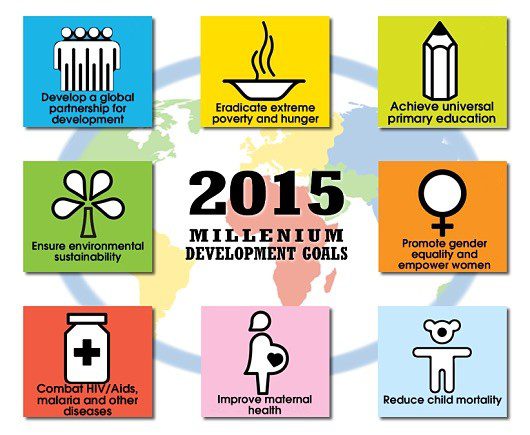
Overall, the number of measles deaths in 2013 shows a 75 percent decrease since the year 2000. However, this is significantly lower than the Millennium Development Goal of a 95 percent decrease between 2000 and 2015.

Global coverage of initial measles vaccines expanded to 83 percent by 2009, but this number has since remained stagnant.

Failed efforts to vaccinate children from measles make them prone to serious health issues including pneumonia, encephalitis, diarrhea and blindness. Developing countries currently account for the highest percentage of measles-related deaths. The latest statistics from 2013 report that 70 percent of measles deaths took place in just 6 countries including India, Nigeria, Pakistan, Ethiopia, Indonesia and the Democratic Republic of Congo.

The last decade has seen impressive advancements toward eradicating measles, and approximately 15.6 million deaths have been avoided from 2000 to 2013. Still, reports show that these leaps in progress have lately been diminishing.

Recent increases in measles cases were due in part to considerable outbreaks in China, the Democratic Republic of Congo and Nigeria. Many countries around Europe have also seen a re-emergence in disease diagnoses including Georgia, Turkey and Ukraine. These regions are burdened by poor healthcare systems, conflict and population displacement, causing forestallments to vaccination efforts.

In addition, many countries are now experiencing reduced funding for measles eradication campaigns. This lack of support has hindered progress in eliminating the disease, causing measles cases to rise.

“The net effect of reduced global funding by governments and partners has caused postponed and suboptimal immunization campaigns, resulting in large outbreaks that threaten our hard earned gains,” said UNICEF’s Senior Health Advisor, Robert Kezaala.

Members of the Measles & Rubella Initiative state that in order to recommence progress in eliminating the disease, organizations must promote measles awareness and the dangers surrounding the disease.

Additionally, obstacles that are preventing vaccination advancements must be addressed.

Dr. Peter Strebel of the Department of Immunization, Vaccines and Biologicals urges countries to take action against measles. “Countries urgently need to prioritize maintaining and improving immunization coverage. Failure to reverse this alarming trend could jeopardize the momentum generated by a decade of achievements in reducing measles mortality,” says Strebel.

– Meagan Douches

Sources: Think Progress, Reuters, Measles Rubella Initiative, WHO
Photo: Karmavision

November 29, 2014
https://borgenproject.org/wp-content/uploads/borgen-project-logo.svg 0 0 Borgen Project https://borgenproject.org/wp-content/uploads/borgen-project-logo.svg Borgen Project2014-11-29 04:00:072024-06-05 01:58:19Measles Eradication Progress Stalled
Family Planning and Contraception, Global Health

Pathfinder International Addresses Overpopulation

pathfinder_international
Clarence Gamble was born in 1894 in Cincinnati, Ohio and proceeded to attend a slew of universities including the likes of Princeton and Harvard University, where at the latter he received his M.D. degree. Following, he became heavily involved in birth control organizations and research. He worked alongside Planned Parenthood and initiated projects to study population growth in countries such as India and Japan.

In 1957, Gamble founded the Pathfinder Fund, an organization dedicated to providing a wider audience of people with access to safe, efficient and helpful reproductive health services. The fund is donation-based, which came into play as early as the 1960s. In fact in the 1960s the USAID and Office of Population donated $10 million to the organization, thus proving the government’s support of the discussed issues.

Pathfinder was already operating globally in the 60’s and 70’s opening offices in Latin America, Indonesia, Egypt, Chile, the Philippines and actively participating in population schemes in various African countries. Over the decades, the Pathfinder Fund continued to grow and, by the 90’s, it was the Pathfinder International.

In 1996, Pathfinder won the UN Population Award, an award given to someone who has raised awareness of population issues and solutions. And more recently in the 2000’s Pathfinder began the African Youth Alliance program aimed toward people 10-24 years of age in African countries like Botswana and Ghana. It was formed in order to assist with reproductive health.

Nowadays, Pathfinder International continues their hunt for better sexual and reproductive health care for all. They have six main focus areas: Adolescents, HIV/AIDS, Contraception and Family Planning, Advocacy, Abortion and Maternal and Newborn Health.

For example of their comprehensive care, as part of their abortion focus, Pathfinder not only supports a woman’s right to an abortion, but also advocates for safe abortions and rigorous post-abortion care. The organization accomplishes this in a number of ways one being through legislation, and another by funding an expanded number of professionals who can provide the medical and psychological services needed.

Another focus area, the Contraception and Family Planning focus, is also a worldwide project for Pathfinder. Over the years, Pathfinder has involved itself in over 100 countries attempting to integrate family planning concepts and to provide contraception to those in need of it. Above all people need to be educated, and Pathfinder does their best to also take on that responsibility.

Pathfinder International encourages the public to do its part as well. People can host fundraisers and events of that nature to provide contraceptives to people. One of the easiest ways to support the cause is for people to use their voices. People can become a part of their advocacy network or even start a conversation about reproductive health on a public forum. And lastly, Americans can vote for legislation to continue this type of focus. In an ever-growing population, it is important to be as conscious as possible of the world’s sexual and reproductive health.

– Kathleen Lee

Sources: Pathfinder International, Harvard Library

October 17, 2014
https://borgenproject.org/wp-content/uploads/borgen-project-logo.svg 0 0 Borgen Project https://borgenproject.org/wp-content/uploads/borgen-project-logo.svg Borgen Project2014-10-17 04:00:122024-06-05 01:53:30Pathfinder International Addresses Overpopulation
Global Health

Truvada, a New HIV Prevention Pill

A new HIV treatment has recently been introduced to the public. The treatment, known as Pre-Exposure Prophylaxis (PrEP) and sold under the brand name Truvada, “involves taking a pill once a day to prevent HIV infections in populations that are at high risk.”

The World Health Organization (WHO) has recently recommended that people who have a high risk of getting HIV should be taking the pill. In an interview with Michael Martin of NPR, Dr. Anthony Fauci, who attended the 20th annual International Aids Conference (IAC) that took place in Melbourne, Australia, seeks to explain the recommendation by the WHO and the sudden interest in the Truvada treatment. He told Martin that it is taken both as a treatment and as a precautionary and prevention drug.

Fauci explained that the WHO is now extremely interested in PrEp because “the clinical trials have incontrovertibly shown that if used properly and if people take the pill—and this is a pill that has two drugs in it, that are highly effective against HIV.”

He also commented that for people who do take the pill consistently, “the efficacy is greater than 90 percent,” and that because of this level of success, “the (WHO) and our own Centers for Disease Control and Prevention here in the United States are recommending that people in a few subcategories who are at particularly high risk should seriously consider taking this pre-exposure prophylaxis.”

Dr. Robert Grant, who also attended the 20th annual IAC, commented on the success of the drug’s implementation. He said that a daily dose was necessary because it keeps people in the habit of taking the medicine. He explained to Medscape that “daily dosing creates the highest drug levels, which provides somewhat of a cushion in case people miss a few doses,” and helps to ensure and maximize the effective nature of the treatment.

While the drug is now being used more regularly and shows promise for future HIV research, it is important to remember that Truvada serves only as a treatment and as prevention method and not as an actual cure for HIV.

– Jordyn Horowitz

Sources: NPR, Truvada
Photo: SheKnows

August 6, 2014
https://borgenproject.org/wp-content/uploads/borgen-project-logo.svg 0 0 Borgen Project https://borgenproject.org/wp-content/uploads/borgen-project-logo.svg Borgen Project2014-08-06 13:32:252024-05-27 09:20:47Truvada, a New HIV Prevention Pill
Global Health, Global Poverty

First Ever U.S.-Africa Leaders Summit 

From August 4 to August 6, the White House is hosting the first ever United States-Africa Leaders Summit. During the summit, U.S. President Barack Obama aims to strengthen ties with Africa’s leaders and engage in conversation on investing in the future of the continent.

The summit, hosts 50 African leaders in good standing with the U.S. and is focused on trade and investment in Africa. They are also discussing food security, availability of clean water and sustainable housing.

With the continent in the midst of a serious Ebola outbreak, some gears may be shifted toward providing reliable healthcare facilities to the millions who suffer from health problems due to impoverished conditions throughout rural Africa.

Healthcare is a hopeful topic of discussion for the U.S.-Africa Leaders Summit, as the healthcare inequality gap proliferates in both countries. In South Africa, healthcare for the impoverished is increasingly difficult to attain, as no one seems to be making the initial investment to build a hospital where effective healthcare can be provided on a public scale.

Another significant highlight of the summit is climate change. Africa’s rural agriculture relies on the rain. In recent years, Africa has suffered from harsher and more frequent environmental changes, and so Obama has opened a dialogue on implementing sturdier agricultural infrastructure to positively impact food security among African nations.

This has big implications for Africa’s impoverished population, as 65 percent of the entire continent relies on agriculture as their source of livelihood. If environmental conditions can be dealt with more productively, agricultural output will increase. This will have real and beneficial effects on conditions by raising wages and lowering the price of food. Thus, Africa’s impoverished population will have greater buying power.

Obama is also hopeful that his discussions on trading partnerships will have a positive impact on job markets in Africa. In doing this, African companies will be seeking foreign investment and will prove that the continent has more to offer than just commodities and natural resources. If significant investment is secured, many tangible benefits will be brought back to American soil, as these companies will be capable of expanding the economy and beginning to employ Africa’s promising youth.

All in all, the U.S.-Africa Leaders Summit has a lot of potential for aiding Africa’s population.

– Conner Goldstein

Sources: UCSF, WhiteHouse.gov, The World Bank, The Guardian
Photo: The Guardian

August 6, 2014
https://borgenproject.org/wp-content/uploads/borgen-project-logo.svg 0 0 Borgen Project https://borgenproject.org/wp-content/uploads/borgen-project-logo.svg Borgen Project2014-08-06 09:41:482024-05-27 09:20:42First Ever U.S.-Africa Leaders Summit 
Global Health, Health

Health Care and Taxation in Developing Countries

Healthcare and Taxation in developing countries
One of the reasons health care in developing nations is ineffective is that governments heavily tax medicines and other health care related products. While the combination of health care and taxation in developing countries is a good revenue generator for the government, it imposes a heavy burden on those who cannot afford to carry it. Those with low incomes and who mostly need these medicines find themselves castigated by high prices that result from government tariffs and taxes.

Developing nations tend to import many, if not all, of the medicines prescribed. In addition, patients usually are the ones paying the full amount for medical services due to the unavailability of health care in their countries. For instance, the average Indian pays for about 70 percent of health care services. After taxes and tariffs, the price of medicines can go up two-thirds, making even generic drugs unaffordable to the lower class.

This story repeats itself in other emerging markets. Countries like Argentina, Russia and Brazil impose tariffs of 10 percent on medicines. Other developing nations like Algeria and Rwanda impose tariffs of 15 percent, and in places like the Republic of Djibouti tariffs can even go up to 26 percent.

In the case of medicine, tariffs are only one part of the problem. Many countries also impose heavy taxes on top of tariffs. For instance, Brazil imposes a 28 percent tax on prescribed medicines, while India levies a variety of taxes that increase the value of medicine by about 8 percent on top of the states’ taxes, which can range from five to 16 percent.

Besides the fact that they place the heaviest economic burden on the poorest sectors of the population — which also tend to have the highest levels of health problems — these tariffs and taxes are economically counterproductive. According to Rod Hunter, senior vice president at the Pharmaceutical Research and Manufacturers of America, higher prices on medicines limit people’s use of them. Illnesses go on unabated, in time leading to less productivity and a lower national GDP.

The effects of reducing or eliminating tariffs and taxes on medicines have been dramatic in places like Kenya, Colombia, Colombia, Ethiopia, Malaysia, Nicaragua, Pakistan, Tanzania and Uganda. For instance, after the Kenyan government removed tariffs and taxes on anti-malaria medicine, infant mortality and disease rates between 2005 and 2009 declined by almost 44 percent.

The initiative shown by these countries has resonated across the globe. Many African nations in 2011 pledged to lower tariffs and taxes on medicines. However, so far only a handful of nations have followed through.

It is in the best interest of countries like India and China to lower tariffs, especially considering India is the biggest exporter of finished medicines and the China produces 70-80 percent of the active ingredients contained in medicines.

The upcoming 2015 BRICS summit could be a good place to raise this issue again. These large stakeholders and developed nations alike could make it part of the agenda to change the practice of “taxing the sick.” Perhaps they could even form a coalition to press governments worldwide to change these practices and broaden access to health care in many developing nations.

– Sahar Abi Hassan

Sources: Project Syndicate, Voice of America
Photo: Huffington Post

July 28, 2014
https://borgenproject.org/wp-content/uploads/borgen-project-logo.svg 0 0 Borgen Project https://borgenproject.org/wp-content/uploads/borgen-project-logo.svg Borgen Project2014-07-28 15:37:302024-05-27 09:19:04Health Care and Taxation in Developing Countries
Global Health, Global Poverty

Prosecuting Organ Harvesters in Europe

organ harvesters
The international community awaits the European Union’s unveiling of a special tribunal for allegations against illegal organ harvesters in Kosovo in the late 1990s. Working for the EU, U.S. prosecutor John Clint Williamson will likely finish his investigation of the claims within this year. The government of Kosovo disapproves of the investigation, as many of its officials are former guerrilla members.

The renewed interest in long-awaited justice provides a grim reminder of a black market system responsible for the illegal global sale of approximately one organ every hour, according to the World Health Organization. In Europe alone, 120,000 desperate patients on dialysis and 40,000 patients awaiting organ transplants continue to buy organs from inhumane origins. Illegally obtained organs derive from a variety of methods including kidnapping, fraud, murder or seizure. The victim is ultimately unaware of the process.

In April of 2013, Serbia arrested five of its citizens involved in an illegal kidney ring serving wealthy patients in North America, Germany and Israel. Lutfi Deruishi, the leader, received an eight year sentence after the court convicted him of luring victims – often from Turkey, Moldova and Russia – to his clinic with the promise a large payout. The organ harvesters removed organs with little or no compensation and abandoned victims at the airport, which is how authorities eventually discovered the group. The prosecutor on the case, Jonathan Ratel, called the crimes a “..cruel harvest of the poor.”

The 2009 arrest of a Brooklyn man, Levy-Ishak Rosenbaum, resulted in the first federal prosecution of organ harvesting in the United States. He brokered sales to New Jersey patients of organs harvested from the poor of Israel and Moldova.

Impoverished Eastern Europeans find traffickers via the internet and believe the price of selling their organs will solve their desperate financial state. Traffickers often transport their victims across borders and threaten violence if the donor refuses to continue with the operation or reports the crime to police. These criminal organizations profit as the middleman between dying patients and impoverished donors, both willing to adopt extremes to survive. On the black market, organs can fetch tens of thousands of dollars – lungs and hearts selling for hundreds of thousands. The 15,000 to 20,000 kidneys trafficked each year account for 75 percent of all annual illegal organ sales.

The 2008 summit in Turkey of the Transplantation Society and International Society of Nephrology produced the Declaration of Istanbul on Organ Trafficking and Transplant Tourism. This document focuses on the state’s responsibility to protect the vulnerable poor. Governments, according to the Declaration, should reinforce programs on kidney disease prevention and proper medical care for donors. Experts believe legislation against organ trafficking will need increased enforcement; additionally, donor pool regulations will need to be reexamined in order to end the exploitation of the world’s impoverished.

— Erica Lignell

Sources: The Guardian, Seattle Times, NBC, WHO, NY Times 1, NY Times 2, NY Daily News 1, NY Daily News 2, Telegraph, Reuters, Medscape

July 15, 2014
https://borgenproject.org/wp-content/uploads/borgen-project-logo.svg 0 0 Borgen Project https://borgenproject.org/wp-content/uploads/borgen-project-logo.svg Borgen Project2014-07-15 08:00:202024-12-13 17:50:25Prosecuting Organ Harvesters in Europe
Global Health, Global Poverty, Technology

Bangladesh Uses Mobiles to Protect Mothers

Bangladesh uses mobiles
“It’s time for the second tetanus toxoid vaccine. Just one more and your baby will be protected against tetanus. Go to your clinic now,” reads one mobile message from Mobile Alliance for Maternal Action (MAMA).

Bangladesh is hard at work trying to meet Millennium Goals 4 and 5. In partnership with MAMA, the country has implemented a project to reduce mother and child deaths. Over 500,000 women already subscribe to the service. Named Aponjon, meaning “dear one,” the project sends over 350 free text and voice messages to expectant and new parents. The messages contain information about a range of pregnancy and childcare-related subjects, such as nutrition, vaccinations and when to go to the doctor. They can even be selected by topic, so mothers can request messages about preventing HIV transmission to their children, or post-partum family planning, if they require it. The messages are not just for mothers, either. There are some tailored for fathers and mothers-in-law, as well.

The goal of Aponjon is to reach mothers who do not have as much access to medical care. This is particularly relevant in rural areas, where Bangladesh’s dropping maternal mortality rate has made a smaller impact. While Bangladesh has reduced its maternal mortality rate by 66 percent, this change has been strongest in urban areas, under private medical care.

Aponjon allows women who cannot make it to clinic or who are nervous to talk to doctors, to understand how to take care of themselves and their babies. Since the adult female literacy rate is only 57.7 percent, messages are sent vocally as well as through SMS text.

The mobile company Telenor is also trying to expand health services, now that Bangladesh uses mobiles, to other countries as well. It currently offers a service where physicians answer health questions by phone at any time of day. It is also working on using video conferencing for doctor-patient interactions.

Bangladesh is also working to increase mothers’ health in other ways. Female education is increasing in the country, and currently more girls are educated than boys. Increased education leads people to seek more healthcare, as well as to have fewer children. There is also more education in medical-related fields. Also, the Bangladesh government, WHO, and the UN Population Fund introduced a program to train 3,000 midwives by 2015. Since only a third of Bangladeshi women have a skilled physician with them as they give birth, the program is designed to increase maternal health. Over 1,000 people have already completed the first stage of training.

All of these goals put Bangladesh well on the way to meeting and exceeding the Millennium Goals, in addition to creating a happier and healthier population for the country.

– Monica Roth

Sources: IRIN, Daily Star, MAMA, WHO, The Hindu, Htxt
Photo: MAMA

July 10, 2014
https://borgenproject.org/wp-content/uploads/borgen-project-logo.svg 0 0 Borgen Project https://borgenproject.org/wp-content/uploads/borgen-project-logo.svg Borgen Project2014-07-10 12:00:582024-05-27 09:18:11Bangladesh Uses Mobiles to Protect Mothers
Global Health, Global Poverty, Health

Fistula Surgery Success in Kenya

There is hope for the more than two million women worldwide who are affected by obstetric fistula, the medical condition in which a hole tears between the vagina and either the rectum or the bladder as the result of a prolonged and difficult childbirth. A string of successful fistula correction surgeries in Kenya proves that treatment is becoming more accessible to women in developing countries who suffer from what is widely known as “the most devastating of all childbirth injuries.”

Dr. Hillary Mabeya of the Gynocare Fistula Centre recently completed – with success – his 1,000th fistula correction surgery at the surgical hospital located in Eldoret, Kenya. Gynocare, which serves a region accessible to approximately 10 million people, performs all surgeries pro bono, allowing its patients to worry about nothing more than their own recovery.

In developing countries, surgical centers of this type are necessary to treat fistula, which often throws women even further into poverty as they become socially withdrawn because of constant bowel or bladder leakage. Although it is estimated that there are 100,000 new cases of obstetric fistula every year, the international treatment capability still hovers around just 6,500 cases annually.

Yet giving women access to this surgery is not the only challenge fistula presents: many women, especially those who reside in rural areas, do not even know that their condition can be corrected via surgical means. It is crucial to let childbearing women in low-income countries know that there are options should complications arise in their deliveries. They do not have to live with the indignity of obstetric fistula.

Considering that fistula correction surgeries have the potential to transform so many lives, it is disappointing that H.R. 2888, the Obstetric Fistula Prevention, Treatment, Hope and Dignity Act of 2013, which was assigned a Congressional committee nearly a year ago, was never introduced to the entire Senate or the House of Representatives. Foreign aid could be especially helpful in establishing surgical hospitals like Gynocare in other developing nations, many of which lack fistula treatment centers, as well as promoting fistula education.

Until more foreign aid is designated for this purpose, humanitarian organizations should look to the 1,000 women who have been freed from fistula in Kenya as inspiration for the future.

– Elise L. Riley

Sources: Gynocare, Fistula Foundation, Al Jazeera
Photo: Flickr

July 10, 2014
https://borgenproject.org/wp-content/uploads/borgen-project-logo.svg 0 0 Borgen Project https://borgenproject.org/wp-content/uploads/borgen-project-logo.svg Borgen Project2014-07-10 11:23:412024-05-27 09:18:10Fistula Surgery Success in Kenya
Page 34 of 40«‹3233343536›»

Get Smarter

  • Global Poverty 101
  • Global Poverty… The Good News
  • Global Poverty & U.S. Jobs
  • Global Poverty and National Security
  • Innovative Solutions to Poverty
  • Global Poverty & Aid FAQ’s
Search Search

Take Action

  • Call Congress
  • Email Congress
  • Donate
  • 30 Ways to Help
  • Volunteer Ops
  • Internships
  • Courses & Certificates
  • The Podcast
Borgen Project

“The Borgen Project is an incredible nonprofit organization that is addressing poverty and hunger and working towards ending them.”

-The Huffington Post

Inside The Borgen Project

  • Contact
  • About
  • Financials
  • President
  • Board of Directors
  • Board of Advisors

International Links

  • UK Email Parliament
  • UK Donate
  • Canada Email Parliament

Get Smarter

  • Global Poverty 101
  • Global Poverty… The Good News
  • Global Poverty & U.S. Jobs
  • Global Poverty and National Security
  • Innovative Solutions to Poverty
  • Global Poverty & Aid FAQ’s

Ways to Help

  • Call Congress
  • Email Congress
  • Donate
  • 30 Ways to Help
  • Volunteer Ops
  • Internships
  • Courses & Certificates
  • The Podcast
Scroll to top Scroll to top Scroll to top