• Link to X
  • Link to Facebook
  • Link to Instagram
  • Link to TikTok
  • Link to Youtube
  • About
    • About Us
      • President
      • Board of Directors
      • Board of Advisors
      • Financials
      • Our Methodology
      • Success Tracker
      • Contact
  • Act Now
    • 30 Ways to Help
      • Email Congress
      • Call Congress
      • Volunteer
      • Courses & Certificates
      • Be a Donor
    • Internships
      • In-Office Internships
      • Remote Internships
    • Legislation
      • Politics 101
  • The Blog
  • The Podcast
  • Magazine
  • Donate
  • Click to open the search input field Click to open the search input field Search
  • Menu Menu

Archive for category: Foreign Relations

Foreign Policy, Foreign Relations, Global Poverty

5 Facts About the House Committee on Foreign Affairs

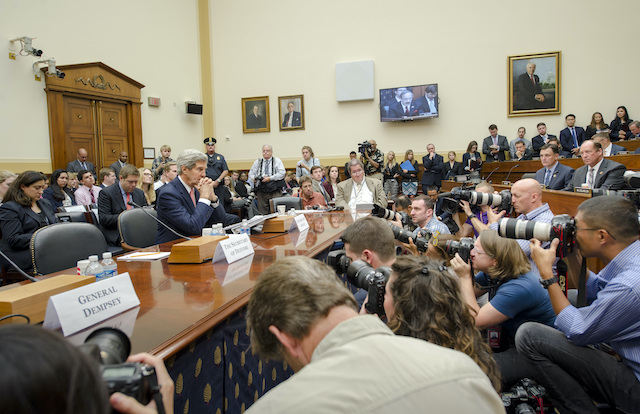
the House Committee on Foreign AffairsThe House Committee on Foreign Affairs oversees all legislation relating to foreign policy in the United States House of Representatives, including foreign policy and issues of national security. There are 47 representatives currently serving on the Committee. They consist of 21 Republicans and 26 Democrats. The corresponding committee in the Senate is the Committee on Foreign Relations. The House Committee on Foreign Affairs is one of the most influential parts of Congress. It has played a significant role in shaping the United States foreign policy. Here are five facts about this important Congressional Committee.

5 Facts About the House Committee on Foreign Affairs

  1. In 1775, the Continental Congress created a committee to oversee relations with foreign powers. Its original name was the Committee of Secret Correspondence. In 1777, the committee changed the name to the Committee for Foreign Affairs. The powers of the committee evolved over the next few decades with the creation of the other branches of the federal government. However, it maintained its role of supervising foreign policy issues for the legislature. In 1822, Congress formally established the House Committee on Foreign Affairs as a standing committee.
  2. It has had many noteworthy members in its recent history. Many influential representatives have served on this committee in the past decade, including Republicans Ron Paul, Mike Pence and Ron Desantis and Democrats Tulsi Gabbard and Howard Berman. The current roster includes Democrats Ilhan Omar and Joaquin Castro. These prominent representatives have all influenced the ideology of the House Committee on Foreign Affairs. For example, Ilhan Omar has advocated for developing countries to receive economic support during the COVID-19 pandemic. This has helped to make foreign aid a larger aspect of the Committee.
  3. It has a subcommittee that oversees global humanitarian issues. One of its six standing subcommittees is the Subcommittee on Africa, Global Health, Global Human Rights and International Organizations. This subcommittee has regional jurisdiction over legislation that relates to Africa. In addition, it has functional jurisdiction over topics such as the United Nations Universal Declaration of Human Rights, the Peace Corps and legislation relating to maternal and child health. These topics have an especially large impact on the global poor. However, one of its most important functions is the influence it has over the promotion of human rights and the protection of vulnerable and impoverished people around the world.
  4. It unanimously passed the Global Child Thrive Act. The Global Child Thrive Act is a bill that would give the U.S. Agency for International Development greater authority to include early childhood development aid in the foreign assistance it provides. Children living in extreme poverty often do not have access to the education and support they need as their brain develops. Studies have shown this can have negative cognitive and emotional effects. In December 2019, the Committee unanimously passed the bill. Giving the bill bipartisan support in the Committee makes it more likely that Congress will pass it. This legislation would make a huge difference for children in developing countries around the world.
  5. It passed the Global Health Security Act. Virginia Representative Gerald Connoly introduced this legislation in early 2019. It includes several measures to ensure that the United States is better prepared to deal with the spread of diseases around the world. For example, it requires a Global Health Security Coordinator to manage the response of the government. This would make a huge difference in combating the spread of COVID-19, especially for poor and developing countries. The bill was passed by the Committee on Armed Services and the House Intelligence Committee before going to the House Committee on Foreign Affairs. The Foreign Affairs Committee passed the bill in early 2020, and it is currently awaiting a vote in the House of Representatives.

All Congressional committees have a large amount of influence over their respective policy areas. The House Committee on Foreign Affairs is one of the most important governmental bodies for shaping the foreign policy of the United States. It oversees many bills that relate to global poverty and has influenced the House of Representatives to pass many critical pieces of legislation. The actions of the Committee have a large impact on the way the U.S. interacts with the rest of the world.

– Gabriel Guerin
Photo: Wikimedia
September 24, 2020
https://borgenproject.org/wp-content/uploads/borgen-project-logo.svg 0 0 Kim Thelwell https://borgenproject.org/wp-content/uploads/borgen-project-logo.svg Kim Thelwell2020-09-24 10:26:192020-09-24 10:26:195 Facts About the House Committee on Foreign Affairs
Foreign Relations, Global Poverty

25 Years of Peaceful US and Vietnam Relations

us and vietnam relations
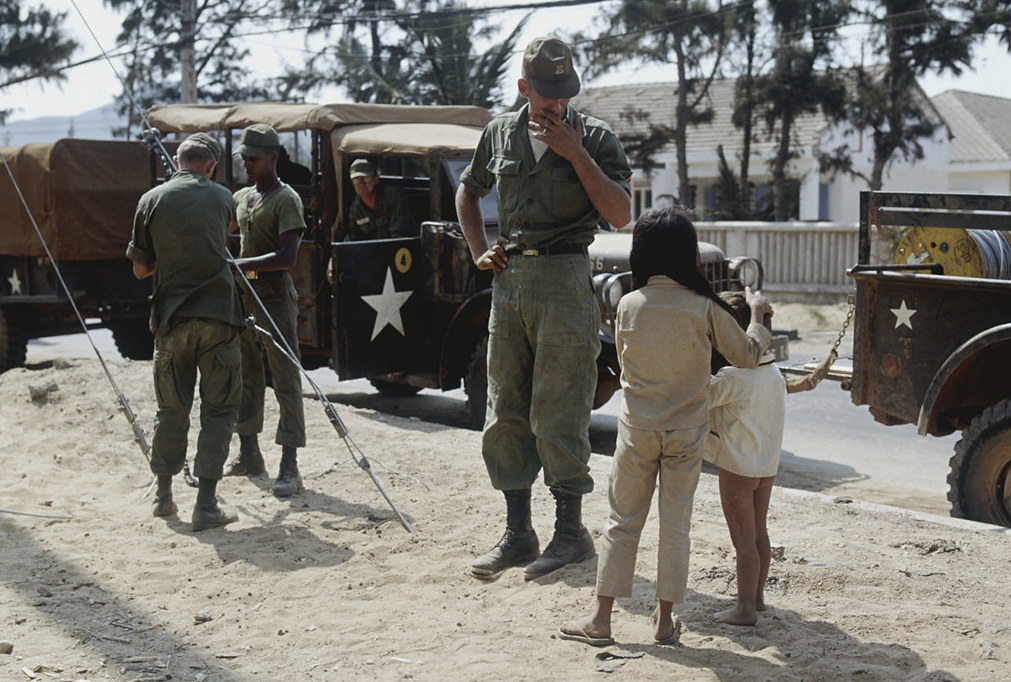
The U.S. and Vietnam relations have experienced many changes over time. In 1995, the two nations normalized the alliance and since then, the partnership has become stronger. In June of 2020, Florida representative Ted Yoho introduced a resolution to the House, H. Res. 1018, to recognize the 25 years of normalized relations between the nations. It reaffirms the relationship and expresses a desire for the U.S. to continue its successful partnership with Vietnam.

The U.S. and Vietnam have established strong economic relations during these 25 years as the U.S. has advocated for economic growth within the country. In 2000, for instance, the nations agreed on a bilateral trade agreement that benefits both nations. Also, in recent years, U.S. investment has spiked in Vietnam. Throughout the nations’ partnership, Vietnam has become a growing economic power with an unemployment rate of only 2.2% in 2017. Furthermore, just 8% of its population lives below the poverty line. As noted in the resolution, the U.S. encourages Vietnam’s continued growth in leadership, stability and prosperity.

House Resolution 1018

On June 24, 2020, Representative Yoho introduced H. Res. 1018 to the U.S. House of Representatives. Less than a month later, the resolution moved to the Foreign Affairs Committee before going to the Subcommittee on Asia, the Pacific and Nonproliferation.

A Congressional resolution is different from a Congressional bill as it holds no legal obligation. Rather, it is a reflection on the widespread attitude of one of the Congressional institutions. House Resolution 1018 marks 25 years of normalized U.S. and Vietnam relations, celebrates the success that occurred during those years and looks forward to future relations.

More specifically, through H. Res. 1018, the U.S. encourages Vietnam’s decision to take on more global leadership in the U.N. Security Council and the Association of Southeast Asian Nations. It also encourages and celebrates the stability of the nation, reaffirming the importance of U.S. and Vietnam relations. The stability of Vietnam is beneficial for the U.S. because it lowers concerns over national security and allows for a complete sense of closure around the Vietnam War as the U.S. accounts for its military.

US and Vietnam Relations Moving Forward

In the future, the nations look to continue their normalized relations because it is a mutually beneficial partnership. As noted in the resolution, the U.S. aims to spread its values to Vietnam, continuing its “strong support for human rights and democratic values.” As these are major values of the U.S. government, it is helpful for the nation to spread them to other countries. H. Res. 1018 puts a large emphasis on this area of U.S. and Vietnam relations — signaling that it will be a significant part of the nation’s relations moving forward.

According to the resolution, human rights and democratic values contribute to advances in poverty reduction. Moving forward, much of the focus on U.S. and Vietnam relations emphasizes economic conditions. For example, the U.S. previously gave humanitarian aid to Vietnam through the United States Agency for International Development (USAID). With the hope for increasing economic prosperity in the resolution, the nations are looking towards further reducing poverty through future reduction efforts.

House Resolution 1018 aims to continue the peaceful U.S. and Vietnam relations through expanding upon many of the nation’s established successes. This resolution motivates the Vietnam government to continue working with the U.S. to ensure economic success and stability.

– Erica Burns
Photo: Flickr

September 24, 2020
https://borgenproject.org/wp-content/uploads/borgen-project-logo.svg 0 0 Kim Thelwell https://borgenproject.org/wp-content/uploads/borgen-project-logo.svg Kim Thelwell2020-09-24 01:14:562024-05-29 23:23:2025 Years of Peaceful US and Vietnam Relations
Foreign Policy, Foreign Relations, Politics

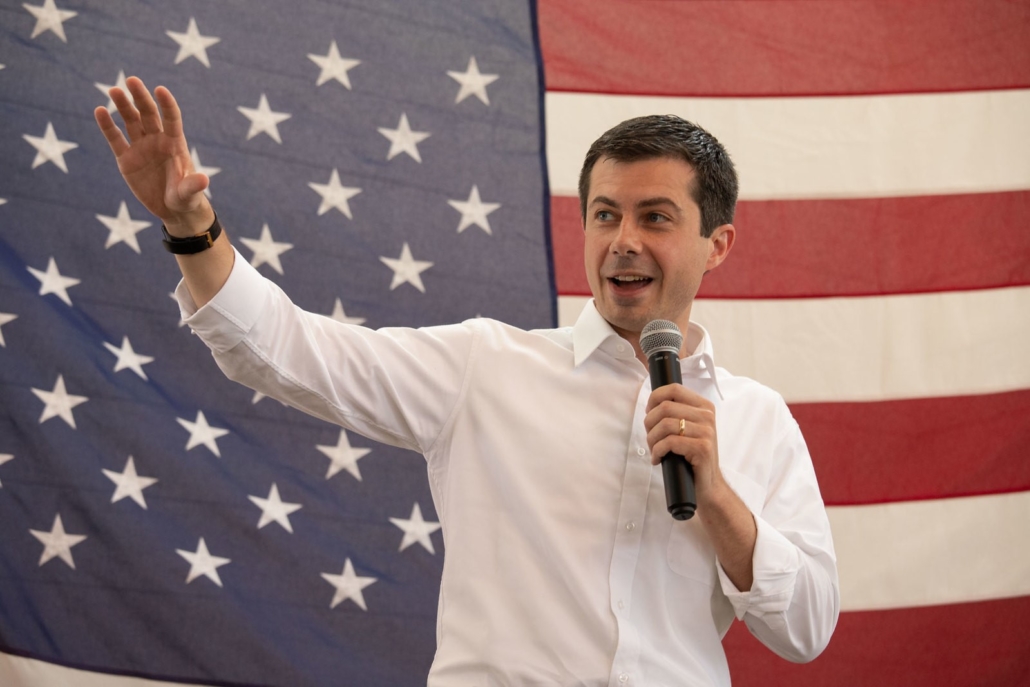
Dem. Candidate Pete Buttigieg’s Foreign Policy

Buttigieg's Foreign Policy
The youngest of the Democratic candidates running for office in the 2020 election, people widely know and consider candidate Pete Buttigieg for his professional and academic credentials. People commonly refer to Buttigieg as “Mayor Pete” due to his current occupation as South Bend, Indiana’s mayor, but he also speaks eight languages, including Norwegian, Maltese and Arabic. Buttigieg received his Bachelor’s Degree from Harvard University in 2003, and soon after completed his postgraduate education as a Rhodes Scholar at the University of Oxford. Between 2009 and 2017, he also served as a Lieutenant in the U.S. Navy Reserves. Buttigieg’s foreign policy has also set him apart as a champion for foreign policy.

Following his speech at the University of Indiana, where he discussed his foreign policy with an emphasis on national security, TIME Magazine referred to Buttigieg as the potential “foreign policy candidate in 2020.” Notably, while most other presidential candidates have only vaguely touched upon their foreign agenda, Buttigieg’s foreign policy has made up a key aspect of his campaign.

Indeed, Buttigieg advocates for organization and forward-thinking; the country’s decisions today will lead the nation and the world in the decades of tomorrow. In his words, “we need a strategy… Not just to deal with individual threats, rivalries, and opportunities, but to manage global trends that will define the balance of this half-century in which my generation will live the majority of our lives.”

This article outlines three key aspects one should know about Pete Buttigieg’s Foreign Policy, with respect to potential effects on global poverty trends and the developing world.

End the Endless War

Buttigieg criticizes the post-9/11 legislation that allows the president to use what they deem necessary military force against any organization who assisted with the terrorist attacks. Specifically, he points out that the Authorization for Use of Military Force (AUMF) needs major correcting. A former naval intelligence officer himself, he detailed that this blank check that deployed him to Afghanistan needs changing: troops should only enter into conflict with the government’s complete understanding of the issue at hand and the possible consequences of military involvement.

According to Buttigieg, promoting a government that brings power to Congress once again in taking votes on war and peace would ensure a more careful government in its military decisions. This would especially be the case when U.S. involvement concerns vulnerable and severely impoverished countries, like Afghanistan.

Reverse Authoritarianism

Given the severity of conditions in North Korea, Buttigieg assures that he would not take any interactions with the regime lightly. Moreover, he is a clear believer in the liberal international order, which emphasizes democracy and leadership by the U.S. and its allies, as a way to greater ensure peace, prosperity and consequently lower global poverty rates.

Buttigieg believes reversing authoritarianism would require the unapologetic promotion of liberal order ideals. He also claims that the U.S. has lacked a proper foreign policy since the last presidential election, and incorporating the liberal international order and applying it in communications and relations with Russia or North Korea would bring structure to the U.S. foreign agenda.

Rejoining the Iran Nuclear Deal

Buttigieg has highlighted that as president, he would make nuclear proliferation and rejoining the Joint Comprehensive Plan of Action, also known as the Iran Nuclear Deal, a priority in his foreign policy. The Obama administration first established the agreement in 2015 and worked to ensure that Iran’s nuclear program is peaceful in exchange for lifted sanctions by Germany and the U.N. Security Council, including the U.S. While the Iran Nuclear Deal and its consequences remain controversial domestically, Buttigieg’s vow to rejoin falls in line with the liberal international order, which stresses international cooperation and alliance, in addition to democracy.

Furthermore, there has been a reported economic crisis in Iran following the U.S. withdrawal from the nuclear deal and implemented sanctions. According to Hassan Tajik, director of the Iranian group for the development of international trade, “one of the main problems is the reduction of people’s purchasing and financial capacity, which has brought the population to the edge of poverty.” Rejoining the deal begs the question of a potential change in impoverished conditions in Iran.

While Buttigieg’s speech may not be a Buttigieg Doctrine, he outlines clear priorities in a speech about foreign policy, which may deem him more foreign policy-oriented among the Democratic candidates. Buttigieg’s foreign policy has yet to disclose his complete stances on a range of foreign policy-related issues, but his speech has indicated his desire to involve the U.S. with international affairs in a cooperative, yet cautious manner. As demonstrated, doing so can have a major impact on global poverty trends.

– Breana Stanski
Photo: Flickr

September 20, 2019
https://borgenproject.org/wp-content/uploads/borgen-project-logo.svg 0 0 Kim Thelwell https://borgenproject.org/wp-content/uploads/borgen-project-logo.svg Kim Thelwell2019-09-20 07:30:212024-05-29 23:10:30Dem. Candidate Pete Buttigieg’s Foreign Policy
Foreign Aid, Foreign Policy, Foreign Relations, Global Poverty, Politics

5 Former Presidents on Foreign Aid

Former presidents on foreign aidIt is not widely known how much foreign aid is being spent as a part of the national budget, especially because statistics and figures can change dramatically under different administrations and eras. The policies of former presidents on foreign aid can reflect the national and international priorities of the nation itself and what the presidents themselves valued more compared to other factors within the federal budget.
5 Former Presidents on Foreign Aid: Who Spent What?

  1. Harry S. Truman is well-known for the Marshall Plan and the Truman Doctrine. While the Truman Doctrine was to extend economic and military aid to Greece, the Marshall Plan was more inclusive as it was designed to help Western European countries rebuild after World War II, consisting of $13 billion. Other goals achieved through these means were building markets for U.S. businesses and earning allies during the Cold War.
  2. Ronald Reagan believed in budget cuts domestically, but he was a strong advocate for non-military foreign assistance. He promoted the “0.6% of GDP” minimum to be spent on foreign aid, as he believed that such aid plays a large role in foreign policy strategies. Such strategies were to create stronger U.S. allies and to promote economic growth and democracy globally. Reagan also emphasized that it is an American value to provide foreign assistance based on the U.S. founding beliefs that “all men are created equal.”
  3. Jimmy Carter was an advocate for making human rights a priority of the U.S. foreign policy. Not only did he sustain foreign aid, he also made sure to redirect the routes of such aid away from brutal regimes, such as that of Ethiopia’s Mengistu Haile-Mariam. He also ensured that foreign aid was an instrument used for luring in more American allies during the Cold War. For instance, by 1980, 75 percent of the total aid designed for Africa were redirected towards the Horn of Africa, as Mengistu was Soviet-backed.
  4. During Barack Obama’s presidency in 2011, figures on foreign aid were reported as being increased by 80 percent when compared to the reports in 2008. Foreign assistance kept increasing from $11.427 billion in 2008 to $20.038 billion in 2010 to $20.599 billion in 2011. During 2011, the aid was split into Economic Support Fund, Foreign Military Financing Program, multilateral assistance, Agency for International Development, Peace Corps and international monetary programs.
  5. In 2002, George W. Bush planned an expansion of 50 percent over the next three years through the Millennium Challenge Account which would provide $5 billion every year to countries where that governed unjustly. Additionally, Bush called for $10 billion to combat HIV/AIDS in Africa and the Caribbean over the following five years. There were also emergency funds put aside, consisting of $200 million for famine and $100 million for other complex emergencies.

The policies of former presidents on foreign aid widely reflect their intents and objectives, such as wishing to create more U.S. allies during the Cold War or to stop health epidemics from spreading, like HIV. International assistance can be employed in differing areas of focus that all eventually reach out to help an individual or a community climb out of poverty.

– Nergis Sefer
Photo: Flickr

July 30, 2019
https://borgenproject.org/wp-content/uploads/borgen-project-logo.svg 0 0 Kim Thelwell https://borgenproject.org/wp-content/uploads/borgen-project-logo.svg Kim Thelwell2019-07-30 11:53:012019-09-15 08:01:575 Former Presidents on Foreign Aid
Economy, Foreign Policy, Foreign Relations, Global Poverty

The Global Economy Is on the Rise

global economy is on the risePeople around the globe experienced the mania of the Dow Jones’ historic low in February 2018. Some traders even questioned if this was a sign of a global stock market crash. But as the U.S. stock market recovers from its volatile hijinks, global trade as a whole is rising, and rapidly. This rapid rise has many economists optimistic that the global economy is on the rise as well.
The global economy is driven by trade. As international trade rises, so do technological developments as nations tear down trade barriers. According to a report by the CPB Netherlands Bureau for Economics Policy Analysis, the volume of imports and exports grew by 4.5 percent in 2017. To gain perspective, this is a significant spike from a stagnant 1.5 percent rate of growth the previous year, which was the lowest since the global financial crisis in 2007-2008.

Globalization a Reason Why the Global Economy Is on the Rise

The world is changing. Globalization moves the market, just as we move through our interconnected culture of technology, digital communications and transportation. As markets evolve, global poverty is decreasing, while the global economy is on the rise.

Old business practices are being phased out, technology is replacing hard labor and workers are rising to higher levels of efficiency. Automation is shifting the way goods and services are distributed, easing mass production.

Nations have outsourced businesses to developing nations, partly to reduce wage costs. Yet, business process outsourcing provides an oasis of income for people in developing countries such as India, the Philippines and Malaysia. In many places, this opportunity to earn a living would not be possible without outsourcing.

As technology advances, the market shifts and standards of living rise across the globe. Developing countries who have broken trade barriers have developed competitive advantages in the production of certain products. Ukraine, for example, is known as the breadbasket for its richness in wheat and farmland. Venezuela is known for its vast oil supply and China’s factories are known for producing more than half of the world’s clothing.

Tariff Reduction Has a History of Success in Developing Countries

History reveals that nations who open their economies to trade with the global economy experience faster growth and poverty reduction. During the past 30 years, global poverty has been cut in half. Studies show that developing countries that lowered tariffs in the 1980s experienced quicker economic growth in the 1990s compared to those that did not. Tariffs, or taxes on imports and exports between sovereign states, are often viewed as barriers affecting the global economy.

Developing nations have tariffs that are three to four times higher than industrial countries, and they are even higher on agriculture. Average tariff protection in agriculture is about nine times higher than in manufacturing. This can undermine a developing country’s agricultural sector and exports by depressing world prices.

The outlook for the global economy depends on these countries tearing down trade barriers. Yet, political decisions in developed countries are affected by trade barriers as well. In Venezuela’s case, the U.S. has imposed investor-related sanctions on Venezuelan oil to pressure its government to address its humanitarian crisis of inflation and starvation. According to Reuters, U.S. officials are not ruling out a complete ban on Venezuelan oil in order to send a strong message to its dictator, Nicolás Maduro.

Trade Wars Are Common and May Not Affect Global Trend

China’s trade practices have also affected U.S. trade on a political level. Elon Musk, the CEO of Tesla, recently called on U.S. President Trump for equal and fair rules for cars, citing China’s pressure on foreign businesses to partner with Chinese carmakers before manufacturing in China. Musk noted China’s 25 percent import duty on cars compared to America’s 2.5 percent duty. President Trump proposed a sweeping tariff on steel and aluminum on March 8, 2018, which characterizes the trade wars.

Skeptics believe this political decision could take the global economy down the rabbit hole. Others are bracing for a global crash for different reasons. “I still believe that we’ll face a financial crisis within the next two years if we don’t solve the debt problems,” said Bjorn Ritschewald, a civil engineer with the government Road and Traffic office in Bremen, Germany, a city popular for its maritime trade. “Almost every country spends more than its income. Actually, I don’t know any country that spends less than what it takes in.”

“Waves in trade flow are common, but it depends on the goods,” Ritschewald told The Borgen Project. “You can’t just look at the financial numbers. You also have to look at the real amount of goods and which kind of goods are being sold.” World markets experienced the rippling effects of the Dow Jones’ plunge. The plunge is characterized as market correction, a phenomenon where unusual market success sparks panicked selling, driving market drops across the globe.

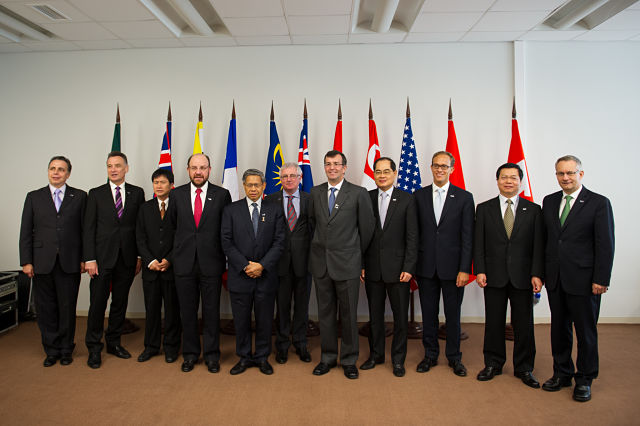
On the other hand, many economists believe that the global economy is on the rise. Their confidence stems from positive trade initiatives such as the Trans-Pacific Partnership, a free trade agreement set to be signed by 11 countries in March. The trade wars and other trade barriers are pitfalls that affect the global economy. However, with trade growth booming, there is much optimism in the air about a healthy global economy in the future.

– Alex Galante

Photo: Google

March 24, 2018
https://borgenproject.org/wp-content/uploads/borgen-project-logo.svg 0 0 Borgen Project https://borgenproject.org/wp-content/uploads/borgen-project-logo.svg Borgen Project2018-03-24 01:30:352024-12-13 17:58:39The Global Economy Is on the Rise
Foreign Policy, Foreign Relations

The Growing Importance of US-Israel Relations Today

The Growing Importance of US-Israel Relations Today
The relationship between the United States and Israel is one of political, economic and historical significance. Over the years and with changes in economic objectives and priorities, the mutual diplomatic relationship of goodwill between the two nations has provided both countries with essential benefits in economic growth and development.

The Origins of U.S.-Israel Relations

Historically, the growth of U.S.-Israel relations can be traced back to the inception of Israel shortly after the World War II. Since May 14th 1948, the United States has played a vital role in providing aid, advice, resources and assistance to Israel. Between the years 1976-2004, Israel became the largest recipient of of U.S. foreign aid. The Arab-Israeli Wars through the course of the 20th century tested the strength of the staunch diplomatic ties between both nations.

U.S.-Israel relations have helped redefine ties with other Arab nations as well. The U.S. commitment to foreign aid such as humanitarian assistance already plays a key role in international conflicts. In recent years in particular, the United States has continued to play an active role in political discourse in the Middle East and is a vital part of peaceful solutions to crises.

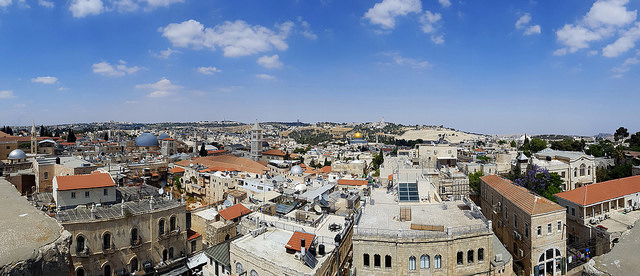
The Trump Administration is now redefining the steadfast U.S.-Israel relations. In a controversial move, President Trump began recognizing Jerusalem as the capital of Israel. Also, with a concrete two-state solution still not on the table, U.S.-Israel relations continue to be challenged.

The Startup Nation

Imbibing the strength of the relationship is vital due to the potential impacts the connection can have on the future. Israel has already contributed to U.S. defense, trade and commerce in numerous ways over the years. In turn, given the potential of Israel’s young and growing population and rich natural resources and assets, U.S. businesses hope to tap into this advantage to expand into new product and labor markets.

Moreover, Israel now already boasts a high annual economic growth which reached a peak at 4.7 percent in January 2017. Since 2003, poverty and income inequality rates in Israel have also largely declined. As Israel remains one of the world’s most advanced economies, it is commonly referred to globally as the ‘Startup Nation.’

Yet, at the same time, according to an estimate made in the year 2012, nearly 19.4 percent of families in Israel still live below the poverty line. Consequently, 1 in 5 Israelis are presumed to be affected by poverty prevalent in the country.

Trade

In the realm of trade, Israel’s trade to the United States is essential as the number of dollars created by exports from Israel create the highest number of U.S. jobs among its free-trading partners. For Israel, the United States remains a vital free- trading partner as it provides the country with an outlet for goods and services.

Furthermore, investment between the U.S. and Israel not only pumps in more Foreign Direct Investment (FDI), but it also plays a significant role in bringing in more American jobs. Investments are now expanding in key aspects like science and technology, agriculture and healthcare; Israeli innovations continually contribute to higher levels of efficiency and productivity as well.

Growth and Future Achievement

In recent years, clean energy, technology and environmental solutions have grown to become priorities of international discourse; in fact, according to a report by the Washington Institute, innovation in Israel is currently focused on addressing water and food security issues globally. U.S.-Israel collaborations in research and development programs are particularly notable for its advancements and contributions to the financial strength of both countries.

To conclude, U.S.-Israel relations continue to be an important source of economic, potential and financial support to both countries — a partnership that continues to grow with time. This varied connection between the two countries will have greater implications in the future, and should also provide a good buffer against shocks in the world economy.

– Shivani Ekkanath

Photo: Flickr

March 18, 2018
https://borgenproject.org/wp-content/uploads/borgen-project-logo.svg 0 0 Borgen Project https://borgenproject.org/wp-content/uploads/borgen-project-logo.svg Borgen Project2018-03-18 01:30:102019-11-21 14:26:18The Growing Importance of US-Israel Relations Today
Aid, Foreign Aid, Foreign Policy, Foreign Relations, Global Poverty

US Benefits from Foreign Aid to Colombia

U.S. benefits from foreign aid to ColombiaForeign aid has always been a source of controversy in U.S. politics. Despite some negative feedback, the aid given to other countries has been beneficial to the U.S. For example, there are multiple ways that the U.S. benefits from foreign aid to Colombia.

For more than 50 years, Colombia was ravaged by war and struggled to reach an agreement of peace that suited both warring parties. This caused the country to be caught in ongoing and seemingly never-ending turmoil. The war impacted millions of citizens in the country and took the lives of more than 220,000 people.

Plan Colombia

In 2016, the U.S. helped Colombia reach a peace agreement with the country’s largest guerrilla group, the Revolutionary Armed Forces of Colombia (FARC). The peace treaty was a culmination of years of hard work for both Colombia and the U.S., who has been working with Colombia to strengthen its military since 2000. The peace agreement has led to nearly 6,900 members of FARC putting down their guns and relocating to the demobilization zones put in place by the U.N. for the former soldiers in the war.

The peace agreement was known as “Plan Colombia,” and it resulted in many U.S. benefits from foreign aid to Colombia. The plan increased U.S. military and diplomatic support from the citizens of the country. 

Colombian Agency for Reintegration

The U.S. has helped Colombia garner peace, increasing military support in the U.S. in the process. The end of the war has prompted the Colombian government, with the help of the U.S., to start an Agency for Reintegration (ACR) in the country. The program is for the millions of people displaced by the war, as well as the soldiers that fought.

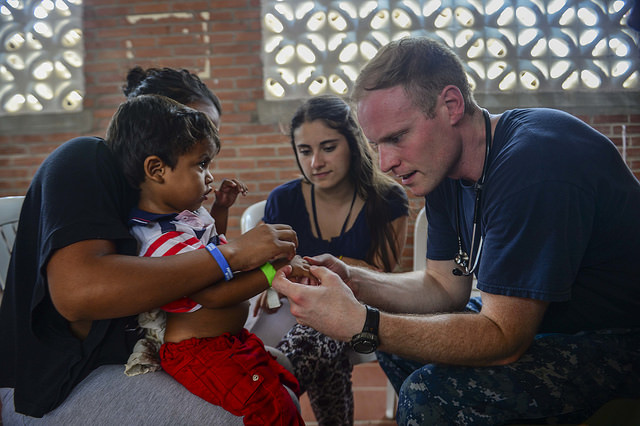
The ACR’s efforts include providing healthcare, employment opportunities, education and vocational training for the former soldiers as they transition back into society. Counting the soldiers and their families, almost 30,000 Colombians are in need of assistance and are receiving aid from the ACR.

Giving aid to foreign countries can reflect positively on the U.S. and can help other countries in need. With support from the U.S., Colombia has ended its civil war and has begun to reintegrate members of the war into society. In response to the aid given to Colombia, the U.S. benefits from raised support for the military and increased diplomatic support.

– Simone Williams
Photo: Flickr

February 11, 2018
https://borgenproject.org/wp-content/uploads/borgen-project-logo.svg 0 0 Borgen Project https://borgenproject.org/wp-content/uploads/borgen-project-logo.svg Borgen Project2018-02-11 13:30:062024-12-13 17:58:36US Benefits from Foreign Aid to Colombia
Developing Countries, Foreign Relations, Global Poverty, Refugees

Learning From the History of Refugees

History of RefugeesWhile it is apparent there has been an increase in refugee traffic over the last few decades, the history of refugees extends much farther back in time. There are some important messages contained within these mass movements that can help explain why refugees are displaced to begin with, what human rights refugees have, why it has been challenging to integrate refugees into society once displaced and the major social advantages in doing so. Furthermore, the history of refugee movements is not localized to any single region, but rather it is a global crisis that involves every member of the planet.
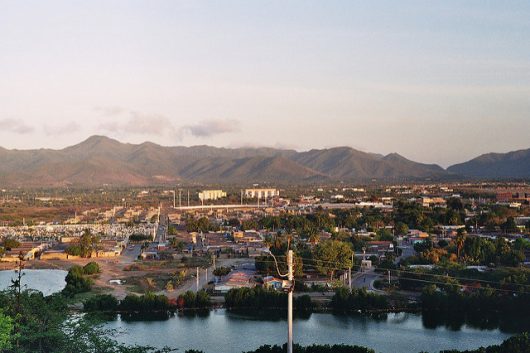
A common question is whether an individual is a migrant or a refugee, and the difference is force versus choice. Being a refugee means having been forcibly pushed out of a community or home, usually by violent means. On the other hand, a migrant makes the conscious decision to leave one’s home and seek a better life. However, these words have recently been used more interchangeably, which has led to failures in international treaties, in the view of government intervention and in the role of the public at large in amending refugee crises.

Upon investigating the definitions of refugee and migrant, there are several examples of forced movements of groups of people throughout history. The post-war movement following WWII has been one of the largest in history, coming second to present-day examples in the Middle East. The WWII refugee movement spawned several ideas surrounding the human rights of refugees, most importantly, the Common Asylum System out of the Geneva Convention. This grants international protection to anyone that meets the criteria of a refugee. However, current political structures and views of refugee-receiving nations have been less than ideal despite treaties that grant asylum, which has perpetuated poverty crises and large death tolls.

It is important to learn from the history of refugees the facts and lessons surrounding current and future refugee movements. The major factors leading to these movements are poverty and political corruption, whether from the government or from radical groups. However, the most important takeaway is of human rights for the innocent, usually dynamic members of society who are willing to integrate into safer living situations and have proved to be productive and non-violent in their new homes.

– Casey Hess

Photo: Flickr

September 26, 2017
https://borgenproject.org/wp-content/uploads/borgen-project-logo.svg 0 0 Borgen Project https://borgenproject.org/wp-content/uploads/borgen-project-logo.svg Borgen Project2017-09-26 07:30:382024-05-29 22:26:46Learning From the History of Refugees
Foreign Relations, Global Poverty

U.S. Sanctions and Venezuela’s Poor

Sanctions and Venezuela's PoorWith the recent political unrest in Venezuela surrounding the controversial election of President Nicolás Maduro, the United States has placed financial sanctions on Maduro and some of his high-ranking officials. These sanctions are aiming to freeze any of Maduro’s U.S. assets as well as halt all business between him and U.S. citizens. However, there may be an unfortunate connection between U.S. oil sanctions and Venezuela’s poor.

These individual embargoes may not be enough, though. The Trump administration is still considering whether or not to place economic sanctions on Venezuela’s oil sector, according to Reuters. This would hit the country hard, as the oil industry accounts for upwards of 95 percent of Venezuela’s export earnings. Venezuela is also the third largest supplier of oil exports to the United States.

While it is important to analyze the effects of economic sanctions on a nation’s elites, what are the effects of these actions on Venezuela’s general populace? More specifically, what effects will these actions against President Maduro have on his people, and are there potential collateral effects linking U.S. oil sanctions and Venezuela’s poor?

First, it should be noted that there are multiple types of sanctions that a country can pass. In terms of U.S. embargoes pertaining to Venezuela, the kinds of sanctions being enacted and debated are in regard to the Specially Designated Nationals and Blocked Persons (SDN) List and the Sectoral Sanctions Identification (SSI) List, respectively.

As described in a case study by the U.S. State Department, sanctions targeting the SDN List are against individuals and entities, such as President Maduro and his high-ranking officials. SSI sanctions, on the other hand, target sectors in a foreign economy, such as the oil and gas industries in Venezuela.

According to the Council on Foreign Relations, the U.S. uses economic and financial embargoes more than any country or any body of countries in the world. As of 2015, the most notable U.S. sanctions historically have been levied against Cuba since 1960, Iran since 1984, North Korea since 2008, and the Ukraine/Russia since 2014.

U.S. embargoes against Venezuela began in 2015 when President Barack Obama issued an executive order targeting seven of Maduro’s high-level officials. New sanctions from late July added President Maduro himself to the SDN List.

In general, embargoes levied against individuals on the SDN List appear to have minimal collateral effects on that person’s respective regional economy. This is what the Obama administration argued when it placed sanctions on Venezuelan officials in 2015, and it is what the Trump administration is arguing now.

Sectoral sanctions, however, seem to have a broader impact on the country at large. The more a sanctioning country is a contributor to the economy of its target, the higher the potential is for collateral damage to occur.

For example, after monitoring the effects of sanctions placed on Russia by the United States and the European Union in 2014, U.S. State Department Deputy Chief Economist Daniel Ahn and Georgetown University professor Rodney Ludema concluded in a study that “sanctions [on Russia]…appear to be ‘smart,’ in the sense of hitting the intended targets…while causing minimal collateral damage.”

The E.U., however, who is Russia’s largest trading partner, had a different story. A study by the European Parliament in 2015 noted that Russian officials predicted an 8-10 percent loss of the country’s GDP due to the E.U. sanctions, resulting in a multitude of indirect collateral effects on the Russian economy and its people.

The scale of trade relations, therefore, directly correlates to the collateral damage sanctions have on an economy, and this must be considered when discussing U.S. sanctions and Venezuela’s poor. The oil sector accounts for 95 percent of Venezuela’s export earnings and 25 percent of their GDP, and because the United States is the country’s largest export destination according to OPEC, a sectoral sanction of this size could potentially have massive effects on Venezuela’s populace.

If Venezuela were to cease relations with their primary trade partner and lose the respective export earnings from their primary resource, the result would be a substantial decrease in national revenue. Money that would normally be used for social programs would be stifled, bringing more harm to a population that is already suffering from economic and political hardships plaguing the country.

Because of all this, it is important to watch the Trump administration and see how the President decides to handle the complex issues surrounding Venezuela. There is a viable argument that collateral damage would result from U.S. oil sanctions and Venezuela’s poor would bear the brunt of that damage.

– John Mirandette

Photo: Flickr

September 11, 2017
https://borgenproject.org/wp-content/uploads/borgen-project-logo.svg 0 0 Kim Thelwell https://borgenproject.org/wp-content/uploads/borgen-project-logo.svg Kim Thelwell2017-09-11 07:30:312024-05-28 00:16:13U.S. Sanctions and Venezuela’s Poor
Foreign Relations, Global Poverty

9 Bipartisan Measures Pass House Foreign Affairs Committee

Bipartisan measuresOn July 27, 2017, the House Foreign Affairs Committee passed nine new bipartisan measures, including the Protecting Girls’ Access to Education in Vulnerable Settings Act. This bill recognizes the need for comprehensive primary and secondary education for refugee children, especially women and girls, as they systematically face greater obstacles in obtaining an education. If passed, this bill would ensure Congress works with both private and multilateral organizations to implement educational programs abroad.

Democratic Rep. Robin Kelly, a co-sponsor of the bill along with Republican Rep. Steve Chabot, spoke for the bill in a markup. Kelly pointed out that 65 million people, half of whom are under 18, have been displaced since the beginning of 2017, and four million displaced children lack access to elementary education.

Kelly claimed that displaced children are more vulnerable to abduction, poverty, and early marriage when they cannot attend school and that school can help displaced children cope with trauma and overcome feelings of isolation by providing a community.

Related measures passed include the North Korean Human Rights Reauthorization Act of 2017, which supports North Korean refugees and advocates for radio broadcasting in North Korea, as well as the resolution entitled “Supporting respect for human rights and encouraging inclusive governance in Ethiopia.” All of the measures passed received bipartisan support, and several have bipartisan sponsorship.

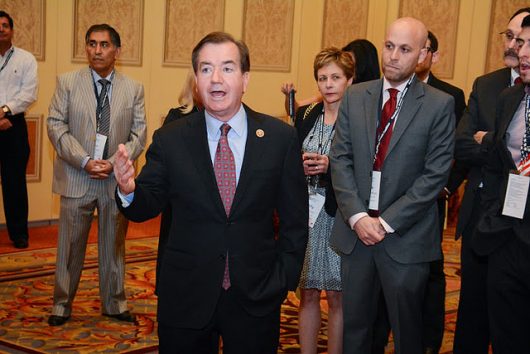
During markups, Congressional committees discuss, amend and rewrite proposed legislation. In this markup, seven of the nine measures discussed were amended, but all passed at the end of the session. Rep. Ed Royce, Chairman of the House Committee on Foreign Affairs, reported the measures favorably and was authorized to seek House consideration of the measures under suspension of the rules.

“Suspension of the rules” is a procedure used to save time when discussing relatively uncontroversial bills. Rep. Royce likely ordered a suspension of the rules based on the bipartisan nature of the measures discussed. This fact means that when the measures are discussed next in the House, they will be unamendable and debate will be limited to forty minutes.

As these bipartisan measures all passed without much dispute, they will likely continue to move quickly through the House of Representatives.

– Caroline Meyers

Photo: Flickr

August 25, 2017
https://borgenproject.org/wp-content/uploads/borgen-project-logo.svg 0 0 Borgen Project https://borgenproject.org/wp-content/uploads/borgen-project-logo.svg Borgen Project2017-08-25 01:30:412024-05-24 23:40:589 Bipartisan Measures Pass House Foreign Affairs Committee
Page 3 of 41234

Get Smarter

  • Global Poverty 101
  • Global Poverty… The Good News
  • Global Poverty & U.S. Jobs
  • Global Poverty and National Security
  • Innovative Solutions to Poverty
  • Global Poverty & Aid FAQ’s
Search Search

Take Action

  • Call Congress
  • Email Congress
  • Donate
  • 30 Ways to Help
  • Volunteer Ops
  • Internships
  • Courses & Certificates
  • The Podcast
Borgen Project

“The Borgen Project is an incredible nonprofit organization that is addressing poverty and hunger and working towards ending them.”

-The Huffington Post

Inside The Borgen Project

  • Contact
  • About
  • Financials
  • President
  • Board of Directors
  • Board of Advisors

International Links

  • UK Email Parliament
  • UK Donate
  • Canada Email Parliament

Get Smarter

  • Global Poverty 101
  • Global Poverty… The Good News
  • Global Poverty & U.S. Jobs
  • Global Poverty and National Security
  • Innovative Solutions to Poverty
  • Global Poverty & Aid FAQ’s

Ways to Help

  • Call Congress
  • Email Congress
  • Donate
  • 30 Ways to Help
  • Volunteer Ops
  • Internships
  • Courses & Certificates
  • The Podcast
Scroll to top Scroll to top Scroll to top