• Link to X
  • Link to Facebook
  • Link to Instagram
  • Link to TikTok
  • Link to Youtube
  • About
    • About Us
      • President
      • Board of Directors
      • Board of Advisors
      • Financials
      • Our Methodology
      • Success Tracker
      • Contact
  • Act Now
    • 30 Ways to Help
      • Email Congress
      • Call Congress
      • Volunteer
      • Courses & Certificates
      • Be a Donor
    • Internships
      • In-Office Internships
      • Remote Internships
    • Legislation
      • Politics 101
  • The Blog
  • The Podcast
  • Magazine
  • Donate
  • Click to open the search input field Click to open the search input field Search
  • Menu Menu

Archive for category: Food & Hunger

Information and stories on food.

Food & Hunger, Global Poverty

Banning Bull Slaughter Makes Vulnerable Populations Poorer

Banning Bull Slaughter Makes Vulnerable Populations Poorer
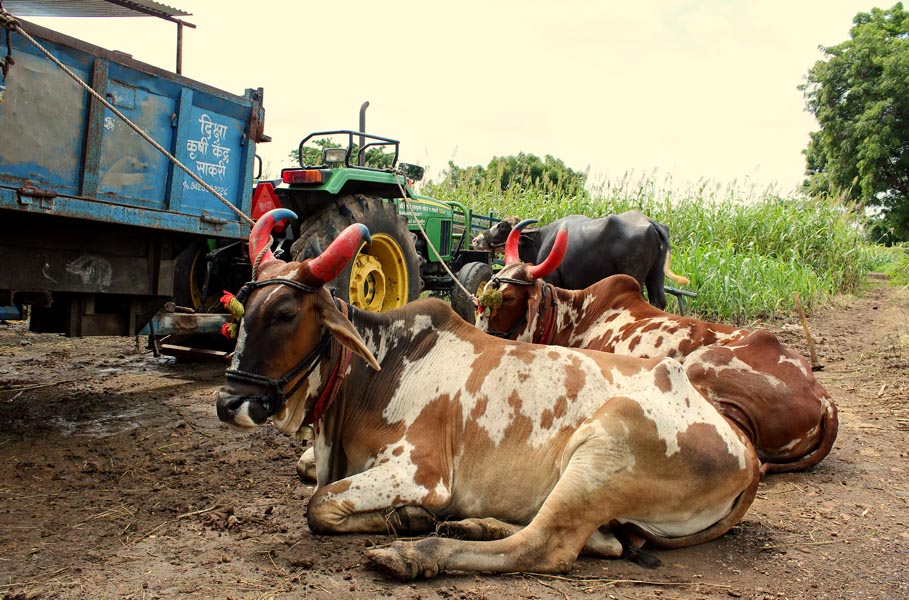
Earlier this year, the government of Maharashtra, India, decided to ban bullock and bull slaughter. The slaughtering of cows, which are considered to be sacred in Hinduism, had already been prohibited since 1976. This new law has faced opposition from many sectors of society that claim it destroys businesses, makes farmers’ livelihoods more vulnerable, and hurts the very animals it hopes to protect.

Another argument against the law is that is promotes Hindu extremist interests over the nation’s secular principles. The Bharatiya Janata Party (BJP), the force behind the new law, argues instead that it protects religious beliefs. However, even one of the BJP’s strongest allies, the Republican Party of India (RPI), has expressed discontent with the law.

Farmers from the state have protested that banning bull slaughter means they can no longer sell their old animals that have outlived their usefulness. Many farmers count on the money made from the sale to pay back loans. In India, where huge numbers of farmer suicides have been a pressing concern, the new law has made farmers’ limited sources of income more precarious.

Some people have even argued that the law will lead to farmers simply abandoning their cattle because they cannot afford to look after them. They will be left on the streets to starve and die, or be smuggled in terrible conditions to Bangladesh, where they will be slaughtered. The very purpose of the law—to protect bulls—would be left unfulfilled.

The law has also eliminated the only type of meat poor people can afford. In India, beef is commonly called the “poor mans’ protein,” as it is much cheaper than mutton or chicken. Buffalo meat, while still legal, is predicted to become more expensive because of a lack of alternatives. In a country where more than half of children under five are malnourished, this ban is feared to increase rates of starvation and sickness.

Specific castes have also been negatively affected. The Qureshis, a Muslim community that has been synonymous with bull slaughter for generations, can no longer practice the only livelihood they know.

The Dharavi leather market has also lost its bearings. Dharavi, one of the biggest slums in Asia, obtained much of its income from its once-thriving leather industry, where workers would make wallets, belts, jackets and handbags. Now, hundreds of workers have been left jobless.

Sources: The Hindu 1, The Hindu 2, The Hindu 3, Times of India, The Independent, Al Jazeera, New York Times 1, New York Times 2
Photo: Stock Photos

July 16, 2015
https://borgenproject.org/wp-content/uploads/borgen-project-logo.svg 0 0 Borgen Project https://borgenproject.org/wp-content/uploads/borgen-project-logo.svg Borgen Project2015-07-16 10:56:202020-07-10 12:46:32Banning Bull Slaughter Makes Vulnerable Populations Poorer
Food & Hunger, Food Aid, Food Security, Global Poverty

The State of Food Insecurity Report

The State of Food Insecurity Report - The Borgen Project
An important aspect in the success of the Millennium Development and Sustainable Development goals is the recording of progress over time. The State of Food Insecurity Report by the Food and Agriculture Organization of the United Nations (FAO) helps look at the initiatives that have worked to sustain food security in developing nations. Focusing on hunger is the first step to ending poverty and maintaining sustainable development. By looking at economic growth, agricultural productivity and international trade, development can be improved according to what continues to work.

The State of Food Insecurity Report finds that “about 795 million people are undernourished globally, down 167 million over the last decade, and 216 million less than in 1990-92,” according to FAO. Although food insecurity has been declining, there is still a chance of stagnation if economic growth slows in Central Asia, Western Asia, and South Africa.

The Millennium Development Goals reach their deadline this year, therefore, new goals have been developed. The Sustainable Development Goals focus on innovative ways to eradicate poverty for good. One way the U.N. does this is to educate farmers on how to efficiently grow crops. This helps feed families in surrounding regions and provides income for farmers to help with economic growth. Taking a sustainable approach to food security, rather than exporting food, maintains the distribution of goods.

Although the report focuses on hunger, many aspects of development affect the result of food security in developing populations. The economic growth of a nation positively affects the nourishment of people in poor countries. However, the report also notes that “it also must include social protections, which include basic human rights and a safety net providing basic needs,” according to Deseret News.

Poverty continues to decline with the implementation of the MDGs and SDGs. Despite this, there still remain people in underdeveloped countries who experience malnutrition and a limited access to education. “The 2015 report not only estimates the progress already achieved, but also identifies remaining problems, and provides guidance on which policies should be emphasized in the future,” says the FAO. The importance of tracking the progress of development goal plans will help the U.N. come closer to completing its ultimate goal of eradicating poverty by 2030.

-Kimberly Quitzon

Sources: Food and Agriculture Organization 1, Deseret News, Food and Agricultural Organization 2,
Photo: Dr. John La Puma

July 15, 2015
https://borgenproject.org/wp-content/uploads/borgen-project-logo.svg 0 0 Borgen Project https://borgenproject.org/wp-content/uploads/borgen-project-logo.svg Borgen Project2015-07-15 11:39:352024-05-27 09:24:21The State of Food Insecurity Report
Food & Hunger

Virtual Meal Planner Could Improve Malnutrition in Ghana

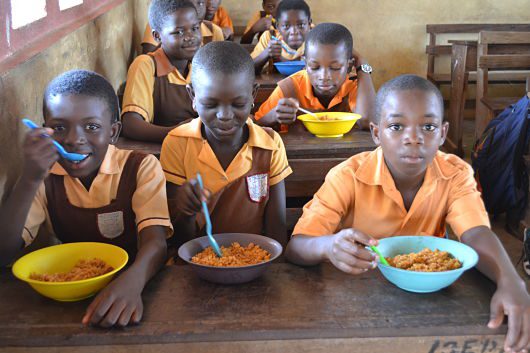
Virtual Meal PlannerFeeding hungry children is one matter. Feeding hungry children nutritious meals, however, is an important aspect of ending hunger. About 360 million children sit down to a school meal every day. For some, this could be their only meal for the day.

Knowing this, countries such as Ghana have taken steps to improve school meals. Ghana School Feeding Programme provides free school meals to over 1.7 million children every school day. Additionally, Partnership for Child Development and Dubai Cares are working with the government to improve the nutrition of school meals.

Partnership for Child Development has created a virtual meal planner. The meal planner can be accessed both online and offline in order to be helpful to more people. This meal planner could allow school cafeteria workers to create menus with local ingredients. Also, the virtual meal planner includes local prices of ingredients. Thus, users can plan the cost of each meal.

In order to combat child malnutrition, the meal planner includes virtual gingerbread children graphics that show the amount of daily nutrients and vitamins the meal offers. The gingerbread measurements are based off of recommendations by the UN’s Food and Agriculture Organization and the World Health Organization. Additionally, the meal planner uses “handy measures.” This means that ordinary utensils, like spoons and buckets, have been calibrated to international measuring units. School cafeteria workers can accurately measure different components of meals without buying expensive kitchen utensils.

Schools can learn about healthy eating, and local farmers can learn what foods are nutritionally beneficial to grow for schools. The virtual meal planner can be used by many people in the community in order to boost the nutritional values of meals.

As a result, Ghana is leading the way in combating malnutrition. This program was trialed in Ghana in 2014, and is still in use today. Other countries around the world could also combat child malnutrition with this easy-to-use program.

More and more children are going to school, and more and more children get their one daily meal from free school lunches. By improving the nutrition of school lunches, we could greatly impact the health of a great number children.

– Ella Cady


Sources: HGSF, Impatient Optimists, ModernGhana World Food Programme

Photo: Adumasa
July 15, 2015
https://borgenproject.org/wp-content/uploads/borgen-project-logo.svg 0 0 Borgen Project https://borgenproject.org/wp-content/uploads/borgen-project-logo.svg Borgen Project2015-07-15 11:10:072024-06-05 03:46:37Virtual Meal Planner Could Improve Malnutrition in Ghana
Food Security, Gender Equality, Global Poverty, Nonprofit Organizations and NGOs, Women

Bangladesh Rural Advancement Committee

women_in_povertyBangladesh Rural Advancement Committee (BRAC) leader Sir Fazle Hasan Abed won the World Food Prize in 2015 for his achievements in promoting global food security. The primary objective of BRAC is to alleviate global poverty through methods that reduce maternal mortality and invest in maternal health, family planning, services to women, empowerment to women, agriculture and other livelihoods. Bangladesh achieved the Millennium Development Goal of halving hunger by 2015, according to recognition by the United Nations.

Outreach has reached 11 other nations making BRAC the leading anti-poverty advocate and activist in the world. BRAC has given 150 million people an opportunity to improve. Abed has lead BRAC for 43 years, starting in 1972 when the committee focused on helping Bangladesh recover from war with Pakistan. It now has a large staff of about 110 thousand people in the countries of Bangladesh, Afghanistan, Pakistan, Philippines, Sir Lanka, Liberia, Sierra Leone, South Sudan, Tanzania, Uganda and Haiti.

Many success stories stem from BRAC, such as the increase in the rate of immunized Bangladeshi children from 2 percent in 1986, to 70 percent in 1990. BRAC gives those in poverty microfinance, health, education, agriculture and livestock services.

The committee gave $1.5 billion small loans to those in need with $100 to $150 per person. The organization nurtures the eight percent of Bangladesh’s poorest in two-year programs created to lift them out of poverty and receive loans. BRAC uses grants, monthly salaries and health services benefiting families, as they are educated about budgeting in and out of the country. Their methods such as this have assisted 180 thousand people out of poverty.

According to statistics last year, Bangladesh is a leader amongst least developed countries (LDC) fighting for gender equality. The amount of women in parliament has increased, rising from only 10 percent in 1991, to 20 percent in 2011.

The key to success in Bangladesh has been women’s labor in agricultural and exporting positions. There were two million women working in ready-made garment (RMG) factories, which is the top export sector, reeling in a profit of $2 billion a year.

The life expectancy of women increased from 54.3 years in the 1980s, to 69.3 years in 2010. Secondary school enrollment for girls has increased, rising from 1.1 million in 1991, to 3.9 million in 2005. Today, girls are less likely to be married at a young age and fertility rates have fallen. An increase in nutritional intake and higher incomes are another result of benefiting women.

Bangladesh is ranked 100 out of 128 when it comes to gender equality. There is still some work to be done, and Abed knows this. He received the Trust Women 2014 Hero award for promoting women’s rights, becoming the first man to receive this award.

Abed was selected among 160 nominations from 45 countries. The award is given to an innovator whose activity has aided women to learn and sustain their rights. After receiving the World Food Prize in 2015, Abed upholds his goal in helping women when he stated in an article by Environmental News Service, “the real heroes in our story are the poor themselves and, in particular, women struggling with poverty.”

A work in progress within BRAC is teaching mothers in Bangladesh how to make oral rehydration fluid in order to fight diarrohoeal deaths. BRAC is particularly proud of halving the number of child mortality since the 1980s. The organization has been working on training midwives in order to reduce mortality rates of both mother and child.

BRAC’s microfinance has been especially empowering women. Microfinance is essential in rural and social development. Of the borrowers in Bangladesh, 92 percent are women and 90 percent live in a rural area.

Bangladesh has increased gender equality in two particular educational levels. Youth literacy and secondary schooling has improved greatly with higher girl to boy ratios. The country has reduced the gender gap faster than the global average and hopes are high to reserve one third of Bangladesh’s parliament for women by 2020.

However, women will continue have challenges to come. The employment rate of women in 2010 was 58 percent, which is ranked 30 percent lower than men. Women are also still unable to own land, and lack necessary tools to perform productively on the agricultural scale. They also face early and forced marriage, maternal deaths, abandonment, and hold a small amount of job opportunities.

Even so, BRAC has successfully impacted the country and Africa. Its microfinance and two-year nurturing programs have generated success. The fertility rate and child survival has improved in Bangladesh and it’s still reaching to further help women. Results for women’s equality in Bangladesh are expanding beyond borders as people leave poverty with the support of BRAC.

– Katie Groe

Sources: The Daily Star, IRIN, Harvard University SAI, The Guardian, Environment News Service
Photo: IPS News

July 13, 2015
https://borgenproject.org/wp-content/uploads/borgen-project-logo.svg 0 0 Borgen Project https://borgenproject.org/wp-content/uploads/borgen-project-logo.svg Borgen Project2015-07-13 11:37:012024-06-04 01:08:12Bangladesh Rural Advancement Committee
Food & Hunger, Food Security, Global Poverty

New Rice Flour Key to Food Security

Rice-Flour-Food-SecurityNutrition is a basic human need, and the lack of nutrition is a sad result of the poverty plaguing so much of the world. South Asia, one of the largest producers of rice, also has the highest overall number of hungry people in the world, with a current estimate at 295 million. A new kind of rice flour could help.
Food insecurity is defined by Oxford Dictionaries as “the state of being without reliable access to a sufficient quantity of affordable, nutritious food.”

Rice flour is a kind of flour made from finely milled rice. It can be a good substitute for wheat flour because it does not cause digestive system irritation. It is used in many of the foods eaten across South Asia, and although wheat flour is slightly higher in nutrition than rice flour, rice is grown in abundance compared to wheat across Asia.

The problem with “normal” rice flour is that it is typically not as efficient at making bread as wheat flour, due to the presence of a particular protein called PDIL1. Researchers studying protein compounds in rice flour at Yamagata University in Japan have discovered that rice flour deficient in the PDIL1 protein active during seed development can produce dough far superior to normal rice flour.

A type of rice flour better suited to make bread could be an incredible leap forward in the fight to end global poverty because more food could be made in a better way across the developing world where rice is widely grown, thus improving food security in poverty-stricken areas.

According to the World Food Programme, hunger kills more people every year than HIV/AIDS, malaria and tuberculosis combined.

Some 795 million people in the world do not have enough food to lead a healthy, active life. That’s about one in nine people on Earth.

The vast majority of the world’s hungry people live in developing countries, where 13.5% of the population is undernourished.

Asia is the continent with the most starving people—two-thirds of its total population. The percentage in southern Asia has fallen in recent years but in west Asia it has increased slightly.

Sub-Saharan Africa is the region with the highest prevalence (percentage of population) of hunger. One person in four there is undernourished.

Poor nutrition causes nearly half (45%) of deaths in children under five—3.1 million children each year.

One out of six children, roughly 100 million, in developing countries is underweight. One in four of the world’s children are stunted. In developing countries, the proportion can rise to one in three.

If women farmers had the same access to resources as men, the number of hungry in the world could be reduced by up to 150 million.

66 million primary school-age children attend classes hungry across the developing world, with 23 million in Africa alone.

The World Food Programme calculates that $3.2 billion is needed per year to reach all 66 million hungry school-age children.

With the new improved rice flour, dough becomes easily stretched and less sticky. It also holds bubbles better during fermentation and baking, and holds its shape and texture after baking. Researchers are already experimenting with PDIL1-deficient rice plants that can be grown in varying climates to improve food security and nutrition globally.

– Jason Zimmerman

Sources: Economic Times, SciDev, Phys
Photo: Brittany Angell

July 10, 2015
https://borgenproject.org/wp-content/uploads/borgen-project-logo.svg 0 0 Borgen Project https://borgenproject.org/wp-content/uploads/borgen-project-logo.svg Borgen Project2015-07-10 11:28:142020-07-10 12:39:38New Rice Flour Key to Food Security
Aid, Aid Effectiveness & Reform, Food & Hunger, Food Aid, Global Poverty, Refugees and Displaced Persons

UN Scales Back Food Aid for Syrian Refugees

UN-Scales-Back-on-Food-Aid-for-Syrian-Refugees
In the wake of large budget cuts and conflict with the Islamic State, or ISIS, the United Nations World Food Programme (WFP) is scaling back its food aid for more than 1.2 million Syrian refugees in Lebanon. These cuts will manifest themselves in the monthly food assistance vouchers that Syrian refugees receive. Normally valued at $19 per person, the vouchers will be reduced to $13.50 as of July.

Around 75% of Syrian refugee households in Lebanon are undergoing “some level of food insecurity,” according to a recent WFP survey. In addition, roughly 800,000 refugees in Lebanon qualify for food vouchers, and this scale-back is arriving right in the middle of Ramadan.

The WFP was banking on a ceasefire between ISIS and the Syrian government in order to let Syrian farmers harvest wheat stored in ISIS territory. No such ceasefire took place.

“That wheat that is harvested cannot be brought across lines of conflict into the area where it is needed most by people who are suffering now into a fifth year of this conflict,” WFP Executive Director Ertharin Cousin told the Associated Press.

A WFP press release issued earlier this month points out that the WFP’s refugee operations are currently 81% underfunded. The WFP is requesting $139 million in order to continue aiding refugees in Lebanon, Jordan, Egypt, Turkey and Iraq through the summer.

“We are extremely concerned about the impact these cuts will have on refugees and the countries that host them,” WFP Regional Director Muhammad Hadi told the U.N. News Centre. “Families are taking extreme measures to cope such as pulling their children out of school, skipping meals and getting into debt to survive. The long-term effects of this could be devastating.”

– Alexander Jones

Sources: McGuirk, UN, Wood
Photo: The Guardian

July 8, 2015
https://borgenproject.org/wp-content/uploads/borgen-project-logo.svg 0 0 Borgen Project https://borgenproject.org/wp-content/uploads/borgen-project-logo.svg Borgen Project2015-07-08 10:47:072024-06-11 02:48:08UN Scales Back Food Aid for Syrian Refugees
Food & Hunger, Global Poverty, Health

Fighting Malnutrition and Strengthening Communities in Ghana

ghana
In countries with historically high rates of malnutrition, new technologies and partnerships are improving access to nutritious foods, empowering community members and helping children become higher achievers. Through support from the World Food Project, World Bank and Bill and Melinda Gates Foundation, countries such as Ghana are stepping up efforts to improve in-school feeding ventures that use produce from local farmers. One program, known as Home Grown School Feeding (HGSF), feeds an estimated 386 million children each day. Through providing children with free meals during school, this venture improves their chances of staying and succeeding in school. This supports local farmers as well in that it creates a reliable, constant market to which growers can sell their produce. The effects of such an initiative reach further along the food supply chain, securing jobs and welfare for local caterers who have begun signing contracts with governments and growers alike.

One of the 20 African countries implementing the HGSF program, Ghana provides meals to 1.7 million children each day, but continues to face malnutrition issues. To address this, the Partnership for Child Development at Imperial College London and the Dubai Cares Foundation has begun collaboration with the Ghanian government to implement an approach that educates communities on good nutrition. The Partnership has released a simple tool, the School Meals Planner, that allows users to create and price meals that are made from local produce. This Planner uses simple graphics to show how nutritious a meal is based on health standards set in place by the World Health Organzation. Further, the planner uses “handy measurements”- tools such as buckets and spoons- that allow families to cook using household appliances rather than expensive equipment. The simplicity of this initiative and its availability both on- and off-line makes it accessible to school budget planners, caterers and families.

The Partnership has also started training community members in health and nutrition to extend the reach of HGSF to entire households. Through community meetings, posters and radio advertisements, more and more people are becoming educated on how to eat right and give their families the nutrients they need. Mercy Awonor, a mother of two from Accra, the capital of Ghana, says the initiative has helped her distinguish between healthy and unhealthy foods when cooking for her family. “My children also know what is good for them,” she says. “If I return from the market without fruit for them they will complain or cry until I get some for them. I tell them they are spoilt but really I’m pleased because I know they will grow strong and healthy.” Through programs like Home Grown School Feeding in collaboration with School Meals Planner, Ghana has implemented low-cost plans that optimize community benefit and engagement through educating people on healthy eating, employing crop growers and caterers and ensuring children are receiving the nutrition they need to prosper in their schools and homes.

– Jenna Wheeler

Sources: HGSF 1, Schools and Health, Impatient Optimists, HGSF 2
Photo: Schools and Health

July 6, 2015
https://borgenproject.org/wp-content/uploads/borgen-project-logo.svg 0 0 Borgen Project https://borgenproject.org/wp-content/uploads/borgen-project-logo.svg Borgen Project2015-07-06 10:06:462024-12-13 17:51:31Fighting Malnutrition and Strengthening Communities in Ghana
Food Aid, Food Security, Global Poverty, Hunger

Hope for Reducing Hunger in Iran

Hunger in IranIran, located in Western Asia, is the 18th largest country in the world. Its population is around 88 million, of which at least  25.4 million live in severe poverty. Recent studies indicate that nearly half of the population experiences some form of food insecurity and more than “12% of the children under 6 are wasted”.

Causes of Hunger in Iran

  • Economic—Food insecurity and hunger in Iran result from various complex challenges. These include economic challenges that have worsened since COVID-19, including raised unemployment and inflation.
    This double burden of economic hardship has severely limited people’s purchasing power, making it difficult for families to afford sufficient food and nutrient-rich options crucial for maintaining good health. As a result, many Iranians struggle to secure regular meals, exacerbating the issue of malnutrition and food insecurity across the country.
  • Agriculture—Iran depends on agriculture to meet its food requirements, producing 13.1% of the GDP. Recent climate changes, such as less rain, droughts and mismanagement of water resources, have negatively affected agriculture, resulting in job losses, lower crop yields, inflation and food insecurity in the population. This has resulted in a surge in poverty and food insecurity.
  • Political—Political instability and economic sanctions, such as import bans, have made it difficult for the country to produce food, disrupting supply chains and limiting access to essential resources. These challenges affect farmers and suppliers and have broader implications for the economy and public health.
  • Refugees— There are approximately 3.5 million refugees in the country who are not living under ideal conditions. They face limited job opportunities, poverty and a lack of access to education and healthcare. This situation is challenging for them and also strains the economy.

Steps to Reduce Hunger

  • UNICEF—UNICEF supports the government in collecting maternal and child nutrition data. The organization also aims to address nutritional deficiencies by enhancing nutrition programs, developing dietary guidelines and educating health care workers on feeding practices for infants and young children. This approach has the potential to nourish thousands of children, reduce health disparities among children and adults, lower the risk of chronic diseases and ultimately help eradicate hunger in Iran.
  • World Food Program—The WFP primarily assists refugees by providing cash assistance through ATM cards. It also helps them establish permanent income sources and become self-reliant by setting up small businesses. Additionally, the WFP provides school meals to improve student attendance and health. During emergencies, it supports the government in recovery and rehabilitation efforts.

The Future of Food Security in Iran

Food security is a major concern for Iran, but the country has significant agricultural potential. Enhancing crop yields is essential to ensure a reliable food supply and fully harness this potential. This can be achieved by minimizing water waste and addressing the impacts of climate change. Collaboration between the government and the international community is crucial for success.

To address the challenges of undernourishment and nutritional deficiencies, collaboration with organizations such as UNICEF and the World Food Program (WFP) can offer the Iranian government essential support, technology and resources and help improve the situation. Such efforts will help ensure a food-secure future for all citizens.

– Rebecca Malachowski and Maria Waleed
Photo: Wikipedia

Updated: October 31, 2024

July 6, 2015
https://borgenproject.org/wp-content/uploads/borgen-project-logo.svg 0 0 Borgen Project https://borgenproject.org/wp-content/uploads/borgen-project-logo.svg Borgen Project2015-07-06 09:46:032024-11-03 17:21:00Hope for Reducing Hunger in Iran
Food & Hunger, Global Poverty, Philanthropy, Technology

How One Woman and Her Phone App Fed the Hungry

phone_app_feed_the_hungry
According to the US Environmental Protection Agency, ranking behind paper, food is the second largest source of waste.

Twenty-five-year-old Komal Ahmad, who graduated from the University of California at Berkley in 2012, is solving this problem by feeding millions of people with her phone app, Feeding Forward.

In 2011, Ahmad was approached by a homeless man who asked her for money. Instead of cash, Ahmad offered to take him to lunch. As they ate, she discovered he was a returned soldier who, after some bad luck, now made his living begging on the streets.

Ahmad was overwhelmed by his situation. Determined to help others like him, she started a program at UC Berkley where cafeterias donated excess food to homeless shelters. Soon after, the program expanded to 140 colleges across the United States.

But Ahmad didn’t stop with the food recovery program.

“Imagine a football stadium filled to its brim,” Ahmad says. “That’s how much food goes wasted every single day in America.”

In 2012, Ahmad collaborated with a developer and they launched the Feeding Forward mobile app in 2013. The app originally targeted restaurant owners and event planners in San Francisco who could use the app to donate leftover food to homeless shelters. By entering their location into the app, a Feeding Forward driver picks up the leftover food and delivers it to shelters in the area.

In addition to the app, Feeding Forward has its own website.

Since Feeding Forward launched, Ahmad has recovered more than 691,896 pounds of food, which fed more than 570,000 people.

Now the CEO of her nonprofit organization, Feeding Forward, Ahmad says, “We need to figure out how to establish sustainable solutions that can distribute the food we already have faster and get it to people who need it faster and safely.”

Ahmad’s mobile app is proof that quick and successful distribution can feed the hungry.

In early June 2015, Feeding Forward partnered with the Bite Silicon Food Valley food-tech conference in Santa Clara, California. Over the course of three days, celebrity chefs prepared a wide range of meals. After the event, Feeding Forward collected 5,135 pounds of food which fed more than 4,279 people in eight different homeless shelters.

Around the world, the Feeding Forward app is praised and desired.

“I didn’t expect it to blow up,” Ahmad says. “People as far as Nairobi, Bangalore and Hong Kong have wrote us asking us to expand Feeding Forward to their cities and countries. They’re like, ‘Tell me what I can do to get it here.’”

The mobile app is currently being revamped. It will be available again in August 2015. The website, however, is still up and running.

Feeding Forward offers hope for other countries struggling with hunger and food distribution.

Ahmad says, “These are huge cities that have absurd amounts of food thrown away every day. We are trying to make the Bay Area a case study to say ‘Hey, if it works here, it can work anywhere.’”

– Kelsey Parrotte

Sources: CNET, Daily News, Feeding Forward, News Everyday
Photo: Architect Africa

July 6, 2015
https://borgenproject.org/wp-content/uploads/borgen-project-logo.svg 0 0 Borgen Project https://borgenproject.org/wp-content/uploads/borgen-project-logo.svg Borgen Project2015-07-06 08:57:182020-06-29 14:41:28How One Woman and Her Phone App Fed the Hungry
Children, Food & Hunger, Global Poverty

Micronutrient-Hungry Children

micronutrient_hungry_children
Hunger and malnutrition often result from a person not eating enough calories. But there are some children who may eat enough calories per day, yet not receive adequate nutrients and are still, therefore, malnourished. These are children who are micronutrient-hungry, or have “hidden hunger.” Their bodies are deteriorating, stunted and/or underperforming because their food in not nutritious enough.

Hidden hunger can affect anyone, but growing children and pregnant mothers are at the most risk since the developing children desperately need micronutrients to grow into healthy adults.

Micronutrients are vitamins and minerals that are present in a healthy diet. There are many micronutrients that are needed for optimal living, but UNICEF considers four to be the most vital: iron, Vitamin A, iodine and folate.

Vitamin A helps a person’s vision and keeps a body strong enough to combat diseases that can often take a child’s life such as measles, diarrhea, malaria and pneumonia.

Iodine helps the thyroid function properly. A healthy thyroid “regulates growth and metabolism.” Iodine deficiency is also a leading cause of preventable mental disabilities that often start in utero if the mother does not get enough iodine.

Iron and folate are both vital in the formation of red blood cells.

Often children are at risk to become malnourished after disasters or wars occur since access to food is one of the major issues for those in refugee camps.

But even in areas that are more stable, if poverty is rampant, then access to proper food is still compromised.

People who live in countries that are considered middle class have micronutrient-hungry children because the cheapest, most filling food is often processed or carbohydrate/energy dense food that have the least amount of the necessary micronutrients.

Much good is being done to ensure that the poverty cycle that is perpetuated by poor nutrition is stopped.

The World Health Organization (WHO) has a plan in place to help specifically with vitamin A deficiency. They are taking a multifaceted approach: “The arsenal of nutritional ‘well-being weapons’ includes a combination of breastfeeding and vitamin A supplementation, coupled with enduring solutions, such as promotion of vitamin A-rich diets and food fortification.”

Part of their plan includes helping those in poverty by “planting seeds,” both in the sense of promoting breastfeeding and of planting a physical garden. Helping rural families plant a garden with fruits and vegetables that are naturally micronutrient dense is a great way to help reduce vitamin A deficiency.

UNICEF is working on the problem of iodine deficiency in the Dominican Republic. Most Americans consume iodized salt on a regular basis, but that commodity is not a part of every culture. Since iodized salt is an easy solution to the devastating issue of iodine deficiency, UNICEF has created an educational initiative in the Dominican Republic to raise public awareness about iodized salt consumption.

The Micronutrient Initiative (MI) in a nonprofit organization based out of Ottawa, Canada and works with the Canadian government, private businesses, global partnerships and individuals to end micronutrient hunger. They are a large scale operation that has an impact around the globe providing education and direct resources to those who are suffering from hidden hunger.

Malnutrition is multifaceted. It cannot be solved through feeding hungry people cheap, calorie dense yet micronutrient-deficient food.  Thankfully, many great organizations also stand on this principle and the issue of micronutrient-hungry children is making great strides.

– Megan Ivy

Sources: Micronutrient Initiative , UNICEF 1, UNICEF 2, World Health Organization 1, World Health Organization 2
Photo: Zomppa

July 6, 2015
https://borgenproject.org/wp-content/uploads/borgen-project-logo.svg 0 0 Borgen Project https://borgenproject.org/wp-content/uploads/borgen-project-logo.svg Borgen Project2015-07-06 08:53:472024-05-27 09:25:39Micronutrient-Hungry Children
Page 50 of 78«‹4849505152›»

Get Smarter

  • Global Poverty 101
  • Global Poverty… The Good News
  • Global Poverty & U.S. Jobs
  • Global Poverty and National Security
  • Innovative Solutions to Poverty
  • Global Poverty & Aid FAQ’s
Search Search

Take Action

  • Call Congress
  • Email Congress
  • Donate
  • 30 Ways to Help
  • Volunteer Ops
  • Internships
  • Courses & Certificates
  • The Podcast
Borgen Project

“The Borgen Project is an incredible nonprofit organization that is addressing poverty and hunger and working towards ending them.”

-The Huffington Post

Inside The Borgen Project

  • Contact
  • About
  • Financials
  • President
  • Board of Directors
  • Board of Advisors

International Links

  • UK Email Parliament
  • UK Donate
  • Canada Email Parliament

Get Smarter

  • Global Poverty 101
  • Global Poverty… The Good News
  • Global Poverty & U.S. Jobs
  • Global Poverty and National Security
  • Innovative Solutions to Poverty
  • Global Poverty & Aid FAQ’s

Ways to Help

  • Call Congress
  • Email Congress
  • Donate
  • 30 Ways to Help
  • Volunteer Ops
  • Internships
  • Courses & Certificates
  • The Podcast
Scroll to top Scroll to top Scroll to top