• Link to X
  • Link to Facebook
  • Link to Instagram
  • Link to TikTok
  • Link to Youtube
  • About
    • About Us
      • President
      • Board of Directors
      • Board of Advisors
      • Financials
      • Our Methodology
      • Success Tracker
      • Contact
  • Act Now
    • 30 Ways to Help
      • Email Congress
      • Call Congress
      • Volunteer
      • Courses & Certificates
      • Be a Donor
    • Internships
      • In-Office Internships
      • Remote Internships
    • Legislation
      • Politics 101
  • The Blog
  • The Podcast
  • Magazine
  • Donate
  • Click to open the search input field Click to open the search input field Search
  • Menu Menu

Archive for category: Food & Hunger

Information and stories on food.

Development, Food & Hunger, Gender Equality, Global Poverty, Hunger

What Causes Hunger in Africa

What causes hunger in Africa? To be certain, Africa is by no means a single entity. The second largest continent on Earth, Africa is an enormous landmass that is home to a wide variety of landscapes, cultures and people.

That said, the continent is also home to much of the world’s hunger, spread across several of the world’s poorest countries. Approximately 30 million people in Africa face the effects of severe food insecurity, including malnutrition, starvation and poverty.

Ending hunger not just in Africa but wherever it occurs is crucial to solving impoverishment and, accordingly, is a leading priority for many humanitarian organizations.


Causes of Hunger in Africa


1. Lack of Infrastructure

Many of the African countries in which there is widespread hunger are countries in which there is also plenty of food. Agriculture is the leading economic industry in several of the hungriest African nations including Niger, Ethiopia and Somalia.

The issue is not that there is a lack of food, the issue is that there are are often no reliable pathways for getting that food from the fields into that hands of the people who need it the most. Many hungry countries lack accessible rural roads on which food could be transported into the countryside.

Where it does not already exist, building the infrastructure necessary for distributing food is essential to ending hunger in Africa.

2. Poverty

Poverty is a cause of hunger in Africa as well as an effect. Nearly a third of individuals living in sub-Saharan Africa are “undernourished,” and 41 percent of people in that same area live on less than U.S. $1 daily. That’s no coincidence; high rates of poverty are correlated with high rates of hunger because acquiring adequate food provisions requires ample resources, not only financial but social as practical as well.

3. Gender Inequality

According to one of the most successful hunger-focused humanitarian organizations, The Hunger Project, gender inequality is a major driving force behind hunger because food tends to go further in the hands of women. When women have adequate food supplies, they as well as their families experience better health and social outcomes than when men have sole control of food rations.

However, in many African nations experiencing hunger crises, though women do the majority of agricultural work, they do not control their own access to food. Addressing gender inequality where it occurs in Africa will be central to eradicating hunger.

4. AIDS

AIDS is especially prevalent in southern Africa (Lesotho, Malawi, Mozambique, Namibia, South Africa, Zambia and Zimbabwe), where approximately six million people are estimated to live with the condition. Not only does AIDS render these individuals too sick to do any sort of agricultural work (which, if farming is their livelihood, can throw them into poverty), it can also render them to sick to leave their homes to acquire food for themselves and their families.

– Elise L. Riley

Sources: Save the Children, The Hunger Project, World Food Programme
Photo: Ceasefire Magazine

January 21, 2015
https://borgenproject.org/wp-content/uploads/borgen-project-logo.svg 0 0 Borgen Project https://borgenproject.org/wp-content/uploads/borgen-project-logo.svg Borgen Project2015-01-21 16:00:222024-12-13 17:51:08What Causes Hunger in Africa
Economy, Food Security, Nonprofit Organizations and NGOs, USAID

VEGA Brings Economic Growth Globally

VEGA
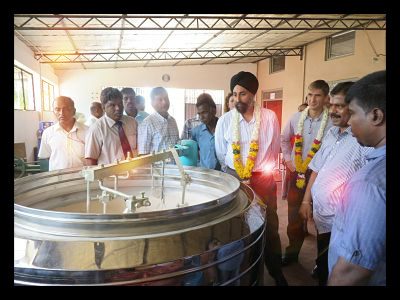
The Volunteers For Economic Growth Alliance, or VEGA, is a nonprofit that brings its members together to execute economic growth projects overseas.

Founded in 2004, VEGA was originally an initiative of the United States Agency for International Development. The organization was meant to be a procurement partner.

Today, VEGA represents itself as a respected NGO alliance of 23 member organizations. Each member brings its expertise to the Alliance to allow VEGA programs to grow in development and scale.

Based in Washington, D.C., VEGA can effectively manage its programs stationed in developing nations.

With a mission to mobilize expertise and resources to promote sustainable economic opportunities, VEGA’s programs aim to scale the services of local organizations, create jobs, increase commerce and trade and improve management.

Volunteers from the U.S. offer their expertise to programs that are committed to serving women, youth and others who are ready to be entrepreneurs in order to lift themselves out of poverty.

Currently, VEGA manages 36 programs in 28 countries.

These programs include: Farmer-to-Farmer, Capacity Building of Cambodia’s Local Organizations, Competitive Agriculture Systems for High Value Crops and Kazakhstan Business Connections.

Though programs only run in 28 countries, members have worked in over 140 countries, bringing their values and skills to local partnerships.

The expertise that VEGA members bring to the team range in areas from agriculture and food security, to tourism development and financial services. Also included are environment and energy, enterprise development and trade and investment.

VEGA believes that economic growth that emphasizes innovation, local partnerships and integrated solutions is the best way to promote prosperity.

With the power of volunteers rallying behind this mission, the strength in collaboration has allowed this NGO to make an impact in economic growth for the developing communities it serves.

– Chelsee Yee

Sources: VEGA Alliance, ACDI VOCA, Africa Agribusiness Magazine

Photo: USAID

December 11, 2014
https://borgenproject.org/wp-content/uploads/borgen-project-logo.svg 0 0 Borgen Project https://borgenproject.org/wp-content/uploads/borgen-project-logo.svg Borgen Project2014-12-11 04:00:092024-06-05 01:58:19VEGA Brings Economic Growth Globally
Food & Hunger, Food Security, Hunger

Uzbekistan’s Progress in Eradicating Hunger

uzbekistan food security
This year, the Global Hunger Index (GHI) ranks Uzbekistan at 5.7 percent for its undernourished population from 2011 to 2013.

More than 800 million people suffer from hunger and the GHI examines 120 of the low-income countries that account for the vast majority of global undernourishment.

In the last 14 years, Uzbekistan has shown a steady improvement in eradicating hunger, with a decline from 3.6 million to 1.7 million of the country’s population facing food insecurity.

However, the country is still in need of renewed political commitment to achieving food security in order to continue making progress against hunger, which not only stunts physical, intellectual and even economic growth but can also lead to death.

Yuriko Shoji, the recently appointed Food and Agriculture Organization (FAO) Sub-regional Coordinator for Central Asia and country representative for Uzbekistan, spoke on the topic at a launch event at Tashkent State Agrarian University.

“Despite good progress made in the past two decades and an increasingly favorable environment, the full potential of agriculture – and food security for everyone – have yet to be achieved,” said Shoji. “With renewed political commitment, and good practice that can be shared with the world, food security of each and every household is within reach.”

Shoji highlighted the key requirements for overcoming the limitations to prioritize food security and nutrition issues. The event served as a platform for discussing global hunger and malnutrition.

Uzbekistan’s positive trend to combat malnutrition serves Millennium Development Goal (MDG) 1 of halving the proportion of undernourished people by next year. It’s a goal that is within reach if Uzbekistan and other developing countries continue making political efforts toward food security.

According to the FAO, 63 developing countries have reached the MDG target and six more are on track to reach it by 2015.

Though Uzbekistan has seen significant progress in hunger, the country must continue to set the path for others that remain chronically undernourished in order to meet next year’s MDG target.

– Chelsee Yee

Sources: The Guardian, UN, Data Wrapper
Photo: EurasiaNet

November 27, 2014
https://borgenproject.org/wp-content/uploads/borgen-project-logo.svg 0 0 Borgen Project https://borgenproject.org/wp-content/uploads/borgen-project-logo.svg Borgen Project2014-11-27 12:00:172024-06-05 01:58:19Uzbekistan’s Progress in Eradicating Hunger
Food & Hunger, Food Security

Reviving Mozambique’s Coconut Groves

mozambique's_coconut_groves
A little over three years ago, the trees in Mozambique’s coconut groves began to develop brown spots. The leaves would then turn yellow and the coconuts would prematurely drop to the ground. At the end of three to six months, the top half of the tree would break off and fall to the ground.

Coconut Lethal Yellowing Disease

Coconut Lethal Yellowing Disease has been the cause of the trees’ deaths. The disease is spread by the rhinoceros beetle, who buries its larva into the fallen trees and saplings. Now, just three years later an estimated half of Mozambique’s coconut trees have been destroyed. With the bark stripped, the groves now look like matchsticks sticking out of the ground. The only known cures are to plant resistant varieties of palm.

According to the Food and Agricultural Organization Mozambique was the largest producer of dried coconut meat in 2011, producing over 62,000 tons yearly. All of which are either exported, turned into coconut oil or consumed locally. It is estimated that Zambézia province, alone, has losses of over $4 million in exports each year.

Some measures have been taken to halt the spread of this disease. This past year the U.S. has aided 277,000 farmers through the Millennium Challenge Account financing the Farmer Income Support Project. This measure cleared 600,000 acres of infected trees and replaced them with 780,000 seedlings.

Concern Worldwide

Even with aid, the coconuts that are being harvested are nowhere near the sustainable quantities of the past, nor are they the same size. Due to the young age of many of the trees, the coconuts are noticeably smaller.

While everything is being done to save the current coconut economy, many are urging the country to start looking for new cash crops, so the country is not overly reliant on one crop. Concern Worldwide, a nonprofit organization, is providing seeds, tools and training throughout Zambezia Province to cultivate tomatoes, sweet potatoes and lettuce as well as staple crops like sorghum and rice.

All of these plants have thrived in Africa’s climate, but Barbara Hladka, an agronomist working for Concern, believes that the plant with the biggest potential to replace the lost income from coconut sales is sesame seeds. “We are seeing buyers coming to some of the most remote communities in Zambezia to purchase sesame directly from growers for as much as 40 meticais ($1.30) per kilo,” said Hladka. “This is much higher than what farmers used to sell coconuts for.”

This new wave of agro-economics, or the process of growing different crops to bring to market, has caught on fast to help many afford the opportunity to work their way out of poverty. It is a successful worldwide trend endorsed by many of the NGOs working in Africa, India and China.

– Frederick Wood II

Sources: InterAction, Macau Hub All Africa
Photo: Huffington Post

October 27, 2014
https://borgenproject.org/wp-content/uploads/borgen-project-logo.svg 0 0 Borgen Project https://borgenproject.org/wp-content/uploads/borgen-project-logo.svg Borgen Project2014-10-27 04:00:132024-06-05 01:58:16Reviving Mozambique’s Coconut Groves
Food & Hunger, Food Security, Global Poverty, Health, Malnourishment

Infant Death from Malnutrition

infant_death
Malnutrition can originate from all sorts of sources: lack of funds, lack of access to food or even negligence. According to the World Health Organization, 45 percent of infant deaths are caused by a lack of nutrition. And malnutrition may not always be the direct cause of death in these children. Often they may pass from things like malaria, pneumonia and diarrhea, all of which stem from a lack of nutrition.

In areas like South Africa, malnutrition is an issue affecting 64 percent of infants. UNICEF has made significant efforts to pervade the country and educate mothers on the benefits of breastfeeding. It seems the primary source of a lack of nutrition has been mixed-feeding practices. In these cases, supplemental food is certainly less than enough from a nutritional standpoint. Nevertheless, 53 percent of infants in South Africa under six months of age are mix-fed.

UNICEF has taken initiative by directly corresponding with the Department of Health in South Africa in order to improve policies and education. They have also taken the approach to focus malnutrition on HIV transmission. With babies more severely undernourished, they are much more apt to receive HIV from their mothers because they are weak and unable to grow.

Deaths under the age of five occur in very specific regions, precisely sub-Saharan Africa and Southern India. The good news is that the rest of the world has seen a drop from 1990 from 32 percent to 18 percent in the percentage of infant deaths under the age of five.

While infants in certain parts of the world suffer from malnutrition due to a lack of finance or education, it seems almost everywhere in the world malnutrition can happen as a result of negligence. For example in 2010 a baby died in South Korea after only a three months of life at a mere 5.5 pounds. CNN reported that the couple was too engaged in online gaming to have paid attention to their newborn. Ironically the game they were playing involved raising a virtual child.

In northern France this year, an infant died of malnourishment at 11 months of age. Parents magazine reported that the vegan couple was only breastfeeding the infant. At this age babies should be introduced to more solid foods, and especially in the case of a vegan couple. Because the infant’s mother was not receiving enough protein, she died with both a Vitamin A and B12 deficiency.

Regardless of what may cause malnutrition in infants, it is something that clearly needs to be monitored. It gives us hope that certain statistics are falling, but the world needs to send its focus more so to the problem areas. We can give our donations, but best of all we can give our wisdom and our health knowledge to prevent more infants from unnecessarily leaving this earth.

– Kathleen Lee

Sources: WHO, Parenting, CNN, UNICEF 
Photo: Flickr

October 22, 2014
https://borgenproject.org/wp-content/uploads/borgen-project-logo.svg 0 0 Borgen Project https://borgenproject.org/wp-content/uploads/borgen-project-logo.svg Borgen Project2014-10-22 04:00:572024-12-13 17:51:16Infant Death from Malnutrition
Food & Hunger, Global Poverty

Food Shortages in Somalia

Three years ago, Somali residents experienced one of the worst famines in history. The devastating epidemic resulted in over a quarter of a million deaths across the country. With severe droughts currently plaguing the nation, officials are concerned that more lives will be lost as the country spirals back into famine.

Al-Shabab, a militant terrorist group based in Somalia, has been preventing aid and relief services from reaching those in need. The group has blocked roadways, prohibiting standard trade from reaching millions of people. In addition, extreme droughts have wiped out a great percentage of livestock and local crops. In some areas, including the province of Bakool, residents state that it hasn’t rained since last October.

“Lack of food and water is our biggest challenge now,” says Bakool Commissioner, Mohamed Abdi Mohamed. “Food is too expensive even for those with money. The town is under a blockade.”

Since al-Shabab began erecting blockades, prices for food and other basic necessities have more than tripled. This has caused many to plunge further into poverty and over a million people have been forced to leave their homes. A large number of people have set out in search of food and water themselves, though, with the continuous drought, many have died along the way. Others have transferred to refugee camps where they often receive little to no assistance.

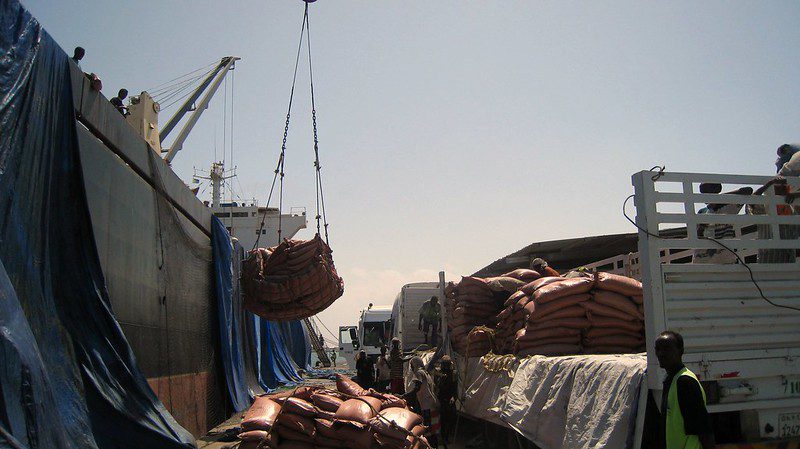
Rebels have intercepted food deliveries intended for thousands of starving people in Somalia. They are currently keeping food products locked away in warehouses in the capital city of Mogadishu. Now, the only way that relief services are able to reach people in these areas is through deliveries of airlifted goods. Though this form of distribution is costly, many international organizations are doing their best to continue relief services.

An estimated 1.6 billion dollars is needed to save the 2.9 million lives at stake. As of yet, only half of this amount as been reached. The UN is currently urging international aid groups and individuals to raise awareness of the situation and to help in funding relief efforts.

– Meagan Douches

Sources: The Guardian, The Huffington Post, UN
Photo: Flickr

October 14, 2014
https://borgenproject.org/wp-content/uploads/borgen-project-logo.svg 0 0 Borgen Project https://borgenproject.org/wp-content/uploads/borgen-project-logo.svg Borgen Project2014-10-14 11:00:512024-05-27 09:22:52Food Shortages in Somalia
Food & Hunger, Global Poverty

Ethiopian Sugar to Reduce Carbon Footprint

carbon footprint
Ethiopia has a bold and innovative plan to reduce the entire country’s carbon footprint to almost zero, and the country plans on achieving it by 2025.  The plan, currently set into motion, centers entirely around sugar.

Ethiopia’s day to day life relies heavily on sugar for their tea, coffee and cooking.  So much so that Ethiopia can’t meet its own sugar demands and has to import 200,000 tons of sugar a year. The cost of petroleum, used to refine the sugar, has also risen. Ethiopia does not produce its own oil and has to import petroleum, pushing the cost of sugar even higher.

Six years ago, the country turned to itself to solve its own problems. Implementing hydro-electric, geothermal, and wind energy, but Ethiopia found it could also produce molasses as a byproduct of sugar refinement. This molasses can then be turned into an ethanol based bio-fuel. Co-generation, which is the use of agricultural waste to create energy, began to be explored as well.

There are currently three sugar plants in full production producing over 300,000 tons of sugar a year as well as 62MW of electricity due to co-generation and ethanol production. These numbers are a significant increase since the program began when half of all power was used by the plant.

This is only the tip of the iceberg. “Ethiopia’s Minister of Water, Irrigation and Energy, Gossaye Mengiste, was reported as saying that the country has the potential to produce 600MW of electricity once the 13 factories, currently under construction are complete.” Once complete the 16 factories are slated to generate exportable sugar quantity in excess of its 200,000 tons it already imports. This will give Ethiopia projection earnings of $300 million.

More importantly than making up the sugar deficit, the emissions produced by these sugar-based bio fuels, when used in cars, stoves and generators, are nearly zero.  The elimination of car emissions is one of the biggest steps to reducing the country’s carbon footprint and achieving its stated goal of zero emissions by 2025.

These ambitious talks have come under fire by some who say that it is a “condescending plan drawn up mainly by people living in highland areas but affecting the lowland population.” Sugar plantations require huge tracts of land. Many officials are turning to pastoralists to solve this problem.  The pastoralist people are southern nomadic groups that herd grazing animals from pasture to pasture.  They comprise roughly 11 percent of the population and use about 63 percent of the land.

The Ethiopian Sugar Development Agency cautioned the government about this as early as 2008, saying, “Government’s strong support in clearly defining the policy with respect to bagasse energy development is critical to the successful achievements of substituting bagasse cogeneration for imported fossil fuels or diversifying electric energy source based on renewable energy source.”

– Frederick Wood II

Sources: New Agriculturist, Reuters, ESI-AFRICA
Photo: AFK Insider

October 6, 2014
https://borgenproject.org/wp-content/uploads/borgen-project-logo.svg 0 0 Borgen Project https://borgenproject.org/wp-content/uploads/borgen-project-logo.svg Borgen Project2014-10-06 12:00:162024-12-13 17:51:12Ethiopian Sugar to Reduce Carbon Footprint
Development, Food & Hunger, Global Poverty

Poverty Simulation Enriches Lives

It is a bold move towards unraveling many of the myths that surround the modern American family currently in poverty. Gayle Gifford of Cause and Effect summed it up as the views that many upper and middle class Americans have about those in poverty. “For many of my middle-class peers, the notion that lots of people in our community simply cannot earn enough to pay the minimum costs of food, shelter and health care, no matter how hard they work, just makes no sense in light of their own life experiences. To them, it seems the poor have chosen poverty.”

The Community Action Poverty Simulation, originally developed by the Missouri Association for Community Action, seeks to enlighten people on what it truly means to live in poverty and the process on how to get out. The poverty represented is not living on a dollar a day or less, but living in conjunction with government assistance, difficult circumstances and the daily stress one carries around while in poverty.

The simulation is divided into a series of 15 minute intervals each representing a week in a month. Members of the simulation are broken up into families and assigned roles. They are also given scenarios and background on their roles to better understand the conditions they are living in. When the buzzer sounds each member of the family carries out the duties of daily life while in poverty. Many tried to find work, but due to past histories ended up in the unemployment line with no money. These same people would also have to find alternate means of funding for unexpected bills, groceries and bus tokens while simultaneously trying to provide for their children.

Circumstances of the simulation would intervene and some participants would have their houses robbed or lose vital paperwork that was needed to prove something to a government official. Others found themselves stealing from other families in the simulation. All this stress just to make it through the day. And this is before any of the groups arrive at the part about getting out of poverty. The short time frames and mountains of work force the participants to make many of the stressful decisions that thousands of Americans have to make daily. The choice whether to feed one’s children or to pay rent is a very real decision and one many people had to make in the simulation.

This poverty simulation program was first used in 2006. It has continued to open eyes all across the country in places like ATSU in Arizona, Davenport University in West Michigan, Ozark Technical Community College in the Midwest, the court systems of New York and even the city employees of Chicago, and many more churches and communities across the nation.

The results have been what a lot of the community leaders were looking for. As an Ozark Technical Community College administrator realized, “There’s a point where it registers that it’s an everyday struggle for many people in this community.” The experience has prompted Ms. Casper, a participant in the Chicago simulation to say, “I felt really below the earth because everybody was so cold. This world has to change in some way.” Still another participant said, I was “waiting for it to be over, but in real life it doesn’t end.”

There are many who feel the program to be a success, but it has also fallen under fire by many of the organizers of volunteer programs and those that have risen up from the depths of poverty. Cheryl Jackson of the Minnie Food Pantry in Plano, TX says “allowing people to steal as part of a poverty simulation isn’t effective.” A former poverty dweller from Creating Bridges in Chicago echoed this sentiment after completing the simulation. “You don’t go to stealing in the first week or the first month. It takes longer than that. You try everything else first.”

— Frederick Wood II

Sources: MACA, Cause & Effect, News Leader, iConnect, Access of West Michigan, NY Courts, CoActive Connections, Chicago Reader, culturemap
Photo: Flickr

September 28, 2014
https://borgenproject.org/wp-content/uploads/borgen-project-logo.svg 0 0 Borgen Project https://borgenproject.org/wp-content/uploads/borgen-project-logo.svg Borgen Project2014-09-28 04:00:202024-12-13 17:51:12Poverty Simulation Enriches Lives
Food & Hunger, Food Security, Global Poverty, Health

What is Hunger?

What is Hunger
What is hunger? For some American high schoolers, waiting for the bell to go to lunch can be excruciating. Stomachs are growling, teenagers are getting cranky, but are they truly hungry?

To be hungry, or “malnourished,” means that, due to a lack of nutritional intake, energy is completely lacking. This often results in a severe inability to perform simple tasks or to concentrate on anything other than food.

Furthermore, the worries accompanying hunger lead to the idea of food insecurity. The U.N. Food and Agriculture Organization defines food insecurity as “a situation that exists when people lack secure access to sufficient amounts of safe and nutritious food for normal growth and development and an active and healthy life.”

In the 1970s, 30 percent of the people in our world suffered from hunger. Now we can proudly say that that percentage has been reduced to only 16 percent of the world, but this is still a staggering 925 million people.

The dangers of hunger extend past being temporarily without food. With a weakened body, malnourished people are much more prone to diseases like tuberculosis, dysentery and typhoid. The body also begins to feed on its own bone and muscle, creating a vicious cycle that typically ends with organs like the heart shutting down.

Hunger can affect mental capabilites as well. Without adequate nourishment, people are unable to concentrate and thus unable to advance educationally and socially.

Some unpleasant statistics from the WFP about hunger include the following:

  • A lack of nutrition causes 45 percent of children deaths under the age of five.
  • Two-thirds of Asia’s population is hungry.
  • In the developing world, 66 million primary school-age children go to class hungry.

According to U.N. FAO Director-General, Jacques Diouf, “Defeating hunger is a realistic goal for our time, as long as lasting political, economic, financial and technical solutions are adopted.”

Organizations like Action Against Hunger, Grocers Against Hunger, UNICEF and countless more are fighting everyday to raise money and collect food for these suffering people throughout the world. These types of initiatives will not only put food on someone’s plate, but will extend their life expectancy, and improve communities. Just as Diouf claimed, global hunger can be defeated.

– Kathleen Lee

Sources: WFP, United Nations

September 26, 2014
https://borgenproject.org/wp-content/uploads/borgen-project-logo.svg 0 0 Borgen Project https://borgenproject.org/wp-content/uploads/borgen-project-logo.svg Borgen Project2014-09-26 04:00:162024-05-25 00:03:34What is Hunger?
Food & Hunger, Global Poverty, Health

3 Causes of Famine in Africa

causes famine africa
A food security crisis is considered a famine when, according to the United Nations, “20 percent of households face extreme food shortages with a limited ability to cope; acute malnutrition rates exceed 30 percent; and the death rate exceeds two persons per day per 10,000 persons.”

Famine exacerbates the challenges of people in poverty and pulls many into the cycle of poverty. This is especially problematic in Africa. Among other nations, famines have been identified in Ethiopia, Somalia and South Sudan. The following are three causes of famine in Africa.


1. Conflict Causes Hunger in Africa

When a government is engaged in war, whether civil or with another country, the leadership of a country must divert funds from some sectors to military expenditure. In some cases, funding is removed from development, leaving the population especially vulnerable to natural disasters or the effects of conflict on agricultural production.

When a natural disaster—such as drought—affects a region, the problem can quickly transform into a famine, and the local and national government are left without the funding to address the problem. Natural disasters can also lead to competition over scarce resources, which cause conflict and high levels of food insecurity, or famine.

2. Climate Change

Climate change directly affects food production, which can create widespread food insecurity and famine. For instance, rising temperatures reduces crop yields by reducing photosynthesis and soil fertility. Higher temperatures, too, increase the survival rate of weeds and diseases that reduce agricultural output.

Increased rainfall and droughts destroy cropland and prevent production entirely. In 2007, heavy rain destroyed a quarter of Bangladesh’s rice crop and over one million acres of cropland.

Extreme variation in weather and intense affects of climate change such as rising temperatures, rainfall and droughts prevent farmers from making accurate predictions regarding agricultural seasons. This, in turn, affects the output of food from farmers, which increases food insecurity. High food insecurity both motivates conflict, as mentioned before, and increases the likelihood of famine.


3. Donor Country Politics

Because of alternative political interests, such as addressing infectious diseases or donating to another part of the world, donor countries can fail to give aid to prevent famine. According to The Guardian, Famine Early Warning Systems and the Food Security Nutrition Analysis Unit predicted the 2011 famine in Somalia. Had the international community responded, a quarter of a million people could have avoided death.

The Guardian argues that United States geopolitical interest in Somalia in 2011 led to a withdrawal of aid, which aided a growing famine. It was only after widespread media attention of the famine that Somalia received a significant amount of humanitarian aid and was able to appropriately deal with the crisis. While humanitarian aid can alleviate the consequences of famine, removing aid at the wrong time can also be one of the causes of famine in Africa.

The three causes of famine listed above is far from a comprehensive list of causes of famine in Africa. In fact, the causes of famine are complex and often have several causes contributing to both the initiation and rapid spread of famine. Aside from conflict, climate change and lack of international response, lack of response from the domestic government and rising prices of food also potentially contribute to famine. Clearly, the causes range from local, to international, to natural or environmental.

Beginning to understand even some of the causes of famine, though, contribute to solving part of the causes and preventing as widespread of problems in the future.

– Tara Wilson


Sources: United Nations, The Guardian, Beyond Intractability, Physicians for Social Responsibility
Photo: English Online


September 25, 2014
https://borgenproject.org/wp-content/uploads/borgen-project-logo.svg 0 0 Borgen Project https://borgenproject.org/wp-content/uploads/borgen-project-logo.svg Borgen Project2014-09-25 16:00:112024-06-05 01:58:123 Causes of Famine in Africa
Page 52 of 78«‹5051525354›»

Get Smarter

  • Global Poverty 101
  • Global Poverty… The Good News
  • Global Poverty & U.S. Jobs
  • Global Poverty and National Security
  • Innovative Solutions to Poverty
  • Global Poverty & Aid FAQ’s
Search Search

Take Action

  • Call Congress
  • Email Congress
  • Donate
  • 30 Ways to Help
  • Volunteer Ops
  • Internships
  • Courses & Certificates
  • The Podcast
Borgen Project

“The Borgen Project is an incredible nonprofit organization that is addressing poverty and hunger and working towards ending them.”

-The Huffington Post

Inside The Borgen Project

  • Contact
  • About
  • Financials
  • President
  • Board of Directors
  • Board of Advisors

International Links

  • UK Email Parliament
  • UK Donate
  • Canada Email Parliament

Get Smarter

  • Global Poverty 101
  • Global Poverty… The Good News
  • Global Poverty & U.S. Jobs
  • Global Poverty and National Security
  • Innovative Solutions to Poverty
  • Global Poverty & Aid FAQ’s

Ways to Help

  • Call Congress
  • Email Congress
  • Donate
  • 30 Ways to Help
  • Volunteer Ops
  • Internships
  • Courses & Certificates
  • The Podcast
Scroll to top Scroll to top Scroll to top