• Link to X
  • Link to Facebook
  • Link to Instagram
  • Link to TikTok
  • Link to Youtube
  • About
    • About Us
      • President
      • Board of Directors
      • Board of Advisors
      • Financials
      • Our Methodology
      • Success Tracker
      • Contact
  • Act Now
    • 30 Ways to Help
      • Email Congress
      • Call Congress
      • Volunteer
      • Courses & Certificates
      • Be a Donor
    • Internships
      • In-Office Internships
      • Remote Internships
    • Legislation
      • Politics 101
  • The Blog
  • The Podcast
  • Magazine
  • Donate
  • Click to open the search input field Click to open the search input field Search
  • Menu Menu

Archive for category: Food & Hunger

Information and stories on food.

Food & Hunger, Global Poverty

Project Angel Food Serves Nine Million Meals

project_angel_food
Project Angel Food, a philanthropic organization that cooks and serves nutritious meals to residents in Los Angeles who are battling critical illnesses, just celebrated serving nine million meals.

In addition to this accomplishment, the organization also celebrated its 25th anniversary. It was founded by Marianne Williamson in 1990 when the HIV/AIDS crisis came into the public eye.

Over the past 25 years, Project Angel Food has expanded to cook medically tailored meals for men and women who suffer from severe illnesses like cancer, renal failure, congestive heart failure and diabetes.

“It’s wonderful to participate in Project Angel Food’s 25th-anniversary celebration – to both remember what was, and help them usher in a new chapter in the life of the organization,” says Williamson.

Project Angel Food has done so well in recent years that they have partnered with the Entertainment Industry Foundation (EIF), a charitable organization that harnesses the collective power of the entertainment industry to raise awareness and funds for critical health, educational and social issues, to help accomplish their goals and mission.

This partnership has enlisted the aid of celebrities such as Eva Mendes, Alanis Morissette and Jane Lynch to help support both the organization and its mission.

“For nearly two decades, the Entertainment Industry Foundation has been honored to support Project Angel Food in its mission to provide essential nourishment to those battling critical illnesses, including people living with cancer,” said EIF President and CEO Lisa Paulsen. “Many of EIF’s health initiatives over that same period have focused on advancing cancer research to improve how the disease is treated. Supporting Project Angel Food has always been a wonderful complement to those efforts, enabling EIF to positively impact more than just one facet of patients’ journeys.”

With the support of EIF, Project Angel Food will be able to continue providing meals to those people with critical illness and make their lives just a little bit better.

– Alysha Biemolt

Sources: Look to the Stars, Angel Food, Entertainment Industry Foundation
Photo: +Beryll

August 23, 2015
https://borgenproject.org/wp-content/uploads/borgen-project-logo.svg 0 0 Borgen Project https://borgenproject.org/wp-content/uploads/borgen-project-logo.svg Borgen Project2015-08-23 01:30:292024-05-27 09:27:30Project Angel Food Serves Nine Million Meals
Food Aid, Global Poverty, Humanitarian Aid, USAID

World Food Program Increases Food Assistance to Syrians

food_assistance
As fighting persists in Syria, life for the population remains a struggle and food security a challenge. Millions of people have been affected amid the escalating violence and the situation is rapidly deteriorating. The U.S. has announced a contribution of $65 million dollars to the World Food Program, which is operating within the Syrian borders.

The armed conflict in Syria, also called the Syrian Civil War, has been ongoing for years since unrest began in 2011. In the wake of the Arab Spring, a revolutionary wave of demonstrations and protests occurred across the Arab world. What began as protests against the government gradually morphed into a rebellion after a violent military force used by President Bashar al-Assad’s government.

As of January 2015, the death toll in Syria had risen above 220,000 and approximately 6 million people have been displaced, cut off from basic human needs such as water, food and electricity.

The United States Agency for International Development (USAID) is giving $65 million dollars to the United Nations World Food Program (WFP) to achieve their goal of providing food assistance to 4 million starving people inside the country and 1.6 million more in the neighboring countries of Jordan, Lebanon, Turkey and Egypt.

In Syria, the WFP has been running dangerously low on funding but the money infusion from USAID will keep the WFP afloat and operating through November preventing what could have been a complete shutdown.

The U.S. being the biggest donor to the Syrian crisis has contributed more than $4 billion dollars overall, allowing millions of needy families within Syria and those affected outside access to food and clean water.

According to USAID, the U.S. has now given more than $1.2 billion to the WFP for its Syrian operations – including more than $530 million for operations inside Syria and more than $693 million for operations benefiting Syrian refugees.

Although USAID has donated billions to the WPF, the international community has for the most part dropped the ball, forcing the WFP to devalue their food vouchers by half to refugees and lowered the amount of food in monthly household parcels inside Syria. USAID and the WFP continues to reach out to other governments hoping to rally more support and pressure them to take more actions.

In a press release by USAID on Friday, July 31, 2015, Dina Esposito, Director of USAID’s Office of Food for Peace said, “we have heard tragic stories of hungry refugees returning to war-torn Syria and taking children out of school to beg.” He continued, “We hope this new funding will help mitigate such difficult choices and help Syrians as the winter months approach.”

In war torn Syria, families are fleeing what were once their homes, desperately seeking safety. Starving and suffering from illness, people are getting life-saving food, water and medical care, thanks to the WFP and the disaster averting financial rescue from USAID.

– Jason Zimmerman

Sources: USAID, Reuters
Photo: Huffington Post

August 22, 2015
https://borgenproject.org/wp-content/uploads/borgen-project-logo.svg 0 0 Borgen Project https://borgenproject.org/wp-content/uploads/borgen-project-logo.svg Borgen Project2015-08-22 01:30:072020-07-02 10:27:41World Food Program Increases Food Assistance to Syrians
Food & Hunger, Food Security, Global Poverty

How Online Marketplace is Reducing Food Waste

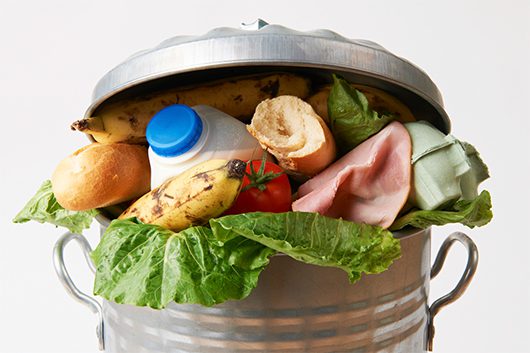
Millions of tons of food are wasted every year in developed countries and the United States is one of the worst offenders, with more than 40 percent of the food supply ending up in dumpsters and landfills rather than on people’s plates. Sadly, the problem has only been getting worse. In 2012, the United Nations was responsible for 35 million tons of wasted food, representing a 20 percent increase from 2000. In 1980, food accounted for 10 percent of U.S. total waste, but today, it accounts for over 20 percent, with Americans wasting more food than plastic, paper, metal or glass.

The issue of food waste is worse in developed countries, where many see food as expendable. But even in wealthy countries, people struggle with hunger. Over 805 million people worldwide suffer from food insecurity, yet enough food is produced to feed everyone on the planet. Furthermore, wasting food is both economically and environmentally unsustainable. Efforts that provide food that could have been wasted to those who truly need it are becoming increasingly important.

Feeding America is making a concentrated effort to eliminate food waste in the United Nations. They are the largest domestic hunger-relief organization in the United States, with a nationwide network of 200 food banks. Feeding America provides over 3.3 billion meals to 46 million people a year through its 600,000 food pantries and meal programs. Their latest initiative, Online Marketplace, is specifically intended to prevent food waste.

Launched in Feb. 2014, Online Marketplace utilizes technology to safely, quickly and effectively recover excess food from local food service outlets. By doing so, Feeding America hopes to reduce food waste while simultaneously providing more meals to people in need. It is primarily geared towards businesses like restaurants or bakeries, which handle perishable food in smaller quantities, therefore producing lots of waste while donating very little.

Online Marketplace directly connects potential donors to meal service programs and food pantries. First, new donors are educated on donation protocols, such as food safety guidelines and standard operating procedures. Next, they are connected with their nearest food bank, which directs them to local food pantries and meal programs to which they can directly donate. Distributors can then pick up food from the donor and transport it to local people in need as soon as possible, sometimes even making deliveries on the same day.

Currently, Online Marketplace is projected to recover 740 million more meals per year for people in need. Feeding America recently received a $1.6 million Google Global Impact Award for using technology to fight hunger. This money will allow the program to expand and feed even more people.

The Online Marketplace program could easily become a model for other developed countries to follow. If such programs catch on, redirecting food waste from the landfill to the dinner table could benefit millions worldwide. Educating those in the food service industry about food waste and simplifying their donation process will encourage more people to get involved in the ongoing battle against world hunger.

– Jane Harkness

Sources: Feeding America 1, Feeding America 2, Feeding America 3, New York Times, Washington Post
Photo: City Fruit

August 19, 2015
https://borgenproject.org/wp-content/uploads/borgen-project-logo.svg 0 0 Borgen Project https://borgenproject.org/wp-content/uploads/borgen-project-logo.svg Borgen Project2015-08-19 11:32:142024-12-13 17:51:49How Online Marketplace is Reducing Food Waste
Food & Hunger, Global Poverty, Hunger, Volunteer

Golden Temple in India Feeds 100,000 Per Day

Golden Temple in India Feeds 100,000 People Per Day
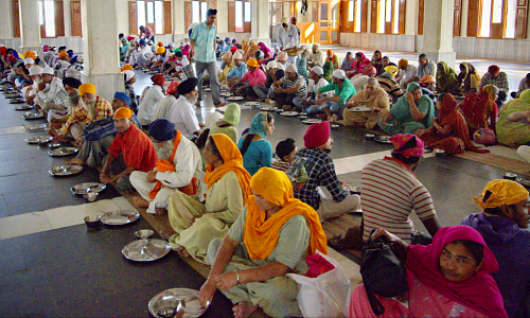
Every year, thousands of tourists line up to see the Taj Mahal in India, which is the most popular tourist destination in the country. In Amritsar, India, a Golden Temple serves 100,000 meals to the hungry every day, which is more people than the Taj Mahal attracts in a day.

The Sikhs believe the langar is a symbol of equality and not just a place for people to come eat for free. The kitchen needs an extensive number of ingredients each day, including 12,000 kilos of flour and 13,000 kilos of lentils. Most of the food is paid for up to two years in advance through donations.

At the langar, everyone gets a free hot meal regardless of their socioeconomic status or their religion. There are 450 people running the kitchen with the help of hundreds of volunteers. Over 300,000 plates, spoons and bowls are washed each day.

“There are only three things in our religion,” says a Sikh volunteer from California. “Chant the name of God, sing religious hymns and volunteer. I work as long as my legs allow me to stand.”

About 15 percent of the people in India are undernourished and 194 million people are hungry. This means a quarter of the undernourished people in the world belong to India. Also, India’s population is one of the fastest-growing populations in the world; it will one day become the most populous country.

More than 3,000 children in India die every day from illnesses related to poor nutrition. Hunger in India remains an alarming issue due to rising food prices and available agricultural land. While food grain production is increasing, it hasn’t been sufficient enough to feed the entire population.

Volunteering goes beyond the Golden Temple: donations from around the world help reduce hunger for thousands of people in India. Akshaya Patra, an NGO in India, feeds 1.4 million schoolchildren every day.

India hosts a large number of mega kitchens that feed people all over the country. Despite the rapidly growing population, the percentage of people who are undernourished and hungry is declining.

– Donald Gering

Sources: Al Jazeera, Good News Network, India Food Banking, India Times, Social Progress Imperative, UNDP, WFP
Photo: SkitHub

August 19, 2015
https://borgenproject.org/wp-content/uploads/borgen-project-logo.svg 0 0 Borgen Project https://borgenproject.org/wp-content/uploads/borgen-project-logo.svg Borgen Project2015-08-19 01:30:442024-05-27 09:27:31Golden Temple in India Feeds 100,000 Per Day
Development, Food & Hunger

Clif Bar: Sustainable Nutrition and Development

Clif_bar
You’ve probably heard of Clif bars. Whether you are leaving for work or school, running to the gym or caught up in the daily rush, Clif bars provide sustainable, long-term energy and doesn’t sacrifice taste or nutrition.

But beyond helping you attain a more sustainable body and mind, Clif Bar is also working to build a more resilient world. It is built on a bottom line of five “aspirations”: strengthening the company through long-term investment, creating a brand that is sustainable in its ethics, quality and authenticity, forming the company around the best interests of its employees’ creating strong, healthy communities, both locally and globally and forwarding conservation and restorative environmental practices. One way Clif Bar does this is through continual work toward a 100 percent organic brand.

“We start every recipe with the goal of [fully] organic products, but we don’t always get there depending on supply,” says Sue Hearn, senior director of communications. In pursuance of increasing the availability of organic crops, the company has invested in research, creating the nation’s first endowed research position focusing on plant breeding for organic crops at the University of Wisconsin-Madison.

“It is critically important that our young people know the benefits of organics and leverages them to develop solutions for all of agriculture. We deeply believe that healthy seeds and healthy soils are key to healthy plants and animals,” commented funder George Siemon.

The company’s headquarters — a former World War II valve factory that was remodeled using reclaimed materials primarily from railroad construction — is also a model of responsible development. It boasts soundproofing technology made from recycled jeans and one of the largest solar panel conglomerations in the United States. Despite its innovative, high-tech design, the company headquarters retains a utilitarian feel, much like Clif Bars themselves do. As further confirmation of the company’s environmental initiatives, its headquarters received LEED Platinum certification for the utmost environmentally-conscious design.

The company also encouraged employees to pursue a minimum of 20 hours of volunteer time a year, amounting to a massive 10,000 hours of community service logged in one year. Beyond building sustainably, the company is working to actively encourage growth in communities and impoverished areas all over the world through service work and research initiatives, such as its agricultural funding. Each year, employees participate in a company-wide bike ride to commemorate the company’s commitment to low-impact development and healthy living.

As a further example of encouraging sustainable, healthy living, the company pays its 320 employees to use its in-house gym for 30 minutes per day, take part in fitness classes and get nutrition counseling and subsidized meals. Rather than trying to balance work and life, founder and former CEO Kevin Cleary works toward integrating the two, providing payment for employees to do their dog-walking and dry-cleaning while on the clock, as well as daycare services alongside the company gym. Its commitment to the wellness of its employees, as well as its customers, has helped it become a reputable brand for empowering and supporting its workers.

This commitment has paid off. Clif Bar has a voluntary turnover rate of around 5 percent. Beyond worker benefits, it offers employees 20 percent shares in the company, increasing shareholder value and encouraging workers to lead initiatives in creating a more sustainable, productive brand. The worker engagement that has resulted, Cleary says, is remarkable.

So next time you need some fuel for a workout, workday or work-in-progress, consider a brand that is derived from and promotes healthy, sustainable ideas and projects to build a more responsible global community.

– Jenny Wheeler

Sources: TriplePundit, Clif Bar
Photo: TriplePundit

August 14, 2015
https://borgenproject.org/wp-content/uploads/borgen-project-logo.svg 0 0 Borgen Project https://borgenproject.org/wp-content/uploads/borgen-project-logo.svg Borgen Project2015-08-14 01:30:032024-05-27 09:27:24Clif Bar: Sustainable Nutrition and Development
Food & Hunger, Food Security, Global Poverty

Food Waste in America

Food_Waste
Starvation has long been something many Americans associate with the “third world.” As a country, we sometimes become so engrossed in aiding other nations that we seldom take the time to look within our own borders and see the issues relating to food waste that we face at home.

While a façade of top-rated healthcare, strong innovation and an overall surplus of goods successfully hides the hunger, poverty and abuse, it is difficult to ignore the facts. Up to 40 percent of the food produced in the United States is going to waste before it even reaches the tables of hungry families. In 2013, 49.1 million Americans lived in food insecure households, meaning families were unsure of where their next meal would come from.

Starvation in the United States does not stem from a lack of food as it does in many developing countries. Instead, it stems from a lack of access to affordable healthy food along with a disregard for re-using and recycling materials considered to be waste.

There are many parts of the United States which are considered “food deserts”. These are areas where there are no food superstores like Whole Foods, Target or Acme, for example. Instead, individuals in these areas are forced to purchase food from gas station markets or travel over 10 miles to get fresh food. These “food deserts” exist even within our nation’s capital and force people to rely on food from shelters and food banks. Unfortunately, many of these food banks do not receive enough donations to keep up with the demand for food.

Much of the waste that inhabits our nation’s dumps comes from farms and supermarkets that were unable to sell produce. About 1.3 billion tons of food gets lost or wasted in the United States, with over 97 percent of food waste ending up in a landfill. Most of this produce is so fresh when it arrives at the dumps that people could have consumed it, had it not come in contact with other waste.

Food waste in America also arises from small households. A family of four throws away around $600 worth of food annually due to spoilage or fear of eating leftovers. When all of this food in the landfills begins to break down anaerobically, without access to oxygen, it produces methane gas, which is about 20 times more toxic than CO2 and can seriously harm our environment.

If supermarkets and households learn to use their food waste responsibly, imagine the world we would live in. Households can use food waste—even if it is completely spoiled—in compost pits, which in turn will help their plants grow better and help our environment. Supermarkets can donate their unsold produce to food banks and soup kitchens nearby and accept the profit losses in order to feed their less fortunate friends and neighbors.

When we live in a nation so devoted to helping others in poverty, it is hard to picture starvation in our own country. Most Americans have the luxury of being able to go down the road to pick up fresh produce every week and are unable to see the issue in throwing away left-overs, but if we just learned to eat and live responsibly, we could make a world of a difference beginning in our own neighborhoods.

– Sumita Tellakat

Sources: End Food Waste Now, NRDC
Photo: Flickr

August 7, 2015
https://borgenproject.org/wp-content/uploads/borgen-project-logo.svg 0 0 Borgen Project https://borgenproject.org/wp-content/uploads/borgen-project-logo.svg Borgen Project2015-08-07 01:30:442024-12-13 18:04:36Food Waste in America
Developing Countries, Food Security, Global Poverty

“Plant Doctors” Fighting Hunger in Kenya

Plant_Doctors
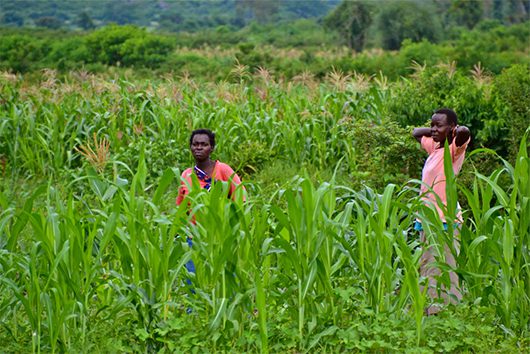
Every year across the developing world an enormous percentage of crops are thrown away due to disease, which contributes to hunger. But what if those sick plants could be cured? In Kenya, when there are sick plants, they call in the “Plant Doctors.”

The Food and Agriculture Administration defines the major developing world’s food crops in order of volume as rice, wheat, maize, cassava, fresh vegetables and sweet potatoes. Other essential crops are sugarcane, oil palm fruits and soybeans. With approximately 4.47 billion people out of the global population of 5.77 billion living in the developing world, the health of these plants are immensely important to food security.

Crops grown in the developing world are more commonly used to feed the public rather than for export. Because of this, volume is lower, there are much lower input costs so pesticides/herbicides are used less extensively or are less effective, and far less inorganic fertilizer is used. Additionally in developing countries, the plant varieties are usually not improved, resistant or higher yielding. The effect of viruses on agriculture in poor nations is more significant and less food grown as a result.

Plant Doctors are highly trained plant health advisers educated in the science of botany and global plant health who take research from the laboratory to the fields to help farmers eradicate diseases plaguing their crops. They also run Plant Clinics, where farmers can take a sample plant to find diagnosis of the problem and give best-practice advice. The plant clinic also provides a meeting place for Plant Doctors and the farmers they aim to serve.

The Plant Clinic works like a doctor’s office visit. When a farmer has a problem with sick plants, the sample plant can be brought in to a Plant Clinic, which operates in local farmers markets. A trained Plant Doctor will then diagnose the problem and recommend an affordable, locally available solution that the farmer can use to manage it. If the farmer follows the plant doctor’s advice; losses are reduced and productivity increases, increasing food to sell and feed his or her family.

Miriam Otipa is a Plant Doctor. She is the Principal Research Scientist & Head of the Plant Pathology Department, Kenya Agricultural and Livestock Research Organization. She posted a blog at Feed the Future about her experiences and the importance of Plant Doctors. She says in her blog that in Kenya, greenhouse farmers routinely lose between 80-100 percent of their tomato crops to pests and diseases.

As Miriam Otipa explains in her blog, it was while growing up in a small Kenyan Village she became interested in career in science. She turned her curiosity and childhood questions into solutions for struggling farmers with ailing crops.

According to Miriam Otipa, success in curing diseased plants is spreading across Kenya. Through the PlantWise program, supported by an international nonprofit called CABI, she has trained over 140 agricultural extension staff to operate 89 Plant Clinics in 13 counties across Kenya and has jointly trained 45 farmers as Plant Nurses, who regularly visit farms, assist with plant examinations, and encourage farmers to use nearby Plant Clinics.

In developing nations, food insecurity is a sad consequence of global poverty. Plant Doctors can help treat sick plants improving agricultural yield and increase the food on hungry people’s tables.

– Jason Zimmerman

Sources: USAID, Plantwise
Photo: Flickr

August 6, 2015
https://borgenproject.org/wp-content/uploads/borgen-project-logo.svg 0 0 Borgen Project https://borgenproject.org/wp-content/uploads/borgen-project-logo.svg Borgen Project2015-08-06 01:30:462020-07-03 08:44:00“Plant Doctors” Fighting Hunger in Kenya
Food & Hunger, Global Poverty, Hunger, Technology

New Smartphone App Allows You to Share Your Leftovers

leftovers
Of the challenges of the 21st century, one of the largest in terms of magnitude and prevalence is food insecurity. The term food insecurity is used loosely to define inconsistent access to food, due to limitations of resources.

The issue is unfortunately highly prevalent in not only the developing world but in the United States as well. According to the United States Department of Agriculture, 1 in 6 Americans faces food insecurity. This translates to roughly 50 million Americans in total.

These staggering numbers are indicative of what most of us are already quite familiar with: the issue of global hunger. However, the interpretation of its causes, and consequently the approach to its solutions, has been controversial. Many scientists, particularly biotechnologists, regard higher food production as the solution; and in many instances, it is effective.

As a result of agronomical developments, the world today is producing more food per inhabitant than ever before. However, the strides made in scientific innovation have not paralleled the alleviation of global hunger.

In fact, the implications of these discrepancies lie in the inequality of food distribution. For many people, food remains unavailable despite the copious amounts of food that go to waste each day. According to the Environmental Protection Agency, almost 35 million tons of food were wasted in the United States in 2013. Estimates by the National Resource Defense Council have estimated that 40% of all food produced in America is wasted.

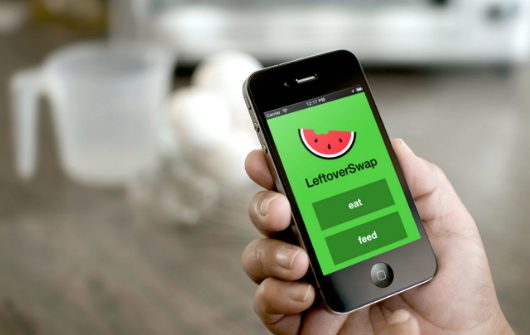
To tackle the issue of wasted food, a Seattle-based startup has come up with a creative solution based on smartphone technology: Leftover Swap. Leftover Swap is a smartphone app that allows users to share their leftover food with others before it goes to waste. The users can snap a photo of their leftovers, and upload it on the app with a location tag. Anyone looking for food can then find all the shared food in their location. To make the app safer for users, it allows for instant messaging within the app where users can agree on a location to pick up food. The app also does not allow any user to charge for their leftover food.

The benefits and the range of applications for the app remain dubious: people who own smartphones are not necessarily the ones in dire need of free food provision. However, as smartphones become cheaper, it may be possible to reach marginalized populations. Moreover, it can be a way for food recovery networks to salvage more food that would have otherwise gone to a landfill.

Many people are also concerned about the degree of safety of food. The Health Department does not evaluate this food, as it is not technically being sold. In spite of the app’s continual reminders to only share food one would eat itself, the hygienic status of the food cannot be positively reaffirmed. The co-founder of the app, Dan Newman, contends that there is a certain degree of faith that needs to be put into this effort, as would be the case if one was being given food as a guest.

The app is to date the only app of its kind and faces some hurdles before it can reach the objectives of sustainability and food equality that it intends. However, it is a step in the right direction, and as interest in the app increases, it is more than likely that we will see improvements both from this app and potential competitors.

– Atifah Safi

Sources: Washington Post, NPR, , NRDC, Feeding America, USDA, Leftover Swap
Photo: Newsana

August 2, 2015
https://borgenproject.org/wp-content/uploads/borgen-project-logo.svg 0 0 Borgen Project https://borgenproject.org/wp-content/uploads/borgen-project-logo.svg Borgen Project2015-08-02 07:14:022024-12-13 17:52:09New Smartphone App Allows You to Share Your Leftovers
Food Security, Global Poverty, USAID

USAID Helps Vietnam Boost Rice Yields

USAID Helps Vietnam Increase its Rice YieldsAs climate change affects agriculture across the developing world, food security is a painful reality for farmers who depend on their crops to eat and eke out a meager living. Every grain of rice they grow is valued — USAID is helping farmers in Vietnam to bolster their harvest yields.

USAID, the United States Agency for International Development, implemented the Vietnam Forests and Deltas Program in 2012, aimed at promoting rice production practices that can reduce greenhouse gas emissions and improve livelihoods with Vietnam’s agricultural extension services.

The program is focused on enhancing climate change resilience and working with all echelons of the Vietnamese society, from the community level up to the national level. Farmers are learning new agricultural techniques and are putting into practice climate-smart livelihoods in order to improve quality of life. They are applying new national policies and strategies in response to rising temperatures and changing weather pattern concerns. The program mainly concentrates on environmental conditions in Vietnam’s vulnerable forest and delta landscapes.

The Thanh Hoa and Kon Tum provinces have been selected by pilots for moving green growth strategies. With the implementation of innovative land use planning and training programs including local government, civil society and the private sector are demonstrating measurable improvements in carbon stocks and environmental services.

The Mekong and Red River Delta areas are increasingly falling victim to climate-related hazards such as storms, flooding, drought, salinity and sea level rise. These deltas are home to some of the most heavily populated and economically productive areas of Vietnam, making the region especially important as well as vulnerable to the country’s stability. USAID is working with the government and communities of the Long An and Nam Dinh provinces to help the population identify climate-related risks and how to take action in order to provide long term resilience.

USAID is working in partnership with several organizations including Winrock International, Vietnam’s Ministry of Agriculture and Rural Development, provincial governments, the Netherlands Development Organization, American Red Cross, Vietnam Red Cross and the Center for Sustainable Rural Development.

In Long An province, with training provided by USAID, farmers across the region have boosted rice yields dramatically, in many cases up to 25 percent more. This means that families once struggling with food insecurity and little to no profit from rice sales are eating better and making a better living, improving quality of life.

Before The Vietnam Forests and Deltas Program went into effect, farmers with minimal agricultural experience suffered preventable crop losses due to ignorance such as overuse or imbalance of fertilizers. As a result of the program, people learned how to apply new techniques including development of internal drainage lines and favoring conditions that lead to stronger and healthier rice plants such as rice paddy leveling.

No matter what one’s views of climate change are, it is a very real problem for the poor with real effects on the people struggling to survive in the delta and forest regions of Vietnam. USAID has proved an essential resource in the developing world. With the programs offered by the agency and its partners, poverty could soon be a thing of the past.

– Jason Zimmerman

Sources: USAID 1, USAID 2, Winrock, MARD

Photo: OceanBitesE

August 1, 2015
https://borgenproject.org/wp-content/uploads/borgen-project-logo.svg 0 0 Borgen Project https://borgenproject.org/wp-content/uploads/borgen-project-logo.svg Borgen Project2015-08-01 01:13:482020-07-06 12:23:07USAID Helps Vietnam Boost Rice Yields
Food & Hunger, Food Security, Technology

Are Drought-Resistant Crops the Solution to World Hunger?

drought-resistantRecently, genetically modified crops have received much criticism in the media. Despite the absence of any concrete scientific data that proves otherwise, opponents remain wary of crops changed by genetic engineering.

However, genetic engineering remains a technique of key significance in food sciences. Researchers have aimed their endeavors towards manipulations of crop genome that could alleviate hunger and malnourishment worldwide. New strains of food crops are being engineered that are better in nutritional value and resistant to environmental disasters.

One of the most significant research areas in this field focuses on making the crops drought-resistant. Drought remains one of the biggest challenges in the provision of food worldwide. Most of the world’s undernourished population is geographically concentrated in the driest areas of the world; this makes their food supply even more susceptible to droughts. The United Nations Food and Agricultural Organization (FAO) reports droughts to be more severe in effect than any other physical hazards. The recent droughts in Kenya and China are proof of the calamitous effects of droughts on food production.

To offer a solution to this problem, many researchers globally are focused on introducing drought-resistant genes into common staple food crops, such as wheat, rice and barley.

In any plant organism, there are multiple genes that interact to form a complexity of arrangement that affects the plant’s response to a stressor, such as drought. One of the most important known plant chemicals that affects a plant’s reaction to the environment is abscisic acid.

Abscisic acid is a plant regulatory hormone that controls a plant’s osmotic responses to external stimuli at a cellular level. As the water level available to the plant drops, abscisic acid regulates the ionic flow through the cellular membranes. This changes the osmotic pressure within the cell, which ultimately leads to closing of stomata — the pores in the leaves of a plant that are responsible for loss of water to the environment. This conserves water within the plant, allowing it to survive in dry conditions.

To enable the plant to survive in dry conditions, the loss of water from the plant body has to be minimized. This can be achieved through abscisic acid dependent regulatory pathways. This is done by increasing the expression of abscicic acid, but only under certain conditions.

Transcription factors in a genome are non-coding parts of the organismal DNA that control the rate of transcription of a particular gene, and therefore the amount of transcribed product—usually a protein—produced. By increasing the amount of osmotic regulators in the plant as a response to environmental stimuli, the plant can conserve water resources and tolerate drought much better. The abscisic acid molecule then regulates the gene expression of other genes within the genome that are induced or repressed to tackle external stress on the plant.

So far, much progress has been made in this field: successful transgenic manipulations have resulted in more drought-resistant lines of wheat and rice. However, as with all genetically engineered products, the progress made is only a fraction of the knowledge that is necessary for reliable products. The genome of any plant is vastly complex: many different genes, transcription factors, and regulators interact simultaneously to generate any desired phenotype, such as drought-resistance. More research efforts are necessary in successfully implementing these crops as an effective solution to hunger.

– Atifah Safi

Sources: National Center for Biotechnology Information 1, SpringerLink, National Center for Biotechnology Information 2, Oxford Journals – Journal of Experimental Botany
Photo: Wikimedia Commons

July 29, 2015
https://borgenproject.org/wp-content/uploads/borgen-project-logo.svg 0 0 Borgen Project https://borgenproject.org/wp-content/uploads/borgen-project-logo.svg Borgen Project2015-07-29 12:03:422024-12-13 17:52:06Are Drought-Resistant Crops the Solution to World Hunger?
Page 48 of 78«‹4647484950›»

Get Smarter

  • Global Poverty 101
  • Global Poverty… The Good News
  • Global Poverty & U.S. Jobs
  • Global Poverty and National Security
  • Innovative Solutions to Poverty
  • Global Poverty & Aid FAQ’s
Search Search

Take Action

  • Call Congress
  • Email Congress
  • Donate
  • 30 Ways to Help
  • Volunteer Ops
  • Internships
  • Courses & Certificates
  • The Podcast
Borgen Project

“The Borgen Project is an incredible nonprofit organization that is addressing poverty and hunger and working towards ending them.”

-The Huffington Post

Inside The Borgen Project

  • Contact
  • About
  • Financials
  • President
  • Board of Directors
  • Board of Advisors

International Links

  • UK Email Parliament
  • UK Donate
  • Canada Email Parliament

Get Smarter

  • Global Poverty 101
  • Global Poverty… The Good News
  • Global Poverty & U.S. Jobs
  • Global Poverty and National Security
  • Innovative Solutions to Poverty
  • Global Poverty & Aid FAQ’s

Ways to Help

  • Call Congress
  • Email Congress
  • Donate
  • 30 Ways to Help
  • Volunteer Ops
  • Internships
  • Courses & Certificates
  • The Podcast
Scroll to top Scroll to top Scroll to top