• Link to X
  • Link to Facebook
  • Link to Instagram
  • Link to TikTok
  • Link to Youtube
  • About
    • About Us
      • President
      • Board of Directors
      • Board of Advisors
      • Financials
      • Our Methodology
      • Success Tracker
      • Contact
  • Act Now
    • 30 Ways to Help
      • Email Congress
      • Call Congress
      • Volunteer
      • Courses & Certificates
      • Be a Donor
    • Internships
      • In-Office Internships
      • Remote Internships
    • Legislation
      • Politics 101
  • The Blog
  • The Podcast
  • Magazine
  • Donate
  • Click to open the search input field Click to open the search input field Search
  • Menu Menu

Archive for category: Food & Hunger

Information and stories on food.

Food & Hunger, Food Security, Global Poverty

How Insects May Solve World Hunger


In 2013, the United Nations reported that eating insects could reduce world hunger and food insecurity.

Eva Muller, a Director of Food and Agriculture Organization (FAO) says, “Insects are not harmful to eat, quite the contrary. They are nutritious, they have a lot of protein and are considered a delicacy in many countries.”

In fact, scientists have discovered over 1,900 edible insects. Some of these include beetles, wasps, caterpillars, grasshoppers, worms and cicadas. Scientists also claim that insects have more protein than beef and other meats.

Insects may also be better for farming than pigs and cows. Not only are insects easier to raise, but they also require less water, feed on waste materials, and produce less greenhouse gasses than cows and pigs. Insect farming could even provide income-generating opportunities for people in rural areas, which ultimately could decrease poverty and end world hunger.

After the report was published, Muller said, “Consumer disgust remains one of the largest barriers to the adoption of insects as viable sources of protein in many Western countries.”

Recently, however, eating insects has gained more popularity.

Daniella Martin, author of the blog Girl Meets Bug, says, “At any angle you look at it, insects have the advantage. They’re ecologically sustainable, use fewer resources and are a high-protein option. It’s also cleaner than livestock.”

Insect recipes are proving to be incredibly trendy, but most importantly, accepted by consumers.

With this in mind, perhaps more researchers can perfect technologies to grow insects in large numbers to feed people all around the world.

Bugs can do more than save the lives of the hungry, but can also conserve our planet.

– Kelsey Parrotte

Sources: Armenpress, Business Insider 1, Business Insider 2,
Photo: BugsFeed

September 1, 2015
https://borgenproject.org/wp-content/uploads/borgen-project-logo.svg 0 0 Borgen Project https://borgenproject.org/wp-content/uploads/borgen-project-logo.svg Borgen Project2015-09-01 01:30:202024-12-13 18:05:00How Insects May Solve World Hunger
Food & Hunger, Global Poverty

Ice Cream and Poverty in Zimbabwe

Ice Cream Will Not Solve Poverty in Zimbabwe
New data from the United Nations’ World Food Programme (WFP) has listed Zimbabwe as one of the poorest nations in the world.

While poverty in Zimbabwe has been an issue for quite some time, these new statistics help place it in a more concrete context. According to the data, 72 percent of the country’s population live below the poverty line, earning less than $1.25 daily.

As poverty in the country grows exponentially, President Robert Mugabe and First Lady Grace Mugabe have announced plans to place Alpha Omega, their personal brand of ice creams and chocolates, into local grocery stores.

Alpha Omega was conceived as a direct response to Nestle pulling its facilities from the country due to pressure from human rights activists. While Alpha Omega provides Zimbabwe with new means to produce its own food, it’s a small solution to a much larger problem.

The WFP spotlights several problem areas that are further contributing to Zimbabwe’s crippling poverty. According to the report 72 percent of the country are currently living below the poverty line, and 30 percent of the 72 percent are “food poor” or suffering from HIV and AIDS.

“In recent years, food production in Zimbabwe has been devastated by a number of factors including natural disasters andeconomic and political instability,” states the WFP report on Zimbabwe. “Food and nutrition security remains fragile and subject to natural and economic shocks in Zimbabwe, with chronic and persistent rates of undernourishment.”

– Alexander Jones

Sources: Mukori, Visser, WFP
Photo: Nehanda Radio

August 29, 2015
https://borgenproject.org/wp-content/uploads/borgen-project-logo.svg 0 0 Borgen Project https://borgenproject.org/wp-content/uploads/borgen-project-logo.svg Borgen Project2015-08-29 06:29:482020-07-01 11:31:27Ice Cream and Poverty in Zimbabwe
Food Security, Global Poverty

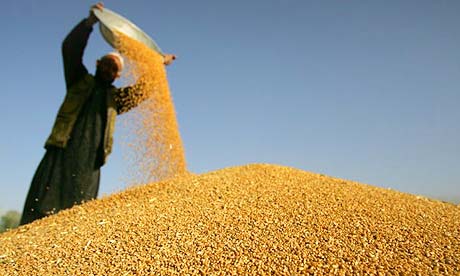
Online Portal Connects Farmers and Grain Buyers

Online Portal Connects Farmers and Grain Buyers- BORGEN
In Nairobi, Kenya, an online platform has been launched to connect farmers to grain buyers. The Kenyan based IT firm Virtual City–in partnership with the Eastern Africa Grain Council (EAGC) and the Food Trade Eastern and Southern Africa Organization–developed this platform named G-Soko.

This online platform is designed to enable small farms in East Africa to sell their produce at favorable prices. As for millers, the G-Soko system is intended to guarantee the availability of quality stocks. These stocks are standardized and proven grading which reduces the need to carry out sampling to check quality, saving time and money for both parties.

The EAGC is partnering with the Secretariat to implement the East African Community (EAC) Food Security Action Plan, which is the EAC strategy to achieve food security in the region.

The executive director of EAGC, Gerald Masila, spoke at the launch of the platform. He “disclosed that G-Soko was part of a five-year trade enhancement and promotion programme in the region. [Because] linking rural food production zones in East Africa to urban consumption centres requires a well functioning regional market and that by adhering to the system, farmers in the region will, among others, be able to access credit while waiting for prices to increase through pledging the electronic warehouse receipt with the banks and agro-dealers.”

This aspect is especially beneficial to farmers because usually, once they are ready to sell a crop, they have to accept the going price that day. But with this platform, they are able to wait until prices are favorable and still access credit through their banks. Farmers are able to get more bank for their crop.

With this platform, farmers also benefit from reduced post-harvest losses through access to professional storage, cleaning and drying. Another plus is the improved prices offered through G-Soko, since many of them rely on farm-gate prices that deliver cash at lower prices.

G-Soko is an attractive platform to farmers because the “EAC continued support in automating agricultural crops trading systems and processes to reduce commercialisation cost and all related challenges and bridge the gap between farmers, traders, and consumers for increased food security in the region.”

The G-Soko is now operational in two of the EAC partner states, Uganda and Kenya. There are arrangements underway to extend the system to Tanzania and Rwanda before the Grains Farmers Summit in early October 2015.

The platform G-Soko is changing how farmers are able to sell their crops for the better. Not only are farmers able to sell their crops for the most favorable prices, but they have access to modern facilities for cleaning and storage.

This platform is making more money for local farmers rather than the large, commercialized farms. Not only is this platform helping local farmers, but it is also ensuring food security for the region.

– Kerri Szulak

Sources: African Research and Resource Forum, IT News Africa, Standard Digital
Photo: Flickr


August 29, 2015
https://borgenproject.org/wp-content/uploads/borgen-project-logo.svg 0 0 Borgen Project https://borgenproject.org/wp-content/uploads/borgen-project-logo.svg Borgen Project2015-08-29 01:30:552020-07-01 11:32:30Online Portal Connects Farmers and Grain Buyers
Aid Effectiveness & Reform, Food Aid, Global Poverty

Changes to US Food for Peace to Increase Sustainability

Changes to Food for Peace to Increase Sustainability
Sixty years after being put into effect, the Food for Peace program faces congressional reform that will lower costs and provide sustainable support for those living in conflict-ridden countries. Currently, law requires that food aid be grown in and shipped from the U.S. – a mandate that increases costs 25-50 percent more than they would be on the current market. Advocates for reform criticize the program for its inefficiency and helping American shipping and farming businesses profit from such programs.

Shipping firms, farms and some NGOs form an “iron triangle of special interests” that have benefited from international aid and attracted criticism from politicians in both parties. Between 2004 and 2013, 88 percent of USAID funding was used to harvest and ship food- a huge cost that decreased the amount of food the organization was able to provide by 64 percent.

A system designed this way is not only inefficient in properly allocating resources, but also counterproductive in affecting any kind of change in the countries that need it most. Daniel Maxwell, professor and research director at the Feinstein International Center at Tufts University, commented, “We need to support local agricultural producers and markets, or at a minimum, not undermine them.” Reformers advocate for changing the system to implement locally grown and shipped food resources rather than those from the U.S.

Senators Corker and Coons, who are cosponsoring the reform of the bill, have estimated that such changes could expand the program’s reach by 12 million people and free up $440 million through local, sustainable production. Providing support for local growers and shippers will strengthen local economies rather than keeping them reliant on international resources, empower and employ more people, and create a more sustainable rebuilding of communities.

Eric Munoz at Oxfam America says that a program created 60 years ago is not useful or appropriate for current times. Indeed, when 60 million people per year are in need of food aid, expansion of resources and lowering costs is more greatly needed than ever. Many farmers believe they have a right to profit from food aid programs and would suffer from reforms, but experts estimate such programs amount to only 1 percent of agribusiness profits.

For policy changes that would so greatly impact those in need, lessening the profits of huge farming businesses in the U.S. seems trivial. Worrying about this profit loss is “an inappropriate way of viewing the rationale of providing emergency assistance and foreign assistance, particularly assistance that is meant to address food insecurity in complex crises like Syria or South Sudan,” says Munoz.

Corker and Coon’s reform bill will see congressional debate in September.

– Jenny Wheeler

Sources: IRIN 1, IRIN 2
Photo: Flickr


August 29, 2015
https://borgenproject.org/wp-content/uploads/borgen-project-logo.svg 0 0 Borgen Project https://borgenproject.org/wp-content/uploads/borgen-project-logo.svg Borgen Project2015-08-29 01:30:392024-05-27 09:27:17Changes to US Food for Peace to Increase Sustainability
Food & Hunger, Food Aid, Food Security, Global Poverty

Food Companies Leading the Fight Against World Hunger

Food Companies Leading in the Fight Against World Hunger - BORGEN
One out of nine people in the world go to bed hungry according to the Food and Agriculture Organization of the United Nations. The United Nations World Food Programme is dedicated to reducing global hunger by offering food aid to developing countries in need. WFP has provided food for more than 90 million people. WFP partners with and receives funding from a few well-known food companies.

Yum! brands started the World Hunger Relief campaign as the largest consumer outreach campaign on the hunger issue. It is the world’s largest restaurant company with more than 40,000 restaurants in 125 countries. It is leading in the fight against global hunger through the campaign, as well as through the mobilization of the 1.5 million employees as advocates for global hunger relief.

Yum! brands’ World Hunger Relief campaign has raised $100 million for WFP since 2007 with the help of global spokesperson Christina Aguilera. Yum! brands include Kentucky Fried Chicken, Taco Bell and Pizza Hut.

https://www.youtube.com/watch?v=GnSf2xj6URs

PepsiCo is another partner of WFP. The company is more well known for its food and beverages than for the philanthropic PepsiCo Foundation. PepsiCo Foundation has donated $3.5 million to WFP to produce a food product made of chickpeas to help treat malnutrition in Ethiopia.

Unilever partners with WFP to make people more aware of global hunger through fundraising and campaigns as well as educational plans. They have targeted their consumer base in 13 countries in their campaigns against global hunger. Unilever has also assisted WFP in identifying what are the nutritional needs of the children to better help them.

Kellogg’s, though not a partner with WFP, does important work to fight global hunger. Kellogg’s donates over $20 million per year in food products for disaster relief and hunger. The company also has an initiative called “Breakfast for Better Days.” The initiative is focused on alleviating hunger specifically in South Africa, pledging to feed 25,000 children every school day in 2015. The company will dedicate one billion servings of Kellogg’s snacks and cereal for global poverty alleviation by 2016 and has donated nearly eight million breakfasts to FoodBank South Africa already.

An increase in awareness of global hunger has also increased the number of food companies coming on board to bring global hunger relief.

– Iona Brannon

Sources: World Food Programme 1, World Food Programme 2, Hunger to Hope, Food and Agriculture Organization of the United Nations, Kellogg
Photo: Flickr


August 29, 2015
https://borgenproject.org/wp-content/uploads/borgen-project-logo.svg 0 0 Borgen Project https://borgenproject.org/wp-content/uploads/borgen-project-logo.svg Borgen Project2015-08-29 01:30:072024-12-13 18:04:43Food Companies Leading the Fight Against World Hunger
Food Security

Climate Change and Food Security in the South Pacific

Climate Change and Food Security in the South Pacific
As climate change is debated hotly by the biggest carbon emitters of the world, temperatures increase and ocean levels rise, dramatically impacting the innocent. Although almost unnoticeable on the west coast of the U.S. or the harbors of Shanghai, the very same sea could soon be swallowing acres of farmland on tiny islands across the South Pacific, thus bringing the argument of climate change and food security to the forefront.

The Marshall Islands, a large grouping of 29 atolls located in the South Pacific Ocean, lies about halfway between Hawaii and Australia. Many of the islands only rise above the sea about two meters and are increasingly vulnerable to climate change.

According to The Japan Times, president of the Marshall Islands Christopher Loeak said the Pacific is fighting for its survival and climate change has already arrived.

Recently, the president declared a state of emergency for the Marshall Islands following some of the worst flooding ever experienced in conjunction with a severe drought. A freak tide nearly destroyed Majuro, a large coral atoll of 64 islands, breaching the sea wall and flooding the airport runway. A drought left 6,000 people surviving on less than one liter of water a day.

Many other South Pacific islands are experiencing the same problems. “Microstates,” as they’re called, including the Solomon’s, Tuvalu and the Carteret Islands are experiencing rapid erosion, higher tides, storm surges and inundation of wells with seawater. Kiribati, an island nation in the central Pacific Ocean comprised of 33 atolls and reef islands, is estimated by its president, Anote Tong, to be uninhabitable within the next 30 to 60 years. Its inhabitants from smaller surrounding islands are escaping the invading seawater and migrating to the capital south of Tarawa. The state is even planning the purchase of 2000 hectares in Fiji for farming and a possible place to live.

Although climate change might not be felt yet in some places of the world and those who profit from it work so tirelessly to bury the evidence, the effects are already changing in the islands of the South Pacific, a region of the world emitting only 0.1 percent of the planet’s carbon. The islander’s way of life is being jeopardized, threatening food security and stripping away their basic needs for survival.

In a 2007 report by the Intergovernmental Panel on Climate Change, observations were discussed on temperature rises in the South Pacific. In fact, compared to earlier historical records in the twentieth century, by 2003, it had become 15 percent drier and 0.8 degrees warmer. The ocean surface had risen about 0.4 degrees, altogether contributing to increased El Niño effects and cyclone frequency and intensity.

In the Pacific, about 70 percent of the main agriculture is geographically located to take advantage of the summer rainy season. Agriculture is therefore heavily dependent on seasonal rainfall for production, but rising temperatures and recurrent droughts are wreaking havoc on food supply and costing, on some occasions, more than island countries’ gross domestic products.

Many urban populations in the Pacific are now very much dependent on cheap foreign imports for their daily sustenance. However, according to a study by the University of Copenhagen in 2007, in the Solomon Islands, the majority of rural people still live and depend on subsistence food production and fisheries. A multitude of cultivated plants such as yams, taro sweet potatoes and other crops such as bananas and watermelon are still part of daily life.

In the recent past, El Niño events have devastated the sugarcane industry and killed off livestock totaling millions of dollars. Flooding and strong winds caused by tropical storms have, in the past, affected farming, but in the years to come it’s projected to only get worse. Precipitation variations are possible up to 14 percent on both sides of normal rainfall by the end of the century, according to the IPCC

Climate associated disasters such as tropical cyclones, flash floods and droughts impose serious constraints on development in the islands, so much so that some Pacific island nations seem to be in a constant mode of recovery. Food availability and people’s accessibility to food are among the first to be affected following such disasters.

The islands in the South Pacific are now leading the world by example, pursuing renewable energy for their power needs. They are beginning to substitute costly import-dependent diesel for homegrown coconut biofuel power and outer island communities are being converted to solar power. Tokelau, a territory of New Zealand, has become the first territory to become 100 percent solar-powered. The Cook Islands and Tuvalu are aiming to be all solar powered by 2020.

Someday, possibly in the not so distant future, the world may lose its jewel of the Pacific. The white sandy beaches and the sapphire seas will disappear for good, consumed by rising ocean waters.

– Jason Zimmerman

Sources: FAO, Japan Times
Photo: Flickr

August 26, 2015
https://borgenproject.org/wp-content/uploads/borgen-project-logo.svg 0 0 Borgen Project https://borgenproject.org/wp-content/uploads/borgen-project-logo.svg Borgen Project2015-08-26 01:30:022020-04-22 17:08:39Climate Change and Food Security in the South Pacific
Food Security, Global Poverty

“Plant Doctors” Focus on Food Security

afghanistan10ahttps://borgenproject.org/plant-doctors-food-security/
When called upon to picture an agricultural hotbed, one hardly thinks of Afghanistan. However, according to USAID, 60 percent of Afghanistan’s population relies on agriculture for their livelihoods and sustenance needs.

Unfortunately, in the wake of decades-long conflict and neglect, damaged farmland and infrastructure prohibit the flourishing food trade that once characterized Afghanistan as a high-quality producer.

Agriculture accounts for 40 percent of Afghanistan’s gross domestic product; when plants die the whole nation suffers. Afghanistan is just one of many countries where farming challenges have a great deal of influence. Food insecurity is a massive global problem. Nearly 795 million people across the world are undernourished.

Low-income farmers in such countries as Kenya, Bolivia and Bangladesh make up an important part of their nations’ economies. When these farmers inevitably lose crops to disease and pests their livelihoods are jeopardized and starvation becomes a prevalent issue.

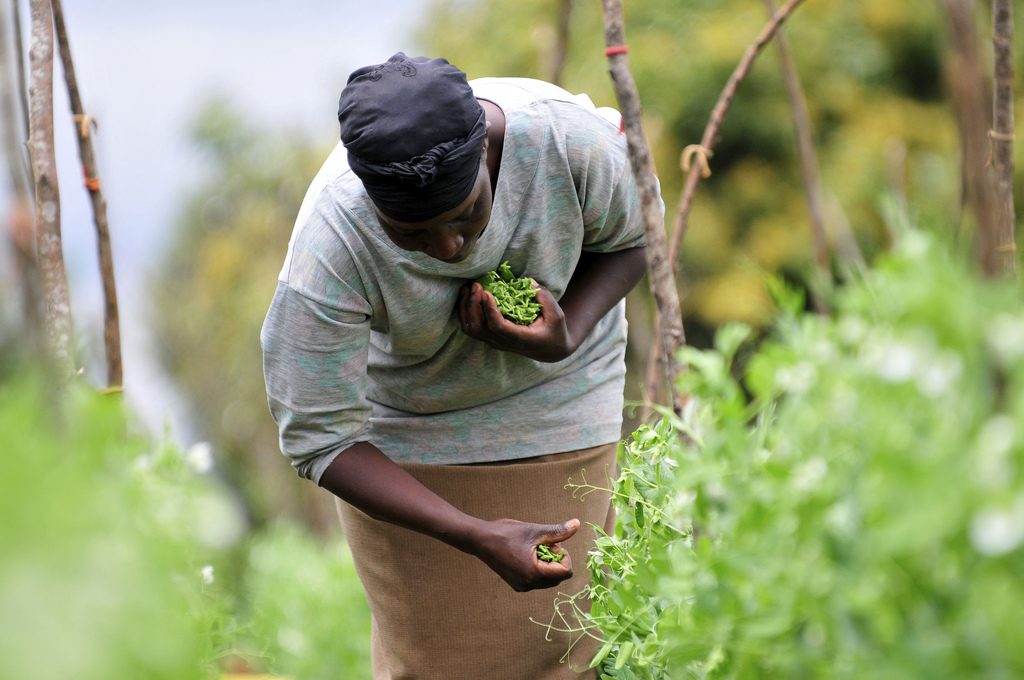
Plantwise, a program supported by international nonprofit CABI, has answered this challenge. Endeavoring to “increase food security and improve rural livelihoods by reducing crop losses,” Plantwise has made 10,000 plant health resources accessible to people in 33 countries across the developing world through their online knowledge bank and free Android app.

One of the program’s key efforts is the construction of clinics where farmers can come for diagnoses and answers to their questions on an individual basis.

Plantwise also works to build integrated plant health systems that connect the various people, suppliers and organizations involved in the agriculture process, as well as operating on national levels to help foster sustainable agricultural policies.

Another innovative aspect of the Plantwise program revolves around plant health. With some small farmers losing as much as 80 percent of their crops to disease and pest problems, the ability to heal sick plants is invaluable.

https://www.youtube.com/watch?v=Xv5hidzZe6k

By training more than 2,000 “plant doctors” capable of diagnosing and treating agricultural issues, Plantwise has fostered a growing network of sustainable plant care.

The quickly growing initiative has positively impacted 600,000 farmers with their efforts thus far. As of 2013, Plantwise has established 720 plant clinics, nearly twice the amount that existed the previous year.

The program hopes to reach millions by 2020, continuing to train plant doctors, build on its network of 168 partner organizations and working to nurture farming-friendly policies in developing nations.

Plantwise describes their vision as one of sustainability, hoping “to improve food security and rural livelihoods around the world, achieving maximum long-term benefits for the countries in which we’re present.” The initiative focuses on building from within, emphasizing partnerships with local people, organizations and governments.

Although food insecurity remains an issue, the instance of undernourishment has declined by 167 million over the past decade. The work of many such organizations and initiatives like Plantwise plays a vital role in the fight to eradicate hunger through sustainable, economically sound methods.

“I’m passionate about training the next generation of plant doctors,” stated Miriam Otipa, a native of rural Kenya and one of Plantwise’s experts. “I am doing my bit to help feed my village and my nation.”

– Emma-Claire LaSaine

Sources: Plantwise, USAID, Zambia Daily Mail, USAID, FAO
Photo: Gaurdian

August 25, 2015
https://borgenproject.org/wp-content/uploads/borgen-project-logo.svg 0 0 Borgen Project https://borgenproject.org/wp-content/uploads/borgen-project-logo.svg Borgen Project2015-08-25 02:26:492024-05-27 09:26:19“Plant Doctors” Focus on Food Security
Children, Development, Education, Food & Hunger, Global Poverty, Health, Water

Why Clean Water Matters

Why Clean Water Matters
It’s all too easy to take for granted all of the conveniences available to us as citizens of a developed country. Having access to clean water is a privilege that goes far beyond just being able to use it for drinking or cooking. It can significantly improve the lives of people in poverty for a number of reasons.

For example, access to clean water usually means a person is more likely to have food to eat. After all, 70 percent of our global water use is for irrigation and agriculture. Often, a lack of clean water means a corresponding lack of food, because communities are unable to grow their own. About 84 percent of the people who don’t have access to clean water live on subsistence agriculture, which means that they are dependent on the growth of their own food for survival.

If people have access only to dirty, contaminated water, then they are in constant danger of waterborne diseases like diarrhea, cholera, fluorosis, HIV, malaria, typhoid and parasites such as intestinal worms. All of these run rampant through unsafe water supplies.

If people are getting sick, then someone in the family has to take care of them. That leaves two people out of school or work. Two people whose education or livelihood is put on hold because there isn’t an accessible clean water source.

Oftentimes, women undertake the time-consuming act of hauling water from its source to the villages where it is needed. In Sub-Saharan Africa, 40 billion hours a year are spent hauling water. This leads to to a sort of “time poverty,” where there is less time for endeavors like receiving an education or making money.

Without access to proper sanitation, many girls drop out of school when they reach puberty. Unsafe water acts as a barrier to education for young women in particular, perpetuating the global poverty and gender inequality cycle.

When mothers fear their children are going to die of diseases, they have more children in the hopes that some of them will survive, which often leads to poor maternal health and overpopulation problems. Poor maternal health can also lead to orphaned children who are left to fend for themselves and do not have time for education because they are focused on survival.

In fact, access to clean water is something that underlays almost all of the Millennium Development Goals – eradicating extreme poverty and hunger, achieving universal primary education, promoting gender equality and empowering women, reducing child mortality, improving maternal health, combating disease and ensuring environmental sustainability. In the new set of Sustainable Development Goals, ensuring access to water and sanitation for all is a goal in itself.

Gary Evans of Living Water International put it like this: “We’re in a world where there are 900 million people barely treading water, and the water’s too low for them to reach the ladder. They don’t need a boat. They don’t need a helicopter to rescue them. They just need a little boost so they can reach the ladder. Then they can climb out on their own. Clean water provides that boost.”

So, it’s clear why clean water is important. And the best part? There really is plenty to go around. Groups like The Water Project and Living Water International are working to build sand dams, wells and devices for water collection and sanitation. Every dollar invested in water and sanitation generates about eight dollars worth of health, time and productivity.

Unsafe water and lack of water causes a lot of problems, but what this really means is that there is one simple fix that will address a multitude of global poverty issues. Clean water means a better world in terms of equality, education, health, food security and more.

– Emily Dieckman

Sources: UN 1, UN 2, UN 3, UNICEF, Water, The Water Project
Photo: Easy Drug Card

August 23, 2015
https://borgenproject.org/wp-content/uploads/borgen-project-logo.svg 0 0 Borgen Project https://borgenproject.org/wp-content/uploads/borgen-project-logo.svg Borgen Project2015-08-23 08:30:542024-06-11 02:48:12Why Clean Water Matters
Food Security, Global Poverty

What Global Warming Means for Food Scarcity


What Global Warming Means for Food Scarcity
The number of devastating effects that global warming has on the Earth is already staggering. According to a new report, “increased food scarcity” is going to make that list a little longer.

The report, commissioned by the British government and carried out by the U.K.-U.S. Taskforce on Extreme Weather and Global Food System Resilience, warns of the effects that global climate change will have on the world’s food supply.

“The chance of having a weather-related food shock is increasing, and the size of that shock is also increasing,” said Tim Benton, a population ecology professor at Leeds University. “As these events become more frequent, the imperative for doing something about it becomes even greater.”

The report analyzed the world’s most prominent “commodity crops,” those being maize, soy, wheat and rice, and how extreme weather conditions would impact their availability. Since the majority of those crops come from a small number of countries (the U.S., China and India, primarily), extreme weather could greatly impact their production.

Perhaps the most startling statistic featured in the report is that by 2040, the severity of crop failures once estimated to only occur once a century, will start happening every three decades.

“Action is urgently needed to understand risks better, to improve the resilience of the global food system to weather-related shocks and to mitigate their impact on people,” Benton continued. “Governments and businesses need to prepare people for not being able to eat certain crops or products anymore.”

– Alexander Jones

Sources: Business Insider, BBC, Science Magazine
Photo: The Telegraph

August 23, 2015
https://borgenproject.org/wp-content/uploads/borgen-project-logo.svg 0 0 Borgen Project https://borgenproject.org/wp-content/uploads/borgen-project-logo.svg Borgen Project2015-08-23 01:30:482024-12-13 18:04:48What Global Warming Means for Food Scarcity
Activism, Children, Food & Hunger, Global Poverty

Kristen Bell Helps Fight Child Hunger

kristen_bell
The childhood hunger epidemic is so severe in Liberia that one child dies of malnourishment every 12 seconds. When Todd Grinnell, Ryan Devlin and Ravi Patel visited Liberia, they were heartbroken by the poverty they encountered. Upon their return, they knew they had to take action. They created a healthy, nutritious fruit and nut bar with the “buy one, give one” mentality that has successfully provided other goods to the unfortunate across the globe.

With the purchase of this new snack, a nutritional bar by the name of “This Bar Saves Lives,” a child in need receives an identical food bar, jam-packed with all of the nutrients required to nurse them back to health. “This Bar Saves Lives” has attracted the attention of A-list celebrities like Kristen Bell. The celebrity endorsement and subsequent promotional video released by Bell has attracted mainstream attention to not only the product but also the horrible reality that is child hunger and malnutrition.

Bell is the latest investor and endorsement the company has received this year. Since its founding, Grinnell, Devlin and Patel have made a variety of appearances at highly publicized events to promote the bar, Comic-Con being one of them. They have also partnered with several companies such as Edesia Global Nutrition Solutions, Whole Foods Market, GOOD Inc., Mending Kids International, Kashi Company, The Strongheart Group and Kiss My Face.

Since 2013, 528,940 packets of bars have been sent to children in need. The co-founders of “This Bar Saves Lives” hope that by the end of this year, the company will sell one million bars, giving the helpless around the world another chance at life and nutrition.

– Alysha Biemolt

Sources: Look to the Stars, This Bar Saves Lives 1, This Bar Saves Lives 2, This Bar Saves Lives 3
Photo: CNN

August 23, 2015
https://borgenproject.org/wp-content/uploads/borgen-project-logo.svg 0 0 Borgen Project https://borgenproject.org/wp-content/uploads/borgen-project-logo.svg Borgen Project2015-08-23 01:30:392024-12-13 17:54:06Kristen Bell Helps Fight Child Hunger
Page 47 of 78«‹4546474849›»

Get Smarter

  • Global Poverty 101
  • Global Poverty… The Good News
  • Global Poverty & U.S. Jobs
  • Global Poverty and National Security
  • Innovative Solutions to Poverty
  • Global Poverty & Aid FAQ’s
Search Search

Take Action

  • Call Congress
  • Email Congress
  • Donate
  • 30 Ways to Help
  • Volunteer Ops
  • Internships
  • Courses & Certificates
  • The Podcast
Borgen Project

“The Borgen Project is an incredible nonprofit organization that is addressing poverty and hunger and working towards ending them.”

-The Huffington Post

Inside The Borgen Project

  • Contact
  • About
  • Financials
  • President
  • Board of Directors
  • Board of Advisors

International Links

  • UK Email Parliament
  • UK Donate
  • Canada Email Parliament

Get Smarter

  • Global Poverty 101
  • Global Poverty… The Good News
  • Global Poverty & U.S. Jobs
  • Global Poverty and National Security
  • Innovative Solutions to Poverty
  • Global Poverty & Aid FAQ’s

Ways to Help

  • Call Congress
  • Email Congress
  • Donate
  • 30 Ways to Help
  • Volunteer Ops
  • Internships
  • Courses & Certificates
  • The Podcast
Scroll to top Scroll to top Scroll to top