• Link to X
  • Link to Facebook
  • Link to Instagram
  • Link to TikTok
  • Link to Youtube
  • About
    • About Us
      • President
      • Board of Directors
      • Board of Advisors
      • Financials
      • Our Methodology
      • Success Tracker
      • Contact
  • Act Now
    • 30 Ways to Help
      • Email Congress
      • Call Congress
      • Volunteer
      • Courses & Certificates
      • Be a Donor
    • Internships
      • In-Office Internships
      • Remote Internships
    • Legislation
      • Politics 101
  • The Blog
  • The Podcast
  • Magazine
  • Donate
  • Click to open the search input field Click to open the search input field Search
  • Menu Menu

Archive for category: Food & Hunger

Information and stories on food.

Food & Hunger, Global Poverty

Food Program Initiatives in The Gambia

Food program initiatives in The Gambia
One of Africa’s smallest countries, The Gambia is plagued by desertification, political corruption and rampant poverty. But thanks to the contributions of numerous agencies, the government has been able to make rapid advancements, with a clear-cut, long-term plan for food program initiatives in The Gambia. Providing increased support in the agricultural sector and expanding resources will benefit both the private and public sector, leading to economic prosperity.

According to the CIA World Factbook, crop failures caused by droughts between 2011 and 2013 have increased poverty, food shortages and malnutrition. Furthermore, The Gambia has one of the highest infant mortality rates in West Africa. Another issue that impedes The Gambia’s agricultural growth is climate change, which has hindered poverty alleviation.

The United Nations Food and Agriculture Organization launched the “Improving Food Security and Nutrition in the Gambia, Through Food Fortification” project on September 26, 2017. Its purpose is to improve education about nutrition and increase micronutrients, as well as allocate funding towards the following projects:

  • Support for household incomes
  • Agricultural production
  • Food diversification
  • Treating acute malnutrition
  • Promotion of optimal care practices

Vice President Fatoumata Jallow-Tambang, who launched the project, says that these food program initiatives will pave the way for increased capabilities in the public and private sector. She claimed that such projects will increase essential micronutrients such as vitamin A, iron, zinc and folic acid among others. Increasing micronutrient deficiency control has been a core principle of food program initiatives in The Gambia. The government has taken many steps to do so, which include revising a 2006 food fortification and salt iodization regulation that was enacted to provide food fortification.

Other food program initiatives in The Gambia that have steadily increased awareness at a local level include the Great Green Wall for the Sahara and the Sahel Initiative. The operation is a four-year project funded by the European Union, the FAO and The Gambia. It aims to tackle poverty by “ending hunger, improving resilience to climate change and using a landscape approach.” Furthermore, the project targets rural farmers, a pivotal component of controlling land degradation and deforestation. The initiative also serves to empower local communities by establishing “community woodlots, community managed forests and promoting joint forest park management,” according to Regional Forestry Officer Ebou Janha.

The Gambia struggles with illiteracy, with more than half of the country unable to read or write. This new approach tackles the importance of reaching out to students in the classroom to educate them on how to properly manage natural resources and to actively become engaged in their communities. One additional component includes promoting environmental management.

Patta Kanyi, Focal Person at the Agency for the Development of Women and Children emphasized the importance of educating local communities on the proper usage of cooking stoves to reduce the effects of climate change and lessen the need for wood.

Such practices make The Gambia’s objective of eradicating poverty more attainable. The efforts being made to combat such hardships are truly remarkable. By building more robust communities through partnerships with inter-governmental organizations and the private sector, The Gambia has become a trading partner with developed countries. The attempt to involve rural farmers in forest management will be crucial for maintaining a sustainable environment. The food program initiatives in The Gambia demonstrate the objectives this country has in eradicating poverty for good.

– Alexandre Dumouza

Photo: Flickr

November 27, 2017
https://borgenproject.org/wp-content/uploads/borgen-project-logo.svg 0 0 Borgen Project https://borgenproject.org/wp-content/uploads/borgen-project-logo.svg Borgen Project2017-11-27 01:30:322024-06-07 05:07:50Food Program Initiatives in The Gambia
Food & Hunger, Global Poverty, Health

Lucky Iron Fish: Tackling Malnutrition in Impoverished Countries

Malnutrition in Impoverished CountriesAnemia is the most common nutritional problem in the world. There are over two billion people that are anemic. Tackling malnutrition in impoverished countries can be difficult, but the creators of the Lucky Iron Fish hope to alleviate a worldwide issue.

When the creator of the Lucky Iron Fish, Christopher Charles went to Cambodia, he found that there were many people suffering from iron deficiency and anemia. About half of the women and children in the entire country was not getting the proper amount of iron in their diets. That caused many people to be tired, suffer constant headaches, and even made them unable to work at times.

When Dr. Charles visited, there were no real solutions to this problem. Iron supplements were not widely available and even if people could get their hands on them, the iron supplements were too expensive. Cambodians also did not want to take the supplements due to various side effects.

Dr. Charles wanted to come up with a solution to all of these problems. The Lucky Iron Fish is the solution Cambodians were looking for.

The Lucky Iron Fish is a small iron fish that can be used to infuse foods with a healthy amount of iron. Iron supplements tend to have too much iron in them which can be detrimental to your health. The Lucky Iron Fish infuses meals with about 75 percent of the daily recommended iron so people are not getting too much iron in their meals, so there are no ill side effects.

Another problem with iron supplements is that people usually just do not like taking them. The Lucky Iron Fish is made to be cooked in food that people were going to eat anyways. When using the fish, they just need to boil it for 10 minutes along with their food and the meal is now iron-rich. Not only that, but the iron is tasteless so it does not affect the meals.

Cost is a major factor when dealing with malnutrition in impoverished countries. High cost can end up making the product unavailable to those who need it most.

The Lucky Iron Fish costs about 30 USD. So it is not too expensive so it can be bought by many people. Not only that, but the creators of the Iron Fish have a buy a fish give a fish program. Anyone who buys a fish will also end up giving a fish to a family who needs it.

30 USD can end up looking expensive for some because people think they have to replace it every couple of months. A single Lucky Iron Fish can end up being used for five years before needing replacing.

Tackling malnutrition in impoverished countries can be a challenge. The cost and effectiveness of a product can really reduce resources for impoverished countries to use. The Lucky Iron Fish tackles all of these issues to make sure people are getting the best product to tackle anemia and iron deficiency.

The original target for the Lucky Iron Fish was for Cambodians. Now anyone can buy them and the creators are hoping to send one million fishes worldwide by 2020.

– Daniel Borjas

Photo: Google

November 17, 2017
https://borgenproject.org/wp-content/uploads/borgen-project-logo.svg 0 0 Borgen Project https://borgenproject.org/wp-content/uploads/borgen-project-logo.svg Borgen Project2017-11-17 01:30:522019-11-21 01:14:45Lucky Iron Fish: Tackling Malnutrition in Impoverished Countries
Food & Hunger, Global Poverty, Health

Cassava Root Can Pull Regions Out Of Poverty

Cassava RootThe cassava root is such a versatile ingredient in the fight against poverty that some scientists are calling it a ‘miracle crop’.

It’s likely that even you have come across cassava, as it makes up the small balls in bubble tea and is the main ingredient in tapioca pudding.

While it lends a hand to some dishes in developed countries, the root is a vital component to diets in the developing world. Cassava is one of the leading food and feed plants of the world, ranking fourth among staple crops with a global production of about 160 million tons per year. The majority of cassava is grown in three regions: West Africa and the adjoining Congo basin, tropical South America and South and Southeast Asia.

The miracle crop was introduced into Africa in the 16th century by Portuguese traders from Brazil. Initially, it was adopted as a famine-reserve crop because of its nutritional value. The leaves can be prepared in a similar fashion to spinach and contain high levels of protein and vitamins A, B and C. Cassava root can be prepared in countless ways, but should not be consumed raw. They are often boiled and sliced, but they can also be dried and beaten into flour.

It is among the highest calorie value foods, containing 160 calories per 100g root. It provides more protein than sources like yams or potatoes and it is also a leading source of essential minerals like zinc, magnesium, copper, iron, manganese and potassium. Potassium is an important component of a healthy diet, helping regulate heart rate and blood pressure.

In addition to its bountiful nutritious value, the crop is perhaps one of the world’s easiest to grow. Cassava root can be grown well in poor soil with a relatively low fertility and textures ranging from sands to clay. It is drought resistant and loses its leaves in order to preserve moisture in times of limited rainfall. The plant produces new leaves when rains resume. Additionally, cassava can be grown in extreme rainfall. For these reasons, the crop requires little labor and attention and the fruits of one harvest can be consumed 6 months to 3 years after planting.

Lastly, cassava has the potential to solve more than hunger. It is possible to transform cassava from a low-yielding famine-reserve crop to a high-yielding cash crop in order to raise income and draw poor regions out of poverty. The domestic market for cassava products continues to grow and export demands are increasing.

Cassava production presents enormous opportunities for solving domestic famine and malnutrition. It could also promote economic stability and reduce poverty through trade between areas with a food surplus and a food deficit.

– Jamie Enright

Photo: Flickr


November 16, 2017
https://borgenproject.org/wp-content/uploads/borgen-project-logo.svg 0 0 Borgen Project https://borgenproject.org/wp-content/uploads/borgen-project-logo.svg Borgen Project2017-11-16 01:30:252024-12-13 17:58:31Cassava Root Can Pull Regions Out Of Poverty
Extreme Poverty, Food & Hunger, Global Poverty, Health

Top 10 Facts About Poverty in Africa

Poverty in Africa Facts Statistics Suffering Poverty Line
How bad is poverty in Africa? The situation is improving, but Africa remains the poorest continent on Earth. But what many people may not know are the effects of poverty in Africa—including hunger, disease and a lack of basic necessities.


Leading Facts About Poverty in Africa


  1. Seventy-five percent of the world’s poorest countries are located in Africa, including Zimbabwe, Liberia and Ethiopia. The Central African Republic ranked the poorest in the world with a GDP per capita of $656 in 2016.
  1. According to Gallup World, in 2013, the 10 countries with the highest proportion of residents living in extreme poverty were all in sub-Saharan Africa. Extreme poverty is defined as living on $1.25 or less a day. In 2010, 414 million people were living in extreme poverty across sub-Saharan Africa. According to the World Bank, those living on $1.25 a day accounted for 48.5 percent of the population in that region in 2010.
  1. Approximately one in three people living in sub-Saharan Africa are undernourished. The Food and Agriculture Organization (FAO) of the United Nations estimated that 239 million people (around 30 percent of the population) in sub-Saharan Africa were hungry in 2010. This is the highest percentage of any region in the world. In addition, the U.N. Millennium Project reported that over 40 percent of all Africans are unable to regularly obtain sufficient food.
  1. In sub-Saharan Africa, 589 million people live without electricity. As a result, a staggering 80 percent of the population relies on biomass products such as wood, charcoal and dung in order to cook.
  1. Of the 738 million people globally who lack access to clean water, 37 percent are living in sub-Saharan Africa. Poverty in Africa results in more than 500 million people suffering from waterborne diseases. According to the U.N. Millennium Project, more than 50 percent of Africans have a water-related illness like cholera.
  1. Every year, sub-Saharan Africa misses out on about $30 billion as productivity is compromised by water and sanitation problems. This amount accounts for approximately five percent of the region’s gross domestic product (GDP), exceeding the total amount of foreign aid sent to sub-Saharan Africa in 2003.
  1. Due to continuing violence, conflict and widespread human rights abuses, the United Nations High Commissioner for Refugees (UNHCR) reports that 18 million people are of concern to the agency, including stateless people and returnees.
  1. Fewer than 20 percent of African women have access to education. Uneducated African women are twice as likely to contract AIDS and 50 percent less likely to immunize their children. Meanwhile, the children of African women with at least five years of schooling have a 40 percent higher chance of survival.
  1. Women in sub-Saharan Africa are more than 230 times more likely to die during childbirth or pregnancy than women in North America. Approximately one in 16 women living in sub-Saharan African will die during childbirth or pregnancy; only one in 4,000 women in North America will.
  1. More than one million people, mostly children under the age of five, die every year from malaria. Malaria deaths in Africa alone account for 90 percent of all malaria deaths worldwide. Eighty percent of these victims are African children. The U.N. Millennium Project has calculated that a child in Africa dies from malaria every 30 seconds, or about 3,000 each day.

– Jordanna Packtor

Sources: Global Issues, World Hunger, World Bank, World Population Review, The Richest, Johns Hopkins Malaria Research Institute, UNHCR, The Water Project, Gallup, Global Finance


1. Donate
2. Email Congress
3. Volunteer


November 7, 2017
https://borgenproject.org/wp-content/uploads/borgen-project-logo.svg 0 0 Borgen Project https://borgenproject.org/wp-content/uploads/borgen-project-logo.svg Borgen Project2017-11-07 04:00:192024-06-04 01:07:57Top 10 Facts About Poverty in Africa
Food & Hunger, Food Security, Global Poverty, Hunger, Water

Protect Drought Vital to End Hunger in Uganda

Hunger in UgandaLocated between South Sudan and the Democratic Republic of Congo, while also struggling against the Lord’s Resistance Army, hunger in Uganda is a major issue that the country, as well as 800,000 refugees, are facing every day. Uganda as a whole produces more food than it consumes, but because of the prevalence of poverty in the country, many of its 39 million people cannot afford to buy all of the food they need.

Only 4 percent of households in Uganda have had food security over the past six years. This is related to the food shortages and destitute diets that have also come from dealing with climate change, urbanization, the inconsistencies of Ugandan policies and poor public financing.

Hunger in Uganda has also been caused by the lack of water. A growing population has led to stresses on water and sanitation services. 24 million people in rural areas do not have access to water, which has increased the incidence of water-related diseases such as diarrhea and dysentery. Each week, 30,000 deaths are caused by unsafe water.

The lack of food has led to malnutrition among children, including refugees. It has been estimated that 33 percent of children under five are enduring chronic undernourishment and stunted growth. Only one in three children actually have food to eat during the day, while stunting affects 29 percent of children and rises to 40 percent in certain areas and among refugees.

Organizations like Action Against Hunger have made efforts to help Uganda. They focus on nutrition, health and care practices, and have helped 148,420 people. They have been able to reach some of the most vulnerable children in refugee settlements and treat life-threatening malnutrition. Action Against Hunger has helped strengthen the local capacity while training locals to be able to provide treatment. They have plans to help prevent malnutrition as well as to gather more information on malnutrition in order to prevent it in the future.

The World Food Programme also helps Uganda by providing cash and food assistance to people in need. They have also set up the “cash/food-for-work” program to ensure there is food during the lean seasons. This program helps communities build tree farms, orchards, irrigation systems, water ponds and dams to help them better endure droughts.

While the poverty rate in Uganda has declined from 31 to 19.7 percent, the fact that the population is still growing means that the number of poor people has not decreased. To combat this, the work the aforementioned groups are doing is vital to help Ugandans become self-sufficient in growing food and end hunger in Uganda.

– Chavez Spicer

Photo: Flickr

November 5, 2017
https://borgenproject.org/wp-content/uploads/borgen-project-logo.svg 0 0 Kim Thelwell https://borgenproject.org/wp-content/uploads/borgen-project-logo.svg Kim Thelwell2017-11-05 07:30:342024-05-29 22:27:40Protect Drought Vital to End Hunger in Uganda
Food Security

US Helps Fight Food Insecurity in the Central African Republic

Food Insecurity in the Central African RepublicOn July 19, 2017, the United Nations World Food Programme announced that it would donate $11 million, which was contributed by the United States government, in order to help feed approximately 500,000 people in the Central African Republic. The country has experienced many hunger-related problems which makes this donation a positive first step to begin combatting food insecurity in the Central African Republic.
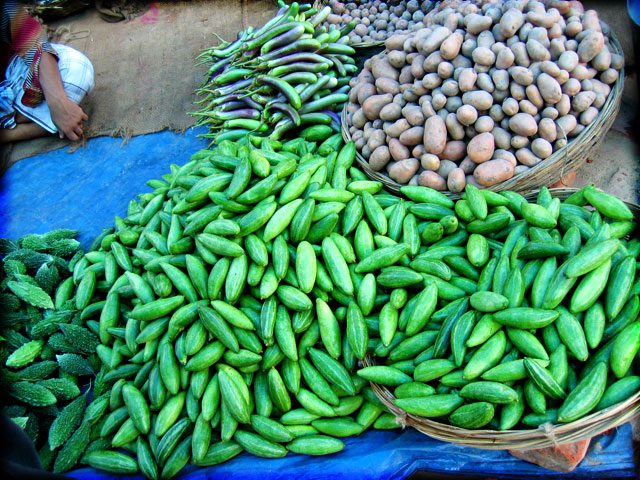
It was reported that the 500,000 people being assisted by the World Food Programme will include displaced people, refugees and students. These groups are considered to be the most disadvantaged groups in the country.

The donation will partly help fund meals in schools in order to help students achieve their educational goals more efficiently and effectively. The relationship between academic success and hunger has been widely studied, and it is often reported that students tend to perform worse in school when they are hungry.

For instance, according to the Global Citizen, it is important that students eat healthy meals in order to succeed, because the brain needs energy to understand information and solve problems. Thus, the World Food Programme’s donation to the Central African Republic will help students focus better on their studies in order to learn the skills that are necessary to thrive as adults.

Furthermore, the Central African Republic has experienced a lot of political instability throughout its history. According to the World Food Programme, “the Central African Republic has the second-to-lowest level of human development in the world.” Many of the people that have been displaced throughout the country have been affected by the violence that has been incited by various rebel groups. Furthermore, there are heightened religious tensions between such groups, which has caused approximately 600,000 people to be displaced.

However, the government of the United States is making an important effort to assist the most disadvantaged groups through the World Food Programme so that food insecurity in the Central African Republic will be addressed and solved. Then, perhaps, other issues can be solved, too.

– Emily Santora

Photo: Flickr

November 4, 2017
https://borgenproject.org/wp-content/uploads/borgen-project-logo.svg 0 0 Borgen Project https://borgenproject.org/wp-content/uploads/borgen-project-logo.svg Borgen Project2017-11-04 01:30:392019-12-29 17:57:54US Helps Fight Food Insecurity in the Central African Republic
Food & Hunger, Food Security, Global Poverty

Pumpkins as a Solution to Poverty in Bangladesh and Uganda

Pumpkins

Every year, the citizens of Bangladesh have to contend with monsoon season, a cool, rainy period that usually lasts from June until October. Most parts of the country get at least 2000 millimeters of rain per year, and 80 percent of that falls during monsoon season. Northeastern Bangladesh is typically hit hardest, sometimes receiving over 4000 millimeters per year.

The heavy rains bring another problem: flooding. When rivers flood, they destroy both crops and nutrient-rich topsoil. As flood waters recede, they often leave behind large quantities of sand and silt, which reduces the availability of arable land.

The United States Agency for International Development (USAID) blames this problem in part for Bangladesh’s malnutrition epidemic. According to USAID, 25 percent of Bangladeshis remain food insecure, and women and children are affected most. Of children under five, 16 percent are acutely malnourished and 41 percent have stunted growth.

But one organization believes it has found a solution. Practical Action, an international NGO that uses technology to alleviate poverty in developing countries, has spent several years experimenting with various “sandbar cropping” techniques in Bangladesh. Their solution? Pumpkins.

Practical Action’s tried-and-true technique for farming pumpkins in the sand is to dig a pit in the sand and fill it with compost and a dozen pumpkin seeds. The pumpkins can grow and be harvested before monsoon season rolls around again.

Pumpkins provide a variety of health and logistical benefits. They can store for a year, providing a stable, reliable source of food. They are also a good source of Vitamin A, a nutrient often lacking in Bangladeshi diets. And in a nation where rivers often change course during monsoons and farmers thus lose their land, sandbar cropping provides more security.

This is why Practical Action started Pumpkins Against Poverty, a project to train 50,000 Bangladeshis with no land of their own to grow up to 600 pumpkins a year. Participants can use the extra income generated by selling the crop to buy livestock or send their children to school. The project will last until March 2018 and has the potential to be replicated nationwide.

Bangladesh is far from the only country to realize the value in farming pumpkins as a solution to poverty. Uganda has also embraced the crop as a profitable, nutritious foodstuff. Pumpkin varieties in Uganda are numerous and include Sweet Cream, Bala, Dulu, Onziga, Sunfish, Anderina and Sugar Pie, among others.

Fatuma Namatosi, founder of Ugandan agribusiness firm Byeffe Foods Company Ltd., decided to center her business on pumpkins, citing them as her favorite crop. The company makes pumpkin porridge, which is popular among children and gives them a vital nutrition boost. Byeffe also helps teach young Ugandans agricultural entrepreneurial skills and creates jobs in the field that employ thousands of young people.

Namatosi founded Byeffe in 2015. Since then, she says, “I’ve provided more accessible and nutritious food options to communities across Uganda, created a variety of agricultural jobs that generate income for families, and empowered more people like me, especially young women, to create their own path in the agriculture industry.” All that progress comes down to pumpkins.

– Chuck Hasenauer

Photo: Flickr

November 3, 2017
https://borgenproject.org/wp-content/uploads/borgen-project-logo.svg 0 0 Borgen Project https://borgenproject.org/wp-content/uploads/borgen-project-logo.svg Borgen Project2017-11-03 07:30:382024-05-29 22:29:00Pumpkins as a Solution to Poverty in Bangladesh and Uganda
Food & Hunger, Global Poverty

Food from Electricity as a High-Tech Solution to Poverty

High-Tech Solution to PovertyElectric-powered food: it sounds too good to be true. And for now, it probably is. But, according to Business Insider, Finnish scientists with the Food From Electricity project earlier this year synthesized a nutrient-rich protein using only water, electricity, carbon dioxide and microbes. The high-tech solution to poverty is reportedly nutritious enough to serve as a meal, being 50 percent (or more) protein and 25 percent carbohydrates. It is a promising step, but the process must be much more efficient before it can be adopted on a grand scale.

This research is the result of a collaboration between the VTT Technical Research Centre of Finland and Lappeenranta University of Technology (LUT). VTT scientist Juha-Pekka Pitkänen has affirmed that, in practice, “all the raw materials are available from the air. In the future, the technology can be transported to, for instance, deserts and other areas facing famine.” As this method does not require a location with the appropriate temperatures or soil type for agriculture, desert conditions will have no effect on its viability.

Business Insider theorizes two possible ways the technology might be used: to provide food for starving people in areas inhospitable to traditional agriculture and to reduce the demand for food livestock and the crops necessary to sustain it.

The second manner of use would bring down global emissions of greenhouse gases, a large portion of which the livestock industry is directly responsible for. Studies show that poorer countries are most vulnerable to the effects of climate change, not least because they lack the financial means to combat those effects. Poorer nations are disproportionately in low-lying areas vulnerable to sea level rises. The nation of Kiribati, spread out over many island reefs and atolls in the Pacific, is a good example of a place already wrestling with less fertile soil and frequent flooding.

As a high-tech solution to poverty, food from electricity has a long way to go. LUT reports that producing one gram of protein in this manner currently takes about two weeks. As researchers model and adjust the process to allow the microbes to grow better, the hope is that the total time required will be reduced. At the same time, researchers want to produce larger quantities of the protein so as to pilot a commercialization effort and eventually develop the process into a compact product for mass production and distribution.

Aside from addressing general poverty, food from electricity has the rare potential to address climate change from both sides of the equation, tackling it at its source while mitigating its impoverishing effects. It will be interesting to see how this technology develops in the future.

– Chuck Hasenauer

Photo: Google

November 1, 2017
https://borgenproject.org/wp-content/uploads/borgen-project-logo.svg 0 0 Borgen Project https://borgenproject.org/wp-content/uploads/borgen-project-logo.svg Borgen Project2017-11-01 07:30:002019-12-29 18:26:50Food from Electricity as a High-Tech Solution to Poverty
Economy, Food Security, Global Poverty

African Development Bank Group’s Global Strategies

African Development Bank Group's Global StrategiesA large part of poverty strategies is implementing some kind of spur in economic growth. This kick-start can be a gateway to social and economic reform in some of the poorest countries in the world, eventually leading to self-sustainability. The African Development Bank Group has made it their mission to place poverty reduction back into the hands of Africans and to create a stimulus that can enable the extremely poor in reducing their poverty scores.

The African Development Bank Group was born out of three different economic groups in Africa. It has set a plan that began in 2013, targeted to reach major benchmarks by 2022. The group has recognized that Africa has begun a transformative journey and progressed greatly over the last decade, yet this progress remains markedly uneven in some areas of the continent. This particular organization relies on a few major objectives to help lift regional member countries out of poverty, while staying congruent with ideals and values. The group first aids by mobilizing and allocating a country’s resources, then provides advice and guidance on technical aspects for development efforts. The African Development Bank Group has also laid out 17 sustainable development goals in order to achieve its mission. These goals include food security measures, sanitation, healthcare, sustainable energy use and procurement, social equality across gender and age gaps, economic growth and stability and ecological preservation plans.

The holistic approach to poverty reduction through economic growth and sustainability is what sets apart the African Development Bank Group. While taking advantage of models such as the World Bank and Multilateral Development Banks, The African Development Bank Group is able to remain primarily domestically-reliant and position itself in such a way as to gain more traction as the 2022 goal nears. Balance sheet optimizations have been a key focus in doing so, as projects continue to be carried out in both the private and public sectors through multilateral funds involving developed countries. The group’s procurement procedures – unlike other bank methods – involve strict standards. These include investments in member countries whose approval processes ensure that procurements are in line with the values and mission of The African Development Bank Group.

– Casey Hess

Photo: Flickr

October 29, 2017
https://borgenproject.org/wp-content/uploads/borgen-project-logo.svg 0 0 Kim Thelwell https://borgenproject.org/wp-content/uploads/borgen-project-logo.svg Kim Thelwell2017-10-29 01:30:442019-12-31 13:03:54African Development Bank Group’s Global Strategies
Children, Food Security, Global Poverty, Hunger, Women

Hunger in Malaysia on the Decline

Hunger in MalaysiaMalaysia has shown remarkable economic progress over the past several decades, with poverty falling from 49.3 percent in 1970 to 23 percent in 1989 and 1.7 percent in 2012. One of the key aspects of the New Economic Policy adopted by Malaysia was creating a “Pro-Poor” policy. According to the World Bank, “the NEP contributed to poverty reduction and helped provide opportunities to poor households.”

However, Malaysia’s Poverty Line Income differs from the standard $1 USD per day (purchasing power parity) poverty line. When converting to international standards, it results in Malaysia having a higher poverty rate.

There has never been a problem of chronic hunger in Malaysia. Many nutrition programs have been incorporated into the rural development programs and have proved successful. According to the World Health Organization, consumption of fewer than 1,960 calories a day is a mark of food poverty. A great indicator of successful eradication of hunger in Malaysia lies in the fact that its daily per capita intake of calories has been consistently above the standard mark. The average was 2,969 in 1999.

The government introduced the Applied Food and Nutrition Programme in 1972 to improve nutrition and alleviate hunger in Malaysia. It aimed to increase the production of nutritious foods and promote supplementary feeding of pregnant and lactating mothers as well as infants and school-going children.

The Nutrition Rehabilitation Programme started in 1989, focusing on malnourished children. Food baskets containing nutritional supplements are distributed to such children on a monthly basis.

The results have been very positive. Only 1 percent of Malaysia’s children under the age of five are severely underweight, while the proportion of moderate underweight malnutrition has declined from 25 percent in the early 1990s to 12 percent in 2001.

Malaysia has overcome poverty through an inclusive approach to growth and equity. But there are still vulnerable groups, like single female-headed households and the elderly. Also, many Orang Asli still face extreme poverty. To move forward, a new consensus has to be built around a poverty line that is more balanced in line with international standards, as was suggested by the UNDP.

– Tripti Sinha

Photo: Flickr

October 27, 2017
https://borgenproject.org/wp-content/uploads/borgen-project-logo.svg 0 0 Kim Thelwell https://borgenproject.org/wp-content/uploads/borgen-project-logo.svg Kim Thelwell2017-10-27 07:30:482024-06-05 02:36:40Hunger in Malaysia on the Decline
Page 33 of 78«‹3132333435›»

Get Smarter

  • Global Poverty 101
  • Global Poverty… The Good News
  • Global Poverty & U.S. Jobs
  • Global Poverty and National Security
  • Innovative Solutions to Poverty
  • Global Poverty & Aid FAQ’s
Search Search

Take Action

  • Call Congress
  • Email Congress
  • Donate
  • 30 Ways to Help
  • Volunteer Ops
  • Internships
  • Courses & Certificates
  • The Podcast
Borgen Project

“The Borgen Project is an incredible nonprofit organization that is addressing poverty and hunger and working towards ending them.”

-The Huffington Post

Inside The Borgen Project

  • Contact
  • About
  • Financials
  • President
  • Board of Directors
  • Board of Advisors

International Links

  • UK Email Parliament
  • UK Donate
  • Canada Email Parliament

Get Smarter

  • Global Poverty 101
  • Global Poverty… The Good News
  • Global Poverty & U.S. Jobs
  • Global Poverty and National Security
  • Innovative Solutions to Poverty
  • Global Poverty & Aid FAQ’s

Ways to Help

  • Call Congress
  • Email Congress
  • Donate
  • 30 Ways to Help
  • Volunteer Ops
  • Internships
  • Courses & Certificates
  • The Podcast
Scroll to top Scroll to top Scroll to top