• Link to X
  • Link to Facebook
  • Link to Instagram
  • Link to TikTok
  • Link to Youtube
  • About
    • About Us
      • President
      • Board of Directors
      • Board of Advisors
      • Financials
      • Our Methodology
      • Success Tracker
      • Contact
  • Act Now
    • 30 Ways to Help
      • Email Congress
      • Call Congress
      • Volunteer
      • Courses & Certificates
      • Be a Donor
    • Internships
      • In-Office Internships
      • Remote Internships
    • Legislation
      • Politics 101
  • The Blog
  • The Podcast
  • Magazine
  • Donate
  • Click to open the search input field Click to open the search input field Search
  • Menu Menu

Archive for category: Food & Hunger

Information and stories on food.

Food Security, Global Poverty, Hunger

Free School Meals Alleviating Hunger in Guam

Hunger in GuamGuam is a small island and a U.S. territory located southeast of Japan with a small population of about 163,000 people. Because of the small population, hunger in Guam has a much higher impact. Thankfully, things are looking up for Guam as rising employment rates and school programs are helping the hunger situation in Guam.
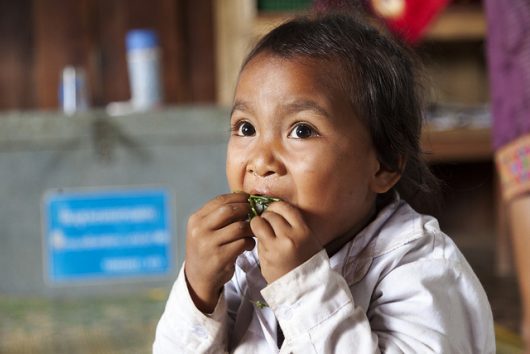
One of the more impactful programs in Guam that is fighting the hunger situation is that all 26 elementary schools in Guam serve meals for free. This free meal plan is provided through the federally funded Community Eligibility Provision grant that is provided by the U.S. Department of Agriculture.

This program feeds elementary students so they are focused and ready to participate in classes by giving them the nutrition they need. Some middle and high schools are also participating in the free meal program. The First Lady of Guam, Christine Calvo, wants to stamp out child hunger in Guam by expanding this program to all schools.

With unemployment, food insecurity becomes an issue. Food insecurity is when people are without reliable access to affordable or nutritious food. Unfortunately, people need to spend money to eat, and if people are unemployed, they cannot do so.

However, Guam has decreased its unemployment rate quite drastically. From June 2015 to June 2016, the unemployment rate in Guam dropped from 8.7 percent to 3.9 percent, a 55 percent decrease in unemployment. Because of this decrease, food insecurity has become less of an issue and more people know where their next meal is coming from.

Although hunger in Guam used to be a major issue, solutions are being implemented to help those in the country. Implementing free meal programs in schools and decreasing unemployment are important steps to alleviating hunger in Guam. If the free meal program expands to all schools and the unemployment rate continues to drop, hunger could become a thing of the past for the people of Guam.

– Daniel Borjas

Photo: Flickr

October 26, 2017
https://borgenproject.org/wp-content/uploads/borgen-project-logo.svg 0 0 Kim Thelwell https://borgenproject.org/wp-content/uploads/borgen-project-logo.svg Kim Thelwell2017-10-26 07:30:102024-05-28 00:02:09Free School Meals Alleviating Hunger in Guam
Food & Hunger, Global Poverty, Hunger

Hunger in Guadeloupe Needs Improvement

Hunger in GuadeloupeGuadeloupe is an island and a French overseas region in the Lesser Antilles of the Caribbean. Its population is around 395,000.

Current Statistics

  • Poverty rate – The worldwide economic crisis has caused a sharp increase in unemployment, currently at around 28.7%. The surge in unemployment has led to higher poverty rates, with statistics showing that 34.7% of the population is living below the poverty line. This has directly contributed to hunger and food insecurity, threatening the population’s well-being.
  • Malnourishment –The combination of longer life expectancy and lower fertility rates in Guadeloupe has caused a decrease in population growth and increased dependency ratio, which currently stands at “62.5 passive people (under 15 and over 65) for every 100 working-age people”. This means fewer working-age individuals are available to support the dependent population. The demographic shift has led to increased food insecurity and higher poverty rates. Consequently, hunger is rising, particularly among older adults who are especially vulnerable. As a result, 20% of older adults are malnourished, compared to only 5% of the general population. 

Impact of COVID-19

  • Agriculture – Guadeloupe derives 50% of its export revenue from crop products,  but it still relies on France for a portion of its food supply. The COVID-19 pandemic significantly affected the country’s agricultural systems, leading to various consequences. Reduced demand during lockdowns and a labor shortage resulted in declining crop production and reduced income for farmers and those associated with food businesses. 
  • Eating Habits – The COVID-19 pandemic has not only impacted the economy but has also led to changes in people’s eating habits. Lockdown measures caused individuals to stock up on non-perishable food items, resulting in a less varied diet and an increased susceptibility to health issues like obesity, diabetes and cardiovascular diseases. Additionally, due to rising poverty levels, people have less purchasing power, which prompts them to opt for cheaper but less healthy food choices. Studies have shown a link between low income and obesity. According to the scientific journal Diabetes and Metabolism, obesity rates in the country are high, ranging from 17.9 to 33.1% in different parts of the country.

Good News

Despite facing numerous challenges, there is promising news for the agricultural sector in Guadeloupe. Farmers in the region have responded to these challenges by broadening their crop range and prioritizing greater self-sufficiency in resources, labor and marketing. These adaptations indicate a transition towards more sustainable and eco-friendly farming practices. 

Final Thoughts

The current situation in Guadeloupe is alarming due to high poverty rates, malnourishment among older adults and increased obesity among the population. Resolving these issues will require a comprehensive strategy that includes economic assistance, reforms in the agricultural sector, and the implementation of public health programs. Such steps will help reduce unemployment and poverty and ensure access to nutritious food for all residents of Guadeloupe.

– Scott Kesselring and Maria Waleed

Photo: Flickr
Updated: October 18, 2024

October 26, 2017
https://borgenproject.org/wp-content/uploads/borgen-project-logo.svg 0 0 Kim Thelwell https://borgenproject.org/wp-content/uploads/borgen-project-logo.svg Kim Thelwell2017-10-26 01:30:082024-10-18 05:58:02Hunger in Guadeloupe Needs Improvement
Food & Hunger, Global Poverty

The Importance of Food-Based Programs for the World’s Poor

Food-Based ProgramsOn September 28, 2017, the World Bank published its report on what they named the “1.5 billion people question.” 1.5 billion people around the world receive help via food and voucher programs. The study examines how important food-based programs are for the world’s poor and offers insight into the effectiveness of food-based programs versus cash-based programs.

The 1.5 billion people question asks “how voucher programs, despite theory and evidence generally favoring cash, remain relevant, have evolved and, in most circumstances, have improved over time”.

Food-based programs are a method used to subsidize poverty by funding, in part, certain nutritional expenses. Each country that implements food-based programs in their policies does so by using one or many methods, such as supplementary feeding programs, food for work programs and food stamp programs. These programs fall under two broad categories that either enhance the food supply or influence the demand.

Programs that enhance the food supply are primarily applied to the agriculture and farming industry by either influencing supply chain costs or incentivizing production. Programs that influence demand are known as “food-oriented social assistance” (FOSA). In the United States, these programs take the form of food vouchers, the Women, Infants and Children Program and the school lunch program.

The World Bank report analyzes how countries around the world have historically implemented FOSA as empirical evidence of the importance of food-based programs. It specifically looks at case studies of the United States, Mexico, Indonesia, India, Egypt and Sri Lanka. These countries represent key FOSA programs that have made significant efforts to enhance the quality of life for the participating households and have benefited nearly one billion people collectively.

While these countries are primarily high or middle-income, their studies can be applied to low-income countries as well. Food is about 61 percent of costs for the poor and represents a large stressor for households who are struggling to afford these expenses. FOSA programs such as food distribution programs and food subsidies influence more of the population than unconditional cash transfers (UCF). “Based on administrative data from programs in 108 countries, food and vouchers programs cover 20.4 percent of low and middle-income populations, 13 percent more than UCFs.” Although cash-based programs may be preferred, when food-based programs are enacted using the right specifications and safeguarding, many can benefit. When contemplating humanitarian assistance, large-scale international movements should consider food-based programs as a serious contender.

UCFs generally offer more freedom of choice compared to food or voucher programs that may only apply to certain foods or brands. On the other hand, governments lean towards food and voucher programs because they can reflect the interests of the country as a whole and protect purchasing power at vulnerable economic moments. Most large-scale food programs intertwine multiple sectors of the government, representing multiple industries such as agriculture and food retail. The implementation of food-based programs, therefore, relies on the cooperation of multiple political parties and an argumentative benefit to multiple economic sectors.

The link between poverty and food security has encouraged many countries to focus on developing social protection programs aimed at poverty reduction. By stabilizing the prices of food, governments have found ways to maintain a low cost of living and encourage international developments. Advancements in technology also promote new methods of poverty reduction and social assistance programs. In Indonesia, for example, the “social protection card allows access not only to the food subsidy but also to their cash-based and education-related programs.”

Food is a necessary commodity in daily life. Its relevance to health, economic and social indicators elevates the political significance of food-assistance programs. The six countries in this report have commonly overcome leaking or ineffective FOSA programs by maintaining a flexible dialogue. Technological advancements have reduced the costs of redeeming vouchers and transferring cash, and they have also allowed governments to implement and manage new programs with ease. In analyzing the successes and failures of specific programs, this report exemplifies the benefit of policy adjustability in determining the best solution to augment food security.

– Eliza Gresh

Photo: Flickr

October 25, 2017
https://borgenproject.org/wp-content/uploads/borgen-project-logo.svg 0 0 Borgen Project https://borgenproject.org/wp-content/uploads/borgen-project-logo.svg Borgen Project2017-10-25 01:30:162020-04-03 13:40:02The Importance of Food-Based Programs for the World’s Poor
Food & Hunger, Global Poverty

Dabbawalas – Feeding the Poor of Mumbai

Feeding the Poor of Mumbai

Dabbawala, the legendary lunch delivery system in Mumbai, India is known worldwide for its reliability. They have delivered lunch in dabbas (lunch boxes) prepared in customers’ homes to their offices for the last 125 years. Every day the Dabbawalas, which translates to “ones who carry the box,” collect lunch boxes from over 200,000 homes and deliver them to their customers’ offices, and then deliver the boxes back to their homes on the same day. These men have a reputation for battling all kinds of weather, floods and even riots to provide their services mostly on foot or bicycle.

Share My Dabba Initiative

A few years back, the Dabbawala Foundation started a new initiative for feeding the poor of Mumbai, in association with Happy Life Welfare Society, a nonprofit organization. The process is very simple: every customer is given stickers and whoever wishes to share their lunch puts a sticker on their lunch box. The boxes with stickers are separated and then distributed through a network of volunteers. As a result, tons of food that would otherwise go to waste every day reaches the needy on the streets with the help of the most efficient delivery system in the city. This is a small step, not a complete solution to the vast starvation problem. But it is a great beginning.

Roti Bank

About 400 Dabbawalas have also started a Roti Bank, a campaign for feeding poor and starving people in Mumbai. They work with party planners and caterers to help reduce food waste that happens at celebrations and weddings. The Dabbawala distributes the food after their shifts from 6 to 9 p.m. each day, feeding the poor of Mumbai.

Apart from the above initiatives, the Dabbawalas are also brand ambassadors for the Clean India Campaign, a volunteer campaign to clean different parts of the city. The Dabbawalas have become an inspiration for many as they use their efficiency and skill to feed the poor of Mumbai.

– Tripti Sinha

Photo: Google

October 21, 2017
https://borgenproject.org/wp-content/uploads/borgen-project-logo.svg 0 0 Borgen Project https://borgenproject.org/wp-content/uploads/borgen-project-logo.svg Borgen Project2017-10-21 07:30:292020-06-22 14:33:38Dabbawalas – Feeding the Poor of Mumbai
Food & Hunger, Global Poverty, Volunteer

How to Help People in Africa

How to Help People in Africa
There are many ways to help people in Africa. With many of its countries referred to as underdeveloped nations, it is easy to understand why. This is the reason why so many people who want to help turn their attention to the disenfranchised of Africa. For those interested in how to help people in Africa, this article will try to provide a place to start.


Water
One problem that affects the people of Africa is the most vital resource of all life—water. Developing nations experience the issue of unclean water most severely, with as much as 80 percent of illnesses being traced back to poor water and sanitation quality. In sub-Saharan Africa, 319 million people are without access to improved reliable drinking water.

An organization that looks to curb this imminent problem is The Water Project, an organization dedicated to providing safe, clean water to all people worldwide. They accomplish this by working with local teams in the affected region and, through this cooperation, create and implement clean water programs.

A person looking for how to help people in Africa can find a great method through this organization. One of the most helpful and readily available ways to help this group is by donating to help The Water Project carry out its projects.

Another way to help The Water Project is by creating a fundraising page. There have been over 3,000 fundraising pages created that have raised more than $3 million. There are even more ways to lend a helping hand, including starting a campaign, taking “the water challenge” and becoming a member.


Food and Nutrition
Another problem that many impoverished people in Africa face is lack of proper nutrition, or lack of food altogether. This is especially the case in the Horn of Africa (the peninsula in the east, including Somalia and Ethiopia), where 11 million people are in urgent need of food assistance.

Anyone looking for how to help people in Africa can do so by assisting the World Food Programme (WFP), an organization dedicated to helping the world’s hungry through grassroots methods that has helped over 80 million people in 80 different countries since its inception.

To help, the WFP has listed ten different ways for the average citizen to lend assistance to those in need. These methods include donating both by computer and by text message, spreading the word through sending online quizzes and informational videos, using social media and much more, all of which are simple and easy to do from home.


Volunteering Abroad
Volunteering is a great way to get involved in a more grassroots fashion. For those wondering how to help people in Africa in a way that is a bit more involved, volunteering abroad provides an excellent opportunity.

By visiting the Projects Abroad website, one can find a wealth of information about how to volunteer on the ground in Africa. Margot Le Neveu, who worked in Ghana, gives a taste of what it is like to volunteer with orphans in Africa. She says, “Working at the orphanage was my favorite part of my trip to Ghana. The wood market and bead market were nice to visit, however I really loved playing with all the children at the orphanage.”

Projects Abroad offers several different ways to volunteer, including with day care centers and kindergartens, special needs children and at orphanages themselves. This service provides much-needed growth, stability and social interaction to children that would otherwise do without. Volunteers working through the Projects Abroad programs say they feel that they are “really making a difference”.

All of these organizations offer a variety of ways to help people in Africa. No matter which option you choose, you can know that your assistance is making a vital difference in the lives of impoverished people.

– Stephen Praytor

Photo: Flickr


Donate to fight global poverty today


October 14, 2017
https://borgenproject.org/wp-content/uploads/borgen-project-logo.svg 0 0 Kim Thelwell https://borgenproject.org/wp-content/uploads/borgen-project-logo.svg Kim Thelwell2017-10-14 07:30:392024-05-29 22:27:27How to Help People in Africa
Food Security, Global Poverty, Migration

Migration and Poverty: An Overview

Migration and PovertyThe relationship between migration and poverty may seem a little far fetched. From a general perspective, the two ideas seem disparate. An immigration/emigration officer for deals with people moving from one country to another (sometimes across entire continents). Alternately, poverty (and the alleviation thereof) deals with providing food, water and shelter. However, the two are not just intertwined; poverty is often the causative agent for migration.

The history of human migration and poverty starts at the very dawn of humankind, when our ancestors have still lived in Africa. Back then, early humans did not have the technologies that we have today, such as a writing system or mathematics.

Why is this important? It’s important because back then, human tribes already knew (at some primitive level at least) that in order to find a location with better resources, they needed to move to somewhere else. Consequently, humans have spread (and adapted) to all corners of the planet.

Even today, people generally migrate in order to have better access to resources, be they food or work opportunities. For people living in poverty, such as migrants from Ireland during the potato crisis, it was food. For people who are not direly poor, such as academic migrants, they migrate in order to find academic or employment resources.

But then, one can ask: does migration benefit everyone? Surely, once all the land has been populated and with the academic job market being ferocious, there should be no migration? Well, unfortunately, the topic is infinitely more complex than that.

Thousands of years ago, the only useful resource was food. Nowadays, “wealth” is a complex term that encapsulates a variety of resources: food, money, familial relationships, job prospects, culture and so on.

Some people leave countries because they don’t like their culture, (Switzerland was once described as a prison) because of familial relationships, (U.S. Americans moving across the country to be with family) or for job prospects (Poles moving to the U.K.). Because these migrations have been going on for literally thousands of years, we now live in a world where everyone has traces of multiple ethnicities.

Immigration and emigration has provided individuals with the ability to gain important skills and responsibilities in different communities. Additionally, population movement can help thousands find safer homes. Consequently, mindlessly stopping migration from happening can prevent these individuals from not only rising up in life, but also from achieving basic safety and survival. In fact, MarketWatch recently posted an article explaining why the U.S. still needs immigrants.

This is why migration and poverty are connected closely to one another. Foreign policy should definitely consider this relationship when discussing poverty reduction. The problem of migration cannot be halted by scribbling a few laws in place. However, with the alleviation of poverty, fewer people will find the need to emigrate for reasons of survival and resource necessity.

– Michal Burgunder

Photo: Flickr

October 9, 2017
https://borgenproject.org/wp-content/uploads/borgen-project-logo.svg 0 0 Borgen Project https://borgenproject.org/wp-content/uploads/borgen-project-logo.svg Borgen Project2017-10-09 07:30:402024-12-13 17:58:29Migration and Poverty: An Overview
Food & Hunger, Food Security, Global Poverty

How To Help People In Fiji Affected By Major Cyclones

how to help people in FijiIn 2016, Cyclone Winston, the most powerful tropical storm on record in the southern hemisphere, ripped through the island of Fiji. Winston killed 44 people, destroyed 30,000 homes, and caused nearly $200 million in damages. Later that same year, Cyclone Zena caused significant flooding and damage to Fiji as well. Much of the country’s formerly well-developed infrastructure was damaged by these two storms, and efforts to find out how to help people in Fiji must be continued.

Before the devastation of the double cyclones, there was a good deal of work being done in Fiji to help impoverished communities on the islands. One of the most prominent groups doing this work was HELP International. Projects HELP committed to included anti-drug activism, financial responsibility courses and a multitude of physical education classes for children, especially those with disabilities. However, while only 40 percent of the population was directly affected by Winston and Zena, the most pressing issues remain the assistance and rehabilitation of the islands most dramatically impacted by the tropical storms.

The Food and Agriculture Organization (FAO) of the United Nations is one of the most prominent groups working on how to help people in Fiji. In terms of immediate response, the FAO distributed 90,000 packets of seeds and more than 500,000 fresh planting materials in order to combat food insecurity.

Despite these encouraging signs, there is still much to be done a year after the cyclones devastated the islands. If you are trying to find out how to help people in Fiji, the Fijian government has established a plan to work the islands back to functionality, but foreign aid and investment will be needed.

A program called “Adopt a School” has been started by the Fijian government, with the express purpose of allowing concerned groups to establish and rebuild damaged schools. The “Help for Homes” initiative is a program partially funded by the government in an attempt to subsidize the rebuilding of homes for those who lost them in Winston and Zena.

However, the government is short roughly $97 million, and is relying on donors to fill the gap. The sugar industry, devastated by the storms, is facing similar rebuilding problems and requires similar levels of assistance. Though we cannot forget those affected here in the United States by Irma and Harvey, aid to those whose lives were destroyed by other storms in other countries should not be kept from all who need it.

– Connor S. Keowen

Photo: Flickr

October 9, 2017
https://borgenproject.org/wp-content/uploads/borgen-project-logo.svg 0 0 Kim Thelwell https://borgenproject.org/wp-content/uploads/borgen-project-logo.svg Kim Thelwell2017-10-09 07:30:282024-06-07 05:07:45How To Help People In Fiji Affected By Major Cyclones
Aid, Food & Hunger, Global Poverty

How to Help People in The Gambia

Help People in The GambiaAt the westernmost tip of Africa exists one of the smallest and poorest countries on the entire continent. The Gambia is a nation of just over two million people and roughly 75 percent of the population live in poverty. The 2011 U.N. Human Development Index (HDI) assessed The Gambia as ranking 168th out of 187 countries. The HDI ranks countries based on their level of human development as a society, averaging things like life expectancy, per capita income and birth rate to make projections.

The Gambia scored so poorly on the HDI for a variety of reasons, but one predominant contributor is poor conditions leading to lack of food and agriculture production. About 60 percent of The Gambia’s population depends on some sort of farming for survival. Despite the fact that The Gambia River runs clear across the middle of the country, only 16.7 percent of the country’s available land is arable. This, in conjunction with frequent and erratic rainfall make the life of a Gambian subsistence farmer an especially tough one. The peak rainy season runs through the duration of the summer, hence food production during this time is negligible. Families who depend on subsistence farming – that is, growing enough food to feed themselves – attempt desperately every year to stock their food supplies in anticipation of the rainy season.

The harsh reality of the situation is that the circumstances are not getting any better, weather patterns become more unpredictable by the year and the price of food in the Gambian economy continues to rise steadily. The combination of all of these factors has led to the emergence of a global need to help people in The Gambia. One particular charity organization, which makes strides to improve life for those in The Gambia, is Aid for Africa. Since its inception in 2004, Aid for Africa has worked to combine the efforts of nonprofit organizations working in Sub-Saharan Africa to help those in need. They have made an impact on the lives of impoverished Gambians by establishing “community based self-help programs,” which aim to provide people with the skills and resources they need to escape the cycle of poverty.

The quickest and most effective way to help people in The Gambia is to donate to a charity such as Aid for Africa or even other similar charities. As members of the international community, we have an obligation to help those in need, and now, more than ever, the people of The Gambia need our help to escape poverty.

– Tyler Troped

Photo: Flickr

October 8, 2017
https://borgenproject.org/wp-content/uploads/borgen-project-logo.svg 0 0 Kim Thelwell https://borgenproject.org/wp-content/uploads/borgen-project-logo.svg Kim Thelwell2017-10-08 01:30:572024-05-25 00:19:08How to Help People in The Gambia
Economy, Food Security, Global Poverty

USAID Helping People in Qatar

How to Help People in Qatar

Qatar is a nation of extreme economic stratification between rich and poor. An oil rich gulf state, Qatar’s economy is booming, with its GDP reaching a soaring $329.2 billion in 2016 – making Qatar the wealthiest Arab state. Despite this title, there are still unfortunately a large number of people living in poverty here. In this climate of extreme inequality, the question of how to help people in Qatar remains of vital importance.

This economic growth is coupled with a massive population spike, due to the influx of migrant workers needed to sustain the economic growth of the country. Migrant workers are estimated to comprise about 90 percent of the Qatari population, with nearly 60 percent living in what the Qatari monarchy officially calls “labour camps.”

This influx of migrant workers has been further exacerbated by the construction for the upcoming 2022 FIFA World Cup. Human rights groups have long condemned the working conditions of migrant workers in Qatar. Under the kafala labor sponsorship system, workers are dependent on their employers for their visas, living accommodation and even permission to enter or exit the country. Amnesty International has deemed labor conditions as “squalid and cramped,” while the International Labor Organization is launching investigations into the labor camps and systems surrounding the construction of World Cup infrastructure.

Qatar is an absolute monarchy, ruled by Emir Sheikh Tamim bin Hamad bin Khalifa Al-Thani. As an official ally of the U.S., diplomats from the U.S. have unique access to the small faction of the Qatari population that maintains control over the political and economic realities that the poor face. It is crucial that the U.S. uses its influence to advocate for the outrageous treatment of migrant workers, on whose backs the immense wealth and economic growth of Qatar is built.

USAID has already begun to answer the question of how to help people in Qatar, and are still working to implement a Memorandum of Understanding (MOU) regarding Cooperation to Enhance Global Food Security, signed in 2011. Dr. Rajiv Shah, then the administrator of USAID, signed the MOU, saying, “Both the United States and Qatar see food security as a development issue that must be addressed comprehensively and creatively.”

It is critical to the health and well-being of the impoverished Qatari workers that these goals be pursued. Moreover, resources must continue to flow to organizations such as USAID, which work to pressure the Qatari monarchy to provide a social safety net and adequate human rights for its subjects.

– Jeffery Harrell
Photo: Flickr

October 8, 2017
https://borgenproject.org/wp-content/uploads/borgen-project-logo.svg 0 0 Kim Thelwell https://borgenproject.org/wp-content/uploads/borgen-project-logo.svg Kim Thelwell2017-10-08 01:30:022024-05-29 22:27:31USAID Helping People in Qatar
Food & Hunger, Global Poverty, Water

The Continued Struggle Against Poverty in Greenland

Inescapable Poverty: Greenland Continues to StruggleLocated between the Arctic and Atlantic Oceans is the world’s largest island, Greenland. Ironically, it is also the least populated country in the world, with about 57,728 people as of July 2016. Nevertheless, it is not safe from the problems that plague the world today. The Central Intelligence Agency reports that 16.2 percent of the population lived below the poverty line in 2015. This is a serious problem, given the country’s already small population.

Famous for its Arctic landscapes in the north and sheep farms in the south, Greenland is often a tourist destination, with tourism having grown 20 percent in 2015 and 2016.

However, what countless people do not see when they travel to Greenland is the poverty and the helplessness of individuals around the country. The signs of poverty in Greenland are the same as everywhere else. The inability to afford food and inadequate living conditions are rampant. Furthermore, Project World reports that “many people in Greenland do not have water or sanitation capabilities in their homes, particularly in rural areas, because there is no national grid to supply these services”. Additionally, climate change is affecting the daily lives of indigenous people who live in the Arctic region, as global warming causes erosion, which destroys homes and heritage sites.

Approximately 88 percent of Greenland’s population is Greenlandic Inuit, an indigenous group of people. These people rely on traditional methods of obtaining food, which mainly include fishing, hunting and gathering. The Arctic Monitoring and Assessment Program reports that unpredictable shifts in the number of animals, “travel safety in changing ice and weather conditions present serious challenges to human health and food security”.

Many people wonder what contribution they can make to alleviate this suffering. The best way to eliminate poverty is by directly donating to organizations that support financially disadvantaged individuals. Global associations like UNICEF and the International Rescue Committee all work to eliminate human suffering in the world. While the latter focuses on refugees primarily, it also provides aid to people who live in disastrous conditions.

However, donations are not the only way to improve the lives of these people. Another method is fundraising. Many of these organizations support both large and small-scale projects that raise money for the association.

There is also the opportunity to educate. Many times, people do not realize that almost everywhere, there are people who cannot afford an appropriate living space, food, water and other essential resources. By attending city council meetings, starting a conversation with neighbors, or even visiting schools and universities to inform the community about the widespread poverty in the world, a huge difference can be made.

It is important to realize that such tragic circumstances can be prevented, as long as people come together to solve the underlying problem. These different methods of support all contribute to alleviating poverty in Greenland.

– Sheharbano Jafry

Photo: Flickr

October 7, 2017
https://borgenproject.org/wp-content/uploads/borgen-project-logo.svg 0 0 Kim Thelwell https://borgenproject.org/wp-content/uploads/borgen-project-logo.svg Kim Thelwell2017-10-07 01:30:202024-05-29 22:27:17The Continued Struggle Against Poverty in Greenland
Page 34 of 78«‹3233343536›»

Get Smarter

  • Global Poverty 101
  • Global Poverty… The Good News
  • Global Poverty & U.S. Jobs
  • Global Poverty and National Security
  • Innovative Solutions to Poverty
  • Global Poverty & Aid FAQ’s
Search Search

Take Action

  • Call Congress
  • Email Congress
  • Donate
  • 30 Ways to Help
  • Volunteer Ops
  • Internships
  • Courses & Certificates
  • The Podcast
Borgen Project

“The Borgen Project is an incredible nonprofit organization that is addressing poverty and hunger and working towards ending them.”

-The Huffington Post

Inside The Borgen Project

  • Contact
  • About
  • Financials
  • President
  • Board of Directors
  • Board of Advisors

International Links

  • UK Email Parliament
  • UK Donate
  • Canada Email Parliament

Get Smarter

  • Global Poverty 101
  • Global Poverty… The Good News
  • Global Poverty & U.S. Jobs
  • Global Poverty and National Security
  • Innovative Solutions to Poverty
  • Global Poverty & Aid FAQ’s

Ways to Help

  • Call Congress
  • Email Congress
  • Donate
  • 30 Ways to Help
  • Volunteer Ops
  • Internships
  • Courses & Certificates
  • The Podcast
Scroll to top Scroll to top Scroll to top