• Link to X
  • Link to Facebook
  • Link to Instagram
  • Link to TikTok
  • Link to Youtube
  • About
    • About Us
      • President
      • Board of Directors
      • Board of Advisors
      • Financials
      • Our Methodology
      • Success Tracker
      • Contact
  • Act Now
    • 30 Ways to Help
      • Email Congress
      • Call Congress
      • Volunteer
      • Courses & Certificates
      • Be a Donor
    • Internships
      • In-Office Internships
      • Remote Internships
    • Legislation
      • Politics 101
  • The Blog
  • The Podcast
  • Magazine
  • Donate
  • Click to open the search input field Click to open the search input field Search
  • Menu Menu

Archive for category: Food Security

Information and stories about food security news.

Food & Hunger, Food Security, Global Poverty

New Rice Flour Key to Food Security

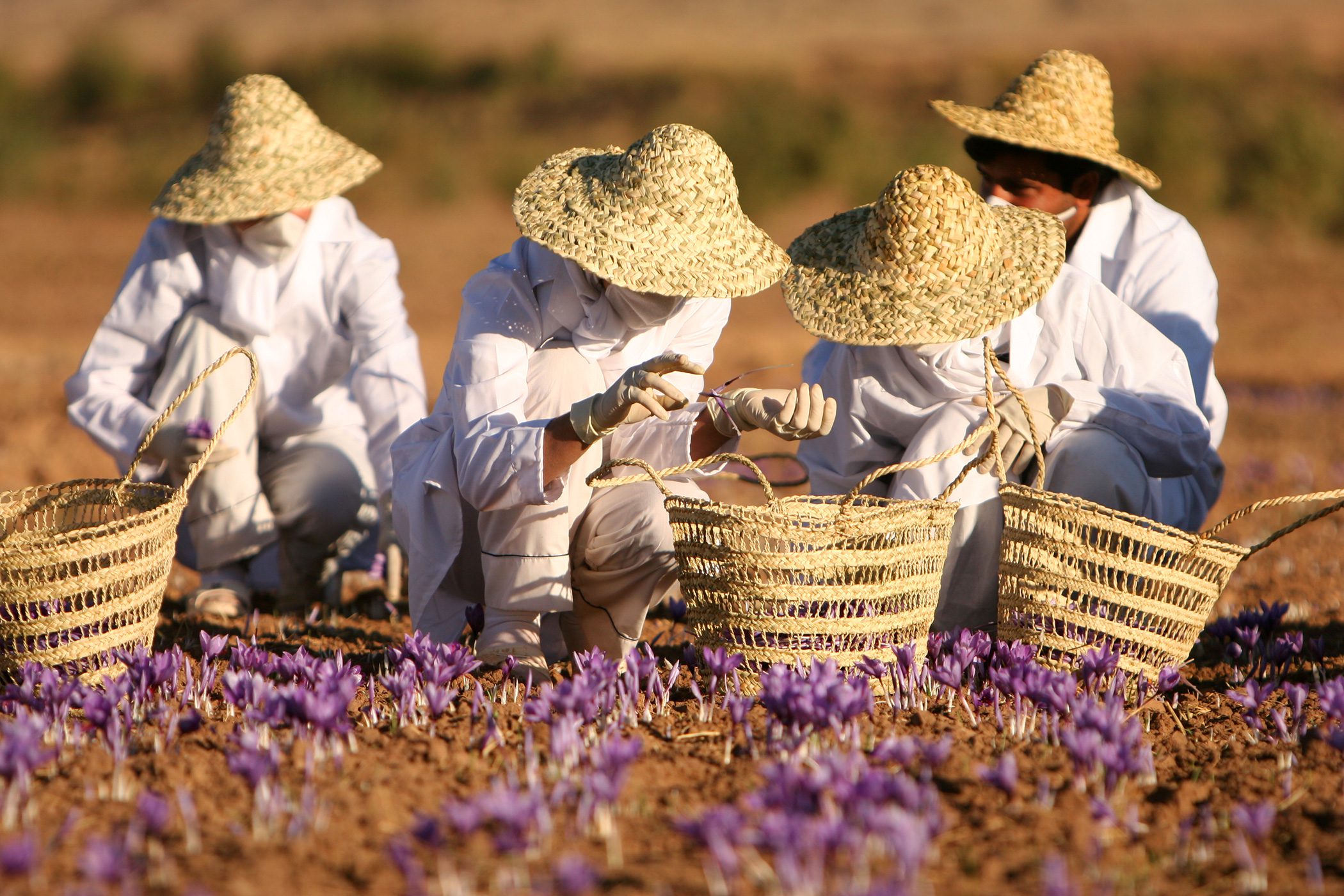
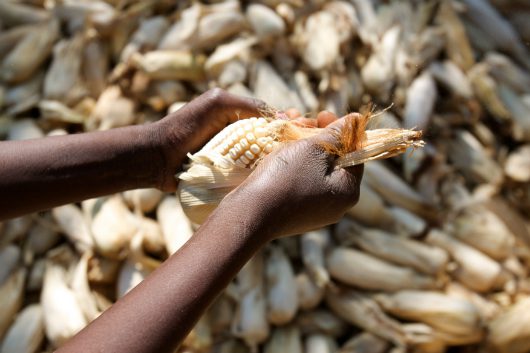
Rice-Flour-Food-SecurityNutrition is a basic human need, and the lack of nutrition is a sad result of the poverty plaguing so much of the world. South Asia, one of the largest producers of rice, also has the highest overall number of hungry people in the world, with a current estimate at 295 million. A new kind of rice flour could help.

Food insecurity is defined by Oxford Dictionaries as “the state of being without reliable access to a sufficient quantity of affordable, nutritious food.”

Rice flour is a kind of flour made from finely milled rice. It can be a good substitute for wheat flour because it does not cause digestive system irritation. It is used in many of the foods eaten across South Asia, and although wheat flour is slightly higher in nutrition than rice flour, rice is grown in abundance compared to wheat across Asia.

The problem with “normal” rice flour is that it is typically not as efficient at making bread as wheat flour, due to the presence of a particular protein called PDIL1. Researchers studying protein compounds in rice flour at Yamagata University in Japan have discovered that rice flour deficient in the PDIL1 protein active during seed development can produce dough far superior to normal rice flour.

A type of rice flour better suited to make bread could be an incredible leap forward in the fight to end global poverty because more food could be made in a better way across the developing world where rice is widely grown, thus improving food security in poverty-stricken areas.

According to the World Food Programme, hunger kills more people every year than HIV/AIDS, malaria and tuberculosis combined.

Some 795 million people in the world do not have enough food to lead a healthy, active life. That’s about one in nine people on Earth.

The vast majority of the world’s hungry people live in developing countries, where 13.5% of the population is undernourished.

Asia is the continent with the most starving people—two-thirds of its total population. The percentage in southern Asia has fallen in recent years but in west Asia it has increased slightly.

Sub-Saharan Africa is the region with the highest prevalence (percentage of population) of hunger. One person in four there is undernourished.

Poor nutrition causes nearly half (45%) of deaths in children under five—3.1 million children each year.

One out of six children, roughly 100 million, in developing countries is underweight. One in four of the world’s children are stunted. In developing countries, the proportion can rise to one in three.

If women farmers had the same access to resources as men, the number of hungry in the world could be reduced by up to 150 million.

66 million primary school-age children attend classes hungry across the developing world, with 23 million in Africa alone.

The World Food Programme calculates that $3.2 billion is needed per year to reach all 66 million hungry school-age children.

With the new improved rice flour, dough becomes easily stretched and less sticky. It also holds bubbles better during fermentation and baking, and holds its shape and texture after baking. Researchers are already experimenting with PDIL1-deficient rice plants that can be grown in varying climates to improve food security and nutrition globally.

– Jason Zimmerman

Sources: Economic Times, SciDev, Phys
Photo: Brittany Angell
July 10, 2015
https://borgenproject.org/wp-content/uploads/borgen-project-logo.svg 0 0 Borgen Project https://borgenproject.org/wp-content/uploads/borgen-project-logo.svg Borgen Project2015-07-10 11:28:142020-07-10 12:39:38New Rice Flour Key to Food Security
Food Aid, Food Security, Global Poverty, Hunger

Hope for Reducing Hunger in Iran

Hunger in IranIran, located in Western Asia, is the 18th largest country in the world. Its population is around 88 million, of which at least  25.4 million live in severe poverty. Recent studies indicate that nearly half of the population experiences some form of food insecurity and more than “12% of the children under 6 are wasted”.
Causes of Hunger in Iran

  • Economic—Food insecurity and hunger in Iran result from various complex challenges. These include economic challenges that have worsened since COVID-19, including raised unemployment and inflation.
    This double burden of economic hardship has severely limited people’s purchasing power, making it difficult for families to afford sufficient food and nutrient-rich options crucial for maintaining good health. As a result, many Iranians struggle to secure regular meals, exacerbating the issue of malnutrition and food insecurity across the country.
  • Agriculture—Iran depends on agriculture to meet its food requirements, producing 13.1% of the GDP. Recent climate changes, such as less rain, droughts and mismanagement of water resources, have negatively affected agriculture, resulting in job losses, lower crop yields, inflation and food insecurity in the population. This has resulted in a surge in poverty and food insecurity.
  • Political—Political instability and economic sanctions, such as import bans, have made it difficult for the country to produce food, disrupting supply chains and limiting access to essential resources. These challenges affect farmers and suppliers and have broader implications for the economy and public health.
  • Refugees— There are approximately 3.5 million refugees in the country who are not living under ideal conditions. They face limited job opportunities, poverty and a lack of access to education and healthcare. This situation is challenging for them and also strains the economy.

Steps to Reduce Hunger

  • UNICEF—UNICEF supports the government in collecting maternal and child nutrition data. The organization also aims to address nutritional deficiencies by enhancing nutrition programs, developing dietary guidelines and educating health care workers on feeding practices for infants and young children. This approach has the potential to nourish thousands of children, reduce health disparities among children and adults, lower the risk of chronic diseases and ultimately help eradicate hunger in Iran.
  • World Food Program—The WFP primarily assists refugees by providing cash assistance through ATM cards. It also helps them establish permanent income sources and become self-reliant by setting up small businesses. Additionally, the WFP provides school meals to improve student attendance and health. During emergencies, it supports the government in recovery and rehabilitation efforts.

The Future of Food Security in Iran

Food security is a major concern for Iran, but the country has significant agricultural potential. Enhancing crop yields is essential to ensure a reliable food supply and fully harness this potential. This can be achieved by minimizing water waste and addressing the impacts of climate change. Collaboration between the government and the international community is crucial for success.

To address the challenges of undernourishment and nutritional deficiencies, collaboration with organizations such as UNICEF and the World Food Program (WFP) can offer the Iranian government essential support, technology and resources and help improve the situation. Such efforts will help ensure a food-secure future for all citizens.

– Rebecca Malachowski and Maria Waleed
Photo: Wikipedia

Updated: October 31, 2024

July 6, 2015
https://borgenproject.org/wp-content/uploads/borgen-project-logo.svg 0 0 Borgen Project https://borgenproject.org/wp-content/uploads/borgen-project-logo.svg Borgen Project2015-07-06 09:46:032024-11-03 17:21:00Hope for Reducing Hunger in Iran
Food Security

FAO Partners with Wholesale Markets

urban_food_security
On May 28 of this year, the United Nations Food and Agriculture Organization signed an agreement with the World Union of Wholesale Markets designed to reduce food waste and improve food security for the world’s urban poor.

According to the FAO, about one third of food produced for human consumption each year is lost or wasted. It estimates that over 40% of root crops, fruits and vegetables are lost or wasted, along with 35% of fish, 30% of cereals and 20% of meat and dairy products. This figure tallies up to an estimated 1.3 billion tons of food with an economic value of $1 trillion. These losses are quickly becoming concentrated in cities, where over half of the world’s population lives. Moreover, this figure will increase by 2050, as two-thirds of the people on earth are expected to live in cities.

Getting food to the urban poor is a novel challenge. Many low-income families live in “food deserts,” areas where there is no easy access to food, much less fresh food.

Eugenia Serova, head of the FAO’s Agro-Industry Division, said in a press release, “more efficient wholesale markets, and overall urban market outlets, can result in more affordable means to reach the city poor with healthy food.”

According to Ms. Serova, this new agreement is as much about learning how to deal with the future as it is about handling the challenges of the present: “If close to 90 percent of the expected increase in the global urban population in the next two decades will take place in cities in Africa and Asia, it makes much sense to build solid knowledge on how to strengthen urban market systems.”

WUWM has agreed to work with the FAO to tackle these challenges with an eye toward sustainability and inclusiveness.

Donald Darnall, a member of the board of directors of WUWM, said, “Some 60 percent of wholesale markets we’ve surveyed said managing food waste was their number-one challenge for the next five years . . . Our markets are embracing ‘good practices’ to reduce waste and we see this as an opportunity to develop improved waste management strategies and share solutions.”

The two agencies hope to develop a set of better practices for wholesale markets in urban settings. The goal is a more efficient flow of information and a dramatic reduction in food waste and loss. The partnership also hopes to improve producers’ access to markets, make food handling safer and more consistent and eliminate urban food deserts.

WUWM is connected to wholesale marketers in 43 countries, giving it access to an enormous amount of data. With this much data and expertise at their disposal, the FAO and WUWM are well on their way to finding new methods of improving efficiency, ensuring better quality of produce and ultimately cutting waste.

– Marina Middleton

Sources: UN News Centre, World Union of Wholesale Markets Seattle Pi Food and Agriculture Organization of the UN Food and Agriculture Organization of the UN
Photo: Flickr

June 12, 2015
https://borgenproject.org/wp-content/uploads/borgen-project-logo.svg 0 0 Borgen Project https://borgenproject.org/wp-content/uploads/borgen-project-logo.svg Borgen Project2015-06-12 12:53:422024-06-11 02:48:06FAO Partners with Wholesale Markets
Food & Hunger, Food Security

Creating Sustainable Food

sustainable_food
The world is estimated to have a population of over nine billion people by the year 2050. Such a large number of people would require plenty of essential resources in order to stay alive. Food is one of those essential resources. The U.N.’s Food and Agriculture Organization estimates that 70 percent more food than is produced now will be needed to cater to this new population size.

Overpopulation is a legitimate threat to the well-being of the inhabitants of Earth. Our natural resources are being depleted more quickly; yet at the same time, we require more of those natural resources. We are playing all of our cards and not getting enough back to play again. At any level of overpopulation, people will always need food for sustenance. That is why research in sustainable foods is becoming more popular.

Impossible Foods is an organization set out to create and provide food that tastes great, is good for you and most importantly, does not have a negative impact on the environment or one’s health. Impossible Foods was started by a Stanford University scientist and has since grown in size to 50 scientists. These scientists look at animal products at a molecular level, and then select specific proteins and nutrients from greens, seeds and grains to recreate meat.

Impossible Foods is severing the connection between animals and meat. We have relied on animals to make our food for us in an unsustainable way. Impossible Foods found a better, more humane way of going about creating meat in particular. On its website for example, one can find a picture of an appetizing cheeseburger, crafted only out of plants. That’s right, both the cheese and the burger were made completely out of plants.

Progression in this field of technology can lead to solutions to the foreseeable overpopulation problem. Our current ways of providing food to the masses is becoming inefficient and is under performing. Companies like Impossible Foods are coming up with ways to increase our food production while maintaining the integrity of the land.

– Erik Nelson

Sources: Impossible Foods 1, Impossible Foods 2, CNBC, Sustainable Solutions Development Network
Photo: Kickstarter

May 22, 2015
https://borgenproject.org/wp-content/uploads/borgen-project-logo.svg 0 0 Borgen Project https://borgenproject.org/wp-content/uploads/borgen-project-logo.svg Borgen Project2015-05-22 12:00:432020-07-18 09:16:38Creating Sustainable Food
Food & Hunger, Food Security, Foreign Aid, Global Poverty

The Future of Food Security

food security
According to the World Bank, the world’s population is set to reach over 9 billion by 2050. With food security already a challenge, how will agriculture meet the food security needs of a much larger population?

According to Chris Brett, global head of sustainability at Olam International, food security success will depend on what he calls the ‘four A’s’—availability, accessibility, affordability and adequacy.

Availability, says Brett, will depend on smallholders’ access to land rights and financial support. Brett believes that policy-makers should look at ways to encourage lending, and increase the extent to which farmers legally own the lands that they cultivate.

As over 2 billion people depend on smallholder farms for their livelihoods, augmenting the smallholders’ ability to prosper could potentially go a long way to reduce poverty.

Banks, however, are unlikely to lend to farmers in disaster-prone areas. Farmers in such areas face the difficult choice between investing in safe but unprofitable crops, or riskier though potentially more lucrative alternatives.

According to a recent article by Gaby Ramm and Roland Steinmann, agriculture insurance presents a potential solution to the conundrum faced by farmers in risk-prone regions. Pilot study results suggest that insurance can indeed play a role in encouraging farmers to engage in more lucrative practices. In India, farmers with rainfall insurance displayed a tendency to gravitate toward cash crops, which—though vulnerable to rainfall deficits—produce much greater returns.

Furthermore, insurance can also indirectly allow farmers access to more credit, by encouraging lenders to lend with more frequency and confidence. This, in turn, leads to further capital investments.

Smallholders can also benefit from cooperation with large-scale agriculture. According to Brett, cooperation between large-scale and small-scale agriculture can be mutually beneficial, and can increase yields through pre-financing and training in skills such as inter-cropping.

Brett also notes that, while Africa’s agricultural potential is enormous, investments in infrastructure will be necessary for that potential to be fully realized. It is estimated that Africa needs $55 million in agricultural investment to guarantee self-sufficiency.

– Parker Carroll

Sources: Poverty Action, The Guardian 1, The Guardian 2
Photo: WSJ

January 23, 2015
https://borgenproject.org/wp-content/uploads/borgen-project-logo.svg 0 0 Borgen Project https://borgenproject.org/wp-content/uploads/borgen-project-logo.svg Borgen Project2015-01-23 04:00:112020-07-17 11:25:08The Future of Food Security
Economy, Food Security, Nonprofit Organizations and NGOs, USAID

VEGA Brings Economic Growth Globally

VEGA
The Volunteers For Economic Growth Alliance, or VEGA, is a nonprofit that brings its members together to execute economic growth projects overseas.

Founded in 2004, VEGA was originally an initiative of the United States Agency for International Development. The organization was meant to be a procurement partner.

Today, VEGA represents itself as a respected NGO alliance of 23 member organizations. Each member brings its expertise to the Alliance to allow VEGA programs to grow in development and scale.

Based in Washington, D.C., VEGA can effectively manage its programs stationed in developing nations.

With a mission to mobilize expertise and resources to promote sustainable economic opportunities, VEGA’s programs aim to scale the services of local organizations, create jobs, increase commerce and trade and improve management.

Volunteers from the U.S. offer their expertise to programs that are committed to serving women, youth and others who are ready to be entrepreneurs in order to lift themselves out of poverty.

Currently, VEGA manages 36 programs in 28 countries.

These programs include: Farmer-to-Farmer, Capacity Building of Cambodia’s Local Organizations, Competitive Agriculture Systems for High Value Crops and Kazakhstan Business Connections.

Though programs only run in 28 countries, members have worked in over 140 countries, bringing their values and skills to local partnerships.

The expertise that VEGA members bring to the team range in areas from agriculture and food security, to tourism development and financial services. Also included are environment and energy, enterprise development and trade and investment.

VEGA believes that economic growth that emphasizes innovation, local partnerships and integrated solutions is the best way to promote prosperity.

With the power of volunteers rallying behind this mission, the strength in collaboration has allowed this NGO to make an impact in economic growth for the developing communities it serves.

– Chelsee Yee

Sources: VEGA Alliance, ACDI VOCA, Africa Agribusiness Magazine

Photo: USAID

December 11, 2014
https://borgenproject.org/wp-content/uploads/borgen-project-logo.svg 0 0 Borgen Project https://borgenproject.org/wp-content/uploads/borgen-project-logo.svg Borgen Project2014-12-11 04:00:092024-06-05 01:58:19VEGA Brings Economic Growth Globally
Food & Hunger, Food Security, Hunger

Uzbekistan’s Progress in Eradicating Hunger

uzbekistan food security
This year, the Global Hunger Index (GHI) ranks Uzbekistan at 5.7 percent for its undernourished population from 2011 to 2013.

More than 800 million people suffer from hunger and the GHI examines 120 of the low-income countries that account for the vast majority of global undernourishment.

In the last 14 years, Uzbekistan has shown a steady improvement in eradicating hunger, with a decline from 3.6 million to 1.7 million of the country’s population facing food insecurity.

However, the country is still in need of renewed political commitment to achieving food security in order to continue making progress against hunger, which not only stunts physical, intellectual and even economic growth but can also lead to death.

Yuriko Shoji, the recently appointed Food and Agriculture Organization (FAO) Sub-regional Coordinator for Central Asia and country representative for Uzbekistan, spoke on the topic at a launch event at Tashkent State Agrarian University.

“Despite good progress made in the past two decades and an increasingly favorable environment, the full potential of agriculture – and food security for everyone – have yet to be achieved,” said Shoji. “With renewed political commitment, and good practice that can be shared with the world, food security of each and every household is within reach.”

Shoji highlighted the key requirements for overcoming the limitations to prioritize food security and nutrition issues. The event served as a platform for discussing global hunger and malnutrition.

Uzbekistan’s positive trend to combat malnutrition serves Millennium Development Goal (MDG) 1 of halving the proportion of undernourished people by next year. It’s a goal that is within reach if Uzbekistan and other developing countries continue making political efforts toward food security.

According to the FAO, 63 developing countries have reached the MDG target and six more are on track to reach it by 2015.

Though Uzbekistan has seen significant progress in hunger, the country must continue to set the path for others that remain chronically undernourished in order to meet next year’s MDG target.

– Chelsee Yee

Sources: The Guardian, UN, Data Wrapper
Photo: EurasiaNet

November 27, 2014
https://borgenproject.org/wp-content/uploads/borgen-project-logo.svg 0 0 Borgen Project https://borgenproject.org/wp-content/uploads/borgen-project-logo.svg Borgen Project2014-11-27 12:00:172024-06-05 01:58:19Uzbekistan’s Progress in Eradicating Hunger
Food & Hunger, Food Security

Reviving Mozambique’s Coconut Groves

mozambique's_coconut_groves
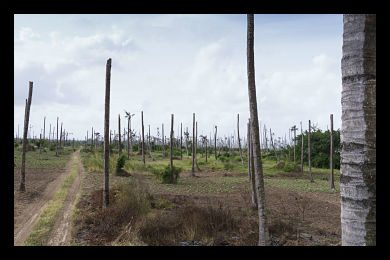
A little over three years ago, the trees in Mozambique’s coconut groves began to develop brown spots. The leaves would then turn yellow and the coconuts would prematurely drop to the ground. At the end of three to six months, the top half of the tree would break off and fall to the ground.

Coconut Lethal Yellowing Disease

Coconut Lethal Yellowing Disease has been the cause of the trees’ deaths. The disease is spread by the rhinoceros beetle, who buries its larva into the fallen trees and saplings. Now, just three years later an estimated half of Mozambique’s coconut trees have been destroyed. With the bark stripped, the groves now look like matchsticks sticking out of the ground. The only known cures are to plant resistant varieties of palm.

According to the Food and Agricultural Organization Mozambique was the largest producer of dried coconut meat in 2011, producing over 62,000 tons yearly. All of which are either exported, turned into coconut oil or consumed locally. It is estimated that Zambézia province, alone, has losses of over $4 million in exports each year.

Some measures have been taken to halt the spread of this disease. This past year the U.S. has aided 277,000 farmers through the Millennium Challenge Account financing the Farmer Income Support Project. This measure cleared 600,000 acres of infected trees and replaced them with 780,000 seedlings.

Concern Worldwide

Even with aid, the coconuts that are being harvested are nowhere near the sustainable quantities of the past, nor are they the same size. Due to the young age of many of the trees, the coconuts are noticeably smaller.

While everything is being done to save the current coconut economy, many are urging the country to start looking for new cash crops, so the country is not overly reliant on one crop. Concern Worldwide, a nonprofit organization, is providing seeds, tools and training throughout Zambezia Province to cultivate tomatoes, sweet potatoes and lettuce as well as staple crops like sorghum and rice.

All of these plants have thrived in Africa’s climate, but Barbara Hladka, an agronomist working for Concern, believes that the plant with the biggest potential to replace the lost income from coconut sales is sesame seeds. “We are seeing buyers coming to some of the most remote communities in Zambezia to purchase sesame directly from growers for as much as 40 meticais ($1.30) per kilo,” said Hladka. “This is much higher than what farmers used to sell coconuts for.”

This new wave of agro-economics, or the process of growing different crops to bring to market, has caught on fast to help many afford the opportunity to work their way out of poverty. It is a successful worldwide trend endorsed by many of the NGOs working in Africa, India and China.

– Frederick Wood II

Sources: InterAction, Macau Hub All Africa
Photo: Huffington Post

October 27, 2014
https://borgenproject.org/wp-content/uploads/borgen-project-logo.svg 0 0 Borgen Project https://borgenproject.org/wp-content/uploads/borgen-project-logo.svg Borgen Project2014-10-27 04:00:132024-06-05 01:58:16Reviving Mozambique’s Coconut Groves
Food & Hunger, Food Security, Global Poverty, Health, Malnourishment

Infant Death from Malnutrition

infant_death
Malnutrition can originate from all sorts of sources: lack of funds, lack of access to food or even negligence. According to the World Health Organization, 45 percent of infant deaths are caused by a lack of nutrition. And malnutrition may not always be the direct cause of death in these children. Often they may pass from things like malaria, pneumonia and diarrhea, all of which stem from a lack of nutrition.

In areas like South Africa, malnutrition is an issue affecting 64 percent of infants. UNICEF has made significant efforts to pervade the country and educate mothers on the benefits of breastfeeding. It seems the primary source of a lack of nutrition has been mixed-feeding practices. In these cases, supplemental food is certainly less than enough from a nutritional standpoint. Nevertheless, 53 percent of infants in South Africa under six months of age are mix-fed.

UNICEF has taken initiative by directly corresponding with the Department of Health in South Africa in order to improve policies and education. They have also taken the approach to focus malnutrition on HIV transmission. With babies more severely undernourished, they are much more apt to receive HIV from their mothers because they are weak and unable to grow.

Deaths under the age of five occur in very specific regions, precisely sub-Saharan Africa and Southern India. The good news is that the rest of the world has seen a drop from 1990 from 32 percent to 18 percent in the percentage of infant deaths under the age of five.

While infants in certain parts of the world suffer from malnutrition due to a lack of finance or education, it seems almost everywhere in the world malnutrition can happen as a result of negligence. For example in 2010 a baby died in South Korea after only a three months of life at a mere 5.5 pounds. CNN reported that the couple was too engaged in online gaming to have paid attention to their newborn. Ironically the game they were playing involved raising a virtual child.

In northern France this year, an infant died of malnourishment at 11 months of age. Parents magazine reported that the vegan couple was only breastfeeding the infant. At this age babies should be introduced to more solid foods, and especially in the case of a vegan couple. Because the infant’s mother was not receiving enough protein, she died with both a Vitamin A and B12 deficiency.

Regardless of what may cause malnutrition in infants, it is something that clearly needs to be monitored. It gives us hope that certain statistics are falling, but the world needs to send its focus more so to the problem areas. We can give our donations, but best of all we can give our wisdom and our health knowledge to prevent more infants from unnecessarily leaving this earth.

– Kathleen Lee

Sources: WHO, Parenting, CNN, UNICEF 
Photo: Flickr

October 22, 2014
https://borgenproject.org/wp-content/uploads/borgen-project-logo.svg 0 0 Borgen Project https://borgenproject.org/wp-content/uploads/borgen-project-logo.svg Borgen Project2014-10-22 04:00:572024-12-13 17:51:16Infant Death from Malnutrition
Food & Hunger, Food Security, Global Poverty, Health

What is Hunger?

What is Hunger
What is hunger? For some American high schoolers, waiting for the bell to go to lunch can be excruciating. Stomachs are growling, teenagers are getting cranky, but are they truly hungry?

To be hungry, or “malnourished,” means that, due to a lack of nutritional intake, energy is completely lacking. This often results in a severe inability to perform simple tasks or to concentrate on anything other than food.

Furthermore, the worries accompanying hunger lead to the idea of food insecurity. The U.N. Food and Agriculture Organization defines food insecurity as “a situation that exists when people lack secure access to sufficient amounts of safe and nutritious food for normal growth and development and an active and healthy life.”

In the 1970s, 30 percent of the people in our world suffered from hunger. Now we can proudly say that that percentage has been reduced to only 16 percent of the world, but this is still a staggering 925 million people.

The dangers of hunger extend past being temporarily without food. With a weakened body, malnourished people are much more prone to diseases like tuberculosis, dysentery and typhoid. The body also begins to feed on its own bone and muscle, creating a vicious cycle that typically ends with organs like the heart shutting down.

Hunger can affect mental capabilites as well. Without adequate nourishment, people are unable to concentrate and thus unable to advance educationally and socially.

Some unpleasant statistics from the WFP about hunger include the following:

  • A lack of nutrition causes 45 percent of children deaths under the age of five.
  • Two-thirds of Asia’s population is hungry.
  • In the developing world, 66 million primary school-age children go to class hungry.

According to U.N. FAO Director-General, Jacques Diouf, “Defeating hunger is a realistic goal for our time, as long as lasting political, economic, financial and technical solutions are adopted.”

Organizations like Action Against Hunger, Grocers Against Hunger, UNICEF and countless more are fighting everyday to raise money and collect food for these suffering people throughout the world. These types of initiatives will not only put food on someone’s plate, but will extend their life expectancy, and improve communities. Just as Diouf claimed, global hunger can be defeated.

– Kathleen Lee

Sources: WFP, United Nations

September 26, 2014
https://borgenproject.org/wp-content/uploads/borgen-project-logo.svg 0 0 Borgen Project https://borgenproject.org/wp-content/uploads/borgen-project-logo.svg Borgen Project2014-09-26 04:00:162024-05-25 00:03:34What is Hunger?
Page 21 of 31«‹1920212223›»

Get Smarter

  • Global Poverty 101
  • Global Poverty… The Good News
  • Global Poverty & U.S. Jobs
  • Global Poverty and National Security
  • Innovative Solutions to Poverty
  • Global Poverty & Aid FAQ’s
Search Search

Take Action

  • Call Congress
  • Email Congress
  • Donate
  • 30 Ways to Help
  • Volunteer Ops
  • Internships
  • Courses & Certificates
  • The Podcast
Borgen Project

“The Borgen Project is an incredible nonprofit organization that is addressing poverty and hunger and working towards ending them.”

-The Huffington Post

Inside The Borgen Project

  • Contact
  • About
  • Financials
  • President
  • Board of Directors
  • Board of Advisors

International Links

  • UK Email Parliament
  • UK Donate
  • Canada Email Parliament

Get Smarter

  • Global Poverty 101
  • Global Poverty… The Good News
  • Global Poverty & U.S. Jobs
  • Global Poverty and National Security
  • Innovative Solutions to Poverty
  • Global Poverty & Aid FAQ’s

Ways to Help

  • Call Congress
  • Email Congress
  • Donate
  • 30 Ways to Help
  • Volunteer Ops
  • Internships
  • Courses & Certificates
  • The Podcast
Scroll to top Scroll to top Scroll to top