• Link to X
  • Link to Facebook
  • Link to Instagram
  • Link to TikTok
  • Link to Youtube
  • About
    • About Us
      • President
      • Board of Directors
      • Board of Advisors
      • Financials
      • Our Methodology
      • Success Tracker
      • Contact
  • Act Now
    • 30 Ways to Help
      • Email Congress
      • Call Congress
      • Volunteer
      • Courses & Certificates
      • Be a Donor
    • Internships
      • In-Office Internships
      • Remote Internships
    • Legislation
      • Politics 101
  • The Blog
  • The Podcast
  • Magazine
  • Donate
  • Click to open the search input field Click to open the search input field Search
  • Menu Menu

Archive for category: Food Security

Information and stories about food security news.

Food & Hunger, Food Security, Global Poverty

How Online Marketplace is Reducing Food Waste

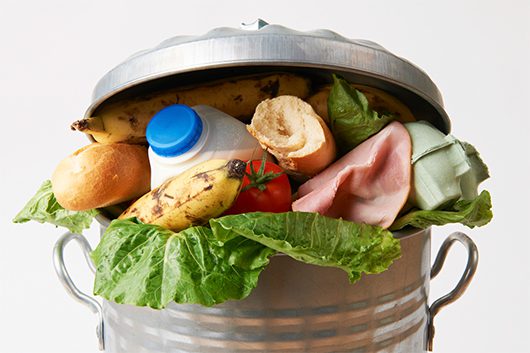
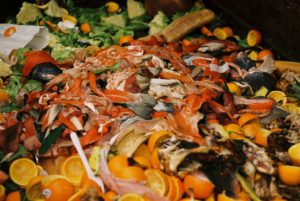
Millions of tons of food are wasted every year in developed countries and the United States is one of the worst offenders, with more than 40 percent of the food supply ending up in dumpsters and landfills rather than on people’s plates. Sadly, the problem has only been getting worse. In 2012, the United Nations was responsible for 35 million tons of wasted food, representing a 20 percent increase from 2000. In 1980, food accounted for 10 percent of U.S. total waste, but today, it accounts for over 20 percent, with Americans wasting more food than plastic, paper, metal or glass.

The issue of food waste is worse in developed countries, where many see food as expendable. But even in wealthy countries, people struggle with hunger. Over 805 million people worldwide suffer from food insecurity, yet enough food is produced to feed everyone on the planet. Furthermore, wasting food is both economically and environmentally unsustainable. Efforts that provide food that could have been wasted to those who truly need it are becoming increasingly important.

Feeding America is making a concentrated effort to eliminate food waste in the United Nations. They are the largest domestic hunger-relief organization in the United States, with a nationwide network of 200 food banks. Feeding America provides over 3.3 billion meals to 46 million people a year through its 600,000 food pantries and meal programs. Their latest initiative, Online Marketplace, is specifically intended to prevent food waste.

Launched in Feb. 2014, Online Marketplace utilizes technology to safely, quickly and effectively recover excess food from local food service outlets. By doing so, Feeding America hopes to reduce food waste while simultaneously providing more meals to people in need. It is primarily geared towards businesses like restaurants or bakeries, which handle perishable food in smaller quantities, therefore producing lots of waste while donating very little.

Online Marketplace directly connects potential donors to meal service programs and food pantries. First, new donors are educated on donation protocols, such as food safety guidelines and standard operating procedures. Next, they are connected with their nearest food bank, which directs them to local food pantries and meal programs to which they can directly donate. Distributors can then pick up food from the donor and transport it to local people in need as soon as possible, sometimes even making deliveries on the same day.

Currently, Online Marketplace is projected to recover 740 million more meals per year for people in need. Feeding America recently received a $1.6 million Google Global Impact Award for using technology to fight hunger. This money will allow the program to expand and feed even more people.

The Online Marketplace program could easily become a model for other developed countries to follow. If such programs catch on, redirecting food waste from the landfill to the dinner table could benefit millions worldwide. Educating those in the food service industry about food waste and simplifying their donation process will encourage more people to get involved in the ongoing battle against world hunger.

– Jane Harkness

Sources: Feeding America 1, Feeding America 2, Feeding America 3, New York Times, Washington Post
Photo: City Fruit
August 19, 2015
https://borgenproject.org/wp-content/uploads/borgen-project-logo.svg 0 0 Borgen Project https://borgenproject.org/wp-content/uploads/borgen-project-logo.svg Borgen Project2015-08-19 11:32:142024-12-13 17:51:49How Online Marketplace is Reducing Food Waste
Food & Hunger, Food Security, Global Poverty

Food Waste in America

Food_Waste
Starvation has long been something many Americans associate with the “third world.” As a country, we sometimes become so engrossed in aiding other nations that we seldom take the time to look within our own borders and see the issues relating to food waste that we face at home.

While a façade of top-rated healthcare, strong innovation and an overall surplus of goods successfully hides the hunger, poverty and abuse, it is difficult to ignore the facts. Up to 40 percent of the food produced in the United States is going to waste before it even reaches the tables of hungry families. In 2013, 49.1 million Americans lived in food insecure households, meaning families were unsure of where their next meal would come from.

Starvation in the United States does not stem from a lack of food as it does in many developing countries. Instead, it stems from a lack of access to affordable healthy food along with a disregard for re-using and recycling materials considered to be waste.

There are many parts of the United States which are considered “food deserts”. These are areas where there are no food superstores like Whole Foods, Target or Acme, for example. Instead, individuals in these areas are forced to purchase food from gas station markets or travel over 10 miles to get fresh food. These “food deserts” exist even within our nation’s capital and force people to rely on food from shelters and food banks. Unfortunately, many of these food banks do not receive enough donations to keep up with the demand for food.

Much of the waste that inhabits our nation’s dumps comes from farms and supermarkets that were unable to sell produce. About 1.3 billion tons of food gets lost or wasted in the United States, with over 97 percent of food waste ending up in a landfill. Most of this produce is so fresh when it arrives at the dumps that people could have consumed it, had it not come in contact with other waste.

Food waste in America also arises from small households. A family of four throws away around $600 worth of food annually due to spoilage or fear of eating leftovers. When all of this food in the landfills begins to break down anaerobically, without access to oxygen, it produces methane gas, which is about 20 times more toxic than CO2 and can seriously harm our environment.

If supermarkets and households learn to use their food waste responsibly, imagine the world we would live in. Households can use food waste—even if it is completely spoiled—in compost pits, which in turn will help their plants grow better and help our environment. Supermarkets can donate their unsold produce to food banks and soup kitchens nearby and accept the profit losses in order to feed their less fortunate friends and neighbors.

When we live in a nation so devoted to helping others in poverty, it is hard to picture starvation in our own country. Most Americans have the luxury of being able to go down the road to pick up fresh produce every week and are unable to see the issue in throwing away left-overs, but if we just learned to eat and live responsibly, we could make a world of a difference beginning in our own neighborhoods.

– Sumita Tellakat

Sources: End Food Waste Now, NRDC
Photo: Flickr

August 7, 2015
https://borgenproject.org/wp-content/uploads/borgen-project-logo.svg 0 0 Borgen Project https://borgenproject.org/wp-content/uploads/borgen-project-logo.svg Borgen Project2015-08-07 01:30:442024-12-13 18:04:36Food Waste in America
Developing Countries, Food Security, Global Poverty

“Plant Doctors” Fighting Hunger in Kenya

Plant_Doctors
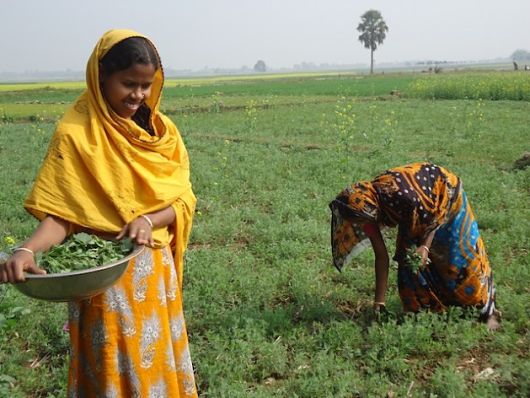
Every year across the developing world an enormous percentage of crops are thrown away due to disease, which contributes to hunger. But what if those sick plants could be cured? In Kenya, when there are sick plants, they call in the “Plant Doctors.”

The Food and Agriculture Administration defines the major developing world’s food crops in order of volume as rice, wheat, maize, cassava, fresh vegetables and sweet potatoes. Other essential crops are sugarcane, oil palm fruits and soybeans. With approximately 4.47 billion people out of the global population of 5.77 billion living in the developing world, the health of these plants are immensely important to food security.

Crops grown in the developing world are more commonly used to feed the public rather than for export. Because of this, volume is lower, there are much lower input costs so pesticides/herbicides are used less extensively or are less effective, and far less inorganic fertilizer is used. Additionally in developing countries, the plant varieties are usually not improved, resistant or higher yielding. The effect of viruses on agriculture in poor nations is more significant and less food grown as a result.

Plant Doctors are highly trained plant health advisers educated in the science of botany and global plant health who take research from the laboratory to the fields to help farmers eradicate diseases plaguing their crops. They also run Plant Clinics, where farmers can take a sample plant to find diagnosis of the problem and give best-practice advice. The plant clinic also provides a meeting place for Plant Doctors and the farmers they aim to serve.

The Plant Clinic works like a doctor’s office visit. When a farmer has a problem with sick plants, the sample plant can be brought in to a Plant Clinic, which operates in local farmers markets. A trained Plant Doctor will then diagnose the problem and recommend an affordable, locally available solution that the farmer can use to manage it. If the farmer follows the plant doctor’s advice; losses are reduced and productivity increases, increasing food to sell and feed his or her family.

Miriam Otipa is a Plant Doctor. She is the Principal Research Scientist & Head of the Plant Pathology Department, Kenya Agricultural and Livestock Research Organization. She posted a blog at Feed the Future about her experiences and the importance of Plant Doctors. She says in her blog that in Kenya, greenhouse farmers routinely lose between 80-100 percent of their tomato crops to pests and diseases.

As Miriam Otipa explains in her blog, it was while growing up in a small Kenyan Village she became interested in career in science. She turned her curiosity and childhood questions into solutions for struggling farmers with ailing crops.

According to Miriam Otipa, success in curing diseased plants is spreading across Kenya. Through the PlantWise program, supported by an international nonprofit called CABI, she has trained over 140 agricultural extension staff to operate 89 Plant Clinics in 13 counties across Kenya and has jointly trained 45 farmers as Plant Nurses, who regularly visit farms, assist with plant examinations, and encourage farmers to use nearby Plant Clinics.

In developing nations, food insecurity is a sad consequence of global poverty. Plant Doctors can help treat sick plants improving agricultural yield and increase the food on hungry people’s tables.

– Jason Zimmerman

Sources: USAID, Plantwise
Photo: Flickr

August 6, 2015
https://borgenproject.org/wp-content/uploads/borgen-project-logo.svg 0 0 Borgen Project https://borgenproject.org/wp-content/uploads/borgen-project-logo.svg Borgen Project2015-08-06 01:30:462020-07-03 08:44:00“Plant Doctors” Fighting Hunger in Kenya
Food Security, Global Poverty, USAID

USAID Helps Vietnam Boost Rice Yields

USAID Helps Vietnam Increase its Rice YieldsAs climate change affects agriculture across the developing world, food security is a painful reality for farmers who depend on their crops to eat and eke out a meager living. Every grain of rice they grow is valued — USAID is helping farmers in Vietnam to bolster their harvest yields.
USAID, the United States Agency for International Development, implemented the Vietnam Forests and Deltas Program in 2012, aimed at promoting rice production practices that can reduce greenhouse gas emissions and improve livelihoods with Vietnam’s agricultural extension services.

The program is focused on enhancing climate change resilience and working with all echelons of the Vietnamese society, from the community level up to the national level. Farmers are learning new agricultural techniques and are putting into practice climate-smart livelihoods in order to improve quality of life. They are applying new national policies and strategies in response to rising temperatures and changing weather pattern concerns. The program mainly concentrates on environmental conditions in Vietnam’s vulnerable forest and delta landscapes.

The Thanh Hoa and Kon Tum provinces have been selected by pilots for moving green growth strategies. With the implementation of innovative land use planning and training programs including local government, civil society and the private sector are demonstrating measurable improvements in carbon stocks and environmental services.

The Mekong and Red River Delta areas are increasingly falling victim to climate-related hazards such as storms, flooding, drought, salinity and sea level rise. These deltas are home to some of the most heavily populated and economically productive areas of Vietnam, making the region especially important as well as vulnerable to the country’s stability. USAID is working with the government and communities of the Long An and Nam Dinh provinces to help the population identify climate-related risks and how to take action in order to provide long term resilience.

USAID is working in partnership with several organizations including Winrock International, Vietnam’s Ministry of Agriculture and Rural Development, provincial governments, the Netherlands Development Organization, American Red Cross, Vietnam Red Cross and the Center for Sustainable Rural Development.

In Long An province, with training provided by USAID, farmers across the region have boosted rice yields dramatically, in many cases up to 25 percent more. This means that families once struggling with food insecurity and little to no profit from rice sales are eating better and making a better living, improving quality of life.

Before The Vietnam Forests and Deltas Program went into effect, farmers with minimal agricultural experience suffered preventable crop losses due to ignorance such as overuse or imbalance of fertilizers. As a result of the program, people learned how to apply new techniques including development of internal drainage lines and favoring conditions that lead to stronger and healthier rice plants such as rice paddy leveling.

No matter what one’s views of climate change are, it is a very real problem for the poor with real effects on the people struggling to survive in the delta and forest regions of Vietnam. USAID has proved an essential resource in the developing world. With the programs offered by the agency and its partners, poverty could soon be a thing of the past.

– Jason Zimmerman

Sources: USAID 1, USAID 2, Winrock, MARD

Photo: OceanBitesE

August 1, 2015
https://borgenproject.org/wp-content/uploads/borgen-project-logo.svg 0 0 Borgen Project https://borgenproject.org/wp-content/uploads/borgen-project-logo.svg Borgen Project2015-08-01 01:13:482020-07-06 12:23:07USAID Helps Vietnam Boost Rice Yields
Food & Hunger, Food Security, Technology

Are Drought-Resistant Crops the Solution to World Hunger?

drought-resistantRecently, genetically modified crops have received much criticism in the media. Despite the absence of any concrete scientific data that proves otherwise, opponents remain wary of crops changed by genetic engineering.
However, genetic engineering remains a technique of key significance in food sciences. Researchers have aimed their endeavors towards manipulations of crop genome that could alleviate hunger and malnourishment worldwide. New strains of food crops are being engineered that are better in nutritional value and resistant to environmental disasters.

One of the most significant research areas in this field focuses on making the crops drought-resistant. Drought remains one of the biggest challenges in the provision of food worldwide. Most of the world’s undernourished population is geographically concentrated in the driest areas of the world; this makes their food supply even more susceptible to droughts. The United Nations Food and Agricultural Organization (FAO) reports droughts to be more severe in effect than any other physical hazards. The recent droughts in Kenya and China are proof of the calamitous effects of droughts on food production.

To offer a solution to this problem, many researchers globally are focused on introducing drought-resistant genes into common staple food crops, such as wheat, rice and barley.

In any plant organism, there are multiple genes that interact to form a complexity of arrangement that affects the plant’s response to a stressor, such as drought. One of the most important known plant chemicals that affects a plant’s reaction to the environment is abscisic acid.

Abscisic acid is a plant regulatory hormone that controls a plant’s osmotic responses to external stimuli at a cellular level. As the water level available to the plant drops, abscisic acid regulates the ionic flow through the cellular membranes. This changes the osmotic pressure within the cell, which ultimately leads to closing of stomata — the pores in the leaves of a plant that are responsible for loss of water to the environment. This conserves water within the plant, allowing it to survive in dry conditions.

To enable the plant to survive in dry conditions, the loss of water from the plant body has to be minimized. This can be achieved through abscisic acid dependent regulatory pathways. This is done by increasing the expression of abscicic acid, but only under certain conditions.

Transcription factors in a genome are non-coding parts of the organismal DNA that control the rate of transcription of a particular gene, and therefore the amount of transcribed product—usually a protein—produced. By increasing the amount of osmotic regulators in the plant as a response to environmental stimuli, the plant can conserve water resources and tolerate drought much better. The abscisic acid molecule then regulates the gene expression of other genes within the genome that are induced or repressed to tackle external stress on the plant.

So far, much progress has been made in this field: successful transgenic manipulations have resulted in more drought-resistant lines of wheat and rice. However, as with all genetically engineered products, the progress made is only a fraction of the knowledge that is necessary for reliable products. The genome of any plant is vastly complex: many different genes, transcription factors, and regulators interact simultaneously to generate any desired phenotype, such as drought-resistance. More research efforts are necessary in successfully implementing these crops as an effective solution to hunger.

– Atifah Safi

Sources: National Center for Biotechnology Information 1, SpringerLink, National Center for Biotechnology Information 2, Oxford Journals – Journal of Experimental Botany
Photo: Wikimedia Commons

July 29, 2015
https://borgenproject.org/wp-content/uploads/borgen-project-logo.svg 0 0 Borgen Project https://borgenproject.org/wp-content/uploads/borgen-project-logo.svg Borgen Project2015-07-29 12:03:422024-12-13 17:52:06Are Drought-Resistant Crops the Solution to World Hunger?
Food & Hunger, Food Security, Global Poverty

USA Food Waste: 7 Surprising Facts

usa food wasteWhat’s the number one risk to worldwide health? The answer may surprise you–it’s not AIDS or malaria, but hunger and malnutrition. One in nine people in the world do not get enough food to be healthy and lead an active life. And yet, in countries like the United States, there remains a shocking excess and waste of food products that could be used to feed millions around the globe. As people become increasingly conscious about recycling and the environment, they should also take a moment to turn their attention to how much they put on their plates. The following points are seven eye-opening facts that shed light on just how extensive the problem of American food waste is.
1. Let’s Talk Calories

The volume of American annual food waste might be better understood in terms of calories. The U.S. Department of Agriculture reports that each year, a staggering 141 trillion calories are gone unconsumed. This is equivalent to around 1,300 calories per capita, per day. This is approximately the number of calories consumed by a small adult or child in a day, meaning that these wasted calories could go toward nourishing several hungry people.

2. Just How Much Food Is 141 Trillion Calories?

Not everyone likes to count calories, and even fewer know what exactly a calorie is. To put it in different terms, over a third of the entire U.S. annual food supply is wasted, a total of 133 billion pounds. That equals more than 20 pounds of food per person per month. Most everyone knows what pounds are, and that’s a lot of them.

3. Americans Waste Some Foods More Than Others

According to the USDA, the top three kinds of food thrown away in 2010 were dairy (25 billion pounds), vegetables (25 billion pounds) and grains (18.5 billion pounds). These are three of the essential food groups on the food pyramid.

4. The U.S. Navy Throws Away What It Can’t Fit In Its Boats

The government provides the brave men and women of the U.S. Navy with the food and drink necessary to make their sea excursions bearable, but sometimes it isn’t possible to get all the food that is given to them into the storage space of their vessels, which are often very small. One might suppose that when this happens the food is donated to a local homeless shelter or food bank.

Unfortunately, this is not the case. Because the U.S. government could be held liable for any sickness that might result from the consumption of a donated food product, the Navy is forced instead to throw surplus provisions away. The extra microwave pizzas and cereal pouches might not seem like much, but this wasted food could be used to feed a family in need.

5. Americans Throw Out More Food Than Pretty Much Anything Else

Food waste makes up over a fifth of American garbage, and half of the waste accumulates at landfills. America tosses more food into the trash than paper, plastic, metal or glass—with 5 million tons as the smallest discrepancy.

6. Food Waste Hurts The Environment

The aforementioned landfills are filled with decomposing organic waste that produces methane, a greenhouse gas that is 20 times more dangerous than carbon dioxide. These landfills are the largest producer of methane emissions in the United States, making up almost a quarter of the total emissions, according to the NRDC.

7. On the Bright Side…

The amount of food wasted, not only by the United States but by other nations as well, suggests that alleviating world hunger isn’t a matter of producing more food. Instead, it is a matter of better managing the food that is already produced, by preserving it and distributing it more thoroughly. There is enough food to feed all 7 billion people in the world. It just needs to get to put in mouths instead of in the trash.

– Katharine Pickle

Sources: NPR, Washington Post
Photo: Wikimedia Commons

July 29, 2015
https://borgenproject.org/wp-content/uploads/borgen-project-logo.svg 0 0 Borgen Project https://borgenproject.org/wp-content/uploads/borgen-project-logo.svg Borgen Project2015-07-29 09:02:082024-12-13 17:51:49USA Food Waste: 7 Surprising Facts
Food & Hunger, Food Aid, Food Security, Global Poverty, Hunger

The Zero Hunger Challenge Revisited

Hunger_ChallengeIt is a simple phrase, proven fact and universal goal all in one: Hunger can be eliminated in our lifetime.
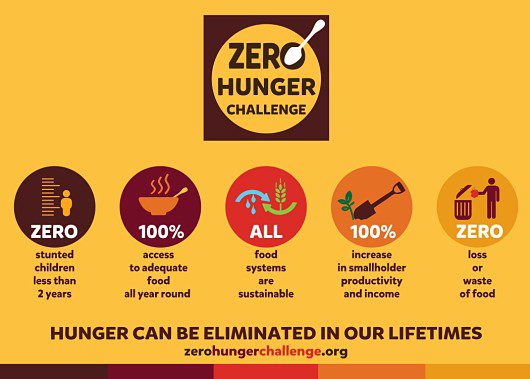
This belief launched the Zero Hunger Challenge in 2012, a program that challenged individuals and organizations to recognize and assist the 800 million hungry people around the world.

Started by U.N. Secretary-General Ban Ki-moon, the challenge strives to achieve five outcomes: zero stunted children less than two years, 100% access to adequate food all year round, making all food systems sustainable, a 100% increase in smallholder productivity and income, and zero loss or waste of food.

Ki-moon believes that combining these five elements will create a world with no hunger. The Zero Hunger Challenge encourages participation from a wide range of people and organizations.

Now three years after Ki-moon launched his Zero Hunger Challenge, countries around the world are declaring their own “end hunger” plans.

In May 2015, the United Nations assisted the government of the Lao People’s Democratic Republic in launching the National Zero Hunger Challenge, which joined with other countries to eliminate hunger and malnutrition while also increasing food resources. Also in May, the Royal Government of Cambodia started a National Zero Hunger Challenge to end hunger in their country by 2025.

As more countries join the National Zero Hunger Challenge, the goal to end hunger becomes more and more realistic. The United Nations estimates that ending world hunger will require investments in rural and urban areas so that poorer people can have access to food and can improve their lives.

Recently, the Zero Hunger Challenge has gained more support from church organizations.

The Ecumenical Advocacy Alliance, a global network of church organizations, asks all uninvolved individuals and churches to join the initiative.

Dr. Manoj Jurian, World Council of Churches coordinator, said, “No one should be hungry, especially in a world that already produces more than enough food to feed everyone. We can build sustainable and waste-free food systems that nourish and support all people and empower the smallholder and family farms that produce that vast majority of the world’s food.”

Dr. Jurian also notes that as religious people, churches are committed to ensuring that no person is hungry. The Bible contains many stories about hunger, the most notable being Matthew 1:25, in which Jesus tells his followers, “For I was hungry, and you fed me. I was thirsty, and you gave me a drink. I was a stranger, and you invited me into your home.” In these lines, caring individuals aid someone in need of food and water; like so, Dr. Jurian claims it is part of religious duty to help those in need.

With active participants around the world, world hunger can end in our lifetime. To join the challenge, visit: www.un.org/en/zerohunger/.

– Kelsey Parrotte

Sources: AllAfrica, Ecumenical Advocacy Alliance, United Nations
Photo: United Nations

July 29, 2015
https://borgenproject.org/wp-content/uploads/borgen-project-logo.svg 0 0 Borgen Project https://borgenproject.org/wp-content/uploads/borgen-project-logo.svg Borgen Project2015-07-29 07:58:012024-05-27 09:26:14The Zero Hunger Challenge Revisited
Charity, Food & Hunger, Food Security, Global Poverty

Heifer International Takes a Holistic Approach to Community Development

heifer_international
Heifer International follows the “teach a man to fish, feed him for a lifetime” philosophy.

The charity organization teaches families living in hunger and poverty how to practice sustainable agriculture and trade. Heifer International provides livestock and other agricultural resources that support financial independence. It also works with public and private partners to ingrain the entrepreneurial drive into the hearts of many developing nations.

Founded in 1944 by Dan West, Heifer is an exemplar in the fight against global poverty.

So far, Heifer has joined forces in more than 125 countries, helping more than 22.6 million families break the cycle of poverty.

In investing in local economies, Heifer has had incredible success.

In 2013, Heifer instituted its Global Impact Monitoring System that collects reference data related to its development work. With this system, the impact is more greatly measurable. This “values-based” system monitors all projects at the group-level and global-level. Heifer further reviews its work by evaluating its projects on five key elements: relevance, effectiveness, efficiency, impact and sustainability.

Heifer projects cover Africa, Asia and the Americas.

The Sahel Program in Africa develops local livestock production in the Sahel region. By providing sheep and goats, the program will impact 516,000 families between 2014 and 2024. The goal is to build resilient and sustainable farming livelihoods.

The Southern Africa Goat Value Chain Program targets food and income security by establishing producers associations, cooperative management and market infrastructures, according to the Heifer site.

The Africa Climate Change Adaption and Mitigation (ACCAM) Program also tackles food security. On the Heifer website, the ACCAM profile lists its goals: creating adaptive climate resilient food systems, increased access to renewable energies, sustainable management of natural resources, increased access to water for agricultural production, sanitation and hygiene, and increased women’s participation in control of resources, leadership and decision-making.

In Asia, Heifer launched similar value chain programs in Bangladesh, India, Cambodia, Nepal, the Philippines and Vietnam. They focus on increasing supplies and management of local commodities such as beef, dairy, goat, swine, chicken and other staple foods.

The GANASOL Agricultural and Livestock Program in Central and South America connects local farmers to market resources. The PROMESA Coffee and Cocoa Program revolves around the coffee, cocoa, cardamom and honey value chains. The PROCOSTA Coastal and Mangrove Ecosystems program addresses climate change, income and food security, and the subsequent issues that affect the mangrove and coastal zones.

This work continues in several other programs, all of which foster self-reliant livelihoods in primarily agriculturally dependent regions.

Heifer International believes in achieving zero hunger by supporting small-scale farmers.

– Lin Sabones

Sources: Heifer, Vimeo
Photo: The Global Journal

July 22, 2015
https://borgenproject.org/wp-content/uploads/borgen-project-logo.svg 0 0 Borgen Project https://borgenproject.org/wp-content/uploads/borgen-project-logo.svg Borgen Project2015-07-22 09:19:552020-07-08 14:36:43Heifer International Takes a Holistic Approach to Community Development
Food & Hunger, Food Aid, Food Security, Global Poverty

The State of Food Insecurity Report

The State of Food Insecurity Report - The Borgen Project
An important aspect in the success of the Millennium Development and Sustainable Development goals is the recording of progress over time. The State of Food Insecurity Report by the Food and Agriculture Organization of the United Nations (FAO) helps look at the initiatives that have worked to sustain food security in developing nations. Focusing on hunger is the first step to ending poverty and maintaining sustainable development. By looking at economic growth, agricultural productivity and international trade, development can be improved according to what continues to work.

The State of Food Insecurity Report finds that “about 795 million people are undernourished globally, down 167 million over the last decade, and 216 million less than in 1990-92,” according to FAO. Although food insecurity has been declining, there is still a chance of stagnation if economic growth slows in Central Asia, Western Asia, and South Africa.

The Millennium Development Goals reach their deadline this year, therefore, new goals have been developed. The Sustainable Development Goals focus on innovative ways to eradicate poverty for good. One way the U.N. does this is to educate farmers on how to efficiently grow crops. This helps feed families in surrounding regions and provides income for farmers to help with economic growth. Taking a sustainable approach to food security, rather than exporting food, maintains the distribution of goods.

Although the report focuses on hunger, many aspects of development affect the result of food security in developing populations. The economic growth of a nation positively affects the nourishment of people in poor countries. However, the report also notes that “it also must include social protections, which include basic human rights and a safety net providing basic needs,” according to Deseret News.

Poverty continues to decline with the implementation of the MDGs and SDGs. Despite this, there still remain people in underdeveloped countries who experience malnutrition and a limited access to education. “The 2015 report not only estimates the progress already achieved, but also identifies remaining problems, and provides guidance on which policies should be emphasized in the future,” says the FAO. The importance of tracking the progress of development goal plans will help the U.N. come closer to completing its ultimate goal of eradicating poverty by 2030.

-Kimberly Quitzon

Sources: Food and Agriculture Organization 1, Deseret News, Food and Agricultural Organization 2,
Photo: Dr. John La Puma

July 15, 2015
https://borgenproject.org/wp-content/uploads/borgen-project-logo.svg 0 0 Borgen Project https://borgenproject.org/wp-content/uploads/borgen-project-logo.svg Borgen Project2015-07-15 11:39:352024-05-27 09:24:21The State of Food Insecurity Report
Food Security, Gender Equality, Global Poverty, Nonprofit Organizations and NGOs, Women

Bangladesh Rural Advancement Committee

women_in_povertyBangladesh Rural Advancement Committee (BRAC) leader Sir Fazle Hasan Abed won the World Food Prize in 2015 for his achievements in promoting global food security. The primary objective of BRAC is to alleviate global poverty through methods that reduce maternal mortality and invest in maternal health, family planning, services to women, empowerment to women, agriculture and other livelihoods. Bangladesh achieved the Millennium Development Goal of halving hunger by 2015, according to recognition by the United Nations.

Outreach has reached 11 other nations making BRAC the leading anti-poverty advocate and activist in the world. BRAC has given 150 million people an opportunity to improve. Abed has lead BRAC for 43 years, starting in 1972 when the committee focused on helping Bangladesh recover from war with Pakistan. It now has a large staff of about 110 thousand people in the countries of Bangladesh, Afghanistan, Pakistan, Philippines, Sir Lanka, Liberia, Sierra Leone, South Sudan, Tanzania, Uganda and Haiti.

Many success stories stem from BRAC, such as the increase in the rate of immunized Bangladeshi children from 2 percent in 1986, to 70 percent in 1990. BRAC gives those in poverty microfinance, health, education, agriculture and livestock services.

The committee gave $1.5 billion small loans to those in need with $100 to $150 per person. The organization nurtures the eight percent of Bangladesh’s poorest in two-year programs created to lift them out of poverty and receive loans. BRAC uses grants, monthly salaries and health services benefiting families, as they are educated about budgeting in and out of the country. Their methods such as this have assisted 180 thousand people out of poverty.

According to statistics last year, Bangladesh is a leader amongst least developed countries (LDC) fighting for gender equality. The amount of women in parliament has increased, rising from only 10 percent in 1991, to 20 percent in 2011.

The key to success in Bangladesh has been women’s labor in agricultural and exporting positions. There were two million women working in ready-made garment (RMG) factories, which is the top export sector, reeling in a profit of $2 billion a year.

The life expectancy of women increased from 54.3 years in the 1980s, to 69.3 years in 2010. Secondary school enrollment for girls has increased, rising from 1.1 million in 1991, to 3.9 million in 2005. Today, girls are less likely to be married at a young age and fertility rates have fallen. An increase in nutritional intake and higher incomes are another result of benefiting women.

Bangladesh is ranked 100 out of 128 when it comes to gender equality. There is still some work to be done, and Abed knows this. He received the Trust Women 2014 Hero award for promoting women’s rights, becoming the first man to receive this award.

Abed was selected among 160 nominations from 45 countries. The award is given to an innovator whose activity has aided women to learn and sustain their rights. After receiving the World Food Prize in 2015, Abed upholds his goal in helping women when he stated in an article by Environmental News Service, “the real heroes in our story are the poor themselves and, in particular, women struggling with poverty.”

A work in progress within BRAC is teaching mothers in Bangladesh how to make oral rehydration fluid in order to fight diarrohoeal deaths. BRAC is particularly proud of halving the number of child mortality since the 1980s. The organization has been working on training midwives in order to reduce mortality rates of both mother and child.

BRAC’s microfinance has been especially empowering women. Microfinance is essential in rural and social development. Of the borrowers in Bangladesh, 92 percent are women and 90 percent live in a rural area.

Bangladesh has increased gender equality in two particular educational levels. Youth literacy and secondary schooling has improved greatly with higher girl to boy ratios. The country has reduced the gender gap faster than the global average and hopes are high to reserve one third of Bangladesh’s parliament for women by 2020.

However, women will continue have challenges to come. The employment rate of women in 2010 was 58 percent, which is ranked 30 percent lower than men. Women are also still unable to own land, and lack necessary tools to perform productively on the agricultural scale. They also face early and forced marriage, maternal deaths, abandonment, and hold a small amount of job opportunities.

Even so, BRAC has successfully impacted the country and Africa. Its microfinance and two-year nurturing programs have generated success. The fertility rate and child survival has improved in Bangladesh and it’s still reaching to further help women. Results for women’s equality in Bangladesh are expanding beyond borders as people leave poverty with the support of BRAC.

– Katie Groe

Sources: The Daily Star, IRIN, Harvard University SAI, The Guardian, Environment News Service
Photo: IPS News

July 13, 2015
https://borgenproject.org/wp-content/uploads/borgen-project-logo.svg 0 0 Borgen Project https://borgenproject.org/wp-content/uploads/borgen-project-logo.svg Borgen Project2015-07-13 11:37:012024-06-04 01:08:12Bangladesh Rural Advancement Committee
Page 20 of 31«‹1819202122›»

Get Smarter

  • Global Poverty 101
  • Global Poverty… The Good News
  • Global Poverty & U.S. Jobs
  • Global Poverty and National Security
  • Innovative Solutions to Poverty
  • Global Poverty & Aid FAQ’s
Search Search

Take Action

  • Call Congress
  • Email Congress
  • Donate
  • 30 Ways to Help
  • Volunteer Ops
  • Internships
  • Courses & Certificates
  • The Podcast
Borgen Project

“The Borgen Project is an incredible nonprofit organization that is addressing poverty and hunger and working towards ending them.”

-The Huffington Post

Inside The Borgen Project

  • Contact
  • About
  • Financials
  • President
  • Board of Directors
  • Board of Advisors

International Links

  • UK Email Parliament
  • UK Donate
  • Canada Email Parliament

Get Smarter

  • Global Poverty 101
  • Global Poverty… The Good News
  • Global Poverty & U.S. Jobs
  • Global Poverty and National Security
  • Innovative Solutions to Poverty
  • Global Poverty & Aid FAQ’s

Ways to Help

  • Call Congress
  • Email Congress
  • Donate
  • 30 Ways to Help
  • Volunteer Ops
  • Internships
  • Courses & Certificates
  • The Podcast
Scroll to top Scroll to top Scroll to top