• Link to X
  • Link to Facebook
  • Link to Instagram
  • Link to TikTok
  • Link to Youtube
  • About
    • About Us
      • President
      • Board of Directors
      • Board of Advisors
      • Financials
      • Our Methodology
      • Success Tracker
      • Contact
  • Act Now
    • 30 Ways to Help
      • Email Congress
      • Call Congress
      • Volunteer
      • Courses & Certificates
      • Be a Donor
    • Internships
      • In-Office Internships
      • Remote Internships
    • Legislation
      • Politics 101
  • The Blog
  • The Podcast
  • Magazine
  • Donate
  • Click to open the search input field Click to open the search input field Search
  • Menu Menu

Archive for category: Development

Information and stories on development news.

Aid, Development, Education, Global Poverty, Women

Teaching Impoverished Women Solar Panel Engineering

Teaching Impoverished Women Solar Panel EngineeringA business partnership between law firm Hogan Lovells and Barefoot College seeks to help women in the developing world rise out of poverty by offering programs in solar panel engineering. Barefoot College, founded in 1972, is a college built by and for the rural poor, whose main objective is “to demystify and decentralise technology and put new tools in the hands of the rural poor with a singular objective of spreading self-sufficiency and sustainability.” This initiative, conducted in partnership with Hogan Lovells, focuses on teaching impoverished women solar panel engineering. The objective is for these women to bring the technology back to their villages and provide a renewable light source to destitute rural areas.

The project estimates it will bring clean, renewable power to over 200,000 people by training 400 women at five centres in Latin America, Africa and the Pacific Islands. Since 2008, when the initiative started, the college estimates it has trained 1084 women, or ‘solar mamas’ as they call them, from 83 different countries in solar panel installation and maintenance. Hogan Lovells is now providing Barefoot with pro bono legal advice and financial backing to help with the most recent expansion of the program.

Although a majority of the women are illiterate, through sign language and color-coded textbooks they are taught how to create, install and maintain solar panels for their community. Not only does this help bring a renewable power source to thousands of destitute villages, but by teaching impoverished women solar panel engineering, it helps to develop gender equality in these regions. The ‘solar mamas’ become respected community advisers and hold a high position as the installers and maintainers of a village’s main power source.

Installing solar panels also brings an array of other benefits to poor, rural, areas. It replaces the use of toxic kerosene, allowing children to study at night with the use of lamps, and family incomes tend to rise, since they pay less than what they paid for kerosene, batteries, candles, etc. Barefoot estimates that it has replaced over 500 million litres of the highly toxic and flammable kerosene since the program started.

Barefoot College and its ‘solar mama’ initiative in cooperation with Hogan Lovells is an example of the innovative progress made by non-governmental institutions in the race to meet the U.N’s Sustainable Development Goals. By training impoverished women in solar panel engineering, Barefoot, in a single program, addresses seven of the 17 goals, including tackling poverty, promoting gender equality and developing affordable and clean energy. It is an example to be followed.

– Alan Garcia-Ramos

Photo: Flickr

September 29, 2017
https://borgenproject.org/wp-content/uploads/borgen-project-logo.svg 0 0 Borgen Project https://borgenproject.org/wp-content/uploads/borgen-project-logo.svg Borgen Project2017-09-29 01:30:522020-07-17 08:15:49Teaching Impoverished Women Solar Panel Engineering
Development, Education, Global Poverty

Harvard Program Teaches the Importance of Global Education

Importance of Global EducationThere are several nonprofit organizations whose missions are to better education in developing countries so that every student has access to equal opportunities. A lot of these programs include funding for teacher associations to ensure that schools are not just well equipped with supplies, but with qualified teachers as well. The Harvard Graduate School of Education is one university whose graduates are qualified to teach any group of students around the world. Their program teaches the importance of global education and prepares students who have an interest in teaching internationally.

The program is called the International Education Policy (IEP) and its aim is to teach students a wide variety of understanding so that graduates can help multiple groups of students around the world. Students learn things from how to improve girls’ education to ways to deliver HIV/AIDS education. Students also learn to design their own innovative programs for schools and how to effectively use those programs to improve the quality of education. Other things that the students learn is how to promote peace, teach about relevant issues and empower students.

Some IEP graduates work with nonprofit organizations such as UNICEF, Save the Children and the World Bank. As education specialists within these organizations, they are policy makers for education worldwide. Some graduates also act as social entrepreneurs and create their own organizations to help with global education.

One graduate of the program, Sara Ahmed, co-founded the Elm International School in Alexandria, Egypt. Ahmed started the school with three goals that she wanted the school to meet. She wanted it to be a student centered environment, use technology as a tool and be internationally minded while still being locally rooted. Ahmed said in an interview, conducted by the Harvard Graduate School of Education, “I wanted a school that I would dream of for my own children.”

Another graduate, Jeff Decelles, started a program called Ragball International, which is based in South Africa. This program takes soccer balls that are created with thrown away plastic by local youths and sells them internationally. The youths making the ragballs also participate in a program that teaches them how to save and set financial goals. The program also teaches students the importance of recycling and re-enforcing the positive impact that reusing has on the environment.

There are many more positive steps that graduates of the IEP program are making towards global education. The most important outcome of this program is that it promotes the importance of global education. With more teachers equipped with knowledge and initiative to make a difference in global education, they can help improve education for students worldwide.

– Deanna Wetmore

Photo: Google

September 28, 2017
https://borgenproject.org/wp-content/uploads/borgen-project-logo.svg 0 0 Borgen Project https://borgenproject.org/wp-content/uploads/borgen-project-logo.svg Borgen Project2017-09-28 01:30:542024-12-13 17:58:29Harvard Program Teaches the Importance of Global Education
Development, Global Poverty

Djibouti Poverty Rate Continues to Fall

Djibouti, a small country wedged in the horn of Africa has had a long history of economic instability and poverty. In the last decade, the country boasted some of its highest poverty rates, however, after 2007, the Djibouti poverty rate finally started to decline.

In 2007, when the Djibouti poverty rate saw its first significant spike downwards, it was recorded at 42 percent. Now, with the buffer from aid organizations and economic help from foreign financing and foreign direct investments, Djibouti has successfully lowered its poverty rate to about 18.8 percent. This rate is a tremendous achievement as the last two decades the poverty rate has fallen about 30 percent.

Following its 2007 rate, the Djibouti poverty rate had dropped to 23 percent by 2013 and then to about 18.8 percent currently.

In 2011, Djibouti’s population reached 820,000. Unfortunately, most of the population were living in extreme poverty. The common causes of poverty in the country were consecutive years of drought, loss of livestock, destruction of crops, malnutrition and unemployment.

The little resources the natives did have were stretched thin for the influx of refugees from neighboring Somalia, where refugees were estimated at 15,000 and growing.

With resources quickly being depleted and food and fuel prices rising, organizations such as the U.N., the World Food Programme, UNICEF, the Food and Agriculture Organisation and the World Health Organisation raised approximately $20 million for food, drought relief, water rehabilitation and mobile health units.

With poverty rates falling, Djibouti has seen increases in its GDP, industrial production growth rate and labor force. The GDP in 2016 was reported at $3.34 billion, an increase of $200 million from 2015, while the industrial production growth rate rose to 4.7 percent in 2016, ranking it 40 in the world.

Although the country still experiences a relatively high percentage of poverty and unemployment, the Djibouti poverty rate has successfully fallen and will continue to fall with help from foreign countries.

– Amira Wynn

September 27, 2017
https://borgenproject.org/wp-content/uploads/borgen-project-logo.svg 0 0 Borgen Project https://borgenproject.org/wp-content/uploads/borgen-project-logo.svg Borgen Project2017-09-27 07:30:432024-05-27 23:54:07Djibouti Poverty Rate Continues to Fall
Development, Education, Global Poverty

How Online Education Can Alleviate Global Poverty

Online Education

Information technology and the ever-increasing access to it has been a product of the 21st century. It has been both a blessing and a curse to the modern world, but does it also have an opportunity to give rise to global access to education? Some argue that the faults of an online education lead students to abuse internet access when “learning” subjects, while others see it as a tool to springboard educational opportunities for both young people as well as those whose community’s systems for education may not have adequate resources.

Massively open online courses, or MOOCs, have recently been made more readily available for online education. With these, students can take courses on several areas of discipline at a variety of different levels, ranging from single courses in business and finance to a more extensive series of courses on web design.

An online education platform utilizing MOOCs, Coursera, has been a forerunner in this type of educational experience by making these courses available for free to any student with access to a computer or smartphone. Co-founder Daphne Koller has made it her mission to enable impoverished communities by making these classes available as a “real course” experience, as opposed to a watered down or less intuitive version that a naysayer may argue is the downfall of online education.

These courses also provide a legitimate certificate that can act as college credit or be presented to a potential employer once a course or set of courses is finished. Koller contends that an online education not only makes courses more accessible, but is also a more enriched way of learning. The courses employ interactive techniques and self- and peer- evaluation during the lesson, where otherwise a student may be complacent or simply not paying attention.

So, students can enjoy a flexible and valuable education online from essentially anywhere in the world, but what does this mean for the future of global poverty?

Platforms such as these not only provide insight into education experiences through models of self-evaluation, self-tutoring, and accessibility, but also open doors for entrepreneurial self-starters. People with the drive to lift themselves out of poverty situations through their own ingenuity and passion would be able to do so, as long as this tool is made available. With seemingly limitless and fast-paced technology advances, online education has the potential to revolutionize the educational experience as a whole and enable more people to take advantage of the power of knowledge.

– Casey Hess

Photo: Flickr

September 27, 2017
https://borgenproject.org/wp-content/uploads/borgen-project-logo.svg 0 0 Borgen Project https://borgenproject.org/wp-content/uploads/borgen-project-logo.svg Borgen Project2017-09-27 01:30:512020-07-16 17:50:12How Online Education Can Alleviate Global Poverty
Children, Development, Global Poverty

Kailash and Malala: Fighting for All Children

All Children“One child, one teacher, one book and one pen can change the world,” Malala Yousafzai stated at the U.N. Youth Assembly, where she launched her international campaign to fight for the equality of all children.
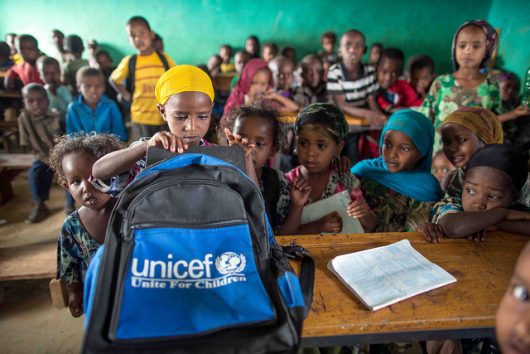
Education is the art of unfolding and absorbing hidden knowledge. As a student matures, the pupil gains the ability to think for themselves, as well as the ability to differentiate fact from fiction. Absorbing the world like a sponge in order to gain knowledge not only enlightens the student, but molds them to better all of mankind.

In 2014, the Nobel Peace Prize focused on empowerment through education. Kailash Satyarthi and Malala Yousafzai shared this international honor “for their struggle against the suppression of children and young people and for the right of all children to education”.

Malala and Kailash dedicated their lives to the betterment of those around them, believing education is the means to lasting peace. Education can be obtained or earned, but cannot be stripped from the person.

Both Nobel Peace Prize recipients defied all odds in order to utilize their experience to touch millions of lives and fight for all children.

Malala was born in Pakistan during a time of chaos and violence. In 2012, she was shot by the Taliban, causing severe injuries and a long recovery. Throughout Pakistan, the Taliban often attacked young girls at school in order to discourage females from receiving an education.

This traumatic incident did not deter Malala from continuing her education, but instead encouraged her to pursue an international campaign from London. Threats from the Taliban poured into her mailbox and inbox as she pursued her recovery as well as her campaign for the universal right to education.

Her platform includes her published book, multiple speeches to the UN, meeting heads of state and traveling to various universities. She has quickly become the face of female empowerment through education and the fight for the education of all children.

In India, Kailash worked as a teacher until 1980, when he became inspired to do more for those most vulnerable. He founded the organization Bachpan Bachao Andolan, which frees thousands of children from exploitation each year. In order to protect their newfound freedom, all children go to school and get an education, the ultimate key to lasting freedom.

Throughout the United States and Europe, education can seem like a chore for some families. To those living in poverty around the world, putting on the school uniform is the embodiment of dignity and pride. Entering the classroom is the first step in breaking the cycle of poverty and domestic abuse, as well as providing hope to dreams.

– Danielle Preskitt

Photo: Flickr

September 27, 2017
https://borgenproject.org/wp-content/uploads/borgen-project-logo.svg 0 0 Borgen Project https://borgenproject.org/wp-content/uploads/borgen-project-logo.svg Borgen Project2017-09-27 01:30:172020-07-16 21:21:32Kailash and Malala: Fighting for All Children
Development, Global Poverty

Small Ways to Help Eradicate Poverty

Help Eradicate PovertyThe eradication of poverty is a controversial topic. Can poverty really be brought to an end? Is there anything that an ordinary citizen can do to help stop this terrible cycle? For those who want to end poverty, but feel like it is an impossible task, there are small but effective ways to help eradicate poverty.

Many organizations have a goal to eradicate poverty by the year 2030. According to Oxfam International Executive Director Winnie Byanyima, this is possible, but many changes must be made in order to achieve such a goal. Byanyima points out that being political is required in order to make real progress in eliminating poverty. Making those in power aware of their riches and showing them why it matters that they are receiving so much while others are struggling to survive is an important step in ending poverty that anyone can achieve.

UNICEF works to eradicate poverty by helping young girls attend school, supporting good nutrition, assisting in water and sanitation improvement, creating a protective child environment and advocating for better awareness and policies.

Plan International suggests similar steps to eradicate poverty, including additional actions such as access to healthcare and providing economic security. Like UNICEF, people can assist them by donating.

It is important to ask the hard questions and focus on the root causes of poverty. This includes topics such as gender inequality and laws that prevent marginalized groups of people from having access to the tools that are needed for them to succeed.

Access to the digital world is also helpful in eradicating poverty. It is important that people are aware of the data that is affecting them. Giving people access to the numbers can cause more people to speak up and create a surge in local awareness.

Finally, one of the simplest ways to help eradicate poverty is to speak out against inequality and demand that action be taken both by citizens and governments alike. If world leaders commit to bringing about changes and citizens continue to push for those changes, there is hope that poverty will become an issue of the past and something to be prevented rather than eradicated.

– Noel Mcdavid

Photo: Flickr

September 27, 2017
https://borgenproject.org/wp-content/uploads/borgen-project-logo.svg 0 0 Borgen Project https://borgenproject.org/wp-content/uploads/borgen-project-logo.svg Borgen Project2017-09-27 01:30:152024-05-29 22:26:53Small Ways to Help Eradicate Poverty
Development, Global Poverty

The Relationship Between Jobs and Poverty

Jobs and Poverty

The proportion of the world’s population living in extreme poverty has decreased significantly since 2012, with 767 million people, or 10.7 percent of the population, now living below the international poverty line, which is $1.90 per person per day. Despite the global financial crisis of 2008-2009, the world poverty rate has steadily declined over the past decade. To have any hope of escaping poverty, income from stable work is essential.

According to Annette Dixon, World Bank South Asia Region Vice President, jobs are necessary to push people out of poverty. A flourishing private sector can help with job creation, while investments in education, healthcare and social protection can ensure that people are credentialed appropriately for those jobs. Investing in women’s education is also imperative if countries are to pull themselves out of poverty. In fact, a woman’s earning potential increases by 20 percent with every year of schooling she receives.

A recent study conducted by the World Bank on factors affecting poverty found a strong correlation between better jobs and poverty reduction. The study, which was conducted in Cambodia, Mongolia, Philippines, Thailand, Timor-Leste and Vietnam, found that a steady income was the largest contributor to poverty reduction. With the exception of the Philippines, incomes from jobs explained 40 percent of the observable reduction in poverty. On the other hand, in Timor-Leste, the loss of labor income between 2001 and 2007, during a period of civil conflicts, explained almost all of the increase in poverty.

The type of labor income plays an important role when discussing better jobs and poverty reduction initiatives. While work in agriculture was a major driver of poverty reduction in the 1980s and 1990s, more recently this has been replaced by wage incomes. Wage incomes explain 50 percent of poverty reduction in countries like Vietnam, the Philippines and Cambodia. In this respect, a flourishing private sector and employment-related training can help bridge the gap between skilled labor and targeted jobs.

The bottom line is that ending poverty and boosting shared prosperity hinge on creating better labor market conditions for the poor. In other words, steady income through better jobs and poverty reduction go hand in hand. Job creation, higher productivity and growth in real wages at the bottom of the distribution are the main mechanisms to achieve sustained poverty reduction.

– Jagriti Misra

Photo: Google

September 24, 2017
https://borgenproject.org/wp-content/uploads/borgen-project-logo.svg 0 0 Borgen Project https://borgenproject.org/wp-content/uploads/borgen-project-logo.svg Borgen Project2017-09-24 01:30:232020-07-09 17:55:04The Relationship Between Jobs and Poverty
Development, Global Poverty

Empowerment Through Chess: Uganda’s Som Chess Academy

Uganda's Som Chess Academy
With a single chess board and a heart for change, Robert Katende launched Uganda’s Som Chess Academy in the Katwe slums of Kampala in 2004. Thirteen years later, the program boasts 13 different centers in varying parts of Uganda (one which focuses on children with disabilities), an impending expansion into neighboring Kenya, an estimated participant count of 1,400 and a world-class chess player in Phiona Mutesi.

The most attention has been gifted to the incredible story of Ms. Mutesi, whose rise from the slums of Katwe to the international chess arena has been featured in ESPN Magazine and Disney’s Queen of Katwe film. And understandably so—Phiona has been honored in various capacities, most notably as one of three “Women of Impact” at the 2013 Women of the World Summit. Her story is especially significant considering the relatively limited role of women in Ugandan society. Such a role ensures that the literacy rate for girls 15 years of age and older is cemented at 65 percent—a rate which is a full 18 percent lower than that of their male peers. Consequentially, Phiona’s success has paved the way for other women to also strive for their goals and meet their potential in spite of traditional gender barriers like minimized education.

However, the everyday successes of Uganda’s Som Chess Academy demand recognition as well. The program is completely free for its participants and provides tangible perks, such as meals, but it also provides something arguably more important: intangible perks, such as personal empowerment, something that is so incredibly significant for children who have very few opportunities to know their strength.

The program operates under the guidance of about 40 peer coaches who aim to not only teach chess but to teach it well—in 2015, Som Academy placed seventh in the national chess league—but to also teach life skills that focus on character development, goal-creation and leadership skills, too. Chess is only a vessel with which to facilitate these understandings; the strategy, mental discipline and adaptation required to play the game is translated into real-life usage as well.

Furthermore, the program actually enrolls participants in school and supports them throughout their academic endeavors, with several of the program’s graduates going on to higher education levels that would have otherwise been inaccessible to children entrapped in the cycle of slum poverty. In an environment where 31 percent of urban children aged 13 to 18 are not attending secondary school, a free program that empowers and ultimately pushes such children into the educational system is truly an incredible gift to a deserving community.

– Kailee Nardi

Photo: Flickr

September 22, 2017
https://borgenproject.org/wp-content/uploads/borgen-project-logo.svg 0 0 Borgen Project https://borgenproject.org/wp-content/uploads/borgen-project-logo.svg Borgen Project2017-09-22 01:30:212024-05-29 22:26:40Empowerment Through Chess: Uganda’s Som Chess Academy
Development, Global Poverty

The Success of Healthcare in Cuba

Health Care in Cuba

Due to the dwindling trade restrictions between Cuba and the United States during the Obama administration, people around the world are getting a look into a country that has been closed off from much of the world for many years. While the country is known for its slow wealth creation and high levels of state control, healthcare in Cuba has made massive strides since the country’s revolution in 1959.

Cuba’s healthcare is recognized as being among the world’s most efficient and high quality systems. Former United Nations Secretary General Ban Ki-moon stated that the country’s healthcare system should be used as a model for many developing countries.

Since the 1959 revolution, when Fidel Castro gained power in Cuba, the socialist ideology emphasized that access to healthcare is a fundamental human right. With this belief inscribed in Cuba’s constitution, the country focuses on preventative approaches to medicine. From providing annual, mandatory checkups to the most complex surgeries, healthcare in Cuba remains free of charge.

With this high level of accessibility, the country has made many health improvements since the beginning of the Castro regime. These include:

  • A 98 percent full immunization record by the age of 2 that protect children from 13 illnesses.
  • Low infant mortality rates. Cuba’s rate is extremely close to that of the United States’ with less than 5 deaths per 1000 births. This statistic makes Cuba the best performer in the developing world.
  • High life expectancies, with men living an average of 77 years and women living an average of 81. These expectancies are almost identical to those in the United States.
  • Record doctor to patient ratios that surpass many developed nations. Every doctor cares for around 150 patients.
  • A well-educated public regarding individual health. Family doctors, who make mandatory visits annually, discuss issues such as smoking, eating and exercising with patients while also providing tailored recommendations to remain healthy.
  • World leading medical schools. Former U.N. Secretary General Ban Ki-moon stated that Cuba’s medical education system is the world’s most advanced. In 2014, over 11,000 students from over 120 nations pursued a career in medicine at the Cuban Institution.
  • A significant focus on research and development. The focus on innovation has been attributed to the U.S. embargo that prohibited trade in medicines for Cuba. This made investing in medical sciences a necessity to provide quality health care.

By the mid-1980s, Cuba developed the world’s first Meningitis B vaccine. In 2012, Cuban doctors developed Cimavax, the first therapeutic cancer vaccine. Additionally, The World Health Organization (WHO) recognized the country as being the first to eliminate HIV transmission between mothers and their children in 2015. These outcomes are found to be a direct result of the huge investments made in Cuba’s biotechnology and pharmaceutical industries.

Healthcare in Cuba has benefited more than just the citizens of its country. Every year, Cuba sends around 50,000 health professionals abroad, providing care to developing countries. In only one decade, Cuba’s contribution to Mission Miracle, a program supporting people with sight impairments, has restored around 3.5 million individuals’ vision. Many of these contributions are made in Latin America, where 165 Cuban institutions maintain 49 ophthalmological centers and 82 surgical units in 14 countries.

However, Cuba’s support reaches beyond its own continent and into Africa. The Cuban chemical and biopharmaceutical research institute LABIOFAM launched a vaccination campaign against malaria in 2014 in more than 15 West African nations. Additionally, during the recent Sierra Leone Ebola crisis, over 100 Cuban doctors and nurses were of assistance.

Castro was an advocate for providing international health support, as he believed by assisting developing countries, Cuba was preventing the expansion of epidemics that could spread to its own nation if not handled correctly. In addition to the philanthropy aspect, Cuban doctors and nurses working in over 77 countries generate $8 billion a year, which makes international health services the country’s largest export.

While the country’s GDP per capita is ranked 137th in the world, healthcare in Cuba has demonstrated that a poor country can create dramatic developments in its population’s quality of life for the long term. Castro’s form of leadership, while questioned in many other areas, has improved the living standards for Cuba’s poorest with regard to medical needs.

The WHO stresses that Cuba provides a prime example of a developing nation with limited resources that can provide an efficient health care system to all of its population. However, for such an outcome, the political institutions of the country must make human beings the center of their policies and not their own wallets.

– Tess Hinteregger
Photo: Flickr

September 21, 2017
https://borgenproject.org/wp-content/uploads/borgen-project-logo.svg 0 0 Borgen Project https://borgenproject.org/wp-content/uploads/borgen-project-logo.svg Borgen Project2017-09-21 01:30:132020-07-05 09:18:35The Success of Healthcare in Cuba
Development, Global Poverty

The Poverty Rate in the United Kingdom

Poverty Rate in the United Kingdom

A recent study from the U.K.’s Office for National Statistics (ONS) has shown that the poverty rate in the United Kingdom fell slightly between 2014 and 2015, dropping from 16.8 percent to 16.7 percent. This rate puts the U.K. roughly in the middle of all E.U. member countries, and just below the E.U. average of 17.3 percent.

The report of a fall in the overall poverty rate in the United Kingdom also came with a reported rise in the persistent poverty rate. The persistent poverty rate is defined as being below the poverty line in the current year, as well as in 2 of the previous 3 years. The persistent poverty rate jumped from 6.5 percent in 2014 to 7.3 percent in 2015. The jump means that 700,000 more people were persistently poor in 2015 than 2014. However, this rate ties for the fifth-lowest in the E.U. and is well below the E.U. average of 10.9 percent.

The rise in the persistent poverty rate did lead to concern from different parties. Justin Watson, the head of the Oxfam U.K. Programme, welcomed the relatively low persistent poverty rate compared to the rest of the E.U. while expressing concern about the 4.6 million people experiencing persistent poverty. Others expressed concern about rising child poverty rates and a disparity between male and female persistent poverty rates.

Addressing the U.K.poverty rate will require more than employment expansion. Median earnings are down 5 percent in the U.K. since the 2008 global recession, even while employment is up 1.5 percent in that same period, hitting a record high in July 2017. A government official cited multiple steps being taken in addition to employment in the attempt to address the overall U.K. poverty rate. In fact, the government spends £90 billion a year  on working age benefits, the National Living Wage is rising and income tax is being lowered or eliminated for millions of people.

– Erik Beck

September 20, 2017
https://borgenproject.org/wp-content/uploads/borgen-project-logo.svg 0 0 Borgen Project https://borgenproject.org/wp-content/uploads/borgen-project-logo.svg Borgen Project2017-09-20 01:30:022024-05-28 00:16:30The Poverty Rate in the United Kingdom
Page 95 of 163«‹9394959697›»

Get Smarter

  • Global Poverty 101
  • Global Poverty… The Good News
  • Global Poverty & U.S. Jobs
  • Global Poverty and National Security
  • Innovative Solutions to Poverty
  • Global Poverty & Aid FAQ’s
Search Search

Take Action

  • Call Congress
  • Email Congress
  • Donate
  • 30 Ways to Help
  • Volunteer Ops
  • Internships
  • Courses & Certificates
  • The Podcast
Borgen Project

“The Borgen Project is an incredible nonprofit organization that is addressing poverty and hunger and working towards ending them.”

-The Huffington Post

Inside The Borgen Project

  • Contact
  • About
  • Financials
  • President
  • Board of Directors
  • Board of Advisors

International Links

  • UK Email Parliament
  • UK Donate
  • Canada Email Parliament

Get Smarter

  • Global Poverty 101
  • Global Poverty… The Good News
  • Global Poverty & U.S. Jobs
  • Global Poverty and National Security
  • Innovative Solutions to Poverty
  • Global Poverty & Aid FAQ’s

Ways to Help

  • Call Congress
  • Email Congress
  • Donate
  • 30 Ways to Help
  • Volunteer Ops
  • Internships
  • Courses & Certificates
  • The Podcast
Scroll to top Scroll to top Scroll to top