• Link to X
  • Link to Facebook
  • Link to Instagram
  • Link to TikTok
  • Link to Youtube
  • About
    • About Us
      • President
      • Board of Directors
      • Board of Advisors
      • Financials
      • Our Methodology
      • Success Tracker
      • Contact
  • Act Now
    • 30 Ways to Help
      • Email Congress
      • Call Congress
      • Volunteer
      • Courses & Certificates
      • Be a Donor
    • Internships
      • In-Office Internships
      • Remote Internships
    • Legislation
      • Politics 101
  • The Blog
  • The Podcast
  • Magazine
  • Donate
  • Click to open the search input field Click to open the search input field Search
  • Menu Menu

Archive for category: Developing Countries

Information and stories about developing countries.

Developing Countries, Development, Education, Global Poverty

The Global Education Gap Remains Despite Education Numbers Surging

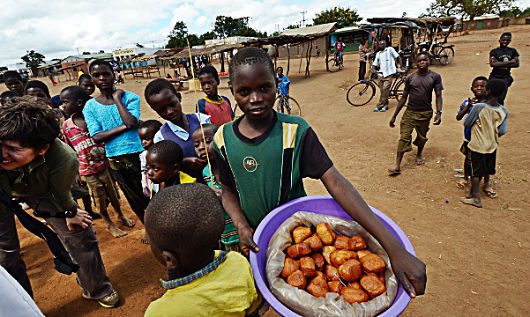
Education Numbers Surge, but Global Education Gaps RemainThe number of children across the globe attending primary school at the beginning of the 1800s: 2.3 million. This number has surged to 700 million today. But despite this gigantic increase, primary school children across the developing world still face one major problem: a global education gap between developed and developing countries.
A new Brookings Institution report details just what this problem is: a 100-year gap in the quality of education between developed and developing regions of the world. This means that the average level of education in many poor countries today is the same as the levels of education in places like Europe and North America were in 1900.

Not only is there a 100-year gap between global education in the developed world and the developing world, but the developing world also lags 85 years behind when it comes to educational attainment. It will take average-scoring students in the developing world six generations to catch up to the same scoring students in the developed world today.

Ninety percent of primary school-aged children are enrolled in school around the world – that success should not go unnoticed or without applause. At the end of World War II, only 1 million children attended primary school. In 65 years, this has increased to 7 million. This “going to scale” of education across the world is incredible. The next step, however, is catching the developing world up to the education levels the developed world enjoys today.

How did it get behind in the first place? The idea of mass schooling is available to all young people and not only those with the resources to access it became a mainstream idea in the middle of the 1800s in areas like North America and Europe. Only in 1948, almost 100 years later, with the Universal Declaration of Human Rights did this become a concept applied to children across the whole world.

Even with the large enrollment number victory, if the data is broken down in specific regions, the picture is not as pretty. In Sub-Saharan Africa, less than 80 percent of school-aged children attend school.

Another way to examine the gap is by looking at the average number of years of schooling adults have. In 1870, adults in the developed world completed an average of 2.8 years of schooling, while adults in the developing world completed under half that time – 0.5 years.

The average lagged behind, usually with adults in the developing world completing under half the years of education that their counterparts in the developing world did until 2010. For every 12 years that adults in the developed world completed on average, adults in the developing world complete an average of 6.5 years – just over half.

It is imperative that this gap is reduced and eventually banished for good. Besides the idea that morally all children deserve the opportunity to develop in order to thrive in the modern age, there are a couple of other reasons why action should be taken immediately. First, ending the 100-year gap holds the possibility for reform and improved global education. New ways of thinking about education in the developing world have the potential to be helpful to education systems in the developed world and benefit all young people.

Second, there is a skills deficit that has already started – between 2010 and 2030, 360 million people over the age of 55 will retire. At the same time, a 60 percent increase in the global labor force will come from places like Africa, India and other South Asian countries, all places in the developing world. These young people should not be affected by the global education gap, so they can seize their place in the world economy left by the well-educated retirees that came before them. If nothing is done, the 100-year gap will continue into eternity. Changes must be made to ensure this does not happen, for the sake of the world’s children and perhaps the world’s economy as well.

– Greg Baker

Sources: Brookings, BBC MG Africa
Photo: Africa Business Conference

July 2, 2015
https://borgenproject.org/wp-content/uploads/borgen-project-logo.svg 0 0 Borgen Project https://borgenproject.org/wp-content/uploads/borgen-project-logo.svg Borgen Project2015-07-02 15:58:062024-05-27 09:25:22The Global Education Gap Remains Despite Education Numbers Surging
Children, Developing Countries, Global Poverty

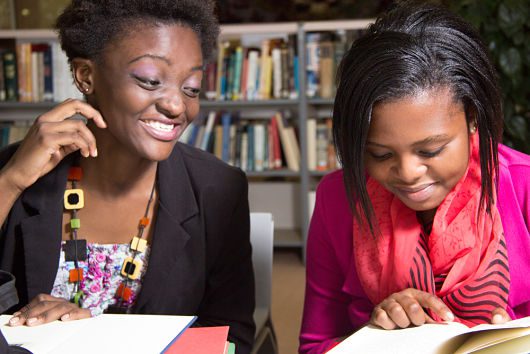
Vision Not Victim Program Helps Girls Reach Goals

vision_not_victim
Girls in developing nations have been facing hardships like violent civil wars and survival in unfamiliar countries as refugees. Their gender and age makes them vulnerable to harassment, exploitation, violence and being bought and sold as child brides.

Many are prevented from attending school and receiving proper health care. Instead of being able to develop their own identity and pursue their personal dreams, they are urged to work for the benefit of their family.

A program by the International Rescue Committee called Vision Not Victim was started to supply girls with the skills and support they need in order to realize their potential and make their dreams a reality.

Meredith Hutchison traveled to the Democratic Republic of Congo in the summer of 2010 to work with local girls. There, she saw the widespread dangers of domestic violence and sexual assault women face all too frequently.

Three years later, Hutchinson began the Vision Not Victim Project which uses photography to impact the lives of girls in poverty. Girls understand the difficulties associated with poor health care and corrupt leadership. Even more, they have their own ideas about how to make positive changes in their community.

“I believe that as much as photographs help us understand terrible truths about war and poverty, as in Congo, they can also help us see the world in a new light: they can showcase our triumphant moments, illuminate role models and create positive visions of the future.”

Here’s how it works: girls ranging in ages 11 to 16, with the help of female leaders from their community, talk about their goals and design a vision for the future. Girls then sketch a tangible picture that represents these goals and the program gets to work recreating it in a photoshoot.

During each session, Hutchinson has noticed the confidence that builds for girls when they see their goals play out before them. Just by providing some props and an appropriate location, participants ‘try on their future’ with courage and grace.

This is promising. As young women, these girls play a very important part in the future of their community and their own lives. True, a photograph is not a final solution, but it does work to propel them in the right direction. Seeing pictures of themselves achieving their goals is very motivating.

Once the photographs are printed, girls share them with their families and community. It can inspire others to envision their own goals as well as realize the potential of young women.

These photographs also have the ability to motivate people in developed countries. It puts faces to the disasters. People are reminded that when they donate to aid groups, they are improving the lives of real people working towards a brighter future for the whole world.

The Vision Not Victim program has worked with girls in the Democratic Republic of Congo and girls in Jordan as Syrian refugees. It is being spread to other developing countries and even for refugee girls resettled in the United States.

– Lilian Sickler

Sources: International Rescue Committee, USAID, The Daily Beast, Women in Foreign Policy
Photo: The Daily Beast

July 2, 2015
https://borgenproject.org/wp-content/uploads/borgen-project-logo.svg 0 0 Borgen Project https://borgenproject.org/wp-content/uploads/borgen-project-logo.svg Borgen Project2015-07-02 15:55:422024-12-13 17:51:39Vision Not Victim Program Helps Girls Reach Goals
Developing Countries, Food & Hunger, Global Poverty

Cleaner Cookstove Technology Fails to Take Off

cookstove_technology
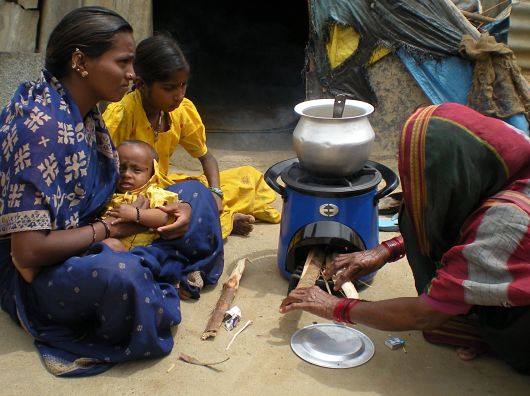
The Poverty Action Lab (PAL), a research organization from MIT, carried out a project that implemented new, environmentally friendly cookstoves for 2,600 households in Orissa, India. Each household contributed a small amount of money to pay for the building of the stove and was given training on its proper use and maintenance. Although the initial take up of the technology was high, families were only cooking 1.8 meals a week on the new stove three years after its implementation. Most had reverted to using their old cookstoves, commonly called chulas.

Indoor air pollution caused by chulas is the second largest health risk in developing countries, after unclean water. Over 70% of all households in India use them. Chulas burn cheap fuels such as firewood, coal or cow manure and create particle matter concentrations of 20,000 micrograms per cubic meter; the recommended limit is just 50. For the people who are around them — mainly women and young children — it is like smoking several packs of cigarettes a day. They cause 2 million deaths in India annually.

The new cookstoves were promoted as a cleaner alternative to traditional stoves that would save families from mental hardship and health expenditures. They would also make them more productive, as adults and children would miss fewer days of work and school. Finally, the stoves were advertised as being more cost-effective as they used less fuel and more time-effective because they decreased cooking times.

Medical checkups three years into the PAL study showed that because they were rarely used, introducing these stoves to poor households even at a very low cost did nothing to change health effects. High levels of blood pressure, a tendency to develop coughs and poor infant health remained the same. People showed the same risks of developing lung cancer, cardiovascular diseases and respiratory diseases.

In addition to causing health problems, chulas cause environmental damage. Worldwide, three billion people use them, or four out of every ten people. They collectively release 6 billion kilograms of CO2 into the atmosphere. That is triple the amount of the daily emissions from all private cars in the United States.

The main issue that seems to have stopped people from using their new stoves was that they required a lot more maintenance, and their unfamiliarity with the technology was an impediment to carrying out repairs. Households reported that they spent hours getting their stoves fixed and cleaning newly added chimneys. Their old way of cooking was easy to use and never broke. Moreover, it was familiar, so people were more inclined to revert back to it when their new stoves exhibited problems.

While the new cookstoves perform well in laboratories and have the potential to drastically decrease health and environmental effects, their effectiveness depends on them actually being used. India launched a National Biomass Cookstove Initiative (NCBI) in 2010 and plans to install 2.5 million cookstoves by 2017. Moreover, Hillary Clinton helped start the Global Alliance for Clean Cookstoves (GACC), which aims to install 100 million cookstoves by 2020. Both the NCBI and GACC would do well to conduct long-term studies before spending millions of dollars in initiatives that have little to no impact.

– Radhika Singh

Sources: National Geographic, The Washington Post, Poverty Action Lab 1, Poverty Action Lab 2, Boston Globe, Ministry of New and Renewable Energy, Global Alliance for Clean Cookstoves
Photo: The Washington Post

July 1, 2015
https://borgenproject.org/wp-content/uploads/borgen-project-logo.svg 0 0 Borgen Project https://borgenproject.org/wp-content/uploads/borgen-project-logo.svg Borgen Project2015-07-01 06:30:112024-12-13 17:51:37Cleaner Cookstove Technology Fails to Take Off
Developing Countries, Global Poverty

How a Decline in Bees Affects the Developing World

decline_in_bees
This week, President Obama revealed a solution to a problem not many Americans knew existed: declining bee populations.

The plan, appropriately titled the “National Strategy to Promote the Health of Honey Bees and Other Pollinators,” was drafted by the Pollinator Health Task Force and runs for a solid 58 pages. It’s the sort of thing that prompts endless jokes and puns (“Plan B” is a popular one), but for farmers around the world, the decline in bees is serious business.

That’s because bees play an important role in our ecosystem. As pollinators, bees help plants reproduce by spreading pollen around, enabling the creation of seeds and fruit. Many crops rely on bee pollination, including coffee and apples. Larger farms rely on beekeepers who drive from farm to farm, leasing their bees for short bouts of pollination. All in all, 30 percent of the world’s crops rely on insect pollination, most often from bees.

If these pollinators were to suddenly disappear, the world would be in a lot of trouble. Yet that is exactly what is happening, in a mysterious phenomenon known to scientists as “colony collapse disorder.” Worker bees are vanishing and their hives are slowly dying off.

That’s leaving some farmers in the developing world scrambling to find new ways of pollinating their crops. In southeast China, for instance, bee populations have been diminished by habitat destruction and heavy doses of pesticides. Apple farmers in the region are now forced to pollinate their crops by hand. Armed with utensils resembling feather dusters, the workers climb along branches and pollinate the trees themselves.

It’s a painstaking and process that leaves Tang Ya, a researcher at Sichuan University, concerned about sustainability. “For fruit growers, artificial pollination can guarantee profits,” the scientist told China Daily. “But as more young people leave their homes to seek jobs in cities, I’m afraid that artificial pollination will be very difficult to achieve in less than two decades.”

But the problem goes beyond economics; it threatens to worsen global malnutrition as well.

A study published this year by Harvard University and the University of Vermont demonstrated how declining pollinator populations would disrupt human diets in the developing world. Vitamin A, for instance, comes from crops which mostly rely on insect pollinators. According to the World Health Organization, Vitamin A deficiency can have devastating consequences for children, including blindness and a much higher risk of illness and death from common childhood infections.

Though aware of the dangers involved, scientists aren’t entirely sure what causes colony collapse disorder. A wide range of explanations have been offered, including pesticide use, climate change, malnutrition and disease. Neonicotinoid, a type of pesticide, has attracted scrutiny recently and European countries have placed restrictions on its further use.

In the United States, President Obama’s plan calls for setting aside land for pollinators, further restricting pesticide use and increasing funding for research. How the developing world will cope, however, is less clear.

– Kevin Mclaughlin

Sources: Berkeley News, China Daily, Whitehouse.gov, University of Vermont, World Health Organization
Photo: Flickr

June 17, 2015
https://borgenproject.org/wp-content/uploads/borgen-project-logo.svg 0 0 Borgen Project https://borgenproject.org/wp-content/uploads/borgen-project-logo.svg Borgen Project2015-06-17 11:56:552020-07-15 18:22:55How a Decline in Bees Affects the Developing World
Developing Countries

What Is A Third World Country?

Third World Country
“Third World country” is a phrase used all the time in discussions of impoverished/under-developed nations, but what does this designation actually mean? Many of those who reference a supposed third world country have no conception of the origin of the phrase and unknowingly use it incorrectly.

The term was first coined during the Cold War era and referred to the nations that were aligned with neither the U.S. nor the U.S.S.R. Most often, these were the developing nations of Africa, Asia and South America.

The “First World” was made up of the democratic-industrial nations within the sphere of American influence. These countries were capitalist and came out of World War II with similar political and economic interests; examples include Japan, Australia and the countries of Western Europe.

The “Second World” was the Eastern bloc of communist-socialist, industrial states in the territory of the U.S.S.R. Today this descriptor would apply to Russia, Eastern Europe (i.e. Poland), some of the Turk states and China.

The three-quarters of the global population that was left over became known as the “Third World.” The countries are not a very cohesive group, including capitalist and communist economies like Venezuela and North Korea, as well as rich and poor countries like Saudi Arabia and Mali.

History of the Third World Country

The exact origin of the terminology “third world” is unclear. In 1952, a French demographer named Alfred Sauvy wrote an article in a French magazine, L’Observateur, that ended by comparing the Third World with the Third Estate of pre-revolutionary France. Sauvy may have been the first to use the phrase, remarking “this ignored Third World, exploited, scorned like the Third Estate.”

The modern descriptor has moved away from its original definition. Today, various indicators, which are have nothing to do with Cold War alliances, are used to classify “Third World” countries. These include political rights and civil liberties, Gross National Income (GNI), Human Development (HDI), as well as the freedom of information within a country. The concept of the “third world” has evolved to describe countries that suffer from high infant mortality, low economic development, high levels of poverty and little to no ability to utilize natural resources.

“Third World” nations tend to have economies dependent on the economic prosperity of the developed countries and, as a result, tend to have a large foreign debt. A common factor is the lack of a middle class — “third world” income distribution is made up of impoverished millions and a very small elite upper class controlling the country’s wealth and resources. Because their economies are lacking, these countries generally cannot support their high levels of population growth. The nations of the “Third World” often have unstable governments and are pervaded by illiteracy and disease.

Although useful as a descriptor for a select group of countries, many exceptions make the geopolitical term seem hugely outdated. For example, Saudi Arabia, as previously noted, is technically a “Third World” country, but it obviously does not meet the qualifications mentioned above. The three worlds additionally do not take into account the emerging economies of countries like Brazil and India. The phrase has expanded to describe sections of affluent countries that are impoverished compared to richer areas but maybe not so destitute with regard to levels of global poverty.

The world of the 21st century is much more complex than it was during the Cold War period; First World countries have third world qualities and vice versa. Calling countries developing nations versus non-developing nations might be a better option, but it is unclear what the exact distinction here is either. Very real modern global problems are not well-served by wishy-washy generalizations.

– Katie Pickle

Sources: Nations Online, Policy.Mic
Photo: Funding Gates

June 14, 2015
https://borgenproject.org/wp-content/uploads/borgen-project-logo.svg 0 0 Borgen Project https://borgenproject.org/wp-content/uploads/borgen-project-logo.svg Borgen Project2015-06-14 13:02:292020-07-16 12:57:37What Is A Third World Country?
Developing Countries

Self-Adjusting Glasses Provide a Vision for the Future

Self-Adjusting-Reading-Glasses
The lack of productivity caused by poor eyesight costs the developing world $269 billion per year according to the World Health Organizations. Other estimates put the number as high as $700 billion.

Poor eyesight makes living in the developing world considerably burdensome. It is much more difficult to hold down a job, accidents are more frequent and even life expectancies are significantly lower.

To bring about worldwide, long-term economic development, affordable eye care must be brought to the 517 million people in developing countries with both impaired vision and a lack of the means to correct it. For this reason, in the past few years, great strides have been made in promoting affordable eye care in the developing world.

Self-adjustable eyewear is a potential solution to this problem. Low priced and easy to use, they provide a solution to over 80 percent of those with vision problems in the developing world, though they cannot yet provide a solution to astigmatism and similar conditions.

One company providing such a service is Eyejusters. Eyejusters bring high quality eyewear to the developing world for a low cost using something known as “Slide Lens.” Able to tackle both near and long-sightedness, though Eyejusters tends to focus on reading glasses, Slidelens glasses allow the individual to adjust them through the turning of a screw.

Self-adjustable eyeglasses can be provided for an extremely low price. Dutch glasses maker, “The Focus on Vision Foundation,” is able to produce a pair of glasses for just $4 a pair, while the average North American pair of prescription eyeglasses is $350.

British company Ad Specs has been selling its brand of self-adjustable eyewear in the developing world for $19 a pair. All of these companies are using technology to bring low-cost solutions to problems which, in the developing world, have a very high cost.

Self-adjustable glasses provide a major fix to the problem of poor eyesight in the developing world. Fixing this problem can significantly improve the economic well-being, health and life expectancy of millions.

– Andrew Michaels

Sources: Forbes, Gizmag New York Times Eyejusters Global Eyesight
Photo: Business Opportunities

June 12, 2015
https://borgenproject.org/wp-content/uploads/borgen-project-logo.svg 0 0 Borgen Project https://borgenproject.org/wp-content/uploads/borgen-project-logo.svg Borgen Project2015-06-12 08:00:352020-07-17 00:52:13Self-Adjusting Glasses Provide a Vision for the Future
Developing Countries, Global Poverty

The 20 Most Impoverished Countries

Impoverished Countries
The term “Third World” is often used to describe the impoverished nations across the globe. According to Business Insider, the following list represents the 20 most impoverished developing countries from lowest to highest by GDP per capita:

  1. Democratic Republic of Congo
  2. Republic of Zimbabwe
  3. Republic of Burundi
  4. Republic of Liberia
  5. State of Eritrea
  6. Republic of Niger
  7. Central African Republic
  8. Republic of Sierra Leone
  9. Togolese Republic (Togo)
  10. Republic of Malawi
  11. Republic of Madagascar
  12. Republic of Mozambique
  13. Federal Democratic Republic of Ethiopia
  14. Republic of Guinea
  15. Republic of Rwanda
  16. Republic of Mali
  17. Republic of Uganda
  18. Federal Republic of Nepal
  19. Burkina Faso
  20. Republic of Haiti

Eighteen of these countries are in Africa. The widespread famine and war that have plagued the continent for decades, along with the hardships resulting from several nations’ recent independence from colonial European powers have all contributed to the poverty endured in the country.

Of the numerous conditions that perpetuate poverty within the countries listed above, three factors dominate: drought, political instability and failure to harness resources.

What Creates Impoverished Countries

Water shortage has long been cited as one of the leading contributors to poverty. Severe droughts afflict nearly every third world nation on this list, causing a domino effect of failed crops, health concerns and further impoverishment.

Governmental instability prolongs poverty by fragmenting nations. Lack of political security and centrality undermine every inferior structure within the national hierarchy. Corruption, dictatorships and military rule impede economic development by institutionalizing instability and failing to address the issues that arise from poverty.

Although some of these countries contain valuable resources, few third world nations possess the capital to develop proper infrastructure. This results in an inability to exploit these assets or yield any profit from them.

The three poorest countries in the world, The Democratic Republic of Congo, Zimbabwe and Burundi, all have a GDP per capita of $400 or less, according to Business Insider. This is less than one one-hundredth of the United States’ GDP per capita.

So what’s the good news? There are tangible solutions to these three problems, and several developing countries are already beginning to pursue them.

Rwanda, rich with minerals and having received external aid after the genocide, shows signs of hope. Guinea and the Central African Republic show promise as well, if they can advance their industries and attain political stability. The Togolese Republic, working to repair its relationship with the international community and improve productivity through market privatization and foreign donor support, is experiencing some economic progress.

External contributors, such as the United Nations and non-governmental organizations, are supporting industry development and helping lay the groundwork for business in third world countries. Local governments are slowly shifting from military leadership to democracy. The progression of technology is creating more efficient ways to grow crops and utilize existing water sources.

The third world countries listed above are still far from escaping the bondage of poverty. Their greatest setbacks are their limited means for improving their conditions. But with the intervention and assistance of external powers, the improvement of infrastructure and the development of autonomous governments, there is potential for progress.

– Zoe Smith

Sources: Business Insider, One World Nations, The World Bank
Photo: World Knowing

June 8, 2015
https://borgenproject.org/wp-content/uploads/borgen-project-logo.svg 0 0 Borgen Project https://borgenproject.org/wp-content/uploads/borgen-project-logo.svg Borgen Project2015-06-08 16:00:212024-05-27 09:24:04The 20 Most Impoverished Countries
Developing Countries, Economy, Extreme Poverty, Global Poverty

Poverty in Lahore, Pakistan

Poverty-in-Lahore-Pakistan
Pakistan is among the nations in the developing world that has made substantial progress in poverty reduction. The amount of people living in extreme poverty has gone down considerably over the years and continues to decrease today. What drives poverty reduction in Pakistan, especially in large areas such as Lahore, is income growth. Through a combination of support programs and reforms, as well as income equality, Pakistan was able to translate income growth to poverty reduction.

According to the World Bank Group, there are over 50 million less people living in poverty in present day Pakistan than there were in 1991. Additionally, the percent of people living on less than a dollar and a quarter a day fell from 66.5 percent to 12.7 percent. However, although extreme poverty in the region has been reduced, there is still over half of the population living under two dollars a day. Despite progress made in Pakistan, there still remains a high number of Pakistanis in poverty and many more who are vulnerable to falling back into poverty, especially in large cities such as Lahore.

Lahore, a large region in Pakistan, is considered to be one of the most populated urban areas in the world and is one of the largest cities in the Islamic world. According to Index Mundi, as of January 2015, Lahore has an estimated 10 million people living in the region. The size of the region poses a bilateral problem; on the one hand, Lahore’s population and size contributes to its wealth and prosperity, while on the other hand, with a large city comes overpopulation and underdevelopment. Large cities such as Lahore often have another side to their urban development: the underdevelopment of parts of the region called the slums. Similar to the slums in various parts of India, Indonesia and Kenya, slums in Lahore are densely populated with areas lacking in basic necessities such as clean water, electricity, security and health care.

In Lahore, 30 percent of the region is considered to fall into the category of slums; however, the percentage does not take into account the amount of unregistered slum neighborhoods in the city. These slums are formed by low income communities that do not have the means to live in proper housing in the city, and they are a byproduct of over population, economic, political and social inequalities as well government intervention. Slums in Lahore are also a consequence of people moving from rural areas around Pakistan to the city in hopes of attaining a better life. The reality, however, reveals that many who move into the city have a difficult time securing employment, and eventually settle in the slum communities as a result. Health care, education, and basics such as sanitation and electricity, are extremely limited in the slums of Lahore and further contribute to low living conditions.

A solution that can bring poverty rates down in Lahore is to have more government involvement through political laws and reforms that pay special attention to these areas. More government interference and aid to counteract inequalities can be the beginning of reducing poverty in the slums of Lahore.

– Nada Sewidan

Sources: The World Bank, TribuneAcademia.edu
Photo: Pakistan Defence

June 6, 2015
https://borgenproject.org/wp-content/uploads/borgen-project-logo.svg 0 0 Borgen Project https://borgenproject.org/wp-content/uploads/borgen-project-logo.svg Borgen Project2015-06-06 12:00:572020-07-17 20:36:39Poverty in Lahore, Pakistan
Developing Countries, Global Poverty

Duke Energy CEO’s Book on Electricity for the Poor

Duke_Energy_CEO_Book_on_Electricity_for_the_Poor
Over 1.2 billion people on Earth do not have access to electricity. Even where cell phones are common, villagers have to walk miles to charge them. More than 95 percent of these people are either in sub-Saharan Africa or developing areas in Asia; 84 percent reside in rural areas.

Former Duke Energy CEO James Rogers is writing a book about bringing electricity to the rural parts of the world that lack energy sources. Rogers served as the CEO and president of Duke Energy from 2006 to 2013. He has worked in the utility industry for over 25 years and has received many awards and recognitions for his leadership and focus on sustainability and research.

Under Rogers’ leadership, Duke Energy has been recognized as a leader in sustainability – performing based on the “triple bottom line” of people, planet and profits. Rogers also serves as the co-founder of the Global BrightLight Foundation, which works to provide globally accessible and affordable energy solutions to improve the education, environment, economic opportunities and quality of life for those living in areas that currently lack access to electricity and power.

The focus of Rogers’ work, “Lighting the World: Transforming Our Energy Future by Bringing Electricity to Everyone,” is to bring electricity to the parts of the world that have little to no access. Rogers details the bold thinking, international cooperation and political will that are required to bring this energy to the 1.2 billion in need.

The key, he states, is finding energy sources that are both renewable and sustainable. Renewability and sustainability are important for nations without basic resources to support the large, centralized power systems on which developed countries heavily rely.

Rogers writes about new large-scale, sustainable solutions that will not only introduce a new era of electricity but also serve as an integral step in lifting the world’s poor out of poverty and onto the road toward renewable, viable economic and energy development.

Rogers doesn’t write only for developing countries, though. The developed world can also benefit from what is learned by drawing electricity from such sources such as sub-Saharan Africa, Southeast Asia and Latin America. Westernized, advanced countries have, for the most part, skipped this “analog” stage of electricity development and have moved directly and swiftly from the middle age to the digital age. This is because these countries have not been hindered by the lack of infrastructure, resource restrictions or outdated laws and regulations that the developing, rural areas must face.

An incubator for innovation and invention, the developing world may be the best platform to make progress on energy issues.

“Lighting the World: Transforming Our Energy Future by Bringing Electricity to Everyone” is scheduled to be published August 2015 by MacMillan Publishers.

– Alison Decker

Sources: MacMillan Publishers, Duke Energy, Global BrightLight Foundation, Charlotte Business Journal, International Energy Agency
Photo: Flickr

May 19, 2015
https://borgenproject.org/wp-content/uploads/borgen-project-logo.svg 0 0 Borgen Project https://borgenproject.org/wp-content/uploads/borgen-project-logo.svg Borgen Project2015-05-19 08:00:292024-05-27 09:23:56Duke Energy CEO’s Book on Electricity for the Poor
Developing Countries, Global Poverty

Helping Poor Countries Deal with Climate Change

Climate Change
It is unfortunate for a family to go without food or water for extensive periods of time. However, the real disaster is climate change. In the world’s poorest countries, where carbon emissions are at their lowest, people experience the worst natural disasters. Droughts affect the production of crops and storms destroy developing regions.

According to Oxfam, “In the next 40 years, climate-related disasters are projected to displace between 150 million and one billion people.”

People living in poverty will experience the greatest loss when natural disasters occur, increasing their risk of starvation and lack of clean water. However, natural disasters will put all people, rich and poor, out of homes and ultimately make climate change one of the main barriers to ending world poverty.

“Just about everything we do has to be focused on tackling climate change, both in terms of mitigation and adaptation,” says World Bank Group President Jim Yong Kim.

During his lecture at Georgetown University, Kim addressed the importance of tackling climate change in order to help the world’s poor and shared his five-point plan that will reduce carbon emissions.

The leading countries in carbon emissions are China and the U.S., therefore these nations are the most responsible for the ongoing production of greenhouse gases. However, these nations are taking action to reduce their carbon footprint. In 2014, the U.S. and China set a goal to reduce emissions by 2025.

“The announcement was a historic step for climate change action and for the U.S.-China relationship, as the world’s two largest economies, energy consumers, and carbon emitters came together to demonstrate leadership on an issue that affects the entire world,” said the White House.

Since climate change affects electricity in some regions, technology is being built to accommodate these issues. The Gates Foundation has invested in the Omniprocessor that not only produces clean water from human waste but also generates electricity without exerting carbon emissions. Additionally, 3D printers have become a potential resource to help developing regions. Given the versatility of 3D printers, they can be used, for example, to create tools to monitor the weather so that people can better prepare for storms or heat waves.

Although technology is being produced and people are fighting for laws that recognize and halt climate change, individuals can help. Saving energy, water and recycling are all steps that can be taken to help the environment and, ultimately, the nations being affected.

– Kimberly Quitzon

Sources: Georgetown University, Oxfam America, The White House
Photo: Flickr

May 5, 2015
https://borgenproject.org/wp-content/uploads/borgen-project-logo.svg 0 0 Borgen Project https://borgenproject.org/wp-content/uploads/borgen-project-logo.svg Borgen Project2015-05-05 12:00:362024-05-27 09:23:51Helping Poor Countries Deal with Climate Change
Page 142 of 157«‹140141142143144›»

Get Smarter

  • Global Poverty 101
  • Global Poverty… The Good News
  • Global Poverty & U.S. Jobs
  • Global Poverty and National Security
  • Innovative Solutions to Poverty
  • Global Poverty & Aid FAQ’s
Search Search

Take Action

  • Call Congress
  • Email Congress
  • Donate
  • 30 Ways to Help
  • Volunteer Ops
  • Internships
  • Courses & Certificates
  • The Podcast
Borgen Project

“The Borgen Project is an incredible nonprofit organization that is addressing poverty and hunger and working towards ending them.”

-The Huffington Post

Inside The Borgen Project

  • Contact
  • About
  • Financials
  • President
  • Board of Directors
  • Board of Advisors

International Links

  • UK Email Parliament
  • UK Donate
  • Canada Email Parliament

Get Smarter

  • Global Poverty 101
  • Global Poverty… The Good News
  • Global Poverty & U.S. Jobs
  • Global Poverty and National Security
  • Innovative Solutions to Poverty
  • Global Poverty & Aid FAQ’s

Ways to Help

  • Call Congress
  • Email Congress
  • Donate
  • 30 Ways to Help
  • Volunteer Ops
  • Internships
  • Courses & Certificates
  • The Podcast
Scroll to top Scroll to top Scroll to top