• Link to X
  • Link to Facebook
  • Link to Instagram
  • Link to TikTok
  • Link to Youtube
  • About
    • About Us
      • President
      • Board of Directors
      • Board of Advisors
      • Financials
      • Our Methodology
      • Success Tracker
      • Contact
  • Act Now
    • 30 Ways to Help
      • Email Congress
      • Call Congress
      • Volunteer
      • Courses & Certificates
      • Be a Donor
    • Internships
      • In-Office Internships
      • Remote Internships
    • Legislation
      • Politics 101
  • The Blog
  • The Podcast
  • Magazine
  • Donate
  • Click to open the search input field Click to open the search input field Search
  • Menu Menu

Archive for category: Aid

Aid, Education, Global Poverty

The Indonesian Family Hope Program Ends Poverty Cycle

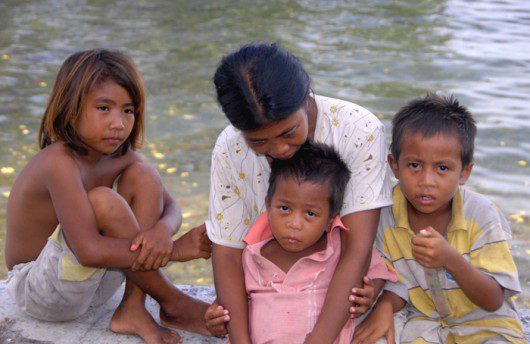
Indonesia_Family

In 2013, 28 million Indonesians lived below the poverty line. Impoverished families throughout the nation were often too poor to afford healthcare and education for their children, leading to illness and injury that trapped them in generational poverty.

In an effort to break this generational cycle, the World Bank, in combination with the Ministry of Social Affairs, has created the Family Hope Program.

Financial and Developmental Aid

The Indonesian Family Hope Program works through a series of cash transfers. The money is given to parents who agree to participate in health and nutrition training, take their children to clinics when they’re ill and keep their children in school.

The program also provides startup money and skills training to parents. These micro-investments give families the means to become entrepreneurs and run their own family businesses, ensuring economic growth and generational development.

Health

Mothers participating in the program are encouraged to give their children the best possible start to life — beginning in the womb. The World Health Organization (WHO) recommends that women have four antenatal check-ups throughout the course of their pregnancy, thus lowering the risk of complications, infections and other life-threatening incidents through screenings. Yet, few women receive all four visits.

The Family Hope Program has increased the number of antenatal checkups by more than 7 percent. This establishes a precedent of continued family health. As mothers are healthier during and after pregnancy, children are healthier and receive better healthcare as a result. The 7 percent increase in antenatal care resulted in a mirrored raise in child immunizations by 7 percent.

The nutritional aspect of the program has also positively impacted childhood development, decreasing the number of children suffering from stunting by 5 percent. As a result of children being healthier, they are able to focus better and attend school.

Education

Along with the cash grants, more than 11,000 facilitators trained in education and nutrition hold seminars teaching mothers how to manage finances, improve the health of their families and aid their children in their studies.

The program has resulted in increased enrollment and school participation.

Many children from poor families stop attending school after completing their primary education, though not due to a lack of desire to attend. The program has removed financial barriers keeping children from continuing their education for the more than 3 million families that the program has reached.

Children now are 8 percent more likely to go on to secondary education and 10 percent more likely to enroll in junior secondary school. According to the United Nations, more education equals higher earning potential and better health, which are essential to end the generational poverty cycle.

– Claire Colby

Sources: NCBI, United Nations, World Bank, World Health Organization
Photo: PBase

October 21, 2015
https://borgenproject.org/wp-content/uploads/borgen-project-logo.svg 0 0 Borgen Project https://borgenproject.org/wp-content/uploads/borgen-project-logo.svg Borgen Project2015-10-21 01:30:342020-06-25 21:38:38The Indonesian Family Hope Program Ends Poverty Cycle
Aid, Children, Education, Global Poverty

Focusing on Education for Syrian Refugees

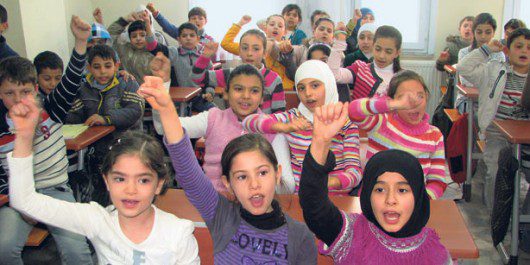
Education_for_Syrian_Refugees
The Syrian Refugee conflict has been a hot topic globally for months now. Many countries have been accepting Syrian refugees since the climax of the crisis, but once a temporary home has been found, what next?

On average, a refugee will stay in a camp for 17 years. In these crowded and busy communities, individuals and families try to create a semi-normal life.

For smaller children though, living in these refugee camps means growing up without a fair chance to attend school. Therefore, greater focus needs to be placed on education for Syrian refugees.

According to The UN Refugee Agency, UNHCR, the Syrian refugee crisis could be a large contributor to another global crisis. Poverty rates, already at a high, could be negatively impacted if proper action is not taken.

In a study done by the UNHCR entitled “Living in the Shadows,” the organization stated, “Two in every three Syrian refugee households are below the absolute poverty line in Jordan, and one out of six is below the Jordanian abject poverty line…households’ economic vulnerability appears to increase over time.”

While humanitarian aid is a huge part of alleviating this problem, more needs to be done. Refugee education and training in vocational skills are a necessity to combat the struggle of poverty within and outside of these refugee camps.

According to The Guardian, “Globally, over 50% of refugees are children. Yet only one in every two refugee children attend primary school. Only one in four refugee adolescents receive secondary school education.”

It has been proven several times over that educational opportunities are one of the key solutions to eradicating poverty. With education comes new skills, a more secure future, and a more stable country.

Recently, more countries have started to pick up on this trend and are working to make necessary changes.

In Turkey, the refugee educational opportunities for children has risen from 199,000 in 2014 to 299,000 this school year.

Lebanon, the country with the highest amount of hosted Syrian refugees, is providing education opportunities for 200,000 of those children.

According to the University World News, “The University of Copenhagen has asked the Danish government for permission to create extra student spaces for refugees and migrants arriving in the country.”

For refugees, education is everything. It is the key to getting out of poverty and a source of hope amidst hardship. Continuance of improved and increased educational opportunities is one of the top essentials of getting Syrian refugees out of poverty and helping them contribute to society wherever they currently reside.

– Katherine Martin

Sources: UNHCR, The Guardian, Today’s Zaman, Huffington Post, University World News
Photo: Todays Zaman

October 13, 2015
https://borgenproject.org/wp-content/uploads/borgen-project-logo.svg 0 0 Borgen Project https://borgenproject.org/wp-content/uploads/borgen-project-logo.svg Borgen Project2015-10-13 01:30:412024-12-13 18:05:12Focusing on Education for Syrian Refugees
Activism, Aid, Global Poverty, Hunger, Philanthropy

10 Top Philanthropists in Asia

Philanthropists_in_Asia
The United Nations, the World Health Organization and other aid groups estimate that almost one-third of people in Asia live on less than $1.51 per day. Here are some of the most successful philanthropists in Asia who are fighting to end poverty and hunger by 2030.

10 Significant Philanthropists in Asia

  1. Jack Ma—China: Founder and executive of Chinese e-commerce giant Alibaba. Ma donated $2.9 billion to charitable causes across China last year. Ma also set up a $2.4 billion trust for Hong Kong youth and rising entrepreneurs.
  2. Sunny Varkey—India: Founder of Gems Education and one of India’s most prominent entrepreneurs. Varkey has recently signed the Giving Pledge, which is a promise to give most of his wealth to philanthropic missions. His foundation seeks to train 250,000 teachers in order to help nearly 10 million students across India, China, Africa and the Middle East.
  3. P.J. Lhuillier—Philippines: Founder of the P.J. Lhuillier Group. In addition to providing 300 annual scholarships to impoverished students, Lhuillier has also established a foundation that enables dropouts to go back to school. The foundation already has 19 adult education centers open with 48 additional centers to open this coming year.
  4. Cho Gang-Gul—South Korea: Founder of Hannsem. The furniture magnate donated $400 million to a South Korean think tank that works across Asia to seek out and train a new generation of global leaders through an understanding of both Eastern and Western cultures.
  5. Jeffrey Cheah—Malaysia: Chairman for the Sunway Group. Since 1997, Cheah has donated nearly $50 million worth of scholarships for 20,000 low-income students. Cheah’s foundation has also donated $6.2 million to fund an exchange program between Southeast Asian institutions and Cambridge University.
  6. Mohamed Abdul Jaleel—Singapore: Founder of Mes Group. The construction mogul had to drop out of school when he was 16 to support his family. He has made it a life mission to help impoverished children get through school. For the past several years, he has given $1.1 million annually to the Straits Times School Pocket Money Fund, which gives students money for lunch meals and school supplies. Abdul Jaleel also donates an additional $1 million each year to schools in Singapore’s poorer neighborhoods.
  7. Philipp Graf von Hardenberg—Thailand: Founder of the Children’s World Academy. The German native moved to Thailand to provide aid after the 2004 Tsunami and has been helping impoverished children ever since. He set up an orphanage to help children affected by the devastation, and the same facility still operates to this day as a school for impoverished youth. The school has raised more than $5 million.
  8. Manny Pacquiao—Philippines: World boxing champion and Philippine Congressman. Pacquiao and his wife donated 200 college scholarships, funded full missions for Habitat for Humanity in the Southern Philippines and gave upwards of $400,000 in medical assistance to needy families.
  9. Hendro Gondokusumo—Indonesia: Founder of Intiland Development. As one of the largest property developers in Indonesia, Gondokusumo has just set up a new foundation aimed at giving low-income and impoverished families affordable and safe living in the capital Jakarta and across the island of Java.
  10. Yao Ming—China: Retired NBA All-Star. His foundation has helped repair schools and build sports facilities for hundreds of thousands of students in rural China. The Yao Foundation hopes to improve the lives of 150,000 children through sport and exercise by the end of this year.

– Joe Kitaj

Sources: Forbes 1, Forbes 2, Forbes 3
Photo: Flickr

October 10, 2015
https://borgenproject.org/wp-content/uploads/borgen-project-logo.svg 0 0 Borgen Project https://borgenproject.org/wp-content/uploads/borgen-project-logo.svg Borgen Project2015-10-10 01:30:392020-06-28 15:23:1810 Top Philanthropists in Asia
Aid, Charity, Global Poverty

The Sovereign Military Order of Malta Aids Poor and Sick

Military-Order-of-MaltaThe Sovereign Military Order of Malta has a rich history of generosity. Also called the Order of St. John of Jerusalem, the organization dates back to 1048. At the time, it was a military order in charge of hospital defense. Members in the Order of Malta were chivalrous and noble of nature.

Since its beginning, the Order of Malta has been committed with aiding the poor and suffering. Today, it operates in more than 120 countries, providing medical and social care, disaster relief, emergency services and assistance for elderly, children and refugees. For more than 900 years, it has cared for people of all religions and beliefs.

“There are 13,500 members world-wide, plus 80,000 trained volunteers and 25,000 medical and para-medical personnel, working in a large number of hospitals, hospices, homes for the elderly and a variety of other aid activities,” says Marchesino Daniel de Petrie Testaferrata, elected president of the Maltese Association of the Order of Malta.

The Order of Malta has diplomatic relations with numerous countries, which allows it to better assist others, such as helping the sick in areas that some organizations may have trouble accessing.

The Order of Malta has provided disaster relief assistance in The Philippines and Haiti. In Africa, it focuses on care for HIV patients; treatment for tuberculosis, malaria and leprosy; and clean water supplies for others. It also cares for refugees and orphaned children in Asia and the Middle East.

In addition, the Order of Malta has aided in Europe and North America. After Hurricane Katrina hit the U.S., the Order of Malta provided shelter while working on reconstruction projects.

Malteser International, the Order of Malta’s relief agency, reports that, in 2014, its aim was to spread medical supplies to regions affected by Ebola. This year, it is educating others in hopes of minimizing the disease.

For more information on the Order of Malta, visit its website.

– Kelsey Parrotte

Sources: Independent, The Order of Malta, Saint Peter’s List,                                                                                                                                                                                                                                                                      Photo: Flickr

October 6, 2015
https://borgenproject.org/wp-content/uploads/borgen-project-logo.svg 0 0 Borgen Project https://borgenproject.org/wp-content/uploads/borgen-project-logo.svg Borgen Project2015-10-06 01:30:252020-06-27 07:01:24The Sovereign Military Order of Malta Aids Poor and Sick
Aid, Global Poverty

Humanitarian Innovation: Creating Jobs for the Impoverished

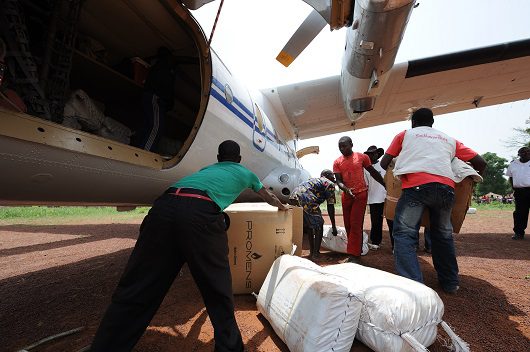
Humanitarian_Innovation
Over the past few years, the UNHCR has experimented with the use of green energy technology in developing countries as a way to create sustainable light, heating and jobs for the poor.

In 2013, the organization funded a solar-light and fuel-efficient stoves project called Light Years Ahead for Sudanese refugees in eastern Chad.

Sudanese refugees and Chadian locals were taught how to construct fuel-efficient stoves and then employed to make them for the community. The stoves do not use firewood, preventing deforestation.

The project successfully used green technology to create a functioning economy for impoverished refugees and locals.

This method of humanitarian aid utilizes skills from locals and refugees to create a functioning local economy.

Last year the UN Office for the Coordination of Humanitarian Affairs published a paper titled “Humanitarian Innovation” emphasizing the importance of capitalizing on the innovation of impoverished people.

The paper identifies previous approaches to humanitarian aid stressing that historically the UN and other aid organizations use a “top-down” structure.

This structure tends to work in the short-term by depending solely on aid from external actors rather than empowering those in need.

Instead, humanitarian innovation uses a “bottom-up” approach by “recognizing and understanding innovation capacity within communities”, and “putting these communities and local systems at the heart of the innovation process, regardless of where ideas or resources originate.”

This “bottom-up” method has been proven successful, mainly by its high investment value. In 2014, the Abu Dhabi Fund for Development (ADFD) and the International Renewable Energy Agency (IRENA) announced a $41 million dollar investment in developing countries’ renewable energy projects.

The investments are meant to stimulate local economies by creating markets. The 2015 and 2016 loan qualification criteria for projects in countries is its ability to assist communities by creating jobs, generating income, helping public education and health, improving energy access, innovation, replicability and aligning with government priorities.

Sierra Leone, Samoa, Mali, the Republic of Ecuador, and the Maldives are some of the countries receiving loan investments.

More and more foreign investors are looking at funding renewable energy projects as a financially wise decision. Portfolio diversification allows investors to spread the risk of a project investment failing among less risking investments.

In other words, if a few projects succeed, a few failed projects can still be financially supported. This approach allows investors to safely invest in green energy projects in developing countries without severe risk.

Agricultural project investments, especially, show the potential to revert climate change, supply food for poor communities, and create jobs for locals, creates food security by using farming systems that are more resilient to climate change.

In addition, these investments reduce emissions and increase “agriculture’s potential to capture and sequester atmospheric carbon” which is harmful to the earth’s atmosphere. This agricultural system depends on daily maintenance from locals. Some locals are trained how to farm by green technology programs.

In 2012, the Food and Agriculture Organization (FAO) which is part of the UN, and the European Commission invested €5.3 in Malawi, Vietnam and Zambia agricultural sectors to help with the transition into climate-smart agriculture.

Leslie Lipper, Senior Environmental Economist at FAO, says that, “Climate change offers the possibility for large-scale financing that’s directly linked to the agricultural sector to recognize the possibility for this environmental benefit, as well as the traditional agricultural products and markets.”

– Michael Hopek

Sources: UNHCR, RSC 1, IRENA 1, IRENA 2, FAO, RSC 2, UN
Photo: bloglet

October 2, 2015
https://borgenproject.org/wp-content/uploads/borgen-project-logo.svg 0 0 Borgen Project https://borgenproject.org/wp-content/uploads/borgen-project-logo.svg Borgen Project2015-10-02 02:37:532024-12-13 18:05:08Humanitarian Innovation: Creating Jobs for the Impoverished
Aid, Developing Countries, Global Poverty, Poverty Reduction

Bankers Without Borders: Global Integration

bankers-without-borders
The developing world is constantly in need of skilled professionals to not only provide immediate assistance but also to help train future workers so as to create a sustainable and self-sufficient community workforce.

For years, organizations like Doctors Without Borders, and Engineers Without Borders have been doing just that: on the one hand these organizations provide care and construct necessary structures respectively, but they also train and instruct local medical students and potential engineers.

However, as developing economies grow, there too needs to be financial assistance and instruction. Bankers Without Borders is attempting to propel developing countries into commercial modernity.

The mission of the organization is to enable citizens in developing countries to realize their full economic potential given the proper tools and training.

The organization was founded by a parent body called the Grameen Foundation. The Grameen Foundation was formed to help optimize other NGOs in terms of gross impact and overall efficiency.

In 2008, the group realized it could use its expertise to directly help those living in abject poverty.

Bankers Without Borders works as an independent organization and also teams up with local and global businesses to offer educational, financial, and consulting services across the developing world.

The organization utilizes nearly 19,700 business professionals, all of whom volunteer their time to help grassroots campaigns, small businesses, and individual investors and entrepreneurs.

As cliché as it is to say, knowledge is power, and anyone who posses it can reach a higher plane of potential. Those living in poverty certainly have the drive to become financially independent, and Bankers Without Borders is giving them the tools.

By encouraging modern, practical, and useful financial knowledge as well as helping to optimize new businesses, the organization is proving to be a huge relief to developing economies.

Bankers Without Borders hopes that one day those in developing countries can pass on the information learned to the next generation, thereby creating strong and self-sufficient modern economies.

– Joe Kitaj

Sources: Bankers Without Borders, Stand4, Doctors Without Borders, EWB-USA
Photo: Bankers Without Borders

September 30, 2015
https://borgenproject.org/wp-content/uploads/borgen-project-logo.svg 0 0 Borgen Project https://borgenproject.org/wp-content/uploads/borgen-project-logo.svg Borgen Project2015-09-30 14:05:082020-06-29 11:36:08Bankers Without Borders: Global Integration
Aid, Poverty Reduction

Success for the FAO in Mozambique

FAO in Mozambique
In Mozambique, 95 percent of the country’s agricultural production comes from farmers owning small pieces of land. Previously these farms were for subsistence, but the recent U.N.’s Food and Agricultural Organization initiative has helped to improve post-harvest practices enabling farmers to sell their crops for profits.

Because the vast majority of farms in Mozambique are small-scale subsistence farms, the communities relying on them are more vulnerable to the shocks of events such as conflict and climatic change. In addition, because yields are low, these farms barely cover subsistence needs, let alone enable families to save any income for the future.

One-third of the Mozambique population is chronically food-insecure. Half a million children are reported as being undernourished and 43 percent of children under five are considered malnourished.

Issues contributing to the lack of food security in Mozambique include a lack of diet diversity, poor agricultural yields and high rates of HIV infection impacting worker productivity, thus affecting agricultural efficiency and production.

It should be no surprise then, that with the high levels of food insecurity and HIV infection in Mozambique, poverty is widespread. The country ranks 178 out of 187 on the UNDP Human Development Index. Mozambique is receiving significant amounts of aid from the U.N.; the country is also a U.N.

“Delivering as One” country, meaning that the country is part of a pilot initiative to improve the partnership between the U.N. and the national government.

As part of Mozambique’s Poverty Reduction Strategy, the country along with the U.N. are working to help farmers absorb less of a loss with regards to climatic shocks and protracted natural disasters.

One way to help farmers is to increase the length of time crops are able to be kept, eaten, and sold. The U.N.’s Food and Agricultural Organization (FAO) is teaching farmers how to store crops for maximum post-harvest storage. With the present technology, farmers lose an average of 30 percent of their harvest.

Currently, farmers sell the bulk of their crops immediately after the harvest. This is because farms in Mozambique often lack storage facilities to keep crops for a later sale, during which they could have a later price. By being able to control when crops are sold, farmers have greater potential to earn an income.

The FAO in Mozambique is teaching farmers about various post-harvest techniques; specifically, the FAO is training artisans in the construction of Gorongosa silos, which are durable, prevent crops from pests, and utilize locally developed technology. The Gorongosa silo is made from clay and mud. With proper care, it can last for twenty years.

This silo is a more valuable option than the traditional silos used in Mozambique, which offer little to no protection from pests or the elements. The Gorongosa silo keeps crops viable for ten months post-harvest, which gives more control to the farmers over their sales and reduces the need for chemical treatments.

This FAO initiative began in 2013 and intends to be a five-year project. Since its inception, 260 artisans have been trained in Gorongosa silo making in fifteen districts throughout Mozambique. Ultimately, the project hopes to train 20,000 farmers in the usage of Gorongosa silos and build 10,000 silos.

This initiative, in conjunction with other strategies to reduce HIV/AIDS in the region and promote economic growth, offers much to improve the livelihoods of those in Mozambique. With greater crop volume post-harvest, farmers can earn more of an income and reduce food insecurity for their families.

– Priscilla McCelvey

Sources: FAO, U.N., World Food Programme

Photo: Flickr

September 30, 2015
https://borgenproject.org/wp-content/uploads/borgen-project-logo.svg 0 0 Borgen Project https://borgenproject.org/wp-content/uploads/borgen-project-logo.svg Borgen Project2015-09-30 02:41:152024-05-27 09:27:56Success for the FAO in Mozambique
Aid, Global Poverty, Women and Female Empowerment

Opportunities Bloom for Women in Gaza

z1
The United Nations Relief and Works Agency (UNRWA) Job Creation Program (JCP) gives women in Gaza the opportunity to work from 6:30 a.m. -12:30 p.m. on a carnation farm, which in turn, allows them to support their families.

A typical day begins with women picking flowers in the cool hours of the morning before later retreating into their tents. There, flowers are carefully bundled into decorative bouquets to be exported and sold at local Gaza markets.

According to an article in the UNRWA, 34-year-old worker Ghanda Na’ana’ has finally found a way to provide for her children in the absence of a husband through her employment with the farm.

“The chance to work here is life-saving for me. I am truly happy to be able to work on this farm together with other women. My husband left me three years ago for another woman; I am the only one who supports my children. We survive because of the food assistance we receive from UNRWA,” she says.

An overarching goal and initiative of the UNRWA JCP addresses the problem of female unemployment while also supporting the agricultural sector of the region.

The UNRWA aims to improve the “quality and output of production by increasing manpower to assist with planting, maintenance and harvesting crops while reducing labor costs, which presumably translates into a reduction of market costs for the consumer and ultimately contributes to local food security.”

According to the Palestinian Central Bureau of Statistics, in the first quarter of 2015, female unemployment in Gaza reached 55.2 percent. This can be attributed to the 2007 blockade which limited exports, obliterating trading opportunities with the rest of the world and severely affecting the agricultural sector of the region.

Raza Hijazi, the owner of the farm where Ghanda works, formerly employed 20 laborers before he was forced to reduce that number to only three. With the 2007 blockade, his business opportunities dwindled as he could no longer export his flowers to Europe. Only with support from the UNRWA, was he able to increase his business and number of employees.

Overall, the JCP has significantly improved the livelihoods for many since its inception in 2006 when 18,385 opportunities were created in the agricultural sector alone (6,350 for female and 12,035 male). Of this number, 2,571 were counted for in the carnation sector.

As of 2014 the UNRWA has calculated that “a total of 20,545 refugees were employed through the JCP, and UNRWA injected US$ 18.1 million into the Gaza economy. In the first quarter of 2015, the Agency created 12,646 JCP opportunities and injected US$ 7 million into the Gaza economy.”

With tremendous efforts currently underway by UNRWA’S JCP, hope is alive for both business owners and women seeking jobs in a country with one of the highest levels of unemployment in the world.

– Nikki Schaffer

Sources: UNRWA, Reuters
Photo: alarabiya

September 30, 2015
https://borgenproject.org/wp-content/uploads/borgen-project-logo.svg 0 0 Borgen Project https://borgenproject.org/wp-content/uploads/borgen-project-logo.svg Borgen Project2015-09-30 02:22:582024-12-13 18:05:07Opportunities Bloom for Women in Gaza
Activism, Aid, Global Health, Global Poverty

Healthabitat: Helping Disadvantaged People Worldwide

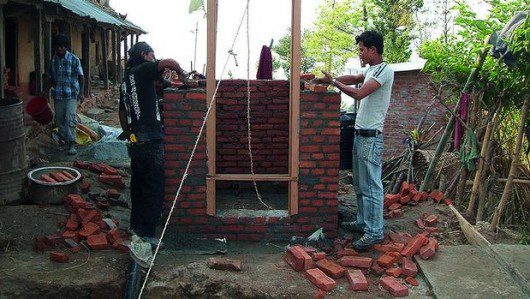
healthhabitat
Operating in countries all over the world including Nepal, the United States and Bangladesh, Healthabitat’s goal is to make the world a healthier, cleaner place for everyone. Their projects focus on improving sanitation, helping people gain access to clean water and providing housing for those in need.

Healthabitat was formed in 1985 when the directors came together to improve the health environment in the Anangu Pitjantjatjara lands of northwest South Australia. Since then, Healthabitat has expanded out of Australia to help disadvantaged people all around the world.

When it was formed in 1985, the directors of Healthabitat put together a list of nine steps to healthy living, which has been used as a guideline for their practices ever since.

These steps ensure that people not only improve their sanitation and living conditions but that they are provided with adequate housing to help decrease mortality rates, particularly among children under the age of 5.

The members of Healthabitat follow a constrained methodology aimed at improving the lives of all involved. This methodology is then improved to accommodate for changes in lifestyles. Data is collected to monitor improvements and is used to better designs.

They then do applied research and develop projects based on the results. Their projects typically involve the help of indigenous people, with 75% of all volunteers coming from their respective local communities. Lastly, the methodology is staged and developed.

In addition to these practices, Healthabitat also works on health hardware for disadvantaged people. This includes a water supply, pumps, tanks, pipes, valves, taps, hot water system, tub and drainage pipes.

The overall goal of Healthabitat is to decrease the number of sick people in the world. The three partners, Paul Pholeros, Dr. Paul Torzillo and Stephan Rainow, along with the guidance of Yami Lester, former director of the controlled health service, Nganampa Health Council, put their minds together to make it all happen.

Healthabitat continues to help people all over the world. Right now, a project they are focusing on is providing the victims of the Nepal earthquake with toilets and housing, while continuing to work in South Australia and the surrounding areas.

– Julia Hettiger

Sources: Health Habitat, Top Masters in Healthcare, World Habitat Awards
Photo: cusphabitat

September 30, 2015
https://borgenproject.org/wp-content/uploads/borgen-project-logo.svg 0 0 Borgen Project https://borgenproject.org/wp-content/uploads/borgen-project-logo.svg Borgen Project2015-09-30 01:30:252024-06-04 04:33:50Healthabitat: Helping Disadvantaged People Worldwide
Aid, Aid Effectiveness & Reform, Global Poverty, Humanitarian Aid

Voucher Programs: Way to Transfer Humanitarian Dollars

Voucher Programs: A Better Way to Transfer Humanitarian Dollars?
When it comes to helping the world’s poor, sometimes questions come up that the average person might never have considered.

Once there is an organization or a group that is willing to provide help, how will they do it? What does “providing resources” mean? How are “resources” defined?

There’re a few different ways for aid to be brought in the direct transfer of goods, such as food, clothing and other necessities, from humanitarian groups to the people in need.

However, there are also the methods of providing the impoverished with cash so that they can purchase the goods they deem necessary for themselves.

As Owen Barder, chair of the High Level Panel on Humanitarian Cash Transfers puts out, “A good starting point for our work is the acknowledgment that people are a good judge of what they need, and we should always think twice before putting our judgment ahead of theirs.”

Providing cash-based aid also has the potential to stimulate local economies, as recipients spend the money at small businesses and help their communities to thrive.

According to a study in the Journal of Development Effectiveness published last year, direct provision of cash is the cheapest way to bring aid, with costs coming to $2.99 per transfer. To put this in perspective, providing food directly came out to $11.46 per transfer because of all of the costs to store, package and distribute the food.

To some, it might seem unnecessarily expensive to provide food and other materials directly to those in need. To others, the idea of giving destitute, uneducated people a set sum of cash to spend whatever way they would like doesn’t make much sense, either.voucher_programs

Even assuming every recipient is perfectly ethical, is it safe to assume all of those in need have enough knowledge of nutrition and savvy spending?

Voucher programs, theoretically, are sort of a happy medium between the benefits of cash transfer and direct resource provision. Only slightly more expensive than direct cash at $3.27 per transfer, in the study, vouchers are like certificates redeemable for specific items, usually food.

Vouchers have the benefit of stimulating local economies without the corruption and security risk present with cash transfers. Voucher programs allow those in need to receive the most nutritious food available without the expense associated with food aid.

Vouchers are not the ultimate, game-ending form of humanitarian aid. Different situations will call for different ways to provide aid. (For example, when providing immunizations, it makes far more sense to simply provide the immunizations themselves en masse, rather than money for each individual to get immunized.)

However, it seems that this form of help is relatively underrated when compared to food and cash aid.

They can be used locally, they are relatively cheap to provide and when they are used at events such as voucher fairs, they offer recipients freedom to spend the aid on what they choose, within a specific context of essential items. Fairs like these can even help to address issues like gender inequality.

Said one woman at a voucher fair held by UNICEF in the Democratic Republic of Congo, “Before we came here, my husband and I discussed what we need. In the past, he did what he wanted with our money, but here it’s me who takes the final decision.”

Paul Harvey and Sarah Bailey said it well in a brief for The Overseas Development Institute (ODI). “Humanitarian organizations provide assistance based on agreed principles and standards. At its heart is the principle of humanity – the universal impulse to seek assistance and to provide it to those in need.”

– Emily Dieckman

Sources: CGDEV, Europa , ODI, Research Gate, TUFTS, UNICEF
Photo: Flickr1, Flickr2

September 26, 2015
https://borgenproject.org/wp-content/uploads/borgen-project-logo.svg 0 0 Borgen Project https://borgenproject.org/wp-content/uploads/borgen-project-logo.svg Borgen Project2015-09-26 01:30:152024-12-13 18:05:05Voucher Programs: Way to Transfer Humanitarian Dollars
Page 59 of 65«‹5758596061›»

Get Smarter

  • Global Poverty 101
  • Global Poverty… The Good News
  • Global Poverty & U.S. Jobs
  • Global Poverty and National Security
  • Innovative Solutions to Poverty
  • Global Poverty & Aid FAQ’s
Search Search

Take Action

  • Call Congress
  • Email Congress
  • Donate
  • 30 Ways to Help
  • Volunteer Ops
  • Internships
  • Courses & Certificates
  • The Podcast
Borgen Project

“The Borgen Project is an incredible nonprofit organization that is addressing poverty and hunger and working towards ending them.”

-The Huffington Post

Inside The Borgen Project

  • Contact
  • About
  • Financials
  • President
  • Board of Directors
  • Board of Advisors

International Links

  • UK Email Parliament
  • UK Donate
  • Canada Email Parliament

Get Smarter

  • Global Poverty 101
  • Global Poverty… The Good News
  • Global Poverty & U.S. Jobs
  • Global Poverty and National Security
  • Innovative Solutions to Poverty
  • Global Poverty & Aid FAQ’s

Ways to Help

  • Call Congress
  • Email Congress
  • Donate
  • 30 Ways to Help
  • Volunteer Ops
  • Internships
  • Courses & Certificates
  • The Podcast
Scroll to top Scroll to top Scroll to top