• Link to X
  • Link to Facebook
  • Link to Instagram
  • Link to TikTok
  • Link to Youtube
  • About
    • About Us
      • President
      • Board of Directors
      • Board of Advisors
      • Financials
      • Our Methodology
      • Success Tracker
      • Contact
  • Act Now
    • 30 Ways to Help
      • Email Congress
      • Call Congress
      • Volunteer
      • Courses & Certificates
      • Be a Donor
    • Internships
      • In-Office Internships
      • Remote Internships
    • Legislation
      • Politics 101
  • The Blog
  • The Podcast
  • Magazine
  • Donate
  • Click to open the search input field Click to open the search input field Search
  • Menu Menu

Archive for category: Aid

Aid, Global Poverty

Equator Prize: 7 Inventive, Local, Sustainable Solutions

Local, Sustainable SolutionsThe Equator Initiative, an organization dedicated to encouraging communities to envision creative, local, sustainable solutions to problems, recently announced the winners of the 2017 Equator Prize.

The 15 winners include grassroots projects located across Africa, Latin America, Eastern Europe and Southeast Asia. They range from a campaign to secure management of a community Mangrove forest in Thailand to the Mali Elephant Project, which protects endangered elephants while working to reduce violence in a war-torn area of Mali.

However, these 15 winners are only the beginning. Across the globe, communities have created local, sustainable solutions to preserve their homelands. These solutions also help feed and educate children and promote peace and justice in their society.

In celebration of its 15th anniversary, the Equator Initiative launched a database that includes 500 of the local, sustainable solutions nominated to receive the 2017 Equator Prize. Here are seven of the most creative and impactful initiatives that local people developed in answer to the challenges they face:

  1. Whales of Guerrero Research Project: The Whales of Guerrero Research Project (WGRP) started in a small fishing village in Mexico in 2013 to increase local interest in protecting the endangered humpback whales. The project teaches children ages 9-13 about marine life and lets them adopt and name whales. It also created an extensive whale-spotting network and runs a program that pairs high school students in Mexico and the U.S. for scientific projects. The WGRP hopes that these workshops will strengthen the community’s pride in the natural environment and inspire them to make choices that will protect the local marine life. The project also advocates that tourist whale watching may become an important source of revenue in a place where the fishing industry has suffered.
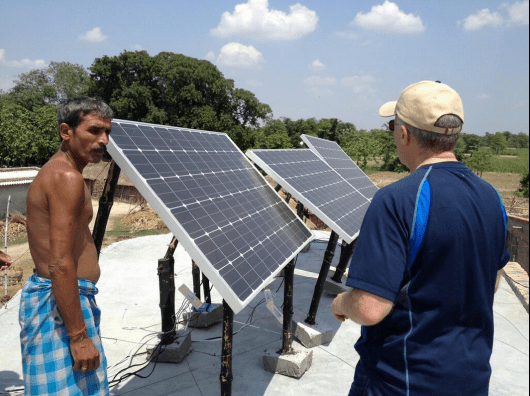
  2. Barefoot Solar Initiative: The Barefoot Solar Initiative works to provide lighting systems that run on solar energy to people in rural villages in India. Since its founding in 1972, the Initiative has illuminated more than 15,000 homes. The new lighting improves air quality, saves money and enables children to study longer in the evenings. The initiative also teaches women how to construct and manage the solar equipment for the homes in their village, giving them a valuable skill set. The organization recently announced a new program that is providing solar lighting to many of the Pacific Island nations.
  3. The Nubian Vault Association (AVN): The AVN builds environmentally friendly homes in Burkina Faso that are inspired by the techniques of the ancient Nubians. The houses are built from sun-dried mud bricks, which are sturdy and emit less carbon than the iron roofing sheets traditionally used. The houses have thermal insulation, so they stay cool during the day and warm in the evenings. By teaching farmers how to build these homes, the AVN also created a new economic activity that helps them earn income during the dry season.
  4. Elevated Honey Co.: This initiative aims to bring economic growth and care for the environment to the mountainous areas of Southwest China through beekeeping. The villagers work with Apis cerana, the honey bee native to their region, using traditional beekeeping methods as a way of sustaining both their environment and their culture. The honey made from this bee is lucrative, worth up to 8 times as much as that of European honeybees.
  5. Comuna Ancestral Las Tunas: This project, established in 1998, helps a community in Ecuador receive the numerous benefits of recycling. Children become empowered to make a difference in their communities as they earn money collecting plastic water bottles. The number of tourists in the area increased by 15 percent, a result of the now clean beaches, and the community is watching over two species of sea turtles. Women are able to turn the plastic bottles into crafts and earn money.
  6. Abolhassani Indigenous Nomadic Tribal Confederacy: In an area of Iran that is rich with diverse animals and plants, the Confederacy developed local, sustainable solutions for coping with drought and sustaining both livestock and crops. Two of these are the revival of the hanar system, which conserves water by giving the animals water only once every two days, and feeding the animals with crops rather than natural vegetation, allowing the land to recover. The Confederacy shares its innovations with other tribes in the area.
  7. Nakau programme: Loru Community Conservation Project: Founded in 2011, this program established a legally protected patch of rain forest on the Pacific Island nation of Vanuatu. The indigenous landowners are able to sell conservation credits, or tax credits for donors, as well as market agricultural products of the rain forest (i.e., certain types of nuts). The project meets several of the Sustainable Development Goals that were a key criteria for the 2017 Equator Prize.

The winners of 2017 Equator Prize have received more than a reward. They have created local, sustainable solutions that have transformed their community. Consequently, their successes can serve as examples and inspiration for future projects.

– Emilia Otte

Photo: Google

July 27, 2017
https://borgenproject.org/wp-content/uploads/borgen-project-logo.svg 0 0 Borgen Project https://borgenproject.org/wp-content/uploads/borgen-project-logo.svg Borgen Project2017-07-27 07:30:182024-12-13 17:58:25Equator Prize: 7 Inventive, Local, Sustainable Solutions
Aid, Global Poverty

5 Organizations Helping People in Madagascar

How to Help People in Madagascar
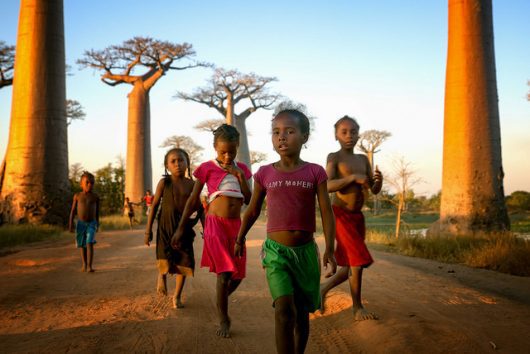
Madagascar is one of the poorest nations in the world. In fact, 70% of the people in Madagascar live below the poverty line, and the country has seen little progress. Those that live in rural Madagascar see poverty rates double that of urban Madagascar, and 80 percent of Madagascar’s population lives in rural areas. However, many discovered how to help people in Madagascar. Here are five organizations that are doing just that.

Water Aid

WaterAid identified that the majority of Malagasy residents do not have access to proper sanitation. Additionally, 11.7 million people in Madagascar lack access to clean water. This resulted in the deaths of nearly 4,000 children each year. To combat this issue, WaterAid installs wells and latrines using different techniques depending on the area. WaterAid also played a role in developing a rice bank system where locals can take loans of rice or money and pay it back slowly over time. This led to the development of small businesses within the community and reduced the threat of a rice shortage. Donate here to support WaterAid’s mission.

SEED Madagascar

SEED Madagascar works directly with local partners to develop dynamic programs that help people in Madagascar. These programs include health education and school construction. Additionally, SEED Madagascar teaches residents technical skills and conducts environmental preservation research. Many projects are successful in enhancing the lives of thousands of Malagasy locals. Help fund these projects today!

Blue Ventures

Blue Ventures is an organization whose main goal is to make the fishing industry in Madagascar more sustainable. Due to their efforts, the marine environment became more secure, and local fisheries are more efficiently managed. Other focus areas include education, family planning and health services. Support Blue Ventures by becoming a sponsor or a volunteer.

Action Against Hunger

Action Against Hunger is an organization that works to provide food security to people in almost 50 countries. The group and helps prevent undernourishment. It also collects and distributes data about it. The organization supports food security, emergency relief, sanitation and clean water access. Action Against Hunger reports that in 2016, “18,270 people gained economic self-sufficiency, 15,998 people received nutritional support, and 10,421 people accessed safe water and sanitation” in Madagascar alone. This organization knows how to help people in Madagascar! Assist in making a difference now.

Feedback Madagascar

Feedback Madagascar is a multi-faceted organization that teaches Malagasy residents that health and environmental qualities are interrelated. For example, the organization aids outhouse construction, gardening, community nutrition training and promoting the sale of contraceptives and “water-treatment products.” Take part in something bigger than yourself!

Organizations that learned how to help people in Madagascar are indispensable. Lives are changed and hope is imparted in the hearts of hundreds of Malagasy residents who may not have survived without assistance. With a little help from others, every person in Madagascar has the ability to live a healthier and more fulfilling life.

– Emma Tennyson

Photo: Flickr

July 26, 2017
https://borgenproject.org/wp-content/uploads/borgen-project-logo.svg 0 0 Borgen Project https://borgenproject.org/wp-content/uploads/borgen-project-logo.svg Borgen Project2017-07-26 01:30:062024-12-13 17:58:245 Organizations Helping People in Madagascar
Aid, Global Poverty, Hunger

Three Apps That Feed the Hungry

Apps That Feed the Hungry
Nowadays people can do almost anything with a smartphone: order groceries, plan a vacation or pay for mass transit. There are even apps that feed the hungry around the world. About one in nine people do not have enough to eat, but the following smartphone apps are changing that, one meal at a time.

Here are three apps that feed the hungry:

  1. Chowberry
    Nigerian entrepreneur Oscar Ekponimo developed this mobile app to put discounted, expiring food in the hands of people who desperately need it. The organization currently operates in four locations in recession-stricken Nigeria, with the help of 20 supermarket partners. Here is how it works: Families on tight budgets sign up for a free account; they search for products set to expire in as little as a week to more than a few months. Users choose whatever cereals, grains, drinks, cans and packaged goods they want. Then they pay online and pick up their goods at participating stores. Some products are as much as 70% off original prices, which makes it easier for impoverished people to feed themselves and their families. Exact numbers of the app’s impact are unavailable at this point, as the site has yet to go public. But, in a three-month pilot, the company had 3,000 daily hits.
  2. Pocket Rice
    With this free mobile app, users earn virtual grains of rice each time they answer a trivia question correctly. The virtual rice accumulates like a point system. But unlike regular trivia games, Pocket Rice’s points become a valuable food source for people in need. When users “donate” their earned rice, co-founder James Downing buys real rice. In-app advertising pays for the rice, so users can play trivia while helping solve world hunger — all for free. The rice goes to targeted areas through the company’s partners, agencies like the United Nations World Food Programme, World Vision and now The Lasallian Foundation. According to in-app text, Pocket Rice’s current project focuses on children in Sri Lanka. The goal is to reduce child mortality and increase babies’ birth weights. Trivia users have earned more than 324 million grains of rice and fed 16,000 people since Pocket Rice’s start in 2013. Users of the app allowed Downing to purchase around 3,500 pounds of rice in 2016 alone.
  3. Share the Meal
    The World Food Programme spearheaded Share the Meal, which lets any smartphone owner feed a child with spare change. People all over the world can download the app for free and start saving lives with donations as small as 50 cents. More than just throwing money at a cause, the app has a tool that lets people track their donations. Users can choose where they want to share a meal, learn about the children the Programme helps and follow their donation’s impact. Users have provided for more than 14 million meals since Share the Meal’s launch in 2015. The meals feed school children and refugees in places such as Haiti, Yemen and Lebanon.

Whether it is the invention of the telegram or the use of cell phone apps, technology has always made the world seem smaller. Today, three apps that feed the hungry are continuing that tradition. Chowberry is bridging the gap between Nigerians in need and retailers willing to help, Pocket Rice is turning phone users’ love of trivia into life-saving food and Share the Meal is making it easy for charitable people to feed children around the world.

– Kristen Reesor

Photo: Flickr

July 25, 2017
https://borgenproject.org/wp-content/uploads/borgen-project-logo.svg 0 0 Borgen Project https://borgenproject.org/wp-content/uploads/borgen-project-logo.svg Borgen Project2017-07-25 01:30:452024-12-13 17:58:19Three Apps That Feed the Hungry
Aid, Global Poverty

What is a Multilateral Organization?


An interest in global issues and how those issues are resolved might lead one to ponder the definition and purpose of multilateral organizations. So: what is a multilateral organization? There are many examples of well-known multilateral organizations. Knowing what they are, how they aid global issues and why they’re important can help in giving them the recognition that they deserve.

Multilateral organizations are formed by three or more nations to work on issues that are relevant to each of them. They ensure participation by all in the management of world affairs while ensuring the legitimacy of any relief efforts being implemented. Multilateral organizations also effectively deal with issues that are global priorities by reducing the risk of making overly quick and careless decisions in resolving issues.

Multilateral organizations are able to fund their projects by receiving funding from multiple governments. Requirements for obtaining a job with a multilateral organization typically require previous experience as well as specialized training in relevant fields such as public health, economics, business or social and behavioral sciences.

Knowing the definition of a multilateral organization leads many to wonder which organizations are multilateral. The United Nations International Children’s Education Fund (UNICEF) is one of many multilateral organizations that are widely known today. To operate in the estimated 190 countries that UNICEF does, they work alongside the United Nations and other United Nations agencies in order to protect the rights of children around the world.

There are 34 national committees in countries including Australia, Canada and Italy which help improve the health of the world’s children, implement healthcare projects and provide HIV/AIDS education with UNICEF. Those interested in becoming a part of UNICEF’s relief efforts can donate, volunteer, share stories on social media and/or apply for a career with the organization.

For those interested in advocacy, it is important to do research and answer the question: what is a multilateral organization? Multilateral organizations are important in aiding global issues, and UNICEF proves this through their relief efforts for children. There are many other multilateral organizations making a difference by combining forces with similar-minded countries.

– Danyel Harrigan

Photo: Flickr

July 25, 2017
https://borgenproject.org/wp-content/uploads/borgen-project-logo.svg 0 0 Borgen Project https://borgenproject.org/wp-content/uploads/borgen-project-logo.svg Borgen Project2017-07-25 01:30:312024-12-13 17:49:11What is a Multilateral Organization?
Aid, Developing Countries, Education, Global Poverty

Google’s Education Expands the World, Shrinks Our Brains

Google's education
Google, one of the world’s most prominent and well-known companies, has massively impacted the world. People can have any piece of information desired at our fingertips, and Google’s education has drastically changed the way children learn.

Google’s education has become so pertinent that the corporation has launched its own app to help teachers in the classroom make assignments, known as Google Classroom. More than 30 million children use Google educational apps such as Google Classroom or Google Docs. The corporation has become so important in schools that Chromebooks (Google-powered laptops) are used by thousands of students and teachers in the classroom. A child in the state of Nebraska has the same access to information as a child in New York, Florida or California. Google’s education has made the world smaller, but it comes at the price of shrinking our brains.

The connectivity of the internet is useful, but some see the internet as a drawback to education as well. Google’s education has made the world smaller, but it comes at the price of shrinking our brains. Having constant access to almost limitless information is not only bad for human discourse; it’s reportedly making us worse at remembering things. And even if we aren’t conscious of it, our brains are primed to think about the Internet as soon as we start trying to recall the answer to a tough trivia question.

Google’s education has transformed education from learning over time into a faster process, one that can easily become a mental-crutch. “Google established itself as a fact in schools,” said Hal Friedlander, former chief information officer for the New York City Department of Education, the U.S.’s largest school district. Before Google established itself in school systems, children would have to research information in textbooks and have to talk to specific adults or mentors about certain topics. Now, the first place students conduct research is on Google.

While students are capable of having research at the touch of a button, teachers are concerned about the newfound capabilities of students’ almost unlimited information resources. Teachers feel that students may be overconfident with their research methods and capabilities. Some teachers believe that students are missing out on the true and somewhat old-fashioned research experience of looking through textbooks and talking to librarians. There’s also the risk of credibility with internet sources. Not every piece of information found on Google is a reliable source of information, and without accurately researching, students are blind to false information versus the truth.

Google’s education has helped expand informational resources to every person with internet access, but there is also the possibility that this access is making our minds less powerful. There has not been much extensive research on this topic yet, and more will need to be done in the future to better understand how Google’s education affects developing minds.

– Mary Waller

Photo: Flickr

July 25, 2017
https://borgenproject.org/wp-content/uploads/borgen-project-logo.svg 0 0 Borgen Project https://borgenproject.org/wp-content/uploads/borgen-project-logo.svg Borgen Project2017-07-25 01:30:172020-06-23 07:25:29Google’s Education Expands the World, Shrinks Our Brains
Aid, Global Poverty

All About the Peace Corps

Peace Corps
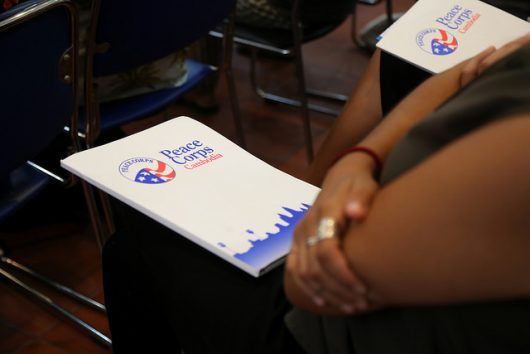
President John F. Kennedy established the Peace Corps in 1961. The group is a government program that Americans are encouraged to participate in if they are passionate about seeing a change in the world.

The Peace Corps’ “work at the forefront of change is turning the world’s challenges into shared triumphs.” Their mission is twofold: to make lasting relationships with countries abroad and to serve the international communities that need it the most.

This government agency would not be where it is today without its team of volunteers. Since the beginning, the Peace Corps received over 220,000 volunteers.

Serving as a volunteer in the Peace Corps, one embarks on a two-year journey to a foreign country in need of help. The program makes sure that each volunteer can contribute something special by utilizing his or her specific skills.

Not only do volunteers make a difference in the lives of the community members they are serving, but they also acquire self-knowledge and perspective that cannot be taught.

In the words of a Corps volunteer, “the cultural humility and wide-lens perspective I gained in Uganda will echo through everything I do in my own country.”

Each volunteer can recall different aspects of serving in the Peace Corps that were fundamental to forming their being: strength, dedication, hard work or communication.

With their team of dedicated volunteers, the Peace Corps has helped over 60 countries in many different fields. Examples include agriculture, the environment, economic development, health, education and youth development.

So, is the Peace Corps truly making a difference? Yes, on many levels. There are daily success stories, small and big, from volunteers and workers in the Peace Corps. Whether this is educating a mother about proper nutrition for her baby or eliminating malaria in African communities, each success is worthy of celebration.

– Sydney Missigman

Photo: Flickr

July 24, 2017
https://borgenproject.org/wp-content/uploads/borgen-project-logo.svg 0 0 Borgen Project https://borgenproject.org/wp-content/uploads/borgen-project-logo.svg Borgen Project2017-07-24 07:30:282020-06-18 08:24:57All About the Peace Corps
Aid, Children, Education, Global Poverty

HP World on Wheels Labs and Underprivileged Children

HP World on Wheels
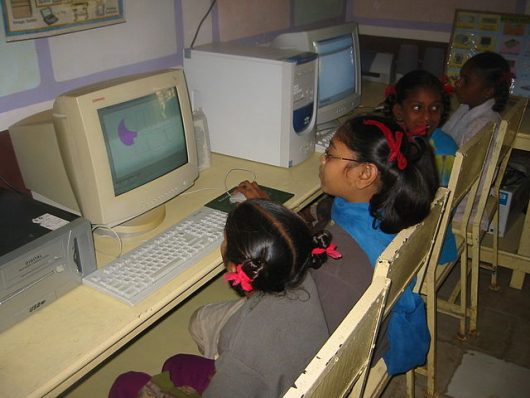
In November of 2016, tech company Hewlett-Packard announced its plan to deploy 48 digital inclusion and learning labs across rural India. The program, HP World on Wheels, intends to enhance digital literacy, education programming and entrepreneurship training.

At the 2017 Global Citizen Festival in Hamburg, Germany, HP furthered its commitment to underserved communities by committing $20 million in technology to enhance the learning of more than 100 million people by 2025.

“In our technology-enabled world, none of us should accept that 330 million children are not learning basic skills,” HP chief supply chain officer Stuart Pann told the festival crowd. “To break the cycle of poverty, we must not only provide access to quality education but also enable better learning outcomes.”

Each HP World on Wheels lab is supplied with computing and printing technology, software suites and e-learning tools as well as IT literacy classes. They are powered by 10 solar panels and produce the least possible greenhouse gases, making them fuel-efficient and environmentally friendly.

HP has set four targets that will help it build strong communities through education:

  1. Expand HP World on Wheels to other less fortunate communities.
  2. Bring HP Learning Studios to refugees in the Middle East in collaboration with Digital Promise Global, the Global Business Coalition for Education, Microsoft and Intel.
  3. Enroll another 100 million entrepreneurs in HP Life, a free e-learning program, by 2025.
  4. Use the HP National Education Technology Assessment (NETA) to guarantee that the education matches what employers require.

As of 2016, there has been seven World on Wheels “Future Classrooms” utilized in rural India. The initiative to improve digital learning everywhere is in collaboration with the United Nations and other nonprofit organizations that will provide business and tech insight in the United States, Myanmar, Tunisia and many other countries needing help in these areas.

“As we work to create technology that makes life better for everyone, everywhere, we recognize that a big gap remains between those who have access, and those who don’t,” HP chief sustainability and social impact officer Nate Hurst said. “We’re thrilled to take another step forward in helping bridge the divide with HP World on Wheels, bringing quality education, entrepreneurship training, and access to essential services to people right where they are.”

– Madeline Boeding

Photo: Google

July 24, 2017
https://borgenproject.org/wp-content/uploads/borgen-project-logo.svg 0 0 Borgen Project https://borgenproject.org/wp-content/uploads/borgen-project-logo.svg Borgen Project2017-07-24 07:30:092024-05-28 00:03:17HP World on Wheels Labs and Underprivileged Children
Aid, Global Poverty, Technology

Chhattisgarh Giving Free Smartphones to the Poor

Free Smartphones to the Poor
Chhattisgarh, a state in central India, has always lacked decent mobile connectivity. Smartphones would be useless in poor communities where there is no wireless coverage. So Chief Minister Raman Singh has been working alongside mobile and electrical companies to expand Chhattisgarh’s network.

In March 2017, Singh announced, while presenting the state budget, a plan to distribute 4.5 million free smartphones to the poor citizens of the state. The annual budget for 2017-18 is up 7.6% from the previous year, providing the state with enough funds to execute its generous plan.

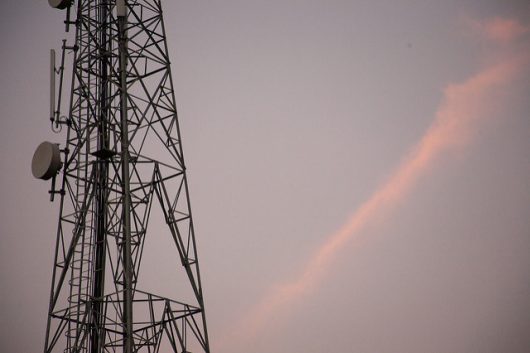
In June 2016, Singh met with state-run telecom operator Bharat Sanchar Nigam Ltd and urged it to install 1,600 mobile towers throughout the state to increase telecom connectivity. The company agreed to install more than 2,000 towers in two years. These new towers will extend the state’s 27 wifi spots with 220 more.

Singh also began the Bastar Net project last year. Singh wishes to increase mobile and Internet access across the Bastar region, an area that has been hit by recent rebellions. The project will include laying an 832-kilometer optical fiber cable, making a ring-network mechanism. Singh believes that this project will enhance government services in the area along with developing a knowledge-based society in Bastar.

Homegrown technology company Smartron signed a Memorandum of Understanding with the Chhattisgarh government this month to change the state’s technological infrastructure by manufacturing smart technology. The company is looking to become India’s first original equipment manufacturer, which will bring a boost in manufacturing and jobs in the country. Smartron’s understanding with the Chhattisgarh government will allow it to expand its services in the areas of health, home, education, energy and more.

With an expanded wireless network and an increase in smart technology manufacturing, Chhattisgarh’s goal of providing free smartphones to the poor can be achieved. With new smart technology, the poor could have unlimited internet access and connectivity with the world around them.

– Hannah Kaiser

Photo: Flickr

July 24, 2017
https://borgenproject.org/wp-content/uploads/borgen-project-logo.svg 0 0 Borgen Project https://borgenproject.org/wp-content/uploads/borgen-project-logo.svg Borgen Project2017-07-24 01:30:092020-06-16 10:40:58Chhattisgarh Giving Free Smartphones to the Poor
Aid, Global Poverty

World Reaches Out and Provides Aid to Marawi


Nearly two months have passed since the conflict with Islamic State terrorist groups began in the Philippines city of Marawi, but its government has hope for a conclusion soon. In the last month, major nations, including Australia, China and South Korea have made large contributions of aid to Marawi aimed to assist the civilians affected by the violence.

South Korea announced on July 5 that it would be giving aid in the form of $1 million to the victims in Marawi City. In a statement regarding the donation, Korean Ambassador Kim Jae-shin stated, “On behalf of the Korean government, I would like to extend my sympathy to all evacuees of Marawi City. Our donation, even if it’s not big…is a token of our friendship with the Philippines.”

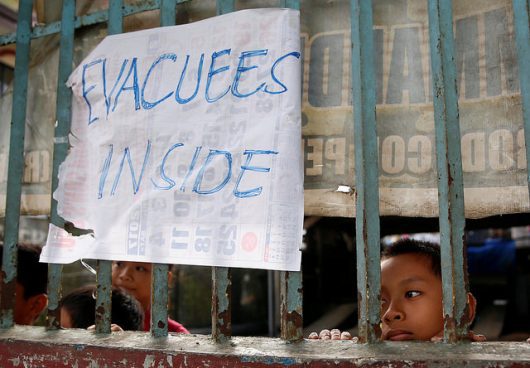
With a death toll that recently topped 500 and over 183,500 individuals forced from their homes, the crisis is far from over.

On June 27, China donated $3 million in relief funds to the besieged city. The money was directed to the city’s health and social development department in hopes of helping those who have been displaced or whose homes have been destroyed.

Australia also made contributions totaling approximately $7 million. In a statement on June 20, Foreign Minister Julie Bishop firmly stated that the Australian government will stand strong beside the Philippines to fight terrorism. The donated aid packages included items such as food, sleeping mats, mosquito nets and sanitary supplies.

The conflict began on May 23, after government troops found the hideout of an ISIS leader, Isnilon Hapalon, in the city. When his men called for backup from the Maute, another radical Islamist group, a gunfight began.

The United States became involved in the conflict at the beginning of June as well, providing technical assistance and military aid to Marawi. According to a recent report, American forces are not currently engaged in combat in the city.

– Emily Trosclair

Photo: Flickr

July 23, 2017
https://borgenproject.org/wp-content/uploads/borgen-project-logo.svg 0 0 Borgen Project https://borgenproject.org/wp-content/uploads/borgen-project-logo.svg Borgen Project2017-07-23 07:30:412024-12-13 17:58:22World Reaches Out and Provides Aid to Marawi
Aid, Global Poverty

How to Help People in Somalia

Help People in Somalia
Somalia is in a pre-famine state, experiencing severe drought and conflict from radical groups. Both events are causing a major food crisis. A quarter of Somalia’s population is in crisis, while over 300,000 children are suffering from malnutrition. This being said, there are plenty of solutions to help people in Somalia including providing nutritional support, access to safe water supply and building prevention and treatment centers.

One way to help people in Somalia is by giving nutritional support. Children and mothers are living with multiple nutritional deprivations. Delivering food assistance will aid and prevent them from being affected by drought and conflict. Some organizations provide agricultural assistance and advancement or nutritional substitutes.

Providing access to safe water supplies is another way to help people in Somalia. Building wells in communities across Somalia enables families to settle one less worry and focus on other responsibilities such as work or school. Although there have been about 500 wells built around Somalia, the risk of contracting diseases from these water supplies is still high.

Building prevention and treatment centers in communities will help to fight these diseases in Somalia. Cholera has spread greatly across Somalia and is in need of an improved treatment plan. Health organizations are responding to such diseases and gathering to build appropriate facilities across the country.

Although there are many things that can be done on the ground, there is always a way to help from home. The simplest and effective way to help people in Somalia is to donate. Many of these acts are possible through donations. There are many campaigns standing by Somalia and its recovery.

One example of an organization to donate to is Love Army for Somalia, a supply aid campaign. Recently, the campaign has expanded into an effective one, allowing people to pair up and give monthly donations to different families in villages suffering deeply from the drought. Back on the ground, these donations are immediately sent to those families to purchase their own necessities instead of getting the packages by the middlemen.

There are many solutions as to how to help people in Somalia. From acting on the ground to donating to a variety of campaigns, every action helps. Millions are aiding Somalia during this famine. This sets the example of the impact that can be made by developing countries.

– Brandi Gomez

Photo: Flickr

July 23, 2017
https://borgenproject.org/wp-content/uploads/borgen-project-logo.svg 0 0 Borgen Project https://borgenproject.org/wp-content/uploads/borgen-project-logo.svg Borgen Project2017-07-23 07:30:392021-02-23 11:54:50How to Help People in Somalia
Page 51 of 65«‹4950515253›»

Get Smarter

  • Global Poverty 101
  • Global Poverty… The Good News
  • Global Poverty & U.S. Jobs
  • Global Poverty and National Security
  • Innovative Solutions to Poverty
  • Global Poverty & Aid FAQ’s
Search Search

Take Action

  • Call Congress
  • Email Congress
  • Donate
  • 30 Ways to Help
  • Volunteer Ops
  • Internships
  • Courses & Certificates
  • The Podcast
Borgen Project

“The Borgen Project is an incredible nonprofit organization that is addressing poverty and hunger and working towards ending them.”

-The Huffington Post

Inside The Borgen Project

  • Contact
  • About
  • Financials
  • President
  • Board of Directors
  • Board of Advisors

International Links

  • UK Email Parliament
  • UK Donate
  • Canada Email Parliament

Get Smarter

  • Global Poverty 101
  • Global Poverty… The Good News
  • Global Poverty & U.S. Jobs
  • Global Poverty and National Security
  • Innovative Solutions to Poverty
  • Global Poverty & Aid FAQ’s

Ways to Help

  • Call Congress
  • Email Congress
  • Donate
  • 30 Ways to Help
  • Volunteer Ops
  • Internships
  • Courses & Certificates
  • The Podcast
Scroll to top Scroll to top Scroll to top