• Link to X
  • Link to Facebook
  • Link to Instagram
  • Link to TikTok
  • Link to Youtube
  • About
    • About Us
      • President
      • Board of Directors
      • Board of Advisors
      • Financials
      • Our Methodology
      • Success Tracker
      • Contact
  • Act Now
    • 30 Ways to Help
      • Email Congress
      • Call Congress
      • Volunteer
      • Courses & Certificates
      • Be a Donor
    • Internships
      • In-Office Internships
      • Remote Internships
    • Legislation
      • Politics 101
  • The Blog
  • The Podcast
  • Magazine
  • Donate
  • Click to open the search input field Click to open the search input field Search
  • Menu Menu

Archive for category: Aid Effectiveness & Reform

Information and stories about aid effectiveness and reform

Aid Effectiveness & Reform, Development

UK Cuts Aid to South Africa

u.k. south africa foreign aid end development
The U.K. International Development Secretary, Justine Greening, announced the U.K. will stop giving direct aid to South Africa in 2015. Currently, the U.K. gives South Africa £19 million or $29.5 million or 250,000 Rands a year. Greening commented on South Africa’s momentous progress that has been made over the past twenty years, emphasizing that it is the economic powerhouse of its continent and serves as the area’s biggest trading partner to Britain, adding that, “I have agreed with my South African counterparts that South Africa is now in a position to fund its own development.”

However, the South Africa African Department of International Relations and Co-operation described the decision as being made “unilaterally” and stated that the aid was “tantamount to redefining our relationship.” The Department further criticized the decision because it was not made through the proper diplomatic channels.

Finance Minister Pravin Gordhan said of Greening’s statement that he does not condone Britain’s decision to reduce aid, as was claimed by Secretary Greening. He also stated that statements and facts surrounding the decision were “deliberately distorted.”

– Essee Oruma

Sources: allAfrica
Photo: The Guardian

May 12, 2013
https://borgenproject.org/wp-content/uploads/borgen-project-logo.svg 0 0 Borgen Project https://borgenproject.org/wp-content/uploads/borgen-project-logo.svg Borgen Project2013-05-12 04:22:352020-05-26 09:04:08UK Cuts Aid to South Africa
Aid Effectiveness & Reform, Developing Countries, Family Planning and Contraception

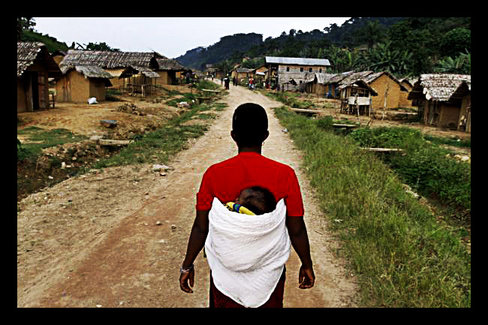
DRC Ranks Last in Maternal Health

congo
Happy Mother’s Day?  Well, maybe not in the Democratic Republic of Congo (DRC), which was recently named the worst place to be a mom according to a report done by Save the Children. The DRC took the unwanted ranking from Niger and for the first time in the 14 years since the report has been published, sub-Saharan Africa took up the bottom ten places.

The London-based charity’s “State of the World’s Mothers” report compared 176 countries in terms of maternal health, child mortality, education and levels of women’s income and political status.  The results were staggering and showed massive gaps in maternal health. A woman or girl in the DRC has a 1 in 3o chance of dying from maternal causes, including childbirth, whereas a women in Finland faces a 1 in 12,200 risk. The report cited the poor health of mothers as well as low access to health care  as possible causes for the high rates of infant mortality in sub-Saharan Africa.

Save the Children is calling for an investment to close the gap. They cite the need for nations to invest in mothers and children and to provide better and more accessible maternal care.  Women must have access to education and political standing as well as high quality health and child care.

Much progress is being made in developing countries and sub-Saharan Africa; the study pointed to four life-saving products that could drastically change the current state of affairs. Those four products are:

1. Corticosteroid injections to women in preterm labor.

2. Resuscitation devices to save babies who do not breathe at birth.

3. Chlorhexidine cord cleansing to prevent umbilical cord infections.

4. Injectable antibiotics to treat newborn sepsis and pneumonia.

Simple devices and measures like these have the potential to give mothers and infants in countries like the DRC a better chance at a full, healthy life.  It is time to continue the progress being made and even the odds for mothers in the DRC and all across sub-Saharan Africa.

– Amanda Kloeppel

Source: Global Post

May 9, 2013
https://borgenproject.org/wp-content/uploads/borgen-project-logo.svg 0 0 Borgen Project https://borgenproject.org/wp-content/uploads/borgen-project-logo.svg Borgen Project2013-05-09 04:00:142020-05-26 08:52:46DRC Ranks Last in Maternal Health
Aid Effectiveness & Reform, Developing Countries

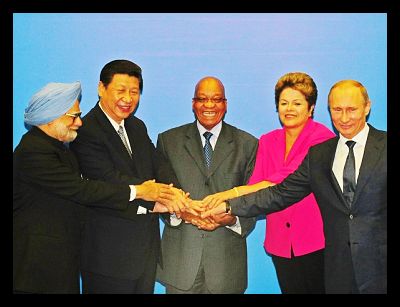
BRICS Plans For Development Bank

Fifth_BRICS_Summit_2013_Brazil_Russia_India_China_Sout_Africa_conference_leadership_global_business

Leaders of BRICS (Brazil, Russia, India, China, and South Africa) announced at the end of their summit in March in Durban their intention to start a new Development Bank.  This Development Bank will be used to mobilize resources within developing countries to build infrastructure and promote sustainable development projects.

Over the last four decades, the nations of BRICS have seen enormous success in economic development and are coming together to see that their futures are bright and full of opportunities.  As developed nations struggle through their own economic difficulties, the Development Bank will serve to bridge a gap in funding.  Infrastructure requirements in emerging-market economies point to the need for the availability of credit and sources of financing. With 1.4 billion people lacking reliable electricity, 900 million lacking access to clean water, and 2.6 billion without adequate sanitation, the Development Bank will be a key player in addressing the long-term sustainable solutions to those problems.  In addition, the forecasted large migration to cities calls for policymakers to fund environmentally sustainable investments.

Predictions for infrastructure spending within the developing world top $2 trillion annually in the coming decades.  This spending will allow nations to achieve long-term poverty reduction and economic growth. The private market will still be relied upon, but their dollars can only go so far. The Development Bank will fill the gap and become a catalyst for change in developing countries.

As the world economy is changing, the Development Bank provides BRICS a chance to reflect on those changes within an institution that utilizes modern financial instruments, strong governance, and broad-based mandates.  The bank can capitalize on new development partnerships and collective action as well as innovative and cost-effective approaches.  While developed countries still have a strong role to play in global development, the shortfall in assistance and need for quick decisions make the Development Bank a welcome institution in the marketplace of emerging countries.

– Amanda Kloeppel

Source: The Korea Herald
Photo: BRICS

May 8, 2013
https://borgenproject.org/wp-content/uploads/borgen-project-logo.svg 0 0 Borgen Project https://borgenproject.org/wp-content/uploads/borgen-project-logo.svg Borgen Project2013-05-08 11:00:232024-05-24 23:49:34BRICS Plans For Development Bank
Aid Effectiveness & Reform, Development

Countries Starting to Reach Development Goals

Data from the World Bank released last week reports twenty fragile countries who are starting to reach development goals.  As the Millennium Development Goals near the end, news of progress is exciting and hopeful. Progress in fragile countries ranges from efforts in reducing poverty, improving the education of girls, and cutting down on deaths during child birth.

The Millennium Development Goals are set to expire in 2015 and these 20 countries were not on track just a few years ago. The progress that has been made since 2010 is remarkable. In addition, six more fragile countries are on target to hit the goals by 2015. Countries like Afghanistan, Nepal, and Timor-Leste have seen a 50% reduction in people in extreme poverty and increased the number of girls in school.  These are strong accomplishments for any nation, but for these nations who are coming out of war and devastation, the results are even more extraordinary.

The data serves as a call for the global community to not strike countries off as hopeless or lost causes, but to seek the development of all nations.  While these twenty have seen remarkable progress, many war-torn nations are still lagging far behind the benchmarks set up by the Millennium Development Goals. These nations are also very prone to relapse as is the case of Yemen who was on target to meet the goal of reducing death during childbirth until the violence during the Arab Spring in 2011.

World Bank leaders are calling for a bridge between long-term development and humanitarian assistance to help countries in the middle of crisis.  When the international spotlight leaves a country in distress, often so does the humanitarian aid, leaving the country devastated and struggling to rebuild itself. To rebuild requires support that focuses on clear actions, steps, and transparent and accountable goals. As nations tighten their spending in the midst of the economic downturn, effective aid is even more important. The World Bank is committed to working more closely with the United Nations to see that long-term development happens in fragile countries.

Community involvement is also key in addressing and meeting needs and designing appropriate projects.  As aid organizations work together with communities, they can address the causes of conflict and also create programs and plans that emerge as long-term solutions.  In the final push to accomplish the Millennium Development goals, this type of aid is going to be increasingly important.

– Amanda Kloeppel
Source: Reuters
Photo: World Hunger

May 8, 2013
https://borgenproject.org/wp-content/uploads/borgen-project-logo.svg 0 0 Borgen Project https://borgenproject.org/wp-content/uploads/borgen-project-logo.svg Borgen Project2013-05-08 09:00:252020-05-26 08:39:44Countries Starting to Reach Development Goals
Advocacy, Aid Effectiveness & Reform, Developing Countries

Business and Africa: A Continent on the Move

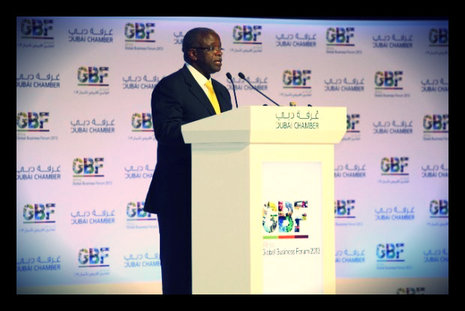
africaglobalbusinessforum

May 1, 2013 was the kick-off of the two-day Africa Global Business Forum in Dubai.  Africa, a continent on the move, has been showing promising signs of economic growth and development.  The Africa Global Business Forum is just one more step in the right direction for a continent on the move.

The Africa Global Business Forum, as announced by the UAE Prime Minister, is set to become an annual event.  The forum brings together leaders from Africa and the UAE to promote business investment, development, and collaboration between the nations of Africa and Dubai.  More than 3,500 delegates are in attendance.  The Prime Minister of Uganda gave the keynote address and stressed the importance of the forum as a signal of the interest in African business and investment opportunities.  He also discussed the importance of the private and public sectors working together as has been done in Dubai.

Dubai serves as a center of 150 different shipping lines and could be a very key logistics hub for Africa to export goods.  The young population and growing middle class in Africa are indicators of the potential for increased growth within Africa. Consumer spending is set to hit US $1.4 trillion by 2020. The forum will seek to strengthen alliances between Africa and outside investors with the goal of reducing poverty in Africa and increasing economic growth and self-sufficiency.

Other topics of note at the forum are looking at boosting Africa’s trade through the role of free trade areas and private equity.  Already major telecom companies are looking to invest in Africa and the prospects for future growth and development are exciting.

– Amanda Kloeppel
Source: CPI Financial

May 4, 2013
https://borgenproject.org/wp-content/uploads/borgen-project-logo.svg 0 0 Borgen Project https://borgenproject.org/wp-content/uploads/borgen-project-logo.svg Borgen Project2013-05-04 14:00:032020-05-26 08:24:21Business and Africa: A Continent on the Move
Aid Effectiveness & Reform, Developing Countries, Extreme Poverty, Global Poverty, Nonprofit Organizations and NGOs, Poverty Reduction

$500 Million ‘Rescue Mission’ Initiative Launched

$500 Million 'Rescue Mission' Initiative LaunchedWith cuts to foreign aid looming and some already in place, humanitarian organizations are going to become even more important in the fight against global poverty. Evangelical organization World Vision launched a $500 million ‘Rescue Mission’ initiative to help 10 million children living in poverty.  The ‘Rescue Mission’ initiative will focus on clean water, access to health care, and child protection.

Under the budget cuts that went into effect as of January 1, 2013, non-profits are predicting that there will be 1.1 million fewer mosquito nets distributed, 300,000 fewer people with access to clean water, and 2 million people with reduced or zero access to food aid.  This is cause for serious concern as we look at being less than 1,000 from the end date for the Millenium Development Goals (MDG).

World Vision launched the $500 million ‘rescue mission’ dubbed “For Every Child” which seeks to raise $500 million by 2015.  It is the farthest-reaching endeavor World Vision has ever taken on.  The initiative will focus on clean water, fighting communicable diseases, providing small loans to families, and protecting children from human trafficking.

When the government cuts budgets, it can be difficult for non-profit organizations to get the start-up capital they need to start new ventures. This campaign is important to continue the life-saving work World Vision is already doing around the world.  It will hopefully fill the gap from government funds and continue to promote the MDGs as we near the final stretch.  We have halved poverty in the last decade and it is very possible to continue the downward trend, but it is going to take a lot of hard work.

While the needs are great and the costs seem high, the alternative to pushing forward is not an option. As Richard Sterns, Executive Director of World Vision put it, “We’ve taken a hard look at the needs that exist today. They are great, but we refuse to believe that poverty is too big, too expensive, or too difficult to overcome-because for the millions of children living in poverty, the stakes couldn’t be higher.”

– Amanda Kloeppel

Source: Christian Post

April 24, 2013
https://borgenproject.org/wp-content/uploads/borgen-project-logo.svg 0 0 Borgen Project https://borgenproject.org/wp-content/uploads/borgen-project-logo.svg Borgen Project2013-04-24 09:00:522020-06-12 23:12:22$500 Million ‘Rescue Mission’ Initiative Launched
Aid Effectiveness & Reform, USAID

Why the US Should Invest in Africa?

Why the US Should Invest in Africa?
USAID in Africa creates many new advantages for the US beyond humanitarian aid, such as fostering strategic national security partners and increasing US economic prospects. George Ingram and Steven Rocker recommend four strategies to better utilize and direct foreign assistance to the region.

In June 2012, President Obama established his development priorities in the region with the White House’s U.S. Strategy toward Sub-Saharan Africa, focusing on economic growth, food security, public health, women and children, humanitarian response, and climate change.

From 2002 to 2012, the total USAID money in sub-Saharan Africa nearly quadrupled, from roughly $1.94 billion to $7.08 billion. The assistance money was largely focused on global health spending, specifically the President’s Emergency Plan for AIDS Relief (PEPFAR). But even beyond global health, the U.S. is the leading donor of humanitarian aid to sub-Saharan Africa, particularly in the area of emergency food aid. The Obama administration also provides assistance in agriculture development through its Feed the Future program, a global hunger and food security initiative. Overall, USAID operates 27 different regional missions in 47 African countries – the top five being Kenya, Nigeria, Ethiopia, Tanzania and South Africa.

U.S. development assistance brings government agencies, American organizations and businesses into collaboration with Africans who are trying to put their own communities and countries onto a more prosperous social, political, and economic plane. There are three critical reasons why the US should invest in Africa:

1. Humanitarian interests – Through moral obligation the U.S. has historically been the leading donor of humanitarian assistance in the region. It is part of the American ethos to continue to respond compassionately to people in their most desperate times of need.

2. National security interests – There are continued terrorist concerns in Somalia and Mali, with the potential new threats in Nigeria (the U.S.’s largest trading partner in sub-Saharan Africa). USAID must continue to be very active in these regions particularly to prevent any terrorist strongholds from cementing and to maintain stability.

3. Economic interests – From 2001 to 2010, six of the fastest-growing economies in the world were in Africa. In 2011, foreign investment to sub-Saharan Africa amounted to more than all the development assistance funding for the whole world. Many countries are recognizing and acting on increasing commercial opportunities in Africa.

Four ways to make U.S. aid to Africa more effective:

1. Sustainable health systems – The majority of health assistance to Africa is used to finance the delivery of health services, which is not sustainable. Greater focus needs to be directed to building health practices that Africans can carry out on their own.

2. Disaster preparedness – For all the humanitarian aid delivered, very little is allocated toward disaster prevention and preparedness. By focusing more resources and expertise toward these areas, the U.S. could reduce the need for large international disaster relief, and save lives.

3. Economic growth – The U.S. should leverage its assistance to stimulate economic growth. Congress and U.S. officials should engage the Export-Import Bank, Department of Commerce, Overseas Private Investment Corporation, U.S. Trade and Development Agency and the U.S. Trade Representative to ensure that a range of government policies and programs are encouraging equitable economic growth for all, and commercial opportunities for U.S. businesses.

4. Democratization and good governance – The U.S. needs to give greater attention and support toward governance policies and oversight; including improving the governmental collection of revenues, transparent budgeting, and building the capacity of civil society and legislative systems.

– Mary Purcell

Source: Brookings
Photo: ruaf.iwmi.org
April 19, 2013
https://borgenproject.org/wp-content/uploads/borgen-project-logo.svg 0 0 Borgen Project https://borgenproject.org/wp-content/uploads/borgen-project-logo.svg Borgen Project2013-04-19 08:43:442020-06-12 20:49:11Why the US Should Invest in Africa?
Aid Effectiveness & Reform, Development

6 Factors for Successful Development

economic-development-sustainability
Since 1945 the United Nations has established the contemporary global, obligation to address the economic and social well-being of ordinary citizens. A very new concept when written into their charter: “The United Nations shall promote higher standards of living, full employment, and conditions of progress and development in the economic and social order.”

Over time, for at least economists and policy makers, this development agenda has become synonymous with “improving economic opportunities through increased production of goods and services.” The implicit assumption is that economic growth will increase quality of life standards, life expectancy, improve nutrition and health.

Since 1945, there have been impressive advancements in the elimination of extreme poverty, but still many professionals wonder how to accelerate growth even more throughout the world – particularly in Africa and South Asia, two regions with a great number of poor. The issue has prompted economists and policymakers to analyze the importance of several factors, policies and institutions, finding six factors for successful development:

1. Social inclusion – With a healthier and more educated population, nations can enjoy a more effective economic and political life. Illiteracy is a major barrier to participation in the economy. Without widespread education, citizens are more easily manipulated by un-just governments – allowing for the empowerment of counter-productive leadership.
2. Quality management – Governments must manage their national macro-economic environment; if there is no over-arching/holistic governance, the nation loses its credibility both in private sector business, and the citizenry. The “political capital” of a country cannot be wasted, and moreover, if public resources and urgent needs are not continually addressed, then the country falls into a burden of “catch up” where they are always behind in development, comparatively.
3. Transparency and accountability – Transparency is essential to prevent corruption and financial fraud, and promotes citizen participation. Experience shows that trust in one’s government encourages citizens and businesses to pay their taxes, thus advancing development and social services. Companies invest and expand more, creating greater confidence in the government and a “virtuous circle” of development ensues.
 4. Technology and innovation – Economic production is no longer just about capital and labor, now knowledge and innovation are just as important. It has been proven that technology gaps can explain the disparity in productivity between different countries. Technological adoption, knowledge dissemination and information communication technology (ICT) are imperative for national competitiveness.
5. Economic opportunities – Increasing the access and use economic resources to citizens is imperative. Free and open access to markets can contribute significantly to development; access to goods, labor and financial markets for personal use, production and exchange; especially the promotion of small-businesses.
6. Administrative Infrastructure – Business and society often come down to bureaucratic needs:  issuance of licenses, permits, birth certificate, passport, filing taxes, starting a business, registering a title, property rights, contract settlements, foreign trade authorization, hiring an employee, use the public health services, etc. The efficiency of bureaucracy is pertinent to advancing greater and more equal access to public resources.
 – Mary Purcell

Source: ITC
Photo: amateurinafrica.com

April 5, 2013
https://borgenproject.org/wp-content/uploads/borgen-project-logo.svg 0 0 Borgen Project https://borgenproject.org/wp-content/uploads/borgen-project-logo.svg Borgen Project2013-04-05 13:11:012024-05-24 23:46:376 Factors for Successful Development
Aid Effectiveness & Reform

Does WTO’s Aid for Trade Reduce Poverty?

Does WTO's Aid for Trade Reduce Poverty?
Aid for Trade is a holistic approach to incorporating developing economies into global trade networks by assisting them in increasing exports and market access. Aid for Trade was initiated at the WTO Ministerial Conference in 2005, and the program has since increased its scope to include building production capacity (financial services, businesses, and industry), trade-related infrastructure (communications, energy, transportation), and trade policy and regulations.

When the Aid for Trade initiative began, it was unclear whether it would receive funding or be successful. Now that it has been implemented for over a decade, it is time to reexamine the links between trade, development, and poverty reduction that Aid for Trade aims to strengthen.

The principle behind Aid for Trade is that increased trade should benefit inhabitants of developing countries, whether or not they are directly involved in the program. One Aid for Trade program teaches Ugandan farmers how to grow and process dried fruit to be sold into the European cereal market. The farmers involved should benefit from increased income, market access, and productivity, and Uganda should benefit from increased exports.

Most evaluations of the effectiveness of Aid for Trade programs take place within 18 months of a given program’s initiation. This is not enough time to measure whether the program has truly been successful at reducing poverty in a sustainable way. Additionally, evaluations often do not take into account a program’s impact on those not involved; how did the fruit-growing education program impact farmers who did not receive additional training and support?

A new study on European trade assistance aid, commissioned by NGOs Traidcraft and the Catholic Agency for Overseas Development, suggests that there may be “hidden losers” to Aid for Trade initiatives. For example, South African fruit growers increased exports to Europe after trade sanctions were lifted. They earned higher wages and improved their standard of living. However, the demand for cheaper fruit also caused some growers to lower wages and to replace full-time employees with temporary, often migrant workers, who did not enjoy the benefits.

The study also found that the majority of trade assistance goes to middle-income countries rather than to the least developed countries (LCDs) that Aid for Trade is directed towards. Little evidence exists to prove Aid for Trade’s effectiveness in reducing extreme poverty; this is likely a result of short-term program evaluations that take place before real impact can be measured, as well as lack of donor interest in, and therefore funding for, impact evaluations.

Overall, there are many obstacles to determining whether or not Aid for Trade has been successful thus far. More thorough, accurate, and long-term evaluations of poverty rates are necessary in order to determine the tangible successes or failures of Aid for Trade.

– Kat Henrichs

Sources: OECD, International Center for Trade and Sustainable Development, The Guardian
Photo: European Commission

March 24, 2013
https://borgenproject.org/wp-content/uploads/borgen-project-logo.svg 0 0 Borgen Project https://borgenproject.org/wp-content/uploads/borgen-project-logo.svg Borgen Project2013-03-24 10:30:322024-12-13 17:49:15Does WTO’s Aid for Trade Reduce Poverty?
Aid Effectiveness & Reform

Paris Declaration on Aid Effectiveness

Paris Declaration on Aid EffectivenessThe Paris Declaration on Aid Effectiveness (PDAE), drafted in 2005, was born out of decades of experience for what does and does not work when allocating and utilizing aid development money. The principles have gained support across the world and within aid agencies – changing aid practices for the better. More and more aid recipients are creating their own national development strategies and aligning with donor groups to streamline efforts and goals, to ensure qualitative results for every dollar spent.

The five core principles of PDAE

1. Ownership: Developing countries set their own strategies for poverty reduction, improve their institutions and tackle corruption.
2. Alignment: Donor countries align behind these objectives and use local systems.
3. Harmonisation: Donor countries coordinate, simplify procedures and share information to avoid duplication.
4. Results: Developing countries and donors shift focus to development results, and results get measured.
5. Mutual accountability: Donors and partners are accountable for development results.
In 2008 the Accra Agenda for Action was designed and added to the Paris Declaration in order to strengthen and accelerate advancement towards the Paris targets. It proposed four main areas for improvement:
1. Ownership: Countries have more say over their development processes through wider participation in development policy formulation, stronger leadership on aid coordination and more use of country systems for aid delivery.
2. Inclusive partnerships: All partners – including donors in the OECD Development Assistance Committee and developing countries, as well as other donors, foundations and civil society – participate fully.
3. Delivering results: Aid is focused on the real and measurable impacts on development.
4. Capacity development: to build the ability of countries to manage their own development agendas.
– Mary Purcell

Source: OECD
Photo: Flixya

March 23, 2013
https://borgenproject.org/wp-content/uploads/borgen-project-logo.svg 0 0 Borgen Project https://borgenproject.org/wp-content/uploads/borgen-project-logo.svg Borgen Project2013-03-23 10:29:152024-12-13 17:49:14Paris Declaration on Aid Effectiveness
Page 14 of 16«‹1213141516›»

Get Smarter

  • Global Poverty 101
  • Global Poverty… The Good News
  • Global Poverty & U.S. Jobs
  • Global Poverty and National Security
  • Innovative Solutions to Poverty
  • Global Poverty & Aid FAQ’s
Search Search

Take Action

  • Call Congress
  • Email Congress
  • Donate
  • 30 Ways to Help
  • Volunteer Ops
  • Internships
  • Courses & Certificates
  • The Podcast
Borgen Project

“The Borgen Project is an incredible nonprofit organization that is addressing poverty and hunger and working towards ending them.”

-The Huffington Post

Inside The Borgen Project

  • Contact
  • About
  • Financials
  • President
  • Board of Directors
  • Board of Advisors

International Links

  • UK Email Parliament
  • UK Donate
  • Canada Email Parliament

Get Smarter

  • Global Poverty 101
  • Global Poverty… The Good News
  • Global Poverty & U.S. Jobs
  • Global Poverty and National Security
  • Innovative Solutions to Poverty
  • Global Poverty & Aid FAQ’s

Ways to Help

  • Call Congress
  • Email Congress
  • Donate
  • 30 Ways to Help
  • Volunteer Ops
  • Internships
  • Courses & Certificates
  • The Podcast
Scroll to top Scroll to top Scroll to top