• Link to X
  • Link to Facebook
  • Link to Instagram
  • Link to TikTok
  • Link to Youtube
  • About
    • About Us
      • President
      • Board of Directors
      • Board of Advisors
      • Financials
      • Our Methodology
      • Success Tracker
      • Contact
  • Act Now
    • 30 Ways to Help
      • Email Congress
      • Call Congress
      • Volunteer
      • Courses & Certificates
      • Be a Donor
    • Internships
      • In-Office Internships
      • Remote Internships
    • Legislation
      • Politics 101
  • The Blog
  • The Podcast
  • Magazine
  • Donate
  • Click to open the search input field Click to open the search input field Search
  • Menu Menu

Archive for category: Advocacy

Information and news on advocacy.

Activism, Advocacy, Education, Global Health, Global Poverty, Nonprofit Organizations and NGOs, Philanthropy, Poverty Reduction

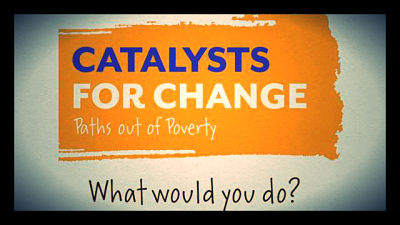
Catalysts for Change

catalysts_for_change_game
A first of its kind, Catalysts for Change, an innovative and interactive online game, was run by the Rockefeller Foundation and the Institute for the Future last year in the beginning of April. The game prompted participants worldwide to discuss and come up with ways to battle the plentiful issues of poverty. The game itself was designed around four catalysts: new evidence, new capacities, new rules and new stories, all of which contributed to the card-based gaming platform.

Players could share ideas through Positive/Critical imagination cards – these had the potential to be built on by others through Momentum, Antagonism, Investigation and Adaptation cards. Leaderboards were also created, displaying points players had earned through using and gaining said cards. These could furthermore be categorized as Scenario Fail, Common Knowledge or Super Interesting based on the players’ personal perception of presented ideas. Achievements spanning across seven levels, going from Inspired to Legend, were available for unlocking before being recorded in player profiles.  Each card played was then cataloged by category, available for public viewing on a special dashboard.

A game blog recorded all progress and presented new missions and challenges in real time. Two weeks before the actual game start, several preparations were made including social media advertising and buzz-building, recruitment, email exchange between coordinators across the world and various sponsor partnerships which led to further awareness among people. Most follow-up cards played were either Investigation or Momentum; of the top-tier, Critical versus Positive imagination were played, the latter being more than twice as frequent. Around 53% of all cards had follow-up cards attached, spanning overall very optimistic and fruitful discussions. As expected from discussions concerning poverty, themes such as education, work and community were amongst the most common. A few top innovative ideas that were brought up include:

–  Alternative economic systems or a universal currency
–  Empathy, i.e. teaching children from an early age to perceive worldly problems
–  Entrepreneurial education and new business funding as a common endorsement for all
–  Socially engineered ways around corruption
–  Sharing to eliminate waste

Although the aim of the game was not to implement any policy for actual poverty reduction, it managed to fulfill its purpose: to motivate and bring together people in their desire to make a change. Several of the players, engaged among one another, even discussed ways they could contribute beyond playing the game, such as starting a non-profit together centered chiefly around their ideas. The attention on social media (Facebook and Twitter) that Catalysts for Change received helped further spread the cause. Thoughts shared by players are still accessible on the website today, providing ‘food for thought’ for anyone hungry for making a difference. Although the game spanned for only 48 hours, it attracted 1,616 players from 79 different countries who used a total of 18,207 cards.

– Natalia Isaeva

Sources: The Rockefeller Foundation: Catalysts for Change, Institute for the Future
Photo: Vimeo
January 13, 2014
https://borgenproject.org/wp-content/uploads/borgen-project-logo.svg 0 0 Borgen Project https://borgenproject.org/wp-content/uploads/borgen-project-logo.svg Borgen Project2014-01-13 22:08:272016-02-16 12:04:43Catalysts for Change
Activism, Advocacy, Aid Effectiveness & Reform, Global Poverty, Philanthropy

The Case Against Gift Aid

The Case Against Gift Aid
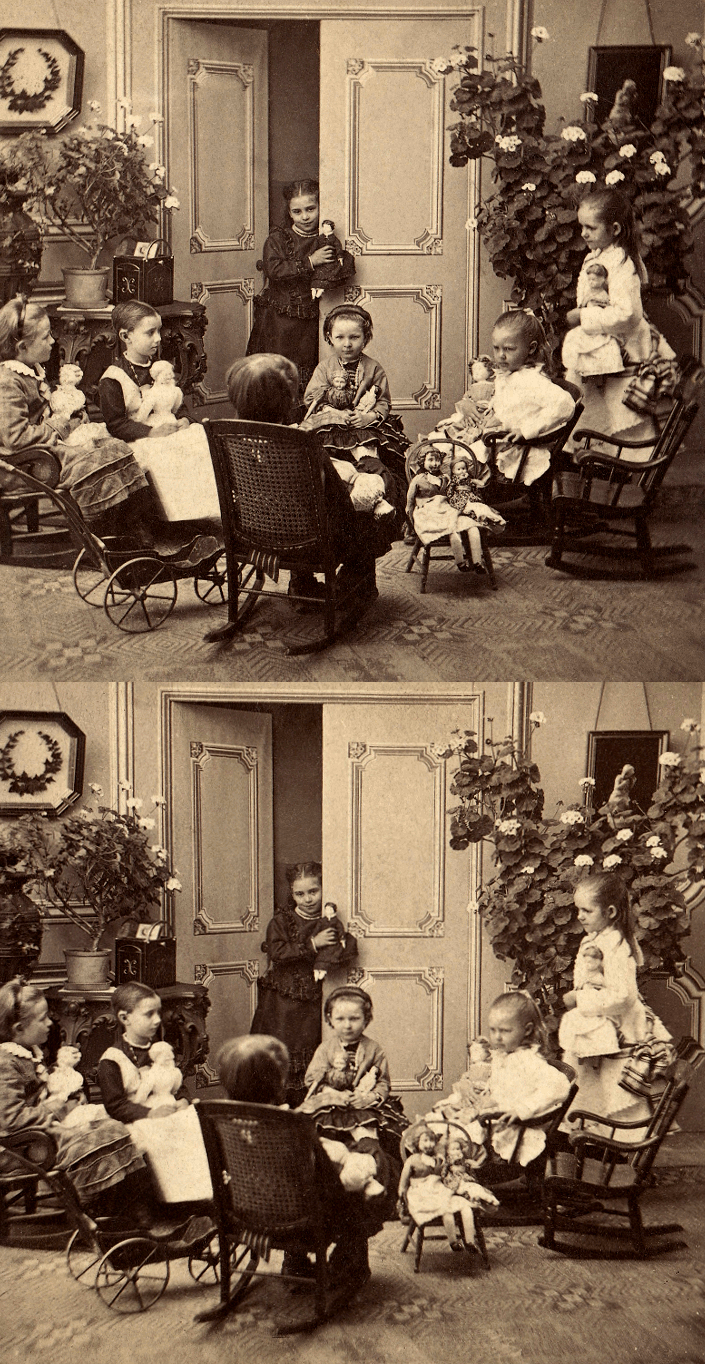
Initiated less than forty years ago, the UK Gift Aid incentive aggrandizes donations received through select charities by providing tax deductions to the donor.

By means of Gift Aid, charities are able to reclaim the basic tax rate (20%) of the donation at no cost to the donor. For example, if an individual donates £10 using Gift Aid, the charity itself receives £12.50. With non-monetary contributions, the original tax is added back in to the overall value of the item. Thus, if a table valued at £100 is supplied, the charity is able to retain the item at £125.

However, before one is eligible to provide a Gift Aid donation, a form documenting basic personal information such as name, home address and information about the designated charity is required. Furthermore, this form is rather versatile in that it can be applied to future donations as well. On the surface, Gift Aid appears ingenious and innovative, and in many ways, it is. Yet, like many other programs wrought by good intentions, this incentive should be wary of also being susceptible to corruption.

For one, Gift Aid is plagued by complexity and ambiguity in its guidelines and operations.

Revenue and Customs declare that the donated items are in fact the possessions of the donor and the charity in question acts as a mere representative. Therefore, it is the donor — not the organization — who has the authority to not only give all or a portion of the sale’s proceeds but also to retain all or a portion of the profits. Meaning, an individual may decide to utilize Gift Aid out of greed and a personal, profit agenda rather than benevolence and an honest desire to give back to others.

The mandatory Gift Aid forms are composed in such a manner that donors are not held accountable for whether proceeds are bequeathed to the charity or not. Thus, an individual could legally sell his or her belongings using the Gift Aid incentive and keep all of the proceeds — leaving the charity, which handles the actual selling of the item, bereft of any profit.

According to the Institute of Fundraising, “the goods are the property of the owner until they are sold, and after they are sold, [the owner] has the right to keep some or all of the proceeds.” Although individuals who are initially willing to sell their personal belongings under Gift Aid may not initially expect to monetarily gain from the transaction.  Because this gaping loophole still exists, the incentive may be vulnerable, or opens an opportunity with the advantage, to misuse.

– Phoebe Pradhan

Sources: HM Revenue and Customs, The Guardian
Photo: Vintage 3D

January 12, 2014
https://borgenproject.org/wp-content/uploads/borgen-project-logo.svg 0 0 Borgen Project https://borgenproject.org/wp-content/uploads/borgen-project-logo.svg Borgen Project2014-01-12 13:34:242020-08-29 00:12:14The Case Against Gift Aid
Advocacy

Three Music Festivals That Give To Financial Aid

firefly_financial_aid
Every year, thousands of music festivals take place around the world. Perhaps inspired in part by George Harrison’s 1971 arena benefit show, “The Concert for Bangladesh,” a multi-artist concert that raised money for East Pakistani refugees following the Bhola Cyclone, festivals now incorporate special activities that contribute to poverty relief in surprising ways. Here is a list of threee music festivals from around the country that play good music while contributing to relief organizations.

1. Firefly hosted by Red Frog Events
A relatively new music festival, Firefly began in 2011 and takes place every year in Dover, DE. Located “among lush wooded landscapes,” Firefly brings in notable alternative and popular artists such as Yeasayer, Lupe Fiasco, and Bassnectar. Unlike other festivals, Firefly offers a TOMS booth which allows festival attendees to purchase a pair of TOMS shoes and have them customized by an artist. As with other TOMS programs, including eyeware, for every pair of shoes sold TOMS will donate another as part of its One For One Movement.

2. Bonnaroo
Located in Tennessee on a 700 acre stretch of land, Bonnaroo celebrate camping, music, and global awareness. One section of their festival is dedicated to “Planet Roo,” an area dedicated to a “variety of nonprofit organizations committed to protecting our resources, promoting healthy lifestyles and making the world a better place,” states their website. Although unrelated to global aid, Bonnaroo has also asked buyers to donate an additional $1 when they purchase their tickets.  The proceeds go toward an on-site solar array and other eco-projects.

3. Lollapalooza
Chicago hosts this behemoth of a festival that began in 1991 by Jane’s Addiction front man, Perry Farrell. Over a three-day time period, the festival showcases popular and up and coming artists to over 225,000 fans. In addition to the concerts, Lollapalooza also offers informational booths dedicated to non-profit organizations, including One, a global grassroots advocacy organization, “dedicated to fighting extreme poverty, preventable disease and hunger around the world.” Alongside One is Oxfam, another global organization that seeks to correct the inequity created by poverty, hunger and injustice.

– Emily Bajet

Sources: Lollapalooza, Lollapalooza Billboard, Rolling Stone, Fast Company

January 9, 2014
https://borgenproject.org/wp-content/uploads/borgen-project-logo.svg 0 0 Borgen Project https://borgenproject.org/wp-content/uploads/borgen-project-logo.svg Borgen Project2014-01-09 04:00:202024-12-13 17:49:49Three Music Festivals That Give To Financial Aid
Advocacy, United Nations

United Nations Treaty Collection

To promote international progress and security, the United Nations creates a series of treaties among nations. The United Nations Treaty Collection (UNTC) is an online database providing full texts of United Nations Treaty Series, League of Nations Treaty Series and multilateral treaties filed by the Secretary-General of the U.N. (SGUN) and its latest status.

The database offers access to over 200,000 bilateral and multilateral treaties filed by the Secretariat. They are recorded in their authentic languages, along with translations into English and French. More than 550 major multilateral instruments cover a wide range of issues that catch global attention, such as human rights, disarmament, commodities, refugees, environment and crimes.

The UNTC offers multiple search criteria so that people can reach treaties by searching participants, subject terms, registration number, date of adoption or keywords.

Apart from treaties, the UNTC publishes information about annual treaty events organized by the Treaty Section of the U.N. The SGUN invites heads of states and governments to attend the event and identifies a series of treaties to be the focus of the event every September. The treaty events aim to advocate universal participation in the multilateral treaties deposited with the SGUN, raise global awareness of international challenges and encourage active engagement of member states in their resolution within the international legal framework.

Treaty training information is also available on the UNTC website. The U.N. hosts annual regional training seminars and workshops on treaty law and domestic implementation of treaty obligations in different countries. The U.N. currently offers member states technical assistance in connection with a range of legal matters. Such assistance includes providing advice, expertise, research, analysis and training.

– Liying Qian

Sources: Learn Stuff, United Nations Treaty Collection, Utrecht University Library
Photo: Wikipedia

January 8, 2014
https://borgenproject.org/wp-content/uploads/borgen-project-logo.svg 0 0 Borgen Project https://borgenproject.org/wp-content/uploads/borgen-project-logo.svg Borgen Project2014-01-08 16:49:332024-05-25 00:36:04United Nations Treaty Collection
Activism, Advocacy, Global Poverty, Health, Inequality, War and Violence

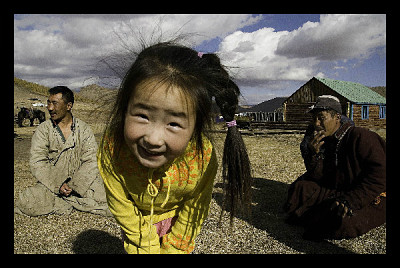
Ethnic Tension Within Inner Mongolia

mongolia
It is no secret that the concerns and rights of ethnic minorities in China fall to the wayside in favor of the Han, the ethnicity with the majority in the country. Inner Mongolia serves as an example of the cultural and economic strife caused by marginalizing one group over another. The result is what the Mongol minority believes is outright economic exclusion and the watering down of their culture.

One of the key issues within the region is the migration of the indigenous nomads from their native grasslands to the cities. The Chinese government waves off the migration as a move into modernity for the nomads. A removal from what Chinese authorities refer to as a “backward” culture, but as Nick Holdstock of the U.K. Independent points out, the natives have no say whatsoever when it comes to moving to the cities. This outflow of ethnic Mongolians to urban centers has raised fears among Mongolians that their culture, language and lifestyle are being threatened.

Another point of tension lies in the regional mining of rare-earth metals. Various mining companies have entered the region to take advantage of the lucrative prospects, especially since the value of these metals is demonstrated in their ubiquity among high-tech electronics. However, the mining has been accompanied by a degradation of the surrounding environment as well as the health of the nomads.

For example, the town of Baotou, a major mining hub, has seen its groundwater polluted to toxic levels, their crops ruined and much of their livestock destroyed. Moreover, the use of underground water sources, essential to the removal of impurities from the coal, has lessened the water available to crops and livestock. Many farmers, unable to deal with destruction of their livelihood, have moved away. The Guardian points out that the population within the surrounding villages of the Baotou plants has decreased dramatically. Those that have remained in the area are plagued by severe illness.

All of these factors have coalesced, creating serious economic problems for the ethnic minority. Environmental devastation of their grasslands has degraded some of the main forms of their economic livelihood; the mining industry in the region tends to hire workers from other provinces, excluding the nomads from many of the economic benefits the industry might bring.  Furthermore, those who have migrated to urban areas have discovered cultural barriers to finding gainful employment, namely an inability to speak passable Mandarin.

Tensions have, moreover, reached the point of violence in some instances. In 2011, a herder was killed by a passing coal truck when he attempted to prevent coal trucks from crossing into his land during his protest against the mining industry. Several days later another protester was killed by a forklift driver. Tensions finally boiled over and several thousand Mongolians went out to voice their opposition toward the mining activities.

Unfortunately, the case of Inner Mongolia is a harsh reminder among ethnic minorities in China of their second-class citizen status. Perhaps in time, the Chinese government will listen to the voices of protest among the disenfranchised minority groups that populate many rural areas throughout China. Until then, Mongolians and other ethnicities face major economic and cultural challenges.

– Zack Lindberg

Sources: The Independent, The Guardian
Fabio Ghioni

January 4, 2014
https://borgenproject.org/wp-content/uploads/borgen-project-logo.svg 0 0 Borgen Project https://borgenproject.org/wp-content/uploads/borgen-project-logo.svg Borgen Project2014-01-04 12:23:512016-02-06 08:44:53Ethnic Tension Within Inner Mongolia
Activism, Advocacy, Human Rights

Madonna Champions Art for Freedom

Founded in September 2013, Art For Freedom is the result of a partnership between global superstar Madonna and VICE Media. The completely digital organization aims to increase awareness of human rights violations around the world through artwork.

Each month, artists are invited to submit their original creations in response to the question, “What does freedom mean to you?” The organization then chooses a winning entry, whose creator is offered a $10,000 donation to the charity of their choice.

In addition to naming monthly winners, Art For Freedom also posts daily winners on its website. The inspirational submissions are displayed on the organization’s home page and can be accessed at any time through its interactive calendar.

Recently, Madonna named illusionist David Blaine as a guest curator for the organization’s December contest. Blaine’s duties will consist of reviewing entries and choosing which pieces will be displayed on the organization’s website.


Past celebrity curators included notables such as Anthony Kiedis of the Red Hot Chili Peppers. For the month of November, Madonna herself hosted a live exhibit on Tumblr to showcase submissions.

Despite its recent start, the organization has quickly gained a following. Notable submissions for the December 2013 contest have included videos and photographs referencing numerous social problems including bullying, transgender issues, religious intolerance, racial intolerance, and other forms of prejudice.

The organization’s website currently features entries from around the world. The last two weeks have seen submissions from France, Bulgaria, Australia, Brazil, Dominican Republic, New Jersey, California, and New Hampshire.

Entries can be from a variety of mediums including film, music, photography, and poetry. Those interested in the organization’s monthly contest may upload original creations on the Art For Freedom website or by uploading the works to social media with the tag #artforfreedom.

– Jasmine D. Smith

Sources: Art for Freedom, Madonna.com
Photo: Blouin Art Info

December 31, 2013
https://borgenproject.org/wp-content/uploads/borgen-project-logo.svg 0 0 Borgen Project https://borgenproject.org/wp-content/uploads/borgen-project-logo.svg Borgen Project2013-12-31 04:00:542024-06-05 03:00:36Madonna Champions Art for Freedom
Advocacy, Children, Developing Countries, Global Health, Global Poverty, Health, Human Rights, Poverty Reduction, United Nations

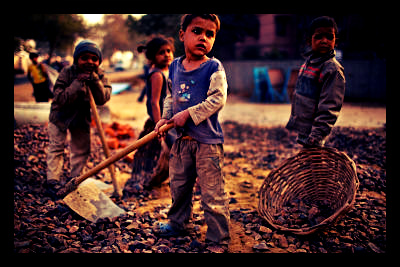
Child Labor: An Overview

Child_Labor_an_Overview
“Millions of children are victims of violence and exploitation. They are physically and emotionally vulnerable and they can be scarred for life by mental or emotional abuse. That is why children should always have the first claim on our attention and resources. They must be at the heart of our thinking on challenges we are addressing on a daily basis. We know what to do, and we know how to do it. The means are at hand, it is up to us to seize the opportunity and build a world that is fit for children,” remarked Ban Ki-moon, Secretarty-General of the United Nations on November 20, 2009, on the Twentieth Anniversary of the Convention on the Rights of the Child.

Just as Ban Ki-moon mentioned, children are not physically or mentally ready to enter the labor force. With the lack of physical abilities, the safety of the workplace cannot be ensured, for both the children and other employees. In fact, children are more likely to be abused and mistreated in an environment centering around child labor.

“Few human rights abuses are so widely condemned, yet so widely practiced. Let us make (child labor) a priority. Because a child in danger is a child that cannot wait,” stated Kofi Annan, Former UN Secretary-General. Around the world, more than 211 million children between the age of 5 and 14 are being forced to work. Among these children, 120 million children are working full time.

To eradicate child labor, people should first understand what leads to such situations. For example, poverty is the first and foremost reason of child labor.  Since many parents do not have the capability to support their household, children end up working to help support the family’s daily lives. Another reason for child labor is a poor education system.

When education is expensive or not readily available, impoverished parents do not see the benefit of learning and think that working is a better alternative. In the United States, there are many laws that prohibit child labor, however, in some countries, child labor laws exist, but are not enforced. Companies can thus take advantage of the cheap labor and further exploit it.

On the other hand, many organizations have been striving to put a stop to child labor by various programs. For example, the United Nations has been running campaigns to raise the awareness of child labor across various nations and airing them in global events such as the World Cup. Moreover, in order to raise the level of education in poverty stricken areas, the Red Cross and governments of third world countries have been recruiting teachers to volunteer in remote areas.

– Phong Pham

Sources: Child Labor Public Education Project, UN: Agencies Urge Greater Action, International Labor Rights Forum, UN: Child Labor
Photo: Addicting Info


Facts about Child Labor

December 26, 2013
https://borgenproject.org/wp-content/uploads/borgen-project-logo.svg 0 0 Borgen Project https://borgenproject.org/wp-content/uploads/borgen-project-logo.svg Borgen Project2013-12-26 04:00:472024-05-25 00:32:50Child Labor: An Overview
Activism, Advocacy

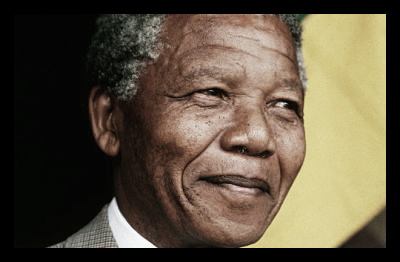
World Leaders Remember Nelson Mandela

World_Leaders_Remember_Nelson_Mandela
Nelson Mandela, former South African President, was highly regarded by leaders all over the globe. His legacy will live on in South Africa and in the hearts of past and present influential leaders.

Soon after the announcement of Mr. Mandela’s death, President Barack Obama praised the South African leader as an influential and inspiring leader who motivated people all across the globe, including the President himself. President Obama solemnly stated that he could not imagine his life without the example set by Mr. Mandela.

Previous U.S. Presidents, including Bill Clinton and George W. Bush, also commended Nelson Mandela for his role in the anti-apartheid movement and outspokenness.

F.W. de Klerk, South Africa’s last apartheid leader, also commended Nelson Mandela for his willingness to compromise and passion for the betterment of South Africa. De Klerk stated in 1990 that though his relationship with Mr. Mandela was “often stormy” “they were always able to come together at critical moments.”

The Dalai Lama, a fellow Nobel Peace laureate, recently said that he will “personally miss a dear friend” and that Mr. Mandela’s “spirit will go on” even though he has physically departed.

Though his controversial position in South Africa during the Apartheid, Nelson Mandela has become a world-renowned leader and activist. U.N. Secretary General Ban Ki-moon hopes that Mandela’s legacy will continue to motivate people across the globe to work for a better world. The White House flags are set to fly at half-staff through Monday.

– Lienna Feleke-Eshete 

Sources: All Africa, Yahoo
Photo: News Discovery

December 25, 2013
https://borgenproject.org/wp-content/uploads/borgen-project-logo.svg 0 0 Borgen Project https://borgenproject.org/wp-content/uploads/borgen-project-logo.svg Borgen Project2013-12-25 12:30:432024-06-05 01:53:43World Leaders Remember Nelson Mandela
Advocacy, Charity

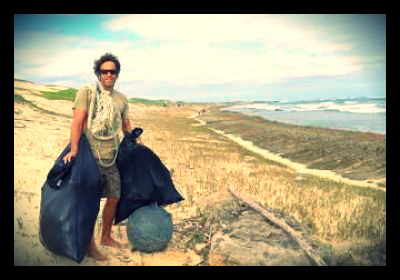
Jack Johnson: Beach Bum or Dedicated Advocate?

jack_johnson_ohana_foundation
Sun-soaked beaches, surfboards, flip-flops, palm trees: these are all images that come to mind when listening to a Jack Johnson song.  The Hawaiian-born and bred musician has cultivated a wonderful laidback musical personality that reflects our fantasies about Hawaii and “taking it easy.” However, when it comes to charity, Johnson could not be more active.

Alongside his wife Kim, Jack has founded two charitable organizations: Kokua Hawaii Foundation and the Johnson Ohana Charitable Foundation.  The former organization works to promote environmental education and responsibility in local schools and communities in Hawaii.  Building upon the grassroots success of their first charity, Kim and Jack founded the Johnson Ohana Charitable Foundation in 2008 to promote environmental, art, and music education on a much larger scale.  The organization has raised $25 million to date for their causes and for smaller charities the organization partners with.  An example of this is a $50,000 donation given to the Tsunami Relief Fund in 2011.

While on tour, Johnson donates 100% of tour profits to his Charitable Foundation.  Johnson is also a major proponent of the “1% For the Planet” brand, which aims to get corporations and brands to donate at least one percent of its sales to nonprofits.  His 2005 album “In Between Dreams” became the first music album to feature the one percent ideal, and his subsequent albums have followed suit.

Johnson is completely invested in teaching and promoting environmental sustainability.  “Jack Johnson’s 2008 tour and CD, “Sleep Through the Static,” set a new precedent in the music industry by taking an eco-friendly approach to all aspects of producing and touring,” according to the Johnson Ohana Charitable Foundation’s website.

Getting young people involved in sustainable farming and local organizing is crucial to Johnson, and a way to build even greater change.  In a recent interview with Samaritan Mag, Johnson said, “We feel like if we can connect kids to their food when they’re young, they can tackle bigger problems as they get older.”

The next time you kick back to a Jack Johnson CD, maybe a sustainable vegetable garden will dance across your imagination as much as a day at the beach.

– Taylor Diamond

Sources: Johnson Ohana Charitable Foundation, Samaritan Mag

December 23, 2013
https://borgenproject.org/wp-content/uploads/borgen-project-logo.svg 0 0 Borgen Project https://borgenproject.org/wp-content/uploads/borgen-project-logo.svg Borgen Project2013-12-23 04:00:012024-05-25 00:38:52Jack Johnson: Beach Bum or Dedicated Advocate?
Advocacy, Developing Countries, Development, Economy, Foreign Aid, Foreign Policy, Global Poverty, Government, Human Rights

More than Moved

cars white background
In the midst of international mourning for Nelson Mandela and in an attempt to drive home the message of International Human Rights Day, a Brazilian NGO posed a provocative question on Tuesday, December 10.

A billboard designed by Conectas Human Rights, featured an image of Nelson Mandela and the question, “Do you feel moved by his legacy?” The text then urged the Brazilian population to act upon their emotions and “Do more than be moved.”

This campaign is driven by recent public opinion polls that reveal a negative feeling toward human rights issues in Brazil and support for more stringent laws and regulations.

Respondents to surveys administered across 134 municipalities in June 2013, support the reduction of maximum crime penalties from 18 years of age to 16, based on a belief held by 60% of the sample population that criminality is the result of ‘bad character.’

Moreover, the Datafolha Research Institute released data that reveal 26% of self-identified conservative-leaning respondents believe that homosexuality must be discouraged by society as a whole, whilst 33% believe that poverty is the result of laziness.

These emerging public opinions are linked to a reduction in funding for human rights groups, namely through foreign aid.

Brazil is widely considered to be an emerging market, the country’s role as 2014 World Cup host is evidence of this image but it disguises the fact that a growing economy does not automatically address human rights issues as seen through the need of foreign aid in assisting structural development.

It is estimated that 60% of the country’s NGOs relied on foreign aid for 80% of their budgets in 2003. Between 2008 and 2009 this aid decreased by 30% and again by another 49% in 2010 alone.

Executive Director of the Brazil Human Rights Fund, Ana Araújo, reminds us that Brazil was marked by dictatorship as recently as 30 years ago, a type of legacy that differs greatly from the one being celebrated across the globe on International Human Rights Day 2013.

Araújo argues that domestic support for human rights groups is the next, though not imminent, step, suggesting that emerging powers require more support, not less, to ensure that their emergence is ‘just.’

– Zoë Dean

Sources: Global Voices Online, Universo Online: CNT, Universo Online: Rightist Leanings, Open Democracy

December 22, 2013
https://borgenproject.org/wp-content/uploads/borgen-project-logo.svg 0 0 Borgen Project https://borgenproject.org/wp-content/uploads/borgen-project-logo.svg Borgen Project2013-12-22 14:16:582024-06-04 03:01:13More than Moved
Page 64 of 77«‹6263646566›»

Get Smarter

  • Global Poverty 101
  • Global Poverty… The Good News
  • Global Poverty & U.S. Jobs
  • Global Poverty and National Security
  • Innovative Solutions to Poverty
  • Global Poverty & Aid FAQ’s
Search Search

Take Action

  • Call Congress
  • Email Congress
  • Donate
  • 30 Ways to Help
  • Volunteer Ops
  • Internships
  • Courses & Certificates
  • The Podcast
Borgen Project

“The Borgen Project is an incredible nonprofit organization that is addressing poverty and hunger and working towards ending them.”

-The Huffington Post

Inside The Borgen Project

  • Contact
  • About
  • Financials
  • President
  • Board of Directors
  • Board of Advisors

International Links

  • UK Email Parliament
  • UK Donate
  • Canada Email Parliament

Get Smarter

  • Global Poverty 101
  • Global Poverty… The Good News
  • Global Poverty & U.S. Jobs
  • Global Poverty and National Security
  • Innovative Solutions to Poverty
  • Global Poverty & Aid FAQ’s

Ways to Help

  • Call Congress
  • Email Congress
  • Donate
  • 30 Ways to Help
  • Volunteer Ops
  • Internships
  • Courses & Certificates
  • The Podcast
Scroll to top Scroll to top Scroll to top