• Link to X
  • Link to Facebook
  • Link to Instagram
  • Link to TikTok
  • Link to Youtube
  • About
    • About Us
      • President
      • Board of Directors
      • Board of Advisors
      • Financials
      • Our Methodology
      • Success Tracker
      • Contact
  • Act Now
    • 30 Ways to Help
      • Email Congress
      • Call Congress
      • Volunteer
      • Courses & Certificates
      • Be a Donor
    • Internships
      • In-Office Internships
      • Remote Internships
    • Legislation
      • Politics 101
  • The Blog
  • The Podcast
  • Magazine
  • Donate
  • Click to open the search input field Click to open the search input field Search
  • Menu Menu

Archive for category: Advocacy

Information and news on advocacy.

Activism, Advocacy, Charity, Developing Countries, Education, Foreign Aid, Foreign Policy, Global Poverty, Philanthropy, Politics and Political Attention, Poverty Reduction

What U.S. Foreign Aid Does for Education

u.s. foreign aid
The money the United States gives out in foreign aid is usually focused in areas of direct impact, such as food to famine-stricken countries or in disaster relief efforts. Some of the lesser-known impacts are in the field of education. In particular, scholarships in foreign aid have allowed students to attend universities throughout the United States which provide more opportunities than would schools in their home countries.

This form of foreign aid is, however, not unique in the Western world. In fact, just as the United States lags behind in the overall standings for foreign aid, it falls behind its Western allies in funding for foreign scholarships as well. France leads all nations in foreign scholarship aid with 18% ($1.36 billion) of its foreign aid going to education, with Germany ranking second, at 13% ($1.05 billion), according to University World News. The U.S., on the other hand, only gives about 3.5% ($805 million) of its own foreign aid to scholarships.

U.S. foreign aid is directed to a number of other areas, but the one area that outshines all others is foreign military assistance. As it stands, roughly 38% ($14 billion) of the U.S. foreign aid budget goes to foreign military assistance. Comparing this to the budget given to foreign scholarships shows where the aims of U.S. foreign policy lie, as they push their military agendas overseas.

The military agenda of the United States looks toward the promotion of friendly democracies in places that the United States does not currently have allies. This can be seen in the United States invasions of Afghanistan and Iraq, as well as support given to rebels in Syria and Libya.  In hopes of achieving these goals, the United States pumps dollars towards friendly foreign militaries in hopes that they will create functioning democracies, with informed and supportive citizens.

In a recent Seattle Times Article, columnist Thomas L. Friedman took aim at this disparity by comparing the figures of foreign military aid for Egypt ($1.3 billion) and foreign scholarships for Jordan ($13.5 million). Friedman wrote that, “merit-based college scholarship program promote(s) tolerance, gender and social equality and critical thinking.”

These qualities of ideal democratic citizens that the United States is hoping to instill in foreigners would be much better fostered through foreign education aid, according to the first-hand observer, Friedman. While Egypt remained in a state of flux during 2013, Jordan has dedicated itself to working towards a state of democracy.  The comparison put forward by Friedman is an informative one for a casual observer, as one can see the benefits that current education aid gives and the potential of what the United States could do.

– Eric Gustafsson

Sources: National Priorities Project, University World News, Seattle Times
Photo: Giphy.com
January 15, 2014
https://borgenproject.org/wp-content/uploads/borgen-project-logo.svg 0 0 Borgen Project https://borgenproject.org/wp-content/uploads/borgen-project-logo.svg Borgen Project2014-01-15 17:15:522017-02-15 10:33:53What U.S. Foreign Aid Does for Education
Activism, Advocacy, Developing Countries, Education, Foreign Aid, Foreign Policy, Global Poverty, Philanthropy

5 Initiatives Fighting Illiteracy

swiss
Technology has, over the years, come to run our lives.  We rely upon it for anything ranging from healthcare innovation to entertainment.  Even now, you are reading this article that was composed on a computer for you to read on the Internet.  No paper newsletter for you.

It is precisely because technology is so all-encompassing for us that the following statistic is so shocking: 1 billion adults worldwide are illiterate.  Equaling 26% of the world’s total adult population, there are 1 billion people who cannot partake in the reading of this article, which you may be taking for granted.

Technology may have made reading and writing even more accessible in our sphere but in lesser-developed areas, such advancements are not seen.  According to UNESCO, the entire continent of Africa has a literacy rate of less than 60%.  Compare that to the 99% literacy rate in the United States.

However, there is hope.

Numerous organizations are dedicated to eradicating illiteracy. Here are five of the top literacy initiatives worldwide.

1. ProLiteracy

The mission statement of ProLiteracy is a perfect articulation of why literacy should be on the forefront of global advocacy: “…when individuals the world over learn to read, write, do basic math and use computers, the more likely they are to lift themselves out of poverty.”  The organization makes literacy for women in developing nations as a top action addressed by their donations and programs.

2. UNESCO Institute for Lifelong Learning

UNESCO hosts a “LitBase” website, which chronicles programs worldwide that have been successful in combating illiteracy.  In doing so, UNESCO hopes to have a go-to source for advocates interested in starting or joining the cause.

3. World Literacy Foundation

The World Literacy Foundation was founded in 2003 to promote awareness of illiteracy by bringing together various government organizations and NGOs.  Some of the programs championed by the Foundation include the Write On English writing competition in Azerbaijan, founding the Centre of Hope computer center in Uganda and the USAID-supported Fantastic Phonics computer program.

4. Global Literacy Project

A key program of the Global Literacy Project is the shipment of books and basic educational supplies throughout Africa, Asia and the Caribbean.  The Walk-for-Literacy fundraiser housed at Rutgers University is run through the Global Literacy Project as well.

5. Literacy.org

Founded at the University of Pennsylvania through a partnership with UNESCO, literacy.org (formerly the Literacy Research Center) has been training teachers and advocates of literacy since 1983.  Literacy.org also hosted a summer intensive workshop in Philadelphia for mid-career professionals interested in promoting literacy in developing countries.

– Taylor Diamond

Sources: ProLiteracy, UNESCO LitBase, World Literacy Project, Global Literacy Project, Literacy.org
Photo: Vintage 3D

January 15, 2014
https://borgenproject.org/wp-content/uploads/borgen-project-logo.svg 0 0 Borgen Project https://borgenproject.org/wp-content/uploads/borgen-project-logo.svg Borgen Project2014-01-15 17:10:482024-05-26 23:03:025 Initiatives Fighting Illiteracy
Activism, Advocacy, Disease, Global Health, Global Poverty, Government, Health, Women & Children

Rwanda Redefines HIV Care

HIV_Care_in_Rwanda
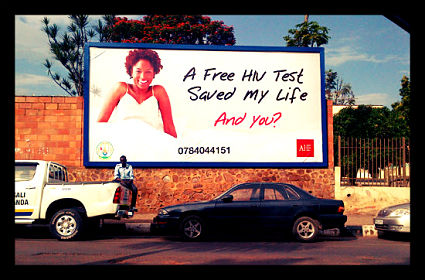
In a country where just 20 years ago, genocide claimed nearly one million lives, the Rwandan government has revamped HIV treatment for the poor by reforming the standards of successful care.

In Sub-Saharan Africa, there are now over 7.5 million people receiving antiretroviral therapy, 150 times as many as a decade ago. Medications have become easier to manage and overall, more effective, forcing some patients to take no more than one pill each day. Also, HIV testing has become much more widely available and the virus is being detected at an earlier stage before the circumstances are too dire.

In Rwanda, many HIV patients are taking their medications as directed, medication which suppresses the virus in their bodies to the point where it is essentially non-detectable. Success here is achieved when the HIV positive individual can earn a living, support their family and care for their community no differently than uninfected individuals. Furthermore, patients who would have previously been hospitalized with severe complications of HIV are now receiving regular preventive care.

The steps forward being taken in this small country are undeniable. Compared with 54 percent of medical patients worldwide, 91 percent of Rwandan patients who require HIV medications have access to life-saving treatment. Even more encouraging, 98 percent of women undergo HIV testing during their prenatal visits. In a country with only one doctor for every 17,000 people, nurses and community health workers have been trained to provide HIV services that were before, only available from physicians. Aggressive media campaigns by the government and other international organizations remind and encourage the public to “Know Your Status” while targeted outreach programs concurrently focus on the high-risk groups.

Rwanda is one of the first sub-Saharan countries to nearly eradicate the transmission of HIV from mothers to their newborns. Due to this, the number of new HIV cases has been cut in half during the last decade, and perhaps soon, it will fulfill the dream of accomplishing an “AIDS free generation.”

– Sonia Aviv

Sources: The Atlantic, The World Bank, BWH Global Health
Photo: AIDS Health

January 15, 2014
https://borgenproject.org/wp-content/uploads/borgen-project-logo.svg 0 0 Borgen Project https://borgenproject.org/wp-content/uploads/borgen-project-logo.svg Borgen Project2014-01-15 08:49:292024-05-26 23:03:03Rwanda Redefines HIV Care
Activism, Advocacy, Education, Foreign Aid, Global Poverty, Nonprofit Organizations and NGOs, Philanthropy, Women & Children, Women and Female Empowerment

Empowering Education: Girls Learn International

Girls_Learn_International
One in six girls in the developing world will not complete an education past the sixth grade.  Add this sobering statistic to shocking numbers which illustrate that the entire continent of Africa has less than a 60% literacy rate, and one can see just how many challenges in completing an education the youth of the developing world face.  However, girls in particular face an even greater challenge due to the widespread gender inequalities that still exist.

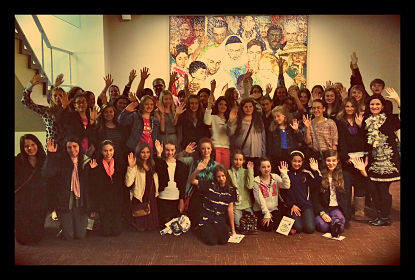
Girls Learn International (GLI) is a nonprofit, student-run organization and movement that encourages U.S. students to promote education for women throughout the world.  Lisa Alter founded the movement with her two teenage daughters in 2003.  Alongside Arielle and Jordana, Lisa began to inspire various youths to get involved in humanitarianism and women’s rights while still in school.  As a result, GLI currently has 114 chapters in over 26 states across the country. GLI also boasts partnerships with 47 schools in 11 countries, including Afghanistan, India, and Ghana.

Countries not providing equal access to education for women will end up losing out on $92 billion for their respective economies, according to Girls Learn International.  Additionally, 7 million cases of HIV/AIDS could be prevented if every child received a primary education, hence why GLI lives by the creed, “Women’s Education is a Basic Human Right.”

Furthermore, GLI has numerous partnerships and sponsors.  GLI is part of the Feminist Majority Foundation, the  Feminist Campus, and is a sister organization to Ms. Magazine.  The organization has also partnered with the Global Campaign for Education’s U.S. Chapter while also fielding a delegation to the United Nations Commission of the Status of Women.

The organization seeks to empower young women and have them take initiatives towards working for global education.  However, gender equality cannot be achieved without the contributions of idealistic young men as well.  To drive this point home, GLI boasts having an all boys’ chapter in Pennsylvania.  Regardless of gender, if you are a young person interested in providing education for women everywhere, GLI is the organization for you.

– Taylor Diamond

Sources: Girls Learn International, Global Campaign for Education
Photo: The Alternative Press

January 15, 2014
https://borgenproject.org/wp-content/uploads/borgen-project-logo.svg 0 0 Borgen Project https://borgenproject.org/wp-content/uploads/borgen-project-logo.svg Borgen Project2014-01-15 08:49:032024-06-04 03:01:13Empowering Education: Girls Learn International
Advocacy, Aid Effectiveness & Reform, Global Poverty

Broadway Success is Fleeting

Broadway
Daniel Craig and Rachel Weisz had already solidified their fame and fortune in the acting world before their 2013 hit on Broadway.  The pair starred in Harold Pinter’s play ‘Betrayal,’ which earned an impressive $17.5 million in only 14 weeks.  Though the play itself was not fawned over by critics, the opportunity to see the married couple on stage drew so many individuals that the play became the year’s second highest grossing play on Broadway.  Nora Ephron’s play ‘Lucky Guy’ held the top position, garnering $23 million in 18 weeks.  The duo is known for its humanitarian work, so how does their recent gig stack up to their causes?

One of Weisz’s focuses is the World Food Programme, for whom she appears in a short promotional video.  The United Nations organization published a projection of 2013 needs for emergency programs, topping $1.45 billion.  The West African sector was projected to require just over $81 million for Ghana, Liberia, and regional refugees and displaced persons due to instability in Mali.  The play’s $17.5 million is just short of 25 percent of the entire projected need of West Africa.

Meanwhile, Craig supports the Afghanistan Relief Organization (ARO.)  The ARO works to provide direct assistance to Afghanis who need it, with a range of programs including Infant Care Kits, Teacher Training, and a Greenhouse Project that provides seeds to farmers and food to the hungry.  The organization’s 2006 total expenses were $189,629.  The Broadway play’s earnings could provide the ARO with 92 more years of services at the same cost, or exponentially increase the operating budget and thus provide more, and higher quality services to more people.

The play’s 14 weeks on Broadway earned more money than most individuals in the world will earn in their lifetimes, and more money than some humanitarian organizations will spend in their existence.  It is safe to say any of Weisz’s or Craig’s favorite humanitarian causes would be thrilled to receive $17.5 million to further their aims.

– Katey Baker-Smith

Sources: Afghan Relief, World Food Programme
Photo: SMS Gif

January 15, 2014
https://borgenproject.org/wp-content/uploads/borgen-project-logo.svg 0 0 Borgen Project https://borgenproject.org/wp-content/uploads/borgen-project-logo.svg Borgen Project2014-01-15 01:10:202024-12-13 17:49:54Broadway Success is Fleeting
Activism, Advocacy, Economy, Food & Hunger, Foreign Aid, Foreign Policy, Global Poverty, Government

Merchant Marines and Food Aid Bill

merchant marines food aid
For some, the U.S. Merchant Marine represents an organization that shuttles American imports and exports around the world during peacetime while becoming a naval auxiliary during wartime. For others, they represent the largest obstacle to food aid reform.

Current food aid regulations stipulate that at least 80% of aid must be shipped by U.S. citizens on U.S. flagged vessels. Critics argue that needless money and time is spent hauling items around the world when food could be purchased locally in a much more timely fashion.

President Obama proposed a food aid overhaul in 2014’s fiscal budget that would reach an estimated 2 to 4 million more people within the year. Specifically, he wished to expand local and regional procurement procedures and food vouchers.

U.S. mariners were not amused by this proposal, however. When the food aid amendment attached to the farm bill reached the Congress floor, maritime lobbyists worked strenuously to ensure it wouldn’t pass, and succeeded.

The U.S. merchant marines provide a unique service for the United States. As they are not employed by United States military, they are able to service both the government and private sector.

The duality of their role in regard to the United States is significant for a number of reasons. The Navy League, a special interest group representing the U.S. maritime community, reports that they provide over 33,000 jobs for Americans, account for $1.9 million in economic output and $24 million in household earnings. Although food aid reformists argue that the shift in these numbers would be slight, by only a few hundred, Merchant Marine advocates contend that change would usher in the end of the merchant marines all together.

The Merchant Marine’s ability to transport troops and supplies during wartime, known as sealift, may be severely impacted if reform results in job loss. The U.S. Maritime Service was established by President Roosevelt in 1938 in anticipation of needed shipping vessels to both the European war front and Pacific Theater. The Merchant Marine provided invaluable service during the war, and current mariners argue that their services are still necessary.

Despite the mariners concerns, the Obama Administration has plans to counteract any negative effects the reform may usher in by providing aid directly to the U.S. Merchant Marine.

The administration proposes shifting $25 million of the efficiency savings that will be obtained through the food aid reform to the Department of Transportation’s Maritime administration. According to the White House International Food Aid Fact Sheet, this additional funding will provide a vehicle to support sustainment of militarily-useful vessels and a qualified pool of citizen merchant mariners.

Although this may not be the solution the merchant mariners were hoping for, the strong advocates for food aid reform may ensure that this is the best they can expect.

– Emily Bajet

Sources: The Center for Public Integrity, U.S. Merchant Marine FAQ, The Maritime Executive, The White House: International Food Aid Fact Sheet
Photo: Giphy.com

January 14, 2014
https://borgenproject.org/wp-content/uploads/borgen-project-logo.svg 0 0 Borgen Project https://borgenproject.org/wp-content/uploads/borgen-project-logo.svg Borgen Project2014-01-14 09:56:202016-04-05 21:03:49Merchant Marines and Food Aid Bill
Activism, Advocacy, Aid Effectiveness & Reform, Developing Countries, Foreign Aid, Foreign Policy, Global Health, Global Poverty, Health

WISH Summit Innovates Health Care Systems

bike
The inaugural World Innovation Summit for Health (WISH) – a conglomeration of entrepreneurs, business leaders, academics and technicians in the health space – convened last week in Qatar. As its title suggests, WISH serves as an arena for international delegates to create and implement innovative, nontraditional solutions to pressing issues in global health.

One participant, Londoner Lord Darzi of Denham (chairman of the Institute of Global Innovation at Imperial College), succinctly stated after the announcement of the Summit that “WISH is about action.”

Qatar’s newfound consideration as a hub for frontline innovation- principally through the Qatar Foundation- landed the nation the opportunity to host the prestigious two-day summit event. The Foundation has been on the forefront of the nation’s “visionary national health strategy” and initiated a first-of-its-kind investigation into the healthcare systems of eight major world players, the United Kingdom, the United States, Spain, Australia, South Africa, Brazil, India and Qatar. The Global Innovation Diffusion Report, unveiled on the second day of the summit, presented a well-researched report card of how each nation fosters and incorporates innovation to maximize health outcomes for their citizens.

The report noted both victories and areas in need of improvement for the eight nations of study. Each succeeded on a general level in identifying and addressing doctors and involving patients in treatment. Unfortunately, however, every nation but Qatar fell short in matching research-based suggestions with real changes in the health care space. Expert assessments of appropriate technological or practical innovations were ignored for different reasons in each nation.

In Spain and the United Kingdom, the least innovative countries, funds for research and development are scarce. New ideas simply cannot get off the ground because there is no money to put wind in their sails to begin with. Australia, Brazil and South Africa were slightly more successful than their European counterparts, but need to improve incentives for academics and policymakers who spread innovation. The United States and India showed a consistent, but small, gap between the ideal and reality.

The thorough case study concluded that innovation is most successfully spurred in the United States when incorporated into (or alongside) insurance and the accompanying payment system. Incidentally, the report identified the rollout of Patient Centered Medical Home (PCMH) programs as a major success for the U.S. in terms of innovation implementation. PCMH programs encourage primary care providers to tailor payments around patient outcomes and foster cooperation between medical and social services.

Moving forward, hot areas of progress for medical innovation will likely include: the application of mobile technology to share and store medical information; policymaking that encourages clinicians to adopt new ways of working; mobilization of resources to allow coordination between researchers and clinicians; and the development of an “innovation culture” and leadership among front line health care professionals.

Delegates representing our nation will undoubtedly confer about these recent findings and carve out a designated space for innovation in discussions touching on future policies, programs and technologies.

– Casey Ernstes

Sources: Gulf News, NCQA, PR News Wire, World Innovation Summit for Health: Home, World Innovation Summit for Health: Global Diffusion
Photo: Vintage 3D

January 14, 2014
https://borgenproject.org/wp-content/uploads/borgen-project-logo.svg 0 0 Borgen Project https://borgenproject.org/wp-content/uploads/borgen-project-logo.svg Borgen Project2014-01-14 09:54:332017-03-20 13:12:30WISH Summit Innovates Health Care Systems
Activism, Advocacy, Charity, Foreign Aid, Global Poverty, Health, Philanthropy

Most Charitable in Hollywood

hollywood
Money is not the only way to contribute to charities, although it is arguably the most effective – unless you are a celebrity. Apparently just being associated with a charity is enough to boost donations by $100,000 per year. Research from the Rutgers’s Business School found charities with celebrity endorsements received a 1.4 percent increase in donations over charities that were not associated with stars.

In that respect, the popular celebrity news website, The Daily Beast, found out who the most charitable celebrities were in regards to lending out their name and fame. Using an in depth survey with forty-eight characteristics via E-poll market research, a list was created with the top celebrities in the charitable running. The list was narrowed after secondary research on www.looktothestars.org, a site that tracks how many charities celebrities are actually supporting. Using Traackr to record the number of actual hits on Google, Facebook, Instagram, Twitter and personal blogs, the list was further weighted to reflect the celebrities’ personal effort put into promoting their respective organizations.

Elton John was at the top of the list with support towards a whopping forty-eight charities. Furthermore, his foundation to help treat AIDS victims, Elton John Aids Foundation, is one of his personally founded charities. Though it may be due to the passing of many of Elton’s close friends of because of AIDS/HIV, he hosts enormous galas open to his multitude of famous friends as fundraisers for his organization.

Second on the list is Angelina Jolie, recognized worldwide for her long list of humanitarian efforts. She has visited various nations such as Tanzania, Iraq, Afghanistan, Jordan, Egypt and Costa Rica, even during times of conflict and war. Taking a hands on approach, she has provided care and aid to refugees in the aftermath of natural disasters, apartheid, oppression and more. She is the founder of the Maddox Jolie-Pitt, named after her first adopted Cambodian son, an organization which serves to implement sustainable community improvement policies for women and children in Cambodia. Angelina and Brad Pitt sold the first images of their newborn twins to People and Hello! Magazines for $14 million, utilizing the entire sum of money for the Maddox Jolie-Pitt Foundation.

Following Angelina on the top 25 list is Bono, the incredible U2 front man, Oprah Winfrey and Ellen Degeneres. Some of the most famous stars on television and film are giving huge chunks of their success away to help others, thus becoming role models in the world of charity and fundraising. It is simultaneously inspiring and humbling to recognize that people have the ability to help those in need no matter how famous, wealthy or well off we are in their own lives. Celebrities have a name and a face but their actions are worth so much more than that, and anyone can take action against global poverty.

– Kaitlin Sutherby

Sources: Marie Claire, The Daily Beast, Look to the Stars
Photo: Giphy.com

January 13, 2014
https://borgenproject.org/wp-content/uploads/borgen-project-logo.svg 0 0 Borgen Project https://borgenproject.org/wp-content/uploads/borgen-project-logo.svg Borgen Project2014-01-13 22:42:122024-12-13 17:49:53Most Charitable in Hollywood
Activism, Advocacy, Education, Global Poverty, Government, Human Rights, Philanthropy, Politics and Political Attention

Quotes from 15 World Leaders on Human Rights

roosevelt Quotes from World Leaders on Human Rights
1. David Cameron, UK Prime Minister
“If we are going to try to get across to the poorest people in the world that we care about their plight and we want them to join one world with the rest of us, we have got to make promises and keep promises.”

2. Irene Khan, former Secretary-General of Amnesty International
“Poverty is not only about income poverty, it is about the deprivation of economic and social rights, insecurity, discrimination, exclusion and powerlessness. That is why human rights must not be ignored but given even greater prominence in times of economic crisis.”

3. Navanethem Pillay, UN High Commissioner for Human Rights

“Discrimination and multiple deprivations of human rights are also frequently part of the problem, sentencing entire populations to poverty… It is surely a matter of outrage that over half a million women die annually from complications related to pregnancy and childbirth. This is nearly half the annual global death toll, and arguably, a direct reflection of the disempowerment of women in social, economic and political life.”

4. Jesse Jackson, American Statesman and Civil Rights Activist
“The great responsibility that we have today is to put the poor and the near poor back on front of the American agenda.”

5. Pope Francis “A way has to be found to enable everyone to benefit from the fruits of the earth, and not simply to close the gap between the affluent and those who must be satisfied with the crumbs falling from the table, but above all to satisfy the demands of justice, fairness and respect for every human being.”

6. Dalai Lama XIV “No matter what part of the world we come from, we are all basically the same human beings. We all seek happiness and try to avoid suffering. We have the same basic human needs and concerns. All of us human beings want freedom and the right to determine our own destiny as individuals and as peoples. That is human nature.”

7. Malala Yousafzai, Pakistani Human Rights Activist
“I don’t know why people have divided the whole world into two groups, west and east. Education is neither eastern nor western. Education is education and it’s the right of every human being.”

8. Pranab Mukherjee, President of India 
“There is no humiliation more abusive than hunger.”

9. Kofi Annan, former Secretary-General of the United Nations
“Education is a human right with immense power to transform. On its foundation rest the cornerstones of freedom, democracy and sustainable human development.”

10. Barack Obama, President of the United States
“This is the moment when we must build on the wealth that open markets have created, and share its benefits more equitably. Trade has been a cornerstone of our growth and global development. But we will not be able to sustain this growth if it favors the few, and not the many.”

11. Desmond Tutu, Noble Peace Prize Laureate
“If you are neutral in situations of injustice, you have chosen the side of the oppressor. If an elephant has its foot on the tail of a mouse and you say that you are neutral, the mouse will not appreciate your neutrality.”

12. Vladimir Putin, President of Russia
“History proves that all dictatorships, all authoritarian forms of government are transient. Only democratic systems are not transient. Whatever the shortcomings, mankind has not devised anything superior.”

13. Mahmoud Ahmadinejad, Iranian President
“The world is in need of an encompassing and of course, just and humane order in the light of which the rights of all are preserved and peace and security are safeguarded.”

14. Bruno Rodriguez Parrilla, Cuban Foreign Minister
“This problem will knock on the doors of all of us, whether through uncontrolled and unmanageable migration flows, by means of diseases and epidemics, as a result of the conflicts generated by poverty and hunger, or as a result of events which are today unforeseeable.”

15. Warren Buffett, American Investor and Philanthropist
“Someone is sitting in the shade today, because someone planted a tree a long time ago.”

– Tyson Watkins

Sources: Office of High Commissioner for Human Rights: Quotes, Office of High Commissioner for Human Rights: Statement by Navenethem Pillay, Catholics Confront Global Poverty, Dalai Lama, Think Exist, Brainy Quote

Photo: Vintage 3D

January 13, 2014
https://borgenproject.org/wp-content/uploads/borgen-project-logo.svg 0 0 Borgen Project https://borgenproject.org/wp-content/uploads/borgen-project-logo.svg Borgen Project2014-01-13 22:30:312024-06-11 02:17:55Quotes from 15 World Leaders on Human Rights
Advocacy, Global Poverty

RadioHead, Gabriel Add Names to Free Tibet Petition

tibetan_jailed_musicians
On December 16, musicians Peter Gabriel, Thom Yorke, Ed O’Brien (Radiohead), Serj Tankian (System of a Down), and Tjinder Singh (Cornershop) became the first five signatures on a petition to help eight fellow musicians.

Free Tibet, a non-profit organization, launched a petition calling on China to release eight Tibetan singers who are being held for singing songs about their hopes and concerns for Tibet and Tibetan culture.

Free Tibet focuses on campaigns for Tibetan self-determination, human rights in Tibet, and an end to Chinese occupation of Tibet.

Since 1950, China has occupied Tibet, attempting to crush the state. Images of the Tibetan national flag and the Dalai Lama, the Tibetan spiritual leader, are prohibited. According to the UN, more than 120 Tibetans have set themselves on fire in protest against Chinese occupation. Tibetans celebrating the Dalai Lama’s birthday were shot by security forces, and anyone who objects to showing loyalty to China risks imprisonment and torture.

Among those imprisoned are the eight musicians named on the Free Tibet petition.

Lolo, Chakdor, Pema Trinley, Kalsang Yerphel, Shawo Tashi, Ugyen Tashi, Achok Phulsung, Choksal were arrested and sentenced since 2012. Lolo has the longest sentence, currently serving six years in jail. His crime? Calling for Tibet’s independence, unity of the Tibetan people, and a return of the Dalai Lama.

Shawo Tashi was sentenced to five years in jail after participating in anti-China protests, distributing photos and notes of Tibetan self-immolators, and singing national pride songs.

Pema Tinley received a two-year sentence after singing songs that praised the Dalai Lama and Tibetans who have self-immolated in protest against China’s occupation.

The petition calls on China to respect the right to freedom of expression guaranteed by the Universal Declaration of Human Rights and the International Covenant on Civil and Political Rights.

“China claims to protect Tibetan culture but by imprisoning these musicians it is suppressing that culture, as well as violating the human rights of these individuals.”

You can check out the petition for yourself here: https://www.freetibet.org/petitions/1742

– Claire Karban

Sources: Free Tibet, Look to the Stars, Huffington Post
Photo: Arts Freedom

January 13, 2014
https://borgenproject.org/wp-content/uploads/borgen-project-logo.svg 0 0 Borgen Project https://borgenproject.org/wp-content/uploads/borgen-project-logo.svg Borgen Project2014-01-13 22:19:402024-05-26 23:02:56RadioHead, Gabriel Add Names to Free Tibet Petition
Page 63 of 77«‹6162636465›»

Get Smarter

  • Global Poverty 101
  • Global Poverty… The Good News
  • Global Poverty & U.S. Jobs
  • Global Poverty and National Security
  • Innovative Solutions to Poverty
  • Global Poverty & Aid FAQ’s
Search Search

Take Action

  • Call Congress
  • Email Congress
  • Donate
  • 30 Ways to Help
  • Volunteer Ops
  • Internships
  • Courses & Certificates
  • The Podcast
Borgen Project

“The Borgen Project is an incredible nonprofit organization that is addressing poverty and hunger and working towards ending them.”

-The Huffington Post

Inside The Borgen Project

  • Contact
  • About
  • Financials
  • President
  • Board of Directors
  • Board of Advisors

International Links

  • UK Email Parliament
  • UK Donate
  • Canada Email Parliament

Get Smarter

  • Global Poverty 101
  • Global Poverty… The Good News
  • Global Poverty & U.S. Jobs
  • Global Poverty and National Security
  • Innovative Solutions to Poverty
  • Global Poverty & Aid FAQ’s

Ways to Help

  • Call Congress
  • Email Congress
  • Donate
  • 30 Ways to Help
  • Volunteer Ops
  • Internships
  • Courses & Certificates
  • The Podcast
Scroll to top Scroll to top Scroll to top