• Link to X
  • Link to Facebook
  • Link to Instagram
  • Link to TikTok
  • Link to Youtube
  • About
    • About Us
      • President
      • Board of Directors
      • Board of Advisors
      • Financials
      • Our Methodology
      • Success Tracker
      • Contact
  • Act Now
    • 30 Ways to Help
      • Email Congress
      • Call Congress
      • Volunteer
      • Courses & Certificates
      • Be a Donor
    • Internships
      • In-Office Internships
      • Remote Internships
    • Legislation
      • Politics 101
  • The Blog
  • The Podcast
  • Magazine
  • Donate
  • Click to open the search input field Click to open the search input field Search
  • Menu Menu

Archive for category: Advocacy

Information and news on advocacy.

Activism, Advocacy, Global Poverty

15 Memorable TED Quotes

ted_quotes.jpg
TED, which stands for Technology, Entertainment, Design, is a global set of conferences owned by the private nonprofit organization Sapling Foundation. Under the slogan “ideas worth spreading,” TED events are held throughout the world, addressing a variety of topics, from science and culture to health, medicine, and global development. Here are some of the most memorable quotes made by TED speakers on the topic of poverty and development.

1.       “You don’t wake up one day no longer a racist. It takes generations to tear that intuition, that DNA, out of a soul of a people.”

–Lawrence Lessig: We the People, and the Republic we must reclaim

2.       “I’d grown up thinking that a [sanitary toilet] was my right, when in fact it’s a privilege — 2.5 billion people worldwide have no adequate toilet.”

–Rose George: Let’s talk crap. Seriously.

3.       “Child mortality [since 2000 is] down by 2.65 million a year. That’s a rate of 7,256 children’s lives saved each day. … It drives me nuts that most people don’t seem to know this news.”

–Bono: The good news on poverty (Yes, there’s good news)

4.       “What you do [to provide better aid is] you shut up. You never arrive in a community with any ideas.”

–Ernesto Sirolli: Want to help someone? Shut up and listen!

5.       “The challenge of development: abject poverty surrounded by corruption.”

–Sanjay Pradhan: How open data is changing international aid

6.       “I have never met a villager who does not want a vote.”

–Rory Stewart: Why democracy matters

7.       “You don’t have to get rich to have [fewer] children. It has happened across the world.”

–Hans Rosling: Religions and babies

8.       “We get so little news about the developing world that we often forget that there are literally millions of people out there struggling to change things to be fairer, freer, more democratic, less corrupt.”

–Alex Steffen: The route to a sustainable future

9. “Connectivity is productivity — whether it’s in a modern office or an underdeveloped village.”

–Iqbal Quadir: How mobile phones can fight poverty

10. “We’ve seen how distributed networks, big data and information can transform society. I think it’s time for us to apply them to water.”

–Sonaar Luthra: Meet the Water Canary

11. “Birth control has almost completely and totally disappeared from the global health agenda, and the victims of this paralysis are the people of Sub-Saharan Africa and South Asia.”

–Melinda Gates: Let’s put birth control back on the agenda

12. “Human development, not secularization, is what’s key to women’s empowerment in the transforming Middle East.”

–Dalia Mogahed: The attitudes that sparked Arab Spring

13. “The United Street Sellers Republic — the USSR — [would be] the second-largest economy in the world after the United States.”

–Robert Neuwirth: The power of the informal economy

14. “We need to deliver [mental] health care using whoever is available and affordable in our local communities.”

–Vikram Patel: Mental health for all by involving all

15. “It was the buildings [in Haiti], not the earthquake, that killed 220,000 people, that injured 330,000, that displaced 1.3 million people, that cut off food and water and supplies for an entire nation.”

–Peter Haas: Haiti’s disaster of engineering

– Nayomi Chibana
Feature Writer 


Read global poverty quotes.

Sources: TED, Reddit
Photo: Lingholic
December 5, 2013
https://borgenproject.org/wp-content/uploads/borgen-project-logo.svg 0 0 Borgen Project https://borgenproject.org/wp-content/uploads/borgen-project-logo.svg Borgen Project2013-12-05 04:00:492024-05-25 00:31:1515 Memorable TED Quotes
Advocacy, Global Poverty

The Diary of a Poor Woman

On an average blog, an average post managed to make headlines. With over 3 million views, Linda Tirado’s blog post, “Why I Make Terrible Decisions, or, poverty thoughts,” has shed new light on poverty in America. Tirado is a wife, mother, student and employee. Her family lives below the poverty line and faces daily struggles to make ends meet.

Tirado articulates a widespread feeling that persists among families in poverty. She explains that stress, uncertainty and depression come along with financial woes. Tired of being misunderstood, Tirado took to her blog to respond to society’s misconceptions about poverty.

With cuts to food stamps occurring at the beginning of November, the welfare debate in the U.S. has recently been a hot topic. Many assume that people who are in poverty are responsible for their own bleak situation. The reality is, and Tirado makes sure to point this out, that those living in poverty were born into it and are never given the resources or the tools to get out.

Tirado’s post is written as a slightly unorganized stream of thoughts which she explains are constantly occurring in the back of her mind. She describes her average day of school, two jobs, and domestic responsibilities, while trying to keep her depression and exhaustion from getting in the way of her duties. Without knowing what will happen tomorrow, Tirado smokes a cigarette, puts her children to bed and fights on.

Tirado has received a lot of backlash because of this post. Anonymous commenters have urged her to stop having children, to not smoke cigarettes which are destroying her health, and to get a real job. It is because of these insensitive and uninformed responses that Tirado wrote her post in the first place. She explains that she had children because she had no access to affordable birth control, she smokes because she cannot afford depression and anxiety medication, and she is often turned down from jobs because she does not fit the company’s image.

There have also been positive responses to Tirado’s post. She has started a “go fund me” site and has received more than her annual salary in donations. Her post has opened doors for her to write a book and be a professional speaker. All this positive reinforcement has encouraged Tirado, and other families living in poverty, to continue searching for a light in the face of hopelessness.

The importance of Tirado’s post goes beyond her newfound opportunities. Her raw words have opened the public’s eye to the true nature of poverty. Often misconstrued as the plight of lazy and uneducated people, poverty is the result of systemic and social failure. Tirado has granted other families in poverty a platform on which they can be heard.

– Alessandra Luppi

Sources: KillerMartinis, The Huffington Post, Huff Post Live
Photo: The Equity Factor

December 2, 2013
https://borgenproject.org/wp-content/uploads/borgen-project-logo.svg 0 0 Borgen Project https://borgenproject.org/wp-content/uploads/borgen-project-logo.svg Borgen Project2013-12-02 04:10:132024-05-25 00:36:29The Diary of a Poor Woman
Advocacy, Developing Countries, Development, Extreme Poverty, Global Poverty, Inequality, Nonprofit Organizations and NGOs, Poverty Reduction, United Nations

International Day for the Eradication of Poverty

On October 17, International Day for the Eradication of Poverty was celebrated in honor of the goal to end world poverty by 2030. Declared by the UN General Assembly, this annual day serves as a reminder to promote the need to end poverty and destitution in all countries, specifically the developing nations.

In celebration of the International Day for the Eradication of Poverty, Interaction, the NGO alliance, highlighted global programs that are already making an impact. One of these programs, A World Vision program in Zambia, has made health care, education, and psycho-social support accessible for more than a quarter million children. The program has also trained nearly 40,000 volunteers to assist people living with HIV across the country. It is programs like these, indeed, that are helping us reach our goal.

In hope to get to zero percent by our lifetime, NGOs, like Interaction, are essential parts of the solution. “We cannot let over a billion people suffer in extreme poverty when we have the tools and the research to change their lives for the better. … We can do better. We have to do better,” said World Bank president Jim Yong Kim.

So far, the world has made significant progress in working toward this goal. While it is bold, it is undoubtedly achievable. Already, extreme poverty rates are half of what they were two decades ago. In 1990, nearly one in two people in the developing world lived in “extreme poverty” or on less than $1.25 a day. Today, this number is about one in five. Because of the help of many institutions, government and nongovernment organizations alike, we have been able to make immense developments. Still, it is not enough. The International Day for the Eradication of Poverty recognizes these groups that have made all the difference through these years and even further, motivates people to help take those next few steps forward.

– Sonia Aviv

Sources: UN, Global Dimension, Devex
Photo: Times Square

October 26, 2013
https://borgenproject.org/wp-content/uploads/borgen-project-logo.svg 0 0 Borgen Project https://borgenproject.org/wp-content/uploads/borgen-project-logo.svg Borgen Project2013-10-26 04:00:382024-05-25 00:30:06International Day for the Eradication of Poverty
Activism, Advocacy, Education, Food & Hunger, Global Poverty

10 Ways to End Hunger

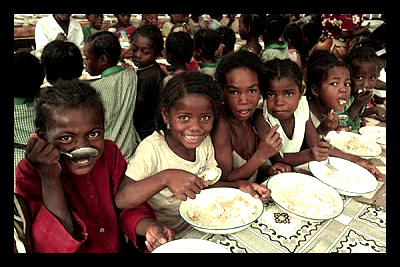
madagascar_children
There are an estimated 852 million hungry people in the world – an astounding number. However, with some simple ideas, the number of hungry people in the world can easily be reduced.

1. Education

Even if hunger was eradicated right now, it would only be temporarily so if education is not a priority. Educated children are prepared children. A good education equips children to provide for themselves, as well as their communities, in the future. Education ensures that the steps taken in the fight against hunger are sustainable.

2. School meals 

School meal programs are one of the easiest ways to feed lots of children, since the children are all gathered in one place. It is also very cost-effective. For 25 cents per meal, the World Food Program feeds 24 million school children annually.

3. Food security programs

The World Food Program defines food security as “when all people, at all times, have physical, social and economic access to sufficient, safe and nutritious food which meets their dietary needs and food preferences for an active and healthy life.” Food security programs aim to meet these needs by training farmers in developing nations through agricultural methods that will provide their communities with food – both now and long-term. The World Food Program reports that it has provided 200,000 farmers with agricultural training since the beginning of its food security programs.

4. Focus on women

It is estimated that women account for 60 percent of the hungry worldwide. If a mother is not able to provide for herself, she will most likely not be able to provide for her children either. This means that hunger is continuously being inherited by children. When women are helped, entire communities are helped.

5. Raise awareness

The simple act of bringing attention to the problem of hunger goes a long way in fighting it. People can’t contribute to a cause they aren’t informed of, and as more people become aware of how hunger affects the poor around the world, more people will engage in the fight against it. It’s that simple.

6. Donate

This is one that tends to be taken for granted. Many people talk about the importance of monetary donations, but relatively few actually donate. This is unfortunate, because donations of any amount can go a long way. There are billions of people in the world that do not suffer from chronic hunger. If all of these people contribute even the tiniest amount that they can afford, hunger will be exponentially closer to being eradicated.

7. Live simply

People in developed nations put so much money towards things they don’t need, while people in the developing world struggle just to get by on a daily basis. Practicing some restraint in spending would free up money that could then be used towards eradicating hunger. This could be as simple as forgoing a cup of coffee each day.

8. Reduce food waste

Excess waste ties up resources that could be used elsewhere in the fight against hunger. It is important for people in developed countries to be mindful of those in developing nations by doing their best to consume only what they need.

9. Be involved in government

Exercise the privileges that come with living in a democratic society in the fight against hunger. Elected officials are in place to represent the voice of the people. If enough people express their concern about global hunger to elected officials, the collective voice cannot be ignored, and action must be taken.

10. Fight for livable wages

It is not enough to simply provide the world’s hungry with food. They must be equipped to provide for themselves. Otherwise, the problem of hunger is not actually solved. Many workers in developing nations are exploited by employers and are not paid nearly enough to provide food for themselves, much less their families. If global hunger is to be defeated, all people must be provided with opportunity to earn livable wages.

– Matt Berg

Sources: YSA, WFPUSA, Huffington Post, World Hunger

Photo: World Food Programme

October 25, 2013
https://borgenproject.org/wp-content/uploads/borgen-project-logo.svg 0 0 Borgen Project https://borgenproject.org/wp-content/uploads/borgen-project-logo.svg Borgen Project2013-10-25 07:32:032024-05-25 00:30:0310 Ways to End Hunger
Activism, Advocacy, Foreign Aid, Foreign Policy, Global Poverty, USAID

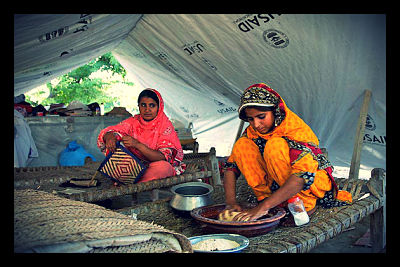
An Overview of USAID

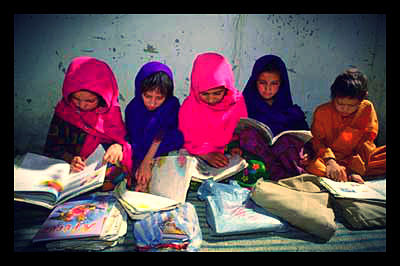
usaid_pakistan
The United States Agency for International Development (USAID) was created in 1961 by The Foreign Assistance Act, which established a separate administration for non-military foreign aid. This consolidated the many separate foreign aid organizations within the US government at the time into one effective agency.

USAID advocates for making international aid the focus of foreign policy.  Under President Truman, foreign policy had two goals:  creating new markets for U.S. exports by relieving global poverty and helping countries prosper through capitalism. Later, in the 1970s, USAID shifted its focus to basic human needs: food security, health, education, jobs and resource management.

Today, USAID focuses on creating sustainable markets, transitioning countries into democracies and rebuilding former areas of conflict. USAID works mainly through non-governmental organizations (NGOs) and diversified aid packages.  Food security, economic growth, education, environmental protection, gender equality, health, innovation, sanitation and conflict management are at the forefront of US foreign policy.  All these factors go into creating sustainable trade partners and positive political relations.

USAID’s $20.4 billion funding comes directly from the U.S. government.  Of this, only about $1.35 billion is spent on operating costs.  The rest of the funding goes to “bilateral assistance” provided to countries and regions in need.  Afghanistan is the largest recipient of US economic assistance at $2.24 billion, followed by Pakistan with $970 million.

Past successes include family planning, immunization programs, improved farming techniques and booming energy sectors in developing countries.  Life expectancy in the developing world has increased by 33 percent, immunizations have eliminated smallpox, and infant and child death rates have decreased by 50 percent in the developing world.  HIV/AIDS education and prevention has been a major focus of USAID, with programs set up in 32 countries.  Meanwhile, 1.3 billion people have access to safe drinking water thanks to USAID-led UN Drinking Water Supply and Sanitation Decade.

– Stephanie Lamm

Sources: USAID History, USAID Sites
Photo: Business Week

October 23, 2013
https://borgenproject.org/wp-content/uploads/borgen-project-logo.svg 0 0 Borgen Project https://borgenproject.org/wp-content/uploads/borgen-project-logo.svg Borgen Project2013-10-23 15:14:362024-05-25 00:30:10An Overview of USAID
Advocacy, Developing Countries, Education, Global Poverty, Health, Nonprofit Organizations and NGOs, Poverty Reduction

5 Books about Global Health and Development

three_cups_of_tea_book
No matter what your political leanings may be, these books cannot help but convince readers of the importance of global development. As you read the anecdotes and arguments presented in these books, remember that only 1 percent of the U.S. budget goes to foreign aid – and change begins with you.

1. Three Cups of Tea by Greg Mortenson

After traveling and mountain-climbing in the Himalayas, Mortenson launched a mission to bring schools and education to children living in remote regions of central Asia. His moving book outlines the importance of local development projects targeted at education, capacity building and sustainability. Through Mortenson’s activism and writing, the Taliban’s hold has been reduced over previously unprotected and disempowered communities.

2. Partner to the Poor by Dr. Paul Farmer

World-renowned doctor, anthropologist and humanitarian Paul Farmer defines the term “structural violence” and explains its connection to global health in this gripping book. Farmer writes about the structural elements of political and social life that systematically undermine access to healthcare in rural Haitian, Rwandan and Peruvian communities. His arguments on political instability’s effect on population compel readers to see the vast impact of foreign policy and aid.

3. The Practice of International Health by Ananya Roy and Daniel Perlman

This book offers a series of personal accounts from physicians and humanitarians providing healthcare around the world. More so than other anecdotes, these stories provide a detailed picture of the logistical and cultural challenges international development projects face. However, rather than discouraging such projects, “The Practice of International Health” demonstrates how such barriers can be overcome in order to achieve remarkable success.

4. Half the Sky by Nicholas Kristof and Sheryl WuDunn

Journalists Kristoff and WuDunn cover a lot of ground in this entertaining and heartbreaking collection of stories. Similar to Mortenson’s work, “Half the Sky” emphasizes the importance of grassroots organizations, illuminating the tireless efforts of individuals in India, China, Afghanistan and Ethiopia on the behalf of women. In the book’s epilogue, Kristoff and WuDunn also provide an extensive list of nonprofits doing amazing work around the world, as well as easy steps for getting involved in female empowerment and global development.

5. Banker to the Poor by Muhammad Yunus

Microfinance has both supporters and critics, but after reading this autobiography by the founder of the Grameen Bank, Muhammad Yunus, readers might find that their opinion has changed. Yunus was awarded the Nobel Peace Prize in 2006 for his work in providing small-value loans to women in rural areas in order to promote economic growth among families and villages.

– Shelly Grimaldi

Sources: GoodReads, Banker to the Poor
Photo: Wishes 4 Life

October 21, 2013
https://borgenproject.org/wp-content/uploads/borgen-project-logo.svg 0 0 Borgen Project https://borgenproject.org/wp-content/uploads/borgen-project-logo.svg Borgen Project2013-10-21 15:54:572020-07-09 20:52:165 Books about Global Health and Development
Activism, Advocacy, Charity, Global Poverty, Human Rights, Nonprofit Organizations and NGOs

What is an NPO?

NPO
A nonprofit organization is an organization that, pursuant to Section 501(c) of the United States Internal Revenue Code, does not retain its surplus revenue as profit. Instead, any surplus money is used to sustain the organization in its execution of a specific goal or set of goals, as designated by its bylaws and charter. In contrast to for-profit organizations, NPOs are largely project-driven ventures as opposed to product-driven ventures.

Before applying to be a 501(c) organization, a board of trustees must be assembled. The board will be committed to governing the execution of the organization’s goals. Once assembled, the board is responsible for drafting a clear and precise set of bylaws outlining the organization’s goals and the ways in which those goals will be pursued.

The bylaws must be recorded and, along with some necessary accounting paperwork (which varies according to different concessions granted by Section 501(c)), submitted to the IRS and the department of the secretary of state where the organization plans to operate in.

Once this paperwork is filed with the state, it may take up to a year for an organization to get approved as a 501(c). Most NPOs use this interim to prepare for launch immediately upon receipt of approval. Much of this time is spent identifying and communicating with potential donors, writing grants and taking other measures to secure funds for when the organization is approved.

Following state approval, a 501(c) organization must adhere to the bylaws it established in order to maintain its tax-exempt status. Its operation is limited by the bylaws it imposed on itself, and its tax-exempt status is contingent upon adherence to those bylaws. If an organization is not working effectively to accomplish its outlined mission, its tax-exemption will be revoked.

Under 501(c) of the Internal Revenue Code, an NPO may receive one of 29 different designations according to its mission. These designations determine what kind of tax exemptions the NPO will receive, as well as the kind of economic activity it is permitted to engage in. These designations are determined by an organization’s goals, the parties it engages with economically, and the recipients of any aid the organization is providing.

Most NPOs involved in the fight against poverty are designated as 501(c)(3)s. By law, a 501(c)(3) falls under one of the following categories: religious, scientific, charitable, educational, literary, public safety, the fostering of international or national amateur sports or the prevention of cruelty to children and animals. Organizations that actively fight against poverty can fall under any number of these categories. As well as tax-exemption, 501(c)(3)s receive reduced postage rates, and are permitted to generate receipts to provide donors with tax write-offs. They are, however, prohibited from participating in any political campaigns.

For an  NPO engaged in the campaign against poverty, transparency is of utmost importance. Strict adherence to bylaws and charter are necessary. If the secretary of state perceives that an organization is straying from its mission, its tax-exempt status will be lost. This renders the organization far less effective in the abolition of poverty. Not only does this cost an organization financially, it costs the world’s poor.

– Matt Berg

Sources: 501c3, Cornell Law, IRS, IRS
Photo: GuideStar,

October 21, 2013
https://borgenproject.org/wp-content/uploads/borgen-project-logo.svg 0 0 Borgen Project https://borgenproject.org/wp-content/uploads/borgen-project-logo.svg Borgen Project2013-10-21 10:45:302024-05-25 00:29:44What is an NPO?
Advocacy, Global Poverty

Pepper Boy: Young Rapper Brings Fight against Poverty to Mainstream

pepper_boy_poverty
Most entertainers shirk social responsibility until they have struck commercial gold and attained stardom. In general, it is only then that they suddenly claim to be steadfast supporters of children in Africa or staunch opponents of animal abuse.

Up-and-coming rapper, Pepper Boy, defies this trend. Hailing from Little Rock, Arkansas, Pepper Boy is the definition of “real.” With a no-frills lyrical style, he is perhaps best known for the sincerity in his tone and the intensely personal nature of his music.

Although his latest mixtape, “Days of Grace,” has garnered critical acclaim–and though hip-hop heavyweight, Lil B, has recognized his music by rapping over his 2010 song, “Tha Parts”–Pepper Boy has yet to score a major label deal or perform at well-known venues. His relative lack of recognition by the masses, however, has not deterred the young rapper from making his activist voice heard–as both a musician and a philanthropist.

On his mixtape track, “Child Soulja,” Pepper Boy tells the story of a young child fighting in Joseph Kony’s Lord’s Resistance Army through a first person perspective. The track, which features a sped up loop of Cutting Crew’s 1986 hit, “(I Just) Died in Your Arms,” opens with the emotionally rousing lines, “Civil war changed everything … Joseph Kony—that’s the man. As a child, he put a gun in my hand. AK-47, almost tall as me. They burned the whole village; then, they took me.”

Similarly, despite lacking a million-dollar recording contract, Pepper Boy has made much of his music available for download via ReverbNation, through which 50 percent of proceeds for sales of select songs will go toward Keep a Child Alive–a non-profit supporting the welfare of families and children infected with or affected by HIV/AIDS. The organization currently works with individuals in Kenya, India, Uganda, Rwanda, and South Africa.

Pepper Boy’s openness to releasing unorthodox songs pertaining to international affairs is refreshing. Conversely, his selflessness in relinquishing potential profit in the name of charity is admirable. Few independent artists have taken such great strides in distancing themselves from material culture and raising awareness for the side effects of global poverty.

One can only imagine the impact Pepper Boy could make if he had a greater audience and more resources at his disposal.

– Melrose Huang

Sources: SPIN, Mishka NYC, Reverb Nation, Keep a Child Alive

October 20, 2013
https://borgenproject.org/wp-content/uploads/borgen-project-logo.svg 0 0 Borgen Project https://borgenproject.org/wp-content/uploads/borgen-project-logo.svg Borgen Project2013-10-20 05:19:312024-05-25 00:26:41Pepper Boy: Young Rapper Brings Fight against Poverty to Mainstream
Activism, Advocacy, Human Rights

Paper Art Company “People Too” Depicts Human Rights Abuses

Fan_the_Flame_People_Too
Russian artists Aleksey Lyapunov and Lena Erlikh are the talent behind the paper-craft agency, People Too, which has quickly become known for its intricate and miniaturized portrayals of lifelike scenes. The dynamic duo produce three-dimensional images entirely out of paper, depicting scenes of office spaces, factory work, holiday parties, rock concerts and, most recently, human rights violations.

In coordination with human rights organization Amnesty International, People Too has created an advertising campaign called Fan the Flame, which highlights several major, well-known abuses. These images show the harshness of human rights violations, by depicting police brutality, stoning, water-boarding and military executions, all in unsettling detail.

Each image in the campaign depicts a violent scene of aggressors attacking their victim. The sculptures and backgrounds are all white, with the exception of a small orange flame on the bottom of each image. The flames are lit by Amnesty’s iconic candle logo, metaphorically linking Amnesty’s burning of the paper oppressors to their work in combating real-life human rights violations.

Using a range of knives, scissors, tweezers and wire cutters, People Too spent a total of four weeks crafting their intricate sculptures for Amnesty’s Fan the Flame campaign. Well worth the effort, this campaign brings to life the cruelty that afflicts many around the world and the work that Amnesty does to end it.

– Tara Young

Sources: Digital Journal, Design Boom, Behance
Photo: Design You Trust

October 18, 2013
https://borgenproject.org/wp-content/uploads/borgen-project-logo.svg 0 0 Borgen Project https://borgenproject.org/wp-content/uploads/borgen-project-logo.svg Borgen Project2013-10-18 04:00:112024-05-25 00:25:28Paper Art Company “People Too” Depicts Human Rights Abuses
Activism, Advocacy, Charity, Global Poverty

5 Benefits to Giving Back to the Community

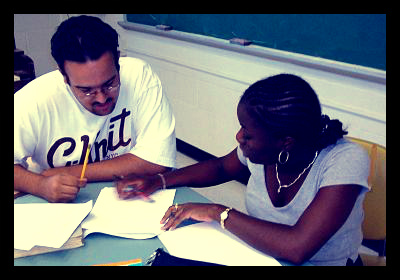
tutoring
There are a variety of ways in which giving back to the community, both local and global, are beneficial:

1. Giving back can foster growth in a company or for an entrepreneur by providing an opportunity to listen and learn from the community (what it wants, and what it needs, and what it means to give). The act of giving back doesn’t have to proceed without thought of what the company needs or even what the company desires to give. Developing a standard policy about the causes you’re willing to donate to and support will allow the charities and organizations that approach you to be in support of your commitment.

The conversation can grow beyond guilt and into one of support. When it comes to listening to the community your business or organization might serve (be it a specific location or a certain demographic) you become more informed by the goals and needs of the community you’re attempting to serve and can tailor future projects towards these goals and needs.

2. An obvious benefit of giving back is that it helps the community, whether the help is on a global scale (foreign aid donations, clothing/food/etc. donations in the wake of natural disasters, or volunteer work) or a local one (donating food to a food bank, volunteering to help students after school, or aiding in cleaning up local waterways), the community improves.

Especially when aid involves helping others make progress beyond the limits of economic, educational, or social blockades. While the changes may be more difficult to grasp on a global level, at the local level the progress made is also visible. Which leads to…

3. Giving back, especially on an individual level (such as tutoring, mentoring a child or volunteering in a soup kitchen), is good for your health. Depending on the work one is doing: physical health can be improved by increased activity, regulated sleep schedules, and better sleep in general, stress relief, and can help reduce the risk of certain health problems, like heart attacks and strokes.

There are studies that show volunteer work can make people happier by boosting not only physical health but also by promoting social interactions and of course the good vibes that come from contributing to the community. This potentially happier and healthier mindset promotes a desire to give back more.

4. Maybe you’re looking for a career change or a career boost, a volunteer opportunity would be a great and beneficial way to begin. Whether you’re writing grants in your spare time or building houses, volunteering is work.

It takes and builds skills and understanding and provides the professional or someone just starting out with a network of people just as invested as they are in the progress of whatever project is in the works. In similar fashion, volunteer work provides a foothold into and gives one a stake in the community

5. Having a stake in the community means coming in contact with community members who may often be overlooked, ignored, or outright scorned depending on their situations. This works both on a local and global scale.

It’s easier to see why more needs to be done on a legislative level if one can see that even with aid programs there are still limits to what someone working full-time or someone on disability or someone without running water, electricity, the list goes on, is capable of doing when the law ignores, fails to protect, or actively works against them.

Meeting other members of your community may also be as simple as visiting a retirement community with your dog or helping out in the community garden. Whatever you end up doing you’re getting a better understanding of the community of which you are a part and its needs.

– The Borgen Project

Sources: Huffington Post, Southern Alpha 
Photo: NCHS

October 17, 2013
https://borgenproject.org/wp-content/uploads/borgen-project-logo.svg 0 0 Borgen Project https://borgenproject.org/wp-content/uploads/borgen-project-logo.svg Borgen Project2013-10-17 13:29:202020-07-02 20:57:195 Benefits to Giving Back to the Community
Page 66 of 77«‹6465666768›»

Get Smarter

  • Global Poverty 101
  • Global Poverty… The Good News
  • Global Poverty & U.S. Jobs
  • Global Poverty and National Security
  • Innovative Solutions to Poverty
  • Global Poverty & Aid FAQ’s
Search Search

Take Action

  • Call Congress
  • Email Congress
  • Donate
  • 30 Ways to Help
  • Volunteer Ops
  • Internships
  • Courses & Certificates
  • The Podcast
Borgen Project

“The Borgen Project is an incredible nonprofit organization that is addressing poverty and hunger and working towards ending them.”

-The Huffington Post

Inside The Borgen Project

  • Contact
  • About
  • Financials
  • President
  • Board of Directors
  • Board of Advisors

International Links

  • UK Email Parliament
  • UK Donate
  • Canada Email Parliament

Get Smarter

  • Global Poverty 101
  • Global Poverty… The Good News
  • Global Poverty & U.S. Jobs
  • Global Poverty and National Security
  • Innovative Solutions to Poverty
  • Global Poverty & Aid FAQ’s

Ways to Help

  • Call Congress
  • Email Congress
  • Donate
  • 30 Ways to Help
  • Volunteer Ops
  • Internships
  • Courses & Certificates
  • The Podcast
Scroll to top Scroll to top Scroll to top