• Link to X
  • Link to Facebook
  • Link to Instagram
  • Link to TikTok
  • Link to Youtube
  • About
    • About Us
      • President
      • Board of Directors
      • Board of Advisors
      • Financials
      • Our Methodology
      • Success Tracker
      • Contact
  • Act Now
    • 30 Ways to Help
      • Email Congress
      • Call Congress
      • Volunteer
      • Courses & Certificates
      • Be a Donor
    • Internships
      • In-Office Internships
      • Remote Internships
    • Legislation
      • Politics 101
  • The Blog
  • The Podcast
  • Magazine
  • Donate
  • Click to open the search input field Click to open the search input field Search
  • Menu Menu

Archive for category: Advocacy

Information and news on advocacy.

Advocacy, Global Poverty, Slavery

UK Campaign Raises Awareness of Modern Slavery

“Slavery is closer than you think” is the slogan of a new campaign in the United Kingdom to raise awareness of slavery happening in the country. The Home Office has launched a two-month campaign that aims to encourage those experiencing modern-day slavery to come forward and seek help from the government, as well as to urge the public to report anyone suspected of enslaving others.

Modern slavery is a major problem in the U.K. The Human Trafficking Foundation estimates that around 20,000 people are living in slavery throughout the country. The three most common types of slavery are agricultural labor, sexual exploitation in a brothel and domestic servitude in another’s home.

Many cases of slavery have been reported lately. In November, three women were discovered in a house in south London after being held there for 30 years of domestic servitude. In another case, James and Josie Connors were convicted of manipulating and exploiting destitute men for their own financial gain in Bedfordshire.

The slogan encompasses the campaign’s main idea, which is that these examples of modern slavery are going on everywhere, like in average households and families.


Facts on Modern Slavery


A new national helpline, supported by the National Society for the Prevention of Cruelty to Children (NSPCC), has also been created to offer information for victims of slavery on how to get help, and to educate the general public on how to accurately report persecutors.

The goal of the campaign is to raise awareness for these previously unknown situations. Through various forms of advertising, the U.K. government hopes to see more victims seeking help and more people reporting the crimes.

Home Secretary Theresa May said, “The first step to stamping out modern slavery is acknowledging and confronting its existence. This campaign aims to bring this hidden crime out into the open and challenges us all to report it wherever we suspect it.”

– Hannah Cleveland

Sources: The Guardian, BBC
Photo: The Guardian

August 10, 2014
https://borgenproject.org/wp-content/uploads/borgen-project-logo.svg 0 0 Borgen Project https://borgenproject.org/wp-content/uploads/borgen-project-logo.svg Borgen Project2014-08-10 12:00:042024-05-27 09:20:45UK Campaign Raises Awareness of Modern Slavery
Advocacy, Development, Human Trafficking

3 Anti-Trafficking Organizations

Countless organizations around the world, big and small, conduct efforts to combat human trafficking in all of its forms. Here are three anti-trafficking organizations trying to make a difference and give hope to the millions of victims and survivors of this heinous transnational crime.

1) Anti-Slavery International

Based in the United Kingdom, Anti-Slavery International has been working to combat slavery since 1839 and this year is celebrating its 175th anniversary. Originally called the Anti-Slavery Society, it focused on emancipating slaves in the British colonies, Americas and the Caribbean in order to bring an end to the Transatlantic Slave trade.

Anti-Slavery International continues to combat modern slavery through advocacy, public outreach, education and its many campaigns. Some of its current campaigns include projects to combat trafficked labor in the Thai fishing industry, pass legislation that seeks to protect domestic workers around the world, end the chocolate industry’s role in child trafficking in the Ivory Coast and eradicate forced labor in the cotton industry of Uzbekistan.

Successes from its campaign activities include the passage of an International Labor Organization Convention on Domestic Labor, a European Union Human Trafficking Directive and the establishment of legislation criminalizing the use of forced labor as a form of trafficking in the U.K.

2) International Justice Mission

The main purpose of the International Justice Mission is to protect those in poverty from fear of violence which they are disproportionately subjected to due to a lack of legal protections throughout many justice systems in the developing world.

IJM works to protect the poor from violent people through partnerships with local authorities who help carry out four projects: rescuing victims, bringing criminals to justice, restoring survivors and strengthening justice systems. IJM’s method works as a three-phase program called Justice System Transformation.

The first phase focuses on the victims of trafficking: IJM works with local actors to rescue and restore victims of trafficking while at the same time bringing to justice those who perpetrate the crime. The second phase focuses on working with local actors to reform justice institutions so that they better address human trafficking and other forms of violent crime related to slavery. The third and final phase involves monitoring operations to support the continuation of just responses to slavery related crimes in countries with newly reformed justice systems.

3) Love146

The foundation of Love146 begins with a heart-wrenching story about the co-founders’ journey to Thailand and the child slavery they saw undercover in a brothel. The campaign is named after one particular girl they witnessed in the brothel, numbered 146, who refused to give up the fight against the crimes being committed against her.

Love146’s main focus is to combat the trafficking and exploitation of children. Their mission statement explains, “We believe in the power of Love and its ability to affect sustainable change. Love is the foundation of our motivation.” Their love and human compassion approach is composed of four interconnected programs.

The first program, which focuses on caring for survivors, involves the operation of safe houses in regions where child trafficking is prevalent within which victims can fully recover and reintegrate into society as healthy and prosperous adults.

The second program consists of prevention education programs which seek to educate children in at-risk areas about trafficking operations, how to spot traffickers and what to do to avoid being caught up in and how to report human trafficking rings.

The third program revolves around training professionals who frequently work with children, such as teachers, in learning how to spot trafficking victims, how to report these crimes and how to help victims who they may come into contact with.

The last program is an advocacy effort to empower those who fight against human trafficking through greater coordination and organization in order to more effectively combat the highly organized criminal trafficking network.

– Erin Sullivan

Sources: Love146 1, Love146 2, Love146 3, Love146 4, Love146 5, Love146 6, International Justice Mission 1, International Justice Mission 2, International Justice Mission 3, Anti-Slavery International 1, Anti-Slavery International 2, Anti-Slavery International 3, Anti-Slavery International 4
Photo: LoveGreater
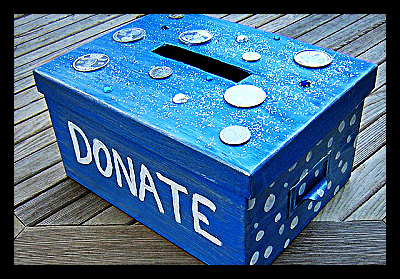
August 7, 2014
https://borgenproject.org/wp-content/uploads/borgen-project-logo.svg 0 0 Borgen Project https://borgenproject.org/wp-content/uploads/borgen-project-logo.svg Borgen Project2014-08-07 13:11:412024-05-27 09:20:483 Anti-Trafficking Organizations
Activism, Advocacy, Development

Success in the Fight Against Poverty

In the fight against something as daunting as extreme poverty, success often gets buried under all of the staggering statistics. Looking at how far the world has come in the fight against extreme poverty involves observing what has been done and what is possible in the coming years. This lens makes it clear that the humanitarian efforts of thousands of people have made a very clear difference in the lives of millions exposed to poverty.

In 1990, the global poverty rate was at 36 percent, which decreased to 18 percent in 2010. This fulfilled a Millennium Challenge Goal to cut the global poverty rate in half, and it did so five years ahead of schedule. The call to action outlined in the Millennium Challenge Goals has inspired many to rally around the cause and make improvements.

In addition to the poverty rate changing, the number of children who die from preventable diseases every year has decreased by 30 percent in the past 15 years, indicating an improvement in the standards of living for thousands of children.

Education in developing countries has seen improvement with higher annual enrollment rates, which will see more apparent return in the future when these children are more prepared and qualified to support their families and contribute to a more stable society.

The future of the fight against poverty smacks of success, given that the fight maintains momentum. Were progress to continue at the current rate, or better yet, speed up, the goal of lifting one billion people out of poverty could be met between 2025 and 2030. Bill Gates posited that there could be almost no impoverished countries by 2035.

There are various initiatives being developed by various humanitarian organizations that show promise of success. In December of 2013, 46 countries all over the world stepped up to accelerate the fight against extreme poverty by committing to a composite $52 billion donation over a period of three years that will go directly to the International Development Association, a fund established by the World Bank to support the world’s poorest.

The Bill & Melinda Gates Foundation, the Clinton Foundation, Warren Buffett, Feed the Future — the list of people and organizations willing to help is endless. And it couldn’t have come at a better time. In a world that is more technologically capable than ever with the resources necessary to feed the whole world and the money to establish stable communities around the world, the fight against extreme poverty is more manageable.

The fight is not over, nor will it be an easy fight to win. Worldwide, there are nearly 1 billion people who survive on $1.25 or less every day. Proportionally compared to the world population, we are facing a smaller fraction, but it is still an overwhelming number. Keeping in mind the progress of the past and the promise of the future, the world can continue to successfully fight against extreme poverty.

– Maggie Wagner

Sources: The World Bank, MSNBC, The World Bank, Mic.com
Photo: Konnect Africa

July 28, 2014
https://borgenproject.org/wp-content/uploads/borgen-project-logo.svg 0 0 Borgen Project https://borgenproject.org/wp-content/uploads/borgen-project-logo.svg Borgen Project2014-07-28 12:51:412024-12-13 17:51:02Success in the Fight Against Poverty
Activism, Advocacy

World Neighbors: Helping Communities

World Neighbors is an international non-profit organization working to improve the lives of people in struggling communities around the globe.

The organization was founded by Dr. John L. Peters, who was inspired to fight global poverty after experiencing it firsthand during his service in World War II.

Upon returning home in 1951, Dr. Peters created World Neighbors. In regards to a speech he gave at his local church after coming home, “I talked about the things I’d seen, but I spoke mostly about the things I felt: that the gulf between the rich and the wretched was intolerable; that we were brothers to, not keepers of, the world’s needy; that we must learn to do things with, not to – or even for – others; that they must share in electing priorities and procedures.”

To this day, the organization’s work is shaped around these principles. Before World Neighbors begins working with a community, the highest priority issues are determined by the community members rather than by the organization.

This ensures that each program is tailored to help whichever issues the community itself deems most important. The organization gives much importance to “listening to people, without predetermined ideas, to identify and address their needs, resulting in greater community involvement and long-lasting impact.”

Once the goals have been determined, the organization utilizes long-term development methods rather than short-term aid, taking a “big-picture, integrated approach focused on the entire community rather than on one issue.”

While multidimensional methods are stressed, World Neighbors divides its work into four different areas: hunger, poverty, disease and the environment. Within each category, the organization focuses on long-term solutions.

To combat hunger, World Neighbors educates communities about sustainable agriculture practices to help them gain more food security over time. In regards to the environment, the organization runs natural resource management programs, which ensure that the ecosystems rural communities survive on remain healthy and productive.

World Neighbors’ long-term initiatives, usually lasting between 8-12 years, focus on taking actions today that will create self-sufficient populations for tomorrow. In World Neighbors’ words, “We seek to strengthen local autonomy rather than create dependency.”

The organization is currently in eleven different countries, benefiting half a million people. Hopefully World Neighbors will continue to aid impoverished populations on a large scale over the coming years, as its long-term methods ensure that partner communities will continue to reap program benefits even after direct support has left, improving sustainability and the lives of struggling people around the globe.

– Emily Jablonski 

Sources: The World Bank, World Neighbors
Photo: Ionok

July 28, 2014
https://borgenproject.org/wp-content/uploads/borgen-project-logo.svg 0 0 Borgen Project https://borgenproject.org/wp-content/uploads/borgen-project-logo.svg Borgen Project2014-07-28 12:49:462024-05-27 09:19:00World Neighbors: Helping Communities
Activism, Advocacy, Global Poverty

How to Get Into Philanthropy

how_to_get_into_philanthropy
As defined by Merriam-Webster, philanthropy is the giving of money and time to help improve the lives of others. Despite the straightforward definition, philanthropy can relate to a broad range of actions, which is why a question many of us ask is how does one get into philanthropy?

When exploring this question, ask yourself, “What causes do I care about most?” With numerous organizations supporting a variety of causes, it can be difficult to choose among hundreds of philanthropic organizations.

As a result, many donors are strategic in their giving, meaning that they ensure that their donations will yield the best results coinciding with their beliefs. To help realize what causes you care most about, rank organizations according to the categories that they address, such as people, places, issues or philosophies.

Sites like CharityNavigator.org and GiveWell.org are helpful when researching and ranking organizations. Don’t be shocked if your rankings change over time. Like everything else, this is a learning process, so allow yourself some time to learn the best ways to donate.

Although monetary donations keep organizations working toward their specific cause, giving time is just as important as giving money. Organizations are always looking for volunteers and even full-time employees dedicated to the organization’s cause. The most popular position people typically apply for in a philanthropic organization is that of program staff member, whose main responsibility is grant-making; but there are so many more positions available that applicants may typically overlook.

Employment opportunities typically available at a philanthropic organization include: member of the foundation board, senior management, finance, programs, communications, administration/human resources, donor relations, research and grants management. All of these positions play a major role in an organization’s daily operations and in the achievement of its core mission.

An increasing amount of volunteers are serving the world’s poor in both the U.S. and foreign countries. Although the common perception of volunteers is that they are merely young and inexperienced college students or graduates volunteering to simply pass the time, volunteers are just as important and influential as employees. With the timing of assignments ranging from weeks to months to even years, volunteering can directly correspond with one’s schedule.

Volunteering has become more than just an easy way to assist international development efforts or humanitarian relief work; anyone can learn new skills and share their knowledge with others. With various opportunities available across the world, finding a volunteer position that is related to your interests or expertise is easy, thanks to sites like Volunteermatch.org and Idealist.org.

Even though philanthropy is commonly associated with donations, it goes beyond donating money. While considering how to get into philanthropy, remember that every action helps, whether you contribute your finances, time, or even your gifts and talents.

– Meghan Orner

Sources: Merriam-Webster, Philanthropy New York, Devex, Bridgespan
Photo: MillanCPA

July 28, 2014
https://borgenproject.org/wp-content/uploads/borgen-project-logo.svg 0 0 Borgen Project https://borgenproject.org/wp-content/uploads/borgen-project-logo.svg Borgen Project2014-07-28 10:36:122024-06-05 01:57:50How to Get Into Philanthropy
Advocacy, Poverty Reduction

Spotlight on Team Tassy

On Saturday, July 26 in Denver and Saturday, September 6 in Pittsburgh, the third annual Great American Water Balloon Fight will take place. The profit from ticket sales go to Team Tassy, an organization passionate about ending global poverty. Team Tassy focuses on helping with the health, education, housing and jobs of those in poverty. Its ideology is that everyone can help, no matter how much or how little.

The story of Team Tassy goes back to Ian Rosenberger’s trip Haiti shortly after the 2010 earthquake. Rosenberger met a Haitian boy named Tassy. Tassy, though surviving the earthquake that stripped 300,000 people of their lives and destroyed the homes of 1.5 million, carried a tennis ball sized tumor on the side of his face.

It was ironic to have survived unlikely catastrophes and yet have a future threatened by something that can be treated. However, Rosenberger realized that the removal of the tumor would not guarantee Tassy a future either. Tassy would still face the hardships that come with an impoverished life. Rosenberger understood that to help Tassy and others like him, people must collaborate to eliminate poverty.

Virginia Montanez of the Pittsburgh Magazine conducted an interview of Rosenberger and Tassy in 2011 regarding the journey together that saved Tassy’s life. Within months, Rosenberger raised $50,000 for the surgery in Pittsburgh required to remove Tassy’s tumor. With the help of friends and donors donations poured in. Rosenberger notes that over 500 people had a hand in helping Tassy jump this hurdle.

In the interview, Rosenberger admitted that there were some worrisome periods when they were unsure of the possibility of meeting their goal and their chances of saving Tassy. However, the ultimate success of Tassy’s story proved the immeasurable power of advocacy.

Rosenberger knows that Tassy’s story is not the only one of its kind. Rosenberger kept going and started Team Tassy in order to help others in need. Rosenberger’s vision and efforts have helped Tassy kick-start a future full of possibilities.  Tassy attends college in Pittsburgh and now envisions a hopeful future. He wants to eventually help others, just as others have helped him.

The water balloon fight was one of the events Rosenberger and his team organized to help fundraise for Haitians. The first water balloon fight in Pittsburgh amassed $22,000. Since then, Team Tassy has continued to host the event.

Besides the colorful sight of nearly 100,000 water balloons sailing through the air over a stadium field, participants can spend their day joining in on other activities. There’s music, yoga, carnival games and food. It’s a very festive, family oriented event. People are encouraged to indulge in some childhood fun in honor of a good cause.

– Carmen Tu

Sources: The Great American Water Balloon Fight, Pittsburgh Magazine, Team Tassy, YouTube – Ted Talks, TribLive
Photo: Team Tassy

July 25, 2014
https://borgenproject.org/wp-content/uploads/borgen-project-logo.svg 0 0 Borgen Project https://borgenproject.org/wp-content/uploads/borgen-project-logo.svg Borgen Project2014-07-25 16:00:482024-12-13 17:53:55Spotlight on Team Tassy
Advocacy, Global Poverty, Health, United Nations

SDG Post 2015

As the finish line for the Millennium Development Goals quickly approaches, talks are already under way to establish the goals for the next 15 years. The new plan, called the Sustainable Development Goals (SDG), is all about renewing the world’s commitment to helping the world’s poor.

As world leaders begin to establish these new goals, food security and nutrition remain crucial elements. David Taylor, Economic Justice Policy Advisor for Oxfam, tells the Inter Press News Agency, “In a world that produces enough food to feed everyone, there is no excuse for anyone to go hungry.”

Yet, as of today, one in eight people still go hungry or is ailed by some type of malnutrition. This is approximately 842 million people who are under-nourished. Poor nutrition causes 45 percent of deaths in children under five—this is 3.1 million children every year.

While, according to Taylor, ending world hunger is not an unrealistic endeavor, we still face enormous challenges in food security and agriculture. It is imperative to formulate new pathways to overcome inefficiency, corruption and wastefulness.

On June 2, the Open Working Group (OWG) in collaboration with the UN, released Draft Zero on SDG with 17 goals to be accomplished in the next 15 years. In terms of food, one of the main emphases of the program is to boost production by locals, women and marginal groups.

Despite the optimism of those proposing SDG, it is not without critics. In recent months, SDG and its proponents are being accused of bypassing water supply and sanitation as basic human rights. According to a letter of protest signed by 77 non-governmental organizations (NGOs), including Biofuel Watch, Blue Planet Project, Corporate Accountability International and End Water Poverty Coalition, their protest arises from the fact that references to water and sanitation as human rights has been removed from SDG.

While the road ahead of a final SDG is still long and complex, the UN Secratary General is expected to provide an update on the final version of SDG by the end of this year. Proponents and critics are expected to work together, and the UN would be taking into account various contributions in order to achieve a plan that best suits the needs of the most disadvantaged sectors of the global population. The final disclosure of the post-2015 development agenda is expected to coincide with a high-level Summit in September of 2015.

– Sahar Abi Hassan

Sources: Inter Press Service 1, Inter Press Service 2, World Food Programme
Photo: Kean University

July 24, 2014
https://borgenproject.org/wp-content/uploads/borgen-project-logo.svg 0 0 Borgen Project https://borgenproject.org/wp-content/uploads/borgen-project-logo.svg Borgen Project2014-07-24 13:47:502024-12-13 17:49:35SDG Post 2015
Advocacy, Technology

Random Hacks of Kindness

random hacks of kindness
Random Hacks of Kindness (RHoK) is an inventive global initiative “involving over 6,000 innovators in more than 35 countries who make the world a better place by developing practical, open source technology solutions to some of the most complex challenges facing humanity.”

The initiative was created in 2009 when representatives from Google, Microsoft and Yahoo! convened at a panel in Washington, D.C. to discuss ways in which technology could be used in the midst of global crises. Each of these top technology companies recognized the immense impact they could have if they stepped into the world of crisis management.

However, they needed a way to circumvent their usual competitiveness, a way to bring their employees together around a common goal.

Random Hacks of Kindness was the solution. The project aims to bring together expert volunteer employees and humanitarian leaders to create solutions to some of the world’s toughest problems. The World Bank and NASA, along with the aforementioned Google, Microsoft and Yahoo!, became founding partners, creating an altogether outstanding mix of expertise in many different fields.

From the beginning, RHoK has stressed how important their specific method is to their success, a process which requires a significant amount of teamwork between different sectors. “The RHoK process — engaging with experts to define strong problem statements, collaborative rapid prototyping through hackathons and creating clears paths for the sustainability of effective solutions — enables the volunteer community of thousands to create impact through their efforts.”

The first step is to collect extremely detailed and well-defined problem statements from people in the field. Users from all over the world can submit descriptions of problems in their local communities to the RHoK website, allowing anyone anywhere to benefit from the talent of RHoK volunteers. These reports are then scrutinized by field professionals and are revised to best fit the sector’s needs.

Developers are the stars of the second step: global hackathons at which prototypes of possible solutions are created during coding-intensive weekends.

Unlike other organizations of its kind, Random Hacks of Kindness volunteer technologists are able to tackle global issues with help from field specialists. “Having an expert on hand at a hackathon to work with the teams and provide real-world experiences and knowledge is [an] invaluable piece of the puzzle when working to build a solution with realistic impact potential.”

The third step involves RHoK’s Sustainability Project, which aims to take the most promising prototypes created at the hackathons and successfully execute them. Through the initiative’s efforts, the prototypes are able to receive the proper funding and support needed to make them a reality.

Random Hacks of Kindness has worked with noteworthy humanitarian organizations like OXFAM and Amnesty International as well as small local communities. It is led by an intensely motivated volunteer community trying to make the world a better place through technology and teamwork.

“Using existing, and freely available, documentation of best practices, and empowering the community to further develop and iterate on them through community-led, individual and organizational initiatives, RHoK continues to remain at the forefront of creating impact through hacking for social good.”

– Emily Jablonski 

Sources: Crisis Commons, Geeks Without Bounds, RHOK
Photo: Technical.ly

July 22, 2014
https://borgenproject.org/wp-content/uploads/borgen-project-logo.svg 0 0 Borgen Project https://borgenproject.org/wp-content/uploads/borgen-project-logo.svg Borgen Project2014-07-22 12:27:582020-07-28 07:03:36Random Hacks of Kindness
Activism, Advocacy, Global Poverty

10 Quotes About Helping Others

Here is a list of 10 quotes about helping others, compiled by The Borgen Project:

1. “The purpose of life is not to be happy. It is to be useful, to be honorable, to be compassionate, to have it make some difference that you have lived and lived well.” – Ralph Waldo Emerson

2. “Those who are happiest are those who do the most for others.” – Booker T. Washington

3. “When we give cheerfully and accept gratefully, everyone is blessed.” – Maya Angelou

4. “Many small people, in many small places, do many small things, that can alter the face of the world.” – Unknown

5. “As you grow older, you will discover that you have two hands, one for helping yourself, the other for helping others.” – Audrey Hepburn

6. “No one is useless in this world who lightens the burdens of another.” – Charles Dickens

7. “Believe, when you are most unhappy, that there is something for you to do in the world. So long as you can sweeten another’s pain, life is not in vain.” – Helen Keller

8. “Everybody can be great. Because anybody can serve. You don’t have to have a college degree to serve. You don’t have to make your subject and your verb agree to serve…. You don’t have to know the second theory of thermodynamics in physics to serve. You only need a heart full of grace. A soul generated by love.” – Martin Luther King Jr.

9. “I know of no great men except those who have rendered great service to the human race.” – Voltaire

10. “No one has ever become poor by giving.” – Anne Frank

– Hannah Cleveland

Sources: GoodReads
Photo: The Motion Machine

July 22, 2014
https://borgenproject.org/wp-content/uploads/borgen-project-logo.svg 0 0 Borgen Project https://borgenproject.org/wp-content/uploads/borgen-project-logo.svg Borgen Project2014-07-22 10:17:092024-06-05 01:57:4710 Quotes About Helping Others
Advocacy, Foreign Aid, USAID

Seven Questions to Ask About Foreign Aid

1. Why does the U.S. give foreign aid?

The U.S. gives aid for several reasons: economic interests, national security and American values. Economically, aid builds trading partners and supports the demand for U.S. goods. For national security, U.S. aid can sustain efforts to reduce injustice and poverty, which can contribute to instability and social tensions. Providing aid can also validate the kindness of the American people, advance democracy and human rights and build a better world.

2. What types of U.S. assistance does it include?

Foreign aid is a very comprehensive term. It incorporates several types of assistance, from the international affairs budget to poverty-focused assistance. The international affairs budget includes the resources to finance U.S. endeavors abroad. For example, it provides funds for USAID and the Department of State’s diplomatic costs and expenses that are sustained in protecting the interests of U.S. citizens and businesses abroad. In addition to helping people in poor countries, this aid provides money to allies for strategic purposes. Poverty-focused assistance concentrates on promoting economic growth and providing services like education and health care.

3. How much does the U.S. government spend on poverty-reducing foreign aid?

The U.S. government spends around $80 per taxpayer on foreign aid. To put that into perspective, compare that number to what Americans spend on other items: $204 per person on soft drinks, the $126 per person on lawn care and $101 per person on candy.

4. What is Americans’ understanding of how much the U.S. spends on this aid?

Americans think the U.S. spends more money on foreign aid than Medicare and Social Security – as much as 30 percent. However, only 0.7 percent of the U.S. federal budget is spent on poverty-focused foreign aid.

5. How can we ensure development aid is not wasted by corrupt governments?

Most poverty-reducing foreign aid is not actually provided directly to foreign governments. Around 85 percent goes through NGOs and U.S.-based government contractors. It may actually force governments to increase transparency and accountability.

6. What is the U.S. doing to make this kind of aid more effective?

The U.S. is doing many things to make foreign aid more efficient, such as defining aid’s purpose, modernizing USAID, developing new models of providing aid and making it more transparent. In 2010, President Obama put forth the first U.S. Global Development Policy which clarifies that the main purpose of U.S. development aid is to pursue global economic growth to fight global poverty. For modernizing USAID, USAID Forward is a new reform agenda that is working to make USAID more efficient, transparent and accountable. President Bush introduced the Millennium Challenge Corporation (MCC) during his presidency. MCC is a “United States foreign aid agency that is applying a new philosophy towards foreign aid.” The MCC model demands that countries to meet criteria in three areas: investments in people, economic freedom and good governance.

7. How can the U.S. improve it to better fight poverty?

There are a few ways. The United States could focus aid more on combating poverty worldwide, provide more transparent information about their foreign aid and give more aid to effective local leaders.

– Colleen Moore

Sources: Alliance for Peace Building, Oxfam America, The Borgen Project
Photo: The Spectator

July 18, 2014
https://borgenproject.org/wp-content/uploads/borgen-project-logo.svg 0 0 Borgen Project https://borgenproject.org/wp-content/uploads/borgen-project-logo.svg Borgen Project2014-07-18 04:00:442024-05-27 09:18:29Seven Questions to Ask About Foreign Aid
Page 52 of 77«‹5051525354›»

Get Smarter

  • Global Poverty 101
  • Global Poverty… The Good News
  • Global Poverty & U.S. Jobs
  • Global Poverty and National Security
  • Innovative Solutions to Poverty
  • Global Poverty & Aid FAQ’s
Search Search

Take Action

  • Call Congress
  • Email Congress
  • Donate
  • 30 Ways to Help
  • Volunteer Ops
  • Internships
  • Courses & Certificates
  • The Podcast
Borgen Project

“The Borgen Project is an incredible nonprofit organization that is addressing poverty and hunger and working towards ending them.”

-The Huffington Post

Inside The Borgen Project

  • Contact
  • About
  • Financials
  • President
  • Board of Directors
  • Board of Advisors

International Links

  • UK Email Parliament
  • UK Donate
  • Canada Email Parliament

Get Smarter

  • Global Poverty 101
  • Global Poverty… The Good News
  • Global Poverty & U.S. Jobs
  • Global Poverty and National Security
  • Innovative Solutions to Poverty
  • Global Poverty & Aid FAQ’s

Ways to Help

  • Call Congress
  • Email Congress
  • Donate
  • 30 Ways to Help
  • Volunteer Ops
  • Internships
  • Courses & Certificates
  • The Podcast
Scroll to top Scroll to top Scroll to top