• Link to X
  • Link to Facebook
  • Link to Instagram
  • Link to TikTok
  • Link to Youtube
  • About
    • About Us
      • President
      • Board of Directors
      • Board of Advisors
      • Financials
      • Our Methodology
      • Success Tracker
      • Contact
  • Act Now
    • 30 Ways to Help
      • Email Congress
      • Call Congress
      • Volunteer
      • Courses & Certificates
      • Be a Donor
    • Internships
      • In-Office Internships
      • Remote Internships
    • Legislation
      • Politics 101
  • The Blog
  • The Podcast
  • Magazine
  • Donate
  • Click to open the search input field Click to open the search input field Search
  • Menu Menu

Archive for category: Advocacy

Information and news on advocacy.

Advocacy, Development, Global Poverty

Outlook of Latin American Markets

Save a few exceptions, outlook for the Latin American fiscal market is bleak. The region as a whole will grow only by two percent and is marked by countries like Peru, where growth has been exceptionally slow, and even more notably by the recent default in Argentina.

This was Argentina’s first default in 13 years, but the eighth default in its history. When the country defaulted in 2001, the government issued negotiable promissory notes that the country later decided not to honor. When Argentina renegotiated to pay back its debt at 30 cents on the dollar, over 90 percent of the bondholders agreed.

The remaining investors did not yield, and were led by Elliot Management to find a solution and be repaid. In a strange turn of events, the Wall Street firm, with only a few hundred employees, managed to attain control of an Argentine naval vessel. It should be noted that no physical force was used, and the original crew was allowed to remain aboard.

Despite the theatricality and the poverty held within Buenos Aires, the nations of Colombia and Peru offer interesting insight into the future of prosperous Latin American countries, even if they show what not to do.

In the short term, Colombia is succeeding. The first reason for its success has been called “winning the commodity lottery.” Colombia’s main exports, oil and coal, have held steady prices in recent years. However, that is hardly replicable. When copper and gold staggered, so did Peru, as the two materials account for 50 percent of exported goods.

Colombia has reformed as well. They have lowered mortgage rates through an agreement with banks and public subsidies. Unemployment decreased, and jobs in construction grew vastly. A law signed in 2012 cut payroll tax, while raising income rates on the better off. It was a true success story, as jobs grew at eight percent.

Peru, in contrast, saw its currency depreciate. Poor contracts in fishing and farming markets lowered public trust. Several corruption scandals did not help matters, either.

The government has tried to respond by including bonuses and increasing wages for state employees, while giving out extra loans for small businesses. Analysts predict that such reforms could have Peru overtake Colombia once more, especially if their lottery fortune increases even marginally.

– Andrew Rywak

Sources: Slate, MercoPress, The Economist
Photo: The Budget Traveler
August 21, 2014
https://borgenproject.org/wp-content/uploads/borgen-project-logo.svg 0 0 Borgen Project https://borgenproject.org/wp-content/uploads/borgen-project-logo.svg Borgen Project2014-08-21 12:04:062024-05-27 09:21:25Outlook of Latin American Markets
Advocacy, Global Poverty

Goma and “Happy” Music Video

Goma
Goma is located on the eastern side of the Democratic Republic of the Congo in Africa. Like many places in the DRC, the town has a reputation for being poor and dangerous. This summer, however, one viral YouTube video presented a different image of Goma and its people.

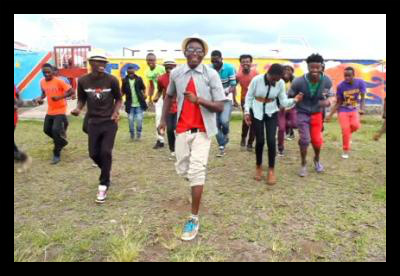
Pharrell Williams’ song “Happy” has achieved chart-topping success all around the world. Because of its popularity, groups of people have recorded their own homemade music videos for the song. One of the most viewed renditions comes from a group of people in Goma.

Kivu Entertainment Youth put the video together for the group. Their music video showcases the talented locals’ energy and happiness. The colorful portrayal of Goma starkly contrasts the public’s typical view of these people and their region.

Why does Goma carry such negative connotations?

First, the area in which Goma is located is dangerous. The area is often called the “rape capital of the world,” according to Think Africa Press. Armed bandits and rebel groups are serious concerns for those who travel the streets around Goma.

In April 2014, the United States Passport and International Travel’s website issued a statement warning visitors of the DRC to travel around Goma when only absolutely necessary. This statement replaced a similar warning that came out in October 2013.

The new statement addressed current information about the ongoing conflict between the North and South Kivu regions of the DRC. The violent disagreements between the people of these two regions have resulted in civilian casualties and displacement of families. Goma, the provincial capital of North Kivu, is in a constant state of unease due to these fights.

Political unrest also gives Goma its image of danger. Tourists in Goma are warned to refrain from taking pictures of government buildings as doing so may cause the police to place them under arrest.

A failing economy does not help Goma’s image either. Homelessness and extreme measures for survival are common. People are discouraged from driving at night because so many car robberies take place after dark.

Public transportation is hard to find because the town cannot afford to fund it. Much like the rest of the DCR, the roads are unsafe for cars, as well.

Finally, disease gives outsiders reason to fear Goma. An outbreak of measles was recently reported in Goma and has had severe effects on the local community. Other air-borne illnesses cause diarrhea and cholera in those that are not vaccinated.

With all of this information, Goma seems like a horrific place. Kivu Entertainment Youth’s video, however, promotes a different side of the Colognese people. Kelvin Batumike led the project. He told interviewers at Think Africa Press that his goal in creating the video was to bring a new image of Goma to the world.

Batumike wanted to present an area of Goma that holds the Amani Music Festival, a three-day music festival that brings all people of the area together to appreciate and enjoy music. This is a unique phenomenon considering that Goma typically cannot foster group functions without a violent protest erupting.

The attitude of the video is celebratory and makes the viewer appreciate life. Even though the people in Goma usually live in poor and dangerous conditions, they still find ways to be “happy.”

-Emily Walthouse

Sources: , U.S. Passports and International Travel

August 21, 2014
https://borgenproject.org/wp-content/uploads/borgen-project-logo.svg 0 0 Borgen Project https://borgenproject.org/wp-content/uploads/borgen-project-logo.svg Borgen Project2014-08-21 11:28:002017-12-04 08:51:46Goma and “Happy” Music Video
Activism, Advocacy, Global Poverty

Building Financial Security in Malawi

Banks and similar “formal financial services” are common means of protecting and investing money in the developed world, but they are scarce in developing nations. Financial security in Malawi, however, is becoming a more prevalent phenomenon.

Having access to formal financial services is important, especially in impoverished communities; it gives people a reliable means of saving that protects them from economic fluctuation. The ability to amass funds over time is crucial to establishing a stable financial future, and gives farmers and entrepreneurs alike a source of funding for new ventures.

Interventions orchestrated by the American nonprofit, Innovations for Poverty Action, show that when farmers in Malawi were given access to savings services, not only did their yields increase in the fields, but also their families had the capital to spend on necessary healthcare and adequate food provisions. Savings accounts accessible to even just one person managed to positively affect entire families.

Farmers are especially in need of formal financial services, as they often earn large sums of money in semiannual increments based on the harvest season, and have no place to store money during the lean periods between harvests. Formally storing money allows farmers to prioritize long-term investments rather than short-term spending and family borrowing, which are common in poor communities.

Banking is highly correlated with education in countries worldwide, suggesting that, like education, it could be a means to escaping poverty. It makes sense, considering that banks provide an easy way to manage income. Humanitarian organizations in the poverty-elimination business would be wise to turn to banking as a means of sustainable development. Savings accounts have already been successful in Malawi, and are sure to be as successful elsewhere in the developing world.

– Elise L. Riley

Sources: Innovations for Poverty Action, The Gates Foundation, The Economist
Photo: World Agroforestry

August 21, 2014
https://borgenproject.org/wp-content/uploads/borgen-project-logo.svg 0 0 Borgen Project https://borgenproject.org/wp-content/uploads/borgen-project-logo.svg Borgen Project2014-08-21 11:22:382024-06-05 01:58:04Building Financial Security in Malawi
Advocacy, Global Poverty

Forms of Modern Day Child Labor

After child labor was legalized in Bolivia this past month, discussion of its causes and impact is on the rise.

The International Labour Organization’s (ILO) website reported that between the years 2000 and 2014, the number of child laborers has decreased one- third, from 246 million to 168 million children.

Though these numbers show promising signs, there are still many hurdles to overcome in ending child labor. Child labor does not merely consist of working in factories and on the streets, but so much more.

1. Slavery

Slavery can come in various forms but all amount to the same thing: a child is owned by someone and has zero say in what they have to do, where they go and what conditions they are forced to live in.

The Anti-Slavery International’s website reported a Sudanese woman named Mende who was taken as a teenager after being separated from her family. Mende ended up in a house in Khartoum as a domestic slave for six to seven years.

“[Once] my master… called me her slave. From that time on I understood who I am. From the beginning she treated me badly and beat me; even then I couldn’t understand why. It was only when she said that she was my owner and called me Abda [servant] that I understood.”

Slavery with children often occurs because the child’s family is in debt and cannot pay that debt off, so to become free from the burden of debt, they sell their child. The child will work for years to pay off their family’s debt.

Other types of slavery include forced labor, which in the private economy generates over $150 billion illegally per year. In addition, War Child U.K. has reported that there are an estimated 250,000 child soldiers in the world because of forced labor.

2. Sexual Exploitation

Sexual exploitation is taking advantage of, abusing and mistreating someone sexually for profit and gain. Many children- girls and boys alike- are exploited every day, whether it be through pornographic material, sexual acts, child marriage or prostitution.

According to the Half The Sky Movement, “trafficking for sexual exploitation is one of the fastest–growing organized crimes, generating $28.7 billion each year.”

What does this mean for children? More and more children will be bought and sold, kidnapped and trafficked across even international boarders, abused countless times over and forced to perform sexual acts.

3. Illicit Activities

Illicit activities are crimes such as producing and/or trafficking drugs, shoplifting, stealing automobiles, theft and begging for money.

Children are forced or willing to get involved with drugs. For those who willingly get involved, it is for the belief that they will become wealthy and gain status. It is these children who are involved in the selling of narcotics that develop drug addictions.

Oftentimes, children are made to become beggars and earn money from passersby. If they do not earn enough throughout the day, they are typically beaten.

4. Work Harmful to Mind, Body and Spirit

Forced into child labor, children suffer mentally, emotionally and physically. ILO reported that child labor which involves domestic work, manufacturing, agriculture and construction are sectors of child labor that raise tremendous concern.

Around 60 percent of child laborers are in agriculture worldwide. Child labor streams mainly from poverty and many times in family farming. Though child labor is thought of only to be in foreign countries, it can be seen on farms in America.

Mining is becoming increasingly popular as a form of child labor. The United Nations Global Initiative to Fight Human Trafficking reported that, “[Children are] forced to spend 10 or more hours a day in dark, cramped mines filled with poisonous chemicals… Children working in the gold mines face mercury poisoning; in coal mines, children inadvertently consume toxic coal dust…”

UN.GIFT also reported that over 32,000 children die per year as a result of working in unsafe conditions.

While many children are playing on playgrounds and catching fireflies on a warm summer night, there are those all around the world who are in bondage, in despair, in crisis, begging for help and a way out.

Juan Somavia, ILO Director- General, said, “A world without child labour is possible with the right priorities and policies…Driven by conscience, let’s muster the courage and conviction to act in solidarity and ensure every child’s right to his or her childhood. It brings rewards to all.”

– Kori Withers 

Sources: International Labor Organization 1, International Labor Organization 2, UN, Anti- Slavery International, Half The Sky Movement, War Child UK, United Nations Global Initiative to Fight Human Trafficking
Photo: The Guardian

August 21, 2014
https://borgenproject.org/wp-content/uploads/borgen-project-logo.svg 0 0 Borgen Project https://borgenproject.org/wp-content/uploads/borgen-project-logo.svg Borgen Project2014-08-21 11:15:042024-12-13 17:51:08Forms of Modern Day Child Labor
Activism, Advocacy, Global Poverty, Health

Five Current Global Issues

current global issues
In the 21 century, the world has made great strides in reducing poverty, eliminating diseases and improving the quality of life for all. However, this progress rests on shaky foundations. Current global issues threaten to undermine humanity’s attempts to better the world and damage all of society.

According to the Nautilus Institute for Security and Sustainability, global issues are those that potentially affect everyone on earth, not just large groups of people. Similarly, solutions to global issues require all people to cooperate in order to meaningfully change the status quo. Since they pose a fundamental risk to society as a whole, global issues require much attention.

Here are just five examples of current global issues. Many of them are interconnected, but any one of them could have serious consequences for everyone if left unchecked.

1. Terrorism

International terrorist organizations can cause conflict anywhere, thus terrorism is a global issue. The expansion of attacks by terrorists hurts many people in developing countries; according to the U.S. State Department, terrorist attacks killed over 11,000 and wounded 21,000 in 2012.

Terrorism also had wide-ranging economic impacts. Former U.S. Ambassador Francis Taylor found that global airline industries lost             $15 billion and global insurance industries lost $50 billion in the wake of the 9/11 attacks. World governments will need to strengthen their relations and promote democratic principles to reduce terrorist threats.

2. Lack of International Labor Laws

Weak international labor laws are a global issue because they hurt workers in the developing world and the economies of developed nations. Laws must exist to protect workers’ rights while allowing multinational firms to do business. The World Bank urges countries to cooperate and strengthen labor laws to prevent abuses and ensure fair wages; at the same time, the laws must facilitate wealth creation. Without optimal rules, the world economy weakens and workers face terrible conditions.

3. Climate Change

Climate change affects all of earth’s environments and is thus a global issue. A report from the Organization for Economic Cooperation and Development (OECD) found that droughts and extreme weather would intensify globally, leading to poor crop yield, water shortages and even desertification. The worst-affected areas, Sub-Saharan Africa and South Asia, will have trouble adapting because per capita GDP is low; millions will be unable to grow or afford food and will starve.

As entire regions face food crises, global economic production becomes much lower, and nations have to care for hungry refugees that flee inhospitable conditions. To prevent the situation from becoming worse, the world must adopt more sustainable energy policies and waste management practices.

4. Antibiotic Resistance

Antibiotic resistance is another global issue that threatens the health of millions and the progress of modern medicine. In 2014, the World Health Organization (WHO) announced the discovery of drug-resistant E. coli, staph and pneumonia-causing viruses all over the world; it also found that 20 percent of previously treated tuberculosis cases were drug-resistant.

The emergence of antibiotic-resistant disease is extremely dangerous. Antibiotics that people use to treat serious infections will stop working and disease fatalities will increase. The global community will need to implement stronger restrictions on antibiotic use to curb drug resistance in deadly diseases.

5. Poverty

While many of the above problems exacerbate poverty in many world regions, poverty itself is a global issue because it leads to social problems that affect even the richest people. According to the research site Poverties.org, poverty leads to higher crime rates, more instances of substance abuse and greater susceptibility to infectious disease. This hurts economic productivity and can lead to instability. Poverty also is linked to terrorism. Consequently, the world must fight poverty to address other global issues.

The world’s current global issues are complex, interconnected problems that require concentrated action for systemic change. Any single global issue could become a crisis with huge economic and human costs. Only with strong international cooperation can the world solve global issues.

-Ted Rappleye

Sources: U.S. State Department 1, U.S. State Department 2, World Bank, OECD, WHO, Poverties, Nautilus Institute
Photo: Flickr

August 21, 2014
https://borgenproject.org/wp-content/uploads/borgen-project-logo.svg 0 0 Borgen Project https://borgenproject.org/wp-content/uploads/borgen-project-logo.svg Borgen Project2014-08-21 04:00:242024-12-13 17:51:09Five Current Global Issues
Activism, Advocacy, Education

Education in Eritrea

Eritrea came into independence in 1993 after a long period of war and military conflict. After gaining its independence, Eritrea continued to struggle with neighboring countries Yemen and Ethiopia, and the consequences were devastating to its people. Today, the country continues to work on rebuilding its infrastructure and developing its economy. Despite the many structures the country has implemented, education still remains a top concern. Below is an exploration of education in Eritrea.


Top 6 Facts about Education in Eritrea


1. Enrollment remains one of Eritrea’s biggest issues. In 2012, data put forth by the World Bank determined that only 42 percent of elementary school-aged children were enrolled in school.

2. Eritrea’s location in the Horn of Africa is a major contributor to the country’s low enrollment rates. Eritrea is extremely susceptible to droughts, as well as floods caused by heavy and sudden rainfall, which makes attending school—and maintaining school grounds—increasingly difficult.

3. Vast disparities in development in Eritrea’s zobas, or regions, is also a significant factor that plays into the low school enrollment rates. Remote regions such as Gash Barka and the Southern Red Sea simply lack schools altogether, so children then lack any access to education opportunities in those regions.

4. Remote regions in Eritrea are also inhabited by nomadic and semi-nomadic pastoralists, for whom attending formal schools that are located at far distances is not impossible, but is in fact undesirable. Families in nomadic communities simply cannot—or don’t—send their children to school.

5. The country is working hard to address the issue of education for nomadic communities. With support from donors and the Netherlands government, 65 nomadic schools have been set up in Eritrea, a vast increase from the seven pilot nomadic schools that existed in 2007.

6. Gender disparity in education remains a top concern within the country’s education system. Though the government claims to be committed to achieving education equality, more than half of school-aged girls are not receiving an education.

Eritrea, ranked 177th out of 187 countries on the Human Development Index, struggles with severe poverty and countless other obstacles that make improving education conditions for children extremely difficult. The country’s unique climate and nomadic communities, coupled with its new independence and lofty regrowth plans, require tailored education initiatives and ample help from foreign aid programs. These programs will help the country improve its education opportunities, and therefore its economy and quality of life as well.

– Elizabeth Nutt

Sources: BBC, UNICEF
Photo: Asmera

August 19, 2014
https://borgenproject.org/wp-content/uploads/borgen-project-logo.svg 0 0 Borgen Project https://borgenproject.org/wp-content/uploads/borgen-project-logo.svg Borgen Project2014-08-19 15:59:262024-05-27 09:21:22Education in Eritrea
Activism, Advocacy

HIAS: Helping Jewish People Globally

HIAS, the Hebrew Immigrant Aid Society, was founded in 1881, and its initial goal was to help Jews in Russia and Eastern Europe escape from the pogroms. As an organization, HIAS has maintained its original goal of helping Jews around the world flee undesirable, threatening situations, as well as managed resettlement programs for the individuals who must leave their homes.

Operating through the values of dignity and respect, empowerment, welcoming, collaboration and teamwork, excellence and innovation, and accountability, HIAS partners with other local refugee assistance organizations in order to maximize the amount and quality of care that goes towards helping refugees settle into new environments.

HIAS partnerships span all across the United States in order to help those seeking better homes both locally and abroad. Partners include the Jewish Family and Children’s Services of the East Bay, the Jewish Family Service of Western Massachusetts, the Jewish Family and Vocational Service of Middlesex County, the Carolina Refugee Resettlement Agency and many more.

HIAS endeavors to not only provide refugees with physical freedom and aid, but also with emotional and psychological support. HIAS gives legal protection to those separated from their children, those seeking asylum, those who need medical attention and those who need protection from danger.

HIAS offers psychological counseling to refugees in order to help them deal with both the trauma they experienced in their old homes and with the shock that comes with moving to a radically different place. HIAS’ goal is to provide refugees with the chance to create a sustainable new life for themselves.

An example of HIAS’ success includes the securing of an asylum in New Jersey for a Syrian refugee who was being targeted by the Assad regime. Additionally, HIAS is managing to sustain a growing community of individuals coming from Iraq to Toledo, Ohio.

— Jordyn Horowitz

Sources: HIAS 1, Charity Navigator, HIAS 2, HIAS 3
Photo: JSpace

August 18, 2014
https://borgenproject.org/wp-content/uploads/borgen-project-logo.svg 0 0 Borgen Project https://borgenproject.org/wp-content/uploads/borgen-project-logo.svg Borgen Project2014-08-18 11:48:032024-05-27 09:21:13HIAS: Helping Jewish People Globally
Activism, Advocacy, Nonprofit Organizations and NGOs

Seven Hip Nonprofits that Work to Alleviate Poverty

With all the nonprofit organizations out there that work to alleviate poverty and combat climate change, it can be hard to choose which one to donate your time or money to. Here are seven hip nonprofits that you can consider donating to:

1. Earthjustice

Founded in 1971 as the Sierra Club Legal Fund, Earthjustice is a nonprofit law firm that works to protect our global earth. It has provided legal representation to more than 1,000 clients and all of its services are provided at no charge. Its three main priorities are promoting clean energy to combat global warming, protecting the health of communities and preserving wildlife and special areas.

2. Girl Effect

The Girl Effect was created by the Nike Foundation in partnership with the NoVo Foundation, the United Nations Foundation and Coalition for Adolescent Girls. Girls play a crucial role in global development. When girls are included in economic development, health and education, there is a better chance to alleviate poverty and prevent HIV/AIDS, teen pregnancy and child marriage. This campaign is about empowering girls and providing them with resources. Its website is pretty cool, too: Girl Effect’s home page uses a video to state their message, mission  statement and what the viewers can do to support it.

3. Sesame Workshop

Sesame Workshop is the nonprofit organization responsible for Sesame Street and so many more education television shows. Its projects provide valuable lessons in respect, understanding, health and literacy to children in more than 150 countries. Sesame Workshop’s mission is to use the educational power of media to help children everywhere reach their highest potential. Its recipe for success is combining a curriculum that addresses children’s critical developmental needs with the sophisticated use of media and a large dose of fun.

4. Charity: Water

Founded in 2006, Charity: Water is a nonprofit organization that brings safe and clean drinking water to developing countries. Charity: Water’s goal is to eliminate diseases from unclean drinking water, and it has helped fund almost 7,000 projects in more than 20 countries. The organization has partnered with ONA products to produce a camera strap in which a percentage of the profit goes to Charity: Water.

5. Greenpeace

Greenpeace is the largest direct-action environmental organization in the world. Its goals are to promote peace and defend our earth by protecting our oceans and ancient forests and working to stop global warming. Climate change causes natural disasters that negatively affect food production, hindering efforts to reduce poverty and advance economic development. Greenpeace believes that alleviating poverty can be done without hurting the Earth. The environmental organization is determined that providing clean energy is essential in the fight to improve health and education and to reduce poverty. Greenpeace exposes and confronts the environmental abuse that is detrimental to lives around the world, while supporting environmentally-friendly solutions.

6. ONE

ONE is an international advocacy organization that works to alleviate poverty and preventable disease. ONE raises awareness and works with political leaders to demand greater transparency, increase investments in nutrition and agriculture and fight AIDS and other preventable diseases. ONE works with activists and policymakers to oversee the use of foreign aid, combat corruption, improve economic development and encourage poverty-reducing efforts. Their teams in Johannesburg, Paris, Berlin, Brussels, London, New York and Washington, D.C. lobby and educate governments to help shape policy decisions that will improve and save millions of lives.

7. Shining Hope for Communities

Shining Hope for Communities is a nonprofit organization that works to promote gender equality and alleviate poverty in the Kibera Slum, one of Africa’s largest slums in Nairobi, Kenya. SHOFCO provides free education for girls as well as poverty alleviation and empowerment programs. The organization provides health care, meals, access to clean water and toilets, school supplies, uniform and counseling to girls that attend The Kibera School for Girls. SHOFCO also provides services to the Kibera community through their community center in order to provide healthier lives for girls and their families and to inspire the community to commit to change.

– Colleen Moore

Sources: Alternative Press, Girl Effect, Sesame Workshop, Peta Pixel, CBC News, ONE.org, Global Giving
Photo: Animation Magazine

August 18, 2014
https://borgenproject.org/wp-content/uploads/borgen-project-logo.svg 0 0 Borgen Project https://borgenproject.org/wp-content/uploads/borgen-project-logo.svg Borgen Project2014-08-18 11:41:182024-12-13 17:51:07Seven Hip Nonprofits that Work to Alleviate Poverty
Activism, Advocacy

Humans of New York: UN Millennium Project

Supported by the Millennium Development Goals Advocacy Group, photographer and founder of Humans of New York Brandon Stanton has taken his portrait project to a global scale.

Stanton will be photographing people in ten different countries and says that, “It would be rather foolish to claim that these portraits and stories somehow represent ‘the world’ or humanity as a whole. The point of the trip is not to ‘say’ anything about the world. But rather to visit some far away places, and listen to as many people as possible.”

Stanton explains that one of the main objectives of the tour is to raise awareness and prompt action to complete the Millennium Development Goals, to be accomplished by 2015. The Millennium Development Goals include the following:

1.

To eradicate extreme hunger and poverty

2.

To achieve universal primary education

3.

To promote gender equality and empower women

4.

To reduce child mortality

5.

To improve maternal health

6.

To combat HIV/AIDS, malaria and other diseases

7.

To ensure environmental sustainability

8.

To enhance and increase global partnership for development

Stanton began his journey in Iraq and has since traveled to Jordan. He will venture next to the Democratic Republic of Congo, then travel to Kenya and then his trip will lead him to Uganda. His only stop in Europe will be in Ukraine. He will then go to India, following which he will be in Vietnam, and then he will photograph in Ecuador. His last stop as of now is in the Amazon – but at the end of the tour, if he has the time and resources, he will go to photograph in El Salvador.

Stanton remarked on the Humans of New York website that on his trip, “In addition to telling stories of individuals, we hope this trip may in some way help to inspire a global perspective, while bringing awareness to the challenges that we all need to tackle together.”

-Jordyn Horowitz

Sources: United Nations, Humans of New York, ABC
Photo: The Epoch Times

August 18, 2014
https://borgenproject.org/wp-content/uploads/borgen-project-logo.svg 0 0 Borgen Project https://borgenproject.org/wp-content/uploads/borgen-project-logo.svg Borgen Project2014-08-18 11:10:512024-05-27 09:21:12Humans of New York: UN Millennium Project
Advocacy, Aid Effectiveness & Reform, Global Poverty, United Nations

Girl Child Network Changes Attitudes in Zimbabwe

Girl Child Network
In Zimbabwe, it’s hard to be a girl. With a population of mostly youth, the country and its economy have been decimated by the AIDS epidemic. Up to 80 percent of the population in rural villages is unemployed and women are subordinated with gender violence and rape.

The Girl Child Network (GCN) is trying to change things. Founded by Betty Makoni, the network is designed to help change the policy and acceptability of rape. The program has grown to assist girls with education and housing.

Featured in the documentary Tapestries of Hope, Girl Child Network is trailblazing the way rape survivors are treated: with dignity and with agency. One of the easiest ways to explain GCN is through its use of the color blue. In Zimbabwe, blue is a color mainly for boys; GCN uses it everywhere.

While health and support are provided, Makoni emphasizes that access to education is among her priorities. A donation as little as $50 could provide a girl with tuition for a year.

Expanding upon the original goal of getting justice for survivors, GCN allows girls to envision futures for themselves. Many of these girls are orphans and some are even mothers themselves, but GCN empowers them. Girls are encouraged to dream and pursue education and careers.

While GCN’s staff advocates for the girls, the girls themselves have emerged as advocates. Some have publicly spoken out against violence against women at the United Nations. Others courageously shared their stories on the documentary.

The solution to the poverty they face isn’t simple. Will achieving a degree make a difference? Will they be able to get a job with the extraordinary high unemployment rate? The answers are unclear. The philosophy of GCN, however, is to maximize the potential and resources for these girls.

– Kristin Ronzi

Sources: Tapestries of Hope
Photo: TeachAids

August 18, 2014
https://borgenproject.org/wp-content/uploads/borgen-project-logo.svg 0 0 Borgen Project https://borgenproject.org/wp-content/uploads/borgen-project-logo.svg Borgen Project2014-08-18 08:18:122017-11-28 11:06:29Girl Child Network Changes Attitudes in Zimbabwe
Page 51 of 77«‹4950515253›»

Get Smarter

  • Global Poverty 101
  • Global Poverty… The Good News
  • Global Poverty & U.S. Jobs
  • Global Poverty and National Security
  • Innovative Solutions to Poverty
  • Global Poverty & Aid FAQ’s
Search Search

Take Action

  • Call Congress
  • Email Congress
  • Donate
  • 30 Ways to Help
  • Volunteer Ops
  • Internships
  • Courses & Certificates
  • The Podcast
Borgen Project

“The Borgen Project is an incredible nonprofit organization that is addressing poverty and hunger and working towards ending them.”

-The Huffington Post

Inside The Borgen Project

  • Contact
  • About
  • Financials
  • President
  • Board of Directors
  • Board of Advisors

International Links

  • UK Email Parliament
  • UK Donate
  • Canada Email Parliament

Get Smarter

  • Global Poverty 101
  • Global Poverty… The Good News
  • Global Poverty & U.S. Jobs
  • Global Poverty and National Security
  • Innovative Solutions to Poverty
  • Global Poverty & Aid FAQ’s

Ways to Help

  • Call Congress
  • Email Congress
  • Donate
  • 30 Ways to Help
  • Volunteer Ops
  • Internships
  • Courses & Certificates
  • The Podcast
Scroll to top Scroll to top Scroll to top