• Link to X
  • Link to Facebook
  • Link to Instagram
  • Link to TikTok
  • Link to Youtube
  • About
    • About Us
      • President
      • Board of Directors
      • Board of Advisors
      • Financials
      • Our Methodology
      • Success Tracker
      • Contact
  • Act Now
    • 30 Ways to Help
      • Email Congress
      • Call Congress
      • Volunteer
      • Courses & Certificates
      • Be a Donor
    • Internships
      • In-Office Internships
      • Remote Internships
    • Legislation
      • Politics 101
  • The Blog
  • The Podcast
  • Magazine
  • Donate
  • Click to open the search input field Click to open the search input field Search
  • Menu Menu

Archive for category: Advocacy

Information and news on advocacy.

Advocacy, Children, Education, Global Poverty, Women, Women & Children, Women and Female Empowerment

5 Reasons to Invest in Educating Women

Education is the single most impactive weapon to empower women and save them from the cycle of poverty. While the gender gap in primary education has decreased over the past two decades, significant inequalities still remain. With women comprising two thirds of the illiterate population, and 2.6 million more girls out of school compared to boys around the world, now is not the time to deny females the right to a decent education.

That’s why USAID recently launched Let Girls Learn, an effort to give girls around the world access to quality education, backed by $230 million in new programs.

Based on statistics from USAID and the World Bank, here are five reasons why an investment in a girl’s education is an investment in a better world:

1. Educating Women Saves Lives
According to USAID, 99 percent of maternal deaths occur in the developing world. However, based on data from the World Bank, child mortality is reduced by 18 per thousand births with each additional year of female education. Giving young women access to education will decrease birth related deaths, as well as safeguard the health of all families. Women who complete primary school education are more likely to ensure their children are immunized, meet their children’s nutritional requirements and practice better sanitation.

2. Educating Women Increases GDP
Family earnings are increased when a wife has received an education. Educated women are better able to provide for their families, and help make smarter financial decisions. USAID reports show that one extra year of primary school boosts a girl’s future wage 10 to 20 percent. On the larger scale, USAID data reveals that when 10% more girls go to school, a country’s GDP increases on average by 3 percent.

3. Educating Women Limits Overpopulation
Investing in women’s education keeps girls in school longer. In the developing world, 1 in 7 girls will marry before they are 15. If a girl stays in school for seven or more years, on average, they will get married four years later and have two fewer children. Additionally, when women are educated about birth control, they are equipped to practice safe family planning.

4. Educating Woman Decreases Disease
Women make up nearly 52 percent of the global total of people living with HIV. A girl who completes a basic education is 3 times less likely to contract HIV/AIDS.

5. Educating Women is the right thing to do
The bottom line is: every child deserves the right to a quality education, and girls are no exception. With programs that ensure safe, quality and empowering education –like those implemented by USAID and Let Girls Learn –the world is one step closer to being a more just and equitable place.

– Grace Flaherty

Sources: USAID, USAID 2, USAID 3, World Bank
Photo: Colorado Chamber of Commerce
July 11, 2014
https://borgenproject.org/wp-content/uploads/borgen-project-logo.svg 0 0 Borgen Project https://borgenproject.org/wp-content/uploads/borgen-project-logo.svg Borgen Project2014-07-11 04:00:042024-05-27 09:18:095 Reasons to Invest in Educating Women
Activism, Advocacy

How to Work for the Bill & Melinda Gates Foundation

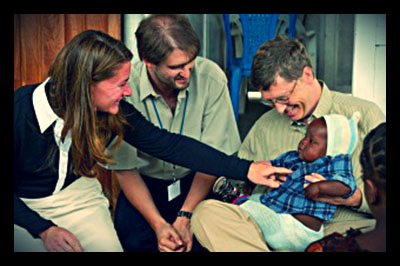
If there is any one charity organization most people have heard of, it might very well be the Bill & Melinda Gates Foundation. Conceived in 2000, the B&MGF is widely considered one of the largest private foundations in the world. It is known for its robust endowment, its thorough transparency and its unwavering commitment to creating and sustaining a high quality of life in some of the world’s worst conditions, especially in Africa, the Middle East and India. Its celebrity-business-magnate-co-chair, Bill Gates, is pretty well known, too.

All of this makes for an attractive working environment; employees relentlessly fight against poverty and have the opportunity to work alongside driven and accomplished coworkers. These jobs, however, are difficult ones to land. Here is some advice geared toward the future Bill & Melinda Gates Foundation employee.

Know your potential position, inside and out

It is a good idea to familiarize yourself with the job’s perks – the designated quiet areas, the spacious atrium, the walls made of whiteboards and carefully crafted environment – but it is even more important to understand your place within the B&MGF process and why it is so critical. Whether you want a communications job advocating and publicizing policy or a vaccines job administering lifesaving shots in Africa, know why you would be integral to the larger picture. This deepened understanding will enable you to recognize the skills and passions you possess that are job-relevant. It will also test your commitment; are you really devoted to the B&MGF project, or do you just really like luxurious atriums? “Both” is an acceptable answer.

Don’t think of it as a nine to five gig

While there is a huge variety of workweek schedules among Bill & Melinda Gates Foundation jobs, it is best to partially ignore the logistics, placing extra emphasis on the organization’s humanitarian vision. There may be tasks to complete and mundane paperwork to file, but the fight against global inequality and extreme poverty is not something relegated to eight hours on weekdays. During “off-hours,” for example, problem solving, studying and teaching can be accomplished to fuel workday endeavors. Anyone dedicated enough to relieving global poverty to work tirelessly for the B&MGF might consider such activities perfectly typical anyway.

Know the issues

Working for the Bill and Melinda Gates Foundation requires that your passion for global poverty reduction has led you to a deep understanding of the issues. It takes accumulated knowledge and a commitment to continued learning.

“It is work that not only relies upon candidates with solid educations and related experience,” begins some advice found on the B&MGF website, “but also a rare dedication to the greater good that exceeds the importance of a specific title.” As is additionally noted on the site, one needs to demonstrate experience, discipline and humility before being seriously considered for the job. Fortunately for you, hanging around The Borgen Project, getting familiar with points of concern and topics of interest, is a great way to build the vocabulary and the mental framework necessary to talk fluently about global poverty and its eradication. You are already on your way.

— Adam Kaminski

Sources: Bill & Melinda Gates Foundation 1, Bill & Melinda Gates Foundation 2, Seattlepi
Photo: NBBJ

July 3, 2014
https://borgenproject.org/wp-content/uploads/borgen-project-logo.svg 0 0 Borgen Project https://borgenproject.org/wp-content/uploads/borgen-project-logo.svg Borgen Project2014-07-03 04:00:562024-06-05 01:57:36How to Work for the Bill & Melinda Gates Foundation
Advocacy, Global Poverty

A Typical Gates Foundation Grant

gates foundation
Supporting work in more than 100 countries, run by 1,211 employees, and with grant payments totaling $30.1 billion, the Bill & Melinda Gates Foundation has become a modern figurehead for advocacy. “Inside the Gates” is a podcast series that provides a glimpse into the grants facilitating the organization’s impactful work.

The grants given by the Bill & Melinda Gates Foundation range from assisting global development to keeping kids in school in the United States. GAVI Alliance was granted $1.5 billion for expanding childhood immunizations. Gateway to College received $7.28  billion to expand a program that enables colleges to serve students who need remedial academic help.

How does the Foundation decide to whom they want to give their grants? Insights from “Inside the Gates,” as well as a newly streamlined evaluation structure, reveal this process.

The Foundation develops all of their grants and contracts using a four-phase process: (1) concept development, (2) pre-proposal, (3) investment development, and (4) management & close.

Concept development happens within the organization, “in consultation with foundation colleagues, researchers, policymakers, and other partners in the field.” Strategies –such as financial services for the poor, tobacco control and emergency response –are developed. More than two-dozen strategies have emerged from the goal of having the greatest possible impact with the greatest number of people.

Once strategic goals are set, the Foundation approaches organizations that they feel are well suited to the work. Request for proposals are also available online if the Foundation wishes to broaden their network or fund multiple organizations for a project.

The third phase, investment development, involves the legal and financial analysis teams from the Bill & Melinda Gates Foundation. After a proposal, a budget, results framework and tracker are approved, the funded organization can begin their aid activities.

The Bill & Melinda Gates Foundation prides itself on “maintaining quality interactions and clear and consistent communication” between a program officer and the grantee. The final step in the grant process is a final report that serves as a summary of the results achieved and lessons learned.

Since the premiere episode in 2012, the monthly “Inside the Gates” podcasts have highlighted grantees and employees of the Bill & Melinda Gates Foundation. Listening to these podcasts reveals the ins and outs of this organization and the projects it sponsors. People like Trevor Mundel, President of the Global Health Program, discuss the impact of effective grantee engagement on the foundation’s work. Others, such as Peter Kithene, an intern at the Gates Foundation, share their stories about working in third world countries and pursuing their dreams in the nonprofit community.

Overall, this podcast series, as well as the recently overhauled grant process give the public a better idea of what the Gates Foundation is doing to change the world. To listen to the podcasts and read in more detail about Bill & Melinda Gates Foundation Grants, visit Inside the Gates.

 – Grace Flaherty

Sources: Sustainable Sanitation Alliance, Bill & Melinda Gates Foundation, Bill & Melinda Gates Foundation
Photo: Gavi Alliance

July 2, 2014
https://borgenproject.org/wp-content/uploads/borgen-project-logo.svg 0 0 Borgen Project https://borgenproject.org/wp-content/uploads/borgen-project-logo.svg Borgen Project2014-07-02 14:43:442024-06-05 01:57:40A Typical Gates Foundation Grant
Activism, Advocacy, Aid Effectiveness & Reform, Nonprofit Organizations and NGOs

Aid Impact of Religious Organizations

For a long time faith-based organizations have played an important role in foreign aid. One of the great advantages brought by these organizations is their ability to connect their congregations in developing countries with their counterparts in industrialized nations. But is there really a difference between the contributions of secular versus religious organizations with regard to foreign aid?

Partnerships with faith-based organizations based in countries affected by poverty, natural disasters and other crises has been key in providing access for development agencies and NGOs in these countries. Some would even argue that without faith-based organizations the flow of aid would be halted to a minimum. This argument is supported by the notion that religious individuals or groups find it much easier to translate compassion into action.

However, this argument loses some of its strength if we consider aid not as a charity, but as an investment. What is more, there are certainly large secular organizations such as Doctors without Borders or Oxfam that have made a huge impact on poverty alleviation.

There is certainly a premise within religious indoctrination that drives to donate for charitable causes. It is even specifically included in the various religious customs and traditions. However, this does not necessarily mean that there would be no aid without faith-based organization.

According to Fiona Fox, founding director of the independent press office Science Media Centre, to improve people’s lives is as much the mission of science as it is of religion. There are countless individuals and groups who do not abide by any religion, and who work arduously to fight hunger and poverty.

In fact, an expanded definition of aid which includes the work of institutes such a the Welcome Trust and the Medical Research Centre dedicated to finding solutions to many health problems in the developing world shows that faith-based organizations do not stand alone in fighting the human plight.

It is difficult to support the idea that there would be no aid without religious organizations. However, it would also be unfair to assume that these organizations do not do their fair share of the work. In the end, it should not matter how much is contributed by a faith-based versus a secular organization, but taking note of the real impact and what kind of results are being generated by both.

– Sahar Abi Hassan

Sources: Center for American Progress, The Guardian 1, The Guardian 2
Photo: opbronx

July 1, 2014
https://borgenproject.org/wp-content/uploads/borgen-project-logo.svg 0 0 Borgen Project https://borgenproject.org/wp-content/uploads/borgen-project-logo.svg Borgen Project2014-07-01 14:17:112024-05-27 09:20:45Aid Impact of Religious Organizations
Advocacy, Aid Effectiveness & Reform, Global Poverty, Nonprofit Organizations and NGOs

InterAction: A Voice for Global Change

Interaction
InterAction is a coalition of U.S.-based international non-governmental organizations dedicated to improving the lives of the world’s poor and most vulnerable. It has 190 members working in every developing country to expand opportunities and support gender equality in the areas of health care, education, agriculture and small business, among others.

Their membership is wide and inclusive, including faith-based groups, secular groups, advocacy-focused groups, or groups focused on public education and other media education related to international issues. While different, all work toward common goals.

All members of InterAction share a set of common values that drive their work: to “foster economic and social development, provide relief to those affected by disaster and war, assist refugees and internally displaced persons, advance human rights, support gender equity, protect the environment, address population concerns, and press for more equitable, just and effective public policies.”

In 2013, in alliance with FedEx, InterAction launched “The FedEx Award for Innovations in Disaster Preparedness,” aimed at promoting and sharing ideas about preparedness and emergency relief. The award will recognize innovative strategy in preparing for vulnerabilities and dealing with emergency situations.
Moreover, as the largest coalition of its kind, InterAction hosts a wide array of educational and training events, development related research and disaster data all available on its website. In recent years, InterAction has published over 5000 documents with findings and policy recommendations about the successes of various development strategies in developing countries and disaster relief measures.

InterAction’s work has been sub-divided into four main categories: international development, accountability and learning, humanitarian action, and policy and advocacy. This makes its work wide-ranging, going from the goal to improve social and economic conditions for the worlds poorest, to relief activities to alleviate suffering during critical moments.

– Sahar Abi Hassan

Sources: InterAction, PreventionWeb

July 1, 2014
https://borgenproject.org/wp-content/uploads/borgen-project-logo.svg 0 0 Borgen Project https://borgenproject.org/wp-content/uploads/borgen-project-logo.svg Borgen Project2014-07-01 14:16:512024-05-27 09:18:00InterAction: A Voice for Global Change
Advocacy, Global Poverty, Water

Using EDM to Fight Global Poverty

Philanthropist Hugh Evans, co-founder of the Oaktree Foundation and Global Poverty Project, organized an electronic dance music festival on June 26 named the Thank You Festival. This benefit show is working to engage the millennial generation in the fight against global poverty.

The show will feature one of the most popular electronic DJs in the world, Tiesto, as well as Above and Beyond and a Maryland local electronic DJ by the name of Alvin Risk. The festival will utilize a 15-foot inflatable toilet to bring awareness to water and sanitation issues around the world. Electronic dance festivals, which are commonly associated with drug use and experimentation, may not seem an ideal place to speak about global poverty.

However, Evans notes that to reach the millennial generation it has to be done through the people they listen to, in this case through electronic dance artists. His previous work with the Make Poverty History concert in Melbourne, Australia was highly successful. The concert, which occurred simultaneously with the G20 meeting, was responsible for Australia doubling its foreign aid efforts. Other concerts Evans has been involved with include the 2012 Global Citizen Festival for which Evans secured the Great Lawn in Central Park, N.Y. The New York festival also occurred simultaneously with another international meeting, this time of the United Nations General Assembly.

The concert raised $1.3 billion in programs to aid the global poor. The June 26 concert is aimed at getting the United States to continue its aid efforts for child survival services as well as double the U.S. government’s funding of the Global Partnership for Education, which would total $40 million. Previous concert efforts of Evans have been associated with rock and pop music. This will be his first effort utilizing electronic dance music.

The festival will feature DJs, Evans and top U.S. Foreign Aid officials who will speak about the cause of eliminating extreme poverty and encourage fans to get involved. Tiesto expressed in an email that the festival provides a unique possibility to produce effective change. “I know that my fans are thoughtful, generous and caring and this festival is a great opportunity to show Washington D.C. what our community is really about.” The festival, which is partnered with Club Glow, the World Childhood Foundation, The Global Poverty Project and Global Citizen, will begin at 4 p.m. on June 26 at Merriweather Pavilion in Columbia, Md.

– Christopher Kolezynski

Sources: EDM, Spin, Washington Post

Photo: Oh So Fresh

June 30, 2014
https://borgenproject.org/wp-content/uploads/borgen-project-logo.svg 0 0 Borgen Project https://borgenproject.org/wp-content/uploads/borgen-project-logo.svg Borgen Project2014-06-30 20:26:402024-12-13 17:50:21Using EDM to Fight Global Poverty
Advocacy, Global Poverty

How to Help the Hungry

Help the Hungry
Helping those who suffer from malnutrition has become a lot easier in the 2010s, with advancements in modern technology.

Helping the hungry and needy can be as simple as clicking a button in the modern age. Funds and donations are one of the most important parts of helping the hungry worldwide along with volunteers and advocacy.

Using donations and monetary gifts, nonprofits are able to mobilize volunteers, some who work on the ground in impoverished areas and some who try to get their cause more well-known through advocacy.

Through the use of technology, including the Internet and social media, doing this has become much simpler. How to help the hungry and put an end to global poverty can be as simple as sending emails or tweets to representatives in government or radio stations.

Posting fliers is easier, spreading the word is easier, delivering food to hungry families is easier and even providing clean water is easier.

Posting fliers to raise awareness on social media can grab someone’s attention and if not the person for whom it was meant, then someone who is friends with them and can see it on their news feed.

Delivering food is made easier, especially in high risk areas through air drops and drones. Now cleaner water is within reach as well with technology that uses plasma to purify water as it is being brought up from a well.

There are also billboards and water tanks that collect water from the rain and humidity and purify it so people can have clean water to drink.

There are so many more ways to help the hungry than there has been in the past right now. But there are still hungry people in the world, struggling to get by on $1 or less per day. Hunger has increased in Africa by 153 percent in the last five years.

However, hunger is down in impoverished South American countries as well as in impoverished Asian nations because these nations see most of the technological advancements and learn to put them to good use.

It is rare for South African nations to see the same sort of technology and receive the same type of training other nations do in order to provide technologically advanced aid.

Much of the technology that is making it onto the market comes from South American inventors and nonprofits to help the impoverished, but as a nation stricken with poverty find it increasingly difficult to get their patents and designs to other nations in desperate need.

So, how do you help the hungry? Monetary gifts and food donations take little to no time at all; in addition, they help greatly with spreading knowledge and technological advancements in order to make fighting hunger, providing clean water and putting an end to global poverty much easier for generations to come.

– Cara Morgan

Sources: Feeding America, US News, WFP 1, WFP 2, World Hunger
Photo: Action Against Hunger

June 30, 2014
https://borgenproject.org/wp-content/uploads/borgen-project-logo.svg 0 0 Borgen Project https://borgenproject.org/wp-content/uploads/borgen-project-logo.svg Borgen Project2014-06-30 20:22:192017-03-20 14:13:00How to Help the Hungry
Advocacy, Human Rights, United Nations

International Day for Victims of Torture

Rope isolated on white background
This week marked the anniversary of the International Day in Support of Victims of Torture.

According to the United Nations, torture as a practice seeks “to annihilate the victim’s personality and denies the inherent dignity of the human being.”

The U.N. General Assembly adopted resolution 52/149 in December 1997, a resolution that proclaimed June 26 as the U.N. International Day in Support of Torture Victims. Believing torture to be “one of the vilest acts perpetrated by human beings on their fellow human beings,” the resolution maintains the intention to completely eradicate all torture measures and practices.

Torture practices used today include the controversial waterboarding, sleep deprivation, force feeding, electric shock and cold cell, among others. Rape, beatings and public sexual humiliation are also considered to be forms of torture as they are measures used to inflict pain upon other individuals. Countries, including the United States, continue to use enhanced interrogation techniques to obtain information from suspected criminals or terrorists. Many believe these techniques qualify as acts of torture.

“As we honor the victims on this International day, let us pledge to strengthen our efforts to eradicate this heinous practice,” U.N. Secretary-General Ban Ki-moon said.

The U.N. Fund for Victims of Torture has assisted torture victims around the world. It provides direct assistance to torture victims — assistance that includes access to psychological and physical rehabilitation centers as well legal services.

While many countries do not make use of torture practices, 41 countries have not ratified the Convention Against Torture and thus allow and continue to use practices deemed to be inhuman by the U.N. In fact, Amnesty International’s 2013 Report stated that 112 of 159 countries practiced torture methods in 2012.

“Torture is an unequivocal crime,” U.N. High Commissioner for Human Rights, Navi Pillay, said. “Neither national security nor the fight against terrorism, the threat of war, or any public emergency can justify its use,” Pillay said. “All States are obliged to investigate and prosecute allegations of torture and cruel, inhuman or degrading treatment, and they must ensure by every means that such practices are prevented.”

– Ethan Safran

Sources: allAfrica, United Nations, International Business Times, Human Rights Web, United Nations Human Rights, Dignity – Danish Institute Against Torture
Photo: Time and Date

June 30, 2014
https://borgenproject.org/wp-content/uploads/borgen-project-logo.svg 0 0 Borgen Project https://borgenproject.org/wp-content/uploads/borgen-project-logo.svg Borgen Project2014-06-30 19:25:242017-03-20 14:13:00International Day for Victims of Torture
Advocacy, Global Poverty, Health

AMIGOS de Las Américas

Amigos de Las Américas
Amigos de Las Américas (AMIGOS) was founded by youth pastor Guy Bevil in 1965 when he and a small group of young adults landed in Honduras to administer polio vaccines in isolated, rural communities.

He knew that people lived off the beaten path, and wanted to provide health services for those who would not normally have access to them. Nearly 50 years later, his philosophy is strongly upheld in the organization.

Amigos de Las Américas has a mission: to make young people leaders and improve underdeveloped communities while doing so. Volunteers are high school or college aged. Summer programs are generally four to nine weeks in length, though college students can take a gap semester or year. All must have a base level of Spanish and an interest in changing the world.

Over 700 volunteers received training in leadership and specific community development projects annually. Volunteers are placed with host families, which gives them a chance to improve their Spanish, learn about the host culture, share their own culture and further integrate into the community.

Accepted applicants to the program must pay a program fee; 80 percent of this goes to cover travel, additional housing and meals. The remaining 20 percent is used for the organization’s administrative expenses.

AMIGOS operates in nine different countries: Paraguay, Panama, Nicaragua, Peru, Mexico, Ecuador, The Dominican Republic, Colombia and Costa Rica. Community development projects cover a wide range of services, but are largely dependent on AMIGOS partners.

AMIGOS partners with locally based organizations, often nonprofit, to ensure that its volunteers are doing effective and needed work within a community. There are 25 partners in total.

Organizations like Servicios de Salud de Oaxaca in Mexico and Prodia of Peru, work mainly in health services, sanitation and nutrition awareness. Fundación Paraguaya and Panama’s Ministereo de Deasarollo Social provide investment services in local projects and individual enterprises. Fútbol con Corazón provides workshops on nutrition and life skills to more than 2,000 children in Columbia. This is in addition, of course, to soccer training.

Some might ask why AMIGOS focuses its efforts on Latin America when there is poverty still in the United States. The organization says it builds leaders, and that the compassion and leadership skills learned while on programs abroad are brought back to the U.S.

— Olivia Kostreva

Sources: AMIGOS, Go Overseas , US Gap Year Fairs
Photo: Vimeo

June 26, 2014
https://borgenproject.org/wp-content/uploads/borgen-project-logo.svg 0 0 Borgen Project https://borgenproject.org/wp-content/uploads/borgen-project-logo.svg Borgen Project2014-06-26 20:49:132024-05-26 23:51:35AMIGOS de Las Américas
Advocacy

TransPerfect: The Perfect Donation

Many large businesses recognize the importance of philanthropic initiatives. They understand that all people, linked by common humanity, have a responsibility to help each other. However, all people are not linked by a common language. Language barriers can, at times, get in the way of global philanthropy. Fortunately, TransPerfect, a translation services company based in New York City, is contributing to the alleviation of this obstacle.

TransPerfect has offices in six different continents and provides translation and interpretation services in over 170 languages. Today, after 20 years in business, it is ranked as one of the Women Presidents’ Organization’s “50 Fastest-Growing Women-Owned/Led Companies” and received the 2014 Global Technology Award from World Trade Week.

TransPerfect also donates significant funds to disaster relief globally and programs benefiting underprivileged people in its home-state of New York.

The largest portion of the company’s charitable donations goes to Heifer International, a relief project that helps impoverished families by donating livestock and other resources. TransPerfect’s donations to Heifer International have helped the organization to supply people in 115 countries with sheep, pigs, chickens, bees and trees.

Even more important than its financial donations, however, are donations of its services.

Recently, TransPerfect announced that it has been chosen as the official language services partner of Oxfam Belgium. Oxfam Belgium is a regional sector of the larger Oxfam organization which seeks to end injustice and poverty in the world. Specifically, Oxfam Belgium focuses its efforts on encouraging people to buy fair trade products, shop in its second-hand stores and contribute to foreign aid in any way possible.

By engaging in this partnership, TransPerfect will donate translation services to the Oxfam Belgium organization. It will translate brochures and other public relations material into Dutch and French so that the Oxfam organization can make effective and engaging presentations to people in the Netherlands. Hopefully, these presentations will catalyze even greater foreign aid and humanitarian projects from this area of the world.

TransPerfect is highly effective in the fight against global poverty, not only because of the relief that it provides for so many charitable organizations, but because its services enable organizations to communicate across cultures. Its translation and interpretation services eliminate the language barriers that often get in the way of effectively explaining projects, goals and other causes. By teaming up with organizations such as Oxfam Belgium, TransPerfect empowers global philanthropists to better carry out their missions.

— Emily Walthouse

Sources: Fort Mill Times, Transperfect 1, Transperfect 2, Heifer International
Photo: AZ BIG Media

June 26, 2014
https://borgenproject.org/wp-content/uploads/borgen-project-logo.svg 0 0 Borgen Project https://borgenproject.org/wp-content/uploads/borgen-project-logo.svg Borgen Project2014-06-26 18:52:042024-05-26 23:51:48TransPerfect: The Perfect Donation
Page 54 of 77«‹5253545556›»

Get Smarter

  • Global Poverty 101
  • Global Poverty… The Good News
  • Global Poverty & U.S. Jobs
  • Global Poverty and National Security
  • Innovative Solutions to Poverty
  • Global Poverty & Aid FAQ’s
Search Search

Take Action

  • Call Congress
  • Email Congress
  • Donate
  • 30 Ways to Help
  • Volunteer Ops
  • Internships
  • Courses & Certificates
  • The Podcast
Borgen Project

“The Borgen Project is an incredible nonprofit organization that is addressing poverty and hunger and working towards ending them.”

-The Huffington Post

Inside The Borgen Project

  • Contact
  • About
  • Financials
  • President
  • Board of Directors
  • Board of Advisors

International Links

  • UK Email Parliament
  • UK Donate
  • Canada Email Parliament

Get Smarter

  • Global Poverty 101
  • Global Poverty… The Good News
  • Global Poverty & U.S. Jobs
  • Global Poverty and National Security
  • Innovative Solutions to Poverty
  • Global Poverty & Aid FAQ’s

Ways to Help

  • Call Congress
  • Email Congress
  • Donate
  • 30 Ways to Help
  • Volunteer Ops
  • Internships
  • Courses & Certificates
  • The Podcast
Scroll to top Scroll to top Scroll to top