• Link to X
  • Link to Facebook
  • Link to Instagram
  • Link to TikTok
  • Link to Youtube
  • About
    • About Us
      • President
      • Board of Directors
      • Board of Advisors
      • Financials
      • Our Methodology
      • Success Tracker
      • Contact
  • Act Now
    • 30 Ways to Help
      • Email Congress
      • Call Congress
      • Volunteer
      • Courses & Certificates
      • Be a Donor
    • Internships
      • In-Office Internships
      • Remote Internships
    • Legislation
      • Politics 101
  • The Blog
  • The Podcast
  • Magazine
  • Donate
  • Click to open the search input field Click to open the search input field Search
  • Menu Menu

Archive for category: Advocacy

Information and news on advocacy.

Activism, Advocacy, Volunteer

Five Places to Volunteer this Holiday Season

volunteer_this_holiday_season
Many people think that they can’t help others if they don’t have money to donate, yet there are many other ways to give back to those in need. Most organizations would be grateful for a pair of helping hands if you have a little time to spare this holiday season. At a time when many people are caught up in the commercial aspect of the holidays, giving back to others can be a very fulfilling and rewarding experience. Here are five international organizations where you can volunteer this holiday season.

1. Stop Hunger Now

Stop Hunger Now is an international relief organization that provides food packages with over 23 essential nutrients to those in need. The organization has helped provide food and aid to people in 65 different countries. Stop Hunger has over 25 meal packaging locations across the U.S. where anyone is welcome to go and volunteer. You can also arrange a meal packaging drive in your local community where Stop Hunger Now will travel to you. The group makes meal packaging a fun activity and encourages teamwork between volunteers to raise production goals.

2. Heifer International

Hiefer has helped bring over 20.1 million families out of hunger and poverty through the use of animals, water purification, women’s empowerment and sustainable farming. The organization’s unique donation system allows donors to fund life-saving projects as well as partial and complete animal donations (mainly cows, goats, sheep, llamas and bees). These animals can help provide a community with valuable resources so they can learn to feed themselves.

In addition, Hiefer offers a multitude of volunteering experiences that range from simply getting the word out about the cause to working on one of Heifer’s animal farms. For those who want to stay local, volunteers can conduct fundraising campaigns like the Read to Feed drive, which promotes a love of reading in children as well as community service. Volunteers can also help advocate Heifer International at local and national events or even travel to one of Heifer’s U.S. farms where they can chose from a variety of volunteer programs lasting from several hours to five days long. You can even sign up to stay and work on the farm for several months if you aren’t quite ready to leave.

3. Oxfam International

Oxfam has established development programs in over 90 countries which work to improve human rights, food security, healthcare and education. The organization allows volunteers to work towards global human rights and poverty-elimination at the local level. Volunteers have the opportunity to join the organization’s Action Corps, a group of trained grassroots advocates that work together locally to gain support for life-saving policies, defend human rights and help communities across the world to overcome hunger and climate change. Action Corps members primarily work as advocates at local events, as event organizers and as leaders. Oxfam’s volunteer program has received great feedback, helping many to develop valuable leadership skills and standout in the job market.

If you aren’t looking to make the commitment to the Action Corps program, Oxfam also looks for volunteers to represent the group at concerts and festivals as well as local events such as farmers markets.

4. Habitat for Humanity

Habitat for Humanity strives to provide safe, affordable housing for low-income families throughout the world. The organization prides itself on an open door policy which brings people together from all walks of life. Habitat has local branches throughout all 50 states, making it easy and convenient for volunteers. Individuals can volunteer at their local branch or even participate in an international Global Village volunteer trip. Volunteers work as a team to build and repair houses for those in need and they can devote as little as one day since there are no time requirements to help out. Volunteering at Habitat helps individuals build skills, meet other like-minded people, while providing a rewarding experience to those involved.

5. Mercy Corps

Similar to Heifer International, Mercy Corps offers many charitable gift ideas that go to those living in poverty. This includes donations of livestock, clean water systems, solar power, vaccinations and education for women and children. Mercy Corps’ gift site makes it easy and fun to give rewarding and charitable gifts- a unique idea for this holiday season!

Mercy Corps Action Center volunteers are able to use their people skills by speaking at events and managing information tables for the organization. In addition, the organization’s MicroMentor system connects business mentors, volunteers and entrepreneurs.

Volunteering at one of these organizations is a great way to give back this holiday season. Though, don’t forget that these groups need help throughout the rest of the year as well.

– Meagan Douches

Sources: Habitat For Humanity, Heifer International, Mercy Corps, Oxfam, Stop Hunger Now
Photo: Wikipedia
December 9, 2014
https://borgenproject.org/wp-content/uploads/borgen-project-logo.svg 0 0 Borgen Project https://borgenproject.org/wp-content/uploads/borgen-project-logo.svg Borgen Project2014-12-09 04:00:102024-06-07 04:44:46Five Places to Volunteer this Holiday Season
Activism, Advocacy, Human Rights, Humanitarian Aid

Episcopal Relief and Development Celebrates 75

Episcopal_relief_and_development
In 1938, in the midst of the Second World War, Episcopalians around the country raised money to help European refugees. In 1940, the Episcopal Church formally founded the Bishop’s Fund for World Relief. Throughout the 1940s and 1950s, the Bishop’s Fund continued to help with post-WWII efforts to rebuild. In 2000, the Fund was renamed to Episcopal Relief and Development. In 2002, it was incorporated as a 501(c)(3). In 2003 it shifted to long-term development projects, officially endorsing the Millennium Development Goals (MDGs).

The platform which Episcopal Relief and Development works from is based on partnership, both with church and other partners in host countries that are working in the same regions with the same goals.

Each year, Episcopal Relief and Development works in over 40 countries and reaches over three million people. Some of those countries are the most impoverished in the world, including Haiti, Burundi, Malawi and Nicaragua.

Episcopal Relief and Development’s four core programs are to alleviate hunger and improve food supply, create economic opportunities and strengthen communities, promote health and fight disease and respond to disasters and rebuild communities. Specific programs include fighting malaria, micro-finance, clean water and maternal and child health. All of their programs relate directly to the MDGs.

The official mission of Episcopal Relief and Development is “to bring together the generosity of Episcopalians and others with the needs of the world.” According to their financial statements, 84 percent of their 2013 budget went to programs. Ten percent went to fundraising and the remaining six percent went to administration. Episcopal Relief and Development is accredited by the Better Business Bureau, InterAction, Charity Navigator and GuideStar. They are based out of New York City.

– Caitlin Huber

Sources: Episcopal Relief, Charity Navigator
Photo: Episcopal Relief

December 8, 2014
https://borgenproject.org/wp-content/uploads/borgen-project-logo.svg 0 0 Borgen Project https://borgenproject.org/wp-content/uploads/borgen-project-logo.svg Borgen Project2014-12-08 12:00:022020-07-18 04:36:27Episcopal Relief and Development Celebrates 75
Advocacy, Education, Global Poverty, Women & Children, Women and Female Empowerment

10,000 Girls Empowers Senegal

10,000_girls
In the moment of need she had to decide whether she will rise to the occasion or fall under the pressure. After the very sudden death of her 26-year-old daughter who left behind five grandchildren – Viola Vaughn was left searching for the pathway to peace. A native of Detroit, Michigan, she spent had much of her life working in Africa. Sensing a need for a return to Africa, her husband and the five grandchildren headed to Kaolack a small town in Senegal.

With a hopeful heart they moved, little did Vaughn know another sudden tragedy, the death of her husband would occur shortly after the move. Lost in her grief Vaughn devoted all of her time to home-schooling her grandchildren ages four to 12.

Word of Vaughn’s success with her grandchildren began spreading and more and more children wanted to have Vaughn as their teacher. Mothers approached her with stories of their children not doing well in school, within two weeks her classroom went from five to 20 students eager to learn from their teacher. Vaughn became more aware of the increasingly low statistical rates of girls getting an education because of the high demands that are put on them on the home front. Most young girls would only fail because they would not be able to make it to classes and exams leading to high dropping out rates and failed classes. In 2001, Vaughn decided to make it official and turned her grandchildren’s bedrooms into classrooms.

She conducted a system of teaching them how to teach and support one another. Within a mere two years the group grew from five to 20 to now 80 girls who are thriving in school. She received a grant and has hired teachers, she had set a limit to 100 but the enrollment rate is exceedingly increasing. The girls are especially ambitious, wanting to take it to 10,000 students.

In order to raise money to reach their goal of 10,000 students, the girls learned to bake. Vaughn taught them and they are now selling their goodies for profit towards the school. With the rapid fundraising of money the girls were able to buy books, supplies and to support more students. The most amazing part is that they are becoming fully self-sufficient, learning skills beyond math and science.

The girls now have a catering, baking and sewing businesses. More than 1,500 girls are now enrolled in Vaughn’s program in six different locations and the waiting list of 1,000 continues to increase. Growing up some of her students were told they would never make it to high school are now earning their college degrees. She hopes that her girls will help revolutionize the region, and she slowly has done just that. The original school started in Senegal, in the city of Kaolack and has since spread to Kaffrine, Kaymor, Koungheul, Maleme-Hoddar, Ndoffane and Kedougou, all small to mid-size towns in Senegal.

10,000 Girls is empowering, uplifting, motivating and encouraging girls all across the globe that they do have the right to an education and they were born with a purpose.

– Charisma Thapa

Sources: Daily Good, 10,000 Girls
Photo: Inter Press Service News

December 6, 2014
https://borgenproject.org/wp-content/uploads/borgen-project-logo.svg 0 0 Borgen Project https://borgenproject.org/wp-content/uploads/borgen-project-logo.svg Borgen Project2014-12-06 12:00:372024-12-13 17:51:1710,000 Girls Empowers Senegal
Advocacy, Global Poverty

Empowering Minority Groups in Albania

minority_groups_in_albania
Since the fall of socialism in 1991, Albania has made great strides in establishing itself as an economic and political power in Europe. The country has joined the United Nations, NATO, World Trade Organization and the Council of Europe. It is poised to join the European Union.

One of the factors holding the country back has been the exclusion of its minorities, primarily the Roma and Egyptians. This exclusion has left 75 percent of Roma and 70 percent of Egyptians categorized as very poor, compared to the 28.8 percent of Albanians with the same rating.

This socioeconomic status is due largely to of a lack of education, employment and basic infrastructure.  This has led many members of these groups to seek wages in the informal labor market, which includes prostitution, women and child trafficking and drug trafficking.

While the government has claimed to include these minority groups in Albania, Egyptians have not been given minority status. The government claims they have not met the criteria necessary. Egyptians must share the same language (other than Albanian), have documentation to prove its distinct ethnic origin or national identity and have distinct customs and traditions or a link to a kinship state outside of the country.

However, the Roma have met these criteria, and, as of 2005, the Albanian government has signed up for the Decade of Roma, a World Bank initiative designed to help in four key areas: education, employment, health and housing and gender and non-discrimination. To date however, the results are not very encouraging, as the number of Roma still labeled as very poor continues to rise.

Against this very bleak picture, several rays of hope have begun to shine on the Roma and Egyptian communities from several organizations. One of these organizations is the United Nations Development Plan, implemented by the Ministry of Social Welfare and funded by the European Union.

These organizations have constructed a project designed to promote social inclusion of Roma and Egyptians through vocational training to increase their employability and strengthen artisan and entrepreneurship skills, especially for women and girls.

The training entailed learning how to cultivate medicinal plants. It was a week-long program where participants were trained how to cultivate, collect and dry medicinal plants. They also learned how to start a business. Additionally, women who owned pieces of land were given sage seeds to help get them started.

Within six months, several of the women who took the course were entrepreneurs employing up to three other women in their businesses. The UNDP recruited sage specialists to assist farmers throughout the process and help them in timing their sales and marketing their product.

Luan Ahmetaj, Director of the Medicinal Plant Institute in Tirana, Albania said, “What makes this intervention unique is the involvement of women in business dominated and run by men. This contributes in empowering those communities.”

There is a huge potential for Albanian medicinal plants. According to the U.S. Agricultural Department, 57 percent of sage imports into the U.S. come from Albania. There are close to 300 members of Roma and Egyptian communities in the regions of Berat, Korca and Vlora that are now benefiting from the initiative, almost half of them women.

Another aspect of this program has been the support of interventions into infrastructure identified by Roma and Egyptian Community Councils, such as kindergartens, road rehabilitations and other interventions. These programs also support the Government of Albania in its efforts to achieve the objectives set forth in the Decade of Roma Inclusion 2005 – 2015. It also promotes respect for human rights and appreciation for cultural diversity, as prerequisites for the country’s EU accession.

– Frederick Wood

Sources: Minority Rights 1, Minority Rights 2, UNDP, UN Albania, ERRC
Photo: Flickr

November 13, 2014
https://borgenproject.org/wp-content/uploads/borgen-project-logo.svg 0 0 Borgen Project https://borgenproject.org/wp-content/uploads/borgen-project-logo.svg Borgen Project2014-11-13 08:00:142020-08-01 18:05:28Empowering Minority Groups in Albania
Advocacy, Global Poverty

Church World Service

church_world_service
For about 66 years, the Church World Service (CWS) has been feeding the hungry and helping the most vulnerable populations in the world. The organization came about after World War II, with the churches of the United States realizing the dire need for humanitarian assistance and providing billions of pounds of food, clothing and medical supplies to war-stricken areas of Europe and Asia.

CWS consists of over 35 Christian denominations and communions that target areas ranging from agriculture, health, disaster relief, refugee resettlement, food production and water sanitation. The overarching goal of the organization is to eradicate hunger and poverty by collaborating with many local partners to create a sustainable environment.

Today, the work of CWS can be seen all over Africa, Asia, Europe, Latin America and the Caribbean, the Middle East and North Africa. The organization strongly believes that development begins at the grassroots and that the citizens of the world must be empowered and self-sufficient.

In Indonesia, CWS worked with Two Degrees Food, among other organizations, to create a food security and nutrition program for local farmers. The project introduced sustainable agricultural methods to Indonesian farmworkers called Permaculture, also known as Permanent Agriculture. Some training involved making their own fertilizer and pesticides so crops could be protected properly and efficiently.

Consequently, food supply has seen a dramatic increase. Yance Banunaek, a female farmer, explains that the newly implemented program has allowed her family to eat a variety of vegetables. Banunaek states, “Before the assistance, sometimes my family would have no vegetables with our meal or only one type of vegetable, but the program has now helped my family to eat more nutritious foods.” She also says that she is able to sell her leftover vegetables in the markets, generating more income to feed her family and send her children to school.

– Leeda Jewayni

Sources: Church World Service, ActAlliance
Photo: Church World Service Harrisonburg

October 29, 2014
https://borgenproject.org/wp-content/uploads/borgen-project-logo.svg 0 0 Borgen Project https://borgenproject.org/wp-content/uploads/borgen-project-logo.svg Borgen Project2014-10-29 04:00:332024-06-05 01:58:16Church World Service
Activism, Advocacy, Global Poverty

SKYE Program Boosts Guyana Youth

SKYE
President Barack Obama’s Caribbean Basin Security Initiative (CBSI) was implemented in the early part of this decade. The United States is working with nations in the Caribbean on substantially reducing illicit trafficking, increasing public safety and security and promoting social justice.

SKYE

SKYE, or The Skills and Knowledge for Youth Employment, program was a direct result of this initiative. It is funded by USAID, managed by the Education Development Center and works with private sector partners, government ministries, community agencies and NGOs.

Their goal is to train and educate the community’s youth in the areas that have been identified as priorities by public and private sector employers in Guyana. Those areas are communications, personal development, local labor laws and financial literacy.

SKYE works with the local youth that are school dropouts, youth who have completed formal education or training but do not have the necessary skills to find employment, and youth involved in the juvenile justice system. Not only does SKYE train these youth, but it sees them into the working force through the use of “employment coaches.”

It is often easy to train the youth, but to see them into the workforce is the daunting task. That is why many employment coaches stayed paired with their youth until they find work. As of June 2014, more than 1,100 youth have completed SKYE’s work readiness training and 400 graduates have already found employment.

Popularity and Success

The program has become so popular and received such a reputation for producing work-ready employees with positive attitudes that BK Quarries, one of the region’s largest employers, recently asked for twenty more SKYE graduates after hiring fourteen.

An April 2004 SKYE graduation ceremony, in which 57 youth graduated, was led by the U.S. ambassador to Guyana, D. Brent Hardt. In the ceremony’s opening speech, he said that SKYE was focused on “strengthening an environment that facilitates youth development, supporting the reintegration to society of high-risk populations, supporting Guyana’s youth in their efforts to find employment or start their own businesses, and supporting the greater engagement of young people as active Guyanese citizens.”

Fiona Wills, who directs SKYE, credited the program’s success to its emphasis on providing youth with one-on-one support and letting each one decide on a path that interests him or her: “Everything we do is about empowering young people to help themselves.”

With this momentum, the program will only continue to move forward at its empowering pace, as it is targeting the right demographic. For there to be a better tomorrow, in any country, we need to focus on breaking the preconceived notions of the youth.

Poverty, and the constraints it invokes, needs to be shown to be breakable. If the youth of a country can’t break free of the poverty cycle through employment programs and other aids, then that country is permanently stuck in poverty’s grip. With programs like SKYE in effect, the world has a better chance of elevating all of its citizens to a place where they can provide their own food, shelter, and clothing.

— Frederick Wood II

Sources: InterAction, Guyana Times, Embassy of the United States, USAID Blog
Photo: Flickr

October 25, 2014
https://borgenproject.org/wp-content/uploads/borgen-project-logo.svg 0 0 Borgen Project https://borgenproject.org/wp-content/uploads/borgen-project-logo.svg Borgen Project2014-10-25 04:00:312024-05-27 09:22:55SKYE Program Boosts Guyana Youth
Advocacy, Development, Global Poverty

Jeffrey Sachs: Sustainable Development after MDGs

jeffrey_sachs
In a presentation at the United Nations University earlier this month, Jeffrey Sachs gave updates on the Millennium Development Goals and projections for after 2015. Sachs, one of the developers of the Millennium Development Goals and Professor of Sustainable Development at Columbia University, discussed the post-2015 future of sustainable development. With the expiration of the MDGs set for 2015, attention is turning to the Millennium Villages Project and the Sustainable Development Solutions Network.

Despite the progress of many nations agreeing to the framework of the MDGs, there is still room for improvement. In the midst of the Ebola crisis, the interdependency of the MDGs, especially focusing on maternal health, epidemic diseases and education, has emphasized a need for equal attention to the goals.

With expectations for exponential increases in global GDP and population, the need for advanced poverty relief is greater than ever. Under the new SDSN framework, set to be instituted by the United Nations after 2015, new goals will be created to target financial responsibility and climate change. In 2015, three conversations will take place in both developed and developing nations to tackle the next phase after the MDGs.

Jeffrey Sachs is seen to be among the frontrunners of the next several decades of continued development. Though the concrete plans implementing change are still yet to be solidified in the post-2015 meetings, cooperation between developed and developing nations is still going to be in the center of the plans.

In an article written in Horizons, Sachs writes, “Ours is a world of fabulous wealth and extreme poverty: billions of people enjoy longevity and good health unimaginable in previous generations, yet at least one billion people live in such abject poverty that they struggle for mere survival every day. The poorest of the poor face the daily life-and-death challenges of insufficient nutrition, lack of healthcare, unsafe shelter, and the lack of safe drinking water and sanitation.” The gap between the OCED and developing nations is growing, and Sachs is acutely aware that the growing rate of the global economy will only aggravate the poverty gap. Achieving a basic standard of living will not eliminate the poverty gap, but will ease the daily struggles of the bottom quintile.

The sustainable development framework is working to achieve a universal standard of living. Though it was intended to reach this standard by 2015, realistically, additional work under a revised viewpoint will follow in the subsequent years.

– Kristin Ronzi

Sources: UN U, UN, UNSDN, Millennium Villages, CIRSD
Photo: Flickr

October 24, 2014
https://borgenproject.org/wp-content/uploads/borgen-project-logo.svg 0 0 Borgen Project https://borgenproject.org/wp-content/uploads/borgen-project-logo.svg Borgen Project2014-10-24 12:49:122024-06-05 01:58:16Jeffrey Sachs: Sustainable Development after MDGs
Activism, Advocacy, Education

Malala Wins Nobel Peace Prize

nobel_peace_prize
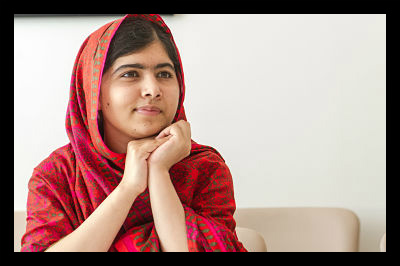
By the age of 17, if a teenager has secured a part-time job, a driver’s license and takes home a good report card, they typically feel pretty accomplished. But 17-year-old Malala Yousafzai has already experienced and accomplished more than most do in a lifetime. On October 10, she added another accomplishment to her list: the youngest person to ever receive the Nobel Peace Prize.

Yousafzai was awarded the Nobel Peace Prize along with Kailash Satyarthi, “for their struggle against oppression of young people and children and children’s right to education,” Chairman of the Norwegian Nobel Committee Thorbjorn Jagland said.

To get to this monumental point in her life, Yousafzai has been through incomprehensible trials, including threats against her life. But through it all, this young girl has been a beacon to the girls in undeveloped countries, in particular Pakistan.

Yousafzai’s story began in 2009, when the young girl took to a blog to transcribe her thoughts and feelings of the world around her, in her native home of Swat Valley in northwestern Pakistan. The Taliban announced an edict that no girls were to be educated. Yousafzai, whose father is a schoolteacher, knew the value of education and chose to attend school, even after the edict was issued.

While journaling her days online, Yousafzai started to receive death threats from the Taliban. On Oct. 9, 2012, the threats came to life.

CNN reported of her attack, “[Gunmen] halted the van…demanded the other girls in the vehicle to identify her…she was pointed out. At least one gunman opened fire, wounding three girls.” The two girls survived the shooting and Malala sustained shots to the head and neck.

Malala underwent a surgery to remove the bullets, and doctors had to remove a part of her skull to reduce brain swelling. She was eventually taken to Queen Elizabeth’s Hospital in the U.K. via helicopter. This young girl who fought for her right to be educated now was fighting to recover from what could have been life-ending injuries. After close to three months, Malala was released from the hospital to rehabilitate in her family’s new home.

Word spread globally of the young heroine, resulting in the United Nations creating a global education campaign entitled, “I am Malala,” even proclaiming November 10 to be Malala Day, focusing on “’Malala and the 32 million girls like Malala not in school.”

Yousafzai recovered from her wounds and returned to school at Edgbaston High School for Girls in Birmingham, England. Since the ordeal, she has become a light for girls all over the world.

Yousafzai has created the Malala Fund, which focuses on educating girls in Pakistan, Kenya, Nigeria and the girls who are Syrian refugees in Jordan. She has also published a book entitled “I am Malala.”

This advocate for education and most recent recipient of the Nobel Peace Prize still has work cut out for her. A CNN infographic from 2012 showed over 4.5 million girls are still out of school in Pakistan.

Even though the statistic is staggering, Yousafzai’s influence can be seen in young girls in her home country. Ahmad Shah, who was an aide to Yousafzai’s father and an educator himself, asked a young girl what she wanted to be when she grew up. Her reply? “I want to become Malala Yousafzai to work for education and peace,” Shah recalled.

The world has its eyes on Malala Yousafzai for now and for the foreseeable future because she is sure to change the world, one little girl at a time.

– Kori Withers

Sources: CNN, CNN 2, The Washington Post, Nobel Prize
Photo: Flickr

October 23, 2014
https://borgenproject.org/wp-content/uploads/borgen-project-logo.svg 0 0 Borgen Project https://borgenproject.org/wp-content/uploads/borgen-project-logo.svg Borgen Project2014-10-23 04:00:262024-12-13 17:51:16Malala Wins Nobel Peace Prize
Activism, Advocacy, Global Poverty

Ending Global Poverty By 2030

ending global poverty
Videos and pictures of malnourished children play on TV screens in between reality TV shows and donation envelopes arrive in the mail, sometimes to be barely glanced at. A supporter of The Global Poverty Movement said, “Everything that has a beginning has an end,” but what is the world doing to end global poverty?

Two people who are aware of and trying to combat this issue are Hugh Evans and Simon Moss. These two men erected The Global Poverty Movement in 2008 during a “High Level meeting on Millennium Development Goals” and within a year launched in Australia. It is their hope that through this project, global poverty can be eradicated by 2030 through the use of government changes and business and consumer action, along with developing a movement that will inspire and educate people to move to action to affect change.

Since landing in England, New Zealand and the United States, the Project has increased in numbers by the thousands and secured funding for their initiatives, such as Live Below the Line, The End of Polio and Global Citizen, to eradicate poverty by the billions.

The Global Poverty Project has made use of multimedia to reach those all over the world in support of their campaign of ending global poverty through video presentations to recruiting celebrities such as Hugh Jackman to enlist in the cause to free ticketed concerts to spread their mission.

By using these methods, people of all ages—about 250,000 so far—are becoming members of Global Citizen, becoming more conscious of the less fortunate and moving to action by simply using the Internet.

In late September, the organization hosted their third annual Global Citizen Festival with popular singers Jay Z, Carrie Underwood, fun. and The Roots, to name a few. In order to obtain tickets, the organization created an incentive program; sign petitions, email world leaders and share content on social media. By doing so, “fans [became] active participants in campaigning for positive change.” These campaigners earned points to put in a raffle to win tickets to the concert.

With the help of activists lobbying for change, a change will come, even if it’s through sharing an article online or signing a name to a petition because like one Global Citizen said, “What we do in one place effects someone on the other side of the world.”

– Kori Withers

Sources: Global Poverty Project, Global Poverty Project 2, Global Poverty Project 3
Photo: UN Seattle

October 14, 2014
https://borgenproject.org/wp-content/uploads/borgen-project-logo.svg 0 0 Borgen Project https://borgenproject.org/wp-content/uploads/borgen-project-logo.svg Borgen Project2014-10-14 04:00:042024-05-27 09:22:49Ending Global Poverty By 2030
Advocacy, Development

ONE Uncovers “Trillion Dollar Scandal”

Extreme poverty around the world has been cut in half over the last 20 years and has a possibility of being completely eradicated by the year 2030. However, the ground that is being gained toward a better tomorrow is being threatened by what some are calling the “Trillion Dollar Scandal.”

A recent report released by the ONE campaign revealed that money is being stolen from developing countries. How? That is a great question. As the report details in depth, ONE has found that through a variety of unethical means, there have been “shady deals for natural resources, the use of anonymous shell companies, money laundering and illegal tax evasion.”

ONE’s studies show that $20 trillion is being held offshore, with $3.2 trillion being withheld from poor countries. Since a trillion sounds just like a big number to most of us, how much is it, really? A stack of one trillion one dollar bills would be 67,866 miles high or about one-third of the way to the moon. Multiply that by three. The amount money that is annually being taken from our poorest countries in the world is truly staggering.

While these estimates are jarring, they do not take into account international aid that is being given to these countries. The stolen money is coming out of their own economies, making fighting poverty ten times more difficult. ONE estimates that as many as 3.6 million deaths in the world’s poorest countries could be prevented each year if this scandal is put to an end by world leaders.

Illegal manipulation of cross-border trade is the biggest source of economic loss for poor countries. If the right steps are taken to end this Trillion Dollar Scandal, ONE suggests the money should go back and be invested in health systems and education. The money stolen from these countries could educate 10 million more children a year, provide around 165 million vaccines and help put an end to preventable child deaths.

Focused on a way to end this, ONE is hoping to get the word out before the upcoming G20 leaders meeting in November. The G20 is currently highlighting economic growth as its number one objective. Clearly though, without putting a stop to the money being stolen from poor countries, economic progress will be impossible.

ONE suggests a four step plan: first, shine light on anonymous companies. Second, publish what you pay. Third, crack down on tax evasion. Fourth, publish government data. To learn more or get involved with spreading the word to the G20, visit their website.

– Brooke Smith

Sources: ONE 1, ONE 2, The Guardian
Photo: OxFam

October 5, 2014
https://borgenproject.org/wp-content/uploads/borgen-project-logo.svg 0 0 Borgen Project https://borgenproject.org/wp-content/uploads/borgen-project-logo.svg Borgen Project2014-10-05 12:00:302024-05-27 09:21:47ONE Uncovers “Trillion Dollar Scandal”
Page 49 of 77«‹4748495051›»

Get Smarter

  • Global Poverty 101
  • Global Poverty… The Good News
  • Global Poverty & U.S. Jobs
  • Global Poverty and National Security
  • Innovative Solutions to Poverty
  • Global Poverty & Aid FAQ’s
Search Search

Take Action

  • Call Congress
  • Email Congress
  • Donate
  • 30 Ways to Help
  • Volunteer Ops
  • Internships
  • Courses & Certificates
  • The Podcast
Borgen Project

“The Borgen Project is an incredible nonprofit organization that is addressing poverty and hunger and working towards ending them.”

-The Huffington Post

Inside The Borgen Project

  • Contact
  • About
  • Financials
  • President
  • Board of Directors
  • Board of Advisors

International Links

  • UK Email Parliament
  • UK Donate
  • Canada Email Parliament

Get Smarter

  • Global Poverty 101
  • Global Poverty… The Good News
  • Global Poverty & U.S. Jobs
  • Global Poverty and National Security
  • Innovative Solutions to Poverty
  • Global Poverty & Aid FAQ’s

Ways to Help

  • Call Congress
  • Email Congress
  • Donate
  • 30 Ways to Help
  • Volunteer Ops
  • Internships
  • Courses & Certificates
  • The Podcast
Scroll to top Scroll to top Scroll to top