• Link to X
  • Link to Facebook
  • Link to Instagram
  • Link to TikTok
  • Link to Youtube
  • About
    • About Us
      • President
      • Board of Directors
      • Board of Advisors
      • Financials
      • Our Methodology
      • Success Tracker
      • Contact
  • Act Now
    • 30 Ways to Help
      • Email Congress
      • Call Congress
      • Volunteer
      • Courses & Certificates
      • Be a Donor
    • Internships
      • In-Office Internships
      • Remote Internships
    • Legislation
      • Politics 101
  • The Blog
  • The Podcast
  • Magazine
  • Donate
  • Click to open the search input field Click to open the search input field Search
  • Menu Menu

Archive for category: Advocacy

Information and news on advocacy.

Advocacy

How to Write to Congress

write_to_congress
Contacting representatives in Congress is one of the most important things a citizen can do to be heard. Some people assume that representatives do not pay much attention to the opinions of their constituents, but this belief is wrong. Because representatives are elected to reflect the district’s or state’s opinions, they are attentive to constituent voices when contacted. Reaching out is key and lets representatives know what their constituents think about certain issues.

Without constituent initiative, opinions can go unheard. Thankfully, contacting representatives has never been easier, both by email or by writing a letter. Here is how:

Emailing

The easiest way to contact representatives is through email. Finding the correct email address is the hardest part of this process.

First, search for your representatives’ names. Visit the following website to search for a representative in the U.S. House of Representatives by zip code: https://www.house.gov/representatives/find/.

To find a representative by his or her name, or to search by state, visit this website: https://www.house.gov/representatives/.

Conduct the same search for your representatives in the U.S. Senate by visiting the following website: https://www.senate.gov/general/contact_information/senators_cfm.

Upon finding the names of the representatives, visit their individual websites. Once there, find the “Contact” section of the website, where there is usually an automated email option. This is the official way to contact your representatives as this ensures the email is sent to the correct alias.

Another great, efficient way to write to Congress is through The Borgen Project website. In the “Act Now” portion of the website, click on the “Email Congress” link. After choosing the issue to be supported, enter all the necessary information to find your representatives in Congress. Once the representatives are located and selected, the representative(s) will receive an email with the simple click of a button!

Writing a Letter

Using the representatives’ websites, locate the postal addresses listed for their offices under the “Contact” section of each individual website. Many representatives have an office located in their district along with an office in Washington D.C. Both offices are receptive to constituent letters.

– Erik Nelson

Sources: U.S.A.gov, United States House of Representatives, United States Senate, The Borgen Project
Photo: Impowerable
May 14, 2015
https://borgenproject.org/wp-content/uploads/borgen-project-logo.svg 0 0 Borgen Project https://borgenproject.org/wp-content/uploads/borgen-project-logo.svg Borgen Project2015-05-14 12:00:332024-05-27 09:23:55How to Write to Congress
Advocacy, Global Poverty

Hugh Jackman Releases Video for Global Citizen

Hugh_Jackman
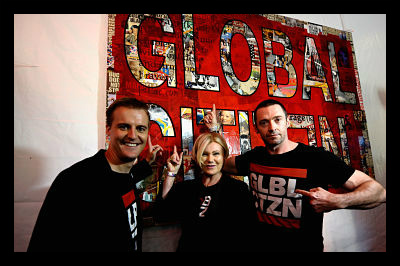
Actor Hugh Jackman, best known for his role as “Wolverine” Marvel’s X-Men series, recently released a video urging others to help end global poverty through the platform Global Citizen and through the initiative of the Global Poverty Project.  “The world has the resources, the policy leaders have the ideas, the question is, do we as global citizens have the will?” asks Jackman in the new video.

This is not the first video Jackman has made regarding the issue of global poverty. In 2013, globalcitizen.org released an impactful video where Jackman explains the organization’s “Live Below the Line” fundraiser. Four thousand people took part in the fundraiser by living below the poverty line, or surviving off of two dollars a day for five days. Their efforts raised $440,000 toward ending extreme poverty. “Lines can’t help it, they separate things. But we can also be the ones who color outside those lines. We can voyage out to cross over lines for the sake of each other and for the planet,” explains Jackman.

Now, Jackman is focusing on the positive: global poverty has been cut in half in the past 20 years. Poverty now has the potential to be completely eliminated by 2030. This year is crucial as world leaders will be making important decisions regarding the future of extreme poverty. Global Citizen remarks that the year 2015 could be a “turning point.”

Global Citizen launched in 2012 and quickly gained the support of many celebrities, including rapper Jay-Z, actress Katie Holmes and singer Carrie Underwood. Every year, Global Citizen hosts a festival attended by many celebrities. In order to win the opportunity to attend, steps toward ending poverty must be taken, such as signing online petitions.

“I am thrilled to be a part of this year’s Global Citizen Festival to further the movement to end extreme poverty,” Jackman was quoted as saying at last year’s festival, which was held in Central Park. “This is a cause that has been close to my heart for many years, and I look forward to joining 60,000 Global Citizens in Central Park as we change the world for the better.”

Jackman’s dedication to the cause is admirable, and chances are this is not the last call-to-action we will see from him.

– Melissa Binns

Sources: Global Citizen, Huffington Post, People
Photo: Zimbio

May 11, 2015
https://borgenproject.org/wp-content/uploads/borgen-project-logo.svg 0 0 Borgen Project https://borgenproject.org/wp-content/uploads/borgen-project-logo.svg Borgen Project2015-05-11 12:00:132024-06-05 01:58:29Hugh Jackman Releases Video for Global Citizen
Advocacy, Global Poverty

Advocacy 101

Advocacy
Advocacy is an effective tool for social change. Advocacy is the act of holding elected officials accountable for their action or inaction. Advocacy has many forms, including letter-writing, calling or e-mailing elected officials, call-in days, social media campaigns, direct lobbying and many others.

Who should advocate? The answer is anyone and everyone! When one engages in advocacy, he or she is attempting to convey a message he or she feels strongly about with the purpose of encouraging action from the official. Elected officials are more likely to take action when there is pressure, specifically from their constituents.

From global poverty to education, there are numerous ways to advocate one’s message. Advocating in person, or in groups, is extremely effective. This can be done through lobbying Congress and elected officials, administrators, policymakers or any other positions of power. One is able to advocate individually and remotely by sending emails, making calls to officials or sending letters. Ad-hoc situations of advocacy are very diverse and are often resurrected around a specific issue or cause.

Ad-hoc advocacy has infinite room for creativity and can be enacted through art installations, social media/photo campaigns, call-in days and a multitude of other options.

For best results, focus on one issue at a time. Be able to deliver the message in a succinct fashion, as people like short summaries for big pictures. While being specific, be sure to include personal experiences and why it is important to you. This is a great way to be remembered by the people (or person) you are lobbying. Beware of your audience while you are speaking from your heart, as you want to stay relatable while not appearing cliche.

To be an effective advocate, one ought to take advantage of technology, embrace available resources and personal skills, and most importantly, immerse oneself. Know the cause inside and out, therefore acting as a resource to others while being able to eloquently spread your passion! When delivering the message, be sure to identify yourself, explain why you are the best spokesperson for the issue and be prepared for questions.

The final step of advocacy is follow up, follow up, follow up! Persuade others to support the causes you support.

There are many issues one can advocate for; however, the most important factor is to advocate for something one is extremely passionate about.

At The Borgen Project, we are most passionate about global development and poverty alleviation. According to The Borgen Project, “Congressional staffers keep a tally of every issue that voters call, write and email the leader about. This information goes into a weekly report that is viewed by the Congressional leader. Your one email will get the issue or bill on the leader’s radar.”

To call or email Congressional leaders regarding issues of global poverty, check out https://borgenproject.org/get-involved-in-the-cause/.

“If you believe in great things, you may be able to make other people believe in them, too.”    – Oliver Wendell Holmes.

– Neti Gupta

Sources: Bonner Network, TIME, Delaware Division of the Arts
Photo: Flickr

May 5, 2015
https://borgenproject.org/wp-content/uploads/borgen-project-logo.svg 0 0 Borgen Project https://borgenproject.org/wp-content/uploads/borgen-project-logo.svg Borgen Project2015-05-05 04:00:462020-07-22 09:41:21Advocacy 101
Advocacy, Global Poverty, Nonprofit Organizations and NGOs

World Renew Tackles Global Poverty

From Asia to Uganda, World Renew, formerly known as The Christian Reformed World Relief Committee, is addressing the problems facing the most impoverished of communities all over the world. The name-change came in 2012 after the organization felt that that the work being done was growing larger and more significant. “The name better reflects who we are and what we are about as a trusted, established non-profit that is working to help eradicate the root causes of extreme global poverty through the renewal of relationships with God, neighbor, and the environment,” says World Renew’s Canadian director, Ida Mutoigo.

It is estimated that World Renew works with 1.86 million people who live in poverty in 35 different countries. This organization is known for its advocacy and quick responses to disasters like the 2011 earthquake in Japan or the conflict that currently exists in Syria. World Renew is also known for aiding with the systemic problems that affect the world’s poor. By focusing on things like AIDS, agriculture, literacy, health, the environment, sanitation and gender equality, the organization helps communities develop and thrive.

There are also unique programs where one can sponsor a refugee or “Free A Family,” where the charity works with a specific family with the help of a contributor’s donations and periodically gives the contributor updates on the family throughout the year. This program intends to provide a family with “nutritious food, clean water, improved health, and increased income.” Another interesting way World Renew helps is by providing materials for someone to throw his or her own “National Baby Shower,” an event where attendees can learn about child and maternal health.

World Renew also encourages individuals to create a campaign of their own by coming up with a “Passion Project.” In addition, there are 24 individual blogs on the World Renew website where volunteers focus posts updates on a specific country.

World Renew’s dedication to advocacy, disaster relief and community development has made change throughout the world. “Sometimes that change is as small as a baby chick, and sometimes it’s as big as community-wide peace-building and reconciliation between ethnic or religious groups,” says World Renew. Either way, its efforts have impacted the global poverty cause.

– Melissa Binns

Sources: Give.org,  The Rapidian, World Renew

March 25, 2015
https://borgenproject.org/wp-content/uploads/borgen-project-logo.svg 0 0 Borgen Project https://borgenproject.org/wp-content/uploads/borgen-project-logo.svg Borgen Project2015-03-25 08:00:192016-03-03 20:55:54World Renew Tackles Global Poverty
Advocacy, Education, Global Poverty

Top 4 Reasons Education in Bolivia Lags

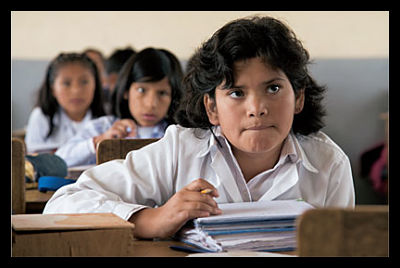
education in boliviaEducation in Bolivia appears to be lacking: one in every seven children in Bolivia does not complete primary school, and the majority of Bolivians never go on to secondary school. In fact, over one million Bolivians over the age of 15 are illiterate. This lack of education contributes to the overall poverty Bolivians face. What factors are contributing to this lack of education? Here are the top four:

    1. Classes are mainly taught in Spanish, but some children learned to speak Quechua and Aymara at home. Many children, especially those from rural areas, cannot understand what is being taught. Being taught a second language in school is also not typical. It is easy to see why kids would become discouraged and decide to drop-out.
    2. Due to widespread poverty and not prioritizing education, schools can be very run-down with little to no proper classroom materials. While there is a lack of resources in Bolivia in general, schools are ranked at the bottom when it comes to addressing the country’s needs.
    3. The poverty in Bolivia also affects the teachers—they often go on strike to protest for higher wages and other related issues. This leaves children without teachers for sometimes days or even weeks at a time.
    4. The primary reason for a child not being in school and the shrinking literacy rate in Bolivia is poverty. Children in urban areas are able to go to school on average for 9.4 years, while those in rural locations only make it on average for 4.2 years. Many children have to work and help support their impoverished family rather than go to school.

Some changes to education in Bolivia have been made, however, with the help of nonprofits. Many organizations have helped provide classrooms and classroom materials in decent condition. One organization, the Foundation for Sustainable Development, helps provide training, tutoring, childcare and workshops to assist Bolivians with their educational needs. When given support and better learning conditions, children typically stay in school and even begin to learn at higher levels than their peers who are not given that support.

If their educational needs are met, they are more likely to succeed. Bolivian children should receive the education they need to thrive.

– Melissa Binns

Sources: Bolivia Bella, Foundation for Sustainable Development
Photo: Netpublikationer

February 26, 2015
https://borgenproject.org/wp-content/uploads/borgen-project-logo.svg 0 0 Borgen Project https://borgenproject.org/wp-content/uploads/borgen-project-logo.svg Borgen Project2015-02-26 12:00:052024-06-05 01:58:22Top 4 Reasons Education in Bolivia Lags
Advocacy, Education, Extreme Poverty

Alleviating Poverty in Calcutta, India

poverty in calcutta
Calcutta is a region that is rich with history, culture and destitution. Calcutta was the former capital of British India, and is one of India’s largest cities and ports, for it is located on the east bank of the Hugli River. Calcutta proves to be the dominant urban center of Eastern India, as it acts as a point of commerce, transport and manufacture. The city holds a diverse range of people, as multiple Hindus, Muslims, Christians, Sikhs, Jains and Buddhists resides in this city.

Languages spoken In Calcutta range from Bengali, Urdu and Oriya to Tamil and Punjabi. Due to the wide range of people and activities, the population density is extremely high with over 4.5 million people, thus overcrowding is an immediate issue. The conflict in Bangladesh during the 1970s has also contributed to refugee colonies in the northern and southern suburbs. Migrants from less urban areas have migrated to Calcutta in search of employment as well, as it is a major export center for tea, petroleum, jute, coal, iron and manganese. Unfortunately, poverty in Calcutta is a huge problem and severe unemployment has been an issue since the early 1950s.

Calcutta has a housing shortage, and approximately one-third of the city’s population lives in poverty-ridden neighborhoods composed of a collection of huts standing on a plot of land that is at least one-sixth of an acre. These dwellings are often not ventilated, single-story rooms with few sanitary facilities, and very little open space.

India is growing into a substantial open-market economy; however, the economy includes a wide range of modern industries and services, including village farming, modern agriculture and handicrafts. The economic downturn in 2011 affected poverty significantly, and the inflation and high interest rates have yet to be alleviated. Furthermore, problems such as corruption, environmental degradation, overpopulation and increasing economic development contribute to the perpetuation of poverty while decreasing the capacity of the government to significantly alleviate any one problem.

According to USAID, “One-third of its population still lives on less than $1.25 per day. Projected to become the world’s most populous country by 2030, India faces tremendous energy, education, health, water and sanitation challenges. India is an important U.S. partner in maintaining regional stability, deepening trade ties and addressing development challenges in India and globally.”

The impact of overcrowding, displacement by natural disasters and lack of sustainable urban policies contribute to the marginalization of Calcutta’s poor; there is simply a lack of means for the homeless to progress and gain material wealth.

The importance of education and farmer organizations is critical for the alleviation of poverty in Calcutta.

– Neti Gupta

Sources: Encyclopedia Brittanica, News Action, USAID
Photo: Steve McCurry

February 22, 2015
https://borgenproject.org/wp-content/uploads/borgen-project-logo.svg 0 0 Borgen Project https://borgenproject.org/wp-content/uploads/borgen-project-logo.svg Borgen Project2015-02-22 11:00:082024-12-13 17:51:20Alleviating Poverty in Calcutta, India
Advocacy, Education

DREDF: People with Disabilities Serving Each Other

DREDF
People with disabilities make up one of the largest minorities in the U.S. with 75 percent who are unemployed and more than 25 percent living in poverty.

However, some social and economic challenges the disabled face are not the consequence of physical limitations but are the result of a lack of accessibility provided by public policy. One leading national civil rights law and policy center is trying to change this by advancing the civil rights of people with disabilities through legal advocacy, training, education, public policy and legislative development. The Disability Rights Education and Defense Fund, or DREDF, has worked toward advocating for the disabled since 1979.

The DREDF is directed by people with disabilities and by those who have children with disabilities. Thus, people with disabilities are able to serve and be served in the areas that fall under their expertise, as these are issues they face everyday. They work with the core principles of equality of opportunity, disability accommodation, accessibility and inclusion to fulfill their mission and vision of a just world where all people can live full and independent lives free of discrimination.

They do this by employing the following strategies:

1.  Training and Education

  • DREDF staff trains and educates people with disabilities and parents of children with disabilities about their rights under state and federal disability rights laws so that they can use the laws as tools to challenge exclusion.
  • The DREDF educates lawyers, service providers, government officials and others about disability civil rights laws and policies.
  • Through a legal clinic in the San Francisco Bay Area, DREDF has operated a disability rights legal clinic in collaboration with law schools for over 15 years.

2.  Legal Advocacy

  • DREDF lawyers represent clients in leading edge disability rights litigation.
  • DREDF serves as co-counsel and prepares briefs on behalf of parties that include disability community representatives and members of Congress in disability rights cases heard by the U.S. Supreme Court.
  • DREDF advocates for the legal rights of all people.

3.   Public Policy and Legislative Development

  • DREDF advocates design and implement strategies that strengthen public policy and lead to the enactment of federal and state laws protecting and advancing civil rights for people with disabilities, such as the Handicapped Children’s Protect Action.

The DREDF also runs an ongoing campaign for healthcare justice for people with disabilities called Healthcare Stories, which is a video advocacy tool that tells the stories of real people with disabilities facing healthcare disparities.

– Chelsee Yee

Sources: DREDF, USICD, Law Help CA,
Photo: Google+

January 29, 2015
https://borgenproject.org/wp-content/uploads/borgen-project-logo.svg 0 0 Borgen Project https://borgenproject.org/wp-content/uploads/borgen-project-logo.svg Borgen Project2015-01-29 16:00:512024-12-13 17:51:18DREDF: People with Disabilities Serving Each Other
Activism, Advocacy

SID: Promoting Policy Dialogue

SID
At the forefront of shaping the theory and practice of development, the Society for International Development (SID) challenges existing practices and suggests alternative approaches to three notable themes— environment, women in development and the concept of human development.

SID is a global network of individuals and institutions that are concerned with development, believing it is participative, pluralistic and sustainable.

Founded in Washington D.C. in 1957 and based in Rome since 1978, SID is a policy-oriented organization that focuses on advocacy and service-delivery actions but plays a unique role that sets their society apart from the rest. What differentiates SID from other development organizations is that the organization builds on multi-disciplinary dialogues, future-minded thinking and scenarios-based and holistic policy planning. Three core actions truly distinguish SID from any other organization: knowledge building through research, facilitating dialogue and catalyzing policy change.

According to the SID website, “since its inception in 1957, SID has always acted as a unique global space for honest dialogue and effective interconnected nature among diverse actors at community, national and international level.” The Society’s broadly-stated vision and mission has remained unchanged and generally, SID’s activities will aim to, “contribute to building consensus for the need for a new convivencia (or coexistence) by supporting initiatives that generate new visions for society, leadership and political will; Encourage and facilitate dialogue between diversities through knowledge based activities; [and] facilitate knowledge generation, sharing and dissemination.”

SID’s website further states that the organization is “recognized as a pertinent, innovative and future oriented institution that fosters learning, innovation and constructive dialogue; one that nudges institutional boundaries and enlarges the spaces for exchange and exploration in the search for social justice and development that is just, equitable and sustainable.”

Today, SID has more than 3,000 members in 80 countries and more than 45 chapters worldwide. SID works with more than 100 local and international associations, networks and institutions involving parliamentarians, academics, students, political leaders and development experts. This society has a holistic, multi-disciplinary and multi-sectoral approach to development.

– Eastin Shipman

Sources: Society for International Development 1, Society for International Development 2, Society for International Development 3, Society for International Development 4, Society for International Development 5 SIDW
Photo: Facebook

January 18, 2015
https://borgenproject.org/wp-content/uploads/borgen-project-logo.svg 0 0 Borgen Project https://borgenproject.org/wp-content/uploads/borgen-project-logo.svg Borgen Project2015-01-18 08:00:132024-12-13 17:51:18SID: Promoting Policy Dialogue
Advocacy, Education

Andela Pays Nigerians To Learn Computer Programming

Andela
For many, working from home is the ultimate luxury, especially when living in a big city where bumper-to-bumper traffic stretches for miles.

This is always the case for New York City, which recently ranked fifth in Forbes’ “10 U.S. Cities With The Worst Gridlock.” But there is one company that’s paying the work-from-home luxury all the way to Nigeria.

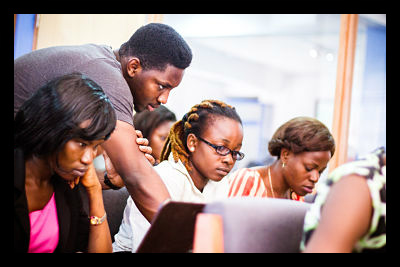
Andela is the global talent accelerator that allows people in Africa to work locally and reach globally. They find the brightest people to provide training and mentorship needed to thrive as full-time, remote developers for companies across the world. Though the company also has offices in the U.S., what distinguishes it from others is its global outreach mission to provide people in Africa an opening to the digital economy and give companies access to untapped talent.

For example, Nigerians are getting paid to learn programming skills before putting them to work on projects that serve businesses back in the States. Chibuzor Obiora is one of those people who at first thought it was too good to be true when he discovered the opportunity on Twitter.

“I was always interested in learning [to code] because of the problem-solving aspect of it,” he told Wired Magazine, “and here was a firm that promised to pay you to learn.”

Even with the increase in competition to gain technical skills such as programming, companies around the world are still struggling to find software developers to meet the demand. Thus, Andela aims to bring out the pool of talent found in other countries that are not known to be tech-hubs like Silicon Valley. This not only includes Nigeria but other countries in Africa.

“We know that brilliance is relatively evenly distributed across the human population,” says Andela co-founder Jeremy Johnson. “In terms of pure aptitude, there are genius level people across the world. But what there’s not is equal opportunity.”

So how exactly do they choose “genius level people” across the world?

Using rigorous, online aptitude tests, Andela gauges reasoning and logic skills followed by a two-week-long screening process that interviews the top 10 percent to access their “soft skills,” such as interpersonal communication.

Those who pass this phase go on to a several-month training program, but not many make it this far due to highly selective nature of the program. Less than one percent of applicants are selected to become Andela developers, which is 10 times more selective than Harvard University, for example.

What comes next for those accepted is access to educational resources that are hard to come by in Nigeria. For example, one student, Tolulope Komolafe, had learned how to “code” from what the teacher wrote on a chalkboard and realized during her first two weeks of training at Andela that her university computer science courses did not involve actual programming.

Students are eligible to work as web developers for Andela’s clients once they finish at least 1,000 hours of training. However, that’s not to say that the learning stops there. According to Johnson, most students will spend about two-thirds of their time working for clients and the rest on education. Work averages around 60 hours a week for both students and staff.

“It’s very similar to the way that guilds worked in the middle ages,” Johnson tells Wired. “You get paid a small amount as an apprentice, then you work as a journeyman with lots of other craftspeople, and eventually become a master.”

Today, U.S. tech companies continue their struggle to find programming talent that meets the demands of selective hiring practices and qualifications. As result, companies like Andela are left with a window to provide a new wave of services that can work globally.

– Chelsee Yee

Sources: Andela, Wired, Forbes
Photo: Wired Magazine

January 16, 2015
https://borgenproject.org/wp-content/uploads/borgen-project-logo.svg 0 0 Borgen Project https://borgenproject.org/wp-content/uploads/borgen-project-logo.svg Borgen Project2015-01-16 08:00:262024-12-13 17:51:18Andela Pays Nigerians To Learn Computer Programming
Advocacy, Nonprofit Organizations and NGOs

FXB Village and a Holistic Approach to Poverty Reduction

2014 marks the 25th anniversary of FXB Village, an innovative international NGO with a holistic approach to poverty reduction.

FXB Village provides sustained assistance to 80 to 100 families in impoverished locales for a three-year period. During this period, FXB Village provides families with training in a diverse range of fields, from healthcare to business. FXB’s goal is for families to be self-sufficient after the three years; according to FXB Village founder Albina du Boisrouvray, the NGO boasts an 86 percent rate in meeting this goal.

The case of Nite, a Ugandan widow, illustrates just how effective the FXB Village approach can be on the ground. According to du Boisrouvray, Nite was first enrolled in the program in 1994; FXB Village provided her with a cow, and school supplies for her 11 children.

FXB Village’s relatively small material investment went a long way in pulling Nite’s family out of poverty and into self-sufficiency. “After 10 years she had three cows, two pigs and some chickens, as well as land on which she was growing pineapples and coffee and a plot that she used to build a house for her eldest son. This had provided enough income to put all her children through school, two of whom went on to university, and one who got a job abroad,” said du Boisrouvray. Nite is just one of the 75,000 people that Du Boisrouvray says FXB Village has pulled out of poverty since its founding in 1989.

Du Boisrouvray, a French countess, founded FXB Village after her son Francois-Xavier Bagnoud- a search and rescue helicopter pilot- died in a helicopter accident in Mali. “When François died in 1986, I wanted to continue doing what he was passionate about: helping others,” she said. Du Boisrouvray sold off her jewels, artwork and real estate to fund the village-based program, which she believes can be a teaching tool for other NGO’s.

Said du Boisrouvray, “We help families in a way that they understand that participation is the key to eradicate poverty; they have to bring their will. It’s not just a one-way thing, it’s a participating activity hand in hand.” Du Boisrouvray has announced that she will release details of the FXB Village initiative in 2015, so that other NGO’s can draw information and inspiration from the FXB approach.

– Parker Carroll

Sources: IB Times 1, IB Times 2, Today
Photo: Flickr

January 3, 2015
https://borgenproject.org/wp-content/uploads/borgen-project-logo.svg 0 0 Borgen Project https://borgenproject.org/wp-content/uploads/borgen-project-logo.svg Borgen Project2015-01-03 04:00:272024-05-27 09:23:08FXB Village and a Holistic Approach to Poverty Reduction
Page 48 of 77«‹4647484950›»

Get Smarter

  • Global Poverty 101
  • Global Poverty… The Good News
  • Global Poverty & U.S. Jobs
  • Global Poverty and National Security
  • Innovative Solutions to Poverty
  • Global Poverty & Aid FAQ’s
Search Search

Take Action

  • Call Congress
  • Email Congress
  • Donate
  • 30 Ways to Help
  • Volunteer Ops
  • Internships
  • Courses & Certificates
  • The Podcast
Borgen Project

“The Borgen Project is an incredible nonprofit organization that is addressing poverty and hunger and working towards ending them.”

-The Huffington Post

Inside The Borgen Project

  • Contact
  • About
  • Financials
  • President
  • Board of Directors
  • Board of Advisors

International Links

  • UK Email Parliament
  • UK Donate
  • Canada Email Parliament

Get Smarter

  • Global Poverty 101
  • Global Poverty… The Good News
  • Global Poverty & U.S. Jobs
  • Global Poverty and National Security
  • Innovative Solutions to Poverty
  • Global Poverty & Aid FAQ’s

Ways to Help

  • Call Congress
  • Email Congress
  • Donate
  • 30 Ways to Help
  • Volunteer Ops
  • Internships
  • Courses & Certificates
  • The Podcast
Scroll to top Scroll to top Scroll to top