• Link to X
  • Link to Facebook
  • Link to Instagram
  • Link to TikTok
  • Link to Youtube
  • About
    • About Us
      • President
      • Board of Directors
      • Board of Advisors
      • Financials
      • Our Methodology
      • Success Tracker
      • Contact
  • Act Now
    • 30 Ways to Help
      • Email Congress
      • Call Congress
      • Volunteer
      • Courses & Certificates
      • Be a Donor
    • Internships
      • In-Office Internships
      • Remote Internships
    • Legislation
      • Politics 101
  • The Blog
  • The Podcast
  • Magazine
  • Donate
  • Click to open the search input field Click to open the search input field Search
  • Menu Menu

Archive for category: Advocacy

Information and news on advocacy.

Advocacy, Education

Congress’s Newest International Basic Education Caucus

International_Basic_Education_Caucus
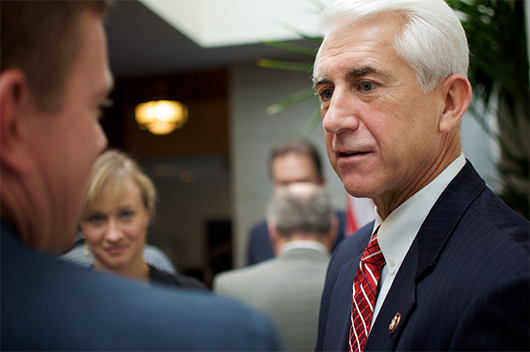
Last week, Representative Dave Reichert (R-WA) and Representative Mike Quigley (D-IL) officially launched the newest caucus in Congress: the bipartisan International Basic Education Caucus.

These two members came together across party lines to encourage a commitment from both Republicans and Democrats in support of basic-quality education around the world. The caucus, officially launched on June 24, 2015, is encouraged and supported by several partner organizations, including the Global Campaign for Education (GCE-US), RESULTS and the Basic Education Coalition. It aims to promote understanding in the 114th Congress of the many global issues associated with inadequate primary education in developing countries — including increasing economic and security issues in the United States. The caucus is intended to encourage its members — and Congress at large — to think of universal education not just as an altruistic good, but as a critical strategic advantage for the United States.

With over 121 million children and adolescents out of school around the world, U.S. funding for international education in developing nations has become increasingly important. Education is the key to breaking the cycle of poverty in these nations. The caucus will not only promote understanding of the types of challenges that arise from a lack of quality, universal education, but will also encourage bipartisan legislation to address these challenges.

One such piece of legislation is the Education For All Act, which has been introduced in previous sessions of Congress, most recently in 2013 by Congresswoman Nita Lowey (D-NY) and Congressman Reichert (R-WA). The bill, which had 76 cosponsors in the House and the Senate, was intended to amend the Foreign Assistance Act of 1961, to include further assistance for developing nations in order to promote universal primary education around the world. It simultaneously strengthened the U.S.’s commitment to global education and supported the means by which developing societies could become sustainable and independent. Though the bill did not pass when introduced, it is possible that the new caucus will bring about increased support for similar pieces of legislation in coming sessions.

While there are numerous congressional caucuses that do very little, there appears to be a reason to be optimistic when considering the future of the International Basic Education Caucus. The caucus will take part in numerous activities, including sponsored briefs on basic education issues, congressional receptions in coordination with partner organizations and letters to the presidential administration and to various world leaders. Such activities are intended to help increase support in Congress for basic international education programs, improve understanding of the seriousness of global education issues among world leaders and establish the means with which to respond to attacks on education, such as recent attacks on schools by Boko Haram in Nigeria or by the Taliban in Pakistan.

Representative Reichert commented upon the caucus’s launch, saying, “If we are going to spread freedom, promote economic growth, enhance stability and security and alleviate poverty around the world, the best way to do that is by first ensuring every young child […] has access to basic education.”

An innovative and historic effort, the bipartisan International Basic Education Caucus has the potential to make a real impact in developing nations and the world at large.

– Melissa Pavlik

Sources: Basic Education Coalition, Congressman Mike Quigley, National Education Association
Photo: Flickr


August 18, 2015
https://borgenproject.org/wp-content/uploads/borgen-project-logo.svg 0 0 Borgen Project https://borgenproject.org/wp-content/uploads/borgen-project-logo.svg Borgen Project2015-08-18 08:21:572024-05-27 09:25:45Congress’s Newest International Basic Education Caucus
Advocacy, Global Poverty, Human Rights, Human Trafficking

Stars Sign Open Letter to Amnesty International

Amnesty_International
More than 400 human rights advocates, including actors, directors, fashion designers and many more, signed an open letter to Amnesty International asking the organization to vote against the decriminalization of the sex industry.

The proposed policy that these advocates are referring to backs the legalization of brothels and pimping. The policy asks for the support of all acts of selling sex to be lawful, but for sex buying to remain illegal.

After learning about Amnesty International’s intention, hundreds of noticeable individuals joined an international public campaign. The campaigners urged the organization to re-evaluate their plans and to stand with those who are oppressed in the sex trade.

The letter declares that advocates agree that those who are prostituted must not be outlawed by law enforcement and that the legalization of selling sex contributes to poverty, homelessness, sexual abuse and discrimination.

Many young children who are forced into the sex trade will not earn an education and will likely contract sexually transmitted diseases. Without healthy and educated citizens, a developing area cannot improve economically.

The cycle of poverty continues because poverty contributes to the sex trade. According to Medical News Today, many families in impoverished areas sell their children into the trade. Sometimes, children and young adults will seek out the trade to earn wages for food and shelter.

Former Irish prostitute Mia de Faoite said that the policy proposal advocating these means of earnings is absolutely unacceptable.

“I can find no justification for those crimes, and I believe that no one is able to justify such human wickedness,” de Faoite said.

She also said this policy move contradicts the organization’s ideals for human rights.
“Amnesty would agree with me, I am sure, and would fight alongside me to find justice, if I asked,” de Faoite said. “This is confusing to me, and it makes no sense because, on the other hand, they are prepared to sanction the behavior that led to this crime.”

A Change.org petition that petitions a “non-profit industrial complex” by Amnesty International agrees with de Faoite. The petition states that with this new policy, the organization will ultimately be harming those who Amnesty International claims to help.

“With this proposal, Amnesty International is moving away from human rights advocacy,” the petition said.

About 500 members of the international human rights organization will meet in Ireland for Amnesty’s 32nd International Council Meeting, where they are projected to approve the decriminalization of sex work. The vicious cycle of poverty will be promoted by Amnesty International’s proposal if there is not a change similar to the one proposed in the open letter.

The letter was signed by celebrities such as author Hannah Pakula, poet Rose Styron, actress Meryl Streep, Pulitzer-Prize winning journalist Anna Quindlen, chef Alice Waters and 2008 Amnesty International Human Rights Award-winner, Lydia Cacho. Other celebrity signers include Emily Blunt, Lena Dunham, Anne Hathaway, Lisa Kudrow, Kate Winslet and Emma Thompson.

This level of support for the change has helped achieve such a grand presence in human rights that there is now a campaign on Change.org for the modification. The letter is still open for more signatures.

To sign the letter and learn more about Amnesty International’s policy, click here.

– Fallon Lineberger

Sources: Change.org, Look to the Stars, Medical News Today, Independent News Ireland
Photo: Vanity Fair

August 15, 2015
https://borgenproject.org/wp-content/uploads/borgen-project-logo.svg 0 0 Borgen Project https://borgenproject.org/wp-content/uploads/borgen-project-logo.svg Borgen Project2015-08-15 01:30:162020-03-27 13:23:30Stars Sign Open Letter to Amnesty International
Advocacy, Global Poverty, Nonprofit Organizations and NGOs, United Nations

U.N. Accredits “Freedom Now” NGO

z1 Borgen Project
The United Nations recently accredited the nonprofit, Freedom Now, as an official Non-Governmental Organization, when only one month before, its application had been denied.

Freedom Now is an American nonprofit organization that works to help free those who have been imprisoned as a result of discrimination based on sex, race, gender and other criteria. This is an advocacy group, which not only provides legal advocacy to clients but also advocates in the public sphere to raise awareness of illegal detentions taking place around the world.

In the original vote, the application was denied by a United Nations committee, arguably because this organization seeks to undermine the country’s own system. One example of a country voting against Freedom Now to further its own agenda is China, which has a history of imprisoning people who disagree with the government. Currently, Freedom Now has a campaign to free a Chinese Nobel Peace Laureate Liu Xiaobo, who is currently serving an 11-year sentence that began in 2009 for “undermining the state authorities,” according to the Nobel Prize website.

While some countries like China and Russia strongly opposed the accreditation, the United States made the final accreditation possible. Following the rejection, the issue was brought to the U.N.’s Economic and Social Council, or ECOSOC, which had the power to vote again on July 20.

With its NGO status, Freedom Now can continue to grow its work as a nonprofit helping those imprisoned based on their identity, but this process has also sparked controversy in the international political sphere. Now, perhaps the United Nations will seek to reform its accreditation system, in which countries that have not always met the UN’s human rights standards are still part of the forces deciding whether or not to give an organization a title of “U.N. NGO.” Freedom Now is teaching us about illegal detentions, but this situation has helped bring public attention to the corruption that allows these detentions to take place.

– Rachelle Kredentser

Sources: India Times, Freedom Now, Nobel Prize, New York Times

August 15, 2015
https://borgenproject.org/wp-content/uploads/borgen-project-logo.svg 0 0 Borgen Project https://borgenproject.org/wp-content/uploads/borgen-project-logo.svg Borgen Project2015-08-15 01:30:072024-05-27 09:27:14U.N. Accredits “Freedom Now” NGO
Activism, Advocacy, Aid Effectiveness & Reform, Global Poverty, United Nations

Action/2015 Progress by Month

action_2015
For Action/2015, “This is our year.” The coalition of more than 1,950 organizations worldwide is carving a brighter future in order to make 2015 the year of action and change. The agenda includes tackling climate change, poverty, and inequality, and so far, Action/2015 made substantial progress through key campaigning and advocacy events.

January
Action/2015 launch:
On January 15, 2015, Action/2015 launched campaigns all over the world from Mali, Mexico, Senegal, Sri Lanka, Uganda, and the UK to name a few. Twitter helped spread #Action2015 to millions of people.

March
International Women’s Day:
On March 8, 2015, the coalition held street marches and rallies around the work in support of women’s rights. They could be spotted from the UK, Nicaragua, Spain, Ecuador, New York City, Bangladesh, Spain, and South Africa.

April
Global Citizen 2015 Earth Day:
The coalition mobilized its campaign via Twitter, Instagram, and Facebook, in order to address the annual spring meeting of the World Bank held in Washington D.C. #Hero, addressed the world’s Finance Ministers to fund poverty reduction projects such as the Sustainable Development Goals and Climate Goals.

May
Throughout the month, Action/2015 campaigned to pressure world leaders attending the Post-2015 Sustainable Development Goal Summit in September and the COP21 climate negotiations in December. More than 22 million advocates in 150 countries held events to call for change. In Kenya, the President responsively agreed to a 12 percent pay increase for workers.

May’s Days of Actions guided support through various themes of change. May 1 was Yes to Labour Rights, No to Social Exclusion Day, and May 13 was Poverty is Sexist Day. Among more, these days calling for global action complemented other events like Citizen Heartings, community sports days, caravans, and concerts.

June
The G7 Summit was held on June 7-8 in Germany. The coalition played its part by taking to Twitter to stand #AgainstPoverty. Many participants were also a part of a free concert, United Against Poverty, also calling to the G7 leaders for greater attention to end poverty.

July
The Financing for Development was held on July 13-16 in Addis Ababa, Ethiopia. Just before the conference, 4.8 million coalition events in 150 countries rallied to demand that world leaders “meet outstanding sending commitments, fight structural injustices of unfair tax, and many other issues.”

August
International Youth Day unleashed #YouthPower. Sri Lanka, South Africa, Brazil, and Benin hosted marches, workshops, political meetings, flash mobs in honor of the movement. The coalition offered guidance through the options to download from their website, International Youth Day toolkits, YouthPower Workshop plans, and contact the team for direct consultation.

September
The United Nations General Assembly will take place on September 15-28. The world’s most influential leaders will meet to conclude the Millennium Development Goals and create a new set of Sustainable Development Goals. The coalition is scheduling September 24 as a Global Day of Action for global mobilization.

November-December
From November 20 to December 11, Paris will host the UN Climate Change Conference. Action/2015 advocates will join around the globe to pressure their world leaders for stronger leadership and progress in poverty reduction.

– Lin Sabones

Sources: Action/2015 1, Action/2015 2, Action/2015 3, Action/2015 4, Action/2015 5, Action/2015 6, Action/2015 7, Action/2015 8, Action/2015 9, World Bank
Photo: Restless Development

August 8, 2015
https://borgenproject.org/wp-content/uploads/borgen-project-logo.svg 0 0 Borgen Project https://borgenproject.org/wp-content/uploads/borgen-project-logo.svg Borgen Project2015-08-08 01:30:162024-05-27 09:27:18Action/2015 Progress by Month
Advocacy, Global Poverty, Hunger, Refugees and Displaced Persons

Jessica Watson Visits Syrian Refugees

Syrian_Refugees
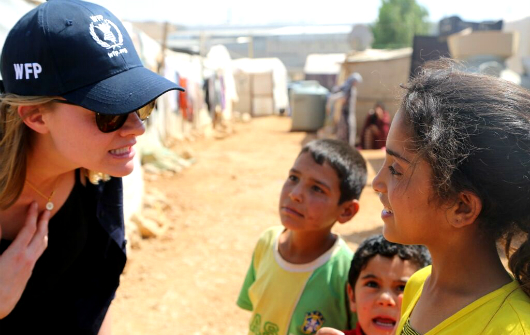
Jessica Watson would like to see children around the world pursue their dreams. In order for that to happen, she must first tackle world hunger.

The 22-year-old is a Youth Ambassador for the United Nations World Food Programme (WFP). Hailing from Queensland, Australia and awarded Young Australian of the Year in 2011, Watson is the youngest person to ever sail around the world solo and unassisted, having completed the global voyage when she was 16 years old.

Watson’s most recent expedition, however, brought her to Lebanon and Jordan, where she visited Syrian refugees. Her “Sail with WFP” initiative recognizes the intimidating journey made by young Syrians who have left their homes for Lebanon or Jordan. As WFP’s Youth Ambassador, Watson provided food and support for suffering families.

Founded in 1961, WFP is the largest hunger-fighting organization in the world, supplying food in times of emergency and working with communities to create sustainability. The goal of the organization is to end world hunger and eliminate global poverty. Funded by governments, companies and private individuals, WFP provides annual assistance to more than 80 million people in 75 countries.

In Lebanon, Watson sailed with five Syrian and Lebanese youths from Beirut, Lebanon’s capital, to a northern port. In Jordan, she spent time in the Azraq refugee camp. There, Watson met a single Syrian mother Manal and her eight children. She accompanied the family to the camp’s only grocery store, where refugees buy food with electronic food cards from WFP.

Earlier this year, however, WFP had to reduce refugee stipends due to a lack of funding. As a result, the refugee program is 81 percent underfunded and many Syrian families are struggling to stay alive. The organization requires $138 million to continue helping refugees in Jordan, Lebanon, Egypt, Turkey and Iraq through September.

Watson also visited a Save the Children International youth center in Amman, Jordan’s capital, and hopes her journey will bring attention to the hardships faced by the Syrian people. A WFP Youth Ambassador since her young global voyage, Watson sails towards a new, hunger-free future.

– Sarah Sheppard

Sources: WFP 1, WFP 2, WFP 3
Photo: News Pronto

August 8, 2015
https://borgenproject.org/wp-content/uploads/borgen-project-logo.svg 0 0 Borgen Project https://borgenproject.org/wp-content/uploads/borgen-project-logo.svg Borgen Project2015-08-08 01:30:072024-05-26 23:05:29Jessica Watson Visits Syrian Refugees
Advocacy, Global Poverty, Human Rights, Human Trafficking

The Modern Slavery Act and What It Means

modern_slavery_act
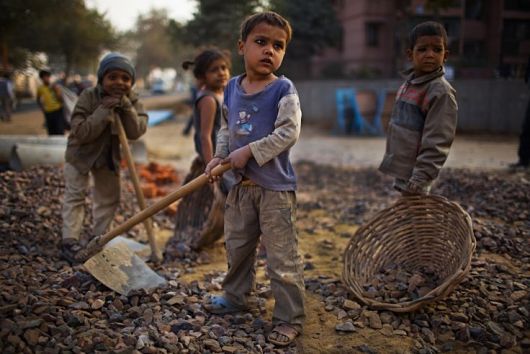
There are more slaves in the world now than any other period of time in human history. These slaves range from young children captured by warlords to do their bidding, to men and women captured to be used as sex slaves. For many years these individuals have been forced to live hidden lives, ashamed of past actions and often worried of facing prosecution for actions carried out while they were enslaved. The United Kingdom has taken the first step of providing solace to these victims with the passing of the Modern Slavery Act of 2015.

The United Kingdom is estimated to house between 10,000 to 13,000 slaves working as prostitutes, servants and workers who live on meager or no wages. These individuals live in constant fear of the traffickers who brought them to the UK and have witnessed atrocities beyond what most have endured. For several years, the laws have been unclear as to how to handle victims of trafficking and this has led to arrests and harsh treatments of several victims rather than their traffickers.

The Modern Slavery Act will effectively protect trafficking victims and prosecute perpetrators.

As the main supporter of the bill, Home Secretary Theresa May said, “This landmark legislation sends the strongest possible signal to criminals that if you are involved in this vile trade you will be arrested, you will be prosecuted and you will be locked up. And it says to victims, you are not alone – we are here to help you.”

This bill proposes increasing traffickers’ jail time from the current 14 years to a lifetime sentence instead. It also provides trafficked workers with overseas domestic work visas, protection and counseling for anything that might have occurred while they were enslaved. While legislation and increased presence from law enforcement may only be the start, it is a step in the right direction. The UK has become the first country to make strict laws and regulations regarding trafficking; for years, traffickers have been using loopholes in the system in order to keep their businesses alive.

Most of the people who are trafficked into the system come from poor families in developing nations who are in desperate need of money. Traffickers promise individuals jobs in outside countries that would allow them to support their families, and while they may get jobs none of the money they earn goes back to their families. If people instead were promised education in local areas, if they no longer had to worry about being stolen away in the night, imagine the innovation that would come with that peace of mind.

While there are a few issues with the bill, time and experience will determine if the bill will be successful.

The developing world needs all the help it can get in order to succeed in becoming a competitor in the global market. This act allows people to stay in their home countries, get the counseling and education they need in order to prosper and ensures that traffickers will be prosecuted to the best of the ability of the law.

– Sumita Tellakat

Sources: Gov.UK, BBC
Photo: IB Times

August 7, 2015
https://borgenproject.org/wp-content/uploads/borgen-project-logo.svg 0 0 Borgen Project https://borgenproject.org/wp-content/uploads/borgen-project-logo.svg Borgen Project2015-08-07 01:30:252020-02-28 08:39:58The Modern Slavery Act and What It Means
Advocacy, Children, Developing Countries, Education, Gender Equality, Global Poverty

Harry Styles Speaks In Video About Education

Harry_Styles

On July 27, Harry Styles of One Direction spoke in a video sanctioned by his campaign, action/1D, about his views on global education and those who deserve a better quality of life.

“I want to live in a world where every child can go to school,” Styles said at the beginning of the video.

Styles, along with bandmates Louis Tomlinson, Liam Payne and Niall Horan, recently launched the action/1D campaign to inspire fans and promote awareness for global education, poverty, climate change, disease and inequality.

With action/1D, supporters can get involved in the campaign by posting pictures and videos that correspond to a topic related to the cause. Fans of One Direction can also catch the boys in videos where each band member will begin with the phrase: “I want to live in a world where…”

In Styles’ video, he spoke about how much he enjoyed school, and the children that he met in Ghana who dream of getting an education. These children cannot afford school, Styles said, and they spend their days working instead of learning.

“At the moment, they have to work all day every day just to earn enough to eat,” Styles said.
The “What Makes You Beautiful” singer brings light to a continuing problem.

According to UNICEF, there are almost 624,000 children not in primary school. Those who do receive an education do not learn the tools required to be successful in secondary school or professional work.

“Often, the school environment is not conducive to learning: classes are overcrowded, water and sanitation facilities are lacking and trained teachers and school books are in short supply,” UNICEF reports.

For those children with disabiliites, education is even more difficult to attain. According to the 2010 national census, 20% of children with physical disabilities are not attending school.

In addition, gender inequality does not provide for an equal amount of girls in school as boys. The national average amount of education is seven years, and in Northern Ghana, girls attend school for just three years.

“Making education available to 100 percent of people around the world is one way to ensure that poverty declines,” the article said.

Along with The Borgen Project, Styles and other members of action/1D agree that education a key to ending extreme poverty. One Direction’s campaign, which is associated with a similar organization, action/2015, seeks to create a world where education, along with health, climate change and inequality, are no longer a problem.

This year, two U.N. summits will gather some of the most influential people in the world. During each conference, these leaders will formulate plans to fix these issues.

With the help of these conferences, numerous humanitarian organizations and Styles, extreme poverty just might end; as Styles pointed out in his video, this change can begin with education.

“Going to school could literally change their lives, but for now, all they can look forward to is a life of struggle, and they deserve so much more,” he said.

Action/1D asks fans of the band to group together to make a difference. To contribute to the cause and to learn more about the campaign, visit the action/1D website.

– Fallon Lineberger

Sources: Action/1D 1, Action/1D 2, Action/2015, The Borgen Project, United States Census, Twitter, UNICEF
Photo: Sugarscape

August 6, 2015
https://borgenproject.org/wp-content/uploads/borgen-project-logo.svg 0 0 Borgen Project https://borgenproject.org/wp-content/uploads/borgen-project-logo.svg Borgen Project2015-08-06 07:45:042024-06-04 01:17:41Harry Styles Speaks In Video About Education
Advocacy, Development, Foreign Aid, Sustainable Development Goals

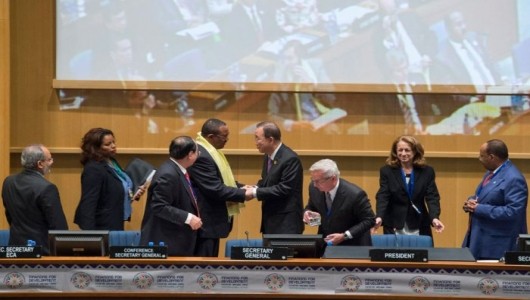
Global Financing Conference Looks to End Poverty

Global Financing Conference Looks to End Poverty - TBPOn July 15, leaders from all over the world will gather at a global financing conference in Addis Ababa, Ethiopia’s capital, to discuss major reforms and policies to make a legitimate dent in the issue of global poverty. This meeting marks the first of three summits in 2015 that aim to lock down funding for poverty programs worldwide. World Bank leader Jim Yong Kim summarized the magnitude of the summit by saying, “If we seize this moment we can accomplish the greatest achievement in human history.” The success of this and subsequent summits may finally put humanity on the correct path for eliminating poverty.

A topic of discussion at this summit will be on how to expand on the Millennium Development Goals, a set of eight target goals set in 2000 to combat poverty. These goals were set to expire after fifteen years, when a new summit would meet to establish new goals moving forward. The upcoming summit in Addis Ababa will spend time creating what will be known as the Sustainable Development Goals (SDGs).

The SDGs will be designed to reflect the changes in the global economy that have occurred since the initial MDGs were created. An excerpt from the World Bank’s website says, “The global development landscape has changed since the MDGs were adopted in 2000. Middle-income countries now account for a much larger share of global GDP. At the same time, inequality within many countries is on the rise and the gap between the rich and the poor is growing.” World leaders will assess a variety of new data to develop effective plans to reduce future poverty.

In order to make the eradication of poverty a reality, nations participating in this summit are preparing to raise the amount of money contributed to fighting poverty from billions to trillions of dollars. The funds necessary to achieving this goal will come “from private investment and domestic tax revenues. Foreign aid is already dwarfed by private financial flows, but it is still a precious resource, important because it reaches people and challenges that private finance alone cannot,” as reported by The Guardian.

This summit may be key in setting the stage for an entirely new era in our planet. The results of this summit and the ones that follow might be the pivotal step for stepping out of the overbearing shadow of poverty and into a bright future for generations to come.

– Diego Catala

Sources: The Guardian, World Bank
Photo: UN

August 5, 2015
https://borgenproject.org/wp-content/uploads/borgen-project-logo.svg 0 0 Borgen Project https://borgenproject.org/wp-content/uploads/borgen-project-logo.svg Borgen Project2015-08-05 07:29:552020-07-02 13:10:11Global Financing Conference Looks to End Poverty
Advocacy

What a Wonderful World: Songs that Inspire Peace

Songs_Advocating_Hope
Music has the power to spread messages and awareness. Even further, music has the ability to capture emotions and leave the listener with a particular feeling. Below are lyrics from seven songs that call for hope and love and dream of an ideal and peaceful world.

1. “The colors of the rainbow, so pretty in the sky,
Are also on the faces of people going by.
I see friends shaking hands, sayin’ “How do you do?”
They’re really sayin’ “I love you.”
I hear babies cryin’. I watch them grow.
They’ll learn much more than I’ll ever know
And I think to myself
What a wonderful world.”

-(What a) Wonderful World by Louis Armstrong

2. “Imagine there’s no countries
It isn’t hard to do
Nothing to kill or die for
And no religion too
Imagine all the people
Living life in peace…
You may say I’m a dreamer
But I’m not the only one
I hope someday you’ll join us
And the world will be as one.”

-Imagine by John Lennon

3. “Somewhere over the rainbow way up high
There’s a land that I heard of once in a lullaby
Somewhere over the rainbow skies are blue
And the dreams that you dare to dream really do come true
Someday I’ll wish upon a star
And wake up where the clouds are far behind me
Where troubles melt like lemon drops
Away above the chimney tops
That’s where you’ll find me.”

-Over the Rainbow performed by Judy Garland

4. “We could fly so high, let our spirits never die
In my heart I feel you are all my brothers
Create a world with no fear
Together we cry happy tears
See the nations turn their swords into plowshares
We could really get there
If you cared enough for the living
Make a little space
To make a better place
Heal the world.”

– Heal the World by Michael Jackson

5. “We are the world, we are the children
We are the ones who make a brighter day
So let’s start giving
There’s a choice we’re making
We’re saving our own lives
It’s true, we’ll make a better day
Just you and me.”

-Written by Michael Jackson and Lionel Richie

6. “We’re begging save the children
The little ones who just don’t understand
Give them a chance to breed their young
And help purify the land
People please hear us (people please hear us)
Through our voice the world knows
There’s no choice.”

-We Got To Have Peace by Curtis Mayfield

7. “There can be miracles when you believe
Though hope is frail it’s hard to kill
Who knows what miracles you can achieve
When you believe somehow you will
You will when you believe”

-When You Believe performed by Whitney Houston and Mariah Carey

– Kelsey Parrotte

Sources: A-Z Lyrics, YouTube 1, YouTube 2, YouTube 3, YouTube 4, YouTube 5, YouTube 6, YouTube 7, Personal Excellence
Photo: Flickr

August 1, 2015
https://borgenproject.org/wp-content/uploads/borgen-project-logo.svg 0 0 Borgen Project https://borgenproject.org/wp-content/uploads/borgen-project-logo.svg Borgen Project2015-08-01 01:30:382024-12-13 17:54:05What a Wonderful World: Songs that Inspire Peace
Activism, Advocacy

How the Richest Americans are Combatting Poverty

Wealthiest_Americans
The members of Forbes’ Top 25 richest Americans includes some of the most influential people in American society. However, these people are not just affecting the lives of Americans – many are using their wealth and influence to better the lives of the world’s poorest people. Here are two of the wealthiest that are making a difference.

Famous as the co-founder of Microsoft, Bill Gates is ranked number one on this list, with a net worth of approximately $81 billion. Focused on the idea “that all lives have equal value,” the Gates family founded the Bill and Melinda Gates Foundation in 2000. Since its launch, the foundation has donated over $30 billion to worthy causes around the world, including organizations aimed at expanding access to immunizations and groups aimed at supporting economic development. The Foundation has four main grant-making areas: global development, global health, global policy and advocacy, and the United States. GAVI Alliance, the organization with the largest grant commitment at $1.5 billion, was also created in 2000 with the goal of expanding access to vaccination in the poorest areas of the world.

An avid supporter of the Bill and Melinda Gates Foundation, as well as a trustee of the organization, Warren Buffett is the second wealthiest person in the Forbes’ list. Having earned his fortune from Berkshire Hathaway, a conglomerate company with stakes in many subsidiary companies, Buffett too makes philanthropy a top priority. Since 2006, Buffet has donated stocks from his company to different philanthropies based on his pledge made in that year to donate the majority of his fortune in annual installments. On July 6, 2015, he announced the latest donation of over $2.8 billion, with the largest amount going to the Bill and Melinda Gates Foundation and the rest donated to four family foundations: Susan Thompson Buffett Foundation, the Susan A. Buffett Foundation, the Howard G. Buffett Foundation and the NoVo Foundation.

These are just two of the richest Americans pledging billions of dollars to the fight against problems stemming from global poverty. Through advocacy, fundraising and donation, these men hope to improve life expectancy, economic mobility and more for those living in poverty in the United States and abroad. While the average American may not be able to donate such significant amounts of money, he or she can donate time and his or her voice to the larger discussion of global poverty. As Bill Gates said as the keynote speaker at the Forbes 400 Summit on Philanthropy last month, “Risk takers need backers. Good ideas need evangelists. Forgotten communities need advocates. And whether your chief resource is volunteer time or hard-earned dollars, for a relatively small investment catalytic philanthropy can make a big impact.

– Rachelle Kredentser

Sources: Forbes 1, Forbes 2 Gates Foundation 1, Gates Foundation 2, Gates Foundation 3, Huffington Post, Bank of America, NY Daily News, Philanthropy Roundtable, WarrenBuffet.com
Photo: World Crunch

July 31, 2015
https://borgenproject.org/wp-content/uploads/borgen-project-logo.svg 0 0 Borgen Project https://borgenproject.org/wp-content/uploads/borgen-project-logo.svg Borgen Project2015-07-31 01:30:252024-05-27 09:26:28How the Richest Americans are Combatting Poverty
Page 43 of 77«‹4142434445›»

Get Smarter

  • Global Poverty 101
  • Global Poverty… The Good News
  • Global Poverty & U.S. Jobs
  • Global Poverty and National Security
  • Innovative Solutions to Poverty
  • Global Poverty & Aid FAQ’s
Search Search

Take Action

  • Call Congress
  • Email Congress
  • Donate
  • 30 Ways to Help
  • Volunteer Ops
  • Internships
  • Courses & Certificates
  • The Podcast
Borgen Project

“The Borgen Project is an incredible nonprofit organization that is addressing poverty and hunger and working towards ending them.”

-The Huffington Post

Inside The Borgen Project

  • Contact
  • About
  • Financials
  • President
  • Board of Directors
  • Board of Advisors

International Links

  • UK Email Parliament
  • UK Donate
  • Canada Email Parliament

Get Smarter

  • Global Poverty 101
  • Global Poverty… The Good News
  • Global Poverty & U.S. Jobs
  • Global Poverty and National Security
  • Innovative Solutions to Poverty
  • Global Poverty & Aid FAQ’s

Ways to Help

  • Call Congress
  • Email Congress
  • Donate
  • 30 Ways to Help
  • Volunteer Ops
  • Internships
  • Courses & Certificates
  • The Podcast
Scroll to top Scroll to top Scroll to top