• Link to X
  • Link to Facebook
  • Link to Instagram
  • Link to TikTok
  • Link to Youtube
  • About
    • About Us
      • President
      • Board of Directors
      • Board of Advisors
      • Financials
      • Our Methodology
      • Success Tracker
      • Contact
  • Act Now
    • 30 Ways to Help
      • Email Congress
      • Call Congress
      • Volunteer
      • Courses & Certificates
      • Be a Donor
    • Internships
      • In-Office Internships
      • Remote Internships
    • Legislation
      • Politics 101
  • The Blog
  • The Podcast
  • Magazine
  • Donate
  • Click to open the search input field Click to open the search input field Search
  • Menu Menu

Archive for category: Advocacy

Information and news on advocacy.

Activism, Advocacy, Volunteer

How to Get Involved with Causes that Matter

get_involved
Compassion is the emotion that forms out of concern for others. For many individuals, this is easy to feel, but harder to put into action. The desire to do good, but not knowing where to start and how to help are common roadblocks.

Luckily, this block is easily overcome. Whether you are young or old, well off or just getting by, there are ways to help and get involved with causes that matter to you.

1. Educate yourself

Getting involved doesn’t necessarily mean that you have to be an expert, but it’s good to know at least the basics. Good questions to ask before getting involved may include: what is their goal, how are they working toward that goal, which route of involvement works best for your lifestyle, etc.

One worthy cause has shared, “Read, check out documentaries, listen to podcasts on your way to work – whatever you can do to learn the most that you can about your cause will only help… by giving you the knowledge you need to educate others and ignite change.”

2. Use your own unique skills

One of the beautiful things about the world we live in is how individuals are able to get together with varying skills in order to accomplish a similar goal. Getting involved with causes works the same way.

The key is to figure out what you can offer to your cause of choice. “Identify your skills—whether you’re bilingual, you have some teaching experience, or you’re skilled at communications and marketing—and volunteer them for an organization you care about. More importantly, use it as an opportunity to learn more about the issue and advocate for it.”

3. Social media

In the world that we live in, technology can be an incredibly easy way to promote a cause. Whether it’s a quick photo, a shared article, or a hashtag there are ways to share with your friends what matters most to you.

There are several ways to share information and raise awareness through social media. Get creative and try things out. You never know how much impact your post will have.

4. Get political

This one is often seen as the most daunting way to get involved with a cause, but it doesn’t have to be.

For individuals that don’t feel comfortable meeting with congress members, there are other ways. One that doesn’t take much time, yet accomplishes a lot, is sending a quick email. If you know of bills that are in congress that relate to your cause, let your leaders know that it matters to you.

At The Borgen Project, encouraging individuals to call or email congress members is a main aspect of the job, but why?

“Congressional staffers keep a tally of every issue that voters call, write and email the leader about. This information goes into a weekly report that is viewed by the Congressional leader. Your one email will get the issue or bill on the leaders radar.”

For those that are comfortable with putting themselves out there, lobbying, bird dogging and sending YouTube videos to congress are all excellent ways to share your support and get involved with your cause.

5. Volunteer/Fundraise

These two are usually the first things that come to mind when we think of personal involvement in a cause of our choice.

For many, a personal block is the feeling that small contributions don’t really help. “But you don’t have to be raking in thousands to donate to a cause—every little bit helps and you can start small.”

Whatever your cause is, check out the site and look for opportunities to volunteer or fundraise. Doing such is a great opportunity and often very rewarding.

The take home from this is that there are ways to get involved for everyone; no matter what lifestyle you live, there are ways to contribute.

– Katherine Martin

Sources: One Green Planet, The Muse, Borgen Project
Photo: Wikimedia
November 14, 2015
https://borgenproject.org/wp-content/uploads/borgen-project-logo.svg 0 0 Borgen Project https://borgenproject.org/wp-content/uploads/borgen-project-logo.svg Borgen Project2015-11-14 01:30:212020-06-24 19:37:13How to Get Involved with Causes that Matter
Activism, Advocacy, Global Poverty

Active Involvement in Global Poverty Efforts Equals Happiness

Helping To Eradicate Poverty Will Make You Happier
The goal to eradicate global poverty continues to be a growing challenge facing the world today. This year, an estimated 700 million people worldwide still live below the poverty line.

In a survey conducted by the charity Action For Happiness, they identified ten everyday habits that make people happier.

On a scale of 1-10, each habit was ranked based on how frequently people performed each habit.

The number 1 ranked habit, at 7.41, was giving.

“Practicing these habits really can boost our happiness. It’s great to see so many people regularly doing things to help others — and when we make others happy we tend to feel good ourselves too,” said Professor Karen Pine, a psychologist involved in the study.

Here are three simple ways people can become involved in the fight to eradicate poverty:

  1. Join an Organization: Ending poverty is not solely the job of world leaders, but individuals worldwide can do their part as well. People who are passionate about ending poverty can join a network of supporters who share similar ideas and strategies.Examples of non-profit organizations include ONE Campaign, UNICEF, CARE, and The Borgen Project.
  2. Contact Your Congressional Leaders In the United States, each state has two senators and a number of representatives who enjoy hearing thoughts and suggestions from their constituents.With phone numbers and emails easily accessible, senators and representatives keep a tally of every issue their constituents call or email about. A simple phone call or a click of a button can determine if a bill is discussed in the Senate or House. Learn more about how easy it is to email and call Congress here.
  3. Set up a Fundraising Page: Online donation pages can be built with donation sites including Donor Drive and GoFundMe. Using social media, people can persuade friends and family to donate to a worthy cause.

Through global poverty efforts, everyone can play a role in ending poverty while simultaneously feeling better about their well-being.

“Extreme poverty has been cut in half in the last 20 years, and the facts show that we can get it to virtually zero within a generation – but only if we act,” said Bono, musician and global activist.

– Alexandra Korman

Sources: Global Citizen, PSY Blog, The Borgen Project
Photo: Flickr

November 11, 2015
https://borgenproject.org/wp-content/uploads/borgen-project-logo.svg 0 0 Borgen Project https://borgenproject.org/wp-content/uploads/borgen-project-logo.svg Borgen Project2015-11-11 01:30:292024-12-13 18:05:18Active Involvement in Global Poverty Efforts Equals Happiness
Activism, Advocacy, Aid, Children, Education, Global Poverty, Hunger

Read to Feed: Global Education Lesson Plans

Global_Education_Lesson_Plans
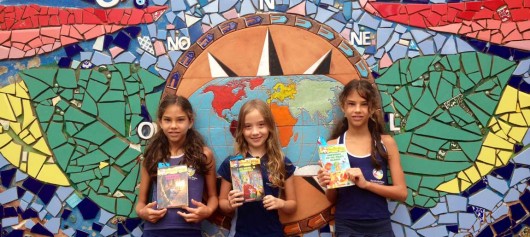
Anyone and everyone can change the world, even in the slightest way. An organization known as Read to Feed gives children the opportunity to make a difference in the lives of families living in poverty.

The program encourages childhood reading while raising awareness of extreme global poverty in young minds. Read to Feed teaches and informs students of the realities of malnutrition and poverty, inspiring them to help those in need and providing an educational incentive to do so.

Here’s how it works: A child chooses a sponsor for each book he or she reads during a period of time set by his or her Read to Feed leader. The sponsor agrees to provide a certain amount of money for each book read or hour spent reading. Then, after the books have been read and the funds collected, the child chooses an animal through Heifer International to give to a family experiencing poverty.

Heifer International is an organization dedicated to ending global poverty and world hunger. Heifer provides families in impoverished communities with livestock and training to combat malnutrition as well as build a sustainable lifestyle.

Furthermore, Heifer encourages the families they have helped to share the training they receive with other families in their communities and pass on the first female offspring of their livestock to another family in need, thus creating a cycle of sustainability that has the power to lift entire communities out of poverty.

The wide variety of livestock provides families with meat, milk, wool and manure to grow their own agriculture. Kids can participate in Read to Feed individually or in groups; however, the program most often takes place in a classroom setting.

Furthermore, Heifer provides Global Education Lesson Plans so that teachers can inform students of the realities of global poverty and the impact that they can make in changing its course.

Read to Feed ultimately provides children with a way to make a difference in many lives. Reading a book is a fun incentive to end extreme poverty, both stimulating a child’s mind by increasing the number of books they read, and their knowledge of the world. Anyone can make a difference and everyone– no matter what age– deserves the chance to try.

– Sarah Sheppard

Sources: Heifer 1, Heifer 2, Learning to Give
Photo: Hiefer International

November 9, 2015
https://borgenproject.org/wp-content/uploads/borgen-project-logo.svg 0 0 Borgen Project https://borgenproject.org/wp-content/uploads/borgen-project-logo.svg Borgen Project2015-11-09 06:26:312024-12-13 18:04:59Read to Feed: Global Education Lesson Plans
Advocacy, Global Poverty, Refugees and Displaced Persons

Former Vietnamese Refugees Reach Out to Fleeing Syrians

Vietnamese_Refugees
As Syria’s civil war worsens, thousands of Syrians are compelled to abandon their lives and relocate to other countries. Their journeys often include the daunting task of crossing oceans in small vessels that are barely sea-worthy. However, safety does not always await them on the other side.

The mass exodus from Syria has caused no small amount of strife among political leaders as they discuss how to accommodate so many refugees.

Working citizens eye the situation warily, anticipating the incoming Syrians as a threat to their livelihoods. Settling in can be very difficult for refugees when their new community is unwelcoming. Such situations can result in refugees living in squalor and becoming a burden to their new country.

The U.S. agreed to take in 10,000 Syrians in the upcoming year, but the Vietnamese American population has decided that more can be done to ensure the newcomers receive a hospitable welcome. After all, only a few short decades separate the Vietnamese from their own experience as refugees.

When the Vietnam War ended in 1975, roughly 125,000 Vietnamese refugees entered the U.S. by boat, much like the Syrians. If they were lucky, they found housing and a source of income. The unlucky spent years in refugee camps or searched the country for separated loved ones.

Now, as they see their own history playing out before their eyes, Vietnamese Americans strive to generate compassion for the fleeing Syrians.

In California, home to the largest population of former Vietnamese refugees, individuals have organized a 4-mile walk-a-thon to raise money for refugee accommodation. A Twitter campaign has also been established to allow U.S. citizens to voice their support for the Syrian refugees.

Other ways that U.S. citizens can assist in the accommodation and acculturalization of refugees are by volunteering at local resettlement agencies, donating funds and household items, becoming an English tutor and spreading the word about refugee aid.

“I want to see what we can do to help the Syrians because that is us,” says Tom Q. Nguyen, who lost his mother and sister when his family fled Vietnam in the 80’s.

Nguyen and fellow campaigners hope that their efforts will inspire others to take part as well. Perhaps the actions of these former Vietnamese refugees mark a new outlook on refugee accommodation.

According to the UNHCR’s 2015 report, nearly 60 million forcibly displaced persons exist in the world today. Half of these are victims of the turmoil in Syria, Afghanistan and Somalia, and all are in need of a new home.

– Sarah Prellwitz

Sources: Migration Policy 1, Migration Policy 2, NY Daily News, Rescue
Photo: Google Image

October 8, 2015
https://borgenproject.org/wp-content/uploads/borgen-project-logo.svg 0 0 Borgen Project https://borgenproject.org/wp-content/uploads/borgen-project-logo.svg Borgen Project2015-10-08 05:33:082024-05-27 09:28:10Former Vietnamese Refugees Reach Out to Fleeing Syrians
Activism, Advocacy, Development, Global Poverty

The Power of Partnerships

The Power of Partnerships
“Together, we can make a difference.”

It sounds cliché, but in the world of humanitarianism, partnerships have been shown, again and again, to be key in fighting global poverty and injustices.

Of course, it occurs on an organizational level all the time. In the humanitarian community, organizations intersect in countless ways. At the end of almost any humanitarian website, there is a tab at the bottom called “Partnerships,” “Partners,” or “Work with Us.”

When one organization has the expertise to improve education opportunities, another has the educators on the ground, another has the finances, and another has the technology to create school supplies that are more affordable or efficient; a partnership can be massively beneficial.

Pooling resources to unite for a common goal means that more help can be brought to where it is needed most.

Historically, partnerships have occurred between countries in order to achieve common political, economic and sometimes humanitarian, goals.

Often, these arise out of necessity: wartime, natural disasters, disease epidemics, and so on. But when partnerships arise out of foresight, crises can be handled more efficiently and existing programs and policies can be improved.

An example is the countries united in a commitment to the Millennium Development Goals, which have been implemented over the last fifteen years to a largely successful degree.

In the partnership between GlaxoSmithKline (GSK) and Save the Children, there are five key elements: programming, research and development, joint-advocacy, employee engagement and cause-related marketing.

The Partnerships page of CARE, an organization whose mission is simply “to serve individuals and families in the poorest communities in the world,” is divided into sections: foundations and trusts, corporate partners, humanitarian partners, institutional donors, and research and technical partners.

The Office for the Coordination of Humanitarian Affairs (OCHA) is a part of the UN Secretariat. Its mission is to bring together humanitarian groups to make sure that responses to emergencies are coordinated and coherent.

partnershipsIt works with governments, regional organizations, and groups at the national and international levels in order to make sure that the people who need help are getting as much as they can as quickly as possible.

These are all examples of the many ways that partnerships can be utilized. There are so many different aspects to any heartfelt mission, so organizations can connect in ways that the average person might never have considered. When opportunities are considered critically, the possibilities are endless.

It can all start to feel a little bit like alphabet soup sometimes: The IRRI works with HRDC, SKEPs, and a company called PRIME. UNAIDS cosponsors include UNHCR, UNICEF, WFP, UNDP, UNFPA, and UNODC.

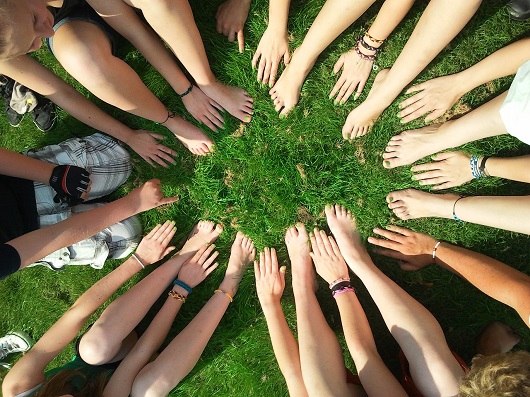
But here is what lies at the core of it all: organizations are coming together, communities are coming together, and individuals are coming together to make a difference and to do what is right. With technology increasing the rate of globalization, partnerships are easier than ever to form, and this should be taken advantage of.

It can serve as a lesson to anyone about the importance of coming together.

For any individual who looks at everything that is wrong with the world and says, “But what can I do?” because their resources and the scope of their influence are limited, he can ask, “What do I need in order to make a difference?”

From there, he can reach out to other individuals and groups who have different resources to offer, who have a different sphere of influence, who can help the person to make the kind of impact that will really be worthwhile.

“Partnership” is a word that can mean so many things. It offers forth a range of possibilities that are almost infinite. Humanitarian groups are one of the most important examples of how much more can be achieved through communication and the formation of connections.

– Emily Dieckman

Sources: Care, OCHA 1, IRRI, OCHA 2
Photo: Pixabay1, Pixabay2

October 8, 2015
https://borgenproject.org/wp-content/uploads/borgen-project-logo.svg 0 0 Borgen Project https://borgenproject.org/wp-content/uploads/borgen-project-logo.svg Borgen Project2015-10-08 01:30:492024-12-13 18:05:02The Power of Partnerships
Activism, Advocacy, Global Poverty

Want to be a Part of Baylor’s Global Health Hackathon?

Want to be a Part of Baylor's Global Health Hackathon?
In September, Baylor Global Initiatives hosted their first Global Health Hackathon. While a hackathon may sound like a group of socially awkward nerds sitting in a dark basement stealing credit card information, it is actually something much less devious and much more relevant to reducing global poverty.

Hackathons are events hosted to bring together students and innovators from a myriad of disciplines. During the event, teams are created that then race to develop solutions to a given problem.

Baylor’s hackathon was held with the intent of generating solutions to global health issues, specifically the emergency response and procedural care being used by Baylor College of Medicine faculty in African countries.

A team’s final product can be anything that can improve global health: software, hardware, medical tools, delivery or financing mechanisms. Winning teams can win funding to further the development of their prototypes or concepts as well as a reward.

Baylor’s hackathon is a wonderful opportunity to work with thinkers who are hoping to make a difference and learn from world-renown faculty from several top-notch university and organizations, including Rice University, Texas A&M University and NASA.

Click here to see highlights from Baylor’s Global Health Hackathon.

– Brittney Dimond

Sources: Momentum, Baylor College of Medicine
Photo: Flickr

October 7, 2015
https://borgenproject.org/wp-content/uploads/borgen-project-logo.svg 0 0 Borgen Project https://borgenproject.org/wp-content/uploads/borgen-project-logo.svg Borgen Project2015-10-07 01:30:402020-06-27 06:43:29Want to be a Part of Baylor’s Global Health Hackathon?
Activism, Advocacy, Global Poverty, United Nations

Ending Extreme Poverty: Politics Weighs Us Down

Ending Extreme Poverty: Politics are Weighing Us Down
In November, The United Nations Climate Change Summit will commence in Paris, France, the last of three paired conferences that set to discuss action regarding two great problems of our time: extreme poverty and climate change. Even though extreme poverty has been cut in half since 1980, political systems are making it difficult to envision the end of extreme poverty by 2030.

Since 2000 when the UN adopted the Millennial Development Goals (MDGs), major victories have been made in regard to extreme poverty. Compared to 1990, the number of people in the world living on less than $1.25 per day has dropped from 1.9 billion to 836 million.

Despite the efforts of the 17 Sustainable Development Goals (SDGs) implemented in September 2015, politics may be halting the fight to eradicate extreme poverty.

Due to war and climate change, 59.5 million people worldwide have left their homes, a global displacement figure that has not been this high since World War II.

With this high displacement, the European Union (EU) has failed to find homes for a mere 60,000 asylum seekers. Since the EU has a population of over 500 million, political leaders have no excuse for finding homes.

In regards to the UN’s Third Financing for Development Summit this past July in Ethiopia, the goal was to discuss ways to finance the end to extreme poverty in 2030.

One key phrase from the conference linked climate, environment, and development: “All of our actions need to be underpinned by our strong commitment to protect and preserve our planet and natural resources, our biodiversity and our climate.”

Unfortunately, no dates or commitment to the clause ensures physical action, lacking a sense of urgency that should be present.

As the Climate Change summit approaches, world leaders will decide a necessary strategy in regard to the growing problem with climate change and its connection to extreme poverty.

With only 15 years left to solve extreme poverty, world leaders and the general population cannot expect the matter to solve itself. More compromise and effort is needed with all world leaders to solve extreme poverty.

– Alexandra Korman

Sources: Arab News, Devex, Irish Examiner
Photo: Flickr

October 3, 2015
https://borgenproject.org/wp-content/uploads/borgen-project-logo.svg 0 0 Borgen Project https://borgenproject.org/wp-content/uploads/borgen-project-logo.svg Borgen Project2015-10-03 09:46:132024-12-13 18:04:58Ending Extreme Poverty: Politics Weighs Us Down
Advocacy, Development, Global Poverty, Women and Female Empowerment

World Bank Grants $11.6 Million for Sahel Women

Sahel_Women
On April 23, 2015, The World Bank Group granted the Sahel Women’s Empowerment and Demographic Dividend Project (SWEDD) $11.6 million, and an additional $23.2 million credit, to include Burkina Faso into the program.

Due to the political instability in Burkina Faso late October 2014, negotiations to add Burkina Faso to the SWEDD project were delayed. Currently, Burkina Faso is the sixth Sahelian country to be added to the project; others include: Chad, Cote d’Ivoire, Mali, Mauritania and Niger.

The Sahel region would gain a great economic boost from a demographic dividend through a rapid decline in fertility and infant mortality rates; the addition of Burkina Faso expands the effectiveness of SWEDD.

The program aims to increase access to reproductive, child and maternal health services for women and adolescent girls in participating countries in the Sahel region of Africa. SWEDD also intends to educate women on gender and their own reproductive health.

In Burkina Faso, the Total Fertility Rate (TFR) is 5.8. With only 15 percent of married women aged 15-49 using contraception the maternal mortality ratio, per 100,000 live births, is 300. Moreover, the under-5 mortality rate, per 1,000 live births, is 108.

The high fertility rate, which worsens population pressure, coupled with poor health services are preventing Burkina Faso from garnering the benefits from a demographic dividend.

Burkina Faso’s involvement in the Sahel Women’s Empowerment promises great outcomes. The issue of child marriage in Burkina Faso is linked to poverty, the tradition of gender inequality and lack of education.

Involving women in the working age population will accelerate Burkina Faso’s demographic dividend because comparably the number of dependents would be lower.

SWEDD will empower women in Burkina Faso through promoting their academic education, and involving more women in life-skills programs, making women more independent.

This will consequently decrease the child marriage rates, which are at an 86 percent prevalence in the Sahel region of Burkina Faso, and 76 percent in the East region.

World Bank Country Manager for Burkina Faso commented on the addition of Burkina Faso to the Sahel Women’s Empowerment Project saying: “Educating adolescent girls and improving health services for women will certainly reduce poverty and boost shared prosperity in Burkina Faso.”

– Marie Helene Ngom

Sources: The World Bank 1, The World Bank 2, Sahel Women Empowerment Outline, Burkina Faso Child Marriage
Photo: Wikimedia

October 1, 2015
https://borgenproject.org/wp-content/uploads/borgen-project-logo.svg 0 0 Borgen Project https://borgenproject.org/wp-content/uploads/borgen-project-logo.svg Borgen Project2015-10-01 12:46:592024-05-27 09:28:07World Bank Grants $11.6 Million for Sahel Women
Advocacy, Development, Global Poverty, Technology

Top 50 Technologies Fighting Poverty


There is no question that the technology revolution of the past 40 years has had an immense effect on human health and development, but many have wondered if there is a single, specific innovation that has proven to be the most impactful.

The answer ends up being that there are many necessary technologies and innovations crucial to human development: 50 to be exact.

The Institute for Globally Transformative Technologies at the Lawrence Berkeley National Research Laboratory (LIGTT) has recently published a report called, “50 Breakthroughs: Critical scientific and technological advances needed for sustainable global development.”

The Berkeley Lab, as it’s commonly known, was founded in 1931 at UC Berkeley, and is now owned and operated by the U.S. Department of Energy. A subdivision of the lab, the LIGTT’s mission is to “identify, develop, and deploy, the next generation of breakthrough technologies for sustainable global development.”

The report ob 50 technologies fighting poverty comes after two years of intense analysis and research. The project was funded in part by USAID’s Global Development Lab.

USAID’s Dave Ferguson, who serves as the Director of the Center for Development Innovation, said “We believe science, technology, and innovation can deliver transformational results, and the 50 Breakthroughs study is an extremely valuable contribution in this endeavor.”

The study is divided into nine different categories and aims to give aid organizations and agencies a map of where to invest their time, funds and resources so as to have the greatest impact.

The categories are global health, food security and agricultural development, human rights, digital inclusion, water, access to electricity, gender equality and resilience against climate change and environmental degradation.

The report finds that water is the most important and needed breakthrough. Director of the study, Shashi Buluswar, said, “Water will be the defining problem of the next 50 years. It’s probably the single most important thing that needs to be solved.”

Other breakthroughs include greater access to vaccines, improved and highly efficient fertilizer and increased water filtration capacity.

Buluswar states that the Berkeley Lab is capable of working to implement many of the breakthroughs but encourages organizations both domestically and around the globe to contribute to their further development. You can read the report here.

– Joe Kitaj

Sources: Berkeley Lab 1, Berkeley Lab 2, LIGTT
Photo: desalinate4kids

September 30, 2015
https://borgenproject.org/wp-content/uploads/borgen-project-logo.svg 0 0 Borgen Project https://borgenproject.org/wp-content/uploads/borgen-project-logo.svg Borgen Project2015-09-30 10:16:212020-06-29 11:44:41Top 50 Technologies Fighting Poverty
Activism, Advocacy, Development, Global Poverty

Startups Ending Poverty

Startups
As successful businesses began springing out of Silicon Valley like a garden first introduced to fertilizer, entrepreneurs started to wonder how they could profit from filling the holes in market demands.

According to Business Dictionary, a startup is the “early stage in the life cycle of an enterprise where the entrepreneur moves from the idea stage to securing financing, laying down the basic structure of the business, and initiating operations or trading.”

But what do startups have to do with global poverty? While many businesses, including most startups, are looking to meet the demand of customers who will shell out enough cash to generate their owners and employees increasing incomes, some ventures are looking to fulfill a different demand.

Below are three for-profit startups that are using their business plans in one way or another to help alleviate poverty. These companies differ from nonprofits because they function as a business instead of an organization. While both work towards bettering the lives of others, they do so in distinctly different ways.

Nuru

Nuru provides training-based poverty solutions for local leaders in poor communities. Their leadership programs are intended to create profitable businesses owned and run by local entrepreneurs.

Nuru staff train and equip their counterpart local teams and in return part of that business’s profit is returned to Nuru where it is distributed to shareholders and reinvested in other development projects.

Instead of reaching into markets with foreign goods or services, Nuru allows locals to provide their own communities with desired and necessary products in a self-sustaining manner. Once Nuru implements their programs they withdraw their staff and allow local leaders to become self-reliant and continue making their own difference.

BioLite

BioLite was created by two camping enthusiasts and sells portable, clean energy stoves, kettles and LED lights. The profits made from their western markets help offset the costs required to make their other product. In addition to camping equipment, BioLite produces a cheaper stove to sell in developing nations.

Since most people living in poverty use open fires for cooking and heating purposes, the demand for inexpensive and safe stoves is high.

This company offers a desired product to untapped markets in developing countries for an affordable price due to their other successful profit earning products. Their business plan is sustainable because they do not rely on donations to continue their work.

Good Cloth

An online clothing store that sells exclusively ethically crafted goods. They’ve divided their products into several categories including recycled, sustainable, organic, made in the U.S. and one titled “Trade Not Aid.”

Good Cloth helps companies who design and create goods without exploiting workers, sell their products. Good Cloth and the brands they sell work to eradicate poverty by pushing against the norm of cheap labor.

They want to help companies who treat their employees fairly and pay them a just wage be successful.

Nuru, BioLite and Good Cloth are only three examples of for-profit business models that are working towards alleviating poverty. While nonprofits play an undeniably imperative role in the fight on global poverty, there is also a place for solutions that include profits.

Businesses have a high interest and investment in their success; in order to eradicate global poverty there needs to be a high interest and investment in finding successful solutions. If incorporating business models and profit as a motivation will lead to poverty reduction, why would we not use it?

– Brittney Dimond

Sources: Business Dictionary, The Good Trade, MIC, Nuru International

Photo: Pixabay

September 30, 2015
https://borgenproject.org/wp-content/uploads/borgen-project-logo.svg 0 0 Borgen Project https://borgenproject.org/wp-content/uploads/borgen-project-logo.svg Borgen Project2015-09-30 10:09:172024-12-13 18:05:09Startups Ending Poverty
Page 41 of 77«‹3940414243›»

Get Smarter

  • Global Poverty 101
  • Global Poverty… The Good News
  • Global Poverty & U.S. Jobs
  • Global Poverty and National Security
  • Innovative Solutions to Poverty
  • Global Poverty & Aid FAQ’s
Search Search

Take Action

  • Call Congress
  • Email Congress
  • Donate
  • 30 Ways to Help
  • Volunteer Ops
  • Internships
  • Courses & Certificates
  • The Podcast
Borgen Project

“The Borgen Project is an incredible nonprofit organization that is addressing poverty and hunger and working towards ending them.”

-The Huffington Post

Inside The Borgen Project

  • Contact
  • About
  • Financials
  • President
  • Board of Directors
  • Board of Advisors

International Links

  • UK Email Parliament
  • UK Donate
  • Canada Email Parliament

Get Smarter

  • Global Poverty 101
  • Global Poverty… The Good News
  • Global Poverty & U.S. Jobs
  • Global Poverty and National Security
  • Innovative Solutions to Poverty
  • Global Poverty & Aid FAQ’s

Ways to Help

  • Call Congress
  • Email Congress
  • Donate
  • 30 Ways to Help
  • Volunteer Ops
  • Internships
  • Courses & Certificates
  • The Podcast
Scroll to top Scroll to top Scroll to top