• Link to X
  • Link to Facebook
  • Link to Instagram
  • Link to TikTok
  • Link to Youtube
  • About
    • About Us
      • President
      • Board of Directors
      • Board of Advisors
      • Financials
      • Our Methodology
      • Success Tracker
      • Contact
  • Act Now
    • 30 Ways to Help
      • Email Congress
      • Call Congress
      • Volunteer
      • Courses & Certificates
      • Be a Donor
    • Internships
      • In-Office Internships
      • Remote Internships
    • Legislation
      • Politics 101
  • The Blog
  • The Podcast
  • Magazine
  • Donate
  • Click to open the search input field Click to open the search input field Search
  • Menu Menu

Archive for category: Advocacy

Information and news on advocacy.

Activism, Advocacy, Global Poverty

What Emma Watson Has Done For Poverty

Emma-Watson-Poverty
GQ Magazine’s 2013 Woman of the Year Emma Watson has quickly become one of the most influential women in the world. The British movie star, only 25-years-old, has been involved with many projects for film, music and fashion, as well as numerous philanthropic movements and organizations. Beginning in her teens, Watson has helped end global poverty on a level that few have met.

The Harry Potter actress has most recently jumped forward with her support of gender inequality with her status as a U.N. Women Goodwill Ambassador and her backing of the HeForShe campaign.

According to the United Nations Development Programme (UNDP), gender inequality is a large factor contributing to extreme poverty. Many women in poor areas receive little or no education because they are only expected to perform other duties like fetch water, provide food and care for their families. If women obtain sufficient schooling, their chance for gaining a well-paying occupation greatly increases.

“Their increased earning power in turn raises household incomes,” the UNDP said. In addition, a more equal environment in the household allows for an improved well-being for children, and henceforth, lowering the chance of poverty for later generations.

Last year, Watson gave a speech asking for help to promote and assist with HeForShe. This movement focuses on addressing boys and men to defend gender equality, rather than traditionally gathering women and girls to rally followers.

Watson talked about how gender inequality exists for both men and women. Because of this, economic growth is harder to sustain, and developing areas are still vulnerable to disease, abuse and other side effects of poverty.

Aside from promoting gender equality, Watson has participated in other efforts to end extreme poverty.

In 2011, she donated a signed copy of “Harry Potter and the Deathly Hallows” to an auction facilitated by ShelterBox, which is an organization that aids areas in need overcome by tragedy and humanitarian crisis.

In successive years, she provided service for UNICEF and United Nations Women. Watson also donated a pair of designer Burberry heels to the Small Steps Project, which provides emergency aid to those living in poor conditions. In addition, she worked with the Millennium Promise organization, which aims to end global poverty by 2025.

Watson has greatly helped the struggle to end global poverty. While simultaneously working on her bachelor’s degree at Brown University and acting in “This is the End,” the humanitarian has gone through great lengths to give back to those in need.

When speaking of insecurity about her qualifications to speak on behalf of gender equality, Watson reassured herself with a notion that people everywhere should tell themselves when they are unsure about helping a cause: “In my moments of doubt, I’ve told myself firmly—if not me, who? If not now, when?”

Although Watson is still young, she has helped fund and mobilize people around the globe for the greater good, and has brought the world one step closer to ending extreme poverty.

– Fallon Lineberger

Sources: GQ Magazine, Look to the Stars, ShelterBox, Small Steps Project, The Telegraph, UNDP, UN Women
Photo: The Lake Front

July 30, 2015
https://borgenproject.org/wp-content/uploads/borgen-project-logo.svg 0 0 Borgen Project https://borgenproject.org/wp-content/uploads/borgen-project-logo.svg Borgen Project2015-07-30 09:03:092024-05-27 09:26:09What Emma Watson Has Done For Poverty
Advocacy, Charity, Global Poverty

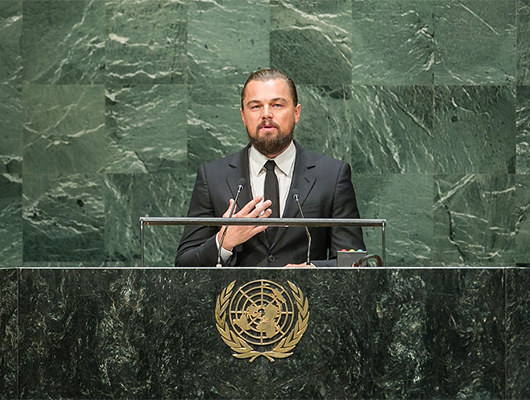
Leonardo DiCaprio Foundation Raises Over $40 Million

Leonardo_DiCaprio_Foundation
At a recent fundraising gala, the Leonardo DiCaprio Foundation (LDF) raised more than $40 million. This money was dedicated to preserving the last of Earth’s wildlife, habitat, and fragile ecosystems.

DiCaprio stated during the opening ceremony, “We’ve decimated our forests, wildlands, polluted and overfished our rivers and oceans; all the key ecosystems that not only serve as a home to our planet’s biodiversity but also make life here for us possible”.

The event itself, an annual affair, focused its current efforts on protecting key species like the tiger, rhino, shark, and mountain gorilla by working with governments to conserve the jungles, coral reef and forests they call home.

The LDF was able to raise such a large amount of money in a single evening by holding a live auction, presented by the LDF’s long-term partner Julius Baer and other co-sponsors like Chopard and Armani.

The live auction sold an extensive collection of fine art, luxury items and uniquely memorable lifetime experiences. Some of the items sold were an estate home on Leonardo DiCaprio’s own Belize Island that was sold for over $11 million, a private concert with Elton John sold twice for a total of $3 million, and a limited re-edition of Rodin’s “The Thinker” sold for close to $2 million. This shortlist of expensive items were a few of the many auctioned off at the gala event. In addition, several key figures at the event donated simply out of the kindness of their hearts for this worthy cause.

Starting in 1998, the LDF has stated its mission of protecting the world’s last wild places. The LDF implements solutions that help restore balance to threatened ecosystems, ensuring the long-term health and well being of all Earth’s inhabitants. Since that time the Leonardo DiCaprio Foundation (LDF) has worked on some of the most pressing environmental issues. The LDF has made several strides with grantmaking, public campaigns and media initiatives to focus efforts on protecting the biodiversity of the world.

With accomplishments like this, it is truly satisfying to see the LDF tirelessly strive to make a difference.

– Alysha Biemolt

Sources: Look to the Stars, Leonardo DiCaprio, Calfund
Photo: Flickr

July 30, 2015
https://borgenproject.org/wp-content/uploads/borgen-project-logo.svg 0 0 Borgen Project https://borgenproject.org/wp-content/uploads/borgen-project-logo.svg Borgen Project2015-07-30 01:30:412020-07-14 07:38:40Leonardo DiCaprio Foundation Raises Over $40 Million
Activism, Advocacy, Global Poverty

How John Oliver Blends Activism and Comedy

John_Oliver“That dress is worth four dollars and ninety five cents. Think about that. That means you could take a five dollar bill, scotch tape it over your genitals, and you’d be wearing a more expensive piece of clothing.”

The audience bursts into laughter. However, while John Oliver is all about getting laughs on his show “Last Week Tonight,” when it comes to blending the comedian and the activist, he’s not joking around.

The above quote is from a segment on sweatshops in the clothing industry, particularly modern, cheaper retailers.

“It seems sweatshops aren’t one of those 90s problems we got rid of like Donnie Wahlberg,” Oliver said. “They’re more like one of those 90s problems we’re still dealing with, like Mark Wahlberg.”

Oliver’s use of his comedic platform as a springboard for his activism makes sense. Prior to his television show’s launch, Oliver was known for his role as a correspondent on “Jon Stewart’s The Daily Show,” and famously filled in for the beloved host in June of 2013, while Stewart was overseas filming his directorial debut.

The difference between Stewart and Oliver’s areas of focus is subtle but significant. Stewart focuses on news and current events, approaching them with a fresh spin, an important trait in a daily program. Oliver, on the other hand, focuses on issues. From food waste, which Oliver compares to Rascall Flatts in that “it can fill a surprising number of stadiums even though many people consider it complete garbage,” to tobacco giant Phillip Morris International threatening to sue Togo, a country with a GDP of just 4.3 billion dollars (“when your GDP is only a couple of billion more than the box office of Avatar, a protracted legal case is not really what you need.”) Oliver takes on major topics not just for laughs, but for information.

What is also unique about Oliver is how he encourages his audience to get involved. In his segment on the tobacco industry, for instance, Oliver christened “Jeff the diseased lung in a cowboy hat” as the new face of Marlboro. Oliver spread t-shirts of the diseased lung in Togo and billboards in Uruguay. Oliver also encouraged his audience to support the new icon, which mocked the tobacco industry’s marketing tactics, particularly in the developing world. It is through this type of culture jamming that Oliver achieves the power of comedy as a medium that influences social change.

Ultimately, “Last Week Tonight” could have been another late night television show, perhaps made a bit edgier due to its placement on HBO. But due to John Oliver’s social activism and experience gained while working with the great Jon Stewart, the show has become an informative springboard for activism, something with great impact on both its audience and the world at large.

– Andrew Michaels

Sources: Last Week Tonight: Fashion, Last Week Tonight: Food Waste, Last Week Tonight: Tobacco, Splitsider
Photo: HBO – Last Week Tonight

July 30, 2015
https://borgenproject.org/wp-content/uploads/borgen-project-logo.svg 0 0 Borgen Project https://borgenproject.org/wp-content/uploads/borgen-project-logo.svg Borgen Project2015-07-30 01:30:202024-12-13 17:54:04How John Oliver Blends Activism and Comedy
Advocacy, Aid Effectiveness & Reform, Global Poverty

Charity Versus Chauvinism: Successful Working Methodology at BRAC

BRACAmidst the daily fight against global poverty levels, success stories arise from one of the world’s largest development charities. Recently awarded the World Food Prize for successfully pulling more than 150 million people in developing countries out of poor living conditions, Fazel Hasan Abed, founder of the Bangladeshi charity BRAC, seems to have stumbled upon a working methodology.

What makes this methodology different from other approaches can be found in the difference between chauvinism and charity. Chauvinistic approaches to world aid portray a very “hands-off” tactic, whereas charity clearly sets out to give direct help to those in need.

Many IGOs are now looking to out-source the BRAC method. This method utilizes a short amount of time, 24 months, and a high amount of pressure on developing communities in order to produce the greatest results.

The first step is to determine the target individuals of aid by looking at the “determinants of poverty” – little to no healthcare availability, no livelihood skills or capital, low self-esteem and illiteracy, as well as social exclusion. This is done through “participatory wealth ranking,” which directly engages the community.

Next, the individuals are provided with adequate resources and taught fundamentals through “asset grants.” Fundamentals include different livelihood skills and literacy abilities, such as being able to write his or her name for the first time.

The last tactic is monitoring. Arguably, this demonstrates the importance of such a hands-on approach and in fact is referred to as the “hand-holding” step. Progress is closely supervised. For two years the individuals receive direct assistance and have proven that these individuals are able to maintain a better quality of life over the next four years after they “graduate” the BRAC system.

While this methodology might seem a “brute force approach” concerning its direct and hands-on elements, it proves to be the most effective. BRAC is smart, efficient, and proven to work. It targets the “ultra-poor” specifically, sets goals and drives the ball home until the individuals have successfully been pulled out of poor living conditions.

– Felicia L. Warren

Sources: The Guardian
Photo: Flickr

July 27, 2015
https://borgenproject.org/wp-content/uploads/borgen-project-logo.svg 0 0 Borgen Project https://borgenproject.org/wp-content/uploads/borgen-project-logo.svg Borgen Project2015-07-27 12:58:232020-07-10 18:02:44Charity Versus Chauvinism: Successful Working Methodology at BRAC
Advocacy, Global Poverty

France Could Make it Illegal to Discriminate Against the Poor

discriminate
Legislation has been proposed in France that would make it illegal to discriminate or “insult the poor” by refusing to offer those living in poverty housing, employment and healthcare.

The legislation proposes that those who discriminate against the poor, or those experiencing “vulnerability resulting from an apparent or known economic situation” could face up to three years in prison along with a fine of €45,000, or roughly $50,000.

With laws already in place across the globe not allowing people to discriminate against race, sex, and disability, this legislation could be another step in the fight for global equality. According to a report published in the Times, 32 percent of dentists, 33 percent of opticians and nine percent of GPs in Paris refused to treat clients without medical insurance.

Europe’s attitude toward its poor has been diminishing over the years, with authorities in Britain monitoring alcohol and cigarette purchases before offering emergency housing payments and landlords refusing apartments for those receiving benefits.

The Times has reported that the legislation has been approved by the French parliament’s upper house and is forecasted to also be passed by the lower house.

“People think that because we are poor, we must be stupid,” Oréane Chapelle, 31, an unemployed French woman, told the Guardian.

This legislation could potentially help curb prevailing negative attitudes toward Europe’s poor, and the threat of jail time and massive fines could offer plenty of new opportunities for those desperately searching for any available.

– Alexander Jones

Sources: The Guardian 1, The Guardian 2, The Times
Photo: The Times

July 26, 2015
https://borgenproject.org/wp-content/uploads/borgen-project-logo.svg 0 0 Borgen Project https://borgenproject.org/wp-content/uploads/borgen-project-logo.svg Borgen Project2015-07-26 11:13:502020-07-03 15:24:18France Could Make it Illegal to Discriminate Against the Poor
Activism, Advocacy, Global Poverty

10 Inspiring Celebrity Quotes About Charity

Celebrity_Quotes
Many celebrities have participated in charities for all sorts of causes. Here are ten celebrity quotes that will inspire you to give back, too.

“The truth of the matter is: you can create a great legacy, and inspire others, by giving to philanthropic organizations.”
– Michael Bloomberg, entrepreneur, politician and philanthropist

“I choose to rise up out of that storm and see that in moments of desperation, fear and helplessness, each of us can be a rainbow of hope, doing what we can to extend ourselves in kindness and grace to one another. And I know for sure that there is no them – there’s only us.”
– Oprah Winfrey, talk show host, actress and founder of Oprah’s Angel Network

“If you think of life as like a big pie, you can try to hold the whole pie and kill yourself trying to keep it, or you can slice it up and give some to the people around you, and you still have plenty left for yourself.”
– Jay Leno, television host and humanitarian

“No matter what happens in life, be good to people. Being good to people is a wonderful legacy to leave behind.”
– Taylor Swift, professional singer and the 2014 Most Charitable Celebrity

“With a generation of younger folks who have thrived on the success of their companies, there is a big opportunity for many of us to give back earlier in our lifetime and see the impact of our philanthropic efforts.”
– Mark Zuckerberg, Facebook founder, investor and patron

“One child, one teacher, one book and one pen can change the world.”
– Malala Yousafzai, women’s rights activist and 2014 Nobel Peace Prize Winner

“Is the rich world aware of how four billion of the six billion live? If we were aware, we would want to help out, we’d want to get involved.”
– Bill Gates, business magnate, computer programmer and co-founder of the Bill and Melinda Gates Foundation

“It’s about giving the gift of life to a stranger.”
– Leighton Meester, actress, professional singer and philanthropist

“If you’re in the luckiest one percent of humanity, you owe it to the rest of humanity to think about the other 99 percent.”
– Warren Buffet, investor, businessman and member of The Giving Pledge

“We’re all in this together. Each and every one of us can make a difference by giving back.”
– Beyoncé, professional singer, musician and founder of BeyGood

– Fallon Lineberger

Sources: Cause Cast, Daily Mail, Ecorazzi, Giving What We Can, Inspire More, Michael Bloomberg, National Philanthropic Trust, Oprah.com, The Giving Pledge, The Quotations Page, Twitter
Photo: Flickr

July 26, 2015
https://borgenproject.org/wp-content/uploads/borgen-project-logo.svg 0 0 Borgen Project https://borgenproject.org/wp-content/uploads/borgen-project-logo.svg Borgen Project2015-07-26 09:47:102024-05-27 09:26:0610 Inspiring Celebrity Quotes About Charity
Advocacy, Philanthropy

10 Hip-Hop Producers Making the World Go ‘Round

world_globe_borgen_africa

Pop radio in recent decades has featured a considerable amount of hip-hopping crossover tunes, courtesy of some of the music industry’s fascinating producers. And with a heavy helping hand of these talents, ten of these following beat-maker producers have long held interest in relieving regions of catastrophic-induced conflicts.

10. Controversial rap mogul Sean “Diddy” Combs is synonymous with charitable causes supporting medical research of HIV/AIDS and cancerous diseases. Perhaps the biggest highlight of the frequent Biggie Smalls producer’s philanthropic work would include his 1994 New York City-established Daddy’s House Social Programs, an international foundation that provides education to the underprivileged and homeless.

9. When auto-tuning-favorite T-Pain isn’t in the booth cranking out hits for Jesse McCartney (“Body Language”) or Flo Rida (“Low”), the “Blame It (On the Alcohol),” the rhymer is certainly making a worldly impact with his digital foundation “If I Could Change the World.” The program, which gives any user the ability to produce a philanthropic idea or select a global charity of their choosing, has been made popular by aid of T-Pain’s recurring concert series “Come to the Crib,” as means to enhance charitable awareness.

8. Certain singles from Michael Jackson’s legendary “Scream” to Janet Jackson’s comeback-knockout “No Sleeep” would not be possible without the help of iconic music-making duo Jimmy Jam and Terry Lewis. The non-stop reinventing pair have helmed a remarkable feat in captivating groundbreaking awareness for the medical support in treating AIDS, cancer and leukemia; effective enough for the two-man unit to receive a 1996 humanitarian accolade from the T.J. Martell Foundation and personal friend Janet Jackson.

7. Hip-hop superwoman Missy Elliott, who has produced for the likes of Beyoncé (“Signs”) and Madonna (“American Life–American Dream Remix”), is not a newbie when it comes to charitable occurrences. Among her most profound causes include her dedication to alleviate domestic abuse and AIDS cases by involvement in fundraising activities with organizations Break the Cycle and the MAC AIDS Fund (the former appointing Elliott as global spokesperson).

6. He’s the brains behind notorious headphone gear Beats by Dre, yet Dr. Dre has stamped his name outside the musical mogul world for the advocacy of a safer environment. Securing iconic production roles in Eminem’s “Hi, My Name Is Slim Shady” and Mary J. Blige’s “Family Affair,” Dr. Dre has generously donated $1 million to organizations relieving the aftereffects of 9/11 and Hurricane Katrina; moreover, Dre’s “Beats Electronics” division has helped create seasonal camps for African schoolchildren.

5. Enormously responsible for composing Mariah Carey’s Grammy-winning “We Belong Together” and Kris Kross’ party-thumping “Jump,” Jermaine Dupri favors in helping underprivileged youth and repairing national tragedies; showcasing his advocacy via his separate launched initiatives Hip-Hop 4 Humanity and The Jermaine Dupri Foundation; the former raising more than $25,000 in aid of 9/11 victims and the latter helping those victimized in Hurricane Katrina. Aside from producing chart-toppers, Dupri served as the perfect power source in 2001 for his remixing role in charitable “What’s Going On,” an anti-AIDS anthem featuring the philanthropic likes of Lil’ Kim and TLC.

4. Swizz Beatz, super-producer known for drafting hit records among Busta Rhymes (“Touch It”) and Whitney Houston (“Million Dollar Bill”), has voiced advocacy for the betterment of health; so passionate that he would be bestowed the title as New York City’s first ever Global Ambassador of Health and Hospitals Corporation. Additionally, Beatz has recorded charitable tunes (“Stranded [Haiti Mon Amour]”); collaborated with City of Hope for the battle against cancer; and launched various events in support of wife Alicia Keys’ anti-AIDS Keep a Child Alive foundation.

3. Innovation and futurism are always laced in the production sounds by freaky sensation Pharrell Williams, who holds an endless catalog of hits and a groundbreaking list of donative accomplishments. From assembling philanthropic numbers with Beyoncé to headlining global humanitarian concerts, the “Let’s Get Blown” producer has launched several astounding projects, such as the NASA-associated Pharrell Williams Resource Center and the globally-interactive “Happy Party” campaign, which acts in a form of a petition to urge global leaders in fixing climatic issues.

2. Though the mainstream hip-hop crowd have not been thoroughly introduced to Immortal Technique as of yet, the intensive “Dance with the Devil” spitter has been making favorable headlines regarding his independent hard-working philanthropic efforts pertaining to activities such as constructing orphanage centers, clinics and schools in war-ravaged Kabul, Afghanistan. One would assume that proceeds collected per an independent musician’s work would be utilized for further entertainment purposes, however the underground producer immediately discards that notion, effectively noting that profits gained from his music are utilized strictly for humanitarian projects, especially in work of constructing homes for the impoverished, like those hailing from Haiti.

1. Largely responsible for bringing Lady Gaga front and center to the spotlight with breakout number “Just Dance,” Akon continuously makes buzz around the world for his recent progress with initiative Akon Lighting Africa (ALA), in supplying electricity to an estimated 600 million African rural natives in need. With the charitable “Oh Africa” adding shine to his name, Akon’s initiative has already implemented solar street lights and home kits to over 14 African regions, and has moreover produced the Solar Academy to teach natives of how solar arrays are installed.

To an unaware audience, music producers endeavoring in “to go” genres seem like the last people you’d expect to make a charitable contribution, especially considering their busy schedules allotting studio time; but these ten producers manage to redefine that aspect and brush away any further misconception. In 2001, when loosely questioned on the nature of hip-hop producers participating in charities, rapper-turned-mogul Dr. Dre proclaimed: “…Money [isn’t donated] to get big recognition […] I did it to help, strictly just to help… a million dollars is the least I could do to help.”

– Jeff Varner

Sources: The Huffington Post, Lubbock On, hinkProgress, HipHopDX, The Indie Spiritualist, The Independent, BORGEN, PRNewswire, NBC Bay Area, EBSCO, PRNewswire, CNN.com, Los Angeles Times, NBC News, Black Celebrity Giving, BET

July 26, 2015
https://borgenproject.org/wp-content/uploads/borgen-project-logo.svg 0 0 Borgen Project https://borgenproject.org/wp-content/uploads/borgen-project-logo.svg Borgen Project2015-07-26 08:27:342024-12-13 17:51:5310 Hip-Hop Producers Making the World Go ‘Round
Advocacy, Global Poverty, Hunger

Manchester City Player Yaya Touré Joins Fight Against Poverty

Yaya_Toure
Yaya Touré, who plays midfielder for the UK club football team Manchester City, is used to scoring goals on the pitch. Now he is instead talking about scoring big goals for humanity by working to end extreme poverty.

Touré, who has partnered with the One Campaign, an international non-profit agency which works to fight extreme poverty and preventable diseases in Africa, recently stated in a self-written article regarding development efforts in Africa, “If we work together and play by the rules, humanity can score the great global goals of ending hunger and extreme poverty and building sustainable communities. “

He has also expressed his hopes that Africa can one day become, “The young, dynamic and driving continent it should be, no longer relegated to the subs bench – and help make a better world for us all,” and that he believes, “There has never been more to play for.”

Tourè, who is a citizen of the Ivory Coast and was raised in this sub-Saharan nation, recalls how he channeled all of his energy into education and sport as a young child. His knowledge and personal experiences within a developing region has provided him with a unique perspective about which methods of development will prove most effective within Africa.

He argues that for example, governments within Africa must give women who are smallholder farmers the ability to receive bank loans and property rights. This advancement would not only further promote gender equality, but would also help over 100 million people out of extreme poverty and hunger. Touré also believes that both boys and girls must have equal access to primary and secondary education facilities, which must provide opportunities to learn numeracy, literacy, and IT skills.

With 70% of African workers earning a living from agricultural practices, he argues that the governments of Africa must invest within the agriculture industry in order to both produce larger quantities of food resources and encourage sustainable practices. Touré, who also serves as a Goodwill Ambassador for the UN Environmental Protection Agency, has joined many other African celebrities in calling upon African leaders and the international community to invest more resources across the continent to smallholder farmers.

He explains in his article that a youth football team requires potential and resources; even if you have the best talent available, they will not develop without the necessary support, training, and resources. Touré compares this situation to the youth of Africa; there is a capacity to build a team with unlimited capacity. He wishes, “For all the young men and women of Africa to have a decent chance of meeting their potential in life. But, for them to be the engine of global progress, they themselves need fuel: for their stomachs, and for their minds.

Touré argues that the rapid growth of Africa’s population, which is estimated to reach two billion people by 2040, must be met with strong efforts by the international community to eradicate hunger and extreme poverty. He has expressed his faith in the potential of the youth of Africa, and believes that, “Unleashed and supported in the right way, these young people could act like rocket fuel to turbocharge African and global prosperity.

– James Thornton

Sources: The Guardian, Malawi Nyasa Times, Think Eat Save
Photo: Flickr

July 24, 2015
https://borgenproject.org/wp-content/uploads/borgen-project-logo.svg 0 0 Borgen Project https://borgenproject.org/wp-content/uploads/borgen-project-logo.svg Borgen Project2015-07-24 19:32:072024-06-04 03:53:08Manchester City Player Yaya Touré Joins Fight Against Poverty
Advocacy, Global Poverty, Women & Children

Kat Johnson Discusses the Institute of Global Homelessness

global_homelessness
Homelessness is a problem waiting to be solved everywhere around the globe. The Institute of Global Homelessness was launched in 2014 to be a resource to solve this problem and believes that the cause is not hopeless. DePaul University and Depaul International partnered to establish the IGH.

It is located at DePaul University in Chicago and is the brainchild of Depaul International, a charity based in London. The university is the largest Catholic University in the U.S. The charity is the parent organization of a group of charities that supports the homeless and marginalized people around the world. Both organizations were founded by the Vincentians, a congregation of priests and brothers, who follow the values of St. Vincent de Paul, a 17th century French priest. Throughout his life, St. Vincent dedicated himself to serving the poor.

IGH focuses its efforts to solve global homelessness on research, leadership and responding to need. On June 1-2, 2015, less than a year after its opening, IGH hosted its first bi-annual research conference, Homelessness in a Global Landscape, at DePaul. Kat Johnson, the Director of IGH, has previously worked for nine years around the globe on issues related to housing and homelessness in various support and leadership roles.

What were the reasons for establishing the Institute of Global Homelessness at DePaul University?

The idea for IGH came from the realization that there was nothing operating at the international level that could act as a resource and consulting hub for leaders around the world who are working to end homelessness.

Mark McGreevy, group chief executive of Depaul International in the U.K., often fielded requests for advice and expertise about ending homelessness by policymakers, service providers and nonprofits and realized there was nowhere to refer them. McGreevy contacted DePaul University in Chicago knowing that aiding the poor is central to the university’s Vincentian mission. DePaul University’s belief in coordinated, effective public service informed the institute’s aim to provide research, leadership, consultancy and shared resources to those working to end homelessness.

Why is DePaul interested in global homelessness instead of focusing on homelessness in Chicago (since it is one of the top 25 cities in the country with a large homeless issue)?

The idea behind IGH is that by connecting effective practice and tenacious leaders across regions, we can accelerate an end to homelessness everywhere. It is DePaul University’s hope that the institute’s work will directly contribute to ending homelessness here in the city. In fact, the day following the conference, we worked with five Chicago-based homelessness organizations to host tours and exchanges with the international attendees.

Since assuming the director role for the institute, I’ve met many professors and students who work closely with the Steans Center for Community-Based Learning, University Ministry and academic programs at DePaul University that look at homelessness from various angles or volunteer with programs addressing homelessness around the city. The decision to lead the IGH has only strengthened DePaul’s drive to contribute to and support the efforts of Chicago’s homelessness advocacy organizations.

How did DePaul come to host the Homelessness in a Global Landscape Conference?

We wanted to gather the best and brightest minds working in the homelessness field in a room and to begin building a global movement to end homelessness. We also used the opportunity to get feedback on our global framework on homelessness, which attempts to set out a common vocabulary and broad definition of homelessness to enable collaboration.

What is your overall reaction to the conference?
The conference convinced me that a global movement to end homelessness is possible. Although we had a back-to-back schedule, people approached us between sessions with the desire to discuss concrete steps toward building a global movement. As a result of those informal conversations, we rearranged the second day’s agenda to include facilitated discussions.

It was one of the most heartening things I’ve seen—delegates from places as varied as India, Canada, Chile and Kenya raising their hands, saying, “I’m ready to see an end to this problem. What will we do to make sure that happens?”

Did the conference fulfill its purpose?

The conference was a success. We saw a robust exchange of ideas, knowledge and sharing of best practices among leaders from almost 30 countries. Our proposed definition and framework of homelessness was largely accepted by attendees, and a willingness to join a global movement emerged.

Could you give some examples of what homelessness means across the globe including an example from a developed country and a developing country?

Soon, we will be sharing widely the final framework, which captures variations of what homelessness can mean. We break homelessness into categories and sub-categories. Any given country will see some of these categories as homeless and others not. Our first category identifies people without accommodation. If you went to Delhi you might hear people talking about “pavement dwellers,” who stay on the pavement in a consistent location. In the U.S., you would more likely hear the term “street homelessness” or “unsheltered homelessness” to describe pavement dwellers. In a third category, there is considerable variation across countries for people defined as living in severely inadequate housing. Some places might consider someone staying on a relative’s couch homeless, others not. I was recently in Pretoria, South Africa, where we saw an informal settlement with structures that consisted of a few boards of wood as walls and a piece of corrugated metal along the top. The structure provided very little protection from weather and no sanitation services. Some people you ask would absolutely consider that homelessness; others would say it isn’t.

When we set out to write a framework of homelessness that would resonate globally, it was important for us to capture all the complexities in naming and defining homelessness in order to offer common language to discuss the various circumstances that can be described as homelessness. So it’s not that any one country would consider everything in our framework as homelessness, and we aren’t pushing anyone to do that. But for the first time, we have a menu with language that will make it possible to compare apples to apples.

Finally, I’d like to note that within this broader set of categories, IGH drew a very clear line around our own focus populations, which are people without accommodation as well as some forms of people living in crisis or temporary accommodation (for example, homelessness shelters or women and children living in refuges for those fleeing domestic violence).

Did you come any closer to a universal definition of homelessness?

We presented our proposal for a global framework of homelessness and received feedback during and following the conference. We are now in the process of refining the definition and expect to publish the final version soon.

Measuring homelessness was a goal of the conference. Is homelessness measured by the reasons people are homeless? Is there any way to tell the numbers of homeless based on the reason for homelessness, such as extreme poverty, natural disasters, runaway youth or LGBT issues?

We begin by looking at a person’s living situation. For example, “people sleeping in the streets or LBGT in other open spaces” will measure exactly that. In most of the world this basic level of measurement is not happening; getting those basic numbers will be paramount at a high level in assessing trends and determining how policy affects the issue. But, of course, to solve the problem we need to know why people experience homelessness and, ideally, also know the individual people experiencing homelessness in a particular place by name and housing need. We see basic measurement as necessary but not sufficient to end homelessness outright. So we will be working on causes—and even more importantly, solutions—alongside the measurement work.

What are your plans for future conferences?

We plan to hold a conference every other year, so look for the next one in 2017. We anticipate narrowing the focus to a specific topic within homelessness. Of course, between now and the next conference, we will continue to run small convenings to support and connect regional networks and gather people.

– Janet Quinn

Sources: Institute of Global Homelessness, DePaul University
Photo: DePaul University

July 24, 2015
https://borgenproject.org/wp-content/uploads/borgen-project-logo.svg 0 0 Borgen Project https://borgenproject.org/wp-content/uploads/borgen-project-logo.svg Borgen Project2015-07-24 18:18:012024-05-27 09:25:45Kat Johnson Discusses the Institute of Global Homelessness
Activism, Advocacy, Global Poverty

UNICEF’s Celebrity Goodwill Ambassadors

Goodwill_Ambassadors
What do Selena Gomez, Sarah Jessica Parker and David Beckham have in common? They are all Celebrity Goodwill Ambassadors for UNICEF.

Founded in 1946 by the United Nations and made a permanent organization of the United Nations in 1953, the United Nations Children’s Fund, or UNICEF, works to ensure the rights of children. According to the Declaration of the Rights of the Child, children have rights to education, protection, health care, shelter and good nutrition. In the poorest regions of the world, children may be denied these rights because of a lack of access to resources, goods and services.

UNICEF has celebrity ambassadors and supporters in countries around the globe. The ambassadors help to raise awareness of global children’s needs, advocate to world leaders for children’s rights and set an example as globally aware citizens. There are three types of Goodwill Ambassadors and Advocates: international, regional and national. These advocates raise awareness internationally, regionally or nationally, with respect to their position.

The Celebrity Goodwill Ambassador program began in 1954 with its first ambassador, the famous entertainer on the screen and on Broadway, Danny Kaye. Following Kaye were other notable performers, actors, singers, athletes and celebrities. One such actor was Audrey Hepburn, who became a Goodwill Ambassador in 1989. In her time as an ambassador, Hepburn traveled to Turkey, Venezuela, Sudan and many other places, advocating for the rights of children.

Currently, there are over 20 international ambassadors, some of which include:

-Katy Perry: She was appointed to Goodwill Ambassador in 2013. Prior to this appointment, Perry had already visited Madagascar with UNICEF, and UNICEF used her song “Roar” in a public service announcement to help inspire girls.

-Liam Neeson: He became a Goodwilll Ambassador in 2011. Famous for his acting on Broadway and in feature films, such as Taken, which discusses trafficking in children and sexual exploitation, Neeson uses his fame to raise awareness of UNICEF’s causes, such as HIV and AIDS programs in Africa.

-David Beckham: Famous for his soccer skills on Manchester United, he used his interest in sports when he became a UNICEF Goodwill Ambassador in 2005, focusing on UNICEF’s Sports Development program. Since then, he traveled with UNICEF to places including Sierra Leone and the Philippines. In 2015, he started 7:The David Beckham UNICEF Fund, which furthers UNICEF’s mission to protect children’s rights.

These celebrities are making a lasting change in the fight for children’s rights and programs dealing with the results of poverty. With new advocates and ambassadors every year, it seems UNICEF will be able to positively change the lives of children for another 62 years and counting.

– Rachelle Kredentser

Sources: UNICEF 1, UNICEF 2, Look to the Stars 1, Look to the Stars 2, UNICEF 3, UNICEF 4, UNICEF 5, UNICEF 6, IMBD
Photo: Daily News

July 23, 2015
https://borgenproject.org/wp-content/uploads/borgen-project-logo.svg 0 0 Borgen Project https://borgenproject.org/wp-content/uploads/borgen-project-logo.svg Borgen Project2015-07-23 08:42:392024-12-13 17:51:55UNICEF’s Celebrity Goodwill Ambassadors
Page 44 of 77«‹4243444546›»

Get Smarter

  • Global Poverty 101
  • Global Poverty… The Good News
  • Global Poverty & U.S. Jobs
  • Global Poverty and National Security
  • Innovative Solutions to Poverty
  • Global Poverty & Aid FAQ’s
Search Search

Take Action

  • Call Congress
  • Email Congress
  • Donate
  • 30 Ways to Help
  • Volunteer Ops
  • Internships
  • Courses & Certificates
  • The Podcast
Borgen Project

“The Borgen Project is an incredible nonprofit organization that is addressing poverty and hunger and working towards ending them.”

-The Huffington Post

Inside The Borgen Project

  • Contact
  • About
  • Financials
  • President
  • Board of Directors
  • Board of Advisors

International Links

  • UK Email Parliament
  • UK Donate
  • Canada Email Parliament

Get Smarter

  • Global Poverty 101
  • Global Poverty… The Good News
  • Global Poverty & U.S. Jobs
  • Global Poverty and National Security
  • Innovative Solutions to Poverty
  • Global Poverty & Aid FAQ’s

Ways to Help

  • Call Congress
  • Email Congress
  • Donate
  • 30 Ways to Help
  • Volunteer Ops
  • Internships
  • Courses & Certificates
  • The Podcast
Scroll to top Scroll to top Scroll to top