• Link to X
  • Link to Facebook
  • Link to Instagram
  • Link to TikTok
  • Link to Youtube
  • About
    • About Us
      • President
      • Board of Directors
      • Board of Advisors
      • Financials
      • Our Methodology
      • Success Tracker
      • Contact
  • Act Now
    • 30 Ways to Help
      • Email Congress
      • Call Congress
      • Volunteer
      • Courses & Certificates
      • Be a Donor
    • Internships
      • In-Office Internships
      • Remote Internships
    • Legislation
      • Politics 101
  • The Blog
  • The Podcast
  • Magazine
  • Donate
  • Click to open the search input field Click to open the search input field Search
  • Menu Menu

Archive for category: Global Health

Children, Global Health, Global Poverty, Hunger, Malnourishment

Project Healthy Children in Tanzania

Project Healthy Children

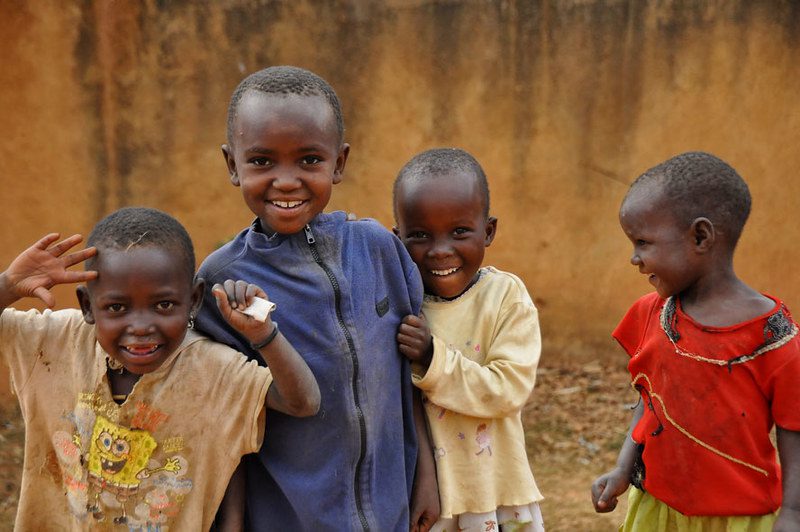
Global hunger is one of the most pressing and visible poverty-related issues in our world today. People can easily recognize the defined ribs, sunken eyes and bone-thin limbs of starvation. However, there is another side to hunger that is not as obvious: micronutrient deficiency.

Micronutrients are vitamins and minerals such as zinc, iron, iodine, vitamin A and folic acid. In developed nations like the United States, most people get these critical nutrients from maintaining a well-rounded diet or taking a daily supplement. But it isn’t always that simple in some other parts of the world. In fact, micronutrient deficiency remains a big problem in Eastern and Southern Africa but often does not get the attention it deserves because the effects are not immediately visible. For this reason, micronutrient deficiency has been nicknamed “hidden hunger.”

Hidden hunger has real and long-lasting consequences. Insufficient amounts of vitamins and minerals can result in learning disabilities, mental retardation, low work capacity, blindness and premature birth. These deficiencies lower overall health and weaken the immune system, thus making it much harder to survive infections like HIV and measles. They can cause extreme birth defects in children and are the leading cause of maternal death during childbirth.

Background

Clearly, micronutrient deficiency is a pressing issue that deserves the attention necessary to mitigate it. An organization called Sanku’s Project Healthy Children (PHC) is doing just that through a process known as food fortification: essentially, they add critical micronutrients to the flour people already consume.

PHC is based in Tanzania and currently supplies almost 2 million people with fortified flour to help them get the vitamins and minerals they need. Flour is a staple food that many people consume regularly; according to the PHC website, “over 50 million Tanzanians eat maize flour every day,” but more than 95 percent of it is produced without added nutrients in small, rural mills. Countries like Tanzania are in desperate need of better access to micronutrients—here, about 35 percent of children under 5 years old have stunted growth due to under-nutrition. Project Healthy Children uses the mills and distribution systems already in place to simply add essential micronutrients to the flour with no additional cost for the consumer. This way, people can get the nutrition they need without changing their eating or purchasing habits.

Why Food Fortification?

  1.  It is cheap: Food fortification is very inexpensive, typically costing no more than $0.25 per person annually. In other words, one quarter donated is enough to supply someone with adequate nutrients for an entire year.
  2. It is effective: Improving nutrition can be highly beneficial to overall health, work capacity and productivity. Women who sustain good nutrition before getting pregnant greatly reduce the risk of maternal death and birth defects.
  3. It has a huge payback: The economic rewards of food fortification are astounding. The WHO estimates that the consequences of micronutrient deficiency (birth defects, learning disabilities, premature death, etc.) can cost a country about 5 percent of its GDP per year. Supplying people with critical vitamins and minerals puts less pressure on a country’s health care system and allows for a more productive workforce. In addition, the Copenhagen Consensus estimated that for every dollar spent on nutrition in young children, a country will save an average of $45 and sometimes as much as $166.

The Future of Project Healthy Children

In the past few years, Project Healthy Children has become even more streamlined in its approach to food fortification. A partnership with Vodafone, a mobile network based in the United Kingdom, allows PHC staff to remotely monitor flour mills so that they instantly know when a machine is down or a mill is low on nutrients. The partnership saves money, time and manpower, allowing PHC to run more smoothly.

Project Healthy Children currently helps nourish about 1.7 million people in sub-Saharan Africa but hopes to reach 100 million people by 2025, an ambitious goal that would be instrumental in lifting communities in Southern and Eastern Africa out of extreme poverty.

– Morgan Johnson
Photo: Flickr

September 18, 2019
https://borgenproject.org/wp-content/uploads/borgen-project-logo.svg 0 0 Jennifer Philipp https://borgenproject.org/wp-content/uploads/borgen-project-logo.svg Jennifer Philipp2019-09-18 01:30:432024-05-29 23:12:47Project Healthy Children in Tanzania
Children, Development, Education, Food & Hunger, Global Health, Global Poverty, Health, Life Expectancy

10 Facts About Life Expectancy in Chile

Life Expectancy in Chile
Located on the southwest edge of South America, Chile‘s international poverty rate is 1.3 percent. This number is fairly low compared to other nations, but Chilean poverty is on the rise as the nation’s international poverty rate increased from 0.9 percent in 2015. Today, 234,083 Chilean people remain impoverished and currently survive on less than $1.90 a day. Despite this descent in economic prosperity, poverty has not negatively affected the country’s life expectancy as it is has risen from 73.6 in 1990 to 79.1 in 2018. Here are 10 facts about life expectancy in Chile.

10 Facts About Life Expectancy in Chile

  1. Female Life Expectancy: While the overall average life expectancy in Chile evens out at 79.1 years, according to the Central Intelligence Agency (CIA), women tend to live longer. Women have an average lifespan of 82.2 years while most men live to the age of 76. Despite this gap in longevity, Chilean citizens generally live long lives as the country ranks 51st among 222 other global nations.
  2. Living Conditions: Overcrowding has long been an issue in Chile. Not only does it reflect the economic fragility of the region but it also harms the physical and mental health of citizens subjected to it. When the Chilean government implemented the Social Housing Recovery of 2014, the health of the country’s citizens increased and their life expectancy increased as a result. Today, the average Chilean home houses 1.2 people per room, which is better than the Organisation for Economic Co-operation and Development’s (OECD) average of 1.8. Thanks to the Social Housing Recovery initiative, Chileans not only experience a higher standard of living, but they also received their right to better health and longer lives.
  3. Obesity: Obesity is one of Chile’s leading health issues. According to the CIA, nearly one-third of all Chilean adults suffer from obesity. Chile’s obesity rates ranked number 32 globally with 34.4 percent of adults and 44.5 percent of children suffering from the condition. Because of obesity, a large number of the nation’s citizens have an increased risk of other diseases including cardiovascular diseases, cancer and diabetes, some of the nation’s leading causes of death.
  4. Public Health Interventions: The Bono Auge Programme of 2010 created a universal health care program for Chile’s people. By providing a private health care voucher when public sector care is unavailable, more Chilean citizens are able to receive health care. Following its implementation, the program reduced the patient waiting list by 113,556 in 2010 to 50,780 the following year. The program also prioritizes those with high mortality pathological conditions and sets a two-day time limit on their waiting period for care. Patients who do not see a health care provider in this time frame receive a voucher so that another provider will see them. Equal health care increases the life expectancy of the Chilean people, as faster care and treatment not only saves lives but also extends them.
  5. Cancer: According to the OECD, Chile’s cancer mortality rate is high in comparison with its level of occurrence. Of the 35 percent of cases diagnosed, 23.8 percent end in death. This number makes up 24 percent of Chile’s national mortality rate and shortens the expected life span of its people. While the country has ways to treat the disease, much of this treatment is unequal and not enough. While it has created good screening procedures for cervical and breast cancers, it lacks large quantities of the equipment necessary to perform the job. Consequently, it is unable to reach a large number of people, and many people’s cancers go undetected. Unequal and limited proper testing hold Chile’s life expectancy back, as many of the country’s people die of cancers they are not aware they even have.
  6. Child Mortality: Ranked 163 in comparison with other countries, Chile’s infant mortality rate is fairly low. With an average of 6.4 deaths per 1,000 births and an under-5 mortality rate of 7.4 out of 1,000 during 2017, the country’s numbers prove themselves unalarming. Also, Chile’s infant mortality rate is on the decline, as the country’s under-5 mortality has dropped from 33.10 in 1980 to 7.4 in 2017.
  7. Air Pollution: Chile’s high concentration of air pollutant particles has a negative effect on the nation’s life expectancy. With 16.03 micrograms per cubic meter polluting Chilean air, the country fails to meet the 10 microgram standard that the World Health Organization set. The issue with polluted air is that it increases the risk for other diseases, such as lung cancer, which can eventually lead to death. Also, many expect that polluted air will be the leading cause of environmental premature death by 2050, meaning that without intervention, the country’s air quality will not only shorten the lives of people in the present, but it will also hurt the citizens of Chile’s future.
  8. Access to Health Care: While Chile has made strides towards equalizing its health care, care inequality is still a large issue. Socioeconomic status is the main determinant of the amount and quality of health care Chilean citizens receive. Chile’s indigenous citizens are statistically more impoverished, as they have a 35.6 percent poverty rate in comparison to their non-indigenous counterparts whose poverty rate rests at 22.7 percent. With a lower economic status, indigenous individuals have a higher risk of death, especially within their first year of life. In Mapuche, Chile, the children indigenous to Araucania have a 250 percent higher risk of death in their first year than those non-indigenous to the region. Without proper and equal access to health care, Chile’s impoverished people have a lower life expectancy merely because of economic status.
  9. Tobacco Consumption: According to the Pan American Health Organization, 20.2 percent of Chilean adolescents aged 19 to 25 participate in tobacco use. This number rises to 49.1 percent when assessing those citizens aged 26 to 34. This popularity in tobacco use not only increases the country’s risk of death from lung-related diseases, but it accounts for a large chunk of its lung cancer diagnoses. Chile is doing work to combat the issue, as it has implemented many anti-smoking policies, such as prohibiting smoking in public. As a result of these legislations, the prevalence of the nation’s total tobacco use has decreased from 42.6 percent in 2006 to 34.7 percent in 2014.
  10. Maternal Mortality: As of 2014, parasites and infections are the largest contributors to maternal deaths in Chile, as they make up to 25 percent of the total causes. While the maternal mortality rate has decreased, as deaths per 100,000 live births have dropped from 39.9 in 1990 to 22.2 in 2015. Improving Chilean poverty and prioritizing Chilean health care would improve the maternal death rate even more, as parasitic and infectious diseases are more prevalent among poverty-stricken regions.

These 10 facts about life expectancy in Chile show that by working towards ending Chilean poverty, the country’s total life expectancy will rise as a result. With poverty increasing the risk of many factors that contribute to Chilean mortality, such as decreased access to health care, reduced health literacy, higher risk of disease and higher prevalence of destructive behavior, a fight against poverty is a fight for all Chilean life.

– Candace Fernandez
Photo: Flickr

September 3, 2019
https://borgenproject.org/wp-content/uploads/borgen-project-logo.svg 0 0 Kim Thelwell https://borgenproject.org/wp-content/uploads/borgen-project-logo.svg Kim Thelwell2019-09-03 15:39:552024-05-29 23:12:2710 Facts About Life Expectancy in Chile
Advocacy, Children, Global Health, Global Poverty, Homeless, Homelessness

Abandoned Infants in Pakistan: Unfinished Business

 Abandoned Infants in Pakistan

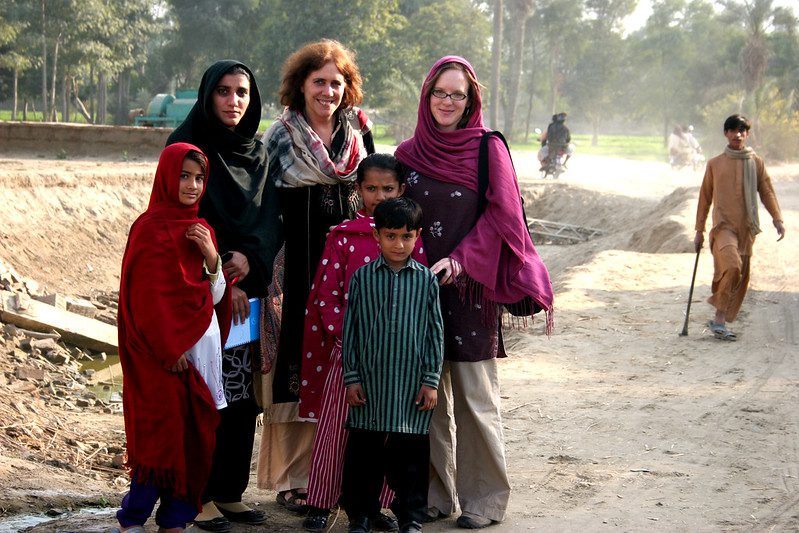
At just over a month old, Fatima was given away on live television. Fatima is just one of many children orphaned in Pakistan after being abandoned in trashcans and dirty alleyways. Placed in piles of rubbish, these infants are dying by the hundreds every year. On his show, “Amaan Ramzan,” Dr. Aamir Liaquat Hussain famously gives away cars and other luxury items to families in need. However, the show made world news after giving Fatima and another baby girl to a family who are unable to have children. As he explains, “These children are not a part of garbage, are not a part of trash, so we took these children from the garbage, from the trash and delivered them to the needy people, the needy parents.” Fatima’s new mother, Tanzeem Ud Din, said that she hopes the show will help encourage others to adopt children in need.

While the cause of the trend to abandon children remains unknown, many have their theories. One father who adopted two of these afflicted children and wishes to remain unnamed said, “it could be people not wanting children, women on their own or a couple that did not go through with an abortion.” He says religious belief plays a great roll in this. Many perish in the litter before they can be rescued. The lucky ones make it to orphanages dedicated to helping abandoned children. The father described his visit to the orphanage he adopted from sites of children with fear on their faces, crying because they had been dropped off two days ago when their mother died and their father left to remarry. Many of the children here live without a birth certificate or any paperwork for identification.

While the situation is horrific, many are working on solutions that will help save these children’s lives.

  1. Improvements to legislation: According to Director of the Imkaan Welfare Organization, Tahera Hasan, “Solutions don’t lie with philanthropic institutions and they never will. We are literally a drop in the ocean as far as the larger landscape is concerned.” In 2016, the Upper House of Parliament passed its first-ever bill to help abandoned children. Un-attended Orphans Rehabilitation and Welfare Act was written to protect the rights of orphaned children and ensure housing, education and healthcare.
  2. Decreasing poverty rates throughout Pakistan: According to the Economic Survey of Pakistan 2015–2016, 39 percent of the population lives in poverty. In contrast, the country has a total fertility rate of 2.55, according to the CIA Factbook, putting it at number 76 for world fertility rates. As a comparison, the United States is 142 on this list. Ahsan Iqbal, Minister for Planning, Development and Reforms says poverty reduction is one of the main objectives of Pakistan’s Vision 2025.
  3. Improving adoption services: According to Hasan, “There is no formal structure for adoption in place here, it is not recognized by the state.” Hansan is dedicated to the support of families adopting in Pakistan with the Imkaan Welfare Organization. Adoption remains mainly unregulated in Pakistan, with no paperwork for these children.

Social worker Ramzan Chippa said, “Parents who are adopting babies want healthy babies.” However, many orphaned children are described as severely mentally ill, one father even noticing a boy tied up in his orphanage to prevent him from taking bites out of his own arm. As a result, organizations such as Imkaan Welfare Organization are necessary to help these children become adoptable and find homes to be placed in.

The unnamed adoptive father referred to the child crisis in Pakistan as “unfinished business.” For countless children abandoned in dumpsters and litter, that is what their life is. Until Pakistan can adequately care for the thousands of unwanted children born every year, their existence will seem unfinished as they are homeless, purposeless and without a family.

– Maura Byrne
Photo: Flickr

August 20, 2019
https://borgenproject.org/wp-content/uploads/borgen-project-logo.svg 0 0 Jennifer Philipp https://borgenproject.org/wp-content/uploads/borgen-project-logo.svg Jennifer Philipp2019-08-20 10:53:142024-05-29 23:12:54Abandoned Infants in Pakistan: Unfinished Business
Aid, Global Health, Global Poverty, Humanitarian Aid, United Nations, USAID

The History of USAID Providing Aid

History of The United States Agency of International Development
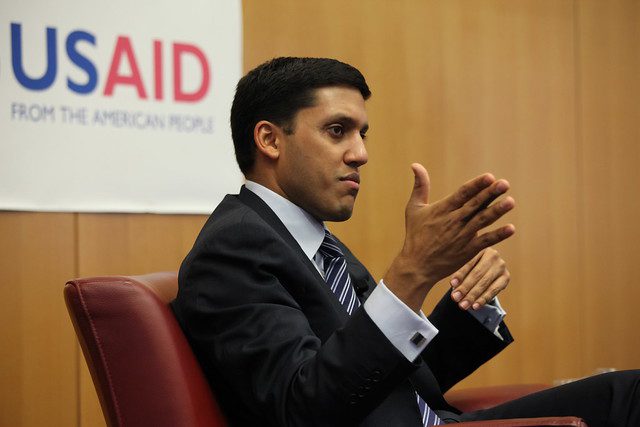
Foreign aid refers to any donation that one country makes to help another. The United States has proven itself to be a leading figure in foreign aid projects through the work of the United States Agency of International Development (USAID). This article focuses on the history of USAID.

USAID is the United States’ foreign aid branch which is responsible for diminishing poverty, innovating development and ideological progress around the world. The organization harbors an interesting history scattered with different approaches and methods. Each decade has acted as an era to test new theories on how to best assuage purveying poverty.

A Quick Historical View

On November 3, 1961, President John F. Kennedy signed an executive order that created the first U.S. agency that would take on global development challenges. USAID emerged “with a spirit of progress and innovation.”

The need for a specific agency to handle global development projects became clear after World War II. The Marshall Plan, active from 1945 to 1949, focused on rebuilding European nations after the damaging war. This demonstrated to U.S. lawmakers that providing assistance to stabilize countries is an effective way of initiating positive change. The 1960s was the decade of development. International powers united under the belief that poverty was a moral blot in the world. Groups like UNICEF and UNDP formed to strengthen infrastructure and industrialization in third-world countries.

Since its early stages, USAID has morphed and shifted focuses. The 1970s had a humanitarian ideal, the 1980s a market-based one and the 1990s saw an effort to stabilize democracy. The 2000s have thus far been reminiscent of USAID’s original purpose.  The all too numerous episodes of violence and war have caused much of USAID’s efforts to go towards rebuilding destroyed neighborhoods and governments.

How Does USAID Implement Aid?

The history of USAID shows that while the organization has taken on multiple approaches, funding methods have remained stagnant. USAID sometimes gives donations to governments and predominantly channels them through NGOs that use the money for very specific purposes.

Many NGOs use their budget to directly affect the lives of individuals and families. Communities receive humanitarian aid in the aftermath of natural disasters. Events like these are particularly harmful to impoverished individuals, as many of them rely on agriculture as the sole means of income. Education and health services are also a primary focus of NGO groups as these are both methods to bring third-world countries onto the modern development stage.

 Which Countries Receive the Most Aid?

There are over 100 countries that receive foreign aid assistance from USAID. The history of USAID shows that countries riddled with violence are often the highest receivers.

To date, USAID has given Afghanistan the most foreign aid from the United States. The country has received a considerable $4.89 billion in total. About 73 percent of this aid has gone directly to military projects. Counter-terrorist projects are particularly important in Afghanistan, as USAID attempts to stabilize legal and judicial systems that work to hinder the threat of violent groups. This not only protects the domestic Afghan population but also works to improve U.S. national security.

Iraq, Israel and Jordan are the next three countries that receive the most foreign aid assistance from USAID. The purpose of these donations is similar to that of Afghanistan.

Ethiopia, South Sudan and Kenya are also big receivers but for different reasons as economic aid is the primary concern. These programs are diverse and unique to the concerns of each country. Many, however, focus on relieving the spread of disease and allocating food security to suffering populations.

 A Recent Project

When reviewing the history of USAID, it is difficult to pick just one outstanding success. The record has shown that it has integrated democracy, erected countless schools and brought the miracles of modern-day science to neglected regions.

One of its recent projects that focuses on agriculture shows that USAID plans for the future and is also pragmatic. The Avansa Agrikultura Project from April 2015 to March 2020  focuses on farming in East Timor. At its completion, the project should help 5,500 individuals in earning more income and benefitting from a nutritious diet. USAID hopes to improve the daily goings of farm life in East Timor in addition to opening international trade markets to recipients.

A glance at the history of USAID personifies it as an organization dedicated to eradicating worldwide poverty through appropriate methods. With its record, it is no secret that this U.S. foreign aid branch poses as an international leader and will more than likely continue to be so in the future.

– Annie O’Connell
Photo: Flickr

August 16, 2019
https://borgenproject.org/wp-content/uploads/borgen-project-logo.svg 0 0 Jennifer Philipp https://borgenproject.org/wp-content/uploads/borgen-project-logo.svg Jennifer Philipp2019-08-16 11:35:432024-05-29 23:12:45The History of USAID Providing Aid
Page 18 of 18«‹161718

Get Smarter

  • Global Poverty 101
  • Global Poverty… The Good News
  • Global Poverty & U.S. Jobs
  • Global Poverty and National Security
  • Innovative Solutions to Poverty
  • Global Poverty & Aid FAQ’s
Search Search

Take Action

  • Call Congress
  • Email Congress
  • Donate
  • 30 Ways to Help
  • Volunteer Ops
  • Internships
  • Courses & Certificates
  • The Podcast
Borgen Project

“The Borgen Project is an incredible nonprofit organization that is addressing poverty and hunger and working towards ending them.”

-The Huffington Post

Inside The Borgen Project

  • Contact
  • About
  • Financials
  • President
  • Board of Directors
  • Board of Advisors

International Links

  • UK Email Parliament
  • UK Donate
  • Canada Email Parliament

Get Smarter

  • Global Poverty 101
  • Global Poverty… The Good News
  • Global Poverty & U.S. Jobs
  • Global Poverty and National Security
  • Innovative Solutions to Poverty
  • Global Poverty & Aid FAQ’s

Ways to Help

  • Call Congress
  • Email Congress
  • Donate
  • 30 Ways to Help
  • Volunteer Ops
  • Internships
  • Courses & Certificates
  • The Podcast
Scroll to top Scroll to top Scroll to top