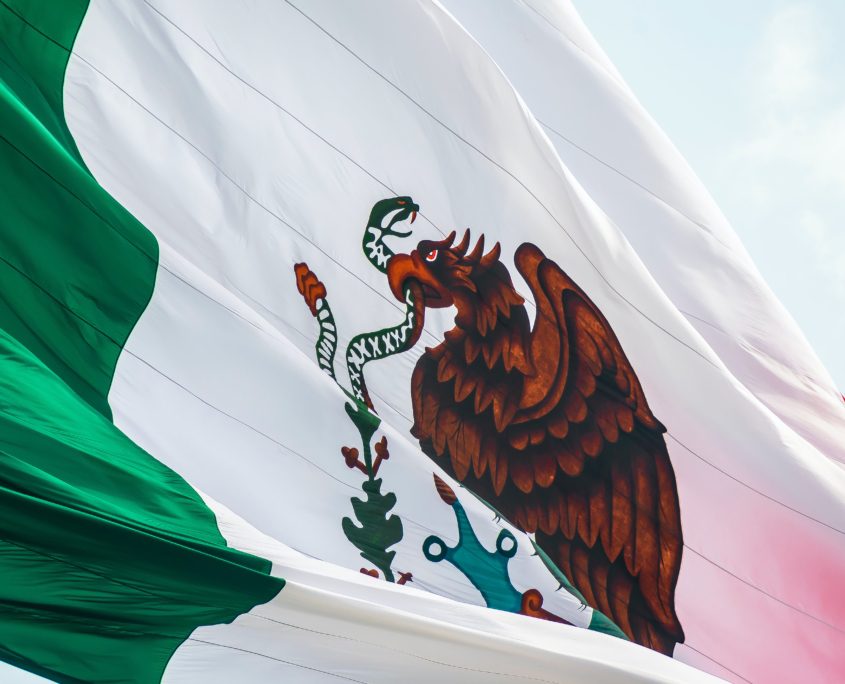
 Mexico is set to legalize the use of medical marijuana in 2021. Although this is significant, there are concerns that large corporations will have an unfair advantage. In a trade that employs many small farm and business owners, fairness is imperative. Stimulating medical cannabis tourism in Mexico could benefit farmers and the government alike. Locals can contribute to the travel industry and the government can provide better opportunities at all levels.
History of Marijuana Legalization in Mexico
Activists have long pushed for the legalization of the recreational use of marijuana. Many have argued that anti-discrimination laws grant marijuana use as a human dignity. Volunteers took interesting measures to protest during the COVID-19 pandemic by planting a garden of cannabis plants outside the Mexican Senate. Although recreational legalization was expected to pass as early as December, the government delayed the vote and instead established a set of regulations for medicinal use on January 12, 2021.
The most significant opposition stems from concerns over national security. Citizens are fearful that poorly implemented parameters could further aggravate the issue of organized crime activity. The new legislation, which regulates cultivation and sale, holds a number of legal complexities that farmers and sellers must adhere to. These requirements are likely to give large firms from Canada and the U.S. the upper hand. State protection has never been too generous for Mexicans in the trade. Prior to U.S. legalization, Mexico’s war on drugs and trafficking focused heavily on marijuana growers.
How Cannabis Tourism Could Address this Crisis
Medical cannabis tourism in Mexico offers an innovative solution to combat these economic insecurities. Cannabis tourism offers itself as a beneficial way for Mexicans to develop their businesses and to further boost tourism revenue. A variety of experiences have garnered interest from potential travelers, offering new spaces like “420-friendly hotels” and dispensary tours. Other nations have also utilized this industry to boost their economies. Thailand, after legalizing medical marijuana, improved itself as a tourist destination. The country encouraged its citizens to provide tours that would offer unique experiences and de-stigmatize the use of the drug. Thailand recognized the economic significance and legislators adapted to facilitate the growth of these new developments. Currently, cannabis tourism in Thailand is projected to develop millions of dollars in tourism revenue.
The new legislation in Mexico allows for tourists and citizens to freely carry medical cannabis products around the state. Though these leniencies are inspired by the precedent set by Thailand and are meant to open the market for cannabis tourism, locals must be pointed in the right direction with the information that will allow them to capitalize on the market to come. Mexico, the sixth most visited country in the world, has huge potential in medical cannabis tourism. Despite the lack of public protection for those who have been in the trade, this is also a significant opportunity to rebuild trust and, subsequently, national security through economic health. Medical cannabis tourism in Mexico offers a promising future, especially if Mexico adequately protects and facilitates small businesses. Additionally, medical cannabis tourism will be a vital source of economic stimulus in the coming years, with a likely surge in post-pandemic traveling.
Cannabis Advocacy in Mexico
Multiple organizations have repositioned their approach to supporting cannabis justice in Mexico as the new laws reinforce a divide between governance and working people. One NGO in particular, Instituto RIA, aims to empower potential vendors in the trade by providing classes on business practices and entrepreneurial literacy. In an interview with the Borgen Project, Instituto RIA co-founder Zara Snapp explained that “cannabis tourism will be immense in Mexico, if [one thinks] about the mezcal tourism, tequila tourism, vineyards.” She asserts that these changes are a “positive for the country and [a] means [for] creating greater economic opportunities across sectors and not about building the massive take-all corporate culture that [has been] seen in other industries.” Instituto RIA’s approach shows that by adapting to these new laws, NGO efforts can strategically position themselves to support an incoming robust trade of medical cannabis tourism in Mexico.
Along with grassroots empowerment work, Instituto RIA works to dismantle an unfortunate connection between national security and cannabis justice. Mexico has a complicated history with non-state actors and human rights violations, especially ones that concern cannabis cultivation and use.
As Snapp puts it, however, the state is an “actor [that activists] can seek to change as citizens of [the] country, whereas non-state actors like organized criminal groups [activists] have zero influence over; [they] cannot [be forced] for transparency, but [conditions can be created] so that some of them will choose to transition to a legal space and legal market. What [activists] hope to do is change the way that the state shows up in communities and with individuals that will rebuild trust, that will begin to build trust.”
Cannabis tourism in Mexico could be a profound solution in reviving socioeconomic and political safeties. Though the new laws are revolutionary in the overall movement for medical cannabis tourism, humanitarian organizations and NGOs are increasing their efforts to ensure the working-class’ struggles are heard.
– Danielle Han
Photo: Unsplash

The Potential of Medical Cannabis Tourism in Mexico
History of Marijuana Legalization in Mexico
Activists have long pushed for the legalization of the recreational use of marijuana. Many have argued that anti-discrimination laws grant marijuana use as a human dignity. Volunteers took interesting measures to protest during the COVID-19 pandemic by planting a garden of cannabis plants outside the Mexican Senate. Although recreational legalization was expected to pass as early as December, the government delayed the vote and instead established a set of regulations for medicinal use on January 12, 2021.
The most significant opposition stems from concerns over national security. Citizens are fearful that poorly implemented parameters could further aggravate the issue of organized crime activity. The new legislation, which regulates cultivation and sale, holds a number of legal complexities that farmers and sellers must adhere to. These requirements are likely to give large firms from Canada and the U.S. the upper hand. State protection has never been too generous for Mexicans in the trade. Prior to U.S. legalization, Mexico’s war on drugs and trafficking focused heavily on marijuana growers.
How Cannabis Tourism Could Address this Crisis
Medical cannabis tourism in Mexico offers an innovative solution to combat these economic insecurities. Cannabis tourism offers itself as a beneficial way for Mexicans to develop their businesses and to further boost tourism revenue. A variety of experiences have garnered interest from potential travelers, offering new spaces like “420-friendly hotels” and dispensary tours. Other nations have also utilized this industry to boost their economies. Thailand, after legalizing medical marijuana, improved itself as a tourist destination. The country encouraged its citizens to provide tours that would offer unique experiences and de-stigmatize the use of the drug. Thailand recognized the economic significance and legislators adapted to facilitate the growth of these new developments. Currently, cannabis tourism in Thailand is projected to develop millions of dollars in tourism revenue.
The new legislation in Mexico allows for tourists and citizens to freely carry medical cannabis products around the state. Though these leniencies are inspired by the precedent set by Thailand and are meant to open the market for cannabis tourism, locals must be pointed in the right direction with the information that will allow them to capitalize on the market to come. Mexico, the sixth most visited country in the world, has huge potential in medical cannabis tourism. Despite the lack of public protection for those who have been in the trade, this is also a significant opportunity to rebuild trust and, subsequently, national security through economic health. Medical cannabis tourism in Mexico offers a promising future, especially if Mexico adequately protects and facilitates small businesses. Additionally, medical cannabis tourism will be a vital source of economic stimulus in the coming years, with a likely surge in post-pandemic traveling.
Cannabis Advocacy in Mexico
Multiple organizations have repositioned their approach to supporting cannabis justice in Mexico as the new laws reinforce a divide between governance and working people. One NGO in particular, Instituto RIA, aims to empower potential vendors in the trade by providing classes on business practices and entrepreneurial literacy. In an interview with the Borgen Project, Instituto RIA co-founder Zara Snapp explained that “cannabis tourism will be immense in Mexico, if [one thinks] about the mezcal tourism, tequila tourism, vineyards.” She asserts that these changes are a “positive for the country and [a] means [for] creating greater economic opportunities across sectors and not about building the massive take-all corporate culture that [has been] seen in other industries.” Instituto RIA’s approach shows that by adapting to these new laws, NGO efforts can strategically position themselves to support an incoming robust trade of medical cannabis tourism in Mexico.
Along with grassroots empowerment work, Instituto RIA works to dismantle an unfortunate connection between national security and cannabis justice. Mexico has a complicated history with non-state actors and human rights violations, especially ones that concern cannabis cultivation and use.
As Snapp puts it, however, the state is an “actor [that activists] can seek to change as citizens of [the] country, whereas non-state actors like organized criminal groups [activists] have zero influence over; [they] cannot [be forced] for transparency, but [conditions can be created] so that some of them will choose to transition to a legal space and legal market. What [activists] hope to do is change the way that the state shows up in communities and with individuals that will rebuild trust, that will begin to build trust.”
Cannabis tourism in Mexico could be a profound solution in reviving socioeconomic and political safeties. Though the new laws are revolutionary in the overall movement for medical cannabis tourism, humanitarian organizations and NGOs are increasing their efforts to ensure the working-class’ struggles are heard.
– Danielle Han
Photo: Unsplash
Ben & Jerry’s Pays Cocoa Farmers a Living Wage
Cocoa Farming in West Africa
The vast majority of the world’s cocoa beans are grown in West Africa, and especially in Côte d’Ivoire and Ghana. Côte d’Ivoire alone exports 30% of cocoa beans sold to such chocolate makers as Nestlé and Mars. The global chocolate market is a large one. It generates huge profits for the mostly European manufacturers who create chocolate bars and other sweets. In addition, it is extremely profitable for the retailers who sell these products on their shelves. In 2014, for instance, sales for chocolate confectionary added up to $100 billion.
The value chain is incredibly lopsided, though. Côte d’Ivoire exports more cocoa beans than anywhere else in the world. Around 25% of the country’s population relies upon income generated from cocoa. Yet these cocoa farmers earn barely $1 per day, less than the $1.90 that marks the extreme poverty line. International sales for chocolate depend upon these farmers and their laborers, but they will see just over 5% of a chocolate bar’s final value.
Cocoa farmers have long faced the challenge of a volatile market since predicted demand and harvest yields can drive prices up or down. Tim Adams highlighted this problem in The Guardian after the price Côte d’Ivoire farmers received fell sharply in 2017. At the same time, Barry Callebaut, which ranks among the world’s biggest cocoa processors and chocolate manufacturers, earned 12% more the next year, with a profit of $288 million.
Improving the Supply Chain with Fairtrade
Fairtrade International is one organization working to change this disparity. Since its founding in 1994, Fairtrade has sought to give small producers a square deal by creating more transparency in the supply chain. Although the organization now works with farmers on multiple continents growing a wide variety of crops—including bananas, tealeaves, sugar cane and coffee beans—cocoa was one of its first targets. This has meant that buyers of any Fairtrade-certified chocolate bar can be sure that:
Finally, Fairtrade is working to establish living incomes for small-scale farmers and agricultural workers, over and above nationally set minimum wages. According to Fairtrade, a living income should allow people to afford nutritious food, decent housing and other essential needs with a small amount set aside to pay for unexpected emergencies.
Ben & Jerry’s Commitment
Here is where the ice cream brand Ben & Jerry’s is stepping up to help the cocoa farmers. The company is a longtime supporter of Fairtrade. Additionally, it has paid millions in Fairtrade Premiums to small-scale farmers growing key ingredients like cocoa. Now, however, Ben & Jerry’s has committed to paying higher prices so that 5,000 farmers in Côte d’Ivoire will earn $600,000 more per year. Divided equally, each farmer will receive about $120 in additional income.
While the price increase will not immediately fill the gap between minimum wages and a living income, Ben & Jerry’s Chief of Social Mission Dave Rapaport has hopes for the future. He told Forbes that Ben & Jerry’s work with Fairtrade is an integral part of a larger strategy—and not just in Côte d’Ivoire. “This is one further step on a longer-term journey that will continue for us,” he said, “[because] we are really committed to helping farmers in our supply chain obtain living incomes and we will be expanding those efforts to supply chains beyond cocoa.”
– Angie Grigsby
Photo: Flickr
Girl’s Education Can Bring Financial Prosperity to Developing Countries
Importance of Girl’s Education
It is starting to become clear that poverty is not just hunger or financial strife, but rather directly correlates with poor education. A society cannot expect to move forward and progress if their government does not provide adequate and sufficient education for girls to obtain a successful life. Instead of having the option for education, many girls must stay home. In many cases, this can lead to sexual abuse and unplanned early pregnancies.
Interestingly, strong evidence suggests that there is a strong bias in children from wealthier families having access to better education opportunities than from poorer families. Nearly 33% of girls who are age 10 to 18 have never even stepped foot inside of a classroom. In a recent report by BBC.com, the United Kingdom’s Prime Minister Boris Johnson heavily emphasized that people are ultimately unaware of the serious harm of girls not having access to education. Prime Minister Johnson has repeatedly reinforced the idea of planned out education for girls that would span 12 years.
COVID-19 Pandemic’s Effect on Girl’s Education
The spread of COVID-19 has been a catastrophe for international school systems all over the world. Within April 2020, a confirmed 194 different nations enforced mandatory school closures. While having the intention of preventing the spread of the disease, it unintentionally derailed over one billion children in their educational journeys. Families have to completely change their daily routines to practice safe distancing and provide a school for their kids. The time lost in the physical classroom is starting to become a noticeable issue. Girl’s education and its setbacks have undoubtedly had a much worse outcome for the young female population. Some are predicting that tens of millions of girls will not get a chance to return to school.
An Initiative to Help Girl’s Education and Developing Countries
A coalition of eight up and coming developing nations have come together in a new initiative. The goal is to ensure the incorporation of poverty-stricken girls completing their primary education. This initiative comes with an underlying advantage that foresees a significant increase in financial output for multiple different developing countries. It is estimated that each dollar used for a girl’s education could generate nearly $3.00 in order to add billions to a country’s total financial income. This approach would be a team effort to help the struggle of developing countries. It can also help warrant the completion of a girl’s primary education. This initiative would suggest that girl’s completion of education could be the real secret to sustainability for countries and the U.N.’s education plan.
Education is one of the most important foundations for any country to succeed. However, many countries overlook girl’s education compared to males. Keeping girls in school can provide financial gain for a country and is a potential outlet for positive change. Therefore, it is essential to ensure the success of all women globally will be carried on for generations to come.
– Brandon Baham
Photo: Flickr
3 Organizations Working to Improve Girls’ Education
3 Organizations Working to Improve Girls’ Education
Education, Gender Equality and Poverty Reduction
The World Bank, the U.N. and the U.K. are trying to create fair schooling policies but are also breaking down social barriers in the developing world. Global society is trending in the right direction for gender equality but the international community still has much work to do. All efforts to improve girls’ education can and will be a catalyst for change.
– Zachary Hardenstine
Photo: Flickr
Natural Gas Industry Creates Job Opportunity for Mozambique
Poverty and Social Inequalities
Within the last 20 years, Mozambique has had a growing period in predictive expansion in agriculture and natural resources. The growth has been at a slow pace. Although the poverty numbers are not what they once were, there is a noticeable space between social and financial equality. A recent report from ClubOfMozambique.com suggests that the abrupt lockdowns from COVID-19 have shined a light on the wide gap between the well-off and the impoverished. Hunger has been another major issue for struggling families due to spikes in inflation and boundary restrictions. There is public blame that is directed toward the government and the failure of equal distribution of wealth.
The Natural Gas Project
In July 2020, a major French oil company, Total, put together a near $15 billion contract agreement to begin the production and distribution of the country’s abundant natural gas resources. The scale of this project is set to be one of the biggest industrial initiatives in the history of Africa. The World Bank and The International Monetary Fund (IMF) have given their assistance both financially and publically. This is needed amid pushback from the use of fossil fuels. An environmental organization called Friends of the Earth International has concluded that ever since the country first discovered natural gas reserves 10 years ago, it has contributed to the public imbalance of wealth and prosperity. From the opposite point of view, the African department of the IMF suggested that the fuel project could be a very unique window of opportunity to bring a fresh start to the economy of Mozambique.
Possible Job Opportunity
The country’s economic statistics would suggest that this project would be a significant milestone for those that are deep in poverty. Proper instruction and leadership from international fuel companies can eventually lead to job opportunities for locals. Currently, job opportunities are few and far between with a high majority having to rely on agriculture for survival. In addition, this is a main key factor that went into the government’s extensive plan. This would work toward converting natural gas into nutrients for crops, bringing higher yields for working farmers. Perhaps most importantly is the fact that this project has the potential to rectify one of the main problems in the country: dependable energy. Bringing in the fuel industry would allow the chance for energy in expanded locations. As a result, it would inevitably bring back Mozambique’s travel and vacation business.
When a country such as Mozambique is going through such disheartening conditions, it is hard to argue against taking the risk to majorly improve their economic situation. When Mozambique takes part in the natural gas business sector, it would lead to more international attention and inclusion.
– Brandon Baham
Photo: Flickr
She’s the First and the Girls’ Bill of Rights
She’s the First
She’s the First, a nonprofit organization, recognizes the benefits of prioritizing women and gender equality. When females are educated and empowered, they can earn up to 20% more as an adult for each additional year of schooling completed. They are also then more likely to be in healthy relationships, have fewer but healthier children, are less likely to marry early and are more likely to make an impact in the world. These reasons are why She’s the First puts girls first by promoting women’s equality and education.
Putting Girls First
She’s the First promotes girls’ education and equality. It provides funding to different community-based organizations that can implement culturally efficient ways for girls to attend school as well as afterschool programs where they can further their education while simultaneously learning about life skills and reproductive health. She’s the First also runs training and conferences around the globe. These conferences amplify girls’ voices around the world, inspiring them to become leaders in their own communities. As of the end of 2019, She’s the First reached 11,000 girls, had a presence in 21 countries and provided training for 52 community-based organizations.
Girls’ Bill Of Rights
She’s the First is a co-organizer of the Girls’ Bill of Rights, a declaration of the rights all girls are entitled to, written by girls, for girls. More than 1,000 girls from 34 countries contributed to the list, created on the 2019 International Day of Girl and presented to the United Nations. The Girls’ Bill of Rights advocates for the promotion of girls’ rights like quality education, equality, leadership, sexual education and reproductive rights, protection from harmful cultural practices, free decision-making and more. To support the Girls’ Bill of Rights, supporters can use the hashtag “#GirlsBillOfRights”, co-sign the bill or make a public pledge of support.
Women’s Empowerment and Poverty Reduction
She’s the First is an organization that works toward complete equality for women worldwide, especially in regards to education. Currently, women face a significant disadvantage, especially those who are uneducated. If women are given education and equality, they can lift themselves out of poverty since education is directly related to lowering poverty levels. She’s the First spreads this idea by creating culturally efficient ways for girls to go to school and further their education in developing countries. The organization also advocates for women’s rights through the Girls’ Bill of Rights. She’s the First plays a crucial part in empowering women and helping them to lift themselves out of poverty.
– Seona Maskara
Photo: Flickr
Operación Eta: A Relief Coalition for Tropical Storm Eta in Honduras
How Does Operación Eta Work?
The coalition’s main goal is to raise funds to support the families affected by tropical storm Eta. Funding comes from crowdsourcing. Thus, Operación Eta has established a GoFundMe profile. Behind the profile, a group of nonprofit organizations has come together. In addition, Honduran college students aiming to create social change in their country established initiatives to counteract poverty, hunger and social inequality during the COVID-19 pandemic. However, tropical storm Eta has united all these groups in one collective effort to help the nation recover. Among other nonprofits, Operación Frijol and Abrazos de Plata work within Operación Eta.
Nonprofits Working Under Operación Eta
Looking Ahead
Tropical storm Eta has wrecked homes and disrupted lives. However, this tragic natural disaster has united the Honduran people while inspiring people’s generosity and encouraging others to stand up in solidarity. The natural hazard has triggered college students into action, bringing hope to those struggling amid the consequences of the disaster.
– Paola Arriaza Avilés
Photo: Pixabay
The Insulated Wonderbag Combats Global Poverty
The Insulated Wonderbag
In developing countries, gendered roles like cooking and tending to the household take up a lot of time. The amount of time spent cooking could be better used on activities that result in the progression of women, such as education and development. Often, women are disproportionately responsible for cooking meals and the labor that goes into the open fires that are required for such cooking. A South African entrepreneur decided to design an invention to help address these difficulties. The insulated Wonderbag is an eco-technology innovation that saves girls and women hours of time and labor and improves indoor air quality and overall health, among other benefits.
How the Wonderbag Began
The idea behind this invention comes from Sarah Collins, a local South African innovator with extensive knowledge of social development and a love for the environment. Collins grew up watching the women before her use cooking tricks to keep food warm when the power went out. One of these tricks, used by her grandmother, was letting hot pans of food sit in cushioned pads to remain warm. A life-changing yet straightforward concept that Collins took and made her own.
The Simple Magic of the Wonderbag
First and foremost, the Wonderbag is a product meant to alleviate women and girls’ daily struggles as caregivers and enable them to pursue education and employment. The Wonderbag works without electricity or gas and is made of upcycled materials such as poly-cotton and chipped-foam. Essentially, it functions similarly to a crockpot or a slow cooker. The insulated Wonderbag allows food, once brought to the boil by traditional cooking methods, to continue cooking for up to 12 hours inside the Wonderbag.
The Benefits of the Wonderbag
The Impacts of the Wonderbag
Since 2008, the revolutionary Wonderbag has been distributed around the world. Thus far, it has had an impressive impact. The introduction of the Wonderbag into communities allows women the chance to build their own businesses and create jobs for others. These businesses range from serving warm meals to sewing new bags. Moreover, every time a Wonderbag is bought, another is donated to women in need in Africa, continuing the cycle of prosperity.
More than 130 NGOs in Kwazulu Natal, South Africa, benefitted from reselling Wonderbags to generate an income, especially during the COVID-19 pandemic. Collectively, these NGOs generated almost two million South African rands to sustain their operations.
Overall, the global need for the insulated Wonderbag continues to grow. So far, there are more than one million Wonderbags worldwide. With every purchase, $1 goes toward subsidizing bags for people in vulnerable communities. The Wonderbag is an innovative solution to combat global poverty.
– Sallie Blackmon
Photo: Flickr
Reforms for Saving the Venezuelan Economy
Saving the Venezuelan Economy
While this economic collapse still ravishes the country, there is certainly hope for the future. Due to both internal and external pressures, the president of Venezuela, Nicolás Maduro, has begun to encourage policies of economic liberalization and privatization that are indicating an economic rebound.
Toward the end of 2019, Argus Media reported the Venezuelan government was beginning to ease economic controls. Specifically, the Maduro government erased most price controls, loosened capital controls, tightened controls on commercial bank loan operations, and most importantly, began to accept informal dollarization. Immediately these policies curbed the levels of hyperinflation that had caused the food crisis across the country. Advisers estimate inflation to be at only 5,500%, a significant improvement compared to the International Monetary Fund forecasts that predicted inflation levels of more than 10 million percent. This is largely in part to the importation of dollars into the Venezuelan economy, pushing out the uselessly-inflated Bolivars. Indeed, a Bloomberg study found Venezuela’s economy is increasingly dollarized, as 54% of all sales in Venezuela by the end of last year were in dollars. Most importantly, food and medicine imports have rebounded, now reaching 15% of the population.
Privatization of the Oil Industry
In addition to the Maduro government relaxing economic controls, the economic rebound in Venezuela has occurred due to increased privatization of the oil industry. Despite being under the control of the military for years, Venezuela’s state-owned oil company has trended toward letting private firms handle operations, aiding in fixing the mismanagement perpetrated by the military’s control of the industry. For the first time in decades, the private sector accounted for more than 25% of GDP in 2019 and likely more by the end of 2020. Consequently, the Panam Post reported that oil production increased by more than 200,000 barrels, a 20% increase following privatization.
Initiatives to Help Venezuelans in Poverty
The South American Initiative, through its medical clinic, provides medical care and medicine to Venezuelans in need, with a special focus on mothers and children. To provide these essential services, it relies on donations that people provide on the GlobalGiving platform.
Fundacion Oportunidad y Futuro addresses hunger and malnutrition with regards to children in Venezuela. It is running in an initiative to provide meals to 800 school-aged children in Venezuela. It also operates through donations via the GlobalGiving platform.
The Future of Venezuela
While there is hope to be found in these reforms, Venezuela has far from recovered. The National Survey of Living Conditions indicates that more Venezuelans are in poverty in 2020 than in 2018, with food security decreasing another 7% over the past two years. The average income of Venezuela remains low at just over 70 U.S. cents a day. These reforms are the foundational steps needed to begin to reverse the economic trend that has relegated millions of Venezuelans to extreme poverty. If the economy is ever to correct itself, liberalization and privatization will be the jumping-off point for an economically thriving Venezuela in the future.
– Kendall Carll
Photo: Flickr
Addressing Migrant and Refugee Health
7 Facts About Migrant and Refugee Health
Refugees are affected by illness and health issues through transit and in their host communities. Most refugees are likely to be in good health in general, according to the CDC, but migrating tends to be a social determinant in refugee health. Health inequities are increased by conditions such as restrictive policies, economic hardship and anti-migrant views. Poor living conditions and changes in lifestyle also play a role.
Refugee health profiles are compiled through multiple organizations to provide information about important cultural and health factors pertaining to specific regions. Refugees from different areas often have very different health concerns. For example, anemia and diabetes are priority conditions in Syrian refugees but parasitic infections and malaria are the focus for Congolese migrants.
About one-third of migrants and refugees experience high rates of depression, anxiety and post-traumatic stress disorders. Mental health is a vital part of all refugee health programs and the priority for youth mental health programming is especially necessary. Forced displacement is traumatic and while there is likely a reduction of high anxiety or depression levels over time after resettlement, some cases can last for years.
Healthcare is often restricted based on legal status within refugee populations. The 1946 Constitution of the World Health Organization articulated that the right to health is an essential component of human rights but many people are limited to claiming this right. Activists for refugee health along with many NGOs call for universal health care and protection for migrant populations.
Important needs in refugee health include the quality and cost of disease screenings. HIV, hepatitis, schistosomiasis and strongyloidiasis are diseases that are prevalent among vulnerable refugee and migrant populations. However, ease and quality of medical screenings are not guaranteed in many centers or camps.
Mothers and children face many barriers due to their unique needs and few refugee health care providers are able to properly address them. There is an increased need for reproductive health services and many of the barriers provide more difficulty than aid to many women. These include language, costs and general stigma.
Prioritizing Vulnerable Populations
The U.N. Refugee Agency (UNHCR) is well known for its work to safeguard the rights and well-being of people who have been forced to flee. Refugee International is another organization that advocates for the rights and protection of displaced people around the world. Awareness of refugee health facts and concerns enables organizations to take a direct stance on improving conditions and procedures. With the growing number of refugees around the world today, addressing migrant and refugee health must be prioritized in order to better protect these vulnerable populations.
– Savannah Gardner
Photo: Flickr