 The World Health Organization (WHO) has recorded 7 million premature deaths globally as a result of elevated levels of air pollution. In 2016, the WHO reported that 91% of the world’s population resided in areas that did not meet the threshold for acceptable air quality. Such conditions escalate the effects of and increase mortality from strokes, cardiovascular disease, respiratory disease and infections, cancer and chronic obstructive pulmonary disease. In 2010, the World Bank along with the Institute for Health Metrics and Evaluation reported more than 180,000 deaths and the loss of 4,100,000 disability life adjusted years directly attributable to road transport air pollution. Also, when declaring the ‘best practice group’ for policy handling of air pollution, the list consisted mainly of high-income countries that can afford preventative measures like electrifying transportation.
Air Quality and Poverty
The WHO reports that low-and middle-income countries suffer the highest effects of elevated exposure to harmful air pollutants. In fact, the majority of the world’s cities with the highest Air Quality Indices (AQI) are found in developing nations. These countries typically do not have adequate laws or enforcement to protect against air pollution. These nations tend to contain a higher number of coal power stations and less stringent restrictions on vehicle emissions.
Further, developing nations experience great disparity in the effects of air pollution and the burden typically falls on the countries’ most impoverished populations. The reason for this is that the impoverished usually reside in highly concentrated areas with dense harmful emissions, a consequence of their exclusion from suburban areas where there are fewer pollutant-generating spaces.
Despite air pollution challenges, a healthy environment, which includes clean air, is a human right and forms part of the United Nations (U.N.) Sustainable Development Goals. In order to improve air quality, one of the U.N.’s main suggestions is to adopt clean and renewable energy and technologies.
Electrifying Transportation
The emissions from current fuel and diesel-powered traditional transportation systems consisting of fossil fuel-powered cars, trucks and buses generate pollutants that have adverse effects on every organ in the human body. These forms of transport are also responsible for approximately half of all the nitrogen oxides in the air of the U.S. alone.
Furthermore, transportation stands as one of the greatest sources of greenhouse gases. Given the large contribution to air pollution arising from main-stream fuel and diesel vehicles, electrifying transportation systems is anticipated to be one of the most effective, shorter-term solutions to air pollution. This will, in turn, lift some of the burdens on impoverished and vulnerable populations.
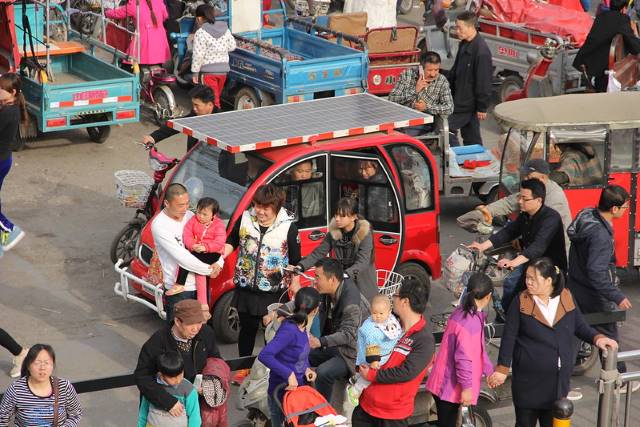
One of the main advancements in renewable technology is the use of electric vehicles. One estimate finds that with the widespread accelerated adoption of clean transportation through the electrification of vehicles and fuel, an approximated 25 million aggregate years of life would be saved by 2030. Included in this figure are at least 210,000 reductions in premature deaths in 2030 alone. These gains would primarily occur in China, India, the Middle East, Africa and developing Asia, especially in locations with the highest rates of poverty.
So far, there are three classes of electric vehicles:
- E4W – Electric four-wheelers.
- E2W – Electric two-wheelers.
- HEV – Hybrid electric vehicles.
Access in Developing Countries
One of the main barriers to electrifying transportation in developing nations is the fact that electric vehicles (EVs) are typically more expensive than traditional fuel and diesel-powered vehicles. However, switching to EVs can prompt savings. Developing nations exist on a spectrum of development. For those with public transportation systems, working police and emergency health care fleets, the governmental investment in the transition toward electric vehicles and trucks would not only help to improve the air quality in the respective nations but would also prove cheaper and more sustainable in the long run.
Of the available classes of electric transport options, the E2Ws would be most beneficial in developing nations. This is because E2Ws have the lowest energy consumption rating. Unlike E4Ws, the E2W class of EV’s ability to charge via regular home outlets means that there are no substantial charging infrastructure investment requirements.
In terms of operational costs, all classes of EVs have lower operational costs than their corresponding fuel vehicles. However, the E2W class has benefits ranging from 24% lower operational costs, and in some countries like Vietnam, eight times lower operating costs than corresponding fuel-based transportation.
Many developing nations might not yet be in a position to invest in and benefit from the E4W or HEV EV classes due to their high initial investment and required charging infrastructure investments. The E2W class by contrast has been found to be a feasible investment for electrifying transportation for poverty reduction. Not only will this contribute to a significant reduction in air pollution, lightening its burden on the poorer populations, but it will also prompt savings for governments and stimulate economic growth. Additionally, as investments in EVs continue to rise, the initial purchase prices will fall and so developing countries might be able to afford higher classes.
– Rebecca Harris
Photo: Flickr

What to Know About the Greek Roma
History of Problems
In Greece specifically, tensions have risen between the Romani and non-Romani Greeks since the economic crisis in 2009. In an interview with The Borgen Project, Dr. Taso Lagos, professor at the University of Washington School of International Studies and researcher of the conditions of the Roma in Greece, said that for non-Romani Greeks, the unemployment rate at the time was “as high as 30%,” but for the Roma, “went up to 60%.”
Ten years after the crisis, the Romani people in Greece still face extreme poverty. A recent eye-opening report showed that while approximately 20% of the general Greek population is at risk of poverty, the same is true for nearly 100% of the Greek Roma.
According to Professor Lagos, there are 351 Roma settlements throughout Greece. In these settlements, many Roma “live in tents where [they] have no running water, no central heating” and “no indoor plumbing.” Some also live in permanent housing such as caravans, but conditions there are also commonly bleak.
In the early 2000s, the Greek government set out with a plan to improve conditions for the Roma, but many say that these efforts were unsuccessful and that most communities are in the same conditions as before.
Causes of Poverty
There is an ongoing debate over what causes this vicious cycle of poverty affecting the Roma. Many people attribute it to a problem of widespread lack of education. More than 90% of Roma children in Greece do not attend preschool or kindergarten. In fact, slightly less than 50% of Roma children will never receive any formal schooling.
In the case of Romani girls especially, education is a primary concern. Many enter marriages as teenagers and are expected to run the household. Therefore, these girls are unable to finish high school. Others exit the school system early due to perceived dangers and stereotypes Romani people hold about the general Greek community. Professor Lagos explains that many Roma girls do not finish high school because “their parents regard Greek schools as denizens of vice and licentiousness.”
Further, the Romani children who do attend school are frequent victims of bullying. Sometimes the early recipients of prejudice, these children endure stereotypes that Romani people are either dirty, drug users or thieves. These perceptions and stereotypes run deep in both communities and continue to add to the problems affecting the well-being of all people.
In one instance, police removed a young girl from her Roma family when her caretakers were accused of kidnapping her. This proved to be false through DNA evidence. But, many Roma continued to receive backlash and criticism from the general population following the event.
Signs of Progress
Years later, there remains ongoing misunderstanding and lack of communication between the two groups. However, some believe that there is hope for improving relations between non-Roma and Roma. This will improve other conditions for the Romani people.
Recent subjects inspiring calls to action for the Greek Roma include:
Another group that is effecting positive change for the Greek Roma is the Panhellenic Association of Greek Roma. This organization, which began in 2007, has afforded more than 50 Roma people grants. These grants help them establish businesses, connect community members with social and emotional support and provide legal support to those struggling with housing.
Professor Lagos spoke on the importance of communication between the Roma and non-Roma of Greece. He argued that it is critical “to institutionalize community dialogue between regular people.” This, he says, “would have a huge impact.”
– Aradia Webb
Photo: Flickr
Electrifying Transportation for Poverty Reduction by Eliminating Air Pollution
Air Quality and Poverty
The WHO reports that low-and middle-income countries suffer the highest effects of elevated exposure to harmful air pollutants. In fact, the majority of the world’s cities with the highest Air Quality Indices (AQI) are found in developing nations. These countries typically do not have adequate laws or enforcement to protect against air pollution. These nations tend to contain a higher number of coal power stations and less stringent restrictions on vehicle emissions.
Further, developing nations experience great disparity in the effects of air pollution and the burden typically falls on the countries’ most impoverished populations. The reason for this is that the impoverished usually reside in highly concentrated areas with dense harmful emissions, a consequence of their exclusion from suburban areas where there are fewer pollutant-generating spaces.
Despite air pollution challenges, a healthy environment, which includes clean air, is a human right and forms part of the United Nations (U.N.) Sustainable Development Goals. In order to improve air quality, one of the U.N.’s main suggestions is to adopt clean and renewable energy and technologies.
Electrifying Transportation
The emissions from current fuel and diesel-powered traditional transportation systems consisting of fossil fuel-powered cars, trucks and buses generate pollutants that have adverse effects on every organ in the human body. These forms of transport are also responsible for approximately half of all the nitrogen oxides in the air of the U.S. alone.
Furthermore, transportation stands as one of the greatest sources of greenhouse gases. Given the large contribution to air pollution arising from main-stream fuel and diesel vehicles, electrifying transportation systems is anticipated to be one of the most effective, shorter-term solutions to air pollution. This will, in turn, lift some of the burdens on impoverished and vulnerable populations.
One of the main advancements in renewable technology is the use of electric vehicles. One estimate finds that with the widespread accelerated adoption of clean transportation through the electrification of vehicles and fuel, an approximated 25 million aggregate years of life would be saved by 2030. Included in this figure are at least 210,000 reductions in premature deaths in 2030 alone. These gains would primarily occur in China, India, the Middle East, Africa and developing Asia, especially in locations with the highest rates of poverty.
So far, there are three classes of electric vehicles:
Access in Developing Countries
One of the main barriers to electrifying transportation in developing nations is the fact that electric vehicles (EVs) are typically more expensive than traditional fuel and diesel-powered vehicles. However, switching to EVs can prompt savings. Developing nations exist on a spectrum of development. For those with public transportation systems, working police and emergency health care fleets, the governmental investment in the transition toward electric vehicles and trucks would not only help to improve the air quality in the respective nations but would also prove cheaper and more sustainable in the long run.
Of the available classes of electric transport options, the E2Ws would be most beneficial in developing nations. This is because E2Ws have the lowest energy consumption rating. Unlike E4Ws, the E2W class of EV’s ability to charge via regular home outlets means that there are no substantial charging infrastructure investment requirements.
In terms of operational costs, all classes of EVs have lower operational costs than their corresponding fuel vehicles. However, the E2W class has benefits ranging from 24% lower operational costs, and in some countries like Vietnam, eight times lower operating costs than corresponding fuel-based transportation.
Many developing nations might not yet be in a position to invest in and benefit from the E4W or HEV EV classes due to their high initial investment and required charging infrastructure investments. The E2W class by contrast has been found to be a feasible investment for electrifying transportation for poverty reduction. Not only will this contribute to a significant reduction in air pollution, lightening its burden on the poorer populations, but it will also prompt savings for governments and stimulate economic growth. Additionally, as investments in EVs continue to rise, the initial purchase prices will fall and so developing countries might be able to afford higher classes.
– Rebecca Harris
Photo: Flickr
Poverty in Paraguay
The landlocked country of Paraguay, located in south-central South America, currently faces strict rule and political turbulence. These recent troubles contribute to the long history of poverty in Paraguay. Since the 1860s, the country has participated in three different major wars in South America. It also experienced a civil war in the 1940s, which gave the Paraguayan people a strong sense of fear and unwillingness to express themselves freely. This sentiment has only recently begun to diminish in the early 21st century.
Background
The citizens and inhabitants of Paraguay are less diverse and more ethnically homogenous than in other South American countries. Most are of European and Guarani descent. Rivers are very important to the country’s economy as these water sources support the function of many hydroelectric power plants. Paraguay is one of the best producers of soybeans and many parts of the country flourish where fertile soil allows for diverse diets and high standards of living.
While the country is making great strides in the 21st century in its efforts to combat poverty, economic distress continues to stand as a major issue. Leading up to the year 2017, Paraguay actually noted an increase in poverty rates. Even though the country performed better economically overall, the total poverty rate that year rose from 26.6% to 28.8%. Even extreme poverty, which is defined as living on less than $1.90 a day, increased in this period.
These numbers are tragic because it shows a reversal in the steady decline of poverty rates in Paraguay in the years prior to 2016. To put this into perspective, in the five years prior, the poverty rate declined from 31.37% to 26.58%. This sudden worsening was unexpected as the South American region was collectively making progress in the fight against poverty. However, things have changed since then and poverty in Paraguay is showing signs of improvement.
Path to Progress
Some think that changes in poverty in Paraguay are the result of the government shifting its focus to extreme poverty. People in extreme poverty may not have the most basic necessities, such as food, shelter, sanitation and medical services. The minister of technical planning, Jose Molinas, confirms that there is a goal of reducing the extreme poverty rate to 3%. However, there is no goal to address the total poverty rate, leaving some impoverished people neglected.
Alicia Bárcena, the executive secretary of the U.N. Economic Commission for Latin America and the Caribbean (ECLAC), states that a lack of investment, extensive divisions in class structure and limited productivity gains are threatening the region’s ability to reach the poverty reduction goals agreed upon by U.N. members in 2015. Perhaps by addressing these issues, then, and by giving attention and care to the total poverty rate as opposed to only extreme poverty rates, the country can see a decline in poverty rates.
In fact, progress is already visible, with the poverty rate reducing from 24.2% to 23.5% between 2018 and 2019. This is due in part to the ongoing support from other countries and aid organizations.
In 2019, the Australian Embassy initiated the Direct Aid Program (DAP). DAP provides small grants for more than 80 countries worldwide, including Paraguay, funding non-governmental organization initiatives to aid these countries. It supports endeavors like providing education for the youth, including vocational and sex education. Other initiatives include promoting the economic development of women to achieve gender equity as well as infrastructure projects for Indigenous peoples. One such initiative, Poverty Spotlight, helped 30,000 Paraguayan families leave poverty through higher income generation. Continued support of programs and initiatives like these will help maintain the country’s progress and gradually eradicate poverty in Paraguay.
– Fahad Saad
Photo: Flickr
Lessening Poverty in Jordan
While known for political stability in a region associated with civil wars and political violence, the Hashemite Kingdom of Jordan does have its fair share of struggles when it comes to the economy. Poverty in Jordan is the outcome of many factors shaping the country’s economic struggles. The kingdom has a scarce amount of natural oil stock in its eastern desert and the country is heavily reliant on foreign importing to meet its energy needs, constituting up to 30% of its total imports.
The country also happens to experience a wide range of issues, such as the inability to meet half of the population’s water demand, only 2.6% of its land being arable, an average labor participation rate of 38.1%, an unemployment rate of 23.9%, millions of refugees from Iraq, Palestine and Syria and a debt crisis consisting of 95% of the kingdom’s gross domestic product. All of these issues exacerbate poverty in Jordan.
Effects of Poverty on Jordan’s Youth
While poverty in Jordan affects people of all ages, a look at Jordan’s children tends to give a grim view. The population of children in Jordan is around 3 million. Of this number, 0.6% endure multidimensional impoverishment, which occurs when one suffers multiple deprivations at one time, and includes facets such as health, education and living standards. Poor quality of work, hazardous environments, disempowerment and the threat of violence also form part of these deprivations.
Poverty in Jordan disproportionately affects the refugee populations. The number of Syrians in Jordan living below the country’s poverty line is 78%. Among Syrian children, 94% of those younger than 5 experience multidimensional poverty. When it comes to malnutrition, 17% of the children face malnourishment due to poverty in Jordan. In addition, the infant mortality rate is 31 per 1,000 children.
Green Innovation
A significant issue that relates to poverty in Jordan is the issue of resource shortage. Addressing this is one way to combat some of the effects of poverty in Jordan. To overcome these challenges, the Hashemite Kingdom is spending more than $5 billion on renewable energy so that the nation can move toward self-sufficiency. Solar energy is already saving money for the local population with one religious clerk saying the bills necessary to generate electricity for his mosque used to be up to $18,350 per year. Now, that cost has been reduced to near zero.
In 2012, Jordan launched 11 renewable energy projects in the Maan province alone. Since then, the growth of the kingdom’s reliance on green power has resulted in 11% of the nation’s total power deriving from renewables in 2019. It is estimated that 15% of today’s Jordanian households have solar-based water heating systems. This investment in renewable energy will make Jordan less dependent on foreign oil markets. It will also drive economic growth through job creation — an estimated 40 million new jobs could exist by 2050. Meeting energy demands and achieving self-sufficiency while reducing the costs of power and igniting economic growth will help to alleviate poverty in Jordan. This will have a direct effect on children, the most powerless and vulnerable to the effects of poverty in Jordan.
– Mustafa Ali
Photo: Flickr
Initiative Underway to Aid Poverty in Mozambique
The Integrated Feeder Roads Project
Funded by the World Bank, the Integrated Feeder Roads Project is an ongoing initiative that is enhancing road access in selected rural regions of Mozambique to support the well-being of local communities. For Mozambique and its segregated rural regions, added transport infrastructure that the Integrated Feeder Roads Project provides will connect these poverty-stricken rural regions to greater Mozambique. As a result, poverty in Mozambique is set to improve through imports, exports and overall improved levels of accessibility to and from rural regions.
Cyclones Strike
In 2019, the powerful Cyclone Idai and Cyclone Kenneth ravaged their way through the Southern Hemisphere and Mozambique was one of many countries deeply affected. Cyclone Idai was deemed to be one of the worst natural disasters to ever hit southern Africa over the last 20 years. Only six weeks later, Cyclone Kenneth hit Mozambique, marking the first time that two strong tropical cyclones struck the country in the same season. The aftermath of both cyclones was devastating, and in the destruction, the already minimal roads connecting rural regions were further damaged and relief efforts from humanitarians became nearly impossible. Poverty in Mozambique worsened after these cyclones and so did the transportive means of aiding it.
The World Bank Helps Aid Poverty in Mozambique
The Integrated Feeder Roads Project was initially approved by the World Bank in 2018 as Mozambique’s transport infrastructure has long been insufficient to sustain steady economies in rural areas and support local communities. Following the cyclones and the damage they left behind, the World Bank approved an IDA grant of $110 million to further aid reconstruction efforts given the severe aftermath of Idai and Kenneth. Overall, the World Bank is financing the Integrated Feeder Roads Project with an estimated total of $185 million.
COVID-19 in Mozambique
As if Mozambique had not endured enough, COVID-19 has been yet another unfortunate obstacle thrown at the country in its rebuilding process after the cyclones. Negatively impacting poverty, Mozambique’s economy has further declined as a result of COVID-19 due to travel restrictions and precautions affecting the flow of goods and services. Transport infrastructure built from the Integrated Feeder Roads Project will aid relief efforts and boost the economy even though COVID-19 is impacting poverty relief efforts.
The Future of Mozambique
In the face of much adversity, the Integrated Feeder Roads Project offers plenty of hope for poverty relief success in Mozambique. Added transport infrastructure will connect rural regions to greater Mozambique, and in a time of heavy need, these opened connections will help rural communities and affected individuals who desperately need it. Overall, foreign aid will help aid poverty in Mozambique.
– Dylan James
Photo: Flickr
Homelessness in Bosnia Requires International Attention
COVID-19 Emergency Shelters
At the beginning of the pandemic, close to 2,500 migrants struggled without access to shelter. As a result, the International Organization for Migration (IOM) established a facility that could serve as living quarters for 1,000 migrants in Bihac, one of Bosnia’s major northern cities. The facility provided “basic humanitarian aid, including accommodation, food, hygiene, sanitation and medical care.” Previously, IOM increased the capacity of a shelter in the Bosnian capital city of Sarajevo.
Both measures were taken to prevent the spread of COVID-19 between and among homeless migrant and civilian populations. To say the least, homelessness in Bosnia is a complicated subject. In addition, for Bosnia’s civilian population, it’s a source of ongoing tension. By mitigating interactions between migrant and civilian populations, IOM interventions were designed to resolve tensions.
Tensions between migrants and local authorities haven’t been quelled, however. Reports of looting and vagrancy led local authorities to close migrant camps around the country. In late September, after local authorities evicted hundreds of migrants from a migrant camp in Bihac, Peter Van der Auweraert, an IOM official, called on state authorities to take control of the situation.
Homelessness in Bosnia
At least 2,500 of the 10,000 migrants who are held up in Bosnia, in limbo between the Eurozone and the countries they fled, live outside without proper shelter. They are exposed to the elements, and seasonal weather conditions will make their situation much worse. IOM tent camps have served as temporary shelters, but they are inadequate solutions for the winter.
An estimated 25% of rural Bosnians live in poverty. This statistic doesn’t include the rate of poverty among migrants who live in the country. A variety of reasons have been cited for Bosnia’s poor economy. However, the fact of the matter is that Bosnia lacks the resources to provide safe facilities for migrants.
Appeals for Additional Support
There is no clear solution to the dangerous conditions that migrants in Bosnia will have to endure this winter. However, one could come from a collaboration of the Bosnian government with governments in the Eurozone and international organizations. Euro-Mediterranean Human Rights Monitor called on the Bosnian government to construct emergency facilities. In addition, it cited international law as the basis for its demand. In an effort to ensure that international law is upheld, Amnesty International filed a complaint against local authorities after reports of violence against migrants were reported.
To that end, Euro-Med Monitor underlined the role of the European Union to “establish a monitoring mechanism in Croatia to ensure that the authorities deployed at the borders respect migrants’ fundamental rights and European law, including their safe access to asylum procedures.” Additionally, IOM began to distribute winter kits, including food and sleeping bags, to thousands of migrants in October. Future funding may come as a result of the United Nation’s appeal for $455 million to address the global refugee crisis.
A concerted effort between advocacy groups and governments is required. So long as the world decides that Bosnia’s marginalized populations deserve the world’s support, then there is hope.
– Taylor Pangman
Photo: Flickr
Protecting Children’s Right to Health Amid Conflict
How Children’s Health is Threatened by Conflict
In recent years, an unprecedented number of children—approximately 28 million—have been displaced by conflict. This displacement has often forced children to live in precarious living arrangements that pose a threat to their health. Children tend to fall victim to communicable diseases as they are unable to receive proper immunization. Additionally, refugee children encounter greater difficulties in accessing health care as a result of discrimination, language barriers or legal status.
Furthermore, today the number of attacks on hospitals during times of conflict is increasing. These attacks cause direct harm to children while also destroying the institutions where they would normally receive essential health care services.
UNICEF in South Sudan
The United Nations International Children’s Emergency Fund’s work in South Sudan has been instrumental in protecting children’s right to health in the country during the civil war that began in December of 2013. UNICEF has been heavily involved in providing health services since the start of the conflict and had vaccinated 3,386,098 children against measles and “provided primary health care services to 3,631,829 children” between 2013 and 2017 period. Additionally, in 2017, UNICEF launched 51 “rapid response missions” to reach communities that are not typically recipients of food aid assistance, and was able to reach thousands of children facing malnutrition.
In response to the COVID-19 pandemic, UNICEF has distributed essential medicines and medical equipment, established “triage and screening points/areas for early recognition and referrals of suspected COVID-19 cases” and continued its psychosocial support services. UNICEF was also able to “treat 267,000 children under 5 affected by severe acute malnutrition” and vaccinated 312,272 children against measles in 2020 alone.
Save the Children in Yemen
Protecting children’s right to health care has been a top priority for Save the Children in Yemen. Due to an incredibly destructive and violent war that has now reached its fifth year, the health sector in Yemen has been severely affected as only 50% of the nation’s health care facilities are functional.
Save the Children has stepped in to support local health care clinics, providing emergency services, vaccinations and food assistance to child victims of airstrikes, bombings and alarming rates of severe acute malnutrition, which have already claimed the lives of thousands of Yemeni children.
The organization is the largest aid agency in the country. During the first four years of the conflict, Save the Children provided services to about three million children. It is committed to continuing its support efforts and raising awareness of the need for greater humanitarian aid funding to better protect children’s right to health in the country, especially with the additional challenges posed by the COVID-19 pandemic.
The International Rescue Committee in Syria
The International Rescue Committee (IRC) is playing a vital role in protecting Syrian children’s right to health during a war that continues to displace millions of people. The organization provides health services to approximately 500,000 children within Syria and to thousands more who have fled to neighboring countries. Within Syria, IRC’s efforts include partnering with local groups to bring medicine and other medical supplies to those who need them, running clinics, “[mobilizing] teams to provide lifesaving trauma services, primary and reproductive care” and providing counseling services.
The IRC has expanded its medical services in Jordan to include primary health care and mobile outreach to Syrian refugees. Most Syrian refugees not living in refugee camps rely on the IRC to provide health care services and to treat communicable diseases. Additionally, in Iraq, the IRC provides “creative healing activities” to help Syrian refugee children dealing with war-related traumas.
Recently, the IRC has been heavily involved in working with local communities to prevent the spread of COVID-19 and has launched various initiatives along with the World Health Organization to bring essential services to displaced Syrian children.
Humanitarian organizations like UNICEF, Save the Children and the IRC are protecting children’s right to health in vulnerable and war-torn countries. However, there is still much to do to provide children with adequate healthcare and protection from preventable diseases and infections. Governments, non-profit organizations and donors from the global community must take action to support children’s right to essential health services. By protecting this vulnerable group, we take one more step toward equality and global health.
– Emely Recinos
Photo: Flickr
“Paani”: How the Villagers of India and Nepal are Saving Their Water
With populations totaling over one billion people and high economic growth rates, the middle classes of India and Nepal are rising quickly as the 21st century progresses. However, with this rise in standard of living comes increased demand for resources. This includes one of the most precious resources on Earth – water, or “paani” in Hindi, a commonly spoken language in both India and Nepal. As Indians and Nepalis elevate themselves out of poverty, the demand for freshwater grows higher. Water in India and Nepal is used for activities ranging from cooking to leisurely use. The limited financial resources of the Indian and Nepali governments pose a significant challenge for ensuring adequate water for each nation’s urban middle classes and rural, largely subsistence farmers. Luckily, local initiatives and international partners are chipping in to solve this issue, with considerable success.
The Challenge
India is home to 1.3 billion people, and its population increases by over 10 million people per year. With an urbanization rate of 34.9% and rapidly growing, the strain on natural resources is significant. The quick expansion of India’s middle class and the problem of resource mismanagement lead to the popularization of the term “Day Zero” across India’s metropolises. “Day Zero” refers to a hypothetical future date in which Indian cities will run out of the groundwater supply required to quench the thirst of their urban populations. Unfortunately, for some Indian cities, that hypothetical scenario is already reality.
The city of Chennai, home to over 10 million people, experienced a “Day Zero” event last year. After losing access to groundwater resources, Chennai and cities like it are forced to tap into the resources of neighboring towns and villages, jeopardizing millions of farmers and their livelihoods. This also limits farmers’ chances at rising out of poverty. Some estimates suggest that by 2030 demand could outpace supply by a factor of two.
Similarly, the nation of Nepal faces rising challenges ensuring water for its people. While considerably smaller than its southern neighbor, Nepal’s population density is high, home to the same number of individuals (over 30 million) as the much larger Canada. With higher average glacial melt as a result of climate change and an increasingly thirsty economy, the Nepali government must contend with more flooding coupled with more consistent drought. Its financial issues mirror those of India, so it too must find innovative ways to conserve and replenish its water supplies. Addressing water in India and Nepal is essential for their success as emerging economies.
The Paani Foundation – India
Though many NGOs, IGOs, and state governments are currently attempting to address challenges with India’s water supply, one in particular stands out: The Paani Foundation. Founded by famous Bollywood actor Aamir Khan, The Paani Foundation assists villages in creating natural water tables and irrigation systems. It works to sculpt the land in order to limit topsoil runoff, maintain water levels during drought and improve local biodiversity. The foundation’s focus is primarily in the Indian state of Maharashtra, located west of the Arabian sea, home to 110 million people. The scale of The Paani Foundation’s work in Maharashtra is so immense that it is often recognized as the largest permaculture project in the world. The work of this NGO showcases how inexpensive and innovative solutions are working today to address the growing water challenges in India.
The Paani Programme – Nepal
Unlike the Paani Foundation, developed by a famous Bollywood actor, the Paani Programme is a cooperative between Nepali villagers, the non-profit AVKO and the United States Agency for International Development. Though the focus of this initiative centers on biodiversity conservation, this program, like India’s Paani Foundation, aims to develop irrigation and management systems that are sustainable in design and easy to maintain. The benefits of preserving biodiversity are two-fold, as resilient ecosystems that improve local wildlife numbers also contribute to the sustainable use of water supplies. With more reliable water access and more resilient ecosystems as a result of the investments of the Paani Programme, villagers across Nepal are more able to enjoy economic resilience and elevate themselves out of poverty.
With booming populations and increasingly thirsty economies, water in India and Nepal must rely on better systems to maintain its flow. Homegrown initiatives like The Paani Foundation are showcasing how local creativity can earn international praise. At the same time, programs like USAID’s Paani Programme provide an important example of the necessity of American federal interest in global poverty reduction and sustainable resource management. With “paani” being the most valuable natural resource on Earth, it’s time to give it the attention it truly deserves.
– Saarthak Madan
Photo: Wikimedia Commons
Human Trafficking in Senegal
Poverty often drives human trafficking. Senegal faces this problem because 46.7% of its citizens have been living below the poverty line as of 2011. Senegal has become a major country in which women and children are victims of trafficking, undergoing forced labor or experiencing sexual exploitation. Here is some information about human trafficking in Senegal.
The Victims
Many young children in the country, known as “talibe” are the victims of human trafficking. Several religious schools are forcing these children to beg on the streets for them. However, these schools are supposed to be caring for these children and teaching them Islamic studies. Human Rights Watch has recorded that over 100,000 talibes had to beg on the streets of Senegal as of 2017 and 2018. Importantly, several individuals have posed as Quranic teachers as well, thus giving many religious schools a bad reputation.
Traditionally, Quranic schools had the design of helping children memorize the Quran. Many know these schools as Daaras and they provide an alternative to formal schooling.
Meanwhile, in the case of women and girls, they may experience trafficking for the purpose of doing domestic housework, performing errands and enduring sexual exploitation. They also sometimes end up in sex tourism. In fact, traffickers frequently send Senegalese women to areas such as the Middle East and Europe.
Solutions
The Senegalese government has made an effort to prevent human trafficking and help victims who have experienced trafficking. Places such as the Ginndi Center provide shelter for impoverished children, including trafficking victims. They receive funding from the Ministry of Good Governance and Child Protection (MGGCP), which receives help from international donors. MGGCP works to reunite these children with their families, being successful in at least 917 cases so far. The government also organized a special police force to combat child sex tourism and a tourism police unit that helps decrease the demand for commercial sex acts in Senegal.
Since 2005, Senegal has a Law to Combat Trafficking in Persons and Related Practices and to Protect Victims. In addition, a new Air and Border Police unit in charge of transnational criminal investigations emerged. The penalities are different regarding crimes of sex trafficking, forced labor and forced begging.
As Senegal’s 2019 Trafficking in Persons Report explained, Senegalese laws impose five to 10 years of imprisonment and a fine for sex and labor trafficking. Meanwhile, in the case of forced begging, Senegal imposes imprisonment of two to five years and a fine. Unfortunately, the government simply handles some traffickers administratively.
Pathway to Continued Progress
Despite the lack of accountability of some officials and traffickers, continuous progress is occurring to increase the number of partnerships between international organizations, NGOs and government ministries/agencies. Workshops and training have been underway for judicial officials, law enforcement, gendarmerie, reporters and social workers. This is providing them with the tools they need for victim identification, investigation practices and assistance procedures in the hopes of eradicating human trafficking in Senegal.
Lastly, three noteworthy achievements have occurred in the fight against human trafficking in Senegal. First, a campaign awareness, that MGGCP organized, exhibited photos of vulnerable children beggars in June 2018. Second, MGGCP initiated a workshop for reporters dealing with child protection, labor and trafficking in November 2018. Lastly, the continued Daara Mapping Project emerged, which is a coordinated effort that compiles and inspects all the Daaras to prevent any type of abuse.
Looking Ahead
Senegal has taken steps to combat human trafficking and corruption. It has also created more economic partnerships by doing business with countries such as France and China.
The Senegalese, just like the rest of the world, must be more sensitive when it comes to human trafficking. Overall, despite the grim realities of human trafficking in Senegal, progress is tangible and citizen awareness is increasing every day.
– Elhadj Oumar Tall
Photo: Flickr
Awareness Around Global Poverty Helps
Raising awareness is a key strategy of ending global poverty. Raising awareness around global poverty helps bring people together who share the goal of eliminating global poverty. There are several factors to consider when channeling awareness. Public interest and celebrity involvement can play a factor in successful events involving raising awareness.
Social Media
Social media is an effective method many nonprofits use to help raise awareness about global poverty. A U.S. study revealed that 47% of those surveyed were able to learn about important causes such as global poverty via social media. Moreover, it showed that 15% gained an awareness of issues relating to ending poverty through social media. Additionally, social media compelled 56% of its consumers to contribute to missions relating to global poverty eradication. The study showed that 59% of people who engaged with a post donated money, while about 53% acted by volunteering, 52% donated items such as clothing or food, 43% became involved in an event for the cause and about 40% purchased a product that supported the cause monetarily.
More than half of all Facebook users have said that they support a charity or cause pertaining to ending global poverty so that their friends can see their support. Also, those engaging in fundraising efforts have seen results up to 10 times greater when incorporating Twitter. While the numbers show how effective using social media to raise awareness can be, it is important that nonprofits strategically approach issues and carefully consider target audiences.
International Focus Days
Days like Giving Tuesday are often effective in raising awareness and donations pertaining to global issues. Donations on Giving Tuesday have grown by more than $360 million from 2012 to 2018. Facebook and PayPal match millions of dollars in donations in honor of the day.
The United Nations raised awareness on the issues of global poverty by marking October 17, 2020, the International Day for the Eradication of Poverty. It used the day to raise awareness of how those living in poverty suffer and what others can do to make a differente. The U.N. used #Endpoverty to raise awareness and educate the public about global poverty. The U.N. recognizes and promotes many international focus days throughout the year which raises awareness on issues that those living in extreme poverty face. These international focus days include World Tuberculosis Day and World Refugee Day.
The Make Poverty History Campaign
The involvement of celebrities in various initiatives often attracts attention, aiding in raising awareness about global poverty. In 2005, the world stood together for the Make Poverty History campaign, a global campaign with the aim of addressing major issues that those living in extreme poverty face. More than 40 celebrities endorsed the event and rallied their fans’ support. Among those celebrities were Pink, Nelson Mandela, George Clooney and Brad Pitt. Celebrities held rallies and performed concerts to help raise awareness. Their endorsements initiated action.
Informing World Leaders
The efforts focused on bringing the issues of poverty to the attention of world leaders. The objective was to encourage them to take action. In the 10 years following the Make Poverty History campaign, aid to Africa increased by more than 60%. In fact, European aid to impoverished countries increased by 48%. This aid led to 36 targeted countries wiping out more than $90 billion in debt for their citizens, HIV cases dropping by 33% in targeted parts of Africa, malaria reducing deaths by more than 50% in Africa and polio reducing cases to less than 500 globally by 2013. Additionally, more than 30 million African children started school, whereas poverty previously affected their enrollment.
How Awareness Around Global Poverty Helps
While there is evidence that shows the effectiveness of raising awareness, there are those that argue the effectiveness. In an article entitled “Stop Raising Awareness Already” by Ann Christiano and Annie Niemand, the writers caution about the dangers of raising awareness and that it can have the opposite of the desired effect causing people to disregard the message if it does not receive proper execution and result in action. While proper execution of raising awareness is crucial to action, no action can occur without awareness.
Again, raising awareness around global poverty helps bring communities together to help create change on issues. Awareness can bring enthusiasm to people and help them feel inspired to create change or act. While awareness alone cannot end global poverty, it is a crucial and effective first step.
– Carolyn Lyrenmann
Photo: Flickr