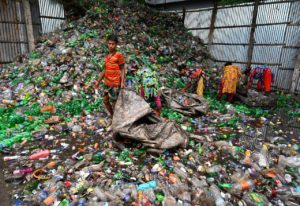
 Millions of families in Southeast Asia reside in areas where pollution and poverty coexist. Plastic waste is not only an eyesore but also a daily risk in areas with poor waste collection and significant unemployment. However, the region is demonstrating that the same plastic pollution that causes environmental degradation may also serve as a vehicle for community development and financial security.
Today, Southeast Asia’s recycling revolution is gaining momentum, with creative recycling initiatives in Vietnam, Indonesia and the Philippines demonstrating that poverty reduction and environmental action can truly coexist.
A Crisis That Hits Low-Income Communities Hardest
Southeast Asia is facing an enormous and growing plastic problem. According to the Organization for Economic Co-operation and Development (OECD), the ASEAN + East Asia region consumed 152 million tons of plastic in 2022, nearly nine times more than in 1990. More than 56% of plastic waste is improperly managed due to inadequate waste management systems; it is frequently burned or disposed of in waterways near low-income areas.
The OECD predicts that the region’s plastic leakage might rise by 68% by 2050 if serious action is not taken. This situation is already more than just an environmental problem for families living near unofficial dumpsites or those who rely on waste picking for a living; it’s a public health and poverty issue.
Vietnam: Recycling as a Path to Livelihoods
One of the best examples of how community-led recycling may improve life in the region is Vietnam’s Greenhub initiative. The organization trained more than 33,000 people in recycling, waste reduction and community cleanups in 2024. It gathered 143,000 kg of garbage, which would otherwise clog drainage systems during floods or contaminate coastlines.
Cleaner surroundings are just one of the many advantages. Four hundred thirty informal waste collectors received training from Greenhub in 2022, enabling them to sort waste more effectively, earn a higher income and work safely. Improvements in this area have the potential to significantly reduce poverty because Vietnam’s informal waste sector is massive, with 10,000 to 16,000 workers sorting and collecting waste every day in just Hanoi and Ho Chi Minh City.
The expanding circular economy movement in Vietnam is also making room for businesspeople who repurpose plastic trash into home goods, crafts and building materials. In both rural and urban areas, these microbusinesses provide new revenue streams and jobs.
Indonesia: Cooperatives Boost Stability for Waste Pickers
Indonesia has some of the highest rates of improper garbage management in the world. The issue is both geographical and financial, due to the thousands of islands and inadequate infrastructure for waste collection. According to OECD estimates, if no changes are made, Indonesia’s plastic waste is projected to increase from 6.5 million tonnes in 2022 to 18 million tonnes by 2050.
The core of Indonesia’s recycling system consists of informal waste pickers, many of whom earn significantly less than the minimum wage. They gather significantly more recyclables than formal and governmental systems put together. However, despite its significance, many people lack a steady source of income, adequate safety equipment or social safety nets.
Cooperative recycling centers are emerging to fill that gap. By organizing waste pickers into formal groups, these centers help workers secure fairer pricing, gain access to equipment and work in safer conditions. Some cooperatives report that members have doubled their income or, for the first time, achieved steady monthly profits.
However, there are still difficulties. Indonesia received 262,900 tons of plastic waste in 2024 and investigations revealed that some discarded plastics were being burned as inexpensive fuel in small-scale operations. This underscores the critical need for safe and sustainable recycling methods that protect people in need.
The Philippines: When Recycling Puts Food on the Table
The Philippines produces 2.7 million tonnes of plastic waste annually, with the majority of this waste coming from single-use sachets used for products such as condiments and shampoos. However, local organizations are coming up with innovative ways to transform waste into opportunity. A “trash-for-rice” program in Mabini, Batangas, collected 4.3 tonnes of plastic and provided low-income residents with 2.6 tonnes of rice in return.
Other programs, such as TrashCashPH, utilize mobile apps to offer individuals cash, groceries or service discounts when they bring in sorted recyclables. Meanwhile, refill systems allow customers to purchase things at a reasonable price without producing additional plastic. Cash-strapped homes benefit greatly from Greenpeace’s “Kuha sa Tingi” refill trial, which helped eliminate 50,000 plastic sachets and saved consumers an average of 201% compared to regular sachet purchases.
Economic and Environmental Wins
These initiatives demonstrate that reducing plastic pollution can have immediate, tangible effects. As part of the growing Southeast Asia recycling revolution, some of the most impoverished families in the region can earn more steady incomes through waste cooperatives and recycling incentives. By enhancing workplace safety, stability and dignity, training and protective regulations help empower informal workers, many of whom are women.
By 2030, recycling improperly disposed of plastic garbage in South and Southeast Asia could reduce greenhouse gas emissions by more than 200 million tons. The reductions show how regional waste management strategies can significantly advance global climate goals. Everyone lives in safer environments when streets, rivers and coastal areas are cleaner.
Communities experience fewer floods, reduced health risks and improved public health overall when waste that blocks drains and waterways is minimized, particularly in low-income districts that are typically the most severely impacted.
A Blueprint for Change
According to OECD estimates, plastic leakage in Southeast Asia could be reduced by 95% by 2050 with robust policies, including increased producer accountability, improved collection systems and investment in recycling. However, communities are some of the most potent forces behind Southeast Asia’s recycling changes, not the government.
Recycling has evolved from an environmental initiative in Southeast Asia into a driving force behind Southeast Asia’s recycling revolution. It serves as both a source of local empowerment and an economic lifeline. One bottle, sachet or piece of plastic at a time, these “trash to treasure” examples demonstrate how communities may create safer, cleaner and more prosperous futures with the proper support.
– Katelyn Leano
Katelyn is based in Plainfield, IL, USA and focuses on Good News and Technology for The Borgen Project.
Photo: Pixabay

ASPIRE in Haiti and Community-Driven Development in Myanmar
Poverty and Conflict
In these economies, close to 40% of the population lives in extreme poverty. According to the 2024 Global Multidimensional Poverty Index, out of 1.1 billion people living in acute poverty, 455 million resided in countries experiencing war or fragility. In 2025, although these regions accounted for less than 15% of the world’s population, they were home to 421 million people living in extreme poverty, more than the total in the rest of the world. Estimates indicate that by the end of this decade, nearly three-fifths of the global extremely impoverished population, approximately 435 million people, will be living in these economies.
As the conflict has intensified, food insecurity has also risen sharply, with approximately 200 million people, accounting for 18% of the population in these regions, facing acute food insecurity. Countries affected by conflict often experience high levels of poverty and ongoing conflict slows progress in poverty reduction. Poverty, in turn, interacts with other underlying grievances to fuel instability, while conflict further deepens economic hardship.
United Nations Security Council
At a United Nations Security Council open debate in New York, U.N. Secretary-General António Guterres emphasised how poverty can fuel conflict.
He said: “Poverty breeds despair. Despair fuels unrest. And unrest tears at the fabric of societies — feeding mistrust, fear and violence.” Conflict, in turn, weakens already weak institutions and exacerbates poverty and food insecurity. In cases of severe conflicts, after five years, the GDP per capita drops by around 15%. It has also negatively impacted employment creation and average life expectancy.
In this manner, conflict and poverty become mutually reinforcing, creating a vicious cycle. A World Bank report suggests that although these countries face significant challenges, they have untapped potential that could reignite growth with effective policymaking. One such advantage is having a large working-age population. By 2055, around 60% of the population in areas affected by conflict or instability will be of working age, larger than anywhere else in the world.
Transforming this into growth would require investment in education, health care, infrastructure and the private sector to create employment opportunities.
Breaking the Cycle
The World Bank, through its programs, aims to provide basic services, foster development opportunities and create employment in these economies by remaining engaged during conflict and after to assist in recovery and transition. The Adaptive Social Protection for Increased Resilience Project (ASPIRE) in Haiti and the National Community-Driven Development Project in Myanmar are two notable examples.
The ASPIRE program in Haiti supports nearly 23,000 households in the department of Grand’Anse. As Haiti continues to struggle with conflict and political instability, the initiative helps strengthen its ability to cope with recurring shocks by providing it with a monthly cash transfer. The program also aimed to provide training on financial literacy and health and hygiene practices to 50% of households. It helped identify more than 100,000 vulnerable households, enabling targeted investments. It not only addressed immediate challenges but also laid the groundwork for future investments in human capital.
The National Community-Driven Development Project in Myanmar, which comprised 37,000 sub-projects, positively impacted more than seven million people in the country. Nearly a fifth of the country’s population benefited from the improved infrastructure, transportation, water supply, education and electrification. Although the World Bank halted the disbursements of the Myanmar Partnership Multi-Donor Trust Fund in 2021, it continued to monitor the situation and provide analyses.
Final Remarks
Addressing conflict can lead to growth only when immediate humanitarian needs are met and paired with long-term investment in human capital. Through the ASPIRE program in Haiti and the development project in Myanmar, the World Bank routed investments toward education, health care and infrastructure. In doing so, the World Bank sought to break the vicious cycle of conflict and poverty.
– Priya Doshi
Photo: Wikimedia Commons
Sikh Humanitarian Organizations Rebuilding Punjab
With agricultural communities forming most of Punjab’s population, whatever affects farmers affects the entire region. Geographically, Punjab has always lived with a water-heavy existence defined by monsoon seasons. Punjab, literally “land of the five rivers,” has always embraced these conditions. Yet what once supported life now contributes to devastation. Every flood deepens poverty and erodes hope for those already living on the edge of survival. As the waters recede, one truth stays clear: if Punjab’s farmers cannot feed themselves, the survival of the wider population rests on fragile ground.
Poverty here is not evident only in rupees but in diminished worth, fractured families and futures placed on hold. Yet through the murky waters, people found hope in the form of seva, or selfless service, a key motto of the Sikh faith that guides the Sikh humanitarian organizations rebuilding Punjab after the floods, such as Global Sikhs, Khalsa Aid and United Sikhs. Each organization plays a unique role that extends far beyond immediate help. Their work presents rebuilding Punjab as a testament to the power of community, religious service and international cooperation. Here, Sikh faith-based charities show that seva is not only a spiritual ideal but also a practical, life-changing force in times of crisis.
The Principle of Seva in Action: Tackling Poverty
Guru Nanak Dev Ji says,
“Do Seva and service in this world and find a seat in the court of God.”
ਵਿਚਿ ਦੁਨੀਆ ਸੇਵ ਕਮਾਈਐ ॥
ਤਾ ਦਰਗਹ ਬੈਸਣੁ ਪਾਈਐ ॥
(Sri Rag M-1, 26)
This philosophy of service sits at the heart of the Sikh community and shapes the work of the charities rebuilding Punjab after the floods’ destruction. Seva, rooted in the teachings of the Sikh Gurus, calls for selfless and unconditional service performed without seeking praise or reward. Sikhs see it as a way of honoring the divine by serving humanity and fulfilling a moral obligation.
This custom turned into a lifeline in the wake of the floods. Volunteers (or sevadars) of all ages, from local villagers to Sikhs in the diaspora, put seva into action by delivering aid, rebuilding livelihoods and reminding communities that solidarity stays stronger than anguish even during turbulent times.
In the aftermath, one of the greatest challenges was helping communities rise from the deeper poverty the catastrophe created. Families who once depended on modest harvests now faced barren granaries and empty farms. The disaster erased even the most basic security in places where poverty already ran deep, leaving parents wondering how they would afford their next meal or whether they needed to send their children overseas to survive.
Impact of the Floods
For many farmers, the human toll defies measurement. After days of relentless monsoon rains, countless families awoke to shattered livelihoods. In talks with The Guardian, Amritsar-based farmer Parmpreet Singh described his reality: “The crops are ruined, and even our homes are in danger of collapsing.”
His family — including his two young daughters and his elderly mother — currently lives on the roof of their home to stay above the water. Singh fears he may need to sell his land and abandon farming after seven hectares of crops were destroyed. Livestock farmers, who depend on only two or three buffaloes, face similar devastation. The shortage of fodder and the soaring cost of silage have pushed their financial stability to a breaking point.
Abad Khan, a small farmer from central Punjab, told Dawn News, “These families were already struggling, and now they are facing a level of poverty almost impossible to escape.” More than 2.2 million hectares of crops — from vegetables to rice and wheat — have been wiped out. In just one week, the price of wheat flour rose by 25%. The scale of economic and social hardship has made recovery daunting, but Sikh organizations have responded by turning seva into focused and sustained action.
Khalsa Aid
Khalsa Aid mobilized its volunteers within hours of the first flood warnings and reached the affected districts before most organizations. Their teams have worked across Gurdaspur, Kapurthala, Ferozepur and Abohar since mid-August, evacuating livestock — often a rural family’s main source of income — and rescuing stranded residents. Alongside these emergency actions, Khalsa Aid supplies clean drinking water, medical assistance, ration bags and crucial fodder for animals suffering after prolonged exposure to stagnant floodwater.
The charity installed industrial dewatering devices in Abohar, where floodwaters persisted long after the rains ended. This equipment helped recover more than 1,000 acres of submerged farmland. To help farmers restore their fields, restart agricultural work and prevent long-term economic collapse, Khalsa Aid’s teams continue to work directly with the communities.
Global Sikhs
Global Sikhs has taken on the equally important responsibility of long-term rehabilitation. Through their Sanjha Sahara Project, volunteers work in 25 severely affected villages to help families rebuild their lives from the ground up. Their approach recognizes that restoring livelihoods is as essential to Punjab’s recovery as clearing water or distributing aid.
They support soil restoration, repair damaged irrigation channels and replace lost livestock, a vital resource for rural households whose earnings depend on a few buffaloes or goats. Global Sikhs also help families rebuild homes damaged by weeks of flooding to ensure children, the elderly and vulnerable people stay safe.
UNITED SIKHS
Sevadars for UNITED SIKHS mobilized across the region and worked tirelessly to evacuate residents from submerged homes, relocate families to safer areas and set up relief camps in villages such as Dhera Ghara and Nihala. They provided medical care, food and clean water to households cut off by flooding. UNITED SIKHS also partnered with local health officials to distribute chlorine tablets and teach safe water practices to prevent the rise of skin infections and waterborne illnesses as stagnant floodwaters lingered. At the same time, the organization addressed severe shortages of cattle fodder caused by flooded fields and blocked roads to help farmers keep their livestock alive.
Rebuilding Punjab: Looking Ahead
These are only some of the organizations rebuilding Punjab. Although the damage devastated countless families, livelihoods and communities, the active service of these charities and the seva they embody brings hope back into people’s lives and provides practical solutions that lay the foundations for long-term recovery. In a glistening and rich culture, the harmony of community and faith shines brighter than ever.
– Prubleen Bhogal
Photo: Flickr
5 Facts on the Current State of Education in Cyprus
In the Republic of Cyprus, education is structured as a 6‑6 system: six years of compulsory primary education starting near age 6, followed by six years of secondary (divided into junior and senior cycles), and then tertiary or vocational pathways. Technical and vocational education and training (TVET) usually lasts two years post-secondary and is overseen by the Human Resource Development Authority (HRDA).
Public spending on education is robust, historically around 6-7% of GDP, significantly above the EU average. In 2022, education expenses made up about 4.9% of total GDP and 13% of the government budget (approximately €1.446 billion). These numbers position Cyprus among Europe’s top spenders in education quality and support.
Performance and Learning Outcomes
Cypriot students take part in the OECD’s PISA assessments. In 2022, their average scores fell to about 418 in mathematics, 411 in science, and 381 in reading—all well below the OECD averages of 472, 485, and 476, respectively. This marks a sharp decline from 2018 and shows Cyprus falling behind many of its EU peers in core academic skills.
Adult learning engagement is another concern: in 2022, only 28.3% of adults participated in education or training, well below the EU average of around 39.5% – with participation among women at just 20.4% versus 36.7% for men. There is a marked gap between higher‑educated individuals (35.5% participation) and those with lower qualifications (10.9%).
Challenges, Reforms and the Road Ahead
Despite high levels of investment, Cyprus’ reliance on inconsistent teacher-assigned school grades, which account for 70% of final marks, can undermine fairness. To make matters worse, university admissions rely almost entirely on centralized exams, disadvantaging students from less privileged schools or socio-economic backgrounds. Additionally, adult learning participation has sharply decreased since 2016, particularly among older populations and non-workers.
In 2015, the government launched an Agency of Quality Assurance and Accreditation in Higher Education to standardize and improve university quality across all institutions. It has evaluated nearly 300 study programs and multiple universities since then, helping hundreds of thousands of students. The HRDA continues to finance vocational training through payroll-based fees and generous subsidies, helping bridge skills gaps in Cyprus’s economy. Technical cooperation with EU partners and UNESCO supports further reforms aimed at expanding adult training and improving early‑grade performance.
Overall, education in Cyprus remains a high‑priority sector, with solid funding, strong tertiary completion, and a national commitment to quality. However, recent declines in PISA performance and adult learning participation signal the need for greater policy involvement, particularly on lifelong learning and transparency in grading. As reforms increase, Cyprus has a chance to bolster its reputation as one of Europe’s education success stories while ensuring that all learners benefit.
– Jeff Zhou
Photo: Flickr
From Trash to Treasure: Southeast Asia’s Recycling Revolution
Today, Southeast Asia’s recycling revolution is gaining momentum, with creative recycling initiatives in Vietnam, Indonesia and the Philippines demonstrating that poverty reduction and environmental action can truly coexist.
A Crisis That Hits Low-Income Communities Hardest
Southeast Asia is facing an enormous and growing plastic problem. According to the Organization for Economic Co-operation and Development (OECD), the ASEAN + East Asia region consumed 152 million tons of plastic in 2022, nearly nine times more than in 1990. More than 56% of plastic waste is improperly managed due to inadequate waste management systems; it is frequently burned or disposed of in waterways near low-income areas.
The OECD predicts that the region’s plastic leakage might rise by 68% by 2050 if serious action is not taken. This situation is already more than just an environmental problem for families living near unofficial dumpsites or those who rely on waste picking for a living; it’s a public health and poverty issue.
Vietnam: Recycling as a Path to Livelihoods
One of the best examples of how community-led recycling may improve life in the region is Vietnam’s Greenhub initiative. The organization trained more than 33,000 people in recycling, waste reduction and community cleanups in 2024. It gathered 143,000 kg of garbage, which would otherwise clog drainage systems during floods or contaminate coastlines.
Cleaner surroundings are just one of the many advantages. Four hundred thirty informal waste collectors received training from Greenhub in 2022, enabling them to sort waste more effectively, earn a higher income and work safely. Improvements in this area have the potential to significantly reduce poverty because Vietnam’s informal waste sector is massive, with 10,000 to 16,000 workers sorting and collecting waste every day in just Hanoi and Ho Chi Minh City.
The expanding circular economy movement in Vietnam is also making room for businesspeople who repurpose plastic trash into home goods, crafts and building materials. In both rural and urban areas, these microbusinesses provide new revenue streams and jobs.
Indonesia: Cooperatives Boost Stability for Waste Pickers
Indonesia has some of the highest rates of improper garbage management in the world. The issue is both geographical and financial, due to the thousands of islands and inadequate infrastructure for waste collection. According to OECD estimates, if no changes are made, Indonesia’s plastic waste is projected to increase from 6.5 million tonnes in 2022 to 18 million tonnes by 2050.
The core of Indonesia’s recycling system consists of informal waste pickers, many of whom earn significantly less than the minimum wage. They gather significantly more recyclables than formal and governmental systems put together. However, despite its significance, many people lack a steady source of income, adequate safety equipment or social safety nets.
Cooperative recycling centers are emerging to fill that gap. By organizing waste pickers into formal groups, these centers help workers secure fairer pricing, gain access to equipment and work in safer conditions. Some cooperatives report that members have doubled their income or, for the first time, achieved steady monthly profits.
However, there are still difficulties. Indonesia received 262,900 tons of plastic waste in 2024 and investigations revealed that some discarded plastics were being burned as inexpensive fuel in small-scale operations. This underscores the critical need for safe and sustainable recycling methods that protect people in need.
The Philippines: When Recycling Puts Food on the Table
The Philippines produces 2.7 million tonnes of plastic waste annually, with the majority of this waste coming from single-use sachets used for products such as condiments and shampoos. However, local organizations are coming up with innovative ways to transform waste into opportunity. A “trash-for-rice” program in Mabini, Batangas, collected 4.3 tonnes of plastic and provided low-income residents with 2.6 tonnes of rice in return.
Other programs, such as TrashCashPH, utilize mobile apps to offer individuals cash, groceries or service discounts when they bring in sorted recyclables. Meanwhile, refill systems allow customers to purchase things at a reasonable price without producing additional plastic. Cash-strapped homes benefit greatly from Greenpeace’s “Kuha sa Tingi” refill trial, which helped eliminate 50,000 plastic sachets and saved consumers an average of 201% compared to regular sachet purchases.
Economic and Environmental Wins
These initiatives demonstrate that reducing plastic pollution can have immediate, tangible effects. As part of the growing Southeast Asia recycling revolution, some of the most impoverished families in the region can earn more steady incomes through waste cooperatives and recycling incentives. By enhancing workplace safety, stability and dignity, training and protective regulations help empower informal workers, many of whom are women.
By 2030, recycling improperly disposed of plastic garbage in South and Southeast Asia could reduce greenhouse gas emissions by more than 200 million tons. The reductions show how regional waste management strategies can significantly advance global climate goals. Everyone lives in safer environments when streets, rivers and coastal areas are cleaner.
Communities experience fewer floods, reduced health risks and improved public health overall when waste that blocks drains and waterways is minimized, particularly in low-income districts that are typically the most severely impacted.
A Blueprint for Change
According to OECD estimates, plastic leakage in Southeast Asia could be reduced by 95% by 2050 with robust policies, including increased producer accountability, improved collection systems and investment in recycling. However, communities are some of the most potent forces behind Southeast Asia’s recycling changes, not the government.
Recycling has evolved from an environmental initiative in Southeast Asia into a driving force behind Southeast Asia’s recycling revolution. It serves as both a source of local empowerment and an economic lifeline. One bottle, sachet or piece of plastic at a time, these “trash to treasure” examples demonstrate how communities may create safer, cleaner and more prosperous futures with the proper support.
– Katelyn Leano
Photo: Pixabay
10 Important Facts About Hunger in Vanuatu
Hunger and Nutrition in Vanuatu
Probably because of its small size, Vanuatu is not ranked in the comparative country report, the Global Hunger Index. The Global Nutrition Report has secured information on Vanuatu’s progress in meeting global nutrition targets; however, some of the data is over a decade old (2013-2020). At that last report, the country was “on course” only for three metrics: childhood overweight, exclusive breastfeeding and childhood wasting. Childhood stunting, anemia of women of childbearing age and low birth weight showed no progress or were worsening, with the islands “off course” for the remaining seven global nutrition indicators.
Food Security
The U.N. Food and Agriculture Organization’s most recent Food Security Profile for Vanuatu is also based on data from 2020 or earlier and is consistent with the Global Nutrition Report. One in 10 Ni Vanuatu (Vanuatu’s Indigenous people) were described as undernourished, with 20.9% experiencing a moderate level of food insecurity, and severe levels of food insecurity suffered by an additional 2.4%. In other words, almost a quarter of Vanuatu’s population was reported as food insecure. On a positive note, the average Ni-Vanuatu is reported to consume more than the recommended amount of fruits and vegetables recommended by the World Health Organization.
More recently, in October-November 2024, the World Food Programme telephone surveyed 1,306 Vanuatu households (82% of them were rural households). This was after a series of severe, damaging cyclones in 2023 that had disrupted the supply chain and impacted agricultural production and economic activity. The rural communities, which rely on subsistence agriculture, experienced a negative impact on consumption and nutrition. In October, although 67% of the households noted acceptable food consumption patterns, this was a 30% decline from the previous year. A 7.3 magnitude earthquake, subsequent to the survey, in December 2024, could only have exacerbated food insecurity. The source of food varied among the provinces: 84% of Malampa Province respondents reported acquiring food through their own production, while 69% of Shefa Province respondents purchased their food from markets or supermarkets.
Subsistence agriculture has its limits, however. In March 2024, Prime Minister Chariot Salwai reported to the National Economic and Investment Forum that “Vanuatu imports nearly half of its food, despite 70% of the population residing in rural areas capable of producing organic products for domestic consumption.”
Public Health Consequences
A substantial reliance on food imports can have a negative public health effect when it facilitates an increase in the consumption of ultra-processed foods. This can lead to an increase in noncommunicable diseases. A recent study of the impact of trade agreements on food systems revealed the relationship between Vanuatu’s World Trade Organization agreements and obligations and the country’s food environment, where an increase was seen in both healthy and less healthy imports.
It was also found that an increase in foreign direct investment was accompanied by an increase in the local production and consumption of processed and ultra-processed foods by foreign-owned companies involved in food manufacturing, processing and production.
Policy Responses to Hunger in Vanuatu
Such changes in the food environment can be addressed and controlled. This demands a balance of priorities among economic and trade interests and public health interests in order to strengthen the “nutrition policy space.” And this balance calls for multisectoral cooperation that includes public health actors in the policymaking process. Vanuatu recognized this in its National Nutrition Policy & Strategic Plan 2016-2020, with one of its guiding principles being a commitment to multisectoral approaches.
This was followed by the Vanuatu Food Safety, Security & Nutrition Policy, 2022-2030, which recognizes and addresses the role of trade, economic and environmental policies on health and the food and nutrition “landscape.”
– Staff Reports
Photo: Wikimedia Commons
Education in Cape Verde
Cape Verde’s formal education follows a 6‑year primary system (ages 6–12), followed by a 5‑year secondary program, which includes a 3‑year general lower-secondary cycle and a 2‑year upper-secondary track focused on either university preparation or vocational training.
Preschool teaches children under 6. Primary net enrollment is reported at about 86%, while gross enrollment, including over‑age or under‑age students, is close to 96%. The country boasts an impressive 99% transition rate to lower secondary schools. However, completion rates remain lower: about 67% for boys and 65% for girls finish primary education. They’re even worse and more gender-disparate for lower secondary education.
Public Spending and Quality Assurance
Cape Verde has maintained high public investment in education for many years, though it declined from 7.5% in 2004 to approximately 5% by 2013. Investment in higher education also increased modestly, from 0.79 % of GDP in 2013 to 0.9% in 2017. Efforts to train teachers and provide textbooks appear effective, as 90% of students have access to textbooks and over 90% of teachers have undergone in-service training.
Despite this commitment, challenges remain. Repetition rates in early primary grades are high, grade 2 sees a repeat rate of about 16.3%, nearly double the average of other grades. Additionally, girls face higher dropout risks, due in part to early childbearing and child marriage, with dropout rates around 24% for girls versus 15% for boys. Such challenges are more prevalent in rural and lower‑income communities, where access to secondary education facilities may be limited and traditional gender roles yield greater influence.
Reforms and International Cooperation
Cape Verde’s inclusive education system is bolstered by national policy and international partnerships. The government collaborates with UNESCO, the U.N., and development partners to improve learning outcomes and equity across islands and vulnerable populations. A key example is a UNICEF‑led initiative under the Global Partnership for Education (GPE), which is funding early childhood and basic education improvements from 2024 to 2029. The program has expanded preschool access to over 5,000 children, many in rural or disadvantaged communities, by providing digital learning rooms and supplying new learning materials. This has helped raise the national preschool enrollment rate to about 86%. The focus on STEM education and vocational training aligns with broader economic ambitions, supported by technical cooperation and external funding.
By combining high literacy targets with strong policy and international support, Cape Verde aims to position education as a transformative national asset. Continued investment in early‑grade learning, improved transition and completion at the secondary level, and expanded opportunities in higher education and vocational training are critical to its vision for sustainable development. With over 90 % adult literacy and near‑universal secondary transition, Cape Verde stands out in its region for educational progress. However, targeted reforms remain crucial to ensure that every child benefits equally from learning.
– Jeff Zhou
Photo: Flickr
Marienstüberl: The Beating Heart of Poverty Relief in Graz
Migration to Austria
Since 2010, migration to Austria has been increasing due to conflicts in the Middle East, with the majority of migrants coming from Syria, Afghanistan, Iran, the Russian Federation, Iraq, Nigeria, Somalia and Georgia. Today, there are also many refugees from Ukraine, all seeking a stable life situation in one of Europe’s wealthiest countries. Wherever these communities originate geographically, there is a common theme that migrants face overwhelming bureaucratic and language barriers that hinder their integration into Austrian life.
With many still struggling to get a foot on the employment ladder, many end up in financial precarity.
Marienstüberl
This is where organizations like Marienstüberl come in. Located in the center of Graz, a few minutes’ walk from the main train station, Marienstüberl shares a large building with Caritas Steiermark. This umbrella organization oversees numerous social initiatives throughout the county. Large food deliveries, mass cooking and food distribution operations take place under one welcoming roof.
It is a place where vulnerable people can go every day for a warm meal and take free food boxes for themselves and their families. For many, it is their second home.
Food Collection
Marienstüberl addresses immediate needs, including food, warmth and shelter, directly. At 7:30 a.m. sharp, the van leaves with two volunteers ready to start their day with some heavy lifting. Years of networking and building a strong reputation as the center of poverty relief in Graz have led to fruitful partnerships with commercial supermarkets, including Spar, Billa and Pennymarkt, many of whose branches set aside unsold food for donation to Marienstüberl.
Often, a small bruise is enough for fruit and vegetables to be set aside, while yoghurts, pastries and bread form the bulk of the donations. With approximately eight supermarkets to visit before 10 a.m., this is physically taxing work. And it does not stop there. A throng of volunteers meets the van upon arrival and the donations are quickly sorted into nutritionally balanced food boxes ready for distribution.
For many, this is a lifeline. With migrants facing continual pushbacks and barriers to receiving state support, these donation boxes are both welcome and necessary.
320 Meals a Day
Meanwhile, the kitchen hums with activity, preparing more than 300 meals for the day. If there are leftovers, they serve perfectly as a snack to serve later in the day for any latecomers. In fact, Marienstüberl’s kitchen is so renowned that it has just released a cookbook.
The book features some of Styria’s most beloved dishes, some designed by esteemed local chefs and, of course, some of Marienstüberl’s own favorites and marks a major milestone. All proceeds will go directly to supporting the marginalized, migrant and refugee communities that frequent Marienstüberl.
30 Years of Poverty Relief in Graz — And Many More To Go
The cookbook marks the 30-year milestone for the organization. According to Caritas director Nora Tödtling-Musenbichler, the cookbook “builds a bridge between different worlds,” allowing those who cannot afford to put food on the table to go somewhere safe and enjoy a warm meal with others.
Indeed, as demonstrated by its thriving relationships with local supermarkets, Marienstüberl occupies a very special place in the Graz community. Attracting generosity from far and wide, major institutions such as Graz University Hospital and the cleaning company Saubermacher are establishing fundraising initiatives to support Marienstüberl.
Conclusion
Every day, every week, every year, Marienstüberl proves to be a close ally for those living in poverty in Graz. It would not be what it is without its extensive volunteer network. With hundreds supporting the cause, Marienstüberl’s contribution to poverty relief in Graz is vital and it shows no signs of slowing down.
– Saroj Spickett
Photo: Pixabay
10 Facts About Education in Argentina
10 Facts About Education in Argentina
Investment in Argentina’s education system is thus significant, comprising international, national, and subnational support. This support is wide in scope in terms of target populations, issues addressed and the solutions undertaken.
– Staff Reports
Photo: Flickr
How Policy Has Helped Eradicate Extreme Poverty in India
There have been continuous five-year plans, dating back to 1951. The country has focused on tackling unemployment, economic growth, building and improving infrastructure and ensuring food security. However, the last ten years have seen the most impactful reforms across these sectors.
Labor Laws
India has been praised for its social protection systems. Employment rates have recently outpaced the working-age population since 2021, with urban unemployment falling to 6.6.% in 2025.
The government implemented the most impactful policies in 2019, with the introduction of the Code on Wages, 2019, the Industrial Relations Code, 2020, the Code on Social Security, 2020 and the Occupational Safety, Health and Working Conditions Code in 2020. These ensured that workers had easier access to security, dignity, health, and wellness measures. As a result, the government increased the minimum wage for workers across all sectors, where it had previously only covered 30% of workers.
Female Employment
Many policies directed towards women have helped to see an increase in the economic position of women and a decrease in the overall levels of extreme poverty in India. For instance, the government launched the National Maternity Benefit Scheme in 2016, which ensured mothers over the age of 19 with financial aid during pregnancy; The Pradhan Mantri Ujjwala Yojana (PMUY), which distributed 50 million LPG connections to women below the poverty line and the Pradhan Mantri MUDRA Yojana (PMMY), which provided loans to help businesses. Of loans awarded, 68% went to female entrepreneurs, boosting women’s success in the labour market.
Introduced in 2018, the Solar Charkha Mission helped young unemployed people gain employment in the poorest rural areas. A rise in female employment has also been seen, with the number of women in paid self-employment nearly tripling since 2018. Policies also ensured that discrimination could not take place based on gender, further helping women succeed in the labour market.
Female Welfare
There have also been various schemes, such as Mission Poshan 2.0, which oversaw the investment into women’s health and wellbeing. Starting in 2018, it has helped to feed, educate and improve the health of women across India. This includes policies such as the Surakshit Matritva Aashwasan (SUMAN), which has strengthened maternal and neonatal care and provided free access to quality healthcare for pregnant people, newborns and new mothers for up to six months after delivery. As of March 2025, authorities have improved a reported 90,015 health care facilities.
Other policies, such as the Pradhan Mantri Surakshit Matritva Abhiyan (PMSMA) and the Pradhan Mantri Matru Vandana Yojana (PMMVY), have also provided improved healthcare and financial benefits to Mothers in India. Such schemes have ensured improved health and well-being of women across India, and prevented many pregnant women from falling into poverty.
Transportation
India has seen deep investment into its transportation infrastructure, with a 500% increase in its budget allocation over the last 10 years. The country has improved its metro system, with the network set to increase from 248 km in 2014 to 945 km by the end of 2024; the government have selected 1,318 railway stations for redevelopment; it nationalized 111 waterways under the National Waterways Act, 2016. This allows for more efficient trade and movement. The reform of infrastructure in India has allowed for increased economic growth, provided jobs across the country and allowed for increased accessibility.
What Now?
Despite the successes achieved through India’s policy reforms, there is still much more work necessary. Even though India has eradicated extreme poverty, one quarter of the population still remains poor. Further policy introductions and reforms will help lift those still living in poverty in India.
– Alys Gaze
Photo: Flickr
Norway’s Poverty Reduction: What We Can Learn From It
This represents a massive 50% increase compared to previous commitments. Norway’s poverty reduction plan largely reflects its belief in strategic investment in global stability, rather than a charity case to be disregarded.
Foreign Aid Contributions
In 2025, Norway provided approximately $228 million in humanitarian aid for 13 crises. These funds went to places like Chad, Gaza and Ukraine, aiming not only to raise awareness of the issues but also to meet the needs of those in need as sustainably as possible. Similarly, it increased funding to the World Bank and the U.N., aiming to target food security, electricity access and climate resilience.
The country’s approach of providing immediate relief, such as water, shelter and medicine, paired with long-term development and governance support, helps ensure that these countries are provided with a stable aid relief plan. Norway’s multi-year agreements with aid organizations, worth nearly $1 billion, reflect a strategic and sustained commitment to relief services.
What Makes Norway’s Model Effective?
Norway’s aid relief plan remains largely effective due to its consistently high levels of aid, regardless of economic uncertainty. Similarly, it participates in strategic partnerships which allow institutions to provide legitimacy and an amplified impact. Not only does Norway consistently rank as a leading European aid donor, but it also does not see poverty aid as “charity.”
It ensures that it is consistently viewed as an overarching justice issue by allocating nearly 1% of its Gross National Income (GNI) to foreign aid.
Lessons for Other Countries
Norway remains an exemplary nation for the rest of the world in terms of generosity and commitment, demonstrating that investing abroad only strengthens stability at home. It expertly managed to tackle climate and poverty issues simultaneously, providing a “future-proof” model of development. The aid Norway provides is successful in creating jobs and fostering expertise in companies across the country and worldwide, thereby enhancing its domestic stability.
Not only has Norway successfully set an example for addressing issues such as climate instability and global poverty, but it has also proven that small states are capable of leadership, demonstrating that influence stems from commitment and credibility. By aligning its policies with the U.N.’s 2030 Agenda, Norway became a member of the Global Alliance Against Hunger and Poverty in 2024, promoting collective, institution-led solutions that scale impact. The country has also shown that aid works best when it is strategic rather than reactive, relying on multi-year planning and rights-based frameworks to deliver deeper, longer-lasting results.
Overall, Norway’s poverty reduction approach is strategic, principled and future-focused. As global crises continue to intensify, other nations can learn from Norway’s willingness to commit to long-term solutions. Its model shows that effective aid is built on consistency, accountability and planning—not short-term reactions.
– Megan Burrows
Photo: Unsplash