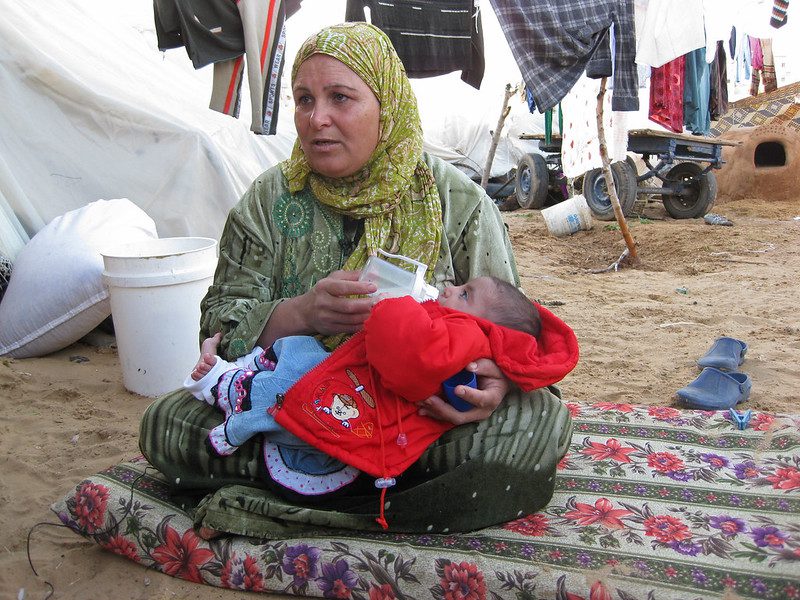
 Since the events of October 7, Israel has tightened its grip on the Gaza Strip. It has made it increasingly difficult for aid to enter the territory. Israel’s blockade has, therefore, left many pharmacy and shop shelves barren. One product in particular has become increasingly sparse on the shelves of various pharmacies across Gaza: menstruation pads. On the rare occasion that pads make their way on a shelf, they are sold at nearly five to six times their original price. For many unemployed and homeless Gazan women, such an expense is unthinkable. This, combined with limited water supply, lack of privacy and indoor plumbing, has compelled women to take measures into their own hands. As the rate of period poverty continues to mount within the Gaza Strip, its female residents prove that there is no shortage of resilience and ingenuity.
Period Poverty among Women and Girls in Gaza
In a study conducted by the United Nations (U.N.), an estimated total of 700,000 Gazan women and girls menstruate but do not have access to hygiene products, such as pads and toilet paper. Even more troubling is their barred access to toilets and running water. Various shelters run by The United Nations Relief and Works Agency (UNRWA), the U.N. aid agency for Palestinians, say there is only one roll of toilet paper per 498 people. Within these same shelters, more than 400 residents share a single bathroom.
The situation is no better for women who live in shared apartment complexes with extended family. Limited access to water forces many to restrict the times they flush the toilet– only doing so when deemed necessary. Three functioning water pipelines remain for the whole of Gaza, thus making it increasingly difficult for women to wash themselves. Showering has become a luxury only some women can afford. Many women rise early and queue in front of hospitals in the hopes of showering before the water supply is cut for that day. Others are there to use the bathroom. Queues can number from up to 1,000 people.
Current Experiences
Owda is a Gazan woman documenting her experience online. She shared a video of one of many makeshift bathrooms found within the displacement camps. She points to the toilet in question, a garbage basket on the ground inside a meager tent and says to the camera: “There is no water. There is nothing around them. There is no infrastructure. They’re living in just a tent and they need bathroom(s). They’re humans.” The U.N. indicates that these sanitary conditions leave many Gazan women at risk of contracting reproductive and urinary tract infections. The sanitary pads that are at the disposal of Gazan women are poorly crafted and only further increase their risk of infection.
Gazan women and girls, therefore, are no longer afforded any privacy in tending to their menstrual hygiene. This issue has put a strain on the psychological health of many women within the strip. Some women share that the mounting stress they are experiencing has caused their menstrual cycles to come twice a month, further exacerbating the issue. As political tensions continue to rise, period poverty within the Gaza Strip only becomes a more pressing matter.
With Extreme Circumstances Comes Extreme Measures
The difficulty in obtaining female hygiene products has forced many Gazan women to resort to dangerous measures. Some women wash previously used pads to cope with the lack. Others have opted for old shreds of clothing, towels and ripped pieces of the tents they are using as shelter as substitutes for pads. Adult diapers and measly tissues are also on the list of items used as surrogates. The use of these substitutions may cause skin irritation, infection and deadly toxic shock syndrome. Though they pose great risks to their health, Gazan women have few other options.
Birth control has become a favored remedy among Gazan women, who would rather delay their cycle than deal with the physical and psychological burden that comes with it. Contrary to pads, the pill is readily available and far less expensive than hygiene products. A month’s supply’s worth of birth control costs approximately $3. The extreme measures Gazan women are reduced to take speak of the gravity of the situation. Furthermore, it highlights how women, once again, bear the blows of war. Gaza’s ongoing period poverty epidemic confirms the previous statement.
An International Call for Change
The international community has noticed Gaza’s shortage of menstrual hygiene products and has done its best to aid the crisis. Anera, a nonprofit organization, has provided hygiene kits, which include pads, underwear and wet wipes, to more than 20,000 women and girls. ActionAid has also supported the women in Gaza by preparing hygiene packages with a month’s worth of supplies. Despite their admirable efforts, more has to be done to aid the women in Gaza and stop the rate of period poverty from rising.
– Yasmine Nowroozi
Yasmine is based in Laval, Quebec, Canada and focuses on Global Health and Politics for The Borgen Project.
Photo: Flickr

An End to Global Poverty by 2030?
Good News for Global Problems
The 2030 Agenda for Sustainable Development is not solely focused on ending global poverty. In fact, of the 17 goals of the U.N.’s Sustainable Development, only goals 1 (no poverty), 7 (affordable and clean energy) and 8 (decent work and economic growth) aim to end global poverty and promote good economic decisions specifically. In general, the U.N. Sustainable Development Agenda aims to help countries worldwide achieve peace and financial stability. Renewable energy, wind power and crop rotation are examples of sustainable development practices used around the world. Sustainable development is a critical part of poverty reduction because it ensures longevity in developing countries.
The UN’s Sustainable Development Agenda
The U.N. is an international organization focused on relief and humanitarian aid. Since October 24, 1945, the U.N. has provided philanthropic assistance and promoted international peace. Sustainable Development originated in 1972 at the U.N. Conference on the Human Environment, led by Maurice Strong. The 1987 Brundtland Report, “Our Common Future,” and the Earth Summit Conference in 1992 sparked interest in Sustainable Development. Predictably, when the Sustainable Development Agenda was introduced, it was unanimously adopted by every U.N. Member State back in 2015. Sustainable Development combines the idea of environmentally and economically safe Development for developing countries.
Reaching Sustainable Development Goals
The U.N. has been committed to addressing global poverty through sustainable development despite unaccounted-for economic fragility, climate and health emergencies. Despite these setbacks, sustainable development has improved in the past nine years, with critical improvements in access to electricity and clean water and increased immunity to certain diseases. Notably, global access to electricity rose to more than 90% in 2021 from 87% in 2015. Similarly, 74% of the world’s population has access to safely managed drinking water, compared to only 70% in 2015.
Although progress on the goals stalled, the U.N., through the 2023 SDG Summit, has reignited hope and optimism in member states about achieving the 2030 Agenda. The summit served as a crucial platform for renewing commitments, sharing innovative strategies and fostering international cooperation to overcome the challenges impeding progress. By bringing together diverse stakeholders, including governments, nongovernmental organizations and the private sector, the U.N. aims to accelerate actions and ensure that the ambitious targets of the SDGs are met.
– Audrey Deras
Photo: Flickr
Hope for Haiti’s Children: The Organization Helping Haiti’s Orphans
Hope for Haiti’s Children
Hope for Haiti’s Children (HFHC) is a nonprofit organization that works with orphans and other impoverished children in every phase of their lives, providing aid in nutrition, housing, health care, education, training and spirituality. Moreover, the organization offers sponsorship programs for underprivileged Haitian children, which benefit not only the children themselves but also their families, schools and communities. HFHC has also achieved sustainable nutrition goals by building a chicken coop and enriching the diet of the children by feeding them eggs. A protein-rich diet will help children battle malnutrition and prevent stunted growth. The chicken coop is also used to educate them about animal farming.
Sponsorship Programs
Last year, the Promising Adult Continued Education Sponsorship (PACES) program was introduced. It focuses on training the future labor force of the country with variable marketable skills and trades. The program is divided into two categories: residential and off-site training. The former is for younger students and includes the subjects of computer, language, baking, gardening and sewing. The latter includes the trades of solar technology, nursing, electrical work, plumbing, culinary arts, tile laying and cosmetology. As of 2022, 17 students enrolled in the program and were certified, becoming competitive in the local job market.
Fritz, a PACES program graduate, was able to enroll in university after completing the program. HFHC has sponsored him since he was 5 years old and he still maintains contact with his sponsor, whom he considers his mom. Now, he works as an outreach minister in the city of Thomazeau and trains local leaders through his leadership seminars, mentoring 200 teens of HFHC. His mom expresses her pride over Fritz’s journey. She has been an HFHC sponsor since 1995, supporting many of Haiti’s children during the years and contributing to educational, health care and lunch programs.
Vision 2030
In view of this, Project Hope was developed in 2019 as a long-term plan for improving the organization’s infrastructure by 2030. This includes doubling the capacity of the Thomazeau Christian Orphanage to accommodate 24 children, building a health and wellness clinic at the Hope Center in Thomazeau and extending the Hot Lunch Program to all its schools.
Additionally, HFHC aims to equip every school with a qualified nurse to follow up on medical needs and educate parents and children on health and wellness. It also aims to expand schools to have individual classrooms for each grade instead of shared space and ensure that each school has the physical build-up to provide schooling for the entire 13-grade curriculum. Finally, it plans to ensure the availability of vocational and job training programs throughout the year at the Hope Center.
Final Remark
By the end of 2023, Hope for Haiti’s Children had sponsored 2,401 children, 3,000 lunch programs, 3,800 Christmas Joy Boxes and more than 200 Christian Youth Camp Attendees. HFHC’s current success indicates a greater likelihood of fulfilling the Project Hope goals by 2030, which could reduce the child poverty rate in Haiti.
– Hafsa Dijoo
Photo: Wikimedia Commons
Experiencing Period Poverty in gaza
Period Poverty among Women and Girls in Gaza
In a study conducted by the United Nations (U.N.), an estimated total of 700,000 Gazan women and girls menstruate but do not have access to hygiene products, such as pads and toilet paper. Even more troubling is their barred access to toilets and running water. Various shelters run by The United Nations Relief and Works Agency (UNRWA), the U.N. aid agency for Palestinians, say there is only one roll of toilet paper per 498 people. Within these same shelters, more than 400 residents share a single bathroom.
The situation is no better for women who live in shared apartment complexes with extended family. Limited access to water forces many to restrict the times they flush the toilet– only doing so when deemed necessary. Three functioning water pipelines remain for the whole of Gaza, thus making it increasingly difficult for women to wash themselves. Showering has become a luxury only some women can afford. Many women rise early and queue in front of hospitals in the hopes of showering before the water supply is cut for that day. Others are there to use the bathroom. Queues can number from up to 1,000 people.
Current Experiences
Owda is a Gazan woman documenting her experience online. She shared a video of one of many makeshift bathrooms found within the displacement camps. She points to the toilet in question, a garbage basket on the ground inside a meager tent and says to the camera: “There is no water. There is nothing around them. There is no infrastructure. They’re living in just a tent and they need bathroom(s). They’re humans.” The U.N. indicates that these sanitary conditions leave many Gazan women at risk of contracting reproductive and urinary tract infections. The sanitary pads that are at the disposal of Gazan women are poorly crafted and only further increase their risk of infection.
Gazan women and girls, therefore, are no longer afforded any privacy in tending to their menstrual hygiene. This issue has put a strain on the psychological health of many women within the strip. Some women share that the mounting stress they are experiencing has caused their menstrual cycles to come twice a month, further exacerbating the issue. As political tensions continue to rise, period poverty within the Gaza Strip only becomes a more pressing matter.
With Extreme Circumstances Comes Extreme Measures
The difficulty in obtaining female hygiene products has forced many Gazan women to resort to dangerous measures. Some women wash previously used pads to cope with the lack. Others have opted for old shreds of clothing, towels and ripped pieces of the tents they are using as shelter as substitutes for pads. Adult diapers and measly tissues are also on the list of items used as surrogates. The use of these substitutions may cause skin irritation, infection and deadly toxic shock syndrome. Though they pose great risks to their health, Gazan women have few other options.
Birth control has become a favored remedy among Gazan women, who would rather delay their cycle than deal with the physical and psychological burden that comes with it. Contrary to pads, the pill is readily available and far less expensive than hygiene products. A month’s supply’s worth of birth control costs approximately $3. The extreme measures Gazan women are reduced to take speak of the gravity of the situation. Furthermore, it highlights how women, once again, bear the blows of war. Gaza’s ongoing period poverty epidemic confirms the previous statement.
An International Call for Change
The international community has noticed Gaza’s shortage of menstrual hygiene products and has done its best to aid the crisis. Anera, a nonprofit organization, has provided hygiene kits, which include pads, underwear and wet wipes, to more than 20,000 women and girls. ActionAid has also supported the women in Gaza by preparing hygiene packages with a month’s worth of supplies. Despite their admirable efforts, more has to be done to aid the women in Gaza and stop the rate of period poverty from rising.
– Yasmine Nowroozi
Photo: Flickr
Boosting Sustainable Agriculture in Rural North Macedonia
North Macedonia has the immediate opportunity to design and implement green policies, which can increase the resilience of its agriculture sector. The development of agricultural production in North Macedonia is crucial, given its importance for the economy and jobs. Here are some of the key strategies boosting sustainable agriculture in rural North Macedonia.
Crop Yields and Quality
Sustainable farming practices such as organic farming and crop rotation can improve soil health and increase crop yields. By embracing these farming methods and minimizing the use of chemicals, farmers can ensure soil quality and promote environmental sustainability. Organic crop production is an emerging sector in North Macedonia, although there is significant room for improvement. In addition to enhancing crop production both in quality and quantity, organic farming can create the potential for agrotourism and connect agricultural production in North Macedonia with foreign markets.
Furthermore, embracing practices such as agroforestry and integrating animal production with crop production allows the diversification of income sources for farmers. This can reduce risk, enhance food security and potentially lead to increased welfare and economic stability.
Enhancing Water Efficiency
Drip irrigation and rainwater harvesting are water conservation methods that can ensure the adequate hydration of crops without depleting water resources. The North Macedonian agribusiness has been focused on identifying sustainable practices for pest control and disease management while also improving irrigation systems and developing crops that are better suited to local conditions. This is crucial for maintaining agricultural productivity, as water scarcity is one of the main factors that is negatively impacting sustainable agriculture in North Macedonia.
Accessing New Markets
As sustainable farming meets the market demands of organic and fair-trade food standards, farmers can tap into new markets both locally and internationally, increasing their earnings. This was achieved through cooperation with Coop, one of the largest supermarket chains in Switzerland. The Swiss support for organic production allowed North Macedonia to export its products and boost its economy.
Agricultural cooperatives encourage farmers to share resources and collectively market their products, which enhances community cohesion and economic resilience. The Macedonian Association of Agricultural Cooperatives (MAAC) and the Support to Development of Agriculture Cooperatives project provide success stories of community cooperation initiatives where farmers develop opportunities for investment, growth and collaboration.
Attracting Youth to Agriculture
Innovative and sustainable farming can make agriculture more appealing for young people, which helps ensure the future of farming communities. Innovative solutions such as the use of drones, satellite imaging and soil sensors are being increasingly embraced to optimize resource allocation and improve crop production, increasing agricultural productivity and reducing waste. Additional successful projects included innovative climate-smart agriculture (CSA) technologies, which the Food and Agriculture Organization (FAO) has implemented, helping improve productivity, competitiveness, sustainability and resilience.
As North Macedonia embraces sustainable agriculture to revitalize its rural areas, the National Strategy for Agriculture and Rural Development 2021-2027 offers a hopeful vision for the future. This initiative not only supports the transition to climate-smart and ecofriendly farming practices but also aims to support rural communities’ economic resilience. By meeting these national goals, sustainable farming has the potential to drive significant positive change in North Macedonia.
– Ilgın Özkul
Photo: Flickr
The Luminos Fund’s Second Chance Program
The Second Chance Program
Recent studies demonstrate significant improvements in literacy and numeracy among program participants. For example, a study conducted by the Ethiopian Ministry of Education found that children enrolled in the Second Chance program showed notable progress in their academic skills. Children who participated in the program “outperformed other students by an average of 10% across math, English and the local language (Sidama).”
Hana’s story epitomizes the transformative impact of the Second Chance program. Despite missing two years of schooling due to the pandemic, Hana not only caught up with her peers but also excelled academically. She had become a top-performing student in her class, inspiring her community and demonstrating the program’s effectiveness in restoring educational opportunities to disadvantaged children.
The Education and Life Skills Program
Moreover, World Vision Ethiopia’s Education and Life Skills (EdLS) Program is dedicated to improving developmental outcomes for children in targeted communities. It focuses on enhancing literacy skills, supporting early learning and ensuring readiness for primary education among children aged 7-14.
Throughout 2023, the program was active across 34 Area Programmes (APs), implementing three distinct project models: Learning Roots (LR) in 21 APs, Basic Education Programme (BEP) in 19 APs and Unlock Literacy (UL) in 19 APs, all aimed at achieving these crucial outcomes. With an investment surpassing $4.9 million, the EdLS positively impacted approximately 294,000 children, with a strong emphasis on benefiting more than 150,000 girls.
This significant investment underscores the program’s commitment to enhancing the educational quality and fostering a supportive learning environment, ultimately contributing to long-term educational and social development in these communities.
The Impact of the Programs
The success of the Second Chance and the EdLS programs extend beyond individual achievements to encompass community-wide benefits and offer inspiration to other organizations for a domino effect. Active community involvement and engagement have been integral to the sustainability and impact of the Second Chance and the EdLS programs. Local stakeholders, including parents, teachers and community leaders, play a vital role in supporting children’s educational journey and fostering a conducive learning environment.
The Luminos Fund’s Second Chance program in Ethiopia exemplifies the transformative potential of targeted educational interventions. By equipping disadvantaged children with essential academic skills and comprehensive support systems, the program not only addresses immediate educational challenges but also cultivates long-term resilience and prosperity within communities. Through rigorous academic studies and compelling success stories like Hana’s, the program underscores the critical role of education in empowering children and building a brighter future for Ethiopia’s next generation.
– Demi Olin
Photo: Flickr
The Mattei Plan: Italy’s Billion-Dollar Investment Plan in Africa
The pillars of the program
The Mattei Plan has six focus areas to guide its efforts:
Collaboration is key
This project will be implemented through a collaboration involving various stakeholders from the Italian government—including multiple Ministries and the Italian Export Credit Agency—as well as from the private and civil society sectors. A notable aspect of the Mattei Plan, which has garnered praise, is its inclusive approach; unlike previous initiatives, it will not be enacted unilaterally from the top down. Instead, African leaders will play an active role in executing the programs, with partners jointly designing key goals and targets.
Evidence of this collaborative approach was visible when 21 African Heads of State and Governments attended the summit where the plan was announced. Additionally, the presence of European Union President Ursula von der Leyen highlighted significant European interest in this innovative, collaborative investment approach in Africa. This integrated approach can deliver short-term goals but also identify areas in which other already existing programs can come in and improve. This comprehensive, cooperative format of the Mattei Plan is original and can change the structure of Italy’s international partnerships.
Benefits for Europe
Italy stands to gain significantly from the Mattei Plan, especially through its “Energy” pillar. Italy aims to become a key energy supplier to Africa, with the state-owned oil and gas company ENI, already a major player in Africa, expecting high returns from the plan. The plan is named in honor of ENI’s founder, Enrico Mattei. Additionally, water services management company ACEA and oil company ENEL are exploring opportunities in Africa related to the environment and energy sectors.
During another meeting involving stakeholders of the Mattei Plan, African Development Bank director Dr. Akinwumi Adesina highlighted the benefits of Italy’s investment in Africa. The continent is home to six of the 10 fastest-growing economies and has the fastest-growing middle class. It also has the highest concentration of the global population under 35 years old, with 75% of the continent’s population below that age.
Looking Ahead
The Mattei Plan, with its €5.5 billion initial investment, aims to transform Italy’s foreign aid policy and foster significant economic and social development in nine African countries. By focusing on key areas such as education, agriculture, health, energy, water and infrastructure, the plan seeks to improve living conditions and reduce migration pressures. Collaborative efforts involving African leaders, European stakeholders and Italian businesses underscore a new model for international partnerships, poised to benefit both Africa and Italy.
– Clara Tripodi
Photo: Flickr
The Current State of Education in Madagascar
Structure of Education in Madagascar
Education in Madagascar follows a structure similar to many Western schools, consisting of a five-year primary school, a four-year lower secondary school and a three-year upper secondary school. Education for 6 to 14-year-olds is compulsory. The students attend school from Oct. to Oct. and it typically runs from 6:30 am to 12:00 pm. Then at 2:00 pm it starts up again until 5:00 or 6:00 pm. They are given a two-hour lunch break so students can return home and come back to school by foot. Students in Madagascar take their classes in French and Malagasy. After the last year of each level of education, the Malagasy students must pass a national exam before proceeding to the next level. Madagascar education is set up for success, yet many do not finish their education.
Challenges Faced by Students and Educators
About one in three adults in Madagascar are illiterate. With 80% of the population living below the poverty line, it is hard for education to be a focal point in families. Many children have to start helping out in their homes as young as 5 years old. This keeps some Malagasy children from ever stepping foot into a classroom and for the children who do, only 60 out of 100 students will complete the full five-year cycle of primary school. However, even the students who stay in school lack literacy skills with 96% of students aged 6 to 10 unable to read a simple paragraph by the end of primary school. The lack of formal training for educators in Madagascar is seen as the cause for the poor literacy rates of those enrolled in school.
The State of Teaching in Madagascar
Teachers in Madagascar receive minimal training and lack support from their administrations. Only about 4% of primary teachers possess the basic pedagogical and subject matter knowledge needed for effective teaching. In addition, about 80% of the Malagasy teachers have had no formal training. This disparity is largely attributed to the teacher recruitment process in Madagascar. Instead of focusing on selecting professional educators, they try to meet the demands of civil servants, leaving many of the teachers to lack formal training. This has caused the illiteracy rates to continue to be high, even for those who have been educated.
Positive Developments in Education
Despite these educational challenges there have been strides for improvements. The United States Agency for International Development (USAID) returned to the Malagasy Education Sector in Jan. 2024 after 15 years. Their new five-year, $10 million, Lova Project, is set to work on building foundational skills for a better future. Along with the National Ministry for Education, they plan to improve literacy, math and socio-emotional instruction for 65,000 students in 500 primary schools and enhance professional development for 1,500 teachers. They also aim to develop an early-grade reading curriculum. This will provide teacher training, learning materials and remedial classes focused on basic reading and math. The Lova Project shows great steps toward building a greater tomorrow for youth and teachers in Madagascar.
Looking Ahead
Madagascar’s education system faces significant challenges due to extreme poverty and insufficient teacher training. However, recent initiatives, such as the USAID’s Lova Project, aim to address these issues by improving literacy, math and socio-emotional instruction for thousands of students and enhancing professional development for teachers. These ongoing efforts represent a hopeful step toward overcoming the educational crisis and building a brighter future for Madagascar’s youth.
– Ellie Buss
Photo: Flickr
The Rwanga Foundation in Kurdistan: Support and Development
History of the Kurdistan Region in Iraq
The Kurdistan region is no stranger to instability and the 2010s were a particularly challenging decade, marked by political turmoil, economic crisis and threats to security. In February 2014, the then-Prime Minister of Iraq blocked 17% of the federal budget constitutionally allocated to Kurdistan. This triggered a crippling financial crisis in the region as many Kurds rely on employment from the Kurdistan Regional Government for their livelihoods.
In June of that year, the Islamic State (ISIS) captured Mosul, Iraq. This led to an influx of Iraqi refugees into the Kurdistan region. In August, ISIS attacked Kurstian and implemented a genocidal campaign against the Yazidi people, prompting the United States (U.S.) to intervene. Liberation from ISIS was eventually achieved in October 2016.
In 2017, the independence referendum, where an overwhelming 93% of Kurds voted in favor, was met with severe repercussions from Iraq. The Iraqi army retook Kirkuk and closed Kurdistan’s airspace and borders, leading to the displacement of more than 100,000 Kurds. Despite these challenges, the decade ended with improved relations with Iraq and although the region has yet to recover fully, Kurdistan has remained resilient in the face of significant adversity.
The Rwanga Foundation’s Mission and Vision
The Rwanga Foundation is dedicated to improving Kurdish youth’s quality of life and providing avenues for educational growth in all sectors. The foundation emphasizes creating a culture and passion for learning by enhancing education standards in Kurdistan through services, capacity-building and policy design. The foundation’s vision is a world where quality education is accessible to everyone.
How It Operates
The Rwanga Foundation operates through four main sectors:
The Rwanga Foundation’s Latest Projects
Final Remark
More than a decade after its formation, the Rwanga Foundation has significantly improved the quality of life in the Kurdish region of Iraq. The continuous efforts of the Rwanga Foundation paint a hopeful future for Kurdistan, strengthening the region’s already resilient people.
– Fatima Naqavi
Photo: Pxhere
Poverty and Dengue Outbreaks in Timor-Leste
Dengue
Dengue, a disease prevalent in tropical and subtropical areas, spreads mainly through Aedes mosquitoes. Common symptoms include fever, aches, rashes and nausea. While not always fatal, dengue can lead to death in severe cases. Currently, no specific treatment exists for the illness; the primary advice for those affected is to rest and drink plenty of fluids.
Dengue Impacts the Impoverished
Due to Timor-Leste’s low income and high poverty rate, dengue outbreaks hit especially hard. About 42% of the nation’s population lives below the poverty line and these individuals suffer more from the outbreaks than those who are not impoverished. Environmental factors often place people in poverty at higher risk. Many are displaced by natural disasters like flooding, which forces them to seek new housing and living spaces, increasing their risk of dengue transmission. Additionally, these disaster sites often lead to increased mosquito populations due to standing water, further elevating the risk of infection. Accessing health care is also challenging for many impoverished people, exacerbated by Timor-Leste’s weak health care system. Poor education and high poverty rates hinder the development of a robust health care industry, allowing illnesses to spread more widely.
Actions Being Taken
The World Health Organization (WHO) is actively combating dengue in Timor-Leste through multiple initiatives. WHO is supporting the government in strengthening its health care system and has trained many workers to provide necessary care. It has also developed national dengue control guidelines for managing future outbreaks and launched a nationwide campaign to educate the public on dengue prevention and home treatment methods. Additionally, WHO has organized cleaning efforts to maintain clean water and environments, reducing contamination risks. The organization also employs fumigation to eliminate mosquitoes from residential areas. The Timor-Leste Red Cross has also contributed, seeking assistance from the International Red Cross. From Feb. to Aug. 2022, these combined efforts successfully reduced the spread of dengue and minimized its impact.
Looking Ahead
Timor-Leste faces significant challenges due to its low income and recurring dengue outbreaks. The WHO and the Timor-Leste Red Cross have implemented various measures to combat the spread of dengue, including health care worker training, public education campaigns and environmental cleaning efforts. Despite these ongoing efforts, the country continues to struggle with the impacts of poverty and a fragile health care system, necessitating ongoing support and resources to effectively manage and reduce dengue cases.
– Tyra Brantly
Photo: Flickr
Child Human Rights Defenders in Brazil
2018 Day of General Discussion Focus
In 2018, the Committee on the Rights of the Child’s Day of General Discussion (DGD) centered on protecting and empowering children as human rights defenders. This first global discussion in 2018 significantly raised awareness and understanding of the roles and activities of child human rights defenders. It established a clear definition of a child human rights defender and laid the groundwork for state obligations under the Convention on the Rights of the Child regarding these defenders. In addition, this 2018 initiative marked a phenomenal achievement: 60 children attended the DGD in person. It also featured the online participation of more than 800 individuals worldwide. The efforts of the DGD brought to light the experiences of children serving as human rights defenders.
Child Human Rights Defenders in Brazil
According to Child Human Rights Defenders (CHRDs), a child human rights defender is a child who takes action to promote, protect and fulfill human rights, including children’s rights.
Support for Child Human Rights Defenders in Brazil
Set up in 1983, Child Rights Connect has played an instrumental role in influencing child rights developments across the world. Some of its notable achievements include the participation of more than 200 children, child rights experts and practitioners, 74% being girls and women, to assess the obstacles faced by child rights movements and how to tackle these ongoing challenges.
Child Rights Connect has empowered children worldwide to actively report to the U.N. Committee on the Rights of the Child. Additionally, 93% of civil society actors have reported that the technical assistance provided by Child Rights Connect has been extremely useful in connecting them with human rights mechanisms.
Contribution of the Alana Institute
The Alana Institute aims to create an equal, inclusive and plural world for children and established the Alana Center in 1994. Over the past 27 years, the center has actively engaged with local government and community stakeholders to focus on the development of children and families. This involvement, along with investments in socio-economic and geographic studies and collaborations with social actors such as residents and public agencies, has significantly improved the quality of life in the community.
Child Rights Connect and the Alana Institute have joined hands to improve the situation of child human rights defenders in Brazil. Empowering child human rights defenders in Brazil, engaging in a safe and sustainable promotion of human rights, engaging with the concerned authorities for effective recognition and providing support for the work of the child human rights defenders in Brazil is of principal focus.
Looking Ahead
The 2018 Day of General Discussion by the Committee on the Rights of the Child significantly raised awareness about child human rights defenders. Additionally, discussions defined their roles and the state’s obligations under the Convention on the Rights of the Child. Efforts by organizations like Child Rights Connect and the Alana Institute in Brazil highlight the ongoing commitment to empower these young defenders. Through initiatives that support education, digital communication and policy feedback, these organizations are helping children advocate for their rights and improve their communities.
– Caren Thomas
Photo: Flickr