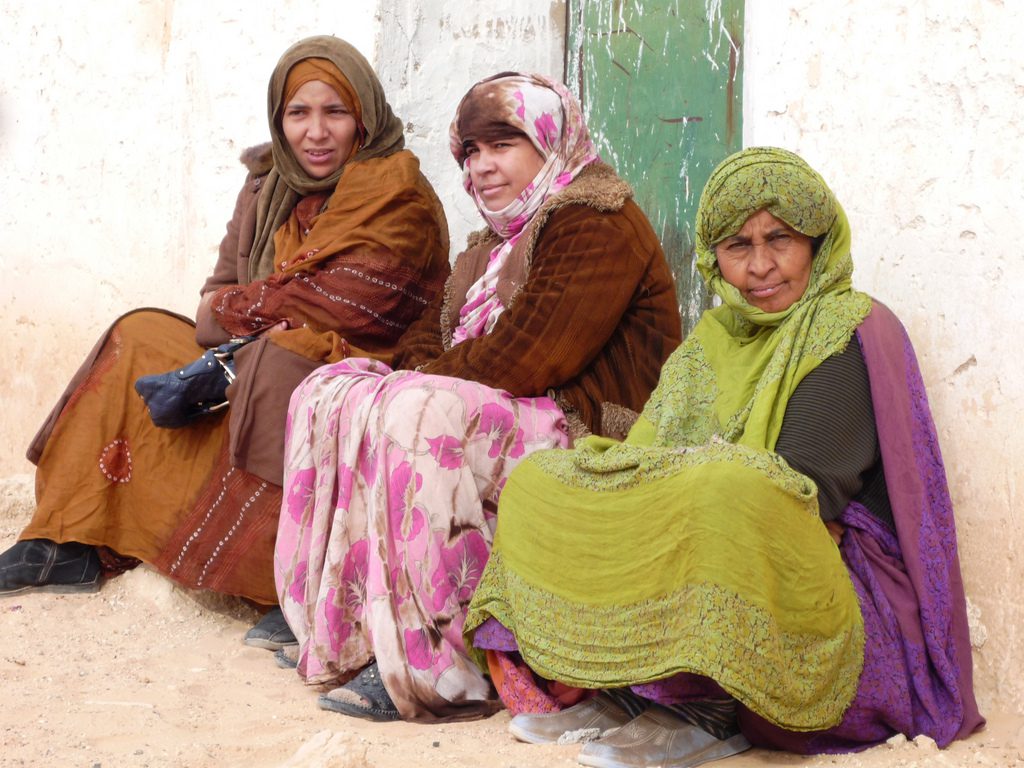
 The Sahrawi refugee crisis, one of the longest-standing in the world after the displacement of Palestinians in 1948, continues to persist with little resolution in sight. Since 1975, following Spain’s withdrawal from Western Sahara and the ensuing armed conflict between Moroccan forces and the Polisario Front, approximately 173,600 Sahrawi refugees have lived in five camps near Tindouf, Algeria.
Current Situation
The Sahrawi refugees are scattered across five camps on the unforgiving “hammada,” a vast and remote desert plain in the Sahara. The most distant camp lies 170 kilometers southwest of the Algerian city of Tindouf, in an area marked by isolation and a lack of economic opportunities. The harsh climate, with temperatures soaring to 50 degrees Celsius in the summer, frequent sandstorms and occasional floods, further exacerbates challenges facing the refugees, such as limited access to necessities and health risks.
Food insecurity is a dire issue, with nearly 90% of the “Sahrawi refugees either food insecure or vulnerable to food insecurity.” A 2022 Joint Assessment Mission and Nutrition survey by the World Food Programme (WFP) reveals a worsening nutrition crisis. The prevalence of life-threatening wasting among children aged 6 months to 59 months has risen from 7.6% in 2019 to 10.7% in 2022. More than half of these children suffer from anemia, two-thirds do not receive the diverse diet needed for healthy development and nearly a third suffer from chronic malnutrition.
Furthermore, the refugees’ heavy dependence on international humanitarian aid, severe living conditions and food shortages have forced many households to cut back on health expenditures or sell off their livestock. Inadequate infrastructure severely hampers the delivery of essential services such as education and health care, leading to high child and maternal mortality rates and adversely affecting the population’s overall health and well-being.
Additionally, employment opportunities within the camps are minimal, leaving a third of Sahrawi refugees without any income and 60% economically inactive. The extreme climate and remoteness of the camps have curtailed traditional income sources like agriculture and livestock rearing. This is particularly detrimental to young people who, due to economic frustrations, may resort to high-risk activities such as smuggling and theft.
The Sahrawi Refugee Response Plan
In response to the myriad of challenges the Sahrawi refugees face, in 2003, the United Nations High Commissioner for Refugees (UNHCR) launched the interagency Sahrawi Refugee Response Plan (SRRP). This initiative, requiring a total of $214 million, represents the first unified effort to address the needs of the Sahrawi refugee population. The plan brings together 28 partners, including the Algerian Red Crescent and the University of Madrid, to deliver coordinated humanitarian assistance.
The SRRP
The SRRP outlines several key priorities, including ensuring refugee protection and legal assistance and providing essential services such as food, shelter, health care and education. The plan also aims to improve water, sanitation and hygiene (WASH) conditions in the camps, which are critical given the harsh desert environment.
In addition to these immediate needs, the SRRP aims to support livelihoods by providing essential supplies, vocational training and income-generating activities. This includes the distribution of 1,500 high-quality cooking stoves and 3,000 bales of second-hand clothes from UNIQLO. On the health care front, the plan addresses the prevalent malnutrition with supplementation, including iron and folic acid, systematic deworming and outpatient care for particularly severe cases.
Education is another focal point, with the SRRP aiming to improve the quality of instruction by training teachers and educational personnel. By tackling a broad scope of issues and closely coordinating with the Algerian government, nongovernmental organizations (NGOs) and other United Nations (U.N.) agencies, the SRRP aims to deliver a comprehensive and effective response, ideally addressing the immediate and long-term needs of the Sahrawi refugee population.
Challenges and Way Forward
A U.N. press briefing from November 2023 confirms that, although the plan has received some donor support, operations remain underfunded. The U.N. actively calls for additional contributions to implement the plan and fully sustain refugee humanitarian assistance. The success of the fundraising efforts is still being determined, but the plan is set to run through 2024 and 2025. By the end of this period, it will be evident whether these initiatives have provided the support needed to improve the livelihoods of the Sahrawi people and move them closer toward long-term stability and self-reliance.
– Asma Issa
Asma is based in London, UK and focuses on Politics for The Borgen Project.
Photo: Flickr

Renewable Energy in Nigeria: Bringing Solar Panels to Locals
Addressing Energy Poverty
Energy poverty in Nigeria is not just a technical issue; it is deeply intertwined with social and economic inequalities. Women and girls, in particular, bear the brunt of energy shortages, as they are often responsible for household energy procurement, which can be both time-consuming and dangerous. REAN recognizes this and is working to ensure that women in Nigeria are a part of the renewable energy revolution, both as beneficiaries and as active participants in the industry.
Renewable Energy in Nigeria
REAN is at the forefront of addressing Nigeria’s energy crisis, a challenge that significantly hampers the nation’s development. It focuses on making fossil fuels a thing of the past, driving the shift toward renewable energy in a country where only about 55.4% of the population has access to grid electricity. This lack of reliable power affects nearly every aspect of life for millions of Nigerians, contributing to poor health outcomes, limited educational opportunities, reduced socioeconomic mobility and gender inequality.
REAN focuses on promoting solar energy as a viable alternative to fossil fuels. Through partnerships with local stakeholders, it has been instrumental in increasing the deployment of solar panels across the country. This initiative provides cleaner energy and supports local industries’ growth, fostering job creation and economic development. By encouraging the use of locally sourced materials and expertise in the renewable energy sector, REAN aims to boost Nigeria’s self-sufficiency in this critical area.
An impactful example of REAN’s work is evident in its support of Ajima Farms, where solar energy has significantly improved productivity by ensuring a consistent power supply. This story highlights how renewable energy can transform local businesses and communities by providing reliable and sustainable power.
Broader Implications for Society
The impact of REAN’s work extends beyond just providing power. Access to reliable and clean energy has profound implications for improving education, as schools can function more effectively with consistent electricity. It also enhances health care delivery, enabling clinics and hospitals to offer better services, particularly in remote areas. Furthermore, by reducing the reliance on fossil fuels, REAN’s initiatives contribute to a healthier environment, helping Nigeria to meet its commitments to global climate goals.
Promoting Renewable Energy in Nigeria
REAN plays a pivotal role in addressing one of the country’s most pressing challenges. By promoting renewable energy in Nigeria, particularly solar power, REAN is not only providing a solution to Nigeria’s energy deficit but also driving broader social, economic, and environmental benefits. REAN’s efforts are crucial in ensuring that the transition to renewable energy is inclusive, sustainable, and beneficial for all Nigerians, thereby making fossil fuels a relic of the past.
– Lydie Udofia
Photo: Unsplash
Improving the State of Mental Health in Suriname
The Mental Health of Indigenous Peoples
The Suriname Herald highlights the correlation between the effects of changing climatic conditions and the decreasing mental health of Indigenous populations is often overlooked. The article shares an interview with an Indigenous Surinamese woman who explains how varying weather conditions have affected the practice of traditional knowledge that was passed down through generations. As weather patterns change, drought causes some agricultural land to become infertile. In contrast, flooding causes harvests to fail in others. The stress and loss of centuries-old ancestral traditions that are tied to the well-being of the land is taking a toll on the mental health of Indigenous people.
In response, a joint effort between a Dutch and Surinamese University and the psychiatric center in Suriname launched the Suriname Indigenous Mental Health Study (SIMH) in 2023. The study aims to bridge the gap in understanding the mental well-being situation among the Indigenous population. With the knowledge gathered from the study, a framework can be built for mental health treatment that implements traditional Indigenous health care systems.
Youth and Women
The COVID-19 pandemic revealed the concerning state of mental well-being among children and youth. In 2023, the United Nations Children’s Fund (UNICEF) reported that 36.2% of youth in Suriname aged 16 to 25 years old have struggled with suicidal thoughts. Additionally, UNICEF found that about 75% of the youth experienced symptoms of stress or depression in 2022.
BMC Public Health’s 2022 study suggests that female respondents in the districts of Nickerie and Paramaribo were at a higher risk of developing depression and anxiety disorders. Researchers found possible cases of depression in 11.5% of male participants. This is in comparison to 19.4% of females from the population of Paramaribo. The cause of the difference between genders in the results is not yet determined. Possible factors contributing to poor mental health for women include limited economic opportunities, a lack of (financial) autonomy, domestic violence and limited family support.
Supporting Mental Health Services
UNICEF recently launched a one-year pilot program to improve mental health in Suriname, beginning in October 2023. The program focuses on the rural district of Nickerie in the Northwest and spans from October 2023 until October 2024. The issue is approached on three fronts:
The program aims to reach 25,000 people in Nickerie through a media campaign. Additionally, it aims to engage 500 children and 500 parents in an initiative to teach mental health skills. UNICEF shared the program’s accomplishments through March 2024:
Conclusion
Socioeconomic and climate-related issues impact mental health in Suriname. Studies have shown that women, youth and Indigenous people are disproportionately affected. The good news is that when the numbers are clear, solutions can start to take shape. UNICEF’s educational approach to positive mental health and the SIMH study that collaborates with Indigenous communities will positively impact mental health in Suriname for future generations.
– Tanisha Groeneveld
Photo: Flickr
The Sahrawi Refugee Response Plan
Current Situation
The Sahrawi refugees are scattered across five camps on the unforgiving “hammada,” a vast and remote desert plain in the Sahara. The most distant camp lies 170 kilometers southwest of the Algerian city of Tindouf, in an area marked by isolation and a lack of economic opportunities. The harsh climate, with temperatures soaring to 50 degrees Celsius in the summer, frequent sandstorms and occasional floods, further exacerbates challenges facing the refugees, such as limited access to necessities and health risks.
Food insecurity is a dire issue, with nearly 90% of the “Sahrawi refugees either food insecure or vulnerable to food insecurity.” A 2022 Joint Assessment Mission and Nutrition survey by the World Food Programme (WFP) reveals a worsening nutrition crisis. The prevalence of life-threatening wasting among children aged 6 months to 59 months has risen from 7.6% in 2019 to 10.7% in 2022. More than half of these children suffer from anemia, two-thirds do not receive the diverse diet needed for healthy development and nearly a third suffer from chronic malnutrition.
Furthermore, the refugees’ heavy dependence on international humanitarian aid, severe living conditions and food shortages have forced many households to cut back on health expenditures or sell off their livestock. Inadequate infrastructure severely hampers the delivery of essential services such as education and health care, leading to high child and maternal mortality rates and adversely affecting the population’s overall health and well-being.
Additionally, employment opportunities within the camps are minimal, leaving a third of Sahrawi refugees without any income and 60% economically inactive. The extreme climate and remoteness of the camps have curtailed traditional income sources like agriculture and livestock rearing. This is particularly detrimental to young people who, due to economic frustrations, may resort to high-risk activities such as smuggling and theft.
The Sahrawi Refugee Response Plan
In response to the myriad of challenges the Sahrawi refugees face, in 2003, the United Nations High Commissioner for Refugees (UNHCR) launched the interagency Sahrawi Refugee Response Plan (SRRP). This initiative, requiring a total of $214 million, represents the first unified effort to address the needs of the Sahrawi refugee population. The plan brings together 28 partners, including the Algerian Red Crescent and the University of Madrid, to deliver coordinated humanitarian assistance.
The SRRP
The SRRP outlines several key priorities, including ensuring refugee protection and legal assistance and providing essential services such as food, shelter, health care and education. The plan also aims to improve water, sanitation and hygiene (WASH) conditions in the camps, which are critical given the harsh desert environment.
In addition to these immediate needs, the SRRP aims to support livelihoods by providing essential supplies, vocational training and income-generating activities. This includes the distribution of 1,500 high-quality cooking stoves and 3,000 bales of second-hand clothes from UNIQLO. On the health care front, the plan addresses the prevalent malnutrition with supplementation, including iron and folic acid, systematic deworming and outpatient care for particularly severe cases.
Education is another focal point, with the SRRP aiming to improve the quality of instruction by training teachers and educational personnel. By tackling a broad scope of issues and closely coordinating with the Algerian government, nongovernmental organizations (NGOs) and other United Nations (U.N.) agencies, the SRRP aims to deliver a comprehensive and effective response, ideally addressing the immediate and long-term needs of the Sahrawi refugee population.
Challenges and Way Forward
A U.N. press briefing from November 2023 confirms that, although the plan has received some donor support, operations remain underfunded. The U.N. actively calls for additional contributions to implement the plan and fully sustain refugee humanitarian assistance. The success of the fundraising efforts is still being determined, but the plan is set to run through 2024 and 2025. By the end of this period, it will be evident whether these initiatives have provided the support needed to improve the livelihoods of the Sahrawi people and move them closer toward long-term stability and self-reliance.
– Asma Issa
Photo: Flickr
The DESFER Project: Empowering Women in the Sahel
The Situation for Women across the Sahel
Dr. Farkhonda Hassan, Chair of the United Nations (U.N.) Economic Commission for Africa’s Committee on Women and Development, points out that many poverty reduction strategies fail to address the disparities in income and power between men and women. She notes that the majority of African women still lack employment opportunities in trade, industry and government. Women across the Sahel experience the harsh effects of this gender inequality. They are more vulnerable to poverty, face significant barriers in accessing land, credit and formal employment and on average, have less time for productive activities due to the burden of domestic work.
The DESFERS Project
Plan International, a global children’s charity committed to creating a fairer world, focuses on building an equal world for girls. The organization has partnered with seven other entities, including ministries and national agencies for renewables, to launch a project that empowers women through renewable energy innovations. Introduced in 2018, the “Economic and Social Development of Women through Renewable Energies in the Sahel” project (DESFERS) actively confronts and addresses the social, cultural and economic inequalities that hinder the economic prosperity of women in the Sahel.
The project started by engaging women to articulate their social and economic needs. Plan International then focused on areas across the Sahara that offered the greatest potential for social and economic impact. Recognizing the critical role of sustainable energy and gender equality in development and economic growth, the European Union has contributed a €7.6 million grant to the DESFERS project.
Initially, the project concentrated on building individual skills such as reading, writing and math and introduced concepts about renewable energies and business. Subsequently, it provided more in-depth technical training focused on solar energy, particularly promoting women-led solar power businesses. The project also offers funding and training to help women launch micro-financial products in the sustainable energy sector. Furthermore, Plan International collaborates with ‘male champions’ who engage men in the community to help shift perspectives and address entrenched gender stereotypes.
Successful Sustainable Female Empowerment
The DESFERS project represents a new opportunity for women who were historically confined to traditional small business activities with minimal financial returns. This initiative merges the sustainable energy sector, specifically solar photovoltaic energy, with female empowerment. Crucially, the project positions women as prominent leaders catalyzing change within their communities. Women now manage the installation and maintenance of much of the new technology and capitalize on the business opportunities that the renewable energy sector presents. Since its inception, the project has supported 4,500 women-owned businesses in sustainable energy and trained 7,000 female entrepreneurs. Additionally, 21,000 women have received financing and the project has greatly enhanced women’s access to renewable energy.
Female Empowerment and Poverty
U.N. Women recognizes that gender equality is a significant and powerful catalyst for reducing poverty and increasing sustainable development. Ensuring equal access to opportunities enables societies to develop healthier and fairer economies. They have commended the shift toward renewable energy that promotes female empowerment. Alliance Sahel has observed that projects with a gender focus not only accelerate growth but also reduce gender and social inequalities. This enhances the economic and social resilience of the entire population, despite various challenges. It also notes a direct intergenerational benefit: projects centered on female empowerment yield long-term results. For example, empowered women tend to invest more in their children’s education and provide them with a more balanced diet, which contributes to building a stronger workforce for the future.
Looking Forward
Overall, the DESFERS project remains a significant success for women across the Sahel. Empowering women through renewable energy not only helps eradicate poverty but also breaks down entrenched gender inequalities prevalent throughout Senegal, Niger and Mali.
– Sian Ameer-Beg
Photo: Flickr
BabesGotBytes: Teaching Women Digital Literacy in South Africa
BabesGotBytes offers a variety of local school programs for students of all ages and free adult classes ranging from basic computer literacy, coding, software and web development, programming and entrepreneurship, among many others. Weekly meetups occasionally feature guest speakers, are open to newcomers interested in the developer’s community and allow like-minded individuals to connect and network.
Industry Changes and Growth
South Africa currently has one of the highest unemployment rates at 33%, with more than 8.4 million people unemployed. According to the Q2 Labor Force Survey for 2024, the industries most affected by job losses are retail, restaurants and hotels, agriculture, domestic work in private households and construction. Increases, however, are in manufacturing, community and social services, utilities, transportation, mining and finance.
The Information Technology (IT) industry is also growing steadily as South Africa has become more advanced in technology. As a central hub for startups and foreign subsidiaries, in one analysis, a growth of 36% was reported for the IT industry within the last three years, with an almost 5% increase in revenue for these companies.
College Degrees Are Essential
With more highly skilled jobs in demand, education plays a significant factor. Having a college degree puts candidates in a better position to secure employment, with graduates making up only 9% of unemployment overall. School systems in South Africa require high schoolers to complete an exam in their final year, known as the “matric,” in order to graduate and for entrance into universities. If the matric isn’t passed, the student is considered to have an “educational attainment less than matric.”
What this means to employers is that although the candidate has a secondary-level education, they didn’t graduate high school. Those without matric qualifications make up a staggering 39% of unemployment. For those living in rural areas, access to schools is limited and many lack infrastructure; teachers often pursue jobs in larger cities where they’re provided with more stability and income.
Gender and Race Add Barriers
Women face many challenges due to expectations of traditional gender roles with fewer resources or role models, with 29.9% of the unemployed, while men, 26.3%. They often face discrimination, receive lower wages and don’t advance as frequently in the workplace. Racial inequalities put Black Africans at an even further disadvantage as the most unemployed race at 37%, deepening the wealth gap and poverty level compared to other racial groups. In relation to this, Black Africans are also the least educated despite making up the majority population.
BabesGotBytes’ Impact
In a few years, BabesGotBytes has expanded into a large operation, partnering with Rlabs in 2023 to develop a six-month digital literacy program for disadvantaged communities. It has hosted workshops and webinars with companies such as Amazon Web Services Cloud, Arduino and Orange Cybersecurity. In December, it organized the Makers Hackathon, where students showcased their skills. This year, it launched a summer robotics camp for children ages 7-15 and participated in Womhub’s GirlsEng Innovation Camp. Recently, it announced its most ambitious project yet, collaborating with Zoho to launch a one-year boot camp to train and mentor 40 women and girls, further advancing their skills and experience.
– Tanita Love
Photo: Pexels
The Impact of COVID-19 on Youth Poverty in Grenada
Youth Unemployment
COVID-19 had a devastating impact on Grenadian society. The pandemic led to nearly half of the population becoming unemployed and pushed the extreme poverty rate from 2.4% to 18.4%. The country’s gross domestic product (GDP) also declined due to a drop in tourism. Youth, who comprise about 22% of Grenada’s population, were hit particularly hard. Even before the pandemic, around 26% of young people were unemployed. As of June 2023, more than 36% of Grenada’s youth were unemployed, a situation heavily influenced by the pandemic. With the rise of unemployment, more youth are succumbing to poverty.
Food Insecurity
COVID-19 also led to significant food insecurity in Grenada, with food prices soaring and nearly 40% of the population reducing their food intake. The pandemic further weakened the country’s agricultural economy, struggling to recover from abnormal weather patterns and two hurricanes in 2018. The combined impact of COVID-19 and the 2018 weather events has exacerbated food insecurity among Grenada’s youth, driving many into extreme poverty.
Solutions
Despite the extreme poverty faced by Grenada’s youth, assistance is being provided. In March 2023, USAID funded three new programs to support the country’s young people. The first program, Youth Resilience, Inclusion and Empowerment (Y-RIE), focuses on strengthening government-provided social services and enhancing educational opportunities in schools and the workforce.
The second program, Strengthening Evidence-Based Decision Making for Citizen Security 2.0 (CariSECURE 2.0), will provide resources and technical assistance to build the capacity of youth-serving institutions to collect and analyze data to support youth crime prevention and response. Lastly, the third program, Opportunities to Advance and Support Youth for Success (OASYS) will focus on increasing the diversion of youth away from custodial sentences.
The organization also signed a $30 million Development Policy Credit (DPC) to support Grenada’s economic recovery and enhance its resilience to adverse climatic conditions after the COVID-19 crisis. USAID is working to create a better life and future for the youth of Grenada.
Final Note
COVID-19 increased Grenada’s youth unemployment, food insecurity and poverty rates. However, USAID has implemented three programs to curb the situation and help the country rebuild its economy. With sustained effort, these initiatives could significantly improve the lives of Grenada’s youth and contribute to long-term economic recovery.
– Ellie Buss
Photo: Wikimedia Commons
Foreign Aid Fueled Zambia’s COVID-19 Vaccination Success
Launch of Zambia’s COVID-19 Vaccination Program
In April 2021, Dr. Jonas Chanda, the Honourable Minister of Health for Zambia, launched the COVID-19 vaccination rollout. The United States Charge d’Affaires, at the United States (U.S.) Embassy, David Young, stated that the U.S. provided $2 billion to the Vaccine Alliance to support the COVAX. The Swedish Ambassador Anna Maj Huktgård congratulated the Government of the Republic of Zambia for achieving an important milestone in the response against COVID-19. She also took this as an opportunity to announce that the Swedish government was allocating a total of $259 million to support the COVAX program. The World Health Organisation (WHO) and the United Nations International Children’s Emergency Fund (UNICEF) worked in collaboration with other partners to support Zambia’s government in implementing the COVID-19 vaccination program.
International Contributions to Zambia’s Vaccination Efforts
In August 2021, the United Kingdom (U.K.) also donated 119,000 vaccine doses to Zambia through COVAX which arrived in Lusaka, as reported by UNICEF and the U.K.’s Foreign, Commonwealth and Development Office. In March 2022, the government of Japan, under an emergency partnership with UNICEF, officially handed over equipment aimed to strengthen the long-term capacity of the health system in Zambia, including the delivery of life-saving vaccines for COVID-19. This support included 82 solar-powered fridge freezers, 25 ‘on grid’ combo vaccine freezers, 120 large vaccine cold boxes and 200 vaccine carriers. This initiative was made possible through the COVAX facility, an international mechanism led by GAVI, CEPI, the World Health Organization and UNICEF to ensure equitable access to vaccines across the developing world.
National Vaccination Campaign and Foreign Aid
Later that year, in October, the Government of the Republic of Zambia and partners, including the Centre for Disease Control (CDC), WHO and UNICEF, launched a 10-day national COVID-19 vaccination campaign targeting children aged 12 to 17 and adults 18 and above across the country. The nation had had clear goals in its fight against COVID-19, which foreign aid undeniably made possible.
Achievements and Continued Support
In November 2022, the Zambian government celebrated the nation’s achievement of vaccinating 70% of the eligible Zambian population. The U.S. government, through the U.S. Agency for International Development, the Centers for Disease Control and Prevention, the President’s Emergency Plan for AIDS Relief (PEPFAR) and the U.S Department of Defense have since provided nearly 1.9 billion kwacha ($120 million) to respond, prevent the spread of and recover from the toll of COVID-19 in Zambia. The U.S. government also supported integrating COVID-19 vaccination into HIV treatment centers to protect those living with HIV against COVID-19.
Looking Ahead
Zambia’s successful vaccination program is a testament to the power of global cooperation. The generous foreign aid donations strengthened international relations and a shared commitment to prioritizing global health, especially during the COVID-19 pandemic, reveals what can potentially be achieved when the world unites for a common cause.
– Nia Willis
Photo: Flickr
IFAD Projects in Peru
Peru is one of the countries that is struggling with poverty and poor living conditions in its rural areas, specifically the southern highlands. Since 1980, the IFAD has provided Peru with nine separate loans totaling $144 million. Additionally, it has initiated several public competitions in Peru to encourage innovation in exchange for a monetary prize. Recently, IFAD has concentrated on three projects in Peru aimed at reducing rural poverty.
Strengthening Local Development Project
Running between 2013 and 2019, this IFAD project worked with a $20 million loan to increase the overall well-being of the rural population by encouraging farmers to form producer associations (PA): groups that work together to leverage resources and tackle common challenges. Researchers found that households joining a PA increased their income, asset ownership and social involvement throughout this project. More financial resources, as well as increased opportunities for collaboration, directly benefited 15,900 households.
Project for Markets and Rural Development
Focusing primarily on women and young people, this IFAD project closely worked with 20,000 rural households and offered support to lift them out of poverty. Preserving cultural heritage is connected to lower rates of poverty because there is stronger community cohesion, which means that there are collaborative, more successful efforts to address local economic challenges. This project recognized this correlation and found ways to preserve culture in the Northern Highlands region of Peru. By contracting technical assistance, the IFAD taught artisans better techniques for making traditional crafts, which ensured that the crafts were high quality and profitable while still maintaining their cultural importance. Similarly, by promoting savings and micro-insurance, the IFAD made sure that rural people were economically secure, allowing them to spend time on cultural practices and pass them on to younger generations.
Livelihood Diversification in the Highlands Project
The Quechua and Aymara families are native groups of Peru and a majority of them are living below the poverty line. The IFAD loaned $34.5 million to this project which directly benefited 15,000 poor, native households. This IFAD project was different from others funded by the same organization, as it had the unique feature of directly transferring funds to communities. This strategy allowed smaller farmers to contract technical assistance and obtain property rights to land. Therefore, farmers would have modern techniques to ensure quality products and have the opportunity to manage their savings. In addition, the project worked with local authorities from this region to create maps and models that would represent the natural resources. Detailed maps helped communities efficiently use resources like water, soil and minerals, which promoted sustainable farming while still increasing agricultural productivity.
Looking Ahead
IFAD’s initiatives in Peru illustrate the organization’s commitment to addressing rural poverty through targeted projects that empower local communities. By focusing on forming producer associations, preserving cultural heritage and promoting sustainable farming practices, IFAD has made significant strides in improving the livelihoods of rural households. These ongoing efforts have not only increased income and asset ownership but also strengthened community cohesion and resource management in Peru’s highlands.
– Sophia Manole
Photo: Flickr
Famine in Sudan: WFP, FAO and UNICEF Are Providing Vital Aid
In a recent United Nations (U.N.) report, Edem Mosornu, Director of Operations and Advocacy in the Office for Coordination of Humanitarian Affairs, calls this a reality coming out of a “nightmare.” She reveals the gravity of the situation, with 90% of the population sitting at an advanced stage of food insecurity, trapped in areas that are out of reach of humanitarian agencies.
Famine has already gripped the entire northern region of Darfur and 13 other areas are at high risk of facing the same fate. Sudan’s dire situation requires immediate assistance, making humanitarian aid and initiatives essential for providing crucial support.
Famine in Sudan and WFP Action
The World Food Programme (WFP) has responded rapidly and effectively to the Sudan emergency. It supports community kitchens around Khartoum in partnership with local organizations, aiming to provide 100,000 hot meals per month. Additionally, WFP’s strategy includes using an “Emergency Telecommunications Cluster” to protect vital communication and establish United Nations Humanitarian Air Services. This successful project connects Sudan to Amman and Nairobi. It has already transported 18.5 metric tons of cargo in the latter half of 2023. WFP is also implementing an emergency wheat production project in areas such as Kassala and Gezira to encourage long-term resilience.
FAO and UNICEF
The Food and Agriculture Organization of the United Nations (FAO) and the United Nations Children’s Fund (UNICEF) also aid Sudan. FAO’s project is closely aimed at supporting farmers and their agriculture and improving the situation through this approach. This involves the distribution of seeds; the U.N. organization has already purchased 8,000 tonnes of millet and sorghum cereal seeds and aims to reach 1.8 million farming families this year.
On the other hand, UNICEF has focused on evaluating and supporting children suffering from severe malnutrition. This effort has included vaccinating 500,000 children and providing more than five million people with clean water. To support education, UNICEF works closely with mothers, offering financial assistance to 350,000 pregnant and lactating women and their families. It is also making efforts to protect vulnerable children from violence, separation and trauma.
Final Note
As long as conflict persists in Sudan, the hunger crisis continues. Predictions from the Integrated Food Security Phase Classification indicate that the situation could lead to severe health issues, including the spread of infectious diseases and increased infant mortality. The humanitarian aid provided by WFP, FAO and UNICEF offers hope for Sudan’s future. However, it also underscores that the situation is far from stable and ongoing assistance remains crucial.
– Grace Sammartini
Photo: Flickr
3 Nonprofits Improving Education in Singapore
Project Dignity
Established in 2010, Project Dignity has a mission of giving back “dignity” to lower-class individuals through education and specialized training. The organization provides skills training and employment opportunities for people who are living in poverty. It also welcomes people with learning or physical disabilities. Project Dignity’s Kitchen teaches people the skills needed to work in the food and beverage industry. In addition, other projects focus on educating people and giving unemployed people skills that can potentially help them get employed. Through this service initiative, the organization helps people get employable skills and also gives them confidence in their work and education, helping them escape poverty.
ReadAble
This organization was founded in 2014 and is focused on literacy and education for children living in poverty. It offers reading and language programs for these children. The organization has volunteer tutors who work with children and develop their reading and writing skills. It aims to encourage children to love learning and have a desire to learn more. This organization helps children with less resources and privilege build the confidence and skills needed to do well academically, giving them a better chance at a brighter future. Essentially, this organization works to provide quality education and assistance with education in Singapore for lower-class children.
South Central Community Family Service Centre
Established in 2013, the South Central Community Family Service Centre helps lower-class families that are struggling to make ends meet. It focuses on assisting adults and children in an educational aspect. It provides many services, including financial aid for school fees, tuition programs and educational workshops for children and even their parents. Its approach ensures that families receive not only the financial support they need but also the mentorship and resources to help their children do well in school. This organization does significant work to help lower-income children receive equal education as all other Singaporean children. Ultimately, this organization strives to make quality education in Singapore accessible to all.
Looking Forward
While Singapore is often regarded as a country with the best education, not everyone is living this reality. However, Project Dignity, ReadAble and the South Central Community Family Service Centre are all nonprofit organizations working to make every child employable and have a proper education for a job in the future. These organizations all recognize that education is a key variable in helping children escape the poverty cycle. Disparity in education in Singapore is still a critical issue that has very little awareness.
– Poppy Duggal
Photo: Flickr