Poverty Reduction and Water Access in Mayotte
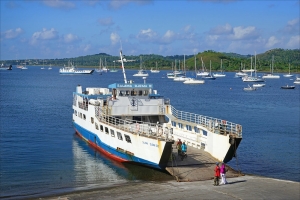 Mayotte is facing a water and sanitation crisis that goes beyond simple household issues. Official data shows that one-third of the population in this French overseas department, located in the Indian Ocean, do not have running water at home. Additionally, two-thirds of households lack basic access to sanitation facilities.
The same European Commission regional fiche reports that current water demand is about 42,000 cubic meters per day, while production capacity is around 39,000. In a territory where 77% of residents live below the poverty line, poor water access in Mayotte has made residents more vulnerable to health risks, increased daily costs and tough living conditions.
When Water Becomes a Poverty Issue
For many residents, the issue is not about lacking a large water supply, but affordability and safety as well. The European Commission states that water-related spending accounts for 17% of average household budget in Mayotte. Families who lack indoor water access most often depend on backyard taps, neighbors or informal sources such as standpipes, wells or streams. Interruptions also pose a health hazard since bacteria and other waterborne disease agents can spread when stored water deteriorates in Mayotte’s heat. Therefore, poor water access in Mayotte negatively affects residents’ public health and a household’s concentration on work, school and other essential needs.
AFD says Mayotte has a population of at least 300,000 people on just 376 square kilometers and continues to experience a growing population. At the same time, the European Commission notes that many of the water network was built to support a much smaller population and that malfunctions in one part of the system can severely disrupt supply across the territory. This helps explain why water shortages in Mayotte are not just the result of a drier climate, they are also related to problems such as aging infrastructure, limited capacity and years of delayed investment.
Major Investments Are Underway
However, active responses are already underway. The European Commission announced additional national investment plans of around €450 million for succeeding years, while the ERDF 2021-2027 program plans to invest €77.5 million ($90,845,500.00 US dollars) in water and sanitation in Mayotte.
AFD also works with local stakeholders to develop infrastructure and support local authorities, including through a project that provides organizational and financial aid to Mayotte’s communes and inter-communal bodies. These efforts matter because poverty reduction in Mayotte partly depends on whether essential services become more reliable and affordable.
A 2024-2027 Water Plan Offers Concrete Steps
The Mayotte prefecture’s 2024-2027 water plan adds more concrete measures. According to the prefecture, leak-repair teams have inspected more than two-thirds of the network since mid-2023 and have repaired more than 1,000 leaks. The plan also includes new boreholes at Coconi and Combani and an Ironi Bé desalination plant with a planned capacity of 10,000 cubic meters per day. Water access in Mayotte is therefore not only a crisis story. It is also a story about whether current repairs, investments and long-term planning can finally turn a basic service into a more stable foundation for health and poverty reduction.
– Ashirah Newton
Ashirah is based in Brooklyn, NY, USA and focuses on Good News and Global Health for The Borgen Project.
Photo: Flickr
