How Policy Has Helped Eradicate Extreme Poverty in India
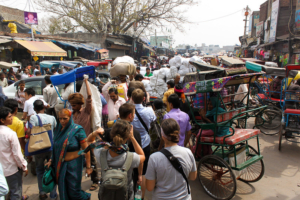 According to the World Bank, India has lifted 171 million people out of poverty in just 10 years. In 2011, 16.2% of the population was living on less than $2.15 per day. By 2023, this number went down to 2.3% This is the fastest reduction of poverty seen by any nation globally. India has seen strong economic growth, increased employment rates and improved infrastructure. The continual implementation of policy reforms has made the biggest difference in eliminating extreme poverty in India.
There have been continuous five-year plans, dating back to 1951. The country has focused on tackling unemployment, economic growth, building and improving infrastructure and ensuring food security. However, the last ten years have seen the most impactful reforms across these sectors.
Labor Laws
India has been praised for its social protection systems. Employment rates have recently outpaced the working-age population since 2021, with urban unemployment falling to 6.6.% in 2025.
The government implemented the most impactful policies in 2019, with the introduction of the Code on Wages, 2019, the Industrial Relations Code, 2020, the Code on Social Security, 2020 and the Occupational Safety, Health and Working Conditions Code in 2020. These ensured that workers had easier access to security, dignity, health, and wellness measures. As a result, the government increased the minimum wage for workers across all sectors, where it had previously only covered 30% of workers.
Female Employment
Many policies directed towards women have helped to see an increase in the economic position of women and a decrease in the overall levels of extreme poverty in India. For instance, the government launched the National Maternity Benefit Scheme in 2016, which ensured mothers over the age of 19 with financial aid during pregnancy; The Pradhan Mantri Ujjwala Yojana (PMUY), which distributed 50 million LPG connections to women below the poverty line and the Pradhan Mantri MUDRA Yojana (PMMY), which provided loans to help businesses. Of loans awarded, 68% went to female entrepreneurs, boosting women’s success in the labour market.
Introduced in 2018, the Solar Charkha Mission helped young unemployed people gain employment in the poorest rural areas. A rise in female employment has also been seen, with the number of women in paid self-employment nearly tripling since 2018. Policies also ensured that discrimination could not take place based on gender, further helping women succeed in the labour market.
Female Welfare
There have also been various schemes, such as Mission Poshan 2.0, which oversaw the investment into women’s health and wellbeing. Starting in 2018, it has helped to feed, educate and improve the health of women across India. This includes policies such as the Surakshit Matritva Aashwasan (SUMAN), which has strengthened maternal and neonatal care and provided free access to quality healthcare for pregnant people, newborns and new mothers for up to six months after delivery. As of March 2025, authorities have improved a reported 90,015 health care facilities.
Other policies, such as the Pradhan Mantri Surakshit Matritva Abhiyan (PMSMA) and the Pradhan Mantri Matru Vandana Yojana (PMMVY), have also provided improved healthcare and financial benefits to Mothers in India. Such schemes have ensured improved health and well-being of women across India, and prevented many pregnant women from falling into poverty.
Transportation
India has seen deep investment into its transportation infrastructure, with a 500% increase in its budget allocation over the last 10 years. The country has improved its metro system, with the network set to increase from 248 km in 2014 to 945 km by the end of 2024; the government have selected 1,318 railway stations for redevelopment; it nationalized 111 waterways under the National Waterways Act, 2016. This allows for more efficient trade and movement. The reform of infrastructure in India has allowed for increased economic growth, provided jobs across the country and allowed for increased accessibility.
What Now?
Despite the successes achieved through India’s policy reforms, there is still much more work necessary. Even though India has eradicated extreme poverty, one quarter of the population still remains poor. Further policy introductions and reforms will help lift those still living in poverty in India.
– Alys Gaze
Alys is based in Wales, UK and focuses on Good News and Politics for The Borgen Project.
Photo: Flickr
