Improving Access to Education in Bangladesh
 Bangladesh has made significant progress in expanding access to education, especially at the primary level. However, many students still drop out before completing secondary school, with only around 64% continuing beyond primary education. Factors such as child labor, early marriage and limited access to quality education continue to shape these outcomes.
These challenges affect all students, but they disproportionately impact girls, limiting their long-term economic opportunities.
Access to Education in Bangladesh
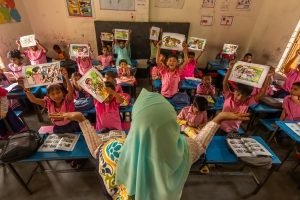
Surovi, a nonprofit school in Dhaka, makes education accessible for children who are often excluded from the system, including those living on the streets or growing up without stable family support. Founded in 1979, the organization focuses on reaching vulnerable groups who would otherwise remain out of school.
For many girls, Surovi serves as a critical entry point into education. They face higher risks of early dropout, child marriage and long-term economic dependency, making access to Surovi school especially important. However, access alone is not enough.
The quality of education remains uneven, as limited resources and a shortage of trained teachers continue to affect how students learn and progress.
The Role of Education in Shaping Opportunities
Education plays a key role in shaping both individual futures and broader economic development, particularly in regions like South Asia, where poverty remains a persistent challenge. According to the World Bank, although Bangladesh has reduced poverty over time, many people still face economic vulnerability, especially in marginalized communities. In this context, education in Bangladesh becomes essential for creating long-term opportunities, particularly for women.
Beyond basic skills, education builds awareness, confidence and independence. More educated societies tend to be more open to new ideas and better equipped to respond to social and economic challenges. For women, this impact is even more significant. Education helps delay early marriage, improves access to employment and allows women to participate more actively in the workforce.
Research by UNESCO shows that expanding access to education can significantly reduce poverty, with studies suggesting that poverty could be cut by more than half if all adults completed secondary education. As Malala Yousafzai emphasizes, education is a powerful tool for change. In this sense, it not only provides knowledge but also creates more capable and economically active individuals who can shape their own futures.
Education and Economic Pathways in Bangladesh
Pathshala South Asian Media Institute creates an atmosphere that makes education an alternative pathway into competitive job markets, particularly within creative industries. For one female student, studying photography became a turning point after a disrupted education journey. She explained that gaining skills and confidence helped her begin building a career, even in a field where income is not immediate and requires personal investment.
A teacher at Pathshala highlighted that these experiences reflect broader structural challenges. Barriers to education remain closely linked to poverty, geographic inequality and unequal access to quality institutions, especially outside major cities. Entering the job market is also highly competitive, with networks and connections often playing a crucial role alongside skills.
However, this dynamic is gradually shifting. More students are using digital platforms, portfolios and professional networks to access opportunities in media, freelancing and small-scale entrepreneurship. According to the teacher, when education is combined with practical skills, it enables students to move from unstable, low-income work to more sustainable livelihoods. While this transition takes time and is not equal for everyone, it shows how education can support long-term economic mobility.
From Education to Economic Empowerment
The experiences of students and educators in Bangladesh show that education is not just about learning but about creating pathways out of poverty, especially for women. As more women gain access to education, they are better positioned to move beyond low-income, unstable work into more secure and independent sources of income. In a situation where economic vulnerability and social expectations continue to shape women’s opportunities, education plays a critical role in shifting this reality.
Women who gain skills, confidence and professional networks are more likely to enter the workforce, start their own ventures or build sustainable careers over time. While challenges such as unequal access, limited resources and a competitive job market remain, they do not erase the progress being made. Instead, they highlight the need for more inclusive and practical education systems.
Closing Remarks
Ultimately, breaking barriers in Bangladesh is not only about increasing access to education but ensuring that education leads to real economic outcomes. When women in Bangladesh can turn education into income and independence, the impact extends beyond individuals and directly reduces poverty across communities and generations.
Globally, education remains one of the strongest tools to fight poverty. According to UNESCO, around 171 million people could escape extreme poverty if all students left school with basic reading skills. Expanding access to quality education, especially for women, can accelerate this progress and create more equal economic opportunities across generations.
– Elif Oktar
Elif is based in London, UK and focuses on Good News for The Borgen Project.
Photo: Pexels
