Using Football to Protect Vulnerable Women from Exploitation
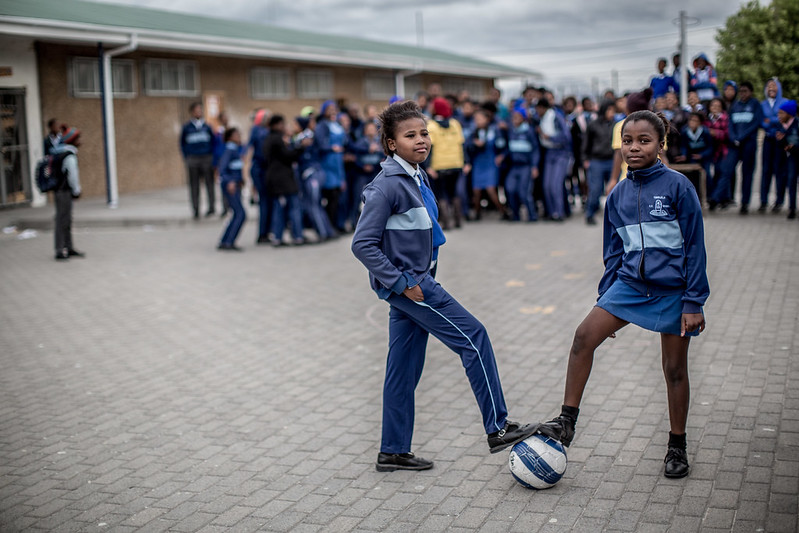 Football has long been known as the game of the people, bringing joy to millions of watchers and players in all corners of the world. Still, perhaps it is less clear how the Homeless World Cup Foundation used football to protect vulnerable women from exploitation. Alongside the FIFA Foundation, the Homeless World Cup Foundation launched the Football to Protect Vulnerable Women from Exploitation program in partnership with four African countries that deal with extreme poverty (Kenya, Tanzania, Zimbabwe, and Zambia). Alongside fun football training and competitions, they developed tools to support women recovering from, or at risk of, exploitation.
Homeless World Cup
Poverty and football are complexly and deeply entangled. As an accessible game for most people, football holds great power as a catalyst for social change with grassroots programmes creating jobs and opportunities, developing vocational and life skills and empowering marginalised groups through social cohesion.
The Homeless World Cup has one vision – to create a world in which homelessness does not exist. According to the U.N., there are more than 1.8 billion people who lack suitable housing worldwide, despite it being a human right. Through both its one-of-a-kind Homeless World Cup tournaments and by delivering year-round programs in 75 countries, they help to achieve their mission by helping players into stable housing, education programs, and employment.
Football to Protect Vulnerable Women from Exploitation Project
The FIFA Foundation and the Homeless World Cup Foundation recognized the transformative power of football to protect vulnerable women from exploitation and create safer communities. They partnered with four Homeless World Cup countries to develop and implement a curriculum of both football and non-football related activities: Kenya, Tanzania, Zambia and Zimbabwe. Programs in each country have used the power of sports to focus on and improve on local issues. The overall project had several goals:
- Identifying vulnerable women who are recovering from or are at current risk of exploitation
- Creating safe spaces for these women, both on and off the pitch, and ensuring close ties to local women’s shelters
- Engaging women in training sessions, including football, coaching, safeguarding, women’s empowerment, and vocational skills to improve employment prospects
- Supporting and guiding these vulnerable women to productive, tangible and sustainable alternatives to exploitation and out of homelessness and poverty
- Targeting young men on and off the pitch to develop positive masculinities in an effort to promote equality between men and women
- Hosting and delivering women’s tournaments; the first Africa Women’s Cup happened in Tanzania in 2024, and the second in Kenya in 2025
Kenya
Around 45% of the Kenyan population lives below the global poverty rate of $3.00 a day. Additionally, around 1.4 million Kenyans live with HIV. As such, the partnership between the FIFA Foundation, the Homeless World Cup Foundation and Vijana Amani Pamoja (a football club formed in 2003 in an area of Kenya with a high rate of HIV), this project to use football to protect vulnerable women also had a large focus on sexual reproductive health and rights for girls and young women. Young women and girls who are vulnerable to sexual exploitation due to poverty and inadequate housing are at an increased risk of HIV, which makes this project all the more important.
Tanzania
Despite seeing significant growth in their economy and a major reduction in poverty since 2000, the poverty rate remains high, with around 29 million people still living in poverty, and 3 million houses are necessary to address the current shelter shortage. Gender-based violence remains a large issue in Tanzania; around 10%, or 2 million, girls and women have experienced female genital mutilation despite the law prohibiting it on girls under the age of 18. Consequently, the project to use football to protect vulnerable women from exploitation in Tanzania focuses largely on tackling gender-based violence to ensure sustainable and safe social development for young people.
Zambia
An astonishing 71% of the Zambian population lives below the poverty line, making it one of the poorest countries in the world. There has been a rapid rate of urbanisation with ‘higher’ paid jobs concentrating in urban areas; there remains a 1.3 million urban housing unit deficit. Zambia’s project partner is Bauleni United Sports Academy, which focuses on children and young people aged 6 to 20 who struggle with poor economic situations and social injustices. They provide resources and facilitate opportunities for 10,000 children to access high-quality sports programmes for positive impacts that last a lifetime.
Zimbabwe
Approximately 9.9 million people live on less than $4.20 a day, and around one in five people live in slums with limited access to water and electricity. Partnering with the FIFA Foundation and the Homeless World Cup Foundation, Zimbabwe’s Young Achievement Sports for Development is a community-based organisation that uses football and education to reach young people and help increase their confidence and prevent substance abuse.
Project Outcomes
This partnership and project have already helped and empowered many girls and women throughout the four partner countries through football and wider initiatives. Sport and football are powerful and effective transformative forces, helping create safer communities by protecting vulnerable women and girls from exploitation. Football and this initiative are far more than a game, but a lifeline for so many experiencing social injustices such as poverty and gender-based violence.
– Stephanie Gable
Stephanie is based in Wales, U K and focuses on Global Health and Politics for The Borgen Project.
Photo: Flickr
