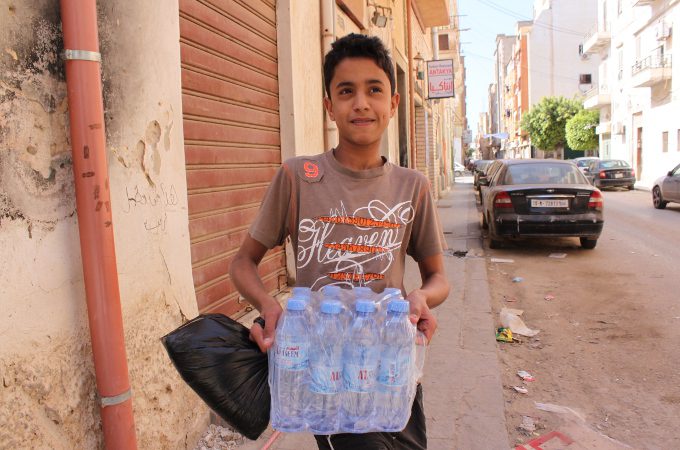
 Libya is a country in North Africa and has one of the largest oil reserves in Africa which is a primary influence in the country’s economic and political state. It was under dictatorship for 42 years and now faces the consequences of the 2011 civil war and NATO intervention. Libya’s economic state and political warfare continue to create instability for the population. Poverty in Libya is a growing issue driven by constant struggle. The country’s fragile economy and growing inflation have limited access to jobs and essential services like health care and education. The ongoing armed conflict in Libya is disrupting people’s livelihoods and fuels regional disputes, causing poverty amongst displaced populations affected by the current situation in Libya.
Current State of Poverty in Libya
After the 2011 revolution and the death of Muammar Al-Gaddafi, the country faced a prolonged civil war, which weakened the state politically and economically. Now Libya faces power struggles, ongoing food insecurity and deteriorating infrastructure. Libya is home to an estimated 8.2 million people and more than 300,000 of the population is currently displaced, with more in need of humanitarian assistance.
Before the 2011 Civil War, Libyan families’ costs for food were offset by the welfare state that provided free education, housing, public services and health care. Since then, poverty in Libya increased with around 325,000 people in need of assistance, according to the World Food Programme (WFP). The impact of COVID-19 further toppled Libya’s economic state and led to its decline in 2020 revealing the severity of the pandemic. Countless people lost their jobs and livelihoods due to the economic downfall of Libya during the outbreak leading to many facing prolonged food insecurity and need for assistance.
Libya’s Economic and Political Situation
The conflict in Libya is the focal cause of Libya’s economic decline. The 2016 internal armed conflict, which lasted until 2018 had severe consequences, including civilian casualties and human rights violations. Security-related outbreaks have led to 2,240 fatalities in 12 months between 2019 and 2020; General Haftar’s Libyan National Army could be responsible for 80% of civilian casualties. Libya’s political struggles between East and West increase the risk of harm and reduce the efforts for stability.
Libya is also struggling with a liquidity problem. Libya relies on oil production and international oil prices to fuel income. However, the instability in Libya has led to “inconsistent government revenues,” according to a 2020 report. This pressure has created liquidity problems for the country, severely impacting people’s ability to withdraw public wages and savings from banks.
Moreover, Libya operates under a dual exchange rate system which causes distortions in currency value and rapid inflation and devaluation. The constant disruptions in the supply chain force Libyans to rely on black-market currency exchange for access to money, according to a 2020 report. This liquidity problem leads to higher living costs due to the limited access to cash, creating food instability for people in Libya.
Education and Health Care
Amongst the Libyan population, the new generations are the most vulnerable and affected by the ongoing unrest and economic instability. Although Libya has seen economic growth in 2023, health care and nutrition are still slowly progressing. According to UNICEF, Libya has seen a decline in child and infant mortality rates as well as a decrease in the population living below the poverty line to 7.1% in 2022. However, primary healthcare and nutrition services plummeted. Education enrolment rates increased to 92%, but many youths, including migrants and refugee children, lack learning opportunities.
Additionally, the World Health Organization (WHO) and the Ministry of Health and Education in Libya revealed the complex situation of the overproduction of health care workers and the shortage of nurses, doctors and specialists. Medical education standards in Libya are rated below average, with low certification standards. This issue limits people from access to quality healthcare, especially for those in poor, rural or disrupted regions.
Solutions and Efforts to Poverty in Libya
The WFP built partnerships with the government of Libya, local NGOs and international organizations to fight poverty and food insecurity in contribution to the U.N. Sustainable Development Cooperation Framework. It has developed a 2023-2025 strategic plan that addresses the need for emergency food assistance and support for the most vulnerable communities in Libya.
WHO and the Red Crescent are working to strengthen and repair the Libyan health care system by providing medical supplies and raining health care workers. This initiative mainly focused on Derna and other regions in Eastern Libya affected by the floods in 2023 that left many displaced and in need of medical and humanitarian assistance.
In 2023, UNICEF and the Ministry of Health ensured the accessibility of primary health care, nutrition and medical support. After the Floods, efforts focused on nutritional screening for 5,461 children and malnutrition management. UNICEF also succeeded in installing 627 vaccination administration systems across Libya, reducing the risk of rising mortality rates, according to 2023 UNICEF report.
Conclusion
Poverty in Libya is deeply caused and rooted in the country’s ongoing conflict, political instability, inflation and economic decline. Limited access to employment and education combined with fragile political and economic structure continues to impact vulnerable populations significantly. Many NGOs and IGOs are addressing and putting in the effort to combat Poverty in Libya. However, the constant instability has made that difficult. Addressing these challenges requires governmental reforms and a stable economy to create a pathway away from poverty.
– Gufran Elhrari
Gufran is based in London, UK and focuses on Politics for The Borgen Project.
Photo: Flickr

CERF Releases $100 million For Underfunded Crises
Twice annually, the CERF’s Acting Emergency Relief Coordinator (ERC) allocates special grants from the Underfunded Emergencies (UFE) Window to support essential life-saving activities in neglected humanitarian emergencies. Here are the country allocations and the underfunded crises they face.
Underfunded Crises in West Africa
CERF will allocate $10 million to Burkina Faso, where more than 2 million people were internally displaced due to armed conflict between internal militias — part of a broader Sahelian violence caused by Islamic extremism and political instability. Twenty-seven percent of the country requires humanitarian assistance and millions face severe food insecurity.
Similarly, Mali faces a security crisis compounded by economic shocks. More than 7 million require humanitarian assistance, 1.37 million face crisis levels of food insecurity, 1.4 million children face undernourishment, approximately 2,600 individuals face famine and more than 350,000 are internally displaced, according to CERF. Mali will receive $11 million to help displaced populations and alleviate food insecurity
Underfunded Crises in Central and East Africa
Ethiopia is struggling with civil conflict and the aftermath of flooding that has caused deaths, displacement, and food insecurity. Up to half a million could be struggling with displacement and more than 15.8 million are food insecure, according to CERF. Meanwhile, Ethiopia faces cholera and malaria epidemics. CERF will provide $15 million to Ethiopia to help provide access to critical services and to reduce morbidity for 12.3 million vulnerable people.
Malawi is also dealing with weather patterns causing food insecurity among 5.7 million people. Aid worth $11 million could help the country deal with the effects of drought.
Since 2017, Mozambique has experienced violence that has displaced hundreds of thousands of people while weather patterns devastate the agricultural sector, according to CERF. Funding of $7 million is going towards preventing a food insecurity crisis.
Burundi faces food insecurity, violence, epidemics and natural disasters. Heavy rainfall caused flooding by the end of last year and displaced thousands. More than 1 million people are food insecure and landslides have displaced more than 47,000 people, according to CERF. Funding of $5 million will support flood recovery and displaced people.
Cameroon experiences several forms of internal violence and natural disasters. Recent floods exacerbate the situation and an estimated 1.8 million people are without adequate water and health services. Receiving $7 million could help vulnerable populations, particularly women and children, against exploitation and malnutrition.
Middle East, South East Asia and the Caribbean
Yemen is considered the largest humanitarian crisis, an eight-year civil war in Yemen between Houthi rebels and Saudi-backed government forces created an economic, social and health crisis. There are 19 million people experiencing a food insecurity crisis while flooding disrupts access to essential services, according to CERF. Many lack sanitation, water and health care access. CERF will provide $20 million to support food security and health for millions in need.
Following a brief period of democratic rule, a 2021 coup in Myanmar devolved into a civil war between a military government and various ethnic militias. Intensified fighting this year increased displacement to 3.1 million people. Almost 13 million people face moderate or severe food insecurity, according to CERF. The organization will provide $12 million to Myanmar which could hopefully help 18 million people who need funding for essential services and support for displaced populations.
Natural disasters and internal gang violence leave 5.5 million people requiring humanitarian assistance in Haiti. There are 578,000 people who are internally displaced, 8.5 million faced food insecurity earlier this year and many face gang violence, according to CERF. Funding of $9 million will support critical needs in the country.
Conclusion
These countries experience underfunded crises despite dire situations and donor pledges. This demonstrates the need for increased attention. The allocation of $100 million by CERF is a crucial step but support from international donors and organizations is essential to address the ongoing challenges these countries face.
– Luke Ravetto
Photo: Flickr
3 Innovations Reducing Poverty in Kosovo
Economic Growth
According to the World Bank, since declaring independence in 2008, Kosovo has experienced a 50% increase in per capita income and a 35% decrease in poverty. Instead of relying on foreign aid for economic growth, the government has increased investments, with help from projects and a stronger financial system. Kosovo has also faced challenges like inefficient economic management and a weak government, which have impacted the economy’s growth.
As a result, the Kosovo Economic Governance Activity (KEGA) was implemented, which is a five-year initiative funded by USAID to help the Kosovo government make reforms in policies to promote growth in the private sector and strengthen public financial management. This initiative resulted in €1.2 billion in formalized buildings that secured citizens’ property rights and an 86% increase in tax revenues, rising from €457 million in 2018 to €852 million in 2023.
Decrease in Unemployment
Focus Economics reported the rate of unemployment in 2019 at 26.7%, and in 2023, it decreased to 10.9%. This rapid decrease resulted from initiatives such as the electronic platform K-GenU, which UNICEF launched to provide opportunities for Kosovo youths to access paid internships and to establish connections with employers. The platform helps young people with skills in job searching. Another initiative by UNICEF, Generation Unlimited, prepares young people for the labor market and has provided internships for around 500 young people in 57 businesses.
Social Protection Initiatives
Many people in Kosovo do not have access to health care, education and protective services. This is due to the ineffective programs to help reduce this shortcoming. To combat this, UNICEF increased support for the Law on Social and Family Services, which aims to broaden services and ensure that everyone in need has the right to access these services. UNICEF in Kosovo also focuses on ensuring that policies that are aimed at aiding children lead to real change in their lives. This involved planning and managing the money for certain programs and directly helping municipalities to ensure that children most in need are receiving the help.
Moving Forward
While Kosovo faces challenges ranging from high rates of unemployment and ineffective social programs, the Kosovo government and international organizations have taken successful steps to tackle this problem. The World Bank reports on a new strategy called the Country Partnership Framework (CPF) for Kosovo for the years 2023 to 2027. This aims to help the country improve its economy over the next five years to create more jobs and improve living standards.
– Nouf Hunaiti
Photo: Flickr
SNV’S WASH Program: Improving Water Access
SNV’s WASH Program Brief
SNV Netherlands Development Organization is a global developmental partner that works with government and private sectors in more than 20 African and Asian countries to improve basic living conditions in three criteria: water, agri-food and energy. In 2023, SNV has improved the lives of 6.4 million people through system upgrading, income increment, outcome management and widespread inclusion of basic services.
SNV’s inspiration comes from pursuing SDGs objectives. In response to the water question, SNV has improved the water security for 1.6 million in 18 countries, with 562,000 people gaining access to water for the first time, according to the 2023 SNV Annual Report. SNV frames its work around three determining topics: systems transformation, changing weather patterns and social equity.
Water, Sanitation and Hygiene (WASH) is SNV’s main water developmental program. SNV’s WASH Program defines successful water security as safe water usage, lower water pollution, protection from water hazards and safe water resources, according to the 2023 annual report. To achieve its objective, SNV works with all levels of government facilities and civil societies to provide impactful systemic changes in water infrastructure. At the household level, SNV provides open-access educational programs and publications, promoting thoughtful and safe water management.
SNV’s WASH Program in Mozambique
From 2017 to 2019, SNV’s WASH Program provided sanitation for 68,000 people in Mozambique. In those two years, 14 percentage points more households gained access to an improved toilet. In terms of WASH’s educational effort, 40,000 people have practiced washing their hands after defecation.
However, due to Cyclone Kenneth’s impact, the program sees a 21% decrease in hygienic toilet maintenance. The percentage of the population without access to handwashing facilities went from 62% to 75%. This led to a 14% increase in out-of-usage toilets and, eventually, a 5% increase in open defecation, according to the 2020 brief.
The Most Recent WASH Project
Transforming Access to WASH and Nutrition Services II (T-WASH II) is a project launched by SNV and funded by the U.K. government aid organizations. The project has a budget of £55,821,502 nationwide to date. T-WASH II aims to improve national, provincial and municipal stakeholders’ knowledge and relationships. The project brings positive change from community involvement and women-in-decision-making positions. The lasting outcome is its learning opportunities for stakeholders and local communities.
Looking Ahead
Despite increasing weather challenges, SNV’s WASH Program sees positive change. SNV will continue to adapt its WASH system to align with the changing demands of the local communities and the challenges that changing weather patterns may bring. SNV’s WASH Program is in full force with the necessary funding to do its part in achieving UN SDGs 6.
– Jimmy Nguyen
Photo: Flickr
China’s malaria elimination
The 1-3-7 Strategy: The Key to Success
One of the cornerstone strategies in China’s malaria elimination was the 1-3-7 surveillance method. The efficient system requires reporting any confirmed malaria case within one day, then investigating within three days and responding within seven days. This rapid detection and response model was integral to China’s ability to control and eliminate malaria.
Real-time data-sharing technology is further enhanced using this method, according to The Lancet. The country also provided monetary incentives to health care workers to encourage timely reporting in some regions. The Gates Foundation recognized the 1-3-7 approach as a model for other countries with malaria breakouts.
Additional Steps to China’s Success
On top of the 1-3-7 strategy implemented to tackle China’s malaria elimination, the country also developed innovative genetic-based approaches by studying parasite populations. Scientists noticed that there is an ideal stage to intervene when it comes to intracellular parasites, this is when they decide to either continue multiples or be transmitted through a mosquito. This is because only a few parasites turn into gametocytes which is required for the transmission. China used strategies like insecticide spraying and mosquito breeding ground elimination.
Furthermore, China also turned its attention to the surveillance of drug resistance. A similar approach could help reduce malaria transmission rates in Africa. WHO recommends frequent efficacy studies to monitor the effectiveness of antimalarial drugs, according to the International Journal of Maternal and Child Health and AIDS (IJMA). China also partnered with international research institutes such as Harvard University where it used advanced genomic tools to study and predict malaria parasite movements.
China’s Leadership
China’s success in eliminating malaria shows the need for strong government leadership and cross-sectoral collaboration. Starting in the 1940s, when China was reporting 30 million cases of Malaria annually, the country gradually reduced its malaria through a series of national plans and partnerships with other nations. In 2010, it launched the National Action Plan for Malaria Elimination. This, combined WHO guidelines with China’s local strategies to achieve elimination.
During this time, China’s government committed over ¥1.38 billion towards malaria elimination efforts, according to BMJ Global Health. This robust financial backing, combined with scientific research, allowed China to upscale its interventions. The discovery of artemisinin is one of the most notable contributions from Chinese research, according to The Gates Foundation. These advances played a key role in China’s success and remain crucial tools in global malaria control efforts.
Future Prospects: China’s Lessons for Africa
This amazing achievement could help African nations achieve malaria-free status. By creating multi-sector collaborations and adapting the 1-3-7 strategy they can unite in the fight against malaria. Furthermore, adapting China’s genetics-based approach could strengthen these efforts.
Additionally, community engagement could be key to success. Educating communities about malaria prevention and involving local leaders in control measures could help ensure these efforts. With the right combination of financial investment and government action, African nations can make significant progress towards reducing malaria. China’s malaria-free certification is not just a victory for China but also a beacon of hope for the global fight against malaria.
– Ellisha Hicken
Photo: Unsplash
Education Initiatives in Namibia
Government Work
Education is mandatory for Namibians between 6 and 16 years old and is free for both primary and secondary school since 2013 and 2016, respectively. In 2023, the country announced the Safeguarding Intangible Cultural Heritage in Basic Education in Namibia and Zimbabwe program, which trains teachers in both nations and establishes a community-based style of learning which emphasizes living heritage and culture.
With this initiative, Namibia moves closer to achieving SDG 4 – access to quality education for all. In addition, Namibia has recently undertaken efforts to digitize its education system, launching “The Digital Schools” as a test project to improve “digital learning environments and enhance teachers’ digital skills.”
USAID
Despite the efforts of the Namibian government, inequalities and deficiencies in education persist. Thankfully, international organizations have stepped up to spur development through their education initiatives in Namibia. USAID has been active since the nation’s birth through its Basic Education Systems Project, helping children in densely populated and underserved regions access primary education before it was free to do so.
USAID’s Ambassador Scholarship Program finances education for orphans and vulnerable children and keeps them in school, helping them receive an equal education to more advantaged students. Finally, a Youth Development program instills in students life skills and vocational training to keep them enrolled in education.
Roger Federer and MCC
Since 2018, the Roger Federer Foundation has encouraged a smooth transition for students entering primary school through its School Readiness Initiative. It assists Namibia’s youth with enrolling and staying in school and promotes equal access between girls and boys. Furthermore, its Early Learning Kiosk offers stimulating digital learning to students at a low cost in the form of a tablet.
The Millennium Challenge Corporation (MCC), another U.S.-based development effort, spent $145 million instituting education initiatives in Namibia through its Namibia Compact. The program trained new teachers and offered new textbooks to students. While test scores and education improved somewhat, the MCC founds new facilities to often not meet the needs of Namibian communities.
UNICEF
UNICEF focuses on education at a young age, using its Integrated Early Childhood Development approach to improve nutrition, stimulation and learning opportunities for pre-primary Namibian children, especially the disabled. Furthermore, the program trains parents in skills to ensure their children’s sustained learning on the path to enrollment in primary education.
Namibia is already far ahead of most African nations in terms of education. However, inequalities exist between vulnerable and disabled populations and the rest of the youth population. With both the government of Namibia and outside organizations recognizing this issue and taking action, vast improvements in education—and development as a whole in Namibia—are sure to follow.
– Cole Zickwolff
Photo: Flickr
Everything You Need to Know About Poverty in Libya
Current State of Poverty in Libya
After the 2011 revolution and the death of Muammar Al-Gaddafi, the country faced a prolonged civil war, which weakened the state politically and economically. Now Libya faces power struggles, ongoing food insecurity and deteriorating infrastructure. Libya is home to an estimated 8.2 million people and more than 300,000 of the population is currently displaced, with more in need of humanitarian assistance.
Before the 2011 Civil War, Libyan families’ costs for food were offset by the welfare state that provided free education, housing, public services and health care. Since then, poverty in Libya increased with around 325,000 people in need of assistance, according to the World Food Programme (WFP). The impact of COVID-19 further toppled Libya’s economic state and led to its decline in 2020 revealing the severity of the pandemic. Countless people lost their jobs and livelihoods due to the economic downfall of Libya during the outbreak leading to many facing prolonged food insecurity and need for assistance.
Libya’s Economic and Political Situation
The conflict in Libya is the focal cause of Libya’s economic decline. The 2016 internal armed conflict, which lasted until 2018 had severe consequences, including civilian casualties and human rights violations. Security-related outbreaks have led to 2,240 fatalities in 12 months between 2019 and 2020; General Haftar’s Libyan National Army could be responsible for 80% of civilian casualties. Libya’s political struggles between East and West increase the risk of harm and reduce the efforts for stability.
Libya is also struggling with a liquidity problem. Libya relies on oil production and international oil prices to fuel income. However, the instability in Libya has led to “inconsistent government revenues,” according to a 2020 report. This pressure has created liquidity problems for the country, severely impacting people’s ability to withdraw public wages and savings from banks.
Moreover, Libya operates under a dual exchange rate system which causes distortions in currency value and rapid inflation and devaluation. The constant disruptions in the supply chain force Libyans to rely on black-market currency exchange for access to money, according to a 2020 report. This liquidity problem leads to higher living costs due to the limited access to cash, creating food instability for people in Libya.
Education and Health Care
Amongst the Libyan population, the new generations are the most vulnerable and affected by the ongoing unrest and economic instability. Although Libya has seen economic growth in 2023, health care and nutrition are still slowly progressing. According to UNICEF, Libya has seen a decline in child and infant mortality rates as well as a decrease in the population living below the poverty line to 7.1% in 2022. However, primary healthcare and nutrition services plummeted. Education enrolment rates increased to 92%, but many youths, including migrants and refugee children, lack learning opportunities.
Additionally, the World Health Organization (WHO) and the Ministry of Health and Education in Libya revealed the complex situation of the overproduction of health care workers and the shortage of nurses, doctors and specialists. Medical education standards in Libya are rated below average, with low certification standards. This issue limits people from access to quality healthcare, especially for those in poor, rural or disrupted regions.
Solutions and Efforts to Poverty in Libya
The WFP built partnerships with the government of Libya, local NGOs and international organizations to fight poverty and food insecurity in contribution to the U.N. Sustainable Development Cooperation Framework. It has developed a 2023-2025 strategic plan that addresses the need for emergency food assistance and support for the most vulnerable communities in Libya.
WHO and the Red Crescent are working to strengthen and repair the Libyan health care system by providing medical supplies and raining health care workers. This initiative mainly focused on Derna and other regions in Eastern Libya affected by the floods in 2023 that left many displaced and in need of medical and humanitarian assistance.
In 2023, UNICEF and the Ministry of Health ensured the accessibility of primary health care, nutrition and medical support. After the Floods, efforts focused on nutritional screening for 5,461 children and malnutrition management. UNICEF also succeeded in installing 627 vaccination administration systems across Libya, reducing the risk of rising mortality rates, according to 2023 UNICEF report.
Conclusion
Poverty in Libya is deeply caused and rooted in the country’s ongoing conflict, political instability, inflation and economic decline. Limited access to employment and education combined with fragile political and economic structure continues to impact vulnerable populations significantly. Many NGOs and IGOs are addressing and putting in the effort to combat Poverty in Libya. However, the constant instability has made that difficult. Addressing these challenges requires governmental reforms and a stable economy to create a pathway away from poverty.
– Gufran Elhrari
Photo: Flickr
HIV Prevention Drug Lenacapavir to Reach 120 Countries
HIV Prevention Drug Lenacapavir
Lenacapavir is a long-acting injectable that provides pre-exposure prophylaxis (PrEP) to reduce the risk of contracting HIV. Earlier this year, a study in South Africa and Uganda revealed the drug’s high efficacy in preventing HIV among HIV-negative girls and women. Furthermore, another trial involving men in Argentina, Brazil, Mexico, Peru, South Africa, Thailand and the United States (U.S.) demonstrated nearly complete protection. Indeed, in the lenacapavir group tested, among women, there were no new cases of HIV infection and the trials revealed no significant safety concerns.
Pressure on Gilead from World Leaders
Following the publication of these findings, Gilead faced pressure from the People’s Medicines Alliance along with a group of 300 world leaders, celebrities, scientists and activists to make the drug available in middle- and low-income countries simultaneously as people in wealthier nations. Among the signatories were actors Gillian Anderson, Stephen Fry, Sharon Stone and Alan Cumming; former heads of state; and Francoise Barré-Sinoussi, a Nobel-winning scientist. In a letter addressed to the Gilead CEO Daniel O’Day, they pushed the company to open the license up to poorer nations immediately. Furthermore, they expressed their hope that the “groundbreaking” development could make “radically positive change for people facing stigma.”
HIV in Low-Income Countries
Gilead is prioritizing the registration of LEN in the 18 countries with the highest HIV incidence rates, in Sub-Saharan Africa and South-East Asia. These high rates stem from inadequate domestic and international funding, with natural disasters and regional conflicts complicating governments’ HIV response efforts. HIV prevalence is higher in specific population groups, including men who have sex with men, which fuels stigma around the disease. However, global efforts to increase treatment accessibility have yielded substantial progress over the past two decades. Currently, 29.8 million of the 39 million people living with HIV are receiving treatment. Indeed, this is a significant increase from 7.7 million in 2010.
Looking Ahead
In response to these promising findings, the WHO has announced it is actively developing guidelines in collaboration with experts and global partners to ensure an affordable supply and equal access to the drug. New pharmaceutical developments are emerging rapidly. HIV prevention drug lenacapavir presents a hopeful method of combating the disease in high-risk countries.
– Hannah Dunford
Photo: Flickr
How the Global Fund Is Addressing TB in India
The Global Fund has integrated numerous services into primary health care systems that use innovative technologies, such as mobile health solutions, to improve patient tracking and adherence to treatment. Health professionals will use vans with technology like X-rays and diagnosis kits to provide free health treatments in the most remote locations. The Fund has vastly increased community access to medicines, testing and protective equipment like mosquito nets.
The Global Fund and India’s Close Collaboration
The Global Fund utilizes various strategies to combat TB in India, which reported 1.96 million cases or one-third of TB cases globally in 2021. The Fund has worked closely with the Indian government since 2006 and multiple local nongovernmental organizations (NGOs) to implement effective TB screening, treatment and prevention programs. The government of India, especially Prime Minister Narendra Modi, has shown immense support for the initiative to end TB in India by next year.
Success in Perspective
In 2012, the Indian government implemented a law requiring all diagnosed cases of TB to be reported to public health officials. This policy has successfully reduced the number of unreported cases plaguing the country. One untreated case can spread the disease to 15-20 people in a year. Due to the highly infectious nature of TB, it is crucial to catch cases as early as possible.
Furthermore, through its close collaboration with the Global Fund, India has transitioned from having the highest tuberculosis population to becoming an innovative supporter of global health. In 2019, India hosted the organization’s Sixth Replenishment Preparatory Meeting. Today, thanks to the efforts of the Global Fund, India can support other global health care organizations by serving as a primary source of low-cost pharmaceuticals.
JEET
The Joint Effort to Eliminate TB (JEET), a nonprofit organization, partners with the Global Fund and NGOs in India to improve access to diagnoses and treatments across all communities. JEET works closely with community health professionals and hospitals to promote sustainable solutions that will continue to benefit the population in the future. Indeed, by collaborating with various NGOs, including TB Alert India and the NGO TB Consortium India (NTC), the organization can reach the most at-risk populations and manage cases and outbreaks efficiently.
India is among the countries with the highest number of private health care providers. Between 2018 and 2020, JEET expanded the Patient-Provider Support Agency model in more than 100 districts across nine high-TB-risk states. This model ensures widespread access to TB treatment and patient support in the most vulnerable communities.
Impact of the Global Fund on Poverty
In 2023, the Global Fund provided treatment to more than 2.4 million people in India, improving life expectancy in low-income communities. As of 2022, the Fund has reduced TB-related deaths by 36% since beginning its work in various countries. Ultimately, TB has a profound impact on poverty levels and economic productivity in India, highlighting how successful TB control can lead to healthier communities, reduced health care costs and enhanced economic opportunities for affected populations.
Impacted individuals struggle on different levels throughout day-to-day life, making access to treatment life-changing for families reliant on working income. Furthermore, reducing the impact of TB on health care systems leaves more time, staff and funding to address other health issues in low-income communities.
– Lauren Sellman
Photo: Flickr
4 Estonian Organizations Making a Difference
Estonian Refugee Council
The Estonian Refugee Council assists refugees globally by providing humanitarian aid, including food and security, support services, mental health services and community services. It also raises awareness about the challenges refugees face in their home countries. The council operates three main programmatic areas with several subprograms focused on education and awareness, entrepreneurship and multi-purpose cash assistance. These programs aim to enhance communal and mental well-being, financial stability and emergency security for refugees. The council has supported more than 293,000 Ukrainian refugees and recently initiated a campaign to aid those affected by the conflict in Lebanon.
Estonian American Fund
The Estonian American Fund or Eesti Ameerika Fond, supports educational, medical and scientific advancements in Estonia by providing equipment and supplies to institutions such as clinics and hospitals. The fund focuses on three core missions: health care, education, and institution building. In health care, the fund has enabled access to drugs and nursing supplies for 7,500 patients, with grants totaling about $18,817. In education, it has allocated $26,068 to train physicians abroad in their chosen specialties, covering education, travel, and living expenses. The institution-building project has received $14,400 to support the construction of hospitals and research centers, including the Estonian Women’s Studies and Research Centre.
UNHCR Estonia
Since Estonia is a member of the European Union (EU), which is one of the three major governmental partners of UNHCR, it hosts a branch of the organization. As part of the Nordic and Baltic regions, Estonia focuses its efforts with UNHCR on supporting governments in European and international legislation concerning asylum, international protection and statelessness. This commitment enables refugees to apply for asylum and gain access to countries in the Nordic and Baltic areas, including Estonia. Additionally, UNHCR in Estonia collaborates with the government, local authorities, NGOs and the media to safeguard refugee rights.
Estonian Foodbank
The Estonian Food Bank, a subsidiary of the German organization Riesenkampff Stiftung, was established in 2010 to combat poverty and food waste. It secures agreements with Estonian organizations, food producers, importers, supermarkets and the EU’s food aid program to supply food to the less fortunate. The food bank trains workers and volunteers to distribute food, organizes local food gatherings in its stores, runs charity campaigns and engages in numerous cooperative projects with other organizations within Riesenkampff Stiftung.
Looking Ahead
Estonia remains committed to supporting both local and international humanitarian efforts through a variety of initiatives. By providing aid to refugees, improving health care and education and addressing food insecurity, Estonia plays an active role in alleviating global challenges. Despite facing financial constraints, Estonian organizations continue to focus on enhancing the well-being of vulnerable populations. These ongoing actions reflect Estonia’s dedication to making a positive difference in global humanitarian work, ensuring assistance reaches those most in need.
– Ashley Diaz
Photo: Flickr
Child Labor in Pakistan: From Factories to Classrooms
To address this issue, vocational training programs are trying to reduce child labor in Pakistan. These programs focus on equipping children with practical, market-driven skills to enhance their employability as they transition into adulthood. Training in various fields allows these children to acquire skills that are in high demand, giving them a chance to secure stable, better-paying jobs.
Vocational Training Reducing Child Labor in Pakistan
The Prime Minister’s Youth Skill Development Program (PMYSDP) plays a pivotal role in providing vocational training opportunities for Pakistan’s youth. By focusing on both high-tech and conventional skills, the program equips young people with market-driven expertise, enabling them to transition from exploitative labor conditions into stable and dignified employment. Through these efforts, PMYSDP could not only help curb child labor in Pakistan but also empower young individuals to improve their socio-economic standing and contribute to the future development of Pakistan.
The Pakistan Bait-ul-Mal School for Rehabilitation of Child Labor, established in 1995, aims to remove children aged 5-14 from hazardous labor and provide them with free education, clothing and a stipend, along with subsistence support for their families. With 159 centers across the country, the program currently benefits 17,871 students. The program helps children from industries like brick kilns, mining and agriculture enroll in schools and receive primary education over four years, with opportunities for higher education.
The joint projects on eliminating child labor in Pakistan have implemented successful strategies, including the use of a unified non-formal education curriculum across districts for consistency and scalability. Furthermore, collaborating with government partners and using the Supporting Children’s Rights through Education, the Arts, and the Media (SCREAM) initiative for teacher training has fostered ownership and improved program delivery. A key achievement is extending pre-vocational and vocational training to working children, including those under 12 and their mothers, offering alternatives to child labor. Involving mothers has empowered them and strengthened their commitment to ensuring their children attend training programs regularly.
Making a Change
In conclusion, Pakistan is making progress in the fight against child labor through education, skills training and empowering families. Programs like the Prime Minister’s Youth Skill Development Program and Pakistan Bait-ul-Mal are giving children the tools to break free from exploitative work and build brighter futures. Indeed with continued commitment to enforcement and support for vocational training, Pakistan can create lasting change, transforming the lives of its youth and unlocking their potential for a better tomorrow.
– Aneela Agha
Photo: Flickr