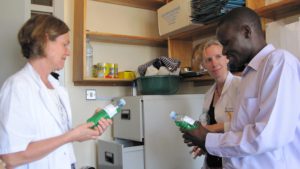
 Palliative care is crucial in mitigating the suffering of individuals who are suffering from serious and/or terminal illnesses. Of the 54 African countries, 43 have no access to basic palliative care systems. Furthermore, even fewer can provide high-quality care to those who need it. Uganda is paving the way for palliative care in Africa. The country is building a nationwide service for citizens to receive care and comfort in the final stages of their lives.
Current Situation in Africa
Basic palliative care services are unavailable in 79.6% of Africa. The vast majority of the continent’s seriously ill population is denied specialized assistance that would improve their quality of life. Relieving the suffering and stress from somebody’s final days is widely regarded as the compassionate thing to do, as palliative care supports both a patient and their loved ones through difficult times.
Palliative care, when available, is offered to people with illnesses such as cancer, heart disease, dementia and HIV/AIDS. In 2023, there were approximately 396,200 AIDS-related deaths in Africa. The data suggests that most of these individuals would not have had the appropriate medical care, guidance and comfort in the lead-up to their passing. Similarly, it is estimated that 367,000 Africans get diagnosed with dementia annually; again, it can be implied that few of these people receive palliative care that would provide comfort in a time of confusion.
Furthermore, half a million Africans are believed to die from cancer annually. In the next 50 years, the figure is projected to increase by 40%. Therefore, palliative care services need to be implemented now so that the future is as comfortable as possible for those facing cancer and other serious illnesses.
Uganda Paving the Way
Uganda’s population is currently estimated at 46 million and is growing at a rate of 2.9%. This expanding East African nation is making remarkable progress in palliative care, following a comprehensive framework that supports everyone involved in the medical process: patients, health care staff and their loved ones.
The Palliative Care Association of Uganda
The Palliative Care Association of Uganda (PCAU) is one of the key forces driving this positive change in Uganda. Established in 1999, the organization provides holistic care and pain relief for needy people. With more than 1,500 individual members and 230 medical facilities offering PCAU services, they implement a framework supporting seriously ill patients in Uganda. PCAU has developed a strategic plan with five focus areas:
- Capacity building
- Advocacy and awareness creation
- Palliative care research and information
- Governance and support functions
- Sustainability and financial efficiency
Those affiliated with PCAU work hard to implement these strategies. Indeed, outcomes are being achieved with the support of the Ugandan Ministry of Health, ensuring 55,000 people in Uganda receive palliative care.
Hospice Africa
Another key provider of palliative care in Uganda is Hospice Africa. Founded in the U.K. in 1992, the charity trains health care staff. It provides palliative care across Africa, with a significant focus on Uganda. Its clinical headquarters is in Kampala, where programs are implemented, patients are treated and morphine is manufactured.
Uganda serves as the base for Hospice Africa, which provides much of its medical attention there. Notably, 95% of Ugandan cancer patients do not seek curative treatment, highlighting the demand for holistic care. In 2023, three Hospice Africa Uganda sites cared for 2,110 individuals needing medical attention. Among these new patients, 66% were diagnosed with cancer and 7% were younger than the age of 18.
Hospice Africa Uganda’s reach is growing. The financial year 2022/2023 saw a 12% increase in patients as the charity expanded and received more funding to help care for seriously ill people.
What the Future Holds
Uganda is an African nation leading by example in providing palliative care to its citizens. Furthermore, the country is inspiring the rest of the continent to follow suit. However, there is still much work to be done. In October 2024, the Ugandan Ministry of Health reported that only 11% of the 500,000 Ugandans needing palliative care were receiving it. While more progress is needed in Uganda, the country is setting a positive example with its strategic frameworks to assist those needing end-of-life support.
By 2050, the Ugandan population is expected to exceed 100 million, making it encouraging to see effective frameworks for providing holistic care already in place. The increasing availability of palliative care in Uganda is poised to enhance the quality of life for the country’s growing population.
– Megan Hall
Megan is based in Suffolk, UK and focuses on Global Health and Celebs for The Borgen Project.
Photo: Flickr

ShareTheMeal: Social Media Helping Fight Hunger
Advocacy and Engagement
Many people use multiple platforms such as Instagram and Twitter to raise awareness for issues across the world. Various organizations and individuals have used platforms for advocacy and engagement to help fight global hunger.
In 2015, the World Food Program (WFP) created the ShareTheMeal campaign which allows users to help those in need with just a few taps on their phone. This helped the cause as the ease of creating a change meant that people were more likely to donate and help the issue, as well as create awareness and a place for people to make a change on the issue of global hunger.
Social media can mobilize people to fundraise which is one of the ways how the ShareTheMeal campaign works. Sharing campaign links through social media brings users closer to helping those in need with only a few taps. ShareTheMeal campaign requires €0.70 minimum to pay and in 2022 it has helped provide 150 million meals around the world.
Real-Time Updates and Wider Reach
The fast-paced nature of social media means that there are real-time updates and the updates can reach people faster. With a broader and quicker reach, people all over the world take an interest and want to find out more. This can be seen through the ShareTheMeal campaign by highlighting certain issues quickly and in depth. In 2020, the Beirut blast further worsened the already existing food crisis in Lebanon. Within 48 hours, ShareTheMeal set up a campaign and helped provide food to people who were struggling, WFP reports.
ShareTheMeal also created a campaign to support people living in Palestine without proper resources to feed themselves and supported 1.1 million people with food just in July 2024. This highlights how campaigns that are on social media can reach a vast number of people quickly and create mass awareness and support for issues surrounding global hunger.
ShareTheMeal
This is just one of the many campaigns on social media currently trying to tackle the issue of global hunger. Charities and organizations that are using social media are important to help both large-scale issues as well as small scale, both by raising awareness and funds for global hunger.
– Rosie Miller
Photo: Flickr
Uganda Paves the Way for Palliative Care in Africa
Current Situation in Africa
Basic palliative care services are unavailable in 79.6% of Africa. The vast majority of the continent’s seriously ill population is denied specialized assistance that would improve their quality of life. Relieving the suffering and stress from somebody’s final days is widely regarded as the compassionate thing to do, as palliative care supports both a patient and their loved ones through difficult times.
Palliative care, when available, is offered to people with illnesses such as cancer, heart disease, dementia and HIV/AIDS. In 2023, there were approximately 396,200 AIDS-related deaths in Africa. The data suggests that most of these individuals would not have had the appropriate medical care, guidance and comfort in the lead-up to their passing. Similarly, it is estimated that 367,000 Africans get diagnosed with dementia annually; again, it can be implied that few of these people receive palliative care that would provide comfort in a time of confusion.
Furthermore, half a million Africans are believed to die from cancer annually. In the next 50 years, the figure is projected to increase by 40%. Therefore, palliative care services need to be implemented now so that the future is as comfortable as possible for those facing cancer and other serious illnesses.
Uganda Paving the Way
Uganda’s population is currently estimated at 46 million and is growing at a rate of 2.9%. This expanding East African nation is making remarkable progress in palliative care, following a comprehensive framework that supports everyone involved in the medical process: patients, health care staff and their loved ones.
The Palliative Care Association of Uganda
The Palliative Care Association of Uganda (PCAU) is one of the key forces driving this positive change in Uganda. Established in 1999, the organization provides holistic care and pain relief for needy people. With more than 1,500 individual members and 230 medical facilities offering PCAU services, they implement a framework supporting seriously ill patients in Uganda. PCAU has developed a strategic plan with five focus areas:
Those affiliated with PCAU work hard to implement these strategies. Indeed, outcomes are being achieved with the support of the Ugandan Ministry of Health, ensuring 55,000 people in Uganda receive palliative care.
Hospice Africa
Another key provider of palliative care in Uganda is Hospice Africa. Founded in the U.K. in 1992, the charity trains health care staff. It provides palliative care across Africa, with a significant focus on Uganda. Its clinical headquarters is in Kampala, where programs are implemented, patients are treated and morphine is manufactured.
Uganda serves as the base for Hospice Africa, which provides much of its medical attention there. Notably, 95% of Ugandan cancer patients do not seek curative treatment, highlighting the demand for holistic care. In 2023, three Hospice Africa Uganda sites cared for 2,110 individuals needing medical attention. Among these new patients, 66% were diagnosed with cancer and 7% were younger than the age of 18.
Hospice Africa Uganda’s reach is growing. The financial year 2022/2023 saw a 12% increase in patients as the charity expanded and received more funding to help care for seriously ill people.
What the Future Holds
Uganda is an African nation leading by example in providing palliative care to its citizens. Furthermore, the country is inspiring the rest of the continent to follow suit. However, there is still much work to be done. In October 2024, the Ugandan Ministry of Health reported that only 11% of the 500,000 Ugandans needing palliative care were receiving it. While more progress is needed in Uganda, the country is setting a positive example with its strategic frameworks to assist those needing end-of-life support.
By 2050, the Ugandan population is expected to exceed 100 million, making it encouraging to see effective frameworks for providing holistic care already in place. The increasing availability of palliative care in Uganda is poised to enhance the quality of life for the country’s growing population.
– Megan Hall
Photo: Flickr
Organizations Providing Aid to Palestine
Islamic Relief
Islamic Relief is dedicated to assisting the world’s most vulnerable populations. Founded in 1984 by Hany El-Banna in response to the famine in East Africa, the organization mobilized the Muslim community to support those in need, securing more than $176,000 to fund various poverty-reduction projects. From then on, the organization grew to support many other disadvantaged groups.
Today, it has lifted more than a billion people out of poverty, contributed to the increase in life expectancy and expanded access to education. Islamic Relief is currently partnering with organizations to provide aid to those in Gaza, offering hot meals, clean water, recreational activities and an orphan sponsorship program.
The Palestine Children’s Relief Fund
The Palestine Children’s Relief Fund (PCRF) is a key organization delivering aid to civilians in Gaza and the West Bank. Founded in 1991 by humanitarians in the USA, PCRF focuses on providing health care to ill and injured children who lack access to local medical services. Since its inception, the organization has sent more than 2,000 children abroad for specialized medical care. It has also provided international doctors and nurses to local hospitals at no cost.
UN Organizations
U.N. organizations, such as the United Nations International Children’s Emergency Fund (UNICEF) and the United Nations Relief and Works Agency (UNRWA), also provide aid to the Palestinian people. In Gaza, UNICEF is on the ground, distributing clean water and administering essential vaccines. The organization focuses on the suffering of children in Palestine while advocating for an immediate ceasefire and ensuring the protection and access to resources for all children.
Additionally, UNRWA provides Palestinian families with support services, such as food, water, cash assistance, education and health care. While both U.N. organizations were initially skeptical about the dire situations faced by these disadvantaged groups, rising injury and death tolls, along with the destruction of essential infrastructure, have demonstrated the extreme vulnerability of the Palestinian people and their urgent need for assistance.
Final Note
While the humanitarian crisis in Palestine persists, numerous nonprofit organizations are successfully providing aid to the people of Gaza. Much of this success is due to the countless individuals who recognize the importance of humanitarian efforts in preventing the destruction of a vulnerable population and restoring hope for a better future.
– Sophia Kharal
Photo: Pixabay
Medical Reforms in Chile
Reforms included a focus on rural and ambulatory services and increased community involvement in health care by the government. Furthermore, importance was placed on opening nationwide health centers, moving resources that the hospital sectors once controlled into the community and expanding the milk distribution program. This six-year health plan was a response to some of the previous health plan’s shortcomings, most notably the lack of comprehensive and complete health care coverage and lack of focus on primary care.
With the military coup in 1973, Allende’s “The National Health Service” was replaced by the “National System of Health Services” under the new leadership. Medical care could no longer be provided for free and competition within medical practice became the norm. The Secretary-General said at the time, “We want to incorporate into the health system certain aspects of the market economy…competition will allow the physician who provides the best care to gain a larger clientele.”
Problems With the Current System
Chile’s health care system is currently financed by two main entities: the Fondo Nacional de Salud (FONASA) and the Instituciones de Salud Previsional (ISAPRE). Approximately 80% of the population is covered by FONASA. The remaining 20% relies on ISAPRE, which includes additional charges based on risk assessments. This structure often leaves many elderly and chronically ill individuals unable to afford the necessary services.
Due to insufficient resources, many of those under the FONASA cannot take advantage of hospital services. Indeed this has led many to not be enrolled with a public health care facility, which has caused an increase in emergency care department visits. The current system faces several additional challenges, including:
Program for Universal Primary Health Care
In December of 2023, the World Bank approved a loan of $200 million to aid Chile’s current efforts to reform its health care system. By 2027, it hopes to reach approximately 187 out of 346 municipalities with an emphasis on primary care. The program will have three main areas of focus:
All three focus areas aim to target the population not covered by FONASA. Those with coverage who are not currently in a Public Health Care (PHC) system. The goal is to reduce the number of patients seeking care directly in emergency services. Other medical reforms in Chile seek to further these objectives by expanding effective coverage in PHC. Additional reforms seek to establish a more resilient system, improving the model for both social and health care and optimizing resources for monitoring and evaluating the health care system.
Final Note
With these new implementations, the health care system in Chile aims to grow stronger. Furthermore, care could become more accessible and reliable for its citizens. Chile aims to build on the foundations established by the health care systems of the past and learn from past mistakes and shortcomings.
– Isabella Chavez
Photo: Pexels
DRC Begins Mpox Vaccination Program
Provisions from the EU
To curb the spread of the virus, the DRC relies on the European Union (EU), donation of 265,000 MBA-BN vaccines, with the help of the U.S. Government, Gavi and Africa CDC. These vaccines require two shots administered one month apart and are available only to adults, according to UNICEF.
With a population of more than 100 million, this means there is a limited amount of doses, so officials have had to target the campaign to those most vulnerable to Mpox. So far, the campaign has focused on the country’s North Kivu and Equateur provinces, the two regions that have recorded the highest number of cases. Within these areas, the Ministry of Health will provide the doses to the most at-risk groups, such as those with existing health problems. UNICEF has coordinated the transport and delivery of the vaccines, as well as the storage and shipment across the DRC.
Further Expected Doses
Although officials in the DRC are currently working with a limited supply of vaccines, the nation has also signed an agreement with the government of Japan, which promises the supply of LC-16 vaccines. LC-16 only requires one shot for immunisation and is currently the only one that has approval for children. One of the most disproportionately impacted, children under 15 are some of the most vulnerable to the virus, accounting for 60% of all recorded cases and 80% of deaths in the DRC, according to UNICEF.
Logistical Difficulties
Alongside limited availability, officials have also faced difficulties when planning the implementation of the Mpox vaccination program itself. Vaccines must be kept as low as -20 degrees Celsius, and, once defrosted, need to be used within 40 days to be effective. Officials are therefore working with a limited time frame in which they can transport and administer doses from the central storage facility in Kinshasa. This poses particular difficulty for the nation’s more rural areas which take longer to reach, an issue that has only been exacerbated by the ongoing conflict in the DRC between the government and rebel groups. This has made access to rebel-controlled regions much more limited and therefore made the transportation of medical resources such as vaccines to these areas much more difficult.
Government efforts, educational campaigns and attempts to raise awareness about the virus, and vaccines are just some of the ways the DRC is currently working to combat the spread of Mpox. Its collaboration with international organizations has proved key to the start of the Mpox vaccination program, and further provisions from nations such as Japan will hopefully allow for the continued suppression of the virus.
– Izzy Tompkins
Photo: Flickr
Fragility and Rule of Law in CAR
Politics, Violence and Economy
CAR has a long history of instability, state disintegration and political violence. It straddles the Sahel region, with a majority Muslim population, while savanna communities are mainly Christian. The conflict has regularly broken out between the Muslim ex-Seleka rebels and the Christian anti-balaka rebels. In 2013, Seleka rebels stormed the capital, Bangui and the country descended into a brutal civil war that continues in some parts of the country.
CAR suffers acutely from gender-based violence (GBV) against women and girls, recording 23.644 cases of GBV in 2022. Inadequate food and water resources, poor health care and weak housing infrastructure exacerbate tensions within households. These challenges, along with socio-cultural norms that are unfavorable to women, have led to sub-optimal survival strategies.
An unstable economy also influences fragility in CAR. Its government has failed to provide basic public goods, including water, food and health care. Poor education and job insecurity have stunted its growth. CAR has a rich endowment of natural resources but has not benefited due to mismanagement. According to the World Bank, the country has also suffered from flooding, fuel shortages and declining international timber trading. These challenges risk an already fragile economy.
Solutions
MINUSCA is a multidimensional United Nations peacekeeping operation set up by the Security Council in 2014. Its mission is to assist CAR in building national stability. It prioritizes the country’s security, rule of law, human rights and political crisis. MINUSCA provides military and police services from regions such as Rwanda to handle disarmament, demobilization and reintegration in CAR.
Cooperazione Internazionale (COOPI) focuses on supporting victims of GBV in CAR. Women and girls gather in a welcoming home in Bangassou where they are encouraged to participate in activities such as knitting and patternmaking, providing them with psychosocial support.
Pelvia, an 18-year-old girl spoke about the positive effect COOPI has had on her life. She spoke about the skills she has learned and how they have provided her with an income to buy necessities that she would otherwise be unable to afford. Pelvia is also glad for the company and support of the other women and girls who have shared similar traumatic experiences, UNOCHA reports.
Economic Growth
CAR receives most of its financial aid from the International Monetary Fund (IMF). In June 2024, the IMF approved an extended $25 million disbursement to continue the push for economic growth in CAR. The aid has been distributed to assist the economy and sustain priority spending on basic public services. The IMF forecasts that CAR’s economy will grow by 1.4% in 2024.
Looking Ahead
Fragility and rule of law in CAR are improving. The country has a long road to stability but there are positive forecasts for its future.
The Economist Intelligence reports that the country’s economic activity will continue to rise over the next few years, with help from the IMF’s funded program. Whilst many areas of CAR are still overrun by rebel groups, the government, with assistance from Russian and Rwandan forces, has control over several major cities, including the capital. This allows for a more stabilized political structure and open rule of law in these areas.
– Millie Trussler
Photo: Flickr
Elderly Poverty Among Algerian Migrant Workers
Therefore, elderly poverty in Algeria could worsen as the demography changes over the coming years. However, the Chibanis who left Algeria in the 1970s looking for a more stable income face the additional challenge of isolation. Tahar Ben Jelloun expresses a common sentiment when he calls the state of the Chibanis “the highest solitude.” Here is more information about Algerian migrant workers in France.
Immigration to France
Poverty in Algeria was one of the reasons for immigration to France in the 1960s. French colonialism in the region had left the natives in a worse position. With the appropriation of land and exploitation of labor, it was hard to earn a living in Algeria.
In general in France, poverty rates decrease with age, dropping to 10% of people over 65. On the other hand, the poverty rate among elderly migrants in Europe is much higher at 25%. Among the migrant population, elderly poverty has increased by 4%, whereas for their native-born counterparts, it has decreased. Accommodation for elderly people has improved over the last few years, but elderly migrants are more likely to live in substandard housing.
Rather than relying on their younger family members, Chibanis often continue to support their families back home in Algeria using their pensions and social benefits. With their families back home and little community or purpose in France, the Chibanis become stuck in perpetual exile. This is what the sociologist Malek Sayad calls the “double absence.” Absent at home, they miss out on key milestones with their families. Absent in France, they struggle to integrate or form a community, and their language skills fall behind.
In addition to the solitude of their lifestyles, the Chibanis did not find the economic prosperity in France that they hoped for. When they arrived in the 1960s, the work available was arduous and menial, paying as little as 80 cents per hour. Today’s Chibanis were the hands that built the roads, factories and school buildings of modern France. Yet, many experience elderly poverty due to the difficulty in obtaining their pensions.
French Bureaucracy
The complex French bureaucracy standing between them and their pensions is hard to navigate for people whose language and literacy skills are low. If a Chibani mistakes the month on which he or she left France for Algeria, and accidentally stays too long, they return to huge debts. If they exceed the six-month limit, the government revokes their benefits and demands a refund of the amount paid.
Movement between France and Algeria has been commonplace since France’s colonization in 1830. Algerians, especially from the impoverished area of Kabylia, emigrated to France to do the hardest and lowest-paid jobs, according to Musée de l’histoire de l’immigration. This was a method for active young men to support their families back home. The influx of cheap labor suited the managerial class, who also used them to break workers’ strikes.
Raising Concerns
Concern about the elderly poverty of Algerian migrant workers spread in France in the early 2000s. One article cites the 2007 film Indigènes as a catalyst for public engagement with the question of the treatment of foreign veterans. That year Rachid Bouzidi, a special adviser for the Employment, Social Cohesion and Housing Ministry, stated “We believe that everyone has the right to live with their family in a decent and dignified way,” according to Radboud Repository article.
However, the Chibanis have experienced several years of precarious social status due to their migratory lifestyle between France and Algeria. They must reside in France to keep their benefits, but their homes and families are overseas.
Activists like Zohra Hamani fight for the visibility and security of Chibanis. President of the charity Les Bons Samaritains Fisabillillah, Hamani said to Al Jazeera.: “We owe all these beautiful French cities to the Chibanis.” Les Bons Samaritains Fisibillillah provides a free breakfast every morning at the centre, which is followed by the opportunity to receive legal and health advice.
Conclusion
Algerian migrant workers living in France are more likely to live in poverty and face the additional challenge of isolation from their communities back home. The French government’s six month stipulation forces these elderly people into isolation and estrangement. However, there are charitable organizations fighting to amplify their voices and rectify the neglect of the French government.
– Io Oswald
Photo: Flickr
Women’s Rights in Vanuatu
Access to Education
Women’s rights are significantly impacted by limited access to education, with a noticeable gender disparity favoring boys. Cultural norms often prioritize boys’ education, leading to higher dropout rates among girls. Economic constraints force families to choose which children to send to school, usually favoring boys.
Additionally, early marriage and domestic responsibilities further limit girls’ ability to continue their education. Efforts by the government and nongovernmental organizations (NGOs) aim to address these disparities through policies and programs promoting girls’ education. Still, community awareness and involvement are crucial in changing attitudes and ensuring equal opportunities for all children.
Early Marriage Among Girls
In Vanuatu, girls can marry with their parents’ consent at the age of 16. As a result, it is common to see early marriages, especially in remote areas. In some regions, traditions suggest that a girl is ready for marriage and intercourse as soon as she begins menstruating. Girls who marry at a young age often lack the maturity and resources to assert their rights, making them more vulnerable to abuse. Early marriages can perpetuate cycles of poverty and dependency, which can lead to increased domestic violence.
Domestic Violence
The majority of women in Vanuatu, 60%, have experienced sexual and physical violence in their lives. These women also face emotional abuse, often worsened by traditional gender roles that disregard such violence. A strong movement is emerging as women join forces to end domestic violence in Vanuatu. Rallying under the slogan “In unity, our advocacy becomes a chorus,” these committed women are working relentlessly to fight domestic violence and advance gender equality.
Their united efforts involve raising awareness, supporting victims and advocating for stronger legal protections. By standing together, they amplify their voices and become a powerful force for change, aiming to create a safer and more just society for all women on the Island.
Organizations Addressing the Issues
The Vanuatu Women’s Center (VWC) is working on several projects, including the Family Protection Unit, which provides legal aid and counseling to survivors of domestic violence. It also conducts community education programs that aim to raise awareness about women’s rights and gender-based violence. In 2022, the organization hosted a workshop with 17 participants from eight villages across the Island, educating them about gender, discrimination, sex, gender equality and stereotypes.
Furthermore, the Department of Women’s Affairs (DWA) is involved in initiatives like the Gender Equality and Women’s Empowerment Policy, which aims to improve women’s access to education, health care and economic opportunities. It also supports local women’s groups to promote gender equality. International organizations like the United Nations Development Programme (UNDP) and the United Nations Children’s Fund (UNICEF) are also backing projects such as the Girls’ Education Project, which focuses on increasing school enrollment and retention rates for girls. They also support programs that aim to delay early marriages by educating communities about the importance of keeping girls in school.
Conclusion
While Vanuatu faces significant challenges regarding early marriage, education and domestic violence, there is a growing movement toward positive change. Efforts by local and international organizations are beginning to bear fruit, with increased awareness and advocacy leading to more educational opportunities for girls and stronger protections against domestic violence. As the community continues to unite to support women’s rights, there is hope for a brighter, more equitable future for all women in Vanuatu.
– Maria Urioste
Photo: Flickr
IPTp Treatment: Reducing Malaria in Pregnant Women in Mali
The IPTp Pill
After observing the adverse effects of malaria on pregnant women, health professionals developed a specific treatment for this group, hoping to reduce malaria rates in Mali. Known as Intermittent Preventive Treatment of Malaria in Pregnant Women (IPTp), this treatment involves taking three pills during each trimester of pregnancy. IPTp has gained popularity for its convenience and affordability compared to other malaria prevention measures. A notable advantage is its minimal side effects, with most only occurring after the first dose.
IPTp Distribution
Once manufactured, various organizations distribute the IPTp treatment directly to Malians, focusing on pregnant women, young mothers and children aged 1-5. The United States (U.S.) President’s Malaria Initiative for Mali (PMI), dedicated solely to combating malaria in this demographic, was established in 2005. Its goal is to reduce malaria incidence by providing health care measures, including IPTp. Mali has stood out among Sub-Saharan African countries due to its high malaria mortality rates. Although PMI has increased the distribution of IPTp, Mali remains a priority because of political instability and insecurity, which hinder health service provision. To address this, PMI ensures a steady supply of IPTp pills to the 13 Malian towns most affected by malaria.
IPTp Awareness
A crucial role in implementing IPTp treatment for malaria in Mali is raising awareness about the pill’s effectiveness. The BMC Malaria Journal recently published a study suggesting that more pregnant women would choose IPTp if provided with a brief factsheet outlining malaria’s potential impacts on their health and that of their child, along with protection strategies. This finding highlights a lack of malaria knowledge among the Malian population, which negatively affects IPTp usage. Consequently, many organizations focused on eradicating malaria in Mali include educational components in their efforts. Groups like Save the Children and CNRS have conducted sessions for Malian teachers on malaria prevention and treatment, including IPTp. While not all classes exclusively comprise pregnant women, the dissemination of this information across various age groups in Mali supports advocacy efforts for IPTp pills.
Looking Ahead
Malaria remains a significant threat in Mali, particularly for pregnant women, with millions of cases reported in recent years. The IPTp has proven effective in reducing malaria-related health risks for both mothers and their children. Organizations such as the U.S. President’s Malaria Initiative have prioritized distributing IPTp and raising awareness about its benefits. Efforts by groups like Save the Children and CNRS have also expanded education on malaria prevention, helping more women access life-saving treatments. Although challenges persist, continued focus on awareness and treatment distribution offers hope for reducing the impact of malaria on vulnerable populations.
– Nadia Haeryfar
Photo: Flickr
Smartphone-Powered Diagnostics in Nepal
The Health Care Landscape in Nepal
The health care landscape in Nepal, despite incorporating both public and private sector services, often fails to meet international standards. As of 2019, health-related expenditures constituted 4% of the country’s GDP, with infectious diseases accounting for roughly two-thirds of all health issues. Although Nepal has made considerable progress in enhancing its health care system, significant challenges persist in access and quality of care. Smartphone-powered diagnostics have emerged as a pivotal solution, bridging the gap between patients and health care providers. This mobile health technology enables health care workers to perform medical tests, diagnose diseases and provide care in previously inaccessible areas.
US Innovations Leading the Charge
Researchers at the University of Washington developed a smartphone attachment that enables remote eye exams using optical microangiography, allowing health care providers to conduct vision assessments in underserved areas. Another breakthrough involves using smartphone apps to analyze facial blood flow, aiding in the early detection of stroke risks. These innovations illustrate how medical care in low-resource regions can be transformational. With these tools, health care has become more accessible, portable and affordable, significantly improving health care access.
In Nepal, for instance, a feasibility study reveals how smartphone-powered diagnostics can make a major impact through the use of the General Movement Assessment (GMA) to screen infants for high-risk cerebral palsy. This technology empowers parents with smartphone-based apps, allowing diagnostics once confined to clinical settings to be available in remote regions. The integration of smartphone-powered diagnostics in Nepal marks a major milestone that overcomes resource barriers and extends quality care to all as a result of global technological advancements.
Empowering Rural Health Workers
Smartphone-powered diagnostics are revolutionizing health care by empowering rural health workers, especially in regions of Nepal where medical professionals are scarce. In remote areas, health workers are often the first line of care but have traditionally lacked access to advanced diagnostic tools. With smartphone-based technologies, these workers can perform critical tests without requiring patients to travel to hospitals. For example, a health worker in a remote village can use a smartphone-connected lab-on-a-chip device to conduct blood tests for diseases like malaria or dengue fever. Health workers transmit results electronically to doctors in urban areas who confirm them, enabling swift treatment decisions. This not only enhances patient care but also eases the pressure on overwhelmed health care facilities.
Overcoming Barriers to Health Care Access
Smartphone-powered diagnostics profoundly impact health care access by overcoming geographical barriers that traditionally isolated rural populations. The country’s mountainous terrain and inadequate infrastructure often hinder patients from traveling to hospitals or clinics for routine medical care. Mobile health technology addresses this challenge by delivering diagnostic tools directly to communities, eliminating the need for long journeys to receive medical attention. Furthermore, these innovations not only enhance accessibility but also reduce health care delivery costs. Unlike traditional diagnostic equipment, which is typically expensive, bulky and requires specialized training, smartphone-based tools are affordable, portable and user-friendly, making them ideal for low-resource settings.
The Future of Smartphone Diagnostics in Nepal
Smartphone-powered diagnostics are set to revolutionize developing countries’s health care by empowering local health workers and enhancing diagnostic capabilities. Innovations, such as apps that measure blood oxygen levels using smartphone cameras and deep-learning algorithms, enable patients to monitor their health at home, particularly benefiting those with respiratory conditions. Collaboration between Nepali providers and international tech innovators could be crucial to scaling these technologies, improving health care access and promoting self-reliance in local communities.
– Alaya Laila
Photo: Flickr