s The Human Development Index (HDI) is a composite measure of health, education, and income which was introduced by the United Nations Development Programme in 1990 as an alternative to purely economic assessments of national progress, such as Gross Domestic Product growth. In the field of international development, the HDI soon became the most widely accepted and cited measure of its kind.
Many developing countries in the 1980s faced strict structural adjustment conditions imposed by financial institutions like the World Bank and the International Monetary Fund. To avoid a financial crisis and get the loans they needed, these countries had to undergo massive economic restructuring that involved currency devaluation, government spending cuts, business deregulation, and reducing taxes for the wealthy. Not surprisingly, the social impact was harsh for the average citizen and the human condition worsened. Do you remember the images of people burning money to keep warm? It was in light of this situation that the United Nations advocated for a human development approach, as opposed to a business development approach.
1990 was the beginning of a campaign by the UNDP for a people-focused strategy towards development, and hence the birth of the Human Development Index. The HDI emphasized that people and their capabilities should be the ultimate criteria for assessing the development of a country, not economic growth alone. The HDI was designed to reflect average achievements in three basic aspects of human development – leading a long and healthy life, being knowledgeable and enjoying a decent standard of living.
The main components used to calculate a country’s HDI are Life Expectancy at Birth, Gross National Income per Capita, Mean Years of Schooling and Expected Years of Schooling. From these, a number between 0 and 1 is produced – with 1 being the best possible HDI and 0 being the worst possible HDI. As of 2012, Norway ranked number 1 out of 187 countries with an HDI of 0.955. Niger and the Democratic Republic of the Congo tied for last place with an HDI of 0.304.
The HDI can be revealing in other ways as well. For example, how is it that two countries with the same level of GNI per capita can end up with such different human development outcomes? The Bahamas’ GNI per capita is higher than New Zealand’s (by 17%) but because life expectancy at birth is about 5 years shorter, mean years of schooling is 4 years shorter and expected years of schooling differ greatly between the two countries; New Zealand has a much higher HDI value than the Bahamas.
Although the Human Development Index is a more holistic measure of human development in a country when compared to GDP per capita, the HDI is still not all-inclusive. The HDI, for example, does not reflect political participation or gender inequalities. The Inequality-adjusted HDI, Gender Inequality Index and Multidimensional Poverty Index offer other insights into a country’s development status.
According to the 2012 HDI, the top ten countries with the best human development are:
1. Norway
2. Australia
3. USA
4. Netherlands
5. Germany
6. New Zealand
7. Ireland (tied for 7/8 spot)
8. Sweden (tied for 7/8 spot)
9. Switzerland
10. Japan
Out of the 187 countries counted in the 2012 HDI, the bottom ten countries with the least human development are:
177. Sierra Leone
186. Democratic Republic of the Congo (tied for last place)
186. Niger (tied for last place)
– Maria Caluag
Source: UNDP
Photo: Guardian

Deciphering the Human Development Index
s The Human Development Index (HDI) is a composite measure of health, education, and income which was introduced by the United Nations Development Programme in 1990 as an alternative to purely economic assessments of national progress, such as Gross Domestic Product growth. In the field of international development, the HDI soon became the most widely accepted and cited measure of its kind.
Many developing countries in the 1980s faced strict structural adjustment conditions imposed by financial institutions like the World Bank and the International Monetary Fund. To avoid a financial crisis and get the loans they needed, these countries had to undergo massive economic restructuring that involved currency devaluation, government spending cuts, business deregulation, and reducing taxes for the wealthy. Not surprisingly, the social impact was harsh for the average citizen and the human condition worsened. Do you remember the images of people burning money to keep warm? It was in light of this situation that the United Nations advocated for a human development approach, as opposed to a business development approach.
1990 was the beginning of a campaign by the UNDP for a people-focused strategy towards development, and hence the birth of the Human Development Index. The HDI emphasized that people and their capabilities should be the ultimate criteria for assessing the development of a country, not economic growth alone. The HDI was designed to reflect average achievements in three basic aspects of human development – leading a long and healthy life, being knowledgeable and enjoying a decent standard of living.
The main components used to calculate a country’s HDI are Life Expectancy at Birth, Gross National Income per Capita, Mean Years of Schooling and Expected Years of Schooling. From these, a number between 0 and 1 is produced – with 1 being the best possible HDI and 0 being the worst possible HDI. As of 2012, Norway ranked number 1 out of 187 countries with an HDI of 0.955. Niger and the Democratic Republic of the Congo tied for last place with an HDI of 0.304.
The HDI can be revealing in other ways as well. For example, how is it that two countries with the same level of GNI per capita can end up with such different human development outcomes? The Bahamas’ GNI per capita is higher than New Zealand’s (by 17%) but because life expectancy at birth is about 5 years shorter, mean years of schooling is 4 years shorter and expected years of schooling differ greatly between the two countries; New Zealand has a much higher HDI value than the Bahamas.
Although the Human Development Index is a more holistic measure of human development in a country when compared to GDP per capita, the HDI is still not all-inclusive. The HDI, for example, does not reflect political participation or gender inequalities. The Inequality-adjusted HDI, Gender Inequality Index and Multidimensional Poverty Index offer other insights into a country’s development status.
According to the 2012 HDI, the top ten countries with the best human development are:
1. Norway
2. Australia
3. USA
4. Netherlands
5. Germany
6. New Zealand
7. Ireland (tied for 7/8 spot)
8. Sweden (tied for 7/8 spot)
9. Switzerland
10. Japan
Out of the 187 countries counted in the 2012 HDI, the bottom ten countries with the least human development are:
177. Sierra Leone
178. Burundi
179. Guinea
180. Central African Republic
181. Eritrea
182. Mali
183. Burkina Faso
184. Chad
185. Mozambique
186. Democratic Republic of the Congo (tied for last place)
186. Niger (tied for last place)
– Maria Caluag
Source: UNDP
Photo: Guardian
Angola Blood Diamonds
Aside from the popularity afforded by a Leonardo DiCaprio movie, the world has largely forgotten about blood diamonds. A romantic name for an entirely unromantic subject, blood diamonds refer to the gemstones that are mined in conflict zones, often exploiting the miners and putting them at great risk, and benefiting warlords instead of governments.
In 2000, attempts were made to stem the flow of diamonds through the Kimberley Process, which required all diamonds to be certified by governments as legitimate (i.e. mined in non-conflict zones) before exportation. The program was initially successful but quickly fell apart after corruption saw most governments bribed to allow the sale of blood diamonds.
Through ongoing, the issue faded from public awareness until 2011 when Angolan journalist and human rights activist Rafael Marques published “Blood Diamonds: Corruption and Torture in Angola”.
The book documented the human rights abuses and killings in Angola at the hands of the military. Marques describes events of shocking brutality in the military’s effort to maintain control over the diamond trade. Among them, 15 miners were forced to jump to their deaths from a speeding truck at different times so that their bodies would be scattered and more difficult to locate, a mine was purposefully destroyed to bury and kill 45 workers, and there were routine stripping and beating of workers and villagers with the flat sides of machetes.
The book has garnered attention not only for its graphic content but for the struggles Marques has had to face as a result of writing it. He was subsequently sued by eight generals for libel, in an attempt to intimidate or bankrupt him, but recently the courts found his writings protected under free speech.
Yet Marques’ fight seems as though it will be fruitless without international intervention. Angola’s Attorney General is not pursuing the case. Also, the generals accused in the book remain free as Angola’s leader, Jose Eduardo dos Santos, cannot afford to turn against them.
The responsibility now lies with consumers; the flow of diamonds responds entirely to demand in consumer countries. Human rights movements are urging consumers to demand ethically-sourced products or seek alternatives. Though Africa seems unable to stop the production of blood diamonds, global consumers wield the power to deny them a market.
– Farahnaz Mohammed
Sources: Brilliant Earth, All Africa
Photo: Mickeyboston
The Maasai Brand: Fighting for Cultural Heritage
For consumers in the Western world, buying unique jewelry or clothing with distinctly foreign influences may seem a natural part of the quest for personal style. For many communities in developing countries, however, these items or designs are a part of cultural heritage. A recent BBC spotlight on one such culture — the Maasai in Kenya and Tanzania — explores why some forward thinkers in Africa are partnering with intellectual property groups to protect their heritage.
Tourist practices have long been questioned as exploitation, such as taking photographs of natives without permission or in return for money, or disrupting natives’ daily lives by gawking. For the Maasai, these tourist practices also violate deeply ingrained cultural superstitions. In an interview with BBC, Maasai leader Isaac ole Tialolo shared that twenty years ago a tourist took a photo of him without permission. “We believed that if somebody takes your photograph, he has already taken your blood,” Isaac explained. Angered, Isaac destroyed the tourist’s camera.
More than exploitative tourist practices, what concerns Isaac is “use and abuse” of the Maasai culture. 80 companies worldwide use the name or the image of the Maasai, whether for Land Rover accessories, athletic and orthopedic shoes, or Louis Vuitton’s Masai line.
The fight against exploitation of cultural trademarks is not a new one. For example, in the mid-1970’s the Navajo Nation unsuccessfully tried to copyright the word “Navajo” to restrict who could apply the term to products; this resistance against outside use has continued, notably in a 2011 lawsuit the Navajo Nation brought against the clothing chain Urban Outfitters for using the term “Navajo.”
In some respects, the quality and representation of the items carrying cultural brands is a concern. “Tacky is a good word,” Navajo Times contributor Bill Donovan said of the Urban Outfitter items in an interview with NPR. “The Navajo Nation has been very sensitive about people using their name to promote tacky products.” For the Maasai name to be attached to orthopedic trainers or beach towels — items that do not even represent their namesake — is similar abuse.
Today, many Maasai leaders are attempting to stand for their cultural heritage. But Isaac ole Tialolo understands the entire Maasai nation must agree to this. He hopes they will be successful in uniting the Maasai for intellectual property rights. The NGO Light Years IP works alongside Maasai leaders — as it has in a number of developing countries — to educate the Maasai in what they are aiming to do.
The Maasai have a strong sense of ownership of their culture, says Isaac. As the Maasai become educated and the rest of the world becomes informed on the matter, branding consultant Bruce Webster says “they’ll win the PR battle absolutely.”
– Naomi Doraisamy
Source: BBC,Guardian,NPR
Photo: BBC
The Life of a Refugee
Last week the U.N. office of the High Commissioner for Refugees (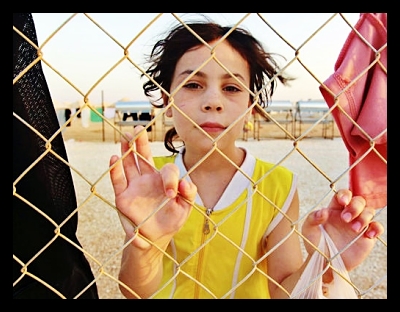 UNHCR) said more than 1.5 million Syrian civilians had fled their country to escape the civil war that had been raging there for almost two years. Dan McNorton, a spokesman for the UNHCR, said the actual number of refugees is probably much higher due to concerns some Syrians have regarding registration. In addition, approximately 4 million people have been internally displaced since the beginning of the conflict. So what does this mean for the Syrian people who are now refugees? What can be expected in the life of a refugee?
The UNHCR defines a refugee as a person who,
Like the Syrian refugees, many are often caught between a rock and a hard place. If they stay, they put themselves and their families in serious danger. If they flee, instability and uncertainty greet them at every turn. The UNHCR was created in 1950 to lead and coordinates international efforts to protect and assist people facing this difficult decision. They protect the basic human rights of refugees and aim to ensure all refugees are given the opportunity to seek asylum in another country.
The starting point for many is often a UN refugee camp, intended to create a safe haven until they can begin their lives anew. Unfortunately, it is all too often the end of the road as well. Those who live in the camps are usually provided basic life sustaining necessities, but many will never leave. They become trapped in a state of dependence on these camps.
Currently, the largest and oldest camp (designed to house around 90,000 people) is home to almost half a million people, mostly from Somalia. It was intended to be a temporary solution for the influx of refugees from Somalia when the country descended into civil war more than 20 years ago, but the remoteness of its eastern Kenyan location and threats to security have prevented the UNHCR from further developing the camp for those who have permanently settled there. Education and sanitation is limited and the camp is extremely overcrowded.
The Syrian refugees have fled mostly to the neighboring countries of Jordan and Lebanon. Just last week Oxfam issued an urgent appeal for funds to assist those who are fleeing the conflict. Rick Bauer, the regional humanitarian coordinator for Oxfam said, “The sad reality is that the vast majority of Syrian refugees are not going home soon. He added that Oxfam is “starting to really worry about the health of Syrian refugees”.
“The aid effort must be properly funded and focused on providing refugees with affordable and decent places to stay, where they can live with dignity. That’s priority number one for refugees and host communities alike,” he said.
Priority number one indeed. But for the sake of Syrians who find themselves in a refugee camp, we hope they do not stay long.
– Erin N. Ponsonby
Source: CNN, UNHCR, Raw Story
Photo: MWB
Climate Adaptation Crucial to Easing Conflict?
The international community has recognized the significance of climate change and its possible implications. President Obama’s 2010 National Security Strategy states that, “The change wrought by a warming planet will lead to new conflicts over refugees and resources…”
Recent studies have shown that climate change has lead to an increase in conflicts. The U.N. Environment Program’s “From Conflict to Peace building” reported that approximately 40% of civil wars have been associated with natural resources. Resource availability has come under immense stress due to climate change. Natural resource-based conflicts have particularly affected Sub-Saharan Africa. And this will continue to be a problem as, in the future, the region will likely experience longer and more extreme droughts and floods, which could lead to food and water insecurity as well as increased migration and poverty. All of these factors could increase the risk of conflict in the region. To counter this increase in conflict, governments should develop new climate adaptation policies.
The UN Environment Program shows that resource-driven conflicts are twice as likely to relapse within five years of negotiations. To prevent this problem, environmental concerns and climate adaptation strategies should be included in conflict negotiations. Some non-governmental organizations, including Tearfund and the International Institute for Environment and Development, have gone directly to local communities to manage resource conflict. They believe that, by building local organizations to manage resources, the chances conflict will occur are reduced. Governments need to recognize that they will have to look to more climate adaptation policies if they wish to prevent future conflict in their countries.
– Catherine Ulrich
Source: Alertnet
Photo: Mathematics of Planet Earth
Defining an Emerging Market
The term “emerging markets” was coined in 1981 at the International Finance Corporation when promoting the first mutual funding investments in developing countries. While the term is sometimes considered unhelpful, it is important to identify and define these markets. Emerging markets are a hot topic as they are predicted to surpass the US, German, and UK economies in the future.
There are three factors that distinguish an emerging market from a developed market. Firstly, rapid economic growth defines emerging markets. Great examples of emerging markets are Brazil, Russia, India, China, and South Africa (BRICS). In recent decades, these developing countries have boosted their large economies based on global capital, technology, and talent. The GDP growth rates of these countries have outpaced those of more developed economies, lifting millions out of poverty and creating new middle classes and large new markets for consumer products and services. The large labor pools of these countries give their economies a huge advantage over more developed economies.
The second factor that defines the emergence of a developing economy is how much competition it offers in comparison to developed markets. Along with the rapid pace of development, these countries pose serious competition to current dominant economies in developed countries such as the United States, the United Kingdom, Germany, France, and Italy.
Lastly, emerging markets are often defined in terms of their financial situation and infrastructure. While their rapid growth and competitiveness are positive growth indicators, the amount of red-tape and inconsistencies involved in dealing with these markets marks them as emerging. Unfortunately, some argue that the corruption in these markets will halt them all together despite other growth factors.
While the economies of Brazil, Russia, India, and China are well on their way to surpassing “emergence”, the predicted emerging economies of the future are Colombia, Indonesia, Vietnam, Egypt, Turkey, and South Africa (CIVETs). According to John Bowler, director of Country Risk Service at the Economist Intelligence Unit, the sizeable populations of some of these countries and the wealth of natural resources in others, just might make them the economic boomers of the next decade.
– Kira Maixner
Source CNN , Forbes
Photo ACF
Achieving Food Security in South-East Asia
Home to 600 million people, the region of South-East Asia is a source of precious resources and a strong work force. Still, many suffer from hunger and malnutrition, which is why it is important to achieve food security in this region. Boosting the agriculture sector in this region is essential to economic growth and development. With the growing obstacles of climate change and depletion of natural resources it is important to focus on creating long-lasting policies and reform on the agriculture sector of this region.
However, farmers are going to need a lot of help from the government to achieve food security in this region. Farms require investment in knowledge and tools as well as having a say in the government. In South-East Asia most farms are very small, usually 2 hectares of land or less, and run primarily by women. The government should focus on policies that support farmer’s organizations, empower and educate women as well as raise awareness about property rights.
World leaders have begun to take steps to implement some of the policies stated above at the World Economic Forum on East Asia taking place in Myanmar. They have proposed a new initiative called New Vision for Agriculture, which is trying to facilitate a public-private collaboration to achieve food security as well as environmental stability. It urges for an increase in investment in agriculture to boost economic growth. It highlights innovative ways for the public and private sectors to work together to achieve the best outcome. Exceptional effort from all actors is necessary to reach the common goal of food security in South-East Asia.
– Catherine Ulrich
Source: WE Blog
Photo: Trend Southeast
Google Embraces Renewable Energy in Africa
Google announced in late May that it is investing $12 million on a “96 megawatt solar photovoltaic plant in South Africa.” This plant is significant because it utilizes the climate of southern Africa to generate clean and renewable energy.
While South Africa is one of the continent’s more economically advanced countries, the utilization of solar panels in Africa could set an important trend for developing countries in the region. As Africa continues to progress and its standards of living rise, there will be a higher energy demand coming from Africans. Without the use of renewable sources, this higher energy use would result in an increase of greenhouse gases emitted into the atmosphere, potentially propelling climate change.
The investment made by Google demonstrates that higher standards of living in Africa can be possible through the use of clean energy. The majority of the continent is well suited to obtain energy from solar panels since most areas in Africa have a high level of Global Horizontal Irradiation, a parameter which evaluates the solar energy potential of a particular region. The investment should also encourage other areas of the world, both developed and developing, to invest in renewable energy. The solar plant is expected to “generate enough power for 30,000 South African homes” without emitting greenhouse gases into the atmosphere. While not all areas of the world have climates that are well-suited for the use of solar plants, other renewable resources, such as wind power, hydropower, and geothermal energy should be considered as ways to maintain a high standard of living without creating pollutants that can degrade the environment.
– Jordan Kline
Source: TechCrunch,SolarGis
What Does CRS Do?
Catholic Relief Services (CRS) was founded in 1943 by the Catholic Bishops of the United States to serve WWII survivors in Europe. The organization now serves over 100 million people in over 100 countries. Their mission is to serve impoverished and disadvantaged people, working in the spirit of Catholic social teaching to promote the sacredness of human life and the dignity of the human person. Although CRS is a Catholic based organization, they help whomever they can regardless of their race or religion, employing Catholics and non-Catholics alike.
CRS works to ease suffering, provide development assistance, and foster charity and justice. They have a set of guiding principles including: the sacredness and dignity of humans, preservation of basic human rights, supporting the social nature of humanity, promoting the common good, subsidiarity, solidarity, stewardship, and strengthening the options of the poor. CRS is governed by a board of directors including clergy, elected bishops, and Catholic lay men and women.
CRS provides both emergency and long-term relief to countries. They work to provide basic necessities, healthcare and education to the poorest and most vulnerable populations in the world. CRS focuses on six key areas of services including: emergencies, hunger, education, health, peace and helping at home.
CRS assists in regions affected by natural disasters and wars, providing water, food, shelter, as well as attempting to bring about long lasting peace if possible. CRS fights hunger through development of agriculture, improved water and sanitation, sustainable work options and through providing microfinance loans to those in need. They build improved educations systems, especially for women and girls and develop community-based health care systems to improve medical conditions. CRS also fights HIV/AIDS and establishes programs to reduce child and maternal mortality.
CRS proclaims Peacebuilding as the most important thing they do, lying at the heart of their operations. Conflict resolution, education and prevention are incredibly important to CRS. However, CRS also believes that rebuilding civil society and civic organization encourages good governance and makes governments accountable to their populations.
Some good examples of their programs are their programs to improve agriculture in Latin America. They are connecting farmers with suppliers and vendors to agricultural cooperatives to help the poorest farmers thrive. They have introduced more efficient technology to increase profits by the means of bean processing plants and drip irrigation systems. This method has seen beneficial results in Nicaragua and Ecuador where farmers have seen an additional dollar in profit per pound of cocoa. CRS is looking to expand their programs to Haiti in the wake of their natural disaster. CRS is creating an exit strategy for farmers in poverty by helping them improve their products, expand their markets and become self-sustainable.
– Caitlin Zusy
Source: CRS Blog, CRS
Global Communities Are Partners For Good
Global Communities is an international non-profit that works to bring about sustainable changes to the lives of vulnerable people. They work with community members to determine the needs to the community. They utilize a multi-faceted approach by mobilizing the communities, governments, the private sector and NGOs to work together. They bring together complementary strengths and shared responsibilities of given organizations to work toward a common goal.
Global Communities was previously named CHF International. Founded in 1952, they currently work in 20 countries in Africa, Asia, Europe & the Caucasus, Latin America & the Caribbean and the Middle East. Their mission is “to be a catalyst for long-lasting positive change in low- and moderate-income communities around the world helping them to improve their social, economic, and environmental conditions.” They strive to be genuine, committed, connected and purposeful in every project they pursue.
Their funding comes from governments, foundations, local groups and the private sector in order to maximize impact and effectiveness. They try to create self-sustaining organizations that can withstand crises and work well and efficiently on their own.
Global Communities implements innovative housing techniques to help the most vulnerable of populations. They work to make living conditions more stable and desirable in the developing world. One such population is the Nairobi community in Kenya. The slums there feature some of the most-at-risk populations in Kenya with high unemployment, cramped living spaces, and marginalization from mainstream society. There are also ethnic, religious, and political tensions present.
Global Communities’ project in Nairobi is funded through USAID and is called the Kenya Tuna Uwezo program. This program aims to reduce politically motivated conflict in the area. Global Communities is strengthening social networks of community members and civil society groups. They are working with PeaceNet and Kituo Cha Sheria, partner organizations, to engage young people with the goal of reducing resistance within and between identity groups. They are also fostering communication between ethnic lines while also ensuring technical and organizational capacity of partners to ensure the program can be sustained.
Global Communities has projects all over the world focusing on a range of topics including economic development, micro, SME and Housing Finance, infrastructure and construction, governance and urban development, civil society and municipal development, global health, and emergency response. Global Communities is an important ally in providing development assistance to countries in need, and one that can provide an important link between USAID funding and actual on the ground development and progress.
– Caitlin Zusy
Source: Global Communities